

OBD-II Code B1030: Comprehensive Guide to Body System Electronic Faults
What B1030 means, manufacturer-specific variations, and how to fix it for good
- Code B1030 is a manufacturer-specific body fault code, meaning a Mazda B1030 indicates a heated seat failure while a Nissan B1030 signals an airbag system fault.
- Always read the 2-digit suffix attached to the B1030 code (e.g., B1030-11) to pinpoint the exact electrical fault type, such as a short to ground or an open circuit.
- Stop driving immediately if code B1030 triggers your airbag warning light, as this disables the Supplemental Restraint System (SRS) and prevents airbags from deploying in a crash.
- Fix costs range from $50 for a mail-in airbag module reset to over $1,500 for a dealership control module replacement, making accurate diagnosis critical.
What Does B1030 Mean?
B1030 is a body control module (BCM) code that signals a problem with an electronic part or circuit in the main cabin area. Its meaning changes by manufacturer; on a Mazda, it indicates a bad heated seat, while on a Nissan, it points to an airbag sensor issue. You must look up the code's specific meaning for your car's exact make and model.
Technical definition: The official SAE/ISO definition for code B1030 is not standardized. Automakers assign it to different systems. Common definitions include Left Front Seat Heater Circuit Open, Airbag Diagnosis Sensor Unit, Evaporator Temperature Sensor Circuit Short to Battery, F-CAN A Malfunction (Communication Bus Error), or Front Ceiling Light Circuit Current Above Threshold.
Can I Drive With B1030?
Yes, But With Caution. Your car will drive, but this code frequently points to a problem with the airbag system. If your airbag warning light is on, the Supplemental Restraint System (SRS) is disabled, meaning airbags will not deploy in a crash. This is a serious safety risk requiring immediate professional attention. If the code is for a non-safety feature like a heated seat, driving is safe, but a short circuit creates a parasitic draw that drains your battery overnight.
Common Causes
- Damaged Wiring or Connectors (Very Common) — Broken, chafed, or shorted wires, or loose connectors cause most electrical codes. Wiring passing through moving parts like door hinges, steering columns, or seat tracks fatigues and breaks internally over time.
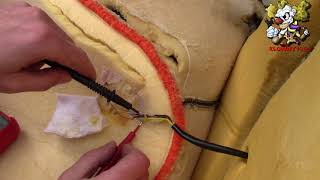
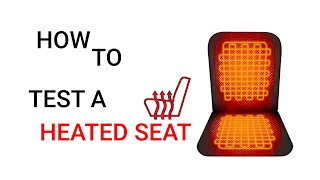
- Faulty Component or Sensor (Very Common) — The part itself fails. This is often a burnt-out seat warmer 🎬 Watch this DIY guide to diagnosing and repairing heated seat elements. element, a dead A/C temperature sensor, or a broken clock spring in the steering wheel.
- Stored Crash Data in Airbag Module (Common) — On Nissan and other models, the SRS module sets this code after a collision. It does not indicate a faulty part; the module simply stored crash data and requires a professional reset.
- Blown Fuse (Common) — A blown fuse for the affected circuit triggers this code. This is a symptom of a larger short circuit that you must find and repair before replacing the fuse.
- Low or Unstable Battery Voltage (Common) — A weak battery causes sensitive electronics to initialize incorrectly, storing random error codes in various modules during startup.
- Faulty Control Module (Less Common) — The computer controlling the faulty part fails. This includes the Body Control Module (BCM), HVAC control unit, or Airbag Control Module (SRS).
- Aftermarket Accessory Interference (Less Common) — Improperly installed aftermarket accessories (remote starters, alarms, LED lighting) tap into the wrong circuits, causing voltage fluctuations that trigger unrelated body codes.
Symptoms
- Airbag warning light illuminates — If the code relates to the Supplemental Restraint System (SRS), the dashboard airbag light illuminates, indicating the system is disabled.
- Specific body feature fails or works intermittently — A body feature like heated seats, air conditioning, or an interior light stops functioning or shuts off by itself after a few minutes.
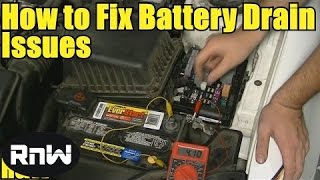
- Battery drains overnight — A short circuit or a faulty module failing to 'sleep' creates a parasitic draw, draining the battery when the car is off.
- Unrelated electrical problems — If the code indicates a communication bus issue, you experience strange electrical behaviors like flickering dash lights or multiple warning messages.
Diagnostic Flowchart
Tap your situation to follow the diagnostic path that matches what you're seeing on this code.
Common Fixes & Costs
- Repair Damaged Wiring or Connector — Parts: $5-$30, Labor: $120-$350, ~2 hr book time (Intermediate)
- Reset Airbag Module (after crash) — Parts: $0, Labor: $50-$150 (service cost + shipping/labor), ~1.5 hr book time (Professional)
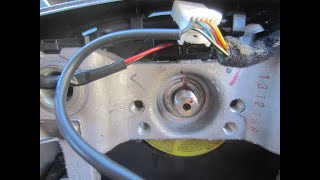
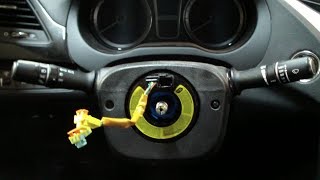
- Replace Clock Spring — Parts: $50-$250, Labor: $150-$400, ~1.5 hr book time (Intermediate)
- Replace Seat Warmer Control Unit — Parts: $320-$350, Labor: $100-$150, ~0.6 hr book time (DIY)
- Replace Evaporator Temperature Sensor — Parts: $20-$60, Labor: $150-$400, ~4.5 hr book time (Intermediate)
DIY vs Professional
- Reset Airbag Module — Beginner:
- Repair Damaged Wiring — Beginner:
- Replace Seat Warmer Control Unit — Beginner:
- Replace Clock Spring — Beginner:
- Replace Evaporator Temperature Sensor — Beginner:
Used vs. New Parts: Buying Guide
When a used part is worth it: For electronic modules like a Seat Warmer Control Unit, a used part from a reputable recycler offers significant savings with low risk. They are generally reliable if the part number matches exactly.
Donor-vehicle mileage cap: roughly under 100000 miles for the part to have meaningful remaining life.
Donor quality checklist:
- Match the part number exactly, as even slight variations are incompatible.
- For modules, ensure the donor vehicle did not have flood or fire damage.
- For clock springs, avoid parts from high-mileage vehicles as they are wear items.
Decision logic:
- If The part is a clock spring or other SRS component. → Strongly favor new OEM or high-quality aftermarket parts. The safety risk of a used, unknown-history airbag component is not worth the savings.
- If The part is a simple electronic module (e.g., seat heat controller) and the new OEM part is over $200. → A used part from a low-mileage donor is a reasonable choice to save money.
- If The part is an Airbag Control Module that has stored crash data. → Neither. The best option is to have your original module professionally reset, which is cheaper and avoids VIN mismatch issues.
Warranty tradeoff: Used parts typically come with a 30-90 day warranty. New aftermarket parts often have a 1-year to limited lifetime warranty. New OEM parts carry a 12-month/12,000-mile warranty.
Worst-case if a used part fails: $200-$500 if a used part fails after the warranty period, requiring repeat labor costs for diagnosis and replacement.
What Happens If You Wait — Timeline
- Immediate: If the airbag light is on, the SRS system is immediately disabled. Airbags will not deploy. (MPG impact: 0%% · Added cost: $0 (but an extreme safety risk))
- 1-4 weeks: If caused by a short circuit, a parasitic draw begins. A significant draw (>0.5A) drains a healthy battery in 2-4 days, causing no-start situations. (MPG impact: 0%% · Added cost: $0-$20 in wasted time/jump starts)
- 1-3 months: Repeatedly jump-starting and deep-cycling the battery causes permanent damage to its internal plates, reducing its ability to hold a charge. The car may not start after sitting for only a day. (MPG impact: 0%% · Added cost: $150-$300 (for a new battery that will also be ruined if the draw isn't fixed))
- 3+ months: An unaddressed short circuit in a component (like a sensor or switch) eventually overheats and damages the driver circuit inside its control module (BCM, SRS, etc.), turning a wiring fix into a module replacement. (MPG impact: 0%% · Added cost: $400-$1500+ (for module replacement and programming))
Cost of Not Fixing It
- Immediate: If the airbag light is on, the entire Supplemental Restraint System (SRS) is disabled. Airbags will not deploy in a crash, posing a major safety risk. (Added cost: N/A (Safety Risk))
- 1-3 months: If caused by a short circuit, it creates a parasitic battery drain, potentially leaving you stranded with a dead battery. This shortens the battery's overall lifespan. (Added cost: $150-$300 (for a new battery))
- 3+ months: Ignoring a fault in a module or wiring leads to further electrical issues. An intermittent short eventually damages the control module itself, turning a simple wiring repair into an expensive module replacement. (Added cost: $400-$1500+)
Diagnosis Steps
- Read the Full Code & Research It
Use an OBD-II scanner capable of reading Body ('B') codes. Note the full code, including suffixes like '-13' or '-12', and research the exact definition for your vehicle's year, make, and model.
Tools: OBD-II Scanner (for Body/Chassis codes) (Beginner) - Check for Technical Service Bulletins (TSBs)
Search for TSBs related to code B1030 for your specific vehicle. Manufacturers release bulletins for known issues, saving hours of diagnosis (e.g., Mazda's seat heater TSBs).
Tools: Internet access (Beginner) - Perform a Visual Inspection
Locate the component and its wiring harness. Look for burnt wires, melted connectors, corrosion, or chafing in high-movement areas like under seats or near door hinges.
Tools: Flashlight (Beginner) - Check Fuses
Locate the fuse box and check the fuse related to the identified system. Replace it if blown, but expect it to blow again if an underlying short exists.
Tools: Owner's manual, fuse puller or needle-nose pliers (Beginner) - Check for Power and Ground at the Component
Use a multimeter to verify the component's electrical connector receives correct voltage and has a solid ground connection. Consult a vehicle-specific wiring diagram for pin locations.
Tools: Multimeter, vehicle-specific wiring diagram (Intermediate) - Test the Circuit for Opens or Shorts
Disconnect the component and control module. Use a multimeter to check for continuity between the two points, a short to ground, and a short to power. Perform a voltage drop test across suspected bad connections; a reading above 0.2V on a power wire indicates excessive resistance.
Tools: Multimeter, vehicle-specific wiring diagram (Advanced) - Test Sensor Signal with Live Data
For sensor-related codes, use an advanced scan tool to monitor the live data stream. For a clock spring, watch airbag resistance values while turning the steering wheel; large jumps indicate a broken internal ribbon.
Tools: Advanced OBD-II Scanner with Live Data (Advanced) - Measure Component Resistance
Test the specific component's resistance with a multimeter. For a Mazda seat heater, a reading of 'OL' confirms a broken element. For a Dodge evaporator sensor, a reading of just a few ohms indicates a short.
Tools: Multimeter, Temperature-Resistance Chart (Advanced)
When This Code Triggers (Freeze-Frame Conditions)
- System State: Key-On, Engine-Off (KOEO) or Accessory Active (The BCM or SRS module performs a self-test upon ignition or when a specific feature (like a seat heater) is turned on. Faults are often detected instantly.)
- Battery Voltage: 9V - 16V (The code sets if voltage is too low during startup, causing modules to initialize improperly, or too high due to a charging system fault.)
- Component Status: Active / Commanded On (For circuit-specific faults (e.g., heated seat, A/C sensor), the code is most likely to be set the moment the driver requests that component to turn on.)
- Ambient Temperature: Any, but often noted in cold weather (Failures of heated components are most often discovered and triggered during cold weather when they are used most frequently.)
Related Codes
- B1032 — This code frequently appears for the opposite side of the car. For example, if B1030 is for the driver's seat heater, B1032 will be for the passenger's seat heater. The diagnostic procedure is identical.
- U0140 — When B1030 appears with U-series codes like U0140 ('Lost Communication With Body Control Module'), it signals a network problem. Diagnose the U-code first, as the B1030 is likely a symptom of the BCM being offline.
- B1030-XX (e.g., -11, -12, -13, -15, -19) — On many Chrysler, Dodge, Jeep, and Fiat vehicles, a two-digit suffix specifies the electrical fault type (e.g., Short to Ground, Short to Battery, Open Circuit). This is crucial information that directs the diagnostic approach.
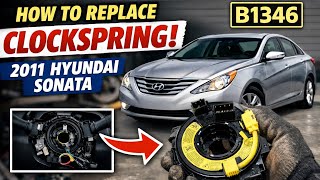
- B1346 — On Hyundai vehicles, B1346 ('Driver Airbag Resistance Too High') is often a companion code to a B1030-related clock spring failure. Both point towards a fault in the circuit connecting the steering wheel airbag to the SRS module.
Climate & Environmental Factors
- High Humidity / Moisture: Moisture is a primary catalyst for corrosion on electrical connectors, pins, and wires. This corrosion increases resistance, causing intermittent signals, open circuits, or short circuits that directly trigger codes like B1030. This is common in coastal regions or areas with high rainfall.
- Cold Weather: Extremely cold temperatures make wire insulation and plastic connectors brittle, increasing the likelihood of them cracking or breaking, especially in high-movement areas like door harnesses or seat tracks. Failures of heated components, like seat warmers, are also more likely to be noticed and reported during cold weather.
How to Talk to a Mechanic About This Code
Say this: "I have a B1030 code. For my [car's make and model], I believe this points to an issue with the [specific part, e.g., driver's seat heater circuit or airbag sensor]. I'd like to schedule a diagnostic to confirm the fault in that circuit."
This signals you have done your research and are not just a random customer with a warning light. It focuses the technician's efforts, requests a specific diagnostic test rather than a vague 'fix it', and prevents them from starting from scratch, which saves you money on diagnostic time.
Avoid saying:
- 'My airbag light is on, can you look at it?' (This is too vague and invites a wide-ranging, expensive diagnosis).
- 'Just fix whatever is wrong.' (This gives the shop a blank check to perform any repair they see fit).
- 'Do whatever you think is best.' (This relinquishes your control over the repair process and cost).
Questions to ask before authorizing the repair:
- Can you confirm the fault is a broken wire, a faulty component, or a bad module?
- If it's a wiring issue, is the repair to the harness or are you replacing the whole harness?
- Will you provide a written estimate with a full breakdown of parts and labor before you begin the work?
- What is the warranty on the parts and the labor for this specific repair?
- For an airbag code after a collision (especially on a Nissan), have you confirmed that the module simply needs a reset rather than a full replacement?
Where to Take It: Dealer vs Independent vs Chain
- Dealer:
Recommended for warranty/TSB issues (e.g., Hyundai clock spring, Mazda seat controller) or if an independent shop cannot program a required module. Otherwise, it's a costly option.
Best for: Vehicles under warranty., Repairs covered by a Technical Service Bulletin (TSB) or recall., Complex airbag system diagnostics and module programming that require manufacturer-specific tools.
Downsides: Highest labor rates, often 1.5x to 2x more than independent shops., May default to replacing an entire assembly when a smaller component or wiring repair would suffice. (Typical cost: +50% vs. baseline) - Independent Shop:
Best choice for most out-of-warranty B1030 repairs, provided you choose a well-regarded shop that specializes in electrical diagnostics.
Best for: Out-of-warranty vehicles where cost is a concern., Diagnosing and repairing common electrical faults like broken wires, faulty sensors, or bad connectors., Building a long-term relationship with a trusted mechanic.
Downsides: Quality and expertise vary greatly; you must find a shop with strong electrical diagnostic skills and positive reviews., May not have the expensive, proprietary tools needed for some brand-specific module programming. (Typical cost: +0% vs. baseline) - Chain Shop:
AVOID for diagnosing a B1030 code. The risk of misdiagnosis (e.g., replacing an expensive module for a simple wiring fault) is very high. They are not equipped for nuanced electrical troubleshooting.
Best for: Simple, high-volume jobs like oil changes, tires, and brakes.
Downsides: Technician skill for complex electrical diagnosis is highly variable., Business model often encourages upselling, leading to a higher risk of replacing unnecessary parts. (Typical cost: -10% vs. baseline)
When to Walk Away From the Repair
If the estimated repair cost exceeds 40-50% of your car's current private-party value, you should seriously consider not fixing it.
- Car worth $10000, fix is $700: Fix it. The repair cost is well below the threshold and restores a key safety or comfort feature.
- Car worth $4000, fix is $1800: Walk away. The repair cost is 45% of the car's value. It's very likely not a sound financial decision.
- Car worth $2500, fix is $1500: Walk away, unless the repair is absolutely critical for safety and you cannot afford a replacement vehicle. This repair represents 60% of the car's value.
What Scan Tool You Need for This Code
Minimum: A scanner that can read and clear manufacturer-specific Body ('B'), SRS/Airbag, and ABS codes. A basic engine-only ('P' code) reader is useless for B1030.
A $20 code reader will not see or be able to clear a B1030 code. It will report 'No Codes Found,' leading you to believe there is no issue, even with a warning light on. You need a tool that can communicate with the Body Control Module (BCM) and/or the Supplemental Restraint System (SRS) module.
Budget: BlueDriver Pro Scan Tool (~$99) — Connects to a smartphone app and can read/clear enhanced codes like ABS, SRS/Airbag, and BCM for most major makes (Ford, GM, Toyota, etc.). It also provides live data, which is useful for seeing sensor inputs in real-time.
Mid-range: Autel MaxiDiag MD808 Pro / Launch CRP123X (~$250-350) — These are powerful handheld units that offer comprehensive system access (Engine, Transmission, ABS, Airbag) for a wide range of vehicles. They provide robust live data, code definitions, and can perform some service resets, making them excellent for serious DIYers.
Professional: Autel MaxiCOM MK808 / MK906BT (~$500-1200) — Offers professional-level diagnostics, including bidirectional control to command components to turn on/off, which is extremely useful for testing circuits without having to physically access them. Provides full OEM-level functions for most vehicles.
Rent vs buy: AutoZone's 'Loan-A-Tool' program allows you to leave a deposit to borrow a scanner, which is refunded upon return. If this is a one-time fix, renting is the most cost-effective option. If you plan to do your own diagnostics regularly, buying a tool like the BlueDriver offers excellent long-term value.
How to Clear the Code After You Fix It
- Fix the underlying mechanical or electrical fault.
- Use an OBD-II scan tool capable of reading BCM/SRS codes to clear the fault memory.
- Cycle the ignition off and then on, and re-scan to ensure the code does not return immediately.
Drive cycle (~15 minutes): For most B1030 faults, a complex drive cycle is not required. After clearing the code, start the vehicle and operate the specific accessory (e.g., turn on the heated seat, run the A/C) to confirm the repair. For SRS codes, the light should stay off after clearing if the fault is fixed. A short 10-15 minute drive with mixed city/highway conditions is sufficient to confirm the fix.
Readiness monitors affected: Not applicable for most B1030 faults.
Watch out for:
- Disconnecting the battery will not clear 'hard codes' from an Airbag (SRS) module, especially after a crash.
- The code returns immediately if the root cause, such as a broken wire or faulty sensor, has not been properly repaired.
- Using a basic OBD-II scanner that only reads Powertrain ('P') codes will not see or clear Body ('B') codes.
Will This Fail Emissions / State Inspection?
No — by itself this code doesn't fail OBD inspection (but it can keep readiness monitors from setting, which causes a separate fail).
- California: A B1030 code itself will not fail the smog check, but if the airbag warning light is on, it fails a separate safety inspection, although California does not have a mandatory periodic safety inspection program for most private vehicles.
- New York: An illuminated airbag warning light is a failure item during the annual safety inspection. The vehicle will not pass until the SRS fault is repaired and the light is off.
- Texas: An illuminated airbag warning light is NOT a failure item on the standard Texas vehicle safety inspection. The vehicle will pass with the light on.
Most Commonly Affected Vehicles
- Mazda 3, CX-30 (2019-2023) — Prone to B1030:13 (Open Circuit) due to faulty seat warmer control units or heating elements. TSBs SA-009-21 and 09-012-23b address these known issues. 2019 models often need a new control unit (Part No. BCKA-67-5J0B).
- Dodge / Chrysler / Jeep Various (Ram 1500, Grand Cherokee, Town & Country) (2004-Present) — Commonly sets B1030 with a suffix, like B1030-11 (Evaporator Temp Sensor Circuit Short to Ground) or B1030-12 (XM Radio Communication Fault / Short to Battery).
- Nissan Armada, Titan, various (2003-2015) — This code often appears as 'DIAGNOSIS SENSOR UNIT' in the airbag module after an accident, requiring a module reset, not replacement.
- Honda Civic, CR-V, Accord (2007-Present) — On many Honda models, B1030 indicates an 'Ultrasonic system malfunction,' pointing to a fault with the security system's interior motion sensor or its circuit.
- Ford Focus, Mondeo, Kuga (2011-Present) — Indicates a fault with the 'Circuit prise accessoire zone de chargement' (Cargo area accessory power socket circuit), often due to a blown fuse or wiring issue.
- Hyundai Tucson, Elantra, Sonata (2011-Present) — Frequently associated with faults in the SRS system, such as a failing clock spring, which has an extended warranty on some models. Symptoms include the airbag light and non-functional steering wheel buttons.
- Fiat Various (2012-Present) — Highly specific, such as B1030-19 'Front Ceiling Light-Circuit Current Above Threshold,' pointing directly to a short circuit in the overhead console or map light.
- GMC / Chevrolet Sierra, Silverado, various (2007-Present) — On some GM vehicles, B1030 indicates a fault in the driver's front speaker circuit, leading to loss of audio from that channel.
Manufacturer-Specific Notes
- Mazda: For 2019-2023 models with B1030:13, check TSBs. TSB SA-009/21 points to a faulty control unit (Part No. BCKA-67-5J0B) if the seat warmer turns off after 10 minutes. TSB 09-012-23b points to a logic issue requiring heating element replacement. These repairs may be covered under warranty.
- Chrysler / Dodge / Jeep: The two-digit suffix code is critical for diagnosis. It tells the technician exactly what kind of electrical fault to look for (e.g., -11 for short to ground, -12 for short to power, -15 for open circuit), saving significant diagnostic time.
- Nissan: On many models, this code gets stored in the airbag module after a collision and does not mean the module is broken. It simply contains crash data and needs to be reset by a specialist for around $50, which is much cheaper than replacement.
- Hyundai: A failing clock spring is a very common cause for airbag-related B1030 codes. Due to high failure rates, Hyundai offered an extended warranty (e.g., Campaign TXXC) on this part for many models. Always check with a dealer for warranty coverage before paying for a repair.
Real Owner Stories
2019 Mazda3 with 45K miles
Driver's heated seat would turn on, but then shut itself off after about 10 minutes and could not be turned back on until the car was restarted.
What they tried:
- Owner tried un-linking the heated seats from the automatic climate control in the vehicle settings, but this had no effect.
Outcome: A forum user identified the symptoms as matching Mazda TSB SA-009-21, which points to a faulty seat warmer control unit. The owner took it to the dealer, who replaced the control unit (Part No. BCKA-67-5J0B) under warranty, resolving the issue.
Lesson: For specific, repeatable symptoms on newer cars, always search for Technical Service Bulletins (TSBs). A known issue like this saves hours of diagnosis and is often a warranty-covered repair.
2012 Nissan Titan after minor accident
Airbag light was on after a minor front-end collision where airbags did not deploy. A scanner showed code B1030 'DIAGNOSIS SENSOR UNIT'.
What they tried:
- A local mechanic quoted over $800 to replace the main SRS Airbag Control Module, stating it was 'fried' from the accident.
Outcome: Owner found an online mail-in service that specializes in airbag module resets. They removed the module, shipped it to the service, and paid about $50. The service cleared the stored 'crash data' and sent it back. After reinstalling the original module, the B1030 code was gone and the airbag light stayed off.
Lesson: On many Nissan, Infiniti, and other models, B1030 after an accident means the module has stored crash data and is locked. It does not need replacement, only a professional reset, saving hundreds of dollars.
2012 Dodge Ram 1500 with 110K miles
A/C stopped blowing cold air. A scan tool revealed code B1030-12, 'Evaporator Temperature Sensor - Circuit Short to Battery'.
What they tried:
- The owner replaced the A/C clutch, the pressure transducer, the evaporator temperature sensor itself, and the entire HVAC control module, but the code and problem persisted.
Outcome: The owner was advised on a forum to stop replacing parts and test the circuit directly. The underlying issue was likely a wiring short between the sensor and the control module, which requires tracing the specific wire to find the damage.
Lesson: When a code indicates a 'circuit fault' (short or open), do not immediately replace the component. The fault is often in the wiring *between* the sensor and the module. Test for voltage, ground, and resistance at the connector first to avoid wasting money on unneeded parts.
How to Prevent This Code From Triggering
- Apply Dielectric Grease to Connector Seals (During any repair involving an electrical connector) — Dielectric grease is non-conductive and waterproofs the connector seals, preventing moisture and oxygen from reaching the metal pins. This stops corrosion before it starts, which is a primary cause of circuit faults.
- Secure and Protect Wiring Harnesses (Once, or when working near wiring) — Use zip ties or loom to secure loose wiring away from sharp metal edges, exhaust heat, and moving parts like seat tracks. This prevents chafing and broken wires, a very common cause of intermittent shorts and opens.
- Address Water Leaks Immediately (As needed) — Fix leaky window seals, sunroof drains, or windshield seals promptly. Water intrusion is a leading cause of electrical failure, as it corrodes connectors and short-circuits expensive control modules.
- Perform Regular Battery Maintenance (Every 6 months) — Keep battery terminals clean and tight. Low or unstable voltage from a failing battery causes random, incorrect error codes to be stored in various electronic modules during startup.
Frequently Asked Questions
What does OBD-II code B1030 mean?
It is a general trouble code for the 'Body' of the car, but its specific meaning depends entirely on your vehicle's manufacturer. It indicates a heated seat on a Mazda, an A/C sensor on a Dodge, or an airbag part on a Nissan. You must research the definition for your specific car.
Is it safe to drive with code B1030?
The car is safe to drive if the fault is a comfort feature like a heated seat. However, if your airbag warning light is on, your airbags will not deploy in an accident. You must get the SRS system professionally inspected immediately.
How much does it cost to fix code B1030?
Costs range from $120 for a simple wiring repair to over $1,500 for an airbag control module replacement at a dealership. A common Mazda seat warmer control unit repair costs around $450, while a Nissan airbag module reset is often under $150.
My B1030 code is for the airbag. Can I just reset it?
It depends on the cause. If the code appeared after an accident and indicates 'DIAGNOSIS SENSOR UNIT', a professional service can reset the stored crash data. If the code indicates an internal module failure or a sensor circuit fault, resetting the code will not fix the problem, and the light will return.
What are common misdiagnosis mistakes for code B1030?
The most common mistake is replacing an expensive control module when the actual problem is a simple broken wire or corroded connector. Another frequent error is replacing an entire airbag control module after a collision when it only needs its stored crash data reset.
Can a weak car battery cause the B1030 code?
Yes. A low or unstable battery causes electronic modules to report errors when the car starts up. Test an old battery before starting complex electrical diagnosis.
Can I fix code B1030 myself?
Simple fixes like replacing a blown fuse or repairing a visibly damaged wire are DIY-friendly. Most causes require vehicle-specific knowledge and tools like a multimeter and wiring diagrams. Leave anything involving the airbag system to a professional due to the severe safety risks of accidental deployment.
What does the suffix on a B1030 code mean, like B1030-13?
The suffix specifies the exact type of electrical fault. For example, ':13' on a Mazda means 'Open Circuit', while '-11' on a Dodge means 'Circuit Short to Ground'. This detail is extremely helpful for accurate diagnosis.
Key Takeaways
- Code B1030 is a manufacturer-specific body fault code, meaning a Mazda B1030 indicates a heated seat failure while a Nissan B1030 signals an airbag system fault.
- Always read the 2-digit suffix attached to the B1030 code (e.g., B1030-11) to pinpoint the exact electrical fault type, such as a short to ground or an open circuit.
- Stop driving immediately if code B1030 triggers your airbag warning light, as this disables the Supplemental Restraint System (SRS) and prevents airbags from deploying in a crash.
- Fix costs range from $50 for a mail-in airbag module reset to over $1,500 for a dealership control module replacement, making accurate diagnosis critical.
Helpful Videos
Shop the Parts Behind B1030
Below are the parts most often responsible for code B1030, ranked by how frequently each one is the actual culprit (per the diagnosis above). Tap any to see what we have for your vehicle.



The information in this article is provided for general reference and educational purposes only. Vehicle specifications, procedures, and part compatibility can vary by production date, trim level, and region. Always consult your vehicle's factory service manual and verify part numbers before purchasing or performing repairs. Safety-critical components such as airbags, seat belts, and braking systems should be installed by a qualified professional.
- 🧭 Diagnostic Flowchart
- 🎬 Helpful Videos
- 🛍️ Shop This Part
- What Does B1030 Mean?
- Can I Drive With B1030?
- Common Causes
- Symptoms
- Common Fixes & Costs
- DIY vs Professional
- Used vs. New Parts: Buying Guide
- What Happens If You Wait — Timeline
- Cost of Not Fixing It
- Diagnosis Steps
- When This Code Triggers (Freeze-Frame Conditions)
- Related Codes
- Climate & Environmental Factors
- How to Talk to a Mechanic About This Code
- Where to Take It: Dealer vs Independent vs Chain
- When to Walk Away From the Repair
- What Scan Tool You Need for This Code
- How to Clear the Code After You Fix It
- Will This Fail Emissions / State Inspection?
- Most Commonly Affected Vehicles
- Manufacturer-Specific Notes
- Real Owner Stories
- 2019 Mazda3 with 45K miles
- 2012 Nissan Titan after minor accident
- 2012 Dodge Ram 1500 with 110K miles
- How to Prevent This Code From Triggering
- Frequently Asked Questions
- What does OBD-II code B1030 mean?
- Is it safe to drive with code B1030?
- How much does it cost to fix code B1030?
- My B1030 code is for the airbag. Can I just reset it?
- What are common misdiagnosis mistakes for code B1030?
- Can a weak car battery cause the B1030 code?
- Can I fix code B1030 myself?
- What does the suffix on a B1030 code mean, like B1030-13?
- Key Takeaways
- 🎟️ Get 5% Off