

The Ultimate Guide to OBD-II Code B1034: A Deep Dive for DIY and Pro Mechanics
Why B1034 has dozens of meanings, how to diagnose it like a pro, and how to perform the exact fix for your vehicle.
- Code B1034 has no universal definition; it means a broken heated seat on a 2015-2020 Ford F-150, but signals a disabled airbag system on a Chevy Silverado.
- If the airbag light is on, the entire Supplemental Restraint System is disabled and will not deploy in a crash, requiring immediate repair.
- Always disconnect the negative battery terminal and wait 30 minutes before touching yellow SRS connectors to prevent accidental airbag deployment.
- You must use an advanced OBD-II scanner capable of reading Body (BCM) or SRS codes; a standard $20 engine code reader cannot see or clear B1034.
- Measure component resistance to confirm failures: a good GM pretensioner reads 2-3 Ohms, while a broken Ford heated seat element reads 'OL' or over 10,000 Ohms.
What Does B1034 Mean?
B1034 is a manufacturer-specific Body Control Module (BCM) or Supplemental Restraint System (SRS) code. For a Ford owner, it almost always signals a broken driver's heated seat element. For a GM, Nissan, or BMW owner, it indicates a critical fault in the airbag system, such as an open circuit in a seatbelt pretensioner or a failed crash sensor. You must confirm the code's specific meaning for your vehicle's make, model, and year before diagnosing.
Technical definition: The official SAE/ISO definition for B1034 varies by manufacturer. Common definitions include Ford's 'Left Front Seat Heater Element Circuit Short to Battery or Open' (:15), GM's 'Driver Seatbelt Pretensioner Circuit Open', Nissan's 'Crash Zone Sensor' fault, and BMW's 'Airbag Control Module Internal Fault'.
Can I Drive With B1034?
Yes, But With Caution. This is a critical question with two very different answers. If B1034 indicates a fault in your airbag system (common for GM, Nissan, BMW), the answer is NO. The entire Supplemental Restraint System (SRS) is disabled, meaning no airbags or seatbelt pretensioners will deploy in a crash. If the code relates to a comfort feature like a heated seat (the most common meaning for Ford), the answer is YES. The vehicle is mechanically safe to drive.
Common Causes
- Damaged or loose wiring under the driver's seat. (Very Common) — Constant seat movement chafes, pinches, or unplugs wiring harnesses. For SRS issues, look for the bright yellow connectors. For heated seats, check all connectors leading into the seat base.
- Failed driver's seat heater element. (Common) — On many Ford, Lincoln, and Mercury vehicles, the heating element grid inside the seat cushion breaks from physical stress. This creates an open circuit, disabling the heated seat and triggering code B1034:15. 🎬 Watch: See how these Ford heating elements fail and burn.
- Failed driver's seatbelt pretensioner. (Common) — The pretensioner is a pyrotechnic device that tightens the seatbelt during a crash. Its internal wiring fails over time, creating an open circuit that illuminates the airbag light. This is a primary cause on GM vehicles.
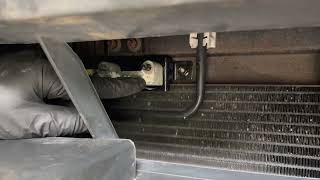
- Corroded front crash sensor. (Common) — On GM and Nissan vehicles, sensors located on the radiator support are exposed to the elements. Moisture and road salt cause internal corrosion, cracking the sensor's plastic housing and destroying the circuit.
- Melted connector at the Seat Control Module (SCME). (Less Common) — On Ford models with heated and cooled seats, the SCME is located under the passenger seat. The power and ground pins on the main connector overheat and melt, causing an open circuit.
- Broken wires in the driver's door jamb. (Less Common) — On some GM models, the wiring for the side impact sensor runs through the flexible rubber boot between the door and the A-pillar. Repeated opening and closing causes these wires to fatigue and break.
- Low vehicle battery voltage. (Rare) — On sensitive European vehicles like BMW, a weak battery causes voltage drops during startup. This corrupts the SRS control module's memory, setting a persistent internal fault code (like 9034).
- Faulty Airbag Control Module (SRS Module). (Rare) — The SRS module itself fails due to internal hardware faults or stores permanent 'crash data' after an accident that prevents the airbag light from being cleared.
Symptoms
- Airbag warning light is on (often with a 'Service Airbag' message). — This is the most common symptom for any SRS-related fault. When this light is on, the entire airbag system is inactive.
- Driver's heated seat fails to heat or shuts off after a few seconds. — On Ford vehicles, the switch lights up briefly or not at all, but no heat is produced. The system detects a fault and shuts down the function.
- Seatbelt is locked or does not retract. — If the B1034 code is related to a deployed or failed seatbelt pretensioner, the seatbelt mechanism physically locks and becomes unusable.
Diagnostic Flowchart
Tap your situation to follow the diagnostic path that matches what you're seeing on this code.
Common Fixes & Costs
- Repairing Under-Seat or Door Jamb Wiring — Parts: $10-$25, Labor: $125-$250, ~1.5 hr book time (Intermediate)
- Replacing the Driver's Seat Heater Element
— Parts: $60-$150, Labor: $250-$450, ~2.5 hr book time
(Professional)
Ford F-150 (2015-2020): OEM FL3Z-14D696-D (Alt: Dorman 641-401) - Replacing the Driver's Seatbelt Pretensioner/Buckle
— Parts: $150-$350, Labor: $150-$300, ~1.2 hr book time
(Intermediate)
Chevy/GMC Silverado/Sierra (2007-2013): OEM 19260208 (Cashmere), 84583994 (Jet Black) (Alt: ACDelco) - Replacing a Front Crash Sensor
— Parts: $60-$180, Labor: $100-$200, ~0.8 hr book time
(DIY)
Nissan Frontier/Xterra/Pathfinder (2005-2009): OEM 98581-ZL10B (Alt: Bosch, Standard Motor Products (SMP)) - Resetting the SRS Airbag Control Module — Parts: $50-$100 (mail-in service), Labor: $100-$200, ~1 hr book time (DIY)
- Replacing the SRS Airbag Control Module — Parts: $200-$800, Labor: $150-$300, ~1.5 hr book time (Professional)
Used vs. New Parts: Buying Guide
When a used part is worth it: Used parts make the most sense for control modules (SRS, BCM) from reputable sellers who guarantee the part is free of crash data.
Donor-vehicle mileage cap: roughly under 100000 miles for the part to have meaningful remaining life.
Donor quality checklist:
- Verify the used SRS module has no stored crash data and matches your part number exactly.
- For crash sensors, avoid parts from vehicles in rust-belt states due to the high risk of corrosion.
- NEVER buy a used seatbelt pretensioner or airbag. These are single-use pyrotechnic devices and it is extremely unsafe.
Decision logic:
- If The part is a seatbelt pretensioner, airbag, or seat heater element → Always buy new OEM or a quality aftermarket replacement. The safety risk or hassle of a used part is not worth the savings.
- If The part is an SRS Control Module and a new one is over $800 → A used module from a guaranteed source or a reset service for your original module are cost-effective, viable options.
- If The part is a crash sensor and the vehicle is older → A used sensor from a low-mileage, non-corroded donor is acceptable, but a new aftermarket part is often inexpensive and provides more peace of mind.
Warranty tradeoff: Used parts typically have a 30-90 day warranty. Aftermarket new parts often carry a 1-year to limited lifetime warranty. OEM new parts carry a 12-month/12,000-mile warranty.
Worst-case if a used part fails: $300-800 if a used electronic module is faulty or has hidden crash data, requiring repeat labor for removal, re-installation, and programming.
What Happens If You Wait — Timeline
- Immediate (SRS Fault): Airbag warning light illuminates. The entire SRS system, including all airbags and seatbelt pretensioners, is disabled by the control module as a fail-safe. (MPG impact: 0%% · Added cost: $0 (but incalculable safety risk))
- 1-6 Months (SRS Fault): The vehicle automatically fails any state safety inspection. The root cause, such as a corroding sensor, continues to degrade from exposure to moisture and road salt. (MPG impact: 0%% · Added cost: $100-$200 (in failed inspection fees and re-tests))
- 6-18+ Months (SRS Fault): Corrosion from a failed sensor wicks up the wiring harness, damaging the connector pins or even the circuit board of the much more expensive SRS control module. (MPG impact: 0%% · Added cost: $500 - $1,500 (if the SRS module is damaged by the initial fault and requires replacement))
- Immediate (Heated Seat Fault): The heated seat function is lost. If the cause is an open circuit in the element, there are no further consequences. (MPG impact: 0%% · Added cost: $0)
- 1-3 Months (Heated Seat Short Circuit): If the fault is a short circuit, high current causes the power/ground pin on the control module (e.g., Ford SCME) to overheat, melting the plastic connector housing. (MPG impact: 0%% · Added cost: $50-$150 (for a new wiring pigtail and potential damage to the module pin))
Cost of Not Fixing It
- Immediate (SRS Fault): Complete deactivation of the entire Supplemental Restraint System. Airbags and seatbelt pretensioners will NOT deploy in a crash, dramatically increasing the risk of serious injury or death. (Added cost: Incalculable (Safety Risk))
- Immediate (Heated Seat Fault): Loss of heated seat function. In rare cases of a short circuit, there is a low risk of damage to the seat control module or melted wiring. (Added cost: $0 - $500 (if module is damaged))
- 1-6+ Months (SRS Fault): The initial fault (e.g., a corroded crash sensor) worsens, allowing moisture to travel up the wiring harness and potentially damage the much more expensive SRS control module. The vehicle fails state safety inspections. (Added cost: $500 - $1500 (for subsequent module replacement))
Diagnosis Steps
- Confirm the Code's Specific Definition
Use a search engine with your car's year, make, model, and 'B1034' to find its exact meaning. A B1034 on a Ford F-150 (heated seat) and a Chevy Silverado (airbag) require completely different diagnostic paths.
Tools: OBD-II Scanner (capable of reading Body/SRS codes) (Beginner) - Visual Inspection Under Driver's Seat
Carefully inspect the entire wiring harness under the driver's seat. Look for unplugged connectors, pinched wires, and signs of corrosion. Pay special attention to the large, yellow SRS connectors.
Tools: Flashlight (Beginner) - Check SRS Connectors (Safety Warning)
CRITICAL: Disconnect the negative battery terminal and wait 30 minutes before handling any yellow SRS connectors to allow backup capacitors to discharge. Disconnect and reconnect the main under-seat connectors to ensure they are fully seated.
Tools: 10mm socket/wrench (Intermediate) - Inspect Front Crash Sensor(s)
For GM or Nissan vehicles, locate the front crash sensors on the radiator core support. Look for physical damage, swelling of the plastic housing, or green/white corrosion on the sensor and its connector.
Tools: Flashlight, basic hand tools (Intermediate) - Perform a 'Wiggle Test'
With the ignition on and a scan tool displaying live SRS/BCM data, gently wiggle the connectors and wiring harness under the seat. If the fault status changes from 'Present' to 'History', you have pinpointed a poor connection.
Tools: Advanced Bi-Directional Scan Tool (Intermediate) - Measure Component Resistance
With the battery disconnected and the component unplugged, use a multimeter to check resistance. A Ford heated seat element should read under 5 ohms; 'OL' means it is broken. A GM seatbelt pretensioner must read exactly between 2-3 Ohms.
Tools: Digital Multimeter (Advanced) - Check for Broken Wires in Door Jamb
For GM side impact sensor codes, peel back the rubber boot between the driver's door and the body. Gently pull on each wire individually. A broken wire stretches or pulls out completely.
Tools: Flashlight, trim removal tool (Intermediate) - Analyze Live Data
Monitor live data PIDs for seat heater temperature or SRS component resistance values. For SRS faults, monitor the resistance PID for the suspect component (e.g., 'PSM_DRV_PRETEN_RES') which must remain stable.
Tools: Advanced Bi-Directional Scan Tool (Professional) - Verify Sensor Voltage
For sensor-related codes, back-probe the sensor connector with a multimeter. You should see a 5V reference voltage on one pin. A complete lack of voltage points to a wiring issue or a faulty control module.
Tools: Digital Multimeter, Back-probe kit (Advanced)
When This Code Triggers (Freeze-Frame Conditions)
- System Self-Test Trigger: Key-On, Engine-Off (KOEO) (The SRS module performs a self-check of all components every time the ignition is turned on. A fault registers within 5-10 seconds if a problem is detected.)
- Battery Voltage: 11.8V - 14.8V (The SRS module monitors system voltage. A code sets if voltage is too low (weak battery) or too high (alternator issue) during the initial self-test.)
- Component Resistance (SRS): 2.0 - 3.5 Ohms (The module constantly monitors the resistance of pyrotechnic circuits. If the resistance goes too high (open circuit) or too low (short circuit), a code sets instantly.)
- User Input (Heated Seat): Heated Seat Button Pressed (For heated seat faults, the code sets when the driver presses the heated seat button and the module detects an open or short in the element circuit.)
Related Codes
- B1035 — Often a companion code. On Nissan, B1034 and B1035 are both general 'Crash Zone Sensor' faults. On Mitsubishi, B1034 indicates a short circuit in the ambient temp sensor, while B1035 indicates an open circuit.
- B1036 / B1038 — Ford-specific heated seat codes. B1034 is for the driver's heater element, B1036 is for the passenger's heater element, and B1038 is for the driver's seat heater temperature sensor.
- B0091 / B0100 — Common GM codes for front impact sensor failures. They are more specific than a SAE-standardized code and often appear instead of B1034, but point to the exact same SRS fault.
- B14BA / B14B9 — On newer Fords with heated/cooled seats, these codes specify an open circuit in the Driver Seat Back TED (B14BA) or Cushion TED (B14B9), often caused by a poor pin connection.
Climate & Environmental Factors
- Road Salt and Humidity: This is a primary contributor to B1034 failures on GM and Nissan trucks. Road salt spray penetrates the front crash sensor, causing internal corrosion that destroys the sensor. Nissan issued TSB NTB09-001 specifically for vehicles in 'Salt States'.
- Cold Weather: Cold temperatures increase physical stress on heated seat elements. The repeated cycle of heating and cooling in freezing weather accelerates the fatigue and breakage of delicate heating grid wires.
How to Talk to a Mechanic About This Code
Say this: "I have a [Your Year, Make, Model] with an airbag light on, and my scanner shows code B1034. I need to schedule a diagnostic to confirm if this is a wiring issue, a bad sensor, or the pretensioner. Do you have a scan tool that can read manufacturer-specific SRS codes?"
This signals you are informed and have done basic research. It focuses the technician on the correct system (SRS), states the specific code, and confirms the shop is properly equipped, saving diagnostic time and preventing them from starting with a basic engine code scan.
Avoid saying:
- 'My airbag light is on, can you just reset it?'
- 'I have a B1034 code, just replace the part.'
- 'Just fix whatever is wrong with the airbag system.'
Questions to ask before authorizing the repair:
- What was the specific resistance reading of the component you tested? (e.g., the pretensioner or heated seat element)
- Did you find a broken wire or a failed part? Can you show me the damaged part?
- Is the recommended repair a new component, or can the wiring be repaired?
- What is the warranty on the parts and labor for this specific repair?
Where to Take It: Dealer vs Independent vs Chain
- Dealer:
Recommended for warranty work or complex, brand-specific electronic faults that independent shops may struggle with.
Best for: Vehicles under warranty (e.g., Ford heated seat)., Complex electronic issues or manufacturer-specific quirks (e.g., BMW module fault from low voltage)., Repairs covered by a recall or Technical Service Bulletin (TSB).
Downsides: Highest labor rates., May default to replacing an entire assembly when a smaller component or wiring repair would suffice. (Typical cost: +50% vs. baseline) - Independent Shop:
Best overall fit for most out-of-warranty B1034 repairs, offering a balance of expertise and value. Ensure the shop is comfortable and equipped for SRS diagnostics.
Best for: Most common, out-of-warranty B1034 fixes (e.g., GM pretensioner, Ford heated seat, Nissan sensor)., Vehicles where cost is a primary concern.
Downsides: Shop must have an advanced scanner capable of reading SRS/BCM codes., Quality and experience can vary; look for ASE certification and good reviews. (Typical cost: +0% vs. baseline) - Chain Shop:
AVOID for initial diagnosis or any repair involving pyrotechnic devices like pretensioners. The safety risks of an improper SRS repair are too high.
Best for: Simple part replacement where the diagnosis is already 100% certain (e.g., replacing a front crash sensor you've already identified as bad).
Downsides: Technician skill varies dramatically., Generally not equipped or trained for in-depth SRS diagnostics., High risk of incorrect diagnosis or improper handling of safety-critical components. (Typical cost: -10% vs. baseline)
When to Walk Away From the Repair
If the estimated repair cost for an SRS-related B1034 fault exceeds 40-50% of the car's private-party value, and the car has other pending issues, you should seriously consider selling it as-is or trading it in.
- Car worth $3500, fix is $1500: Walk away. The repair cost is nearly half the vehicle's value. Sell as a 'mechanic's special' with full disclosure of the airbag issue.
- Car worth $20000, fix is $800: Fix it. The repair cost is a small fraction of the vehicle's value and is critical for safety and resale.
- Car worth $8000, fix is $450: Fix it. This applies to most heated seat repairs, which are relatively inexpensive and do not impact the vehicle's safety or drivability.
What Scan Tool You Need for This Code
Minimum: A scanner that can read and clear codes from the Supplemental Restraint System (SRS) and Body Control Module (BCM).
A standard $20 engine code reader will NOT see B1034. It only communicates with the Powertrain Control Module. You will see 'No Codes Found' even with the airbag light on. Loaner tools from auto parts stores often have this same limitation.
Budget: Autel MaxiCheck ML629 (~$90) — The absolute minimum for this job. It reads and clears codes from the Engine, Transmission, ABS, and SRS modules, which is exactly what's needed to see and erase a B1034 fault.
Mid-range: BlueDriver Pro / Foxwell NT510 Elite (~$100-180) — These tools offer full-system scanning (SRS, BCM, etc.) plus live data graphing. This allows you to perform a 'wiggle test' by watching the resistance value of a sensor in real-time as you move wires. The Foxwell NT510 Elite also offers some bi-directional controls.
Professional: Autel MaxiCOM MK808 / MK808S (~$450-600) — Provides full bi-directional control, allowing you to command components directly to test function. It accesses all vehicle modules, displays live data in text and graph form, and performs advanced service functions like module resets and programming.
Rent vs buy: Buy. The free loaner scanners at most auto parts stores typically cannot read SRS codes. Since a capable scanner is required for both reading and clearing the code after the repair, purchasing a budget or midrange tool is a worthwhile investment for any DIYer.
How to Clear the Code After You Fix It
- Ensure the underlying electrical or mechanical fault has been fully repaired.
- Reconnect the vehicle's battery if it was disconnected for the repair.
- Use an OBD-II scan tool with SRS/Body capabilities to access the specific module (SRS or BCM).
- Select the 'Clear Codes' or 'Erase Faults' function within the scanner's menu for that module.
Drive cycle (~5 minutes): A 'drive cycle' is not required for SRS codes. After clearing the code, turn the ignition off, then turn it back to the 'ON' position. The airbag light illuminates for its self-test (approx. 5-7 seconds) and then turns off. If it stays on, the fault was not properly repaired.
Readiness monitors affected: None. SRS and Body codes do not affect emissions readiness monitors.
Watch out for:
- Disconnecting the battery will NOT clear SRS hard codes; it is a required safety step for repair, not a reset procedure.
- Using a basic engine code reader that cannot access the SRS or BCM modules.
- Failing to clear the code with a scanner after the repair is complete; the airbag light remains on until manually cleared.
Will This Fail Emissions / State Inspection?
Yes — this code typically fails an OBD-II emissions inspection.
- General: An illuminated airbag light will NOT cause a vehicle to fail an emissions-only test (smog check). However, it causes an automatic failure in states that require a comprehensive safety inspection.
- California: An airbag light will not fail the state's smog check, which is only concerned with emissions. There is no separate state-mandated safety inspection.
- New York: An illuminated airbag warning light is grounds for immediate safety inspection failure.
- Texas: An active airbag light is an automatic inspection failure.
Most Commonly Affected Vehicles
- Ford F-150 (2015-2020) — Extremely common for failed driver's seat heater elements, triggering B1034:15. Higher trims (Lariat+) use a Seat Control Module (SCME) under the passenger seat, which is a known failure point for melted connectors.
- Ford Explorer (2016-2019) — Commonly experiences broken heater element grids in the driver's seat. Also subject to SSM 47814 for buzzing seats caused by a poor pin fit in the Driver Seat Module connector.
- Chevrolet / GMC Silverado, Sierra, Tahoe, Suburban (2007-2014) — Often suffer from corroded front impact sensors or wiring issues under the seat for the pretensioner circuit. For 2007-2012 models, check for broken wires in the driver's door jamb.
- Nissan Frontier, Xterra, Pathfinder (2005-2009) — Subject to TSB NTB09-001 for front crash zone sensors that fail due to corrosion from road salt, triggering B1034 or B1035. The fix is a replacement sensor.
- Nissan Murano, Titan (2015-2020) — B1034 often means 'Crash Zone Sensor' and indicates crash data is stored in the SRS module from a past impact. The module must be reset or replaced.
- BMW 3-Series (E90), 5-Series (E60) (2005-2015) — B1034 (or internal code 9034) points to a non-resettable internal memory fault in the airbag control module. This is frequently triggered by a weak battery causing low voltage during engine start.
- Volkswagen UP, Golf (2012-2020) — Experiences under-seat wiring damage that affects both the side airbag igniter and heated seat circuits, often due to items stored under the seat.
- Hyundai Sonata, Elantra (2011-2019) — On some Hyundai models, this code points to a fault with the ambient air temperature sensor circuit, which provides data to the automatic climate control system.
Manufacturer-Specific Notes
- Ford: B1034 almost always refers to the driver's side heated seat element, often with a suffix like :15. This is a comfort issue, not a safety one, and will never turn on the airbag light.
- General Motors (Chevy/GMC): The code points to an open circuit in the driver's seatbelt pretensioner or a faulty front impact sensor. This disables the SRS system and requires immediate attention.
- Nissan: B1034 is defined as 'Crash Zone Sensor.' This means either the sensor itself failed due to corrosion (common on older trucks) or the SRS module stored crash data after an impact and needs a reset.
- BMW: The code (often read as raw code 9034) indicates an internal fault within the Airbag Control Module itself. This is triggered by low battery voltage during engine cranking and requires module replacement or a specialized mail-in reset.
Real Owner Stories
2018 Ford F-150 XLT with 30K miles
Both driver and passenger heated seats stopped working, but the indicator lights on the dash still lit up as normal.
Outcome: Dealer scan revealed codes B1034:15 and B1036:15. Resistance tests showed both seat heater elements had failed with readings over 12,000 Ohms. The fix was to replace both seat heater elements under warranty.
Lesson: On a Ford, if the lights work but there's no heat, the heating element itself is the most likely failure. A multimeter test showing very high resistance (or 'OL') confirms a broken element, even on a low-mileage vehicle.
2015 Ford F-150 Lariat
Heated and cooled seats on both driver and passenger sides stopped working, accompanied by a smell of burning plastic.
Outcome: The owner replaced the SCME module and spliced in a new pigtail connector for the harness. This restored function to both seats. The total cost for the module and pigtail was around $150.
Lesson: For Ford trucks with heated AND cooled seats, the SCME connector under the passenger seat is a known weak point. Before testing elements, always visually inspect this connector for signs of melting or heat damage.
2006 Nissan Xterra
The red airbag warning light on the dashboard was blinking continuously. No other symptoms were present.
Outcome: The owner disconnected the battery for 30 minutes, removed the front grille, and replaced the corroded front crash sensor located on the radiator support. The new sensor came with new nuts, which were torqued to spec. After replacement, the airbag light reset on its own.
Lesson: On older Nissan trucks and SUVs, a blinking airbag light is very often the front crash sensor, which fails from corrosion. It's an accessible, DIY-friendly repair that saves hundreds over dealer costs, provided you disconnect the battery and torque the new nuts correctly.
2009 BMW E90 3-Series
Airbag light came on and stayed on after the vehicle's battery went dead and required a jump start.
Outcome: Instead of replacing the entire SRS module for over $800, the owner removed the module from under the center console and mailed it to an SRS module reset service for approximately $50. After reinstalling the reset module, the fault was gone.
Lesson: On many European cars, a low voltage event from a weak battery triggers a persistent internal fault in the airbag module. A mail-in reset service is a highly effective and budget-friendly first step before resorting to an expensive module replacement.
How to Prevent This Code From Triggering
- Avoid kneeling on seats or placing heavy, sharp objects on them. (Daily habit) — Concentrated pressure snaps the fine, brittle wires inside a heated seat element, creating an open circuit and causing it to fail.
- Keep the area under the front seats completely clear of objects. (Always) — Items like water bottles or umbrellas shift during driving, snagging on delicate wiring harnesses and connectors, causing intermittent or permanent open circuits.
- Apply an anti-corrosion spray (like Fluid Film) to front crash sensors. (Once per year (especially in Salt Belt states)) — This creates a protective barrier that prevents road salt and moisture from penetrating the sensor housing, which is the primary cause of failure for front crash sensors on Nissan and GM trucks.
- Use dielectric grease on under-seat and sensor electrical connectors. (During any related repair) — Dielectric grease seals out moisture and oxygen, preventing the pins and terminals from corroding, which ensures a solid electrical connection and prevents intermittent faults.
- Use a battery tender if the vehicle is stored for long periods. (During storage > 2 weeks) — Prevents low vehicle voltage, which corrupts the memory of sensitive control modules (especially on BMWs), leading to persistent internal fault codes.
Frequently Asked Questions
Can I reset the B1034 code by disconnecting the battery?
No. SRS (airbag) faults are stored as 'hard codes' in the module's memory. You must fix the underlying electrical problem and use a capable OBD-II scanner to clear the code. Disconnecting the battery will not clear it.
I fixed the broken wire under the seat, but the airbag light is still on. Why?
SRS faults latch in the module's memory for safety reasons. After completing the repair, you must manually erase the code from the SRS control module using a scanner. It will not go away on its own.
What is the difference between B1034 and B0091 on a GM vehicle?
They often point to the exact same problem. B0091 is a standardized SAE code for 'Front End Sensor 1', while B1034 is a manufacturer-specific code for the same circuit. Diagnosis for both involves inspecting the front impact sensor and its wiring.
Why is my airbag light on if the code is for a heated seat?
This indicates you have multiple codes stored across different modules. A B1034 code for a Ford heated seat will never illuminate the airbag light. You must scan the SRS module specifically to find the safety-related fault.
Can a bad clock spring cause a B1034 code?
Generally, no. A bad clock spring causes codes related to the driver's airbag squib circuit in the steering wheel. It does not trigger the seatbelt pretensioner or crash sensor codes associated with B1034.
My scanner can't find code B1034, but my airbag light is on. Why?
Basic code readers only access powertrain (P-codes) from the engine computer. You need an advanced scanner that communicates with the Body Control Module (BCM) or Supplemental Restraint System (SRS) to read B-codes.
A shop quoted me over $1000 to fix this. Is that reasonable?
Yes, depending on the root cause. While a simple wiring repair costs $150-$250, replacing an SRS control module or multiple crash sensors easily exceeds $1,000. Always request a detailed breakdown of the parts and labor before authorizing work.
Key Takeaways
- Code B1034 has no universal definition; it means a broken heated seat on a 2015-2020 Ford F-150, but signals a disabled airbag system on a Chevy Silverado.
- If the airbag light is on, the entire Supplemental Restraint System is disabled and will not deploy in a crash, requiring immediate repair.
- Always disconnect the negative battery terminal and wait 30 minutes before touching yellow SRS connectors to prevent accidental airbag deployment.
- You must use an advanced OBD-II scanner capable of reading Body (BCM) or SRS codes; a standard $20 engine code reader cannot see or clear B1034.
- Measure component resistance to confirm failures: a good GM pretensioner reads 2-3 Ohms, while a broken Ford heated seat element reads 'OL' or over 10,000 Ohms.
Helpful Videos
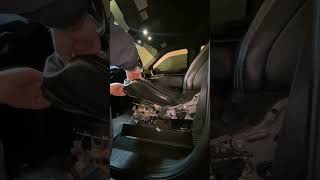
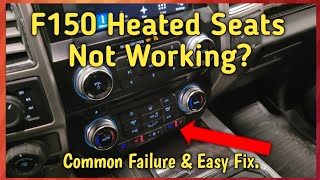
Shop the Parts Behind B1034
Below are the parts most often responsible for code B1034, ranked by how frequently each one is the actual culprit (per the diagnosis above). Tap any to see what we have for your vehicle.



The information in this article is provided for general reference and educational purposes only. Vehicle specifications, procedures, and part compatibility can vary by production date, trim level, and region. Always consult your vehicle's factory service manual and verify part numbers before purchasing or performing repairs. Safety-critical components such as airbags, seat belts, and braking systems should be installed by a qualified professional.
- 🧭 Diagnostic Flowchart
- 🎬 Helpful Videos
- 🛍️ Shop This Part
- What Does B1034 Mean?
- Can I Drive With B1034?
- Common Causes
- Symptoms
- Common Fixes & Costs
- Used vs. New Parts: Buying Guide
- What Happens If You Wait — Timeline
- Cost of Not Fixing It
- Diagnosis Steps
- When This Code Triggers (Freeze-Frame Conditions)
- Related Codes
- Climate & Environmental Factors
- How to Talk to a Mechanic About This Code
- Where to Take It: Dealer vs Independent vs Chain
- When to Walk Away From the Repair
- What Scan Tool You Need for This Code
- How to Clear the Code After You Fix It
- Will This Fail Emissions / State Inspection?
- Most Commonly Affected Vehicles
- Manufacturer-Specific Notes
- Real Owner Stories
- 2018 Ford F-150 XLT with 30K miles
- 2015 Ford F-150 Lariat
- 2006 Nissan Xterra
- 2009 BMW E90 3-Series
- How to Prevent This Code From Triggering
- Frequently Asked Questions
- Can I reset the B1034 code by disconnecting the battery?
- I fixed the broken wire under the seat, but the airbag light is still on. Why?
- What is the difference between B1034 and B0091 on a GM vehicle?
- Why is my airbag light on if the code is for a heated seat?
- Can a bad clock spring cause a B1034 code?
- My scanner can't find code B1034, but my airbag light is on. Why?
- A shop quoted me over $1000 to fix this. Is that reasonable?
- Key Takeaways
- 🎟️ Get 5% Off