

OBD-II Code B1035: Comprehensive Guide to Manufacturer-Specific Faults
B1035 is a manufacturer-specific code that means entirely different things depending on your car—ranging from a GM knock sensor failure to a disabled Nissan airbag. Here is how to diagnose and fix it.
- Code B1035 is manufacturer-specific, meaning it indicates a critical airbag failure on a 2008 Nissan but merely a broken auxiliary audio jack on a 2012 Ford.
- On 1999-2007 GM V8 engines, B1035 flags a failed knock sensor under the intake manifold, requiring a $600-$1,100 repair to prevent severe internal engine detonation.
- For Nissan, Hyundai, and Mercedes vehicles, B1035 disables the Supplemental Restraint System (SRS), meaning your airbags will not deploy in a collision.
- Never buy parts for a B1035 code without scanning the Body Control Module (BCM) or SRS module with a professional $100+ OBD-II tool to confirm your vehicle's exact definition.
What Does B1035 Mean?
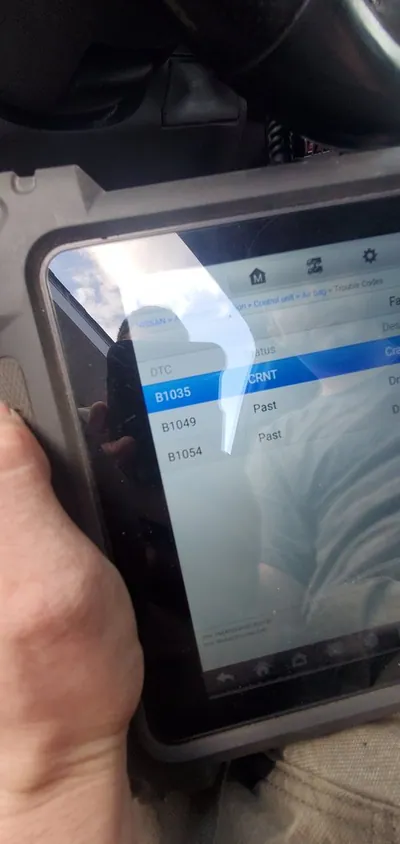
B1035 is a Body Control Module (BCM) or Supplemental Restraint System (SRS) code indicating a circuit malfunction. Because it is manufacturer-specific, its definition varies: General Motors (Knock Sensor Circuit), Nissan/Infiniti (Crash Zone Sensor), Ford (Audio Input Jack), and Dodge/Chrysler (Infrared Temperature Sensor).
Technical definition: B1035 is not standardized by the SAE. Common manufacturer definitions include: Knock Sensor Circuit Performance (GM), Crash Zone Sensor Malfunction (Nissan), Audio Input 1 Circuit Open (Ford), and Infrared Temperature Sensor Input Circuit High (Dodge/Chrysler).
Can I Drive With B1035?
Yes, But With Caution. Driving is technically possible but strongly discouraged. For GM vehicles, driving with a failed knock sensor risks severe engine damage from detonation. For Nissan, Hyundai, or Mercedes, an active B1035 means your airbags will not deploy in a crash. Limit driving to reaching a repair shop.
Common Causes
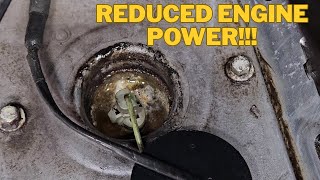
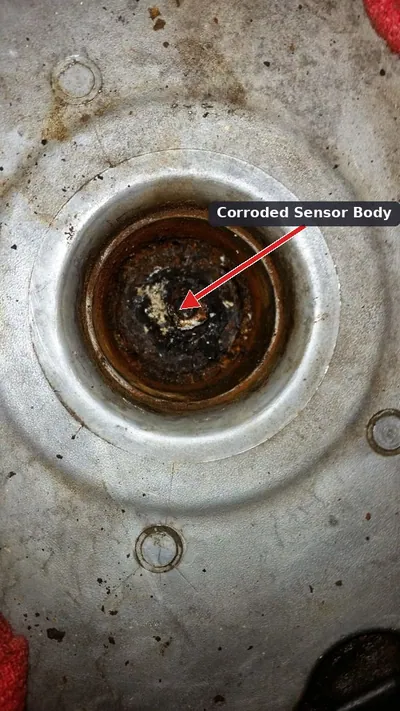 🎬 Watch: Step-by-step guide to replacing GM knock sensors." loading="lazy" style="max-width:100%;height:auto;border-radius:6px;display:block;box-shadow:0 2px 8px rgba(0,0,0,0.1);" />
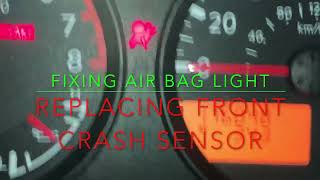
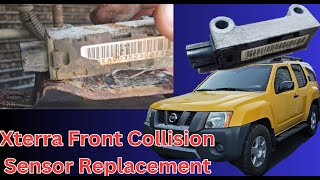
- Failed Sensor (Knock, Crash, or Temp Sensor) (Very Common) — The sensor itself has failed internally. GM knock sensors fail from heat and vibration, while Nissan crash sensors fail from road salt corrosion. 🎬 See how to replace a corroded Nissan crash sensor.
- Damaged or Corroded Wiring/Connectors (Very Common) — The electrical wiring to the sensor is broken, shorted, or suffering from high resistance due to corrosion. On Mercedes-Benz, the yellow airbag connector in the driver's door jamb is a notorious failure point.
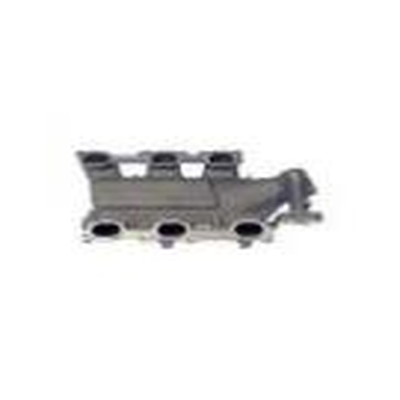
- Leaking Intake Manifold Gaskets (GM V8-specific) (Common) — On 1999-2007 GM V8 engines, knock sensors sit in the engine valley under the intake manifold. Coolant leaking from failing intake gaskets pools in this area, destroying the sensors and wiring harness.
- Post-Collision Fault (Nissan-specific) (Common) — On Nissan vehicles, the SRS module stores this code after a collision to indicate crash zone sensor data was recorded. The module requires a professional reset or replacement and cannot be cleared with a standard scanner.
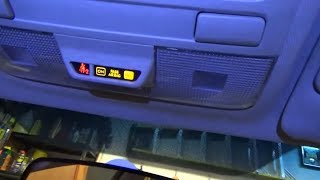
- Cracked Solder Joints on Ancillary Modules (Subaru-specific) (Common) — On 2005-2009 Subaru models, cracked solder joints on the overhead console's circuit board interrupt the passenger airbag indicator signal, causing the SRS module to log a B1035 fault. 🎬 Watch: How to fix Subaru overhead console solder joints.
- Faulty Control Module (ECM/BCM/SRS) (Less Common) — The computer responsible for reading the sensor has failed. Suspect this only after exhausting all wiring and sensor tests.
- Depleted Airbag System Backup Battery (Rare) — If the vehicle's main battery remains dead for an extended period, the airbag control module's backup capacitors drain, triggering an SRS fault code upon startup.
Symptoms

- Check Engine Light or Airbag Light is On — The dashboard illuminates a warning light. An airbag light is the primary indicator for Nissan, Hyundai, and Mercedes faults.
- Reduced Engine Power and Poor Fuel Economy (GM) — A faulty knock sensor forces the computer to retard ignition timing to protect the engine, resulting in sluggish acceleration, a 'heavy' feeling, and a 10-20% drop in MPG.
- Audible Engine Pinging or Knocking (GM) — Without a working knock sensor, the engine cannot correct for detonation, causing a metallic pinging or rattling sound under load.
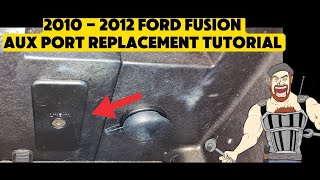
- Inoperative Auxiliary Audio Input (Ford) — The 'AUX' port on the radio fails to recognize plugged-in devices.
- Incorrect Climate Control Operation (Dodge/Chrysler) — The automatic climate control fails to regulate cabin temperature correctly, causing erratic fan speeds.
- Freeze Frame Data Logged (scan-tool only — no driver-felt sign) — The control module stores a snapshot of sensor data from the exact moment the fault triggered.
Diagnostic Flowchart

Tap your situation to follow the diagnostic path that matches what you're seeing on this code.
Common Fixes & Costs
- Replace Knock Sensors and Intake Manifold Gaskets (GM V8) — Parts: $150-$300, Labor: $450-$850, ~4.5 hr book time (Professional)
- Replace Crash Zone Sensor (Nissan) — Parts: $70-$200, Labor: $100-$180, ~1.0 hr book time (Intermediate)
- Repair or Replace Wiring Harness Pigtail — Parts: $15-$50, Labor: $120-$200, ~1.2 hr book time (DIY)
- Replace Auxiliary Input Jack (Ford) — Parts: $20-$50, Labor: $100-$200, ~0.8 hr book time (Beginner)
- Reset Airbag Control Module (Nissan) — Parts: $0, Labor: $50-$150, ~0.5 hr book time (Professional)
Used vs. New Parts: Buying Guide
When a used part is worth it: For non-safety parts like a Ford audio jack, a used part from a reputable auto recycler is cost-effective. For GM knock sensors, new aftermarket sensors are affordable and a better choice due to the high labor cost of replacement.
Donor-vehicle mileage cap: roughly under 60000 miles for the part to have meaningful remaining life.
Donor quality checklist:
- For airbag sensors, only purchase non-deployed parts from a certified automotive recycler.
- Avoid parts from vehicles with flood or heavy collision damage.
- Match the part number exactly.
Decision logic:
- If The part is a critical safety component (e.g., airbag crash sensor) → Strongly favor a new OEM part. The risk of a used part failing in a crash is not worth the savings.
- If The part is electronic and labor for replacement is high (e.g., GM knock sensors) → Buy a new, quality aftermarket or OEM part to avoid paying for labor twice.
- If The part is simple, external, and for a non-critical system (e.g., Ford audio jack) → A used part is a reasonable and low-risk way to save money.
Warranty tradeoff: Used parts from recyclers typically have a 30-90 day warranty. New aftermarket parts carry a 1-year to limited lifetime warranty. New OEM parts have a 1-year/12,000-mile warranty.
Worst-case if a used part fails: $500-$1000. This represents paying for labor a second time plus the cost of another replacement part.
What Happens If You Wait — Timeline
- 0-1 month: For GM knock sensor: Check Engine Light appears. Performance feels slightly sluggish. MPG drops by 3-5%. For Airbag: SRS light is on, system is disabled. (MPG impact: 3-5% (GM)% · Added cost: $0-$40 in wasted fuel.)
- 1-4 months: For GM knock sensor: Engine becomes noticeably sluggish when accelerating. Audible light pinging occurs under load. MPG drops by 5-10%. For Airbag: System remains disabled. (MPG impact: 5-10% (GM)% · Added cost: $50-$150 in wasted fuel.)
- 4-12 months: For GM knock sensor: Persistent engine knock becomes common. The ECM runs in limp mode with severely retarded timing. Sustained detonation causes premature wear on pistons and bearings. MPG drops by 10-20%. (MPG impact: 10-20% (GM)% · Added cost: $1500+. Risk of scoring piston rings or damaging rod bearings from continuous detonation.)
- 12+ months: For GM knock sensor: Catastrophic engine damage occurs. Continued detonation cracks a piston or flattens a bearing, requiring an engine rebuild. For Airbag: The safety risk remains absolute. (MPG impact: >20% (GM)% · Added cost: $3,000-$7,000 for an engine rebuild or replacement.)
Cost of Not Fixing It
- 0-3 months: For GM knock sensor faults: reduced fuel economy, poor acceleration, and audible engine pinging. For airbag faults: non-functional airbag system and automatic failure of safety inspections. (Added cost: $50-$150 in wasted fuel.)
- 3-12 months: For GM: Persistent engine knock leads to premature wear on internal engine components like pistons and rod bearings. (Added cost: $1,500-$4,000 for internal engine repair if detonation becomes severe.)
- Ongoing: For airbag faults: The airbag system will not deploy in a collision, dramatically increasing the risk of serious injury or death. (Added cost: Incalculable. The cost is a catastrophic failure of a primary safety system.)
Diagnosis Steps
- Confirm the Code and Manufacturer Definition
Use a professional OBD-II scanner capable of reading Body ('B') and SRS codes to confirm B1035 is active. Research your specific vehicle's make, model, and year to determine the exact component at fault.
Tools: Professional OBD-II Scanner (Beginner) - Perform a Visual Inspection
Inspect the relevant sensor and its wiring harness. Look for frayed wires, loose or corroded connectors (especially yellow airbag connectors), or physical damage to the sensor housing.
Tools: Flashlight (Beginner) - Check for Technical Service Bulletins (TSBs)
Search online for TSBs related to your vehicle and code B1035. Manufacturers frequently issue bulletins for known problems, such as Nissan's TSB NTB09-001 for crash zone sensors.
Tools: Internet Access (Beginner) - Test the Sensor's Internal Resistance
With the sensor disconnected, use a multimeter to measure the resistance (Ohms) between its terminals. Compare the reading to manufacturer specifications. A GM knock sensor typically reads 93k-107k Ohms. Infinite or near-zero resistance confirms a failed sensor.
Tools: Multimeter, Manufacturer's specifications (Intermediate) - Test the Wiring Harness for Continuity and Shorts
Disconnect the sensor and the control module. Check for continuity on the signal and ground wires from end to end (must be under 5.0 ohms). Check for a short to ground by testing resistance between the signal wire and the negative battery terminal (must be infinite resistance).
Tools: Multimeter, Vehicle-specific wiring diagram (Intermediate) - Check for Reference Voltage
With the sensor disconnected and the ignition on (engine off), check for the correct reference voltage (typically 5V) sent from the control module to the sensor's connector. Lack of voltage indicates a module or wiring failure.
Tools: Multimeter (Intermediate) - Perform a Knock Sensor Tap Test (GM)
Reconnect the sensor and set your multimeter to AC Millivolts (mV). While the engine idles, lightly tap the engine block near the sensor with a wrench. A small AC voltage spike (10-100mV) indicates the sensor detects vibration. No signal confirms a dead sensor.
Tools: Multimeter, Wrench (Professional) - Analyze the Sensor with an Oscilloscope
Use an oscilloscope to view the sensor's output waveform. A flat line or erratic, noisy pattern confirms a failed sensor or wiring issue that a multimeter misses.
Tools: Oscilloscope, Back-probe pins (Professional)
When This Code Triggers (Freeze-Frame Conditions)
- Engine Coolant Temp: 140-210°F (60-99°C) (Engine is fully warmed up. The ECU waits for operating temperature to run the test.)
- RPM: 1500-3000 RPM (Cruise or steady throttle. The knock sensor circuit test runs when the engine is under stable load.)
- Engine Load: 40% or more (The engine is under moderate load, such as climbing a slight grade.)
- Vehicle Speed: 35-65 mph (Steady highway driving conditions are required for the diagnostic to complete.)
Related Codes
- P0327 / P0332 — Indicates 'Knock Sensor 1/2 Circuit Low Input.' On GM vehicles, these are specific companion codes to B1035. Seeing them together guarantees a failure of the sensors or harness under the intake manifold.
- B1034 — A companion code to B1035. On a Dodge, B1034 means 'Circuit Low' while B1035 means 'Circuit High'. On Nissan, B1034 indicates a crash sensor unit failure, while B1035 indicates a communication failure.
- B1209 — On Nissan vehicles, this indicates crash data is stored in the SRS module and requires a specialized reset service after a collision.
Climate & Environmental Factors
- Road Salt & High Humidity: Destroys Nissan front crash zone sensors via galvanic corrosion between the sensor's metal housing and the vehicle's frame. It also ruins under-seat and door jamb airbag connectors on various makes.
- Water Intrusion (Engine Washing/Rain): Floods the engine valley on 1999-2007 GM V8s, shorting the knock sensors. Always build an RTV silicone dam around new sensors during replacement to prevent recurrence.
- Extreme Cold: Causes wiring insulation to become brittle and crack, leading to open circuits when disturbed. Causes temporary high resistance readings in connectors until the cabin warms up.
How to Talk to a Mechanic About This Code
Say this: "Be specific based on your vehicle. For GM: 'I have a B1035 code on my Chevy for the knock sensor circuit. I need a diagnosis to confirm if it's the sensor, harness, or wiring.' For Nissan: 'My Nissan has an airbag light and a B1035 code. I need a diagnosis of the crash zone sensor circuit.'"
This signals you've done research, narrows the diagnostic focus, and prevents a shop from starting from scratch, avoiding excessive diagnostic fees.
Avoid saying:
- 'Just fix whatever's wrong'
- 'My check engine light is on, can you look at it?'
- 'Whatever you recommend'
Questions to ask before authorizing the repair:
- For GM Knock Sensor: 'Did you test the harness for continuity before condemning the sensor? Will you replace the harness and intake gaskets at the same time?'
- For Nissan/Hyundai Airbag: 'Did you visually inspect the sensor and connector for corrosion? Can your scanner fully reset the SRS module after the repair?'
- For any repair: 'Can I get a written estimate breaking down parts and labor? What is the warranty on this repair?'
Where to Take It: Dealer vs Independent vs Chain
- Dealer:
Best for: Airbag-related faults (Nissan, Hyundai, Mercedes) due to specialized SRS reset tools and liability., Vehicles under warranty or with open recalls for this issue.
Downsides: Significantly higher labor rates., May recommend replacing an entire assembly when a wiring repair suffices. (Typical cost: +50% vs. baseline) - Independent Shop:
A reputable independent shop is the best choice for GM knock sensor and Ford audio jack faults. For any airbag-related B1035, a dealer or specialized SRS repair service is strongly recommended.
Best for: Common, well-documented issues like the GM knock sensor replacement., Out-of-warranty vehicles where cost is a major factor.
Downsides: Quality varies widely; vet shops based on reviews and ASE certifications., May lack specialized tools to reset SRS modules. (Typical cost: +0% vs. baseline) - Chain Shop:
AVOID for GM knock sensor and all airbag-related faults. Acceptable only for the Ford audio jack.
Best for: Simple part swaps like a Ford audio jack if you provide the diagnosis.
Downsides: High pressure to upsell; technician skill varies dramatically., Not equipped for complex diagnostic work or high-stakes safety system repairs. (Typical cost: -10% vs. baseline)
When to Walk Away From the Repair
If the estimated repair cost exceeds 40-50% of the car's private-party value, pause and consider alternatives. For critical safety repairs like airbags, push this threshold higher.
- Car worth $4000, fix is $1100: Fix it. A GM knock sensor repair at this price is ~28% of the vehicle's value and prevents engine destruction.
- Car worth $3500, fix is $1800: Borderline / Walk away. An out-of-warranty Hyundai OCS mat repair costs over 50% of the car's value. Get a second opinion.
- Car worth $12000, fix is $450: Fix it. A Nissan airbag sensor repair is a small fraction of the car's value and resolves a critical safety issue.
What Scan Tool You Need for This Code
Minimum: A scanner that reads and clears Body (B-prefix) and SRS (Airbag) codes. Basic engine-only code readers will not see this fault.
A $20 code reader from a parts store shows 'No Codes' because it only scans the engine control module. B1035 is stored in the BCM or SRS module.
Budget: BlueDriver Pro (~$99) — Reads and clears enhanced codes, including ABS, Airbag (SRS), and BCM for major brands. Allows you to see the specific B1035 definition for your vehicle.
Mid-range: Foxwell NT510 Elite (~$180) — Provides manufacturer-specific diagnostics for SRS/BCM systems and performs system-specific resets.
Professional: Autel MaxiCOM MK808 / MK808BT (~$500) — Offers full bidirectional control and OEM-level diagnostics for all modules. Performs advanced functions like resetting the SRS module after a repair.
Rent vs buy: Parts store loaner tools are basic engine code readers and will not work for B1035. Buying a scanner with SRS/BCM capability like a BlueDriver is a mandatory investment for this code.
How to Clear the Code After You Fix It
- Reconnect battery if disconnected for repair.
- Use a compatible OBD-II scan tool to clear the fault code from the specific module (ECM for GM, SRS for Nissan).
- For Nissan airbag faults, perform a specific manual key-on/key-off sequence if a capable scanner is unavailable.
- Perform a complete drive cycle to allow readiness monitors to run.
Drive cycle (~20 minutes): A general drive cycle includes a cold start, a few minutes of idling, mixed city driving, and concludes with several minutes of steady highway-speed driving (50-60 mph).
Readiness monitors affected: Comprehensive Component Monitor, Misfire Monitor
Before emissions retest: drive at least 50 miles to fully set monitors.
Watch out for:
- Disconnecting the battery will not clear hard crash data from a Nissan SRS module.
- Using a basic OBD-II scanner fails to clear the code because it cannot communicate with the SRS or BCM module.
- If the root cause (corroded connector) is not fixed, the code returns immediately.
- Not driving the vehicle long enough after clearing the code results in a 'Not Ready' status for emissions monitors.
Will This Fail Emissions / State Inspection?
Yes — this code typically fails an OBD-II emissions inspection.
- California: An illuminated Check Engine Light (from a GM knock sensor fault) is an automatic failure. An airbag light fails the safety portion of the inspection.
- New York: An illuminated Check Engine Light causes an emissions test failure. An airbag light is currently an advisory and does not cause an automatic failure.
- Texas: In counties requiring emissions testing, an illuminated Check Engine Light is an automatic failure. An airbag light is a safety item and causes a failure.
Most Commonly Affected Vehicles
- Chevrolet / GMC Silverado, Sierra, Yukon, Suburban (1999-2007) — Extremely common for knock sensor failure (often setting P0327/P0332 alongside B1035). Sensors sit under the intake manifold where leaking gaskets allow coolant to pool. Always build a silicone (RTV) dam around new sensors.
- Nissan Frontier, Xterra, Pathfinder (2005-2009) — Subject to a major safety recall (NHTSA Campaign ID: 08V690000) because the front crash zone sensor suffers severe corrosion from road salt, triggering B1035 and disabling front airbags.
- Hyundai / Kia Sonata, Elantra, Santa Fe, Optima (2006-2010) — Frequently points to a failure of the passenger Occupant Classification System (OCS) sensor mat. This is frequently covered by a recall or extended warranty (e.g., TXXC).
- Subaru Outback, Legacy (2005-2009) — Logs a B1035 fault due to cracked solder joints on the circuit board inside the overhead console affecting the passenger airbag status indicator light.
- Dodge / Ram Ram 1500, Grand Caravan (2010-2012) — Prone to a B1035 code related to the infrared temperature sensor in the overhead console, affecting automatic climate control.
- Ford Edge, Fusion (2011-2014) — Commonly indicates an open circuit in the auxiliary audio input caused by a failed 3.5mm jack.
- Mercedes-Benz C-Class (W203) (2000-2004) — Triggers B1035 for high resistance in an airbag circuit, frequently caused by a faulty yellow electrical connector in the driver's door jamb.
Manufacturer-Specific Notes
- General Motors: B1035 almost always refers to the knock sensor circuit. On 1999-2007 V8s, the sensors are located under the intake manifold and fail primarily due to water intrusion.
- Nissan / Infiniti: Points to a 'Crash Zone Sensor' malfunction caused by corrosion. After a collision, the code is stored as hard data and requires a specialized tool to reset the SRS module.
- Ford: Typically means 'Audio Input 1 Circuit Open,' a non-critical fault related to the 3.5mm auxiliary jack.
- Hyundai / Kia: Commonly associated with the Occupant Classification System (OCS) sensor mat in the passenger seat, which disables the passenger airbag.
Real Owner Stories
2006 Chevy Silverado 1500 with 5.3L V8 at 145K miles
Check Engine Light came on with codes P0332 and B1035. Owner noticed sluggish acceleration and a drop in fuel economy.
What they tried:
- Ignored the light, but performance worsened.
- A mechanic quoted $750 for the repair, citing the need to remove the intake manifold.
- Owner decided to perform the repair DIY.
Outcome: Replaced both knock sensors, the wiring harness, and intake manifold gaskets (Fel-Pro MS 98016 T). Total cost for parts was $220. The repair took 5 hours. Code cleared and performance was restored.
Lesson: On GM V8s, P0332/P0327 and B1035 mean the knock sensors or harness failed due to moisture. Because it is labor-intensive, replacing the sensors, harness, and intake gaskets simultaneously is the only cost-effective approach.
2012 Nissan Frontier at 129K miles
Airbag warning light was on. A scan revealed code B1034 'Crash zone sensor (unit fail)'.
What they tried:
- Visually inspected the front crash sensor and found it severely corroded.
- Replaced the sensor with a new OEM unit.
- After replacement, the code changed to B1035 'Crash zone sensor (COMM fail)' and the light remained on.
Outcome: The owner cleaned the harness connector with electronic cleaner. The 'COMM fail' code indicated the airbag control module was not communicating due to a poor connection and hard codes. The fix required a pristine connector and a professional scan tool to fully reset the SRS module.
Lesson: Corrosion kills Nissan crash sensors. When replacing one, thoroughly clean the connector. A 'COMM fail' code afterward points to a wiring issue or a hard code in the SRS module requiring a professional reset.
2004 Mercedes C230 with intermittent airbag light
The SRS light came on intermittently, often triggered by adjusting the driver's seat.
What they tried:
- A shop scanned the car, found a B1035 code indicating high resistance in a driver-side airbag circuit, and quoted $500 to replace the harness.
Outcome: The owner found the yellow airbag connector under the seat suffered from fretting corrosion. They disconnected the battery, cut out the connector, and soldered the wires directly using heat-shrink tubing. Total cost was $5. The light never returned.
Lesson: For intermittent airbag faults with high-resistance codes, the connector is often the culprit. Soldering to bypass a faulty connector is a highly effective repair, but must only be done with the battery disconnected.
How to Prevent This Code From Triggering
- Apply Dielectric Grease to Airbag Connectors (During any repair that exposes them) — Dielectric grease seals out moisture and oxygen, preventing the fretting corrosion that causes high-resistance faults in sensitive SRS connectors under seats or in door jambs.
- Build RTV Dams Around GM Knock Sensors (When replacing knock sensors) — Applying a bead of RTV silicone around the top of the sensor holes before reinstalling the intake manifold creates a dam that prevents water from reaching the sensors.
- Use Quality Intake Manifold Gaskets (When performing related repairs) — Original plastic-carrier intake gaskets on GM V8s crack and leak coolant. Upgrading to a modern gasket with a metal carrier (like Fel-Pro MS 98016 T) prevents leaks that destroy knock sensors.
- Avoid Aggressive Engine Washing (Always) — High-pressure washers force water past weather seals on critical components like knock sensors and airbag sensors, causing immediate failure.
Frequently Asked Questions
What is a knock sensor and why is it important?
A knock sensor is a small microphone bolted to the engine that listens for vibrations from engine knock (detonation). If it detects a knock, it tells the engine computer to adjust ignition timing to prevent internal engine damage.
Is it safe to drive with code B1035?
It depends on the manufacturer, but it is never recommended. A GM knock sensor code risks long-term engine damage. A Nissan, Hyundai, or Mercedes airbag code means your airbags will not deploy in a crash.
Can I pass a state inspection with an airbag light on?
In jurisdictions with strict safety inspections like Pennsylvania and Virginia, an active airbag light is an automatic failure. In states like New York, it is currently an advisory. In states that only perform emissions testing, an airbag light is ignored.
What are the most common misdiagnosis mistakes for B1035?
The most common mistake is replacing the sensor without testing the circuit. Technicians frequently find the actual cause is a corroded connector or broken wire, especially with Nissan airbag faults and GM knock sensor faults.
Why does it cost so much to replace a knock sensor on my Chevy Silverado?
On 1999-2007 GM V8 trucks, the knock sensors sit under the engine intake manifold. Replacing them requires 4-5 hours of labor to remove the manifold, replace the sensors and harness, and reinstall everything with new gaskets.
Can I just ignore this code and keep driving?
Ignoring B1035 leaves you with an unsafe vehicle performing poorly. You risk serious engine damage on GM vehicles or failed safety systems during a crash on Nissan and Hyundai vehicles.
Can bad gasoline cause a knock sensor code?
Using fuel with an octane rating lower than required causes severe knocking, which the computer might interpret as a sensor fault. However, this rarely causes a B1035 circuit code, which specifically points to an electrical failure.
Key Takeaways
- Code B1035 is manufacturer-specific, meaning it indicates a critical airbag failure on a 2008 Nissan but merely a broken auxiliary audio jack on a 2012 Ford.
- On 1999-2007 GM V8 engines, B1035 flags a failed knock sensor under the intake manifold, requiring a $600-$1,100 repair to prevent severe internal engine detonation.
- For Nissan, Hyundai, and Mercedes vehicles, B1035 disables the Supplemental Restraint System (SRS), meaning your airbags will not deploy in a collision.
- Never buy parts for a B1035 code without scanning the Body Control Module (BCM) or SRS module with a professional $100+ OBD-II tool to confirm your vehicle's exact definition.
Helpful Videos

Shop the Parts Behind B1035
Below are the parts most often responsible for code B1035, ranked by how frequently each one is the actual culprit (per the diagnosis above). Tap any to see what we have for your vehicle.




The information in this article is provided for general reference and educational purposes only. Vehicle specifications, procedures, and part compatibility can vary by production date, trim level, and region. Always consult your vehicle's factory service manual and verify part numbers before purchasing or performing repairs. Safety-critical components such as airbags, seat belts, and braking systems should be installed by a qualified professional.
- 🧭 Diagnostic Flowchart
- 🎬 Helpful Videos
- 🛍️ Shop This Part
- What Does B1035 Mean?
- Can I Drive With B1035?
- Common Causes
- Symptoms
- Common Fixes & Costs
- Used vs. New Parts: Buying Guide
- What Happens If You Wait — Timeline
- Cost of Not Fixing It
- Diagnosis Steps
- When This Code Triggers (Freeze-Frame Conditions)
- Related Codes
- Climate & Environmental Factors
- How to Talk to a Mechanic About This Code
- Where to Take It: Dealer vs Independent vs Chain
- When to Walk Away From the Repair
- What Scan Tool You Need for This Code
- How to Clear the Code After You Fix It
- Will This Fail Emissions / State Inspection?
- Most Commonly Affected Vehicles
- Manufacturer-Specific Notes
- Real Owner Stories
- 2006 Chevy Silverado 1500 with 5.3L V8 at 145K miles
- 2012 Nissan Frontier at 129K miles
- 2004 Mercedes C230 with intermittent airbag light
- How to Prevent This Code From Triggering
- Frequently Asked Questions
- What is a knock sensor and why is it important?
- Is it safe to drive with code B1035?
- Can I pass a state inspection with an airbag light on?
- What are the most common misdiagnosis mistakes for B1035?
- Why does it cost so much to replace a knock sensor on my Chevy Silverado?
- Can I just ignore this code and keep driving?
- Can bad gasoline cause a knock sensor code?
- Key Takeaways
- 🎟️ Get 5% Off