

OBD-II Code B1053: Manufacturer-Specific Body Control Fault
What B1053 means, why it triggers, and how to fix it
- Identify your vehicle's specific B1053 definition first, as it dictates whether you are fixing a $150 keyless entry software bug or a $400 airbag pretensioner.
- Do not drive if the airbag light is illuminated, because the B1053 code completely disables the Supplemental Restraint System (SRS) during a crash.
- For 2015-2022 Jeep Renegade and Fiat 500X models, check TSB 08-054-23 or similar before replacing parts, as a 1-hour dealer software update usually fixes the issue.
- Never test airbag component resistance on the harness side going to the SRS module; always test the disconnected component directly to prevent accidental deployment.
What Does B1053 Mean?
B1053 is a manufacturer-specific body control module (BCM) code relating to comfort, convenience, and safety features. It most commonly indicates a fault in the Supplemental Restraint System (airbags and seat belts) or the keyless entry/ignition system. You must identify the exact definition for your specific vehicle year, make, and model to begin diagnosis.
Technical definition: B1053 lacks a universal definition. Common manufacturer-specific definitions include: * **Jeep/Fiat:** RFHM (KIN Communication) - Signal Plausibility Failure * **Suzuki:** Driver/Passenger Pretensioner Initiator Circuit Short To Ground * **General Motors (Chevrolet/Cadillac):** Deployment Commanded w/Loop Malfunction * **Ford:** Fuel Tank Level Sensor Continuous Memory DTCs * **Mahindra:** Passenger Pretensioner Resistance Value Too High * **Alfa Romeo:** High Beam or Flash Light Input - Circuit Short To Ground * **Mazda:** Passenger's Seat Belt Pretensioner Circuit Resistance Too High
Can I Drive With B1053?
No — Do Not Drive. Do not drive the vehicle. This code disables critical safety systems like airbags or causes keyless ignition systems to fail, leaving you unable to start or shut off the engine.
Common Causes
- Outdated Radio Frequency Hub Module (RFHM) Software (Very Common) — On Jeep Renegade and Fiat 500X models, a software glitch in the keyless entry module causes signal plausibility errors. A dealer-performed software update resolves this.
- Faulty Seat Belt Pretensioner (Very Common) — On Suzuki, Mahindra, and Mazda vehicles, this code indicates a failed seat belt pretensioner. The internal pyrotechnic charge fails, wiring shorts out, or internal resistance falls out of specification, triggering the airbag light.
- Failed or 'Latched' Airbag Control Module (SDM/SRS Module) (Common) — On GM vehicles, this code 'latches' after an accident. The module stores crash data and permanently disables the system until it is professionally reset or replaced. A standard scanner cannot clear it. 🎬 Watch: A simple trick to help clear airbag warning lights.
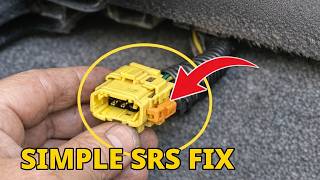
- Wiring or Connector Issues (Common) — Damaged wires, loose connections, or corrosion interrupt the signal and trigger this fault. This frequently occurs in the yellow airbag connectors under the front seats when disturbed by stored items or seat movement. 🎬 See how to fix a loose under-seat SRS connector.
- Water Intrusion on RFH Module (Common) — Jeep Renegades suffer from a known rear roof-mounted antenna gasket leak. Water drips directly onto the Radio Frequency Hub (RFH) module, causing corrosion and erratic behavior.
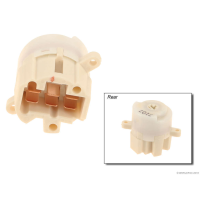
- Faulty Keyless Ignition Node (Start Button) (Less Common) — The push-start button wears out or develops internal faults, sending an illogical signal to the control module.
- Low or Unstable Battery Voltage (Less Common) — A weak battery causes communication glitches between modules during startup, leading to spurious codes like B1053.
- Sulfur Contamination on Fuel Level Sender (Ford) (Uncommon) — On Ford models, sulfur in gasoline builds up on the fuel sender's contacts, causing erratic gauge readings.
Symptoms
- Airbag Warning Light is On — Indicates a fault in the Supplemental Restraint System (SRS). The airbags will not deploy in an accident.
- Engine Will Not Shut Off with Start Button — On keyless ignition vehicles (Jeep/Fiat), the engine refuses to shut down, requiring battery disconnection as a temporary measure.
- Engine Will Not Start or 'Service Passive Entry' Message — The vehicle fails to start when the push-button is pressed, accompanied by a dashboard warning message.
- Erratic Fuel Gauge Readings (Ford) — The fuel gauge reads incorrectly, fluctuates wildly, or shows empty when the tank is full.
- Seat Belt Light Flashing — Flashes alongside the airbag light to indicate a specific fault with the pretensioner system.
- Fault Stored in BCM/SRS Module (scan-tool only — no driver-felt sign) — The code B1053 is stored in the Body Control Module or Supplemental Restraint System module's memory.
Diagnostic Flowchart
Tap your situation to follow the diagnostic path that matches what you're seeing on this code.
Common Fixes & Costs
- Radio Frequency Hub Module (RFHM) Software Update — Parts: $0, Labor: $150-$250, ~1.0 hr book time (Professional)
- Seat Belt Pretensioner Replacement — Parts: $150-$400, Labor: $100-$300, ~1.5 hr book time (Intermediate)
- Airbag Module (SRS) Reset Service — Parts: $0, Labor: $50-$150, ~1.5 hr book time (Professional)
- Keyless Ignition Node (Start Button) Replacement — Parts: $40-$200, Labor: $75-$150, ~0.8 hr book time (DIY)
- Wiring Harness / Connector Repair — Parts: $10-$50, Labor: $150-$400, ~2.5 hr book time (Advanced)
DIY vs Professional
- RFHM Software Update — Beginner:
- Seat Belt Pretensioner Replacement — Beginner:
- Airbag Module (SRS) Reset/Replacement — Beginner:
- Keyless Ignition Node (Start Button) Replacement — Beginner:
- Ford Fuel Sender Replacement — Beginner:
Used vs. New Parts: Buying Guide
When a used part is worth it: Used parts are not recommended for SRS components due to extreme safety risks. Resetting your original module is always better than buying a used one.
Donor-vehicle mileage cap: roughly under 50000 miles for the part to have meaningful remaining life.
Donor quality checklist:
- Verify the donor vehicle was NOT in an accident.
- Ensure the part was stored in a dry, climate-controlled environment.
- Match the part number exactly. Used modules require professional VIN programming.
Decision logic:
- If The part is a seat belt pretensioner or airbag. → Buy new OEM. The safety risk of a faulty used part is too high.
- If The airbag module has stored crash data but is not physically damaged. → Use a mail-in reset service on your original module to avoid VIN programming issues.
- If The airbag module is physically damaged (water, impact). → Buy a new OEM module and have it professionally programmed.
Warranty tradeoff: Used SRS parts carry massive liability and short warranties. Reputable module reset services provide limited or lifetime warranties. New OEM parts carry a 1-year manufacturer's warranty.
Worst-case if a used part fails: Catastrophic. If a used SRS component fails to deploy in a crash, the cost is severe injury or death.
What Happens If You Wait — Timeline
- Immediate: For an SRS fault: The airbag light turns on. The entire SRS system is immediately disabled by the control module. (MPG impact: 0%% · Added cost: $0 (but safety is compromised))
- 0-2 months: For a keyless entry fault: The 'Service Passive Entry' message appears intermittently. The car hesitates to start. (MPG impact: 0%% · Added cost: $0)
- 2-6 months: For a keyless entry fault: The driver is stranded with a no-start condition or unable to shut the engine off. For an SRS fault: An ignored wiring short damages the input circuit on the SRS control module. (MPG impact: 0%% · Added cost: $100-$300 (towing) or $500-$1500 (module damage))
- At time of accident: For an SRS fault: A collision occurs and the airbags fail to deploy. The consequence is a significantly increased risk of serious injury or death. (MPG impact: 0%% · Added cost: Infinite (Safety Risk))
Cost of Not Fixing It
- Immediate: The entire Supplemental Restraint System is disabled. There is no airbag protection in a crash. (Added cost: N/A (Safety Risk))
- 0-3 months: For keyless entry faults, you risk being stranded if the car won't start or unable to shut the engine off, requiring a tow. (Added cost: $100-$300 (Towing or locksmith service))
- 3+ months: Ignoring a short circuit damages the sensitive airbag control module, turning a simple repair into an expensive module replacement. (Added cost: $400-$1500 (Module replacement and programming))
- At time of sale/inspection: The vehicle fails state safety inspections and suffers significantly reduced resale value. (Added cost: Reduced vehicle value, failed inspection fees.)
Diagnosis Steps
- Confirm the Code's Meaning for Your Vehicle
Use the vehicle's make, model, and year to search for the specific definition of B1053. Knowing if you are diagnosing an airbag, keyless entry, or fuel system issue is mandatory.
Tools: OBD-II Scanner, Internet Access (Beginner) - Check for Technical Service Bulletins (TSBs)
Jeep and Fiat have issued TSBs for this code requiring a software update. Check with a dealer or search online for TSBs related to B1053 for your car to avoid unnecessary parts replacement.
Tools: VIN, Internet Access or Phone (Beginner) - Inspect the Battery and Terminals
Ensure the battery is fully charged and terminals are clean. Use a multimeter to verify at least 12.4 volts with the engine off. Weak batteries cause random electronic faults.
Tools: Multimeter, Wrench Set, Terminal Brush (Beginner) - Perform a Visual Inspection
For airbag codes, inspect the yellow wiring and connectors under the front seats for damage or loose plugs. For Jeep keyless entry codes, check for water stains on the rear headliner indicating a leak onto the RFH module.
Tools: Flashlight (Intermediate) - Test Component Circuit Resistance (Airbag/Pretensioner)
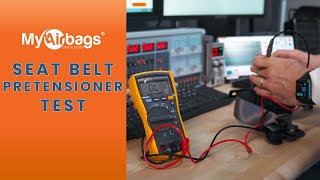
Disconnect the battery and wait 15 minutes. Disconnect the seat belt pretensioner and use a multimeter set to Ohms to measure resistance across the component's two pins. A healthy pretensioner reads between 2.0 and 3.5 ohms. NEVER measure resistance on the harness side going to the SRS module.
Tools: Multimeter, Vehicle-Specific Service Manual, Trim Removal Tools (Advanced) - Scan Live Data (Keyless Entry)
Monitor live data PIDs from the BCM or RFHM. Monitor the 'Keyless Ignition Node (KIN) Switch' status. It should change cleanly from 'Not Pressed' to 'Pressed'. Erratic data indicates a faulty button or circuit.
Tools: Advanced Bi-Directional Scan Tool (Advanced) - Test Fuel Sender Sweep (Ford)
Disconnect the fuel pump module. Connect a multimeter across the two fuel level sender pins. Resistance should be approximately 16 ohms full and 158 ohms empty. The reading must change smoothly as fuel sloshes.
Tools: Multimeter, Wiring Diagram (Advanced) - Isolate the Fault with a Resistor (Advanced)
Substitute the airbag component with a 2.2 to 3.0 ohm SRS-safe resistor. If clearing the code works and it does not return, the component is faulty. If the code remains, the fault is in the wiring or control module.
Tools: SRS-approved Resistor Pack, Advanced Scan Tool (Professional)
When This Code Triggers (Freeze-Frame Conditions)
- Fault Priority: 1-3 (Indicates a high-priority fault related to safety systems.)
- Battery Voltage: 11.5-12.5V (Key On, Engine Off) or 13.5-14.5V (Engine Running) (The fault triggers during startup if battery voltage is low, or during normal operation if a component fails.)
- Ignition Status: RUN or START (The code sets during the initial system self-check at key-on or when a specific function is requested.)
- Malfunction Frequency Counter: 1 or more (Shows how many times the fault has been detected, distinguishing between hard and intermittent faults.)
Related Codes
- B1057 — Appears with B1053 on Suzuki vehicles. Indicates the exact same fault ('Pretensioner Initiator Circuit Short To Ground') but for the passenger side.
- B1A7D-2F — On Jeep/Fiat models, this code for an 'erratic start button signal' confirms the fault lies within the keyless ignition system. The RFHM software update is the primary fix.
- B0053 — A similar GM airbag code for 'Deployment Commanded'. Both indicate the airbag module has stored crash data and requires a professional reset or replacement.
- P0463 — On Ford vehicles, P0463 'Fuel Level Sensor Circuit High Input' alongside B1053 confirms a failure in the fuel sender unit or its wiring.
Climate & Environmental Factors
- High Humidity / Rain: On Jeep Renegades, heavy rain accelerates water intrusion through the rear roof antenna. Water drips onto the Radio Frequency Hub (RFH) module, causing corrosion and triggering B1053.
- Cold Weather: Low temperatures reduce battery cranking power. Body control modules are sensitive to low voltage during startup and generate spurious communication codes like B1053 in cold climates.
How to Talk to a Mechanic About This Code
Say this: "I have a B1053 code. For my [Make], this relates to the [keyless system/seat belt pretensioner/fuel sender]. I'd like to schedule a diagnostic. If it's a Jeep, please check for TSBs related to an RFHM software update before diagnosing hardware. If it's an airbag issue, please check the component's circuit resistance before quoting a replacement part."
Signals you've done research and directs the technician toward the most likely cause. Prevents paying for parts when a software update is the known fix, and requests specific electrical tests to confirm failures.
Avoid saying:
- 'My airbag light is on, can you fix it?' (too vague, invites expensive guesses)
- 'Just replace the part the code points to.' (The code indicates a circuit fault, not always a bad part)
- 'Do whatever you think is best.' (gives up all control over the repair process)
Questions to ask before authorizing the repair:
- For a Jeep/Fiat: Did you confirm with my VIN that there are no open TSBs for an RFHM software update?
- For an airbag fault: What was the resistance reading of the component? Can you show me the damaged part?
- For a GM vehicle after an accident: Is the code 'latched'? If so, can you send my module for a reset service instead of replacing it?
- Can I get a written estimate that breaks down the cost of parts and labor?
- What is the warranty on this specific repair and the new parts?
Where to Take It: Dealer vs Independent vs Chain
- Dealer:
Required for Jeep/Fiat software updates. Recommended for other makes if under warranty or if independent shops lack specific diagnostic tools.
Best for: Jeep/Fiat vehicles needing the RFHM software update., Vehicles under warranty., Complex electronic issues requiring manufacturer-specific tools (like wiTECH).
Downsides: Highest labor rates., Defaults to module replacement when a reset or wiring repair is possible. (Typical cost: +50% vs. baseline) - Independent Shop:
Best fit for most non-software related B1053 issues, offering a good balance of expertise and value.
Best for: Out-of-warranty vehicles with non-software issues (e.g., Suzuki pretensioner, Ford fuel sender)., Diagnosing and repairing wiring or connector problems., Cost-effective diagnosis for most B1053 variants.
Downsides: Lacks manufacturer-specific programming tools for updates., Quality varies; ensure the shop is experienced with SRS/body electrical work. (Typical cost: +0% vs. baseline) - Chain Shop:
AVOID. This code requires specialized diagnostic capabilities beyond what chain shops offer.
Best for: Simple, unrelated maintenance like oil changes or tires.
Downsides: Lacks specialized tools and training for SRS or advanced body control module diagnostics., High pressure to upsell leads to incorrect repairs. (Typical cost: -10% vs. baseline)
When to Walk Away From the Repair
If the estimated repair cost for the safety system exceeds 40-50% of the car's private-party value, consider selling it as-is with full disclosure.
- Car worth $3000, fix is $1800: Walk away. The repair cost is over half the car's value. Sell as a 'mechanic special' with full disclosure.
- Car worth $15000, fix is $450: Fix it. This is a minor cost to restore a critical safety feature and maintain value.
- Car worth $8000, fix is $2500: Borderline. Get a second opinion. Weigh the cost against the car's overall condition.
What Scan Tool You Need for This Code
Minimum: A scanner that reads and clears Supplemental Restraint System (SRS) and Body Control Module (BCM) codes. A basic engine-only code reader will not see B1053.
A standard $20 OBD-II reader only communicates with the Powertrain Control Module. B1053 is a 'B' (Body) code stored in the SRS or BCM.
Budget: Foxwell NT301 / Autel AutoLink AL619 (~$80) — Reads and clears codes from the ABS and SRS modules. This is the minimum required to diagnose the fault and turn off the airbag light.
Mid-range: BlueDriver Pro / Launch CRP129E (~$120) — Offers SRS/BCM code reading and clearing, plus live data streaming. Viewing live data helps diagnose intermittent wiring issues or test start button signals.
Professional: Autel MaxiCOM MK808S / XTOOL D7 (~$400-500) — Provides full bidirectional control to command components and perform advanced resets. Necessary for deep diagnostics but overkill for just reading B1053.
Rent vs buy: Auto parts store loaner tools typically cannot read SRS codes. For a one-time SRS issue, renting a full-system scanner is cost-effective. If you do regular maintenance, buying a mid-range scanner is a worthwhile investment.
How to Clear the Code After You Fix It
- Ensure the battery is reconnected.
- Use an SRS-capable OBD-II scan tool to access the specific module (SRS, BCM, or RFHM).
- Select the option to 'Clear DTCs' or 'Reset Codes'.
- Cycle the ignition off, then on, and verify the warning light does not return.
Drive cycle (~15 minutes): For non-latched codes, a 15-minute drive allows the system to re-run self-tests and confirm the fix. For latched GM codes, no drive cycle works; the module must be professionally reset.
Readiness monitors affected: This is a Body ('B') code and does not affect emissions readiness monitors.
Watch out for:
- Attempting to clear a 'latched' GM crash code with a standard scanner fails; the module requires a reset service.
- Disconnecting the battery does not clear a hard-set SRS fault code.
- If the underlying wiring fault is not fixed, the code returns immediately.
Will This Fail Emissions / State Inspection?
No — by itself this code doesn't fail OBD inspection (but it can keep readiness monitors from setting, which causes a separate fail).
- California: An illuminated airbag light is not an automatic failure for the smog test, but fails a separate safety inspection. The code does not affect emissions readiness monitors.
- New York: The NY DMV considers an illuminated airbag warning lamp an advisory item, not a cause for rejection of the safety inspection. Individual shops may be stricter.
- Texas: In counties requiring a safety inspection, an illuminated airbag warning light causes the vehicle to fail.
- Virginia: An illuminated airbag light indicates a system failure and results in a failed state safety inspection.
Most Commonly Affected Vehicles
- Jeep Renegade (2015-2022) — Extremely common. Caused by a software glitch in the Radio Frequency Hub Module (RFHM). Addressed by TSBs 08-064-21, 08-056-23, and 08-054-23.
- Fiat 500X (2016-2021) — Shares the Renegade platform and electronics, making it prone to the exact same RFHM software and start-button faults. TSB 08-003-16 addresses this.
- Suzuki Grand Vitara & SX4 (2006-2014) — Indicates a 'short to ground' in the driver or passenger seat belt pretensioner circuit. Often appears with B1057.
- Ford Transit, F-Series (2000-2019) — A memory code indicating a fault in the fuel tank level sensor circuit, leading to an inaccurate fuel gauge.
- Chevrolet / GM Silverado, Equinox, Malibu (2005-2018) — A latched code indicating the airbag module commanded a deployment during a crash. Requires module replacement or professional reset.
- Mahindra Scorpio, XUV500 (2011-2020) — Points to 'high resistance' or 'circuit open' in the passenger seat belt pretensioner circuit.
- Mercedes-Benz Various Models (2000-2010) — Indicates the SRS control unit's coding is faulty or corrupted, often triggered by low battery voltage.
- Mazda Various Models (2004-2015) — Indicates 'Passenger's seat belt pretensioner circuit resistance too high', pointing to a fault in the passenger-side seat belt buckle or wiring.
Manufacturer-Specific Notes
- Jeep / Fiat: The most likely cause is a software bug, not a broken part. A dealer must perform a software update on the Radio Frequency Hub Module (RFHM) per TSBs 08-056-23 or 08-054-23.
- General Motors: This is a 'latched' code that cannot be cleared with a standard scan tool. The airbag module detected a crash and must be professionally reset or replaced.
- Suzuki: The definition specifically points to a 'short to ground' in the seat belt pretensioner circuit. Diagnosis focuses strictly on checking the wiring harness and the pretensioner unit for electrical shorts.
- Ford: This is a 'Continuous Memory DTC,' meaning the fault was detected but may not be present now. It is frequently caused by intermittent wiring issues or low battery voltage during startup.
Real Owner Stories
2017 Jeep Renegade with 75,000 miles
Owner experienced intermittent no-start conditions and the 'Service Passive Entry' message. Eventually, the engine would not shut off with the push button.
What they tried:
- Replaced the key fob battery and main vehicle battery, which did not fix the problem.
- A shop suspected a faulty start button or BCM.
Outcome: After finding TSB 08-064-21, the owner visited a Jeep dealer. The dealer performed a software update on the Radio Frequency Hub Module (RFHM) for $180. The problem was completely resolved.
Lesson: For Jeep/Fiat keyless entry issues, always check for TSBs related to an RFHM software update before replacing hardware.
2008 Suzuki SX4 with 110,000 miles
The airbag warning light stayed on. A scan tool pulled code B1053.
What they tried:
- Checked the connection under the driver's seat.
- Tested the resistance of the driver's seat belt pretensioner. The reading was 0.8 ohms, well below the expected 2.0-3.0 ohms.
Outcome: Owner purchased a new OEM seat belt pretensioner assembly for $280. After disconnecting the battery, they replaced the unit and cleared the code with an SRS-capable scanner. The light stayed off.
Lesson: On Suzuki vehicles, B1053 points directly to the pretensioner. A resistance test confirms the failure before spending money.
2012 Chevrolet Silverado after a minor accident
Vehicle was in a minor collision. After repairs, the airbag light was on with code B1053.
What they tried:
- The body shop replaced the locked driver's seat belt pretensioner.
- Tried to clear the B1053 code with a professional scan tool, but it would not erase.
Outcome: The shop determined the code was 'latched'. They sent the Airbag Control Module to a mail-in reset service for $59.99. The module was reinstalled, and the light was gone, saving $600 over a new module.
Lesson: On GM vehicles, B1053 after an accident is a latched code. Use a specialized reset service to clear stored crash data for a fraction of the cost.
2011 Ford F-150 with 140,000 miles
The fuel gauge read erratically, triggering the check engine light with codes P0463 and B1053.
What they tried:
- Added fuel system cleaner, but the problem persisted.
- A mechanic quoted $900 to replace the fuel pump assembly.
Outcome: The owner found a corroded connector on the frame rail leading to the fuel tank. They cleaned the contacts and applied dielectric grease. The fuel gauge immediately worked correctly.
Lesson: For Ford fuel gauge issues, inspect the wiring and connectors between the tank and the frame for corrosion before replacing the fuel sender.
How to Prevent This Code From Triggering
- Regularly check and maintain battery health (Every 6 months) — Low voltage causes spurious electronic faults in Body Control Modules and SRS modules, setting codes like B1053.
- Address any water leaks immediately (As needed) — On Jeep Renegades, a faulty antenna gasket leaks directly onto the RFH module, causing corrosion and failure.
- Avoid storing hard objects under the front seats (Daily habit) — Items sliding under seats snag and damage sensitive SRS-related wires and yellow connectors.
- Use a fuel system cleaner with Techron (for Ford) (Every 3,000-5,000 miles) — Cleans sulfur deposits off fuel sender contacts, preventing erratic readings and costly replacements.
- Be careful when jump-starting the vehicle (As needed) — Improper jump-starting creates voltage spikes that damage sensitive electronics, including the BCM and SRS control module.
Frequently Asked Questions
Why does the B1053 code have so many different meanings?
The first letter 'B' stands for Body. Unlike 'P' (Powertrain) codes with universal definitions, 'B' codes are defined by the manufacturer for their specific systems. This is why the same code means an airbag fault on a Suzuki and a keyless entry fault on a Jeep.
Is it safe to drive with the airbag light on and a B1053 code?
No. When the airbag warning light is on, the entire Supplemental Restraint System (SRS) is disabled as a safety precaution. None of the airbags or seat belt pretensioners will activate in a crash.
My Jeep Renegade won't turn off because of code B1053. What should I do?
This is a known issue directly addressed by Jeep TSBs. Force the engine off through the Uconnect screen settings or by temporarily disconnecting the battery. The permanent fix is a dealer software update for the RFH module.
What is a common misdiagnosis for B1053?
On Jeep/Fiat vehicles, the most common misdiagnosis is replacing the keyless entry start button when only a software update is needed. For airbag faults, a common mistake is replacing a seat belt pretensioner when the actual problem is a damaged wire under the seat.
I replaced the part, but the B1053 code won't clear. Why?
First, on GM vehicles, this is a 'latched' crash code that requires the airbag control module to be professionally reset or replaced. Second, the part you replaced was not the root cause; the issue remains in the wiring, a connector, or the control module itself.
What's the difference between replacing an airbag module and resetting it?
Resetting an airbag module is a mail-in service ($50-$150) that clears crash data from your existing unit. Replacement is necessary only if the module is physically damaged by water or impact. A new module costs $400-$1200 and requires dealer programming.
Can I reset the airbag light myself by disconnecting the battery?
No. Disconnecting the battery does not clear crash data or permanent fault codes from the SRS module. The fault must be repaired and the code cleared with an SRS-capable scan tool or professional reset service.
Key Takeaways
- Identify your vehicle's specific B1053 definition first, as it dictates whether you are fixing a $150 keyless entry software bug or a $400 airbag pretensioner.
- Do not drive if the airbag light is illuminated, because the B1053 code completely disables the Supplemental Restraint System (SRS) during a crash.
- For 2015-2022 Jeep Renegade and Fiat 500X models, check TSB 08-054-23 or similar before replacing parts, as a 1-hour dealer software update usually fixes the issue.
- Never test airbag component resistance on the harness side going to the SRS module; always test the disconnected component directly to prevent accidental deployment.
Helpful Videos
Shop the Parts Behind B1053
Below are the parts most often responsible for code B1053, ranked by how frequently each one is the actual culprit (per the diagnosis above). Tap any to see what we have for your vehicle.

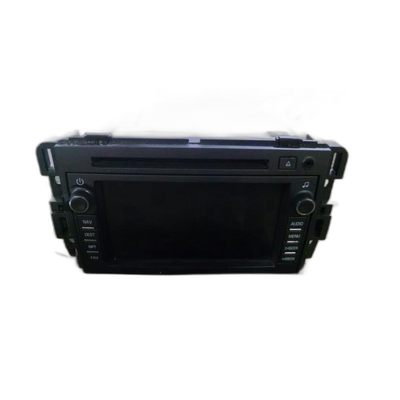

The information in this article is provided for general reference and educational purposes only. Vehicle specifications, procedures, and part compatibility can vary by production date, trim level, and region. Always consult your vehicle's factory service manual and verify part numbers before purchasing or performing repairs. Safety-critical components such as airbags, seat belts, and braking systems should be installed by a qualified professional.
- 🧭 Diagnostic Flowchart
- 🎬 Helpful Videos
- 🛍️ Shop This Part
- What Does B1053 Mean?
- Can I Drive With B1053?
- Common Causes
- Symptoms
- Common Fixes & Costs
- DIY vs Professional
- Used vs. New Parts: Buying Guide
- What Happens If You Wait — Timeline
- Cost of Not Fixing It
- Diagnosis Steps
- When This Code Triggers (Freeze-Frame Conditions)
- Related Codes
- Climate & Environmental Factors
- How to Talk to a Mechanic About This Code
- Where to Take It: Dealer vs Independent vs Chain
- When to Walk Away From the Repair
- What Scan Tool You Need for This Code
- How to Clear the Code After You Fix It
- Will This Fail Emissions / State Inspection?
- Most Commonly Affected Vehicles
- Manufacturer-Specific Notes
- Real Owner Stories
- 2017 Jeep Renegade with 75,000 miles
- 2008 Suzuki SX4 with 110,000 miles
- 2012 Chevrolet Silverado after a minor accident
- 2011 Ford F-150 with 140,000 miles
- How to Prevent This Code From Triggering
- Frequently Asked Questions
- Why does the B1053 code have so many different meanings?
- Is it safe to drive with the airbag light on and a B1053 code?
- My Jeep Renegade won't turn off because of code B1053. What should I do?
- What is a common misdiagnosis for B1053?
- I replaced the part, but the B1053 code won't clear. Why?
- What's the difference between replacing an airbag module and resetting it?
- Can I reset the airbag light myself by disconnecting the battery?
- Key Takeaways
- 🎟️ Get 5% Off