

OBD-II Code B1060: A Pro's Guide to Communication & Airbag Circuit Faults
What B1060 means, why it triggers, and how to fix it for good
- Code B1060 indicates either a B-CAN communication failure on Honda/Acura vehicles or a driver's airbag circuit fault on Nissan/Suzuki vehicles.
- If the airbag light is illuminated, the driver's airbag is disabled and will not deploy in a collision, posing a critical safety risk.
- For airbag-related B1060 codes, replace the clock spring first; for communication codes, test the battery and check the 10A 'Meter' fuse before replacing modules.
- Diagnose CAN bus integrity by measuring resistance between OBD-II pins 6 and 14, which must read approximately 60 Ohms on a healthy network.
- Bypass the driver's airbag using a 2.2-2.5 Ohm resistor to safely confirm if the high resistance fault lies within the clock spring or the airbag inflator.
What Does B1060 Mean?
B1060 signals one of two primary issues depending on the manufacturer. For Honda and Acura, it indicates a communication breakdown on the B-CAN (Body-Controller Area Network) between the Relay Control Module and the instrument cluster. For Nissan, Suzuki, and some GM vehicles, it points to a high resistance fault in the driver's airbag (SRS) circuit.
Technical definition: The SAE/ISO definition for B1060 varies by manufacturer. For Honda/Acura, it is 'Relay Control Module Lost Communication with Gauge Control Module (VSP/NE Message)', meaning the relay module is missing speed or RPM signals. For Nissan and Suzuki, it is 'Driver Airbag First Stage Circuit High Resistance' or a 'Diagnosis Sensor Unit' error, indicating a physical break in the airbag wiring.
Can I Drive With B1060?
Yes, But With Caution. You can drive, but it carries significant risk. If the airbag light is on, the driver's airbag is disabled and will not deploy in a crash, drastically increasing injury risk. If the instrument cluster is failing, you lose your speedometer, temperature gauge, or fuel gauge while driving. Driving without a speedometer leads to speeding tickets, while an inoperative temperature gauge lets the engine overheat, causing catastrophic damage.
Common Causes
- Faulty Clock Spring (Spiral Cable) (Very Common) — The clock spring is the most frequent cause for airbag-related B1060 codes. It is a coiled ribbon of wires behind the steering wheel that maintains electrical connections while turning. The thin internal wires fatigue and break from constant rotation, creating an open circuit or high resistance.
- Weak or Failing Battery (Common) — Low system voltage from a dying battery causes widespread electronic network failures. Control modules require a stable voltage above 12.0V to communicate. A voltage drop during cranking triggers random communication fault codes like B1060, even if the engine starts.
- Blown Fuse(s) (Common) — A blown fuse for the instrument cluster, Body Control Module (BCM), or SRS module interrupts power and communication instantly. Always verify the 10A 'Meter' or 'SRS' fuses under the dash before replacing expensive parts.
- Damaged Wiring or Poor Connections (Common) — Wires corrode, fray, or disconnect. This frequently affects the single B-CAN wire in Honda systems or the yellow SRS connectors under the driver's seat and steering column. High humidity accelerates corrosion on connector pins, increasing circuit resistance.
- Faulty Gauge Control Module (Instrument Cluster) (Less Common) — The instrument cluster fails internally due to cracked solder joints or faulty microprocessors. This stops it from communicating with other modules on the CAN network, logging B1060 alongside U0155.
- Faulty Relay Control Module or Body Control Module (BCM) (Less Common) — The BCM acts as a central hub for body electronics. An internal failure stops it from sending or receiving messages from the gauge cluster, causing communication faults.
- Faulty SRS (Airbag) Control Module (Rare) — The main computer for the airbag system occasionally fails internally. This sets a B1060 code on vehicles where the code is airbag-related, though it is far less common than a clock spring failure.
- Aftermarket Electronics Interference (Rare) — Improperly installed remote starters, alarms, or stereo systems interfere with the CAN bus network. This introduces electrical noise or voltage irregularities that disrupt normal module communication.
Symptoms
- Airbag Warning Light is On — This indicates a fault in the safety restraint system. The driver's airbag is disabled and will not deploy in an accident.
- Gauges Not Working or Behaving Erratically — The speedometer, tachometer, fuel gauge, or temperature gauge freeze, flicker, or drop to zero intermittently.
- Steering Wheel Buttons Don't Work — Controls for the audio system, cruise control, or the horn stop functioning. This is a classic secondary symptom of a severed clock spring.
- Multiple Warning Lights on the Dash — A communication failure causes a cascade of warnings. ABS, traction control, and check engine lights illuminate simultaneously because they rely on data from the failing module.
- Vehicle Won't Start or Has Keyless Entry Issues — A failure in the relay control module prevents the immobilizer from recognizing the key, resulting in a crank-no-start condition.
Diagnostic Flowchart
Tap your situation to follow the diagnostic path that matches what you're seeing on this code.
Common Fixes & Costs
- Replace Clock Spring
— Parts: $80-$250, Labor: $150-$300, ~1.5 hr book time
(Professional)
2013-2020 Nissan Rogue: OEM 25554-4BA1A (Alt: Dorman 525-622)
2003-2007 Honda Accord: OEM 77900-SDA-Y21 (Alt: PHILTOP SK525026) - Replace Battery — Parts: $150-$300, Labor: $25-$50, ~0.5 hr book time (DIY)
- Replace Blown Fuse — Parts: $1-$5, Labor: $0, ~0.2 hr book time (DIY)
- Repair Wiring or Connector — Parts: $10-$50, Labor: $125-$300, ~2.0 hr book time (Intermediate)
- Replace/Repair Instrument Cluster
— Parts: $200-$600, Labor: $150-$300, ~1.5 hr book time
(Professional)
2004-2008 Acura TL: OEM 78100-SEP-A22 (Alt: N/A (Repair services common)) - Replace Relay Control Module / BCM — Parts: $200-$600, Labor: $150-$250, ~1.5 hr book time (Professional)
Used vs. New Parts: Buying Guide
When a used part is worth it: For an instrument cluster, a used part from a reputable recycler is cost-effective if the part number matches exactly and you have professional programming tools. Never buy a used clock spring, as it is a primary wear item.
Donor-vehicle mileage cap: roughly under 60000 miles for the part to have meaningful remaining life.
Donor quality checklist:
- For clusters, verify the donor vehicle's VIN to ensure compatibility and check for water damage.
- Match the OEM part number exactly; a single digit difference means incompatibility.
- Avoid clock springs from high-mileage vehicles or regions with extreme temperatures.
Decision logic:
- If The part is a clock spring → Buy new (OEM or high-quality aftermarket). The safety risk and labor cost of a repeat failure are not worth the savings on a used part.
- If The part is an instrument cluster and a repair service is available for your model → Favor repairing your original unit. This avoids all programming and mileage-related issues.
- If The part is an instrument cluster and repair is not an option → A used part is acceptable only if the part number is identical and a shop can program it to your vehicle.
Warranty tradeoff: Used parts typically have a 30-90 day warranty, which does not cover labor. A new aftermarket clock spring carries a 1-year to lifetime warranty. Reputable cluster repair services offer a 1-year or lifetime warranty.
Worst-case if a used part fails: $300-600 if a used part fails after installation, primarily due to repeat labor costs.
What Happens If You Wait — Timeline
- Immediate: For Airbag Type: The airbag warning light illuminates, disabling the driver's airbag. For Communication Type: Gauges flicker or fail intermittently, especially during startup or in cold weather. (MPG impact: 0%% · Added cost: $0 (but immediate, critical safety risk of airbag non-deployment))
- 1-3 months: For Airbag Type: The horn, cruise control, and steering wheel audio buttons begin to fail as more wires in the clock spring break. For Communication Type: The speedometer drops to zero on the highway, or the temperature gauge stops working entirely. (MPG impact: 0-5% (due to inability to monitor speed/driving habits)% · Added cost: $100-$500 (Potential speeding tickets. Risk of running out of fuel.))
- 3-6 months: For Airbag Type: The clock spring ribbon cable completely severs, leading to total failure of all steering wheel electronic functions. For Communication Type: The instrument cluster fails completely, leading to a no-start condition or an overheated engine. (MPG impact: N/A% · Added cost: $2000-$7000+ (Catastrophic engine damage from overheating if the temp gauge failure is ignored.))
- 6+ months: Driving with a known, disabled safety system carries legal and insurance liability implications in an accident. Continued electrical shorts in a failing instrument cluster damage other connected modules on the CAN bus. (MPG impact: N/A% · Added cost: $500-$2500+ (Compounded repair costs from damage to other modules.))
Cost of Not Fixing It
- Immediate: Airbag system is disabled. In a crash, the driver's airbag will not deploy, drastically increasing the risk of serious injury or death. (Added cost: N/A (Safety Risk))
- 0-3 Months: Loss of speedometer leads to speeding tickets. Loss of temperature gauge leads to engine overheating, causing warped heads or a seized engine if unnoticed. (Added cost: $200 - $5000+)
- 3+ Months: Continued driving with a faulty clock spring damages steering column wiring. Ignoring a failing instrument cluster leads to a complete no-start condition. (Added cost: $500 - $2000)
Diagnosis Steps
- Scan for All Codes & Identify the Definition
Use a professional-grade OBD-II scanner to read 'B' (Body), 'C' (Chassis), and 'U' (Network) codes. Determine your vehicle's specific definition for B1060: is it a communication error (Honda/Acura) or an airbag circuit error (Nissan/Suzuki)? Look for companion codes like U0155 or B1346 for context.
Tools: Professional OBD-II Scanner (Beginner) - Perform a Comprehensive Fuse & Battery Check
Test the battery with a multimeter. It must read at least 12.4V at rest and stay above 10V during cranking. Next, check all fuses related to the Instrument Panel, BCM, and SRS in both fuse boxes. Replace any blown fuses.
Tools: Multimeter, fuse puller (Beginner) - Check Live Data PIDs
Using a bi-directional scanner, access live data for the BCM or SRS module. For communication issues, verify if 'VSP' (Vehicle Speed) or 'Engine RPM' data matches the actual vehicle state. For airbag issues, check the resistance value of 'Driver Airbag Loop 1'. A normal value is 2.0-3.5 Ohms; anything higher confirms a physical circuit break.
Tools: Professional Bi-Directional Scan Tool (Advanced) - Visually Inspect Connectors and Wiring
Inspect wiring and connectors at the likely failure points. For communication issues, check the back of the instrument cluster and the Relay/BCM. For airbag issues, inspect the yellow connectors under the driver's seat and at the steering column base. Look for corrosion or pushed-out pins.
Tools: Flashlight, trim removal tools (Intermediate) - Pro Tip: Bypass the Airbag with a Resistor (Nissan/Suzuki)
Isolate the high resistance fault. Disconnect the battery and driver's airbag module. Insert a 2.2 to 2.5 Ohm resistor across the two airbag circuit pins in the clock spring's vehicle-side connector. Reconnect the battery and clear codes. If B1060 stays away, the fault is the clock spring or airbag module. If it returns, the fault is the wiring or SRS module. WARNING: Never measure the airbag module's resistance directly; it triggers deployment.
Tools: 2.2-2.5 Ohm resistor, trim removal tools, OBD-II scanner (Advanced) - Test the Clock Spring Continuity
If the resistor test points to the clock spring, disconnect the battery, remove the airbag, and unplug both sides of the clock spring. Use a multimeter set to Ohms to check continuity across each pin from front to back. Slowly rotate the clock spring. Any fluctuation or 'OL' (infinite resistance) indicates a broken internal ribbon cable.
Tools: Multimeter, socket set, trim removal tools (Advanced) - Pro Tip: Test the CAN Bus Network Resistance
For communication issues, perform a network integrity test. Disconnect the battery. Measure resistance between OBD-II Pin 6 (CAN High) and Pin 14 (CAN Low). A healthy network reads 60 Ohms. A reading of 120 Ohms indicates an open circuit or a disconnected terminating resistor (often in the instrument cluster).
Tools: Multimeter (Advanced) - Pro Tip: Test Honda B-CAN Voltage
Honda's B-CAN is a single-wire system. With the key ON, back-probe the B-CAN wire at the instrument cluster. A healthy line pulses between 0V and 4-5V. If voltage is stuck near battery voltage or 0V, it indicates a short to power/ground or a dead module pulling the network down.
Tools: Multimeter or Oscilloscope, back-probe pins (Advanced) - Check Module Power and Ground
Verify the suspect module (Instrument Cluster or SRS Module) receives power and ground. With the key on, use a multimeter to confirm battery voltage at the power pins and less than 0.1V of resistance to a clean chassis ground on the ground pins.
Tools: Multimeter, vehicle-specific wiring diagram (Advanced)
When This Code Triggers (Freeze-Frame Conditions)
- System Voltage: 9.5-11.5V (During engine crank (voltage drop))
- Ignition Status: ON (During Key-On-Self-Test (KOST) for airbag circuit check)
- Vehicle Speed: Any (Intermittent communication loss occurs at any time while driving)
- Ambient Temperature: < 40°F (Low temperatures exacerbate a weak battery or cause component contraction)
Related Codes
- B1061 — On Honda/Acura vehicles, B1060 indicates the loss of vehicle speed/RPM data, while B1061 indicates the loss of automatic transmission status data. If both appear, it strongly suggests a general communication failure of the gauge cluster.
- U0155 — U0155 means 'Lost Communication With Instrument Panel Cluster'. If U0155 is present with B1060, the fault is almost certainly the gauge cluster itself or its power/ground.
- B1346 — On Hyundai and Kia vehicles, this is the equivalent of the airbag-related B1060. It translates to 'Driver Airbag Resistance Too High' and shares the same primary causes.
- B1005 / B1008 / B1011 — These are manufacturer-specific 'B' codes indicating communication failures. Seeing B1011 alongside B1060 on a Honda points the diagnostic procedure towards testing the gauge control module first.
Climate & Environmental Factors
- High Humidity / Moisture: Accelerates corrosion on wiring connectors and pins. Moisture seeps into non-sealed instrument clusters, causing condensation on the circuit board and leading to shorts.
- Extreme Cold: Reduces battery voltage, causing communication modules to malfunction and trigger network codes like B1060. Makes plastic wiring insulation and connectors brittle.
- Temperature Cycles (Hot-to-Cold): Causes expansion and contraction of electronic components, leading to microscopic cracks in solder joints on printed circuit boards over time.
How to Talk to a Mechanic About This Code
Say this: "I have a B1060 code and need a diagnostic. If you determine it's an airbag fault, please focus on testing the clock spring and its connectors before quoting a new SRS module. If it's a communication fault, please check the battery, fuses, and instrument cluster connections first."
This signals you've done research and directs the technician to the most common, simple, and inexpensive failure points first. It prevents a shop from immediately quoting an expensive control module replacement.
Avoid saying:
- 'Just fix whatever's wrong'
- 'My airbag light is on, can you look at it?' (too vague — invites upsell)
- 'Whatever you recommend'
Questions to ask before authorizing the repair:
- For an airbag code: Did you test the clock spring's continuity while turning it, or perform a resistor bypass test to confirm the fault location?
- For a communication code: Was the battery tested under load, and were the fuses for the instrument cluster and BCM checked?
- If you are recommending a module replacement (cluster or SRS), is it possible to repair my original unit instead?
- What is the warranty on the parts and labor for this repair?
Where to Take It: Dealer vs Independent vs Chain
- Dealer:
A safe but expensive choice. Necessary if a new instrument cluster or BCM needs to be programmed to the vehicle.
Best for: Vehicles under warranty, Complex electrical issues requiring module programming (instrument cluster, BCM), When you want guaranteed use of OEM parts and have exhausted other options.
Downsides: Highest labor rates, More likely to replace an entire assembly (e.g., instrument cluster) rather than recommend a cheaper repair of the original part. (Typical cost: +50% vs. baseline) - Independent Shop:
Best fit for most B1060 scenarios, especially the common clock spring failure. An indie shop specializing in your car's brand is ideal.
Best for: Out-of-warranty vehicles where cost is a factor., Common, well-documented repairs like a clock spring replacement., Diagnosing electrical issues, as they often have more flexibility than dealers to perform circuit-level tests.
Downsides: Quality and expertise vary widely; vet shops based on reviews and certifications (e.g., ASE)., May not have the expensive, manufacturer-specific tools to program new modules. (Typical cost: +0% vs. baseline) - Chain Shop:
AVOID. The diagnostic nuance of B1060 (airbag vs. communication) is beyond the scope of most chain shops, creating a high risk of expensive and incorrect repairs.
Best for: Simple, routine maintenance like oil changes, tires, and batteries.
Downsides: Technician skill varies dramatically., Often lack the advanced diagnostic tools and training for complex 'B' codes., High pressure to upsell leads to misdiagnosis (e.g., recommending an expensive SRS module when only the clock spring is bad). (Typical cost: -10% vs. baseline)
When to Walk Away From the Repair
If the estimated repair cost exceeds 40-50% of the car's private-party value, seriously consider selling or trading in the vehicle instead of repairing it.
- Car worth $5000, fix is $2200: Borderline. The repair is approaching half the car's value. Get a second opinion before authorizing, especially if the car has other known issues.
- Car worth $10000, fix is $700: Fix it. This repair is well below the threshold and addresses a critical safety or functional issue.
- Car worth $3000, fix is $1800: Walk away. The repair cost is over 50% of the car's value. It's not a sound financial decision to proceed.
What Scan Tool You Need for This Code
Minimum: A scanner that reads and clears manufacturer-specific 'B' (Body) and SRS (Airbag) codes.
A cheap, generic OBD-II reader only shows 'P' (Powertrain) codes and will not see the B1060 code at all. The free scan at an auto parts store often uses a basic reader, so confirm their tool reads SRS/Body codes.
Budget: BlueDriver Pro (~$99) — Connects to your smartphone via Bluetooth and reads/clears SRS, ABS, and other body codes for most major brands. It provides repair reports based on a database of verified fixes.
Mid-range: Foxwell NT510 Elite / Autel MaxiCOM MK808S (~$150-350) — These handheld tools offer full system diagnostics, including reading live data from the SRS module (e.g., 'Driver Airbag Loop Resistance'). Some offer bi-directional controls to test components.
Professional: Launch X431 Series / Autel MaxiSYS Series (~$500-1200) — Provides dealership-level diagnostics, including full bi-directional control, module coding/programming (for replacing an instrument cluster or BCM), and detailed live data graphing.
Rent vs buy: Many auto parts stores offer a loaner tool program where you pay a refundable deposit. Verify their loaner tool is an advanced model capable of reading SRS/Body codes. For a one-time issue like B1060, renting is a good option.
How to Clear the Code After You Fix It
- Ensure all components are reassembled correctly.
- Reconnect the negative battery terminal.
- Use a professional OBD-II scanner capable of reading 'B' codes to clear the fault memory from the SRS or Body Control Module.
- Perform a Key-On-Self-Test (KOST) by turning the ignition to the 'ON' position (without starting) and ensuring the airbag light comes on for a few seconds and then turns off.
Drive cycle (~20 minutes): After clearing the code, perform a short drive cycle to confirm the fix. Include a cold start, 5 minutes of city driving, and 10 minutes of highway driving. Turn the vehicle off and restart to ensure the code does not return.
Readiness monitors affected: Not applicable for 'B' codes in the same way as emissions monitors., However, clearing codes resets all emissions readiness monitors, requiring a full OBD-II drive cycle before a smog test.
Watch out for:
- Disconnecting the battery will not clear a hard fault from the SRS or BCM memory; a scanner is required.
- The code returns instantly if the underlying physical problem (e.g., broken clock spring) is not repaired.
- Using a generic code reader that only clears 'P' (powertrain) codes will not clear the B1060 code.
Will This Fail Emissions / State Inspection?
No — by itself this code doesn't fail OBD inspection (but it can keep readiness monitors from setting, which causes a separate fail).
- California: An airbag light will NOT cause a failure of the California Smog Check, which is only concerned with emissions. However, it is a critical safety issue.
- New York: An illuminated airbag warning light is noted on the inspection report as an advisory, but it is NOT a cause for inspection failure.
- Texas: The airbag light is not listed as a specific failure item in the Texas vehicle safety inspection. The vehicle will likely pass.
- Virginia / Pennsylvania: In states with comprehensive safety inspections, an illuminated airbag light is an automatic failure, as the SRS system is a required safety device.
Most Commonly Affected Vehicles
- Honda Accord (2003-2012) — Very prone to B-CAN communication failures between the relay control module and the gauge cluster. Often appears with B1061.
- Acura TL (2004-2008) — Frequently experiences B1060 due to gauge cluster or MICU communication issues.
- Honda Ridgeline (2006-2014) — Service manuals outline diagnostic procedures for B1060 related to gauge control module communication loss, often alongside B1011 and B1205.
- Nissan Rogue, Sentra, Versa (2013-2020) — Code B1060 is tied to the airbag system, pointing to high resistance in the driver's airbag circuit. The clock spring is the most common failure point.
- Maruti Suzuki Wagon R, Baleno, Swift (2015-2022) — B1060 indicates 'Driver Airbag Circuit High Resistance', almost always caused by a faulty clock spring.
- Chevrolet Cruze, Captiva, Aveo, Spark (2008-2016) — On some Chevrolet models, B1060 means 'Rear Right Speaker Circuit Fault', indicating an audio system issue rather than a communication or airbag problem.
- Hyundai Sonata, i20, Elantra (2011-2017) — These models log a very similar code, B1346 ('Driver Airbag Resistance Too High'), which points to the same common failures like the clock spring.
- Subaru Outback, Forester (2010-2018) — B1060 is logged for 'Driver's Airbag Module Circuit #1 Resistance High', pointing towards a likely clock spring failure.
Manufacturer-Specific Notes
- Honda/Acura: This code almost always points to a B-CAN network communication failure between the Relay Control Module and the Gauge Control Module. The B-CAN is a single-wire network, making it susceptible to a single point of failure.
- Nissan/Suzuki/Maruti: On these brands, B1060 is an airbag system code for 'Driver Airbag Circuit High Resistance'. The most common cause by far is a broken clock spring.
- General Motors (GM): The B1060 definition on GM vehicles is inconsistent. It means 'Rear Right Speaker Circuit Fault' on a Chevy Cruze, relates to the anti-theft system on other models, or points to a 'Diagnosis Sensor Unit' fault on vehicles with a Suzuki-based airbag system.
- Ford/Subaru/Others: For many other manufacturers, B1060 is an undefined manufacturer-specific code. It is absolutely critical to use a high-level scan tool that provides the manufacturer's specific definition.
Real Owner Stories
2013 Nissan Rogue at 110K miles - The Misdiagnosis
Airbag light was on. Horn and cruise control worked intermittently. Radio controls on steering wheel went haywire.
What they tried:
- Replaced horn relay and fuse, which only worked for a few minutes.
- A shop quoted over $1500, wanting to replace the clock spring AND the airbag module itself.
Outcome: Owner replaced only the clock spring at home. The part cost $180. All symptoms (airbag light, horn, cruise control) were resolved. Total repair time was 2 hours.
Lesson: The clock spring is the primary failure point for airbag-related B1060 codes, causing secondary issues with steering wheel buttons. It is rare for the airbag module itself to fail. Start with the clock spring.
2007 Honda Accord at 150K miles - The "Easy" Fix
All gauges (speedometer, tach, temp) randomly dropped to zero while driving. B1060 and U0155 codes were present.
What they tried:
- Initially suspected a bad instrument cluster and got a quote for $800 for a replacement.
- Checked online forums which suggested checking the battery and fuses first.
Outcome: The owner discovered a blown 10A fuse for the instrument panel. Replacing the $2 fuse completely resolved the issue. The gauges returned to normal.
Lesson: For communication-based B1060 codes on Hondas, check the simple things first. A weak battery or a single blown fuse mimics the symptoms of a catastrophic module failure.
2016 Maruti Suzuki Brezza - The Intermittent Connector
Airbag light was on constantly. A scan showed B1060-1B 'Driver Air Bag Circuit High Resistance'.
What they tried:
- A mechanic disassembled the steering column to access the clock spring.
- Tested the continuity of the existing clock spring with a multimeter and found it to be good.
Outcome: The mechanic disconnected the clock spring's electrical connectors, cleaned them with contact cleaner, and reconnected them securely. This fixed the high resistance issue permanently.
Lesson: High resistance codes don't always mean a part is broken. Cleaning connectors with a dedicated electronic cleaner and re-seating them is a zero-cost fix to attempt before ordering parts.
2006 Acura TL - The Hidden Cause
Gauges behaved erratically, and multiple warning lights (ABS, Check Engine, Airbag) came on at once in cold weather. Code B1060 was stored.
What they tried:
- Replaced the battery, which did not solve the problem.
- A shop suggested replacing the entire instrument cluster for over $1200.
Outcome: The owner sent the original instrument cluster to a specialized electronics repair service for $250. The service repaired cracked solder joints on the main circuit board, solving all problems.
Lesson: For communication issues, if the battery and fuses are good, have the original instrument cluster repaired. It is cheaper than a full replacement and avoids dealership programming fees.
How to Prevent This Code From Triggering
- Periodically clean and protect key electrical connectors (Every 2-3 years or during other maintenance) — Applying dielectric grease to connectors creates a barrier against moisture and oxygen, preventing the corrosion that causes high resistance faults.
- Maintain battery health and terminals (Annually) — Low or unstable voltage from a weak battery is a primary cause of communication codes. Regularly clean terminals of corrosion and ensure the battery is fully charged.
- Avoid turning the steering wheel to full lock and holding it there (Daily habit) — Holding the wheel at its absolute limit puts maximum stress on the clock spring's internal ribbon cable. Minimizing extreme stress prolongs its mechanical life.
- Be careful during steering/dash repairs (During relevant repairs) — Never let the steering wheel spin freely when the steering rack is disconnected. Ensure the new clock spring is perfectly centered before installing the steering wheel to prevent it from tearing.
- Limit the use of electronics when the engine is off (Daily habit) — Running the radio or lights without the engine running drains the battery, leading to low voltage conditions that trigger spurious communication faults like B1060 upon startup.
Frequently Asked Questions
Is it safe to drive with a B1060 code?
No. If the airbag light is on, the driver's airbag will not deploy in a collision. If the code is a communication error, you risk the sudden loss of your speedometer or engine temperature gauge. This leads to unsafe driving conditions or severe engine damage.
Can a bad battery cause a B1060 code?
Yes. A weak battery providing unstable voltage is a primary cause of communication-related fault codes like B1060, particularly in cold weather. Always have your battery and charging system professionally tested before replacing expensive modules.
My horn and cruise control stopped working. Is this related to B1060?
Yes, this is a classic symptom of a failed clock spring. The clock spring contains the wiring for those buttons and the driver's airbag. When it breaks, it triggers an airbag-related B1060 code and disables those steering wheel functions simultaneously.
How much does it cost to fix code B1060?
Costs vary widely based on the root cause. A simple fuse costs under $5, while a clock spring replacement averages $250 to $550 at a shop. Instrument cluster repairs or replacements range from $200 to over $1,200 depending on the vehicle.
Can I reset the B1060 airbag light myself?
You can clear the code with a scanner, but it returns immediately if the underlying physical fault remains. Manual key-on/key-off reset procedures on older vehicles will not fix a hard fault like a broken clock spring. The only way to permanently turn off the light is to repair the broken component.
What is the most common misdiagnosis for B1060?
The most common mistake is immediately replacing an expensive control module without ruling out simpler causes. Always check fuses, battery health, and perform wiring inspections first. Using a 2.2-Ohm resistor to bypass the airbag is a required professional step to avoid incorrectly replacing a good clock spring.
What does 'Circuit High Resistance' mean?
This means there is too much electrical resistance in the circuit, usually caused by a broken wire, a corroded connector, or a loose pin. For an airbag-related B1060, the break is almost always inside the clock spring's flexible ribbon cable due to constant steering wheel rotation.
Can I replace a clock spring myself?
This is not recommended for beginners because it involves handling an explosive airbag module. Incorrect installation damages the new clock spring or causes the airbag to malfunction. If you attempt this, you must disconnect the battery for at least 15 minutes before starting.
Key Takeaways
- Code B1060 indicates either a B-CAN communication failure on Honda/Acura vehicles or a driver's airbag circuit fault on Nissan/Suzuki vehicles.
- If the airbag light is illuminated, the driver's airbag is disabled and will not deploy in a collision, posing a critical safety risk.
- For airbag-related B1060 codes, replace the clock spring first; for communication codes, test the battery and check the 10A 'Meter' fuse before replacing modules.
- Diagnose CAN bus integrity by measuring resistance between OBD-II pins 6 and 14, which must read approximately 60 Ohms on a healthy network.
- Bypass the driver's airbag using a 2.2-2.5 Ohm resistor to safely confirm if the high resistance fault lies within the clock spring or the airbag inflator.
Shop the Parts Behind B1060
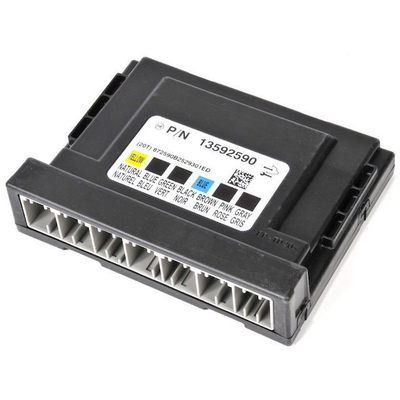
Below are the parts most often responsible for code B1060, ranked by how frequently each one is the actual culprit (per the diagnosis above). Tap any to see what we have for your vehicle.




The information in this article is provided for general reference and educational purposes only. Vehicle specifications, procedures, and part compatibility can vary by production date, trim level, and region. Always consult your vehicle's factory service manual and verify part numbers before purchasing or performing repairs. Safety-critical components such as airbags, seat belts, and braking systems should be installed by a qualified professional.
- 🧭 Diagnostic Flowchart
- 🛍️ Shop This Part
- What Does B1060 Mean?
- Can I Drive With B1060?
- Common Causes
- Symptoms
- Common Fixes & Costs
- Used vs. New Parts: Buying Guide
- What Happens If You Wait — Timeline
- Cost of Not Fixing It
- Diagnosis Steps
- When This Code Triggers (Freeze-Frame Conditions)
- Related Codes
- Climate & Environmental Factors
- How to Talk to a Mechanic About This Code
- Where to Take It: Dealer vs Independent vs Chain
- When to Walk Away From the Repair
- What Scan Tool You Need for This Code
- How to Clear the Code After You Fix It
- Will This Fail Emissions / State Inspection?
- Most Commonly Affected Vehicles
- Manufacturer-Specific Notes
- Real Owner Stories
- 2013 Nissan Rogue at 110K miles - The Misdiagnosis
- 2007 Honda Accord at 150K miles - The "Easy" Fix
- 2016 Maruti Suzuki Brezza - The Intermittent Connector
- 2006 Acura TL - The Hidden Cause
- How to Prevent This Code From Triggering
- Frequently Asked Questions
- Is it safe to drive with a B1060 code?
- Can a bad battery cause a B1060 code?
- My horn and cruise control stopped working. Is this related to B1060?
- How much does it cost to fix code B1060?
- Can I reset the B1060 airbag light myself?
- What is the most common misdiagnosis for B1060?
- What does 'Circuit High Resistance' mean?
- Can I replace a clock spring myself?
- Key Takeaways
- 🎟️ Get 5% Off