

OBD-II Code B1082: A Tale of Two Faults - Airbags or Air Conditioning
What B1082 means, why it triggers, and how to fix it
- Code B1082 signals an HVAC blend door failure on Ford and GM vehicles, or a critical airbag seat belt pretensioner fault on Nissan and Infiniti models.
- An illuminated airbag light with B1082 means your entire Supplemental Restraint System is disabled, requiring immediate repair before driving.
- A clicking dashboard or uneven cabin temperatures confirms a stripped blend door actuator, a $150 to $1,200 repair depending on dashboard disassembly.
- Test your battery voltage (must be >12.4V) and check for TSBs before buying parts, as low voltage triggers false B1082 codes on modern trucks.
- Fixing B1082 costs as little as $50 for a mail-in SRS module reset, or up to $1,500 for a dealer-installed blend door actuator buried behind the dashboard.
What Does B1082 Mean?

B1082 indicates two completely different failures depending on your vehicle's manufacturer. On Ford, Jaguar, and GM vehicles, it flags a failed 'Right Temperature Damper Motor' (blend door actuator) in the climate control system. On Nissan and Infiniti models, it signals a critical safety fault in the 'Right Front Seat Belt Pretensioner Circuit'.
Technical definition: The official SAE/ISO definition varies by manufacturer. For Ford, it is 'Right Temperature Damper Motor Circuit', often with a suffix like :07 (mechanical failure), :11 (short to ground), :12 (short to battery), or :13 (open circuit). For Nissan/Infiniti, it is 'Right-hand Front Seat Belt Pre-Tensioner Circuit Shorted To Power Supply'.
Can I Drive With B1082?
Yes, But With Caution. If B1082 triggers your A/C, you can drive safely with compromised climate control. If it triggers the airbag (SRS) light, do not drive. An active SRS light disables your airbags and seatbelt pretensioners, guaranteeing they will not deploy in a crash.
Common Causes

- Failed Blend Door Actuator (HVAC Issue) (Very Common) — The small electric motor or plastic gears inside the actuator wear out or break, causing it to stick in one position.
- Faulty Seat Belt Pretensioner (Airbag Issue) (Very Common) — The pretensioner unit fails due to a past accident, internal corrosion, or component degradation over time.
- Binding or Broken Blend Door (HVAC Issue) (Common) — The plastic door inside the HVAC housing binds or breaks. The actuator tries to move the stuck door, burning out the motor. This is documented in Ford TSB 22-2127.
- Low Battery Voltage (Both Issues) (Common) — A weak battery causes voltage drops during startup, triggering erroneous HVAC actuator codes or airbag system faults in sensitive control modules.
- Damaged Wiring or Connectors (Both Issues) (Common) — Pinched wires, loose connections, or water intrusion short out the signal. The yellow pretensioner connector under the seat and dashboard actuator wiring are primary targets.
- Faulty Airbag Control Module (Airbag Issue) (Less Common) — The main SRS module fails or stores 'crash data' after an accident, preventing system operation and triggering pretensioner codes.
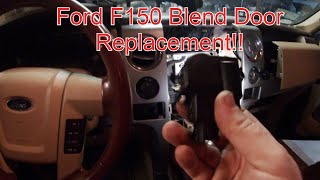
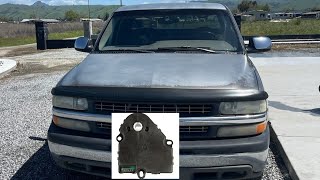
- Faulty HVAC Control Module (HVAC Issue) (Less Common) — The module commanding the actuator fails, meaning replacing the actuators will not solve the temperature control problem. 🎬 Watch: Replacing the temperature control actuator on a Chevy Silverado.
Symptoms

- Airbag Warning Light is On — The light stays on constantly, indicating a disabled Supplemental Restraint System (SRS).
- A/C Blows Hot on One Side, Cold on the Other — A classic sign of a failed blend door actuator in a dual-zone climate system.
- Clicking or Ticking Noise From the Dashboard — A repetitive clicking sound occurs as a stripped actuator gear tries and fails to move the temperature door.
- Inability to Change Air Temperature — The fan works, but the temperature remains stuck in one position because the blend door cannot move.
- Seat Belt is Locked or Won't Retract — A deployed pretensioner locks the seat belt tightly. An electrical fault causes the belt to feel loose or fail to retract.
- HVAC Actuator Position PID Stuck (scan-tool only — no driver-felt sign) — Live scan tool data shows the actuator's position (e.g., R_TEMP_DOOR_ACT_POS) stuck at 0 or its maximum value, confirming it is not moving.
- SRS Module Shows 'Short to Power' Fault (scan-tool only — no driver-felt sign) — An SRS scanner displays 'Right-hand Front Seat Belt Pre-Tensioner Circuit Shorted To Power Supply', confirming an electrical airbag fault.
Diagnostic Flowchart

Tap your situation to follow the diagnostic path that matches what you're seeing on this code.
Common Fixes & Costs
- Replace the Blend Door Actuator
— Parts: $30-$100, Labor: $150-$1,200 (Labor varies dramatically based on dashboard disassembly requirements)., ~1.0-8.0 hr book time
(Intermediate)
Ford F-150 (2015-2020): OEM
Chevy Silverado (2014-2018): OEM - Replace the Seat Belt Pretensioner Assembly
— Parts: $200-$450, Labor: $150-$300, ~1.0-2.0 hr book time
(Intermediate)
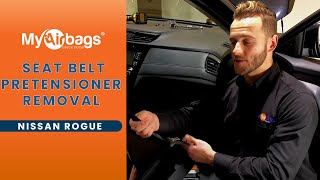
Nissan Rogue (2017-2020): OEM - Repair/Rebuild the Original Seat Belt Pretensioner — Parts: $65-$120 (mail-in service), Labor: $50-$100, ~0.5-1.0 hr book time (DIY)
- Reset the Airbag Control Module (SRS) — Parts: $50 (mail-in service), Labor: $50-$100, ~0.5-1.0 hr book time (DIY)
- Replace the HVAC Control Module — Parts: $150-$400, Labor: $100-$200, ~1.0-1.5 hr book time (Professional)
- Replace HVAC Housing Assembly — Parts: $300-$600, Labor: $800-$1500+, ~8.0-12.0 hr book time (Professional)
Used vs. New Parts: Buying Guide
When a used part is worth it: Buy new blend door actuators, as they are inexpensive and used parts have unknown wear. For a seat belt pretensioner, a rebuilt original part or a used OEM part from a non-flood vehicle is a cost-effective alternative.
Donor-vehicle mileage cap: roughly under 60000 miles for the part to have meaningful remaining life.
Donor quality checklist:
- Verify the donor vehicle was not in a flood or major collision.
- Ensure pretensioner part numbers and interior color codes match exactly.
- Reject parts with visible corrosion on connectors.
Decision logic:
- If The part is a blend door actuator → Buy new. Cost savings are minimal and not worth the risk of premature failure.
- If The part is a seat belt pretensioner AND budget is the primary concern → Use a rebuilt original part or a used OEM part, acknowledging the slightly higher risk.
- If The part is a safety component (pretensioner) AND vehicle is for family transport → Buy new OEM for peace of mind and warranty coverage.
Warranty tradeoff: Used parts carry 30-90 day warranties. Aftermarket new parts offer 1-year warranties. New OEM parts carry 1-2 year warranties.
Worst-case if a used part fails: $150-$500 if a used pretensioner is faulty, requiring repeat labor and module resets.
What Happens If You Wait — Timeline
- Immediate (Airbag Fault): The SRS warning light illuminates. The control module disables the entire supplemental restraint system, including all airbags and seat belt pretensioners. (MPG impact: 0%% · Added cost: $0 (Represents a critical safety failure, not a monetary one).)
- Ongoing (Airbag Fault): The system remains disabled. The vehicle fails state safety inspections. The driver faces a continuous risk of serious injury or death in a collision. (MPG impact: 0%% · Added cost: $350 - $750 (Repair becomes mandatory to pass inspection or legally sell the vehicle).)
- 0-2 Months (HVAC Fault): A clicking noise emerges from the dash, and the passenger side temperature control fails. This is an annoyance with no mechanical impact. (MPG impact: 0%% · Added cost: $0)
- 2-6+ Months (HVAC Fault): The constant clicking becomes a distraction. In cold climates, the inability to defrost the passenger windshield poses a safety hazard. A binding door burns out any newly installed actuator. (MPG impact: 0%% · Added cost: $30 - $100 (Cost of a replacement actuator ruined by a binding door).)
Cost of Not Fixing It
- Immediate (Airbag Fault): The entire Supplemental Restraint System is disabled. Airbags will not deploy in a crash, drastically increasing the risk of severe injury or death. (Added cost: N/A (Safety Risk))
- Ongoing (HVAC Fault): Loss of passenger-side climate control. In cold climates, the inability to defrost the passenger windshield is a safety hazard. (Added cost: Negligible)
- 1-6+ Months (HVAC Fault): A binding door burns out any newly installed actuator, requiring repeat replacements. (Added cost: $30-$100 (Cost of a ruined replacement actuator))
Diagnosis Steps
- Identify the Faulty System (Airbag or HVAC)
Determine which system the code targets. An illuminated airbag light indicates a safety system issue (Nissan/Infiniti). Climate control problems or clicking noises indicate an HVAC issue (Ford/GM).
Tools: OBD-II Scanner (SRS capable) (Beginner) - Visual and Auditory Inspection
For an airbag code, check the yellow connector under the front passenger seat for secure fitment and lack of corrosion. For an HVAC code, listen for a clicking noise behind the glove box when changing temperature settings.
Tools: Flashlight (Beginner) - Test Battery Voltage and Check TSBs
Test the battery; it must be above 12.4V at rest and maintain above 10V during cranking. Search for Technical Service Bulletins (TSBs) for your vehicle, such as Ford SSM 49712 (software update) or SSM 49264 (binding door).
Tools: Battery Tester, Internet Access (Intermediate) - Test the Blend Door Actuator with a Scan Tool (HVAC)
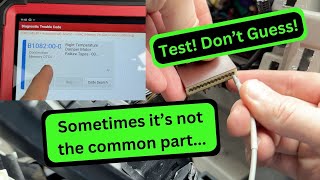
Use a bidirectional scan tool to command the blend door actuator to move. If the position percentage doesn't change, you hear clicking, or the tool reports code B1082:07, the actuator or door has failed.
Tools: Bidirectional Scan Tool (Intermediate) - Inspect the Blend Door Manually (HVAC)
If a new actuator fails, remove it and move the blend door linkage by hand. It must move smoothly. If it binds or feels broken, the HVAC case requires internal repair (Ford TSB 22-2127).
Tools: Basic Hand Tools (Intermediate) - Pretensioner Circuit Resistance Test (Nissan)
WARNING: Disconnect the battery and wait 3 minutes. Never probe the pretensioner directly. Disconnect the pretensioner and plug a 2.0-2.5 ohm resistor tool into the harness. If the B1082 code changes to an 'Open Circuit' code, the pretensioner is shorted internally.
Tools: High-Impedance Multimeter, 2.2-ohm Resistor Tool (Advanced) - HVAC Actuator Circuit Test (Ford)
Disconnect the actuator and probe the harness. With the key on, verify a 5V reference and ground. As you change the temperature, the HVAC module must send alternating polarity voltage (+12V/Ground, then Ground/+12V) to the motor control wires. No voltage change indicates a bad module or wiring.
Tools: Multimeter, Vehicle-Specific Wiring Diagram (Advanced) - Check for Power and Ground at the Component Connector
Use a multimeter to verify correct voltage and ground signals from the control module at the actuator or pretensioner connector. This isolates the fault to the component, the wiring, or the module.
Tools: Multimeter, Vehicle-Specific Wiring Diagram (Advanced)
When This Code Triggers (Freeze-Frame Conditions)
- System Voltage: 11.5-14.8V (Low voltage during startup causes spurious codes in sensitive body modules.)
- Commanded Position vs. Actual Position (HVAC): Mismatch (The HVAC module commanded the actuator to 80%, but the feedback sensor reported 5%, triggering the fault.)
- Circuit Resistance/Continuity (SRS): Out of Range (Short to Power) (The SRS module detected incorrect voltage on the pretensioner circuit during a self-check.)
- Fault Counter: >1 (The module detected the fault over multiple drive cycles before logging a 'hard' code and illuminating the warning light.)
Related Codes
- B1081 — Ford's code for 'Left Temperature Damper Motor'. If B1081 and B1082 appear together, it indicates a systemic issue like a faulty HVAC module or software glitch, not two simultaneously failed actuators.
- B11E6 — Ford's code for 'Right HVAC Damper Position Sensor'. It indicates an internal electrical failure in the actuator's sensor circuit, whereas B1082 points to the motor drive circuit.
- B1083 / B1084 (Nissan) — These relate to the right front seat belt pretensioner. B1083 indicates a short to ground, while B1084 indicates an open circuit, directing diagnostics toward pinched or broken wires.
- U-Series Codes (e.g., U0155) — Communication codes indicate a network failure. If present with B1082, prioritize the U-codes, as the root cause is a wiring problem, failing control module, or low system voltage.
Climate & Environmental Factors
- High Humidity: Moisture accelerates corrosion on electrical pins, causing intermittent connections for under-seat airbag connectors and dashboard HVAC actuators.
- Extreme Cold: Cold weather makes plastic brittle, causing blend door actuator gears to strip when attempting to move a stiff blend door during startup.
- Water Leaks: Clogged sunroof drains or bad windshield seals allow water to pool, directly shorting out airbag modules, pretensioner connectors, or HVAC actuators.
How to Talk to a Mechanic About This Code
Say this: "For an airbag light: 'I have an airbag warning light on, and my scanner shows code B1082 for the passenger seat belt pretensioner. I need a diagnostic to confirm the fault.' For an HVAC issue: 'My passenger side A/C isn't working and the dash clicks. My scanner shows code B1082 for the blend door actuator. Can you diagnose and estimate the repair?'"
This frames the conversation around confirming a specific, known issue rather than a vague problem, preventing unnecessary diagnostic time and protecting against upselling.
Avoid saying:
- 'My check engine light is on, can you just fix it?' (It's an airbag or HVAC light, not check engine).
- 'Just replace the part for code B1082.' (This makes you liable if the part replacement doesn't fix the issue).
- 'Do whatever you think is best.' (This invites extra services).
Questions to ask before authorizing the repair:
- For HVAC: If you replace the actuator and the problem returns, is the follow-up diagnosis included? Did you check if the blend door moves freely?
- For Airbag: Will the SRS module need a reset after the pretensioner is replaced, and is that included in the quote?
- Will you use an OEM or aftermarket part, and what is the warranty on parts and labor?
Where to Take It: Dealer vs Independent vs Chain
- Dealer:
Best for: Vehicles under warranty or with an active recall/service campaign (like Nissan P2A08)., Airbag (SRS) system repairs, due to liability and direct access to manufacturer procedures., Complex HVAC issues requiring a software update or TSB fix.
Downsides: Highest labor rate and part costs., Defaults to replacing entire assemblies rather than smaller components. (Typical cost: +50% vs. baseline) - Independent Shop:
Best for the HVAC fault. For the airbag fault, a reputable independent shop is good, but the dealer is safer for SRS expertise.
Best for: Out-of-warranty HVAC blend door actuator replacements., Vehicles where cost is a primary concern., Simple wiring repairs or connector cleaning.
Downsides: Quality varies; vet shops by reviews and ASE certifications., Some shops refuse SRS/airbag work due to liability. (Typical cost: +0% vs. baseline) - Chain Shop:
AVOID. Both versions of B1082 require diagnostic capabilities beyond the scope of most chain shops.
Best for: Simple part swaps where the diagnosis is already certain and the part is easily accessible.
Downsides: Technician skill varies dramatically., High pressure to upsell services., Lacks equipment for in-depth SRS diagnostics or complex dashboard disassembly. (Typical cost: -10% vs. baseline)
When to Walk Away From the Repair
If the estimated repair cost exceeds 50% of the car's private-party value, consider alternatives. However, an airbag fault is a mandatory safety repair.
- Car worth $5000, fix is $600: Fix it. This is a reasonable cost for either repair and well below the threshold.
- Car worth $3000, fix is $1500: Borderline (HVAC); Fix it (Airbag). An HVAC issue is a tough call. An airbag issue is non-negotiable for safety, but evaluate the car's overall health first.
- Car worth $2000, fix is $750: Fix it if it's an airbag fault. A disabled airbag system makes the car unsafe and illegal to sell in many states.
What Scan Tool You Need for This Code
Minimum: A scanner that reads Body (B) and SRS (Airbag) codes. A basic engine-only reader will NOT see or clear this code.
B1082 is a manufacturer-specific Body code. You need a tool that accesses HVAC and SRS control modules. A basic $20 scanner reports 'no codes found' while your airbag light is on.
Budget: BlueDriver Pro (~$99) — Reads and clears SRS and Body codes, provides freeze-frame data, and offers a database of potential fixes.
Mid-range: Foxwell NT604 Elite / XTOOL D7 (~$150) — Offers bidirectional control to command the blend door actuator to move. Performs a full SRS system reset after component replacement.
Professional: Autel MaxiCOM MK808S / MK900 (~$450) — Provides full bidirectional control, deep system access for HVAC and SRS modules, live data graphing, and ECU coding functions.
Rent vs buy: Auto parts stores offer free scanner services, but their tools often cannot read Body or SRS codes. Buy at least a budget-level SRS-capable scanner to confirm the fix and clear the light.
How to Clear the Code After You Fix It
- For HVAC, perform a module recalibration using a scan tool or button sequence (e.g., on Fords, press 'Off' and 'Floor' then 'Auto').
- For SRS, use an SRS-capable OBD-II scan tool to clear the code. Disconnecting the battery will NOT clear a hard airbag fault.
- Cycle the ignition and operate the repaired system to confirm the code does not return.
Drive cycle (~5 minutes): Body and Safety codes do not require a complex drive cycle. A 'Key-On, Engine-Off' (KOEO) self-test verifies the repair. Operate the affected function to confirm the fix.
Readiness monitors affected: None
Watch out for:
- Clearing the code without a repair results in the code returning instantly.
- Forgetting the HVAC actuator recalibration step causes improper operation and returning codes.
- Using a basic OBD-II scanner fails to clear airbag codes because it cannot communicate with the SRS module.
Will This Fail Emissions / State Inspection?
No — by itself this code doesn't fail OBD inspection (but it can keep readiness monitors from setting, which causes a separate fail).
- California: An airbag light will NOT fail the smog inspection, but it is a safety defect sellers must legally disclose.
- New York: An illuminated airbag warning light is an automatic failure for the annual safety inspection.
- Texas: An illuminated airbag (SRS) light is a reason for rejection during the annual safety inspection.
Most Commonly Affected Vehicles
- Ford F-150 (2009-2021) — Extremely common for passenger-side blend door actuator failure. 2021 models require an HVAC software update (TSB SSM 49712). 2015-2020 models suffer from binding doors causing repeat failures (TSB 22-2127).
- Nissan Rogue / Rogue Sport (2017-2023) — Frequently points to the right-hand front seat belt pretensioner. Service campaign P2A08 replaces the passenger airbag and pretensioner for certain 2021 models.
- Ford Ranger (2019-2020) — TSB SSM 49264 notes B1082 is common due to a binding blend door, requiring replacement of the entire HVAC housing to prevent repeat failures.
- Chevrolet / GMC Silverado / Sierra (2010-2018) — Typically relates to the passenger-side blend door actuator. Labor costs vary from $150 to $900 depending on dashboard disassembly requirements.
- Ford Mustang (2015-2022) — Commonly reported for the passenger side blend door actuator, often appearing alongside code B11E6.
- Infiniti G35 / G37 (2007-2013) — Almost always refers to the right front seat belt pretensioner, requiring replacement or rebuild.
- Ford F-250 / F-350 Super Duty (2011-2022) — TSB 22-2127 addresses a binding door cam issue requiring lubrication or replacement for 2017-2022 models to stop repeat actuator failures.
Manufacturer-Specific Notes
- Ford: Code B1082 almost always refers to the passenger side temperature blend door actuator. TSBs 22-2127 and SSM 49264 address physically binding doors that cause repeat actuator failures.
- Nissan/Infiniti: This code exclusively flags the right front seat belt pretensioner circuit. It stores after an accident, requiring an SRS module reset. Campaign P2A08 provides free replacement for some 2021 Rogues.
- General Motors (Chevy/GMC): B1082 relates to HVAC blend door actuators. Labor for replacement ranges from simple glovebox access to extremely complex dashboard removal.
Real Owner Stories
2012 Ford F-150 XLT with Dual Climate Control
Heard a repetitive clicking noise from the dashboard. The passenger side A/C only blew cold air, regardless of the temperature setting. Code B1082 was active.
What they tried:
- Replaced the passenger side blend door actuator with an aftermarket part.
- When the clicking continued, replaced it a second time with an OEM Ford part.
- The problem persisted, indicating the actuator itself was not the root cause.
Outcome: The owner discovered a broken piece of the blend door inside the blower motor housing. A binding door caused the replacement actuators to fail instantly.
Lesson: If you replace a blend door actuator and the clicking returns, suspect a binding blend door inside the HVAC case (Ford TSB 22-2127). Always move the door linkage by hand to feel for resistance before installing a new actuator.
2018 Nissan Rogue with Airbag Light On
The airbag warning light stayed illuminated. A scan revealed code B1082: 'Right-hand Front Seat Belt Pre-Tensioner Circuit Shorted To Power Supply'.
What they tried:
- Checked the yellow connector under the passenger seat, finding it secure.
- A shop diagnosed an internal failure of the seat belt pretensioner assembly.
Outcome: The owner used a mail-in repair service for the original pretensioner, saving hundreds over a new OEM part. After reinstalling the rebuilt unit and resetting the SRS module, the code cleared.
Lesson: A faulty pretensioner is the most common cause for the Nissan B1082 code. Using a mail-in rebuild service and an SRS module reset saves significant money compared to dealer replacement.
2015 Ford F-150 with Intermittent HVAC Issues After Remote Start
After using remote start, the passenger side climate control defaulted to blowing cold air, triggering code B1082.
What they tried:
- Initially suspected a failing blend door actuator.
- Forum research suggested checking the battery's health first.
Outcome: A battery test revealed a weak original battery. Replacing the battery stopped the strange HVAC behavior during remote start, and the B1082 code never returned.
Lesson: On modern trucks, a weak battery causes the Battery Management System to shed electrical loads, triggering spurious HVAC codes. Always test the battery before replacing expensive components.
2021 Nissan Rogue with B1082 and Service Campaign Notice
Code B1082 appeared shortly before the owner received a notice for Nissan 'Voluntary Service Campaign' P2A08.
What they tried:
- Took the vehicle to a Nissan dealership referencing the service campaign.
Outcome: The dealer replaced the front passenger airbag, the front passenger seat belt pretensioner, and reprogrammed the Airbag Control Unit (ACU) at no cost. This resolved the B1082 code.
Lesson: Always check for recalls and service campaigns. Nissan campaign P2A08 directly addresses the components related to code B1082 for certain 2021 Rogues.
How to Prevent This Code From Triggering
- Maintain Battery Health (Test annually after 3 years) — Low voltage from a dying battery causes spurious electrical faults in sensitive HVAC and SRS controllers, especially in modern Ford vehicles.
- Address Water Leaks Immediately (As needed) — Water from clogged sunroof drains or spills pools under seats or behind the dash, directly shorting out airbag modules, pretensioner connectors, and HVAC actuators.
- Cycle HVAC Settings Periodically (Monthly) — Moving the blend doors through their full range of motion prevents plastic gears and doors from seizing or sticking due to lack of use.
- Protect the Under-Seat Area (Ongoing) — Storing items under front seats impacts sensitive airbag and pretensioner wiring. The yellow connectors are highly vulnerable to physical damage.
Frequently Asked Questions
Can I just reset the B1082 code to fix it?
No. Airbag codes are 'hard codes' that return instantly until the electrical fault is repaired. HVAC codes also return as soon as the module detects the failure again.
Why is my airbag light on if I wasn't in an accident?
Seat belt pretensioners fail over time due to internal corrosion or wiring issues. The connector under the seat is a common failure point from physical damage or water intrusion.
Is it safe to drive with an airbag code B1082?
No. An active airbag code disables the entire Supplemental Restraint System. Your airbags will not deploy in a crash, drastically increasing the risk of severe injury.
The shop replaced my blend door actuator but the code came back. What now?
The blend door itself is likely binding inside the HVAC case, burning out the new actuator (Ford TSB 22-2127). Alternatively, the wiring or the HVAC control module has failed.
Can I replace a blend door actuator or seat belt pretensioner myself?
Actuator replacement is DIY-friendly if accessible, but advanced if it requires dashboard removal. Pretensioner replacement requires disconnecting the battery for 5 minutes to prevent dangerous accidental deployment.
My remote start works, but then the heat turns cold. Is it the actuator?
Not necessarily. On modern Ford trucks, a weak battery causes the Battery Management System to shed electrical loads during startup, triggering false B1082 codes. Test your battery first.
What's the difference between replacing a pretensioner and repairing it?
Repairing involves mailing your faulty unit to a service that rebuilds the internal mechanism and pyrotechnic charge. This is significantly cheaper than buying a brand new OEM replacement from the dealer.
Will a B1082 airbag code cause me to fail an inspection?
Yes. In jurisdictions with safety inspections, an illuminated airbag or SRS warning light is an automatic failure.
I changed my car battery and now the B1082 code is on. Why?
Voltage spikes during a battery change trigger sensitive faults in the SRS or HVAC modules. Disconnect the battery for 15 minutes to reset the modules; if the code returns, diagnose the underlying issue.
Key Takeaways
- Code B1082 signals an HVAC blend door failure on Ford and GM vehicles, or a critical airbag seat belt pretensioner fault on Nissan and Infiniti models.
- An illuminated airbag light with B1082 means your entire Supplemental Restraint System is disabled, requiring immediate repair before driving.
- A clicking dashboard or uneven cabin temperatures confirms a stripped blend door actuator, a $150 to $1,200 repair depending on dashboard disassembly.
- Test your battery voltage (must be >12.4V) and check for TSBs before buying parts, as low voltage triggers false B1082 codes on modern trucks.
- Fixing B1082 costs as little as $50 for a mail-in SRS module reset, or up to $1,500 for a dealer-installed blend door actuator buried behind the dashboard.
Helpful Videos

Shop the Parts Behind B1082
Below are the parts most often responsible for code B1082, ranked by how frequently each one is the actual culprit (per the diagnosis above). Tap any to see what we have for your vehicle.



The information in this article is provided for general reference and educational purposes only. Vehicle specifications, procedures, and part compatibility can vary by production date, trim level, and region. Always consult your vehicle's factory service manual and verify part numbers before purchasing or performing repairs. Safety-critical components such as airbags, seat belts, and braking systems should be installed by a qualified professional.
- 🧭 Diagnostic Flowchart
- 🎬 Helpful Videos
- 🛍️ Shop This Part
- What Does B1082 Mean?
- Can I Drive With B1082?
- Common Causes
- Symptoms
- Common Fixes & Costs
- Used vs. New Parts: Buying Guide
- What Happens If You Wait — Timeline
- Cost of Not Fixing It
- Diagnosis Steps
- When This Code Triggers (Freeze-Frame Conditions)
- Related Codes
- Climate & Environmental Factors
- How to Talk to a Mechanic About This Code
- Where to Take It: Dealer vs Independent vs Chain
- When to Walk Away From the Repair
- What Scan Tool You Need for This Code
- How to Clear the Code After You Fix It
- Will This Fail Emissions / State Inspection?
- Most Commonly Affected Vehicles
- Manufacturer-Specific Notes
- Real Owner Stories
- 2012 Ford F-150 XLT with Dual Climate Control
- 2018 Nissan Rogue with Airbag Light On
- 2015 Ford F-150 with Intermittent HVAC Issues After Remote Start
- 2021 Nissan Rogue with B1082 and Service Campaign Notice
- How to Prevent This Code From Triggering
- Frequently Asked Questions
- Can I just reset the B1082 code to fix it?
- Why is my airbag light on if I wasn't in an accident?
- Is it safe to drive with an airbag code B1082?
- The shop replaced my blend door actuator but the code came back. What now?
- Can I replace a blend door actuator or seat belt pretensioner myself?
- My remote start works, but then the heat turns cold. Is it the actuator?
- What's the difference between replacing a pretensioner and repairing it?
- Will a B1082 airbag code cause me to fail an inspection?
- I changed my car battery and now the B1082 code is on. Why?
- Key Takeaways
- 🎟️ Get 5% Off