

OBD-II Code B1083: Recirculation Damper Motor Fault
What B1083 means, why it triggers, and how to fix it
- Code B1083 indicates a failure in the HVAC recirculation door actuator, which controls whether your car pulls in fresh outside air or recirculates cabin air.
- A repetitive clicking noise from the dashboard lasting 10 to 30 seconds on startup is the most common symptom of stripped plastic gears inside the actuator.
- Repair costs range from $120 for easily accessible actuators to over $1,200 for vehicles like the 2009-2014 Ford F-150 that require full dashboard removal.
- Always verify the code definition with a manufacturer-specific scanner, as Nissan and Jeep reuse B1083 for unrelated, critical safety systems like seatbelt pretensioners.
What Does B1083 Mean?

B1083 means the heating and air conditioning (HVAC) module detects a problem with the air recirculation door motor. This door switches between pulling fresh outside air and recirculating cabin air. The fault is electrical (bad wiring), mechanical (stuck door or broken motor), or a communication error between the motor and the module.
Technical definition: The official SAE/OBD-II definition for B1083 is "Recirculation Damper Motor Circuit Malfunction". The HVAC control module detects an electrical or mechanical issue with the recirculation flap actuator. The module sees a short, an open circuit, or a mechanical failure where the door's actual position mismatches the commanded position. Note: Nissan and some Jeep models use this code for entirely different systems, like seat belt pre-tensioners or ABS sensors.
Can I Drive With B1083?

Yes, But With Caution. This code does not affect engine performance or primary safety systems. However, your ability to control the air source is limited. If stuck on recirculate, you cannot defrost or defog your windshield effectively, creating a significant safety hazard in bad weather. Fix this promptly to ensure visibility.
Common Causes

- Failed Recirculation Damper Actuator (Very Common) — The small electric motor (actuator) moving the recirculation door is the primary failure point. Internal plastic gears strip, or the motor burns out from age and thermal stress.
- Jammed Recirculation Door or Debris (Less Common) — Debris like leaves bypassing a missing cabin filter jams the door mechanism. This physically obstructs movement, stressing the motor until it fails or triggers a mechanical fault.
- Wiring or Connector Pin Issues (Common) — The wiring harness suffers an open circuit or short. Frequently, a single bent, spread, or corroded pin inside the actuator's connector prevents a connection, mimicking a failed actuator.
- Blown HVAC Fuse (Rare) — A blown fuse cuts power to the actuator circuit, immediately setting this code and disabling the motor.
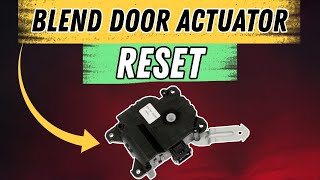
- Incorrect Module Calibration (Rare) — After replacing control modules or a dead battery, the HVAC system loses its stored door positions. 🎬 See how to easily reset and calibrate your door actuator. If the module's expected values mismatch the sensor, it triggers a fault.
- Faulty HVAC Control Module (Very Rare) — The control module fails to send power or correctly read the actuator's position sensor feedback.
Symptoms
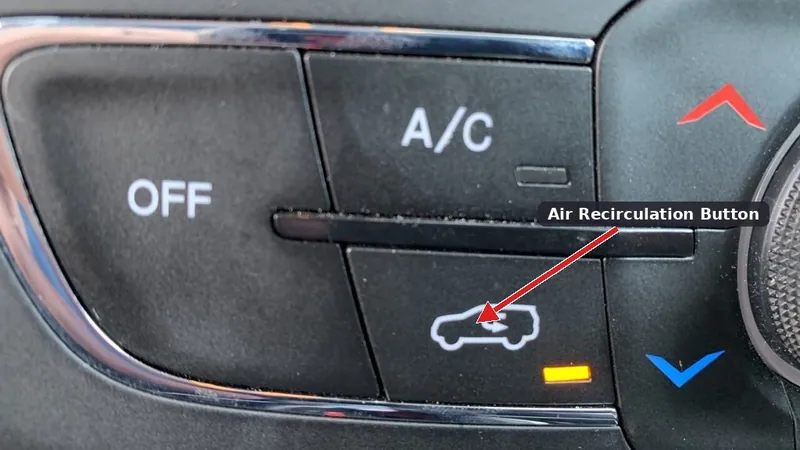
- Clicking, tapping, or grinding noise from the dashboard — A repetitive clicking from behind the glove box on startup or when pressing the recirculation button indicates broken internal actuator gears slipping.
- Recirculation button flashes or is unresponsive — Pressing the recirculation button causes the indicator light to flash and turn off, or fail to illuminate entirely, with no change in airflow.
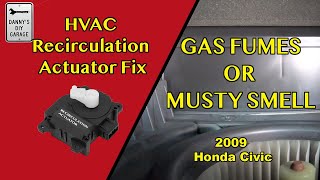
- Stuck air source (foggy windows or weak A/C) — The system cannot switch air sources. If stuck on recirculate, you cannot pull in dry outside air to defog windows. If stuck on fresh air, the A/C struggles to cool hot outside air. 🎬 Watch this guide to diagnose smells and fix actuator issues.
Diagnostic Flowchart
Tap your situation to follow the diagnostic path that matches what you're seeing on this code.
Common Fixes & Costs
- Replace Recirculation Door Actuator — Parts: $20-$150, Labor: $100-$1200+, ~0.8-8.0 hr book time (Intermediate)
- Clear Debris and Reset System — Parts: $0, Labor: $50-$150, ~0.5-1.0 hr book time (DIY)
- Repair Damaged Wiring or Connector — Parts: $5-$30, Labor: $100-$400, ~1.0-3.0 hr book time (Advanced)
- Replace Blown Fuse — Parts: $1-$5, Labor: $0, ~0.1 hr book time (DIY)
- Replace HVAC Air Inlet Duct Assembly — Parts: $100-$250, Labor: $600-$1500+, ~5.0-10.0 hr book time (Professional)
Used vs. New Parts: Buying Guide
When a used part is worth it: Almost never. Recirculation door actuators are high-failure parts made of plastic gears. The low cost of a new aftermarket part ($20-$60) makes buying a used part a poor value proposition.
Donor-vehicle mileage cap: roughly under 20000 miles for the part to have meaningful remaining life.
Donor quality checklist:
- Source from the newest, lowest-mileage vehicle possible.
- Avoid parts from flood or collision vehicles.
- Match the part number exactly to ensure correct internal logic.
Decision logic:
- If The labor to access the part is more than 1 hour → Buy a new OEM or high-quality aftermarket part to minimize the risk of a repeat failure.
- If The part is extremely easy to access (e.g., 15 minutes, behind glove box) → A used part is a temporary fix, but a new part is still strongly recommended.
Warranty tradeoff: Used parts offer a 30-90 day warranty. New aftermarket parts offer 1-year to lifetime warranties. Given the failure-prone nature of this part, a longer warranty is essential.
Worst-case if a used part fails: $200-$1500+ if a used part fails, requiring a repeat of expensive labor.
What Happens If You Wait — Timeline
- 0-4 weeks: A repetitive clicking noise begins, lasting 10-30 seconds on startup. The recirculation button flashes and turns off. Function is intermittent. (MPG impact: 0%% · Added cost: $0)
- 1-3 months: The actuator fails completely. If stuck on 'recirculate', the windshield cannot be defogged. If stuck on 'fresh air', A/C performance drops. (MPG impact: 0-1%% · Added cost: $0)
- 3-6 months: If stuck on 'recirculate', moisture builds up. A musty smell indicates mold and mildew growth on the evaporator core. (MPG impact: 0-1%% · Added cost: $50-$100)
- 6+ months: Mold worsens, causing allergic reactions. The repair now requires professional HVAC system cleaning and sanitizing. (MPG impact: 0-1%% · Added cost: $200-$600)
Cost of Not Fixing It
- Immediate: Reduced comfort and inability to control air source. Windows become foggy and difficult to clear, posing a significant safety hazard in bad weather. (Added cost: $0)
- 1-6 months: If stuck on fresh air, the A/C system works harder, increasing fuel consumption and compressor wear. If stuck on recirculate, moisture buildup promotes mold and mildew growth in the HVAC box. (Added cost: $0-$50)
- 6+ months: The constant clicking is a major annoyance, and ignoring the inability to defrost the windshield causes accidents. Mold remediation requires professional HVAC cleaning. (Added cost: $200-$600+)
Diagnosis Steps
- Verify the Code and Scan for Suffixes
Use an advanced OBD-II scanner to read Body (B) codes and manufacturer-specific definitions. Confirm B1083 relates to the HVAC system. Look for suffix numbers (e.g., Ford's :07 for Mechanical Failure or :11 for Circuit Short) to guide the diagnosis.
Tools: Advanced OBD-II Scanner (Beginner) - Listen for Actuator Operation
With the engine off and key 'on', press the recirculation button. Listen for a motor whirring or a door moving behind the dash. A clicking noise confirms a bad actuator; silence suggests a power issue or dead motor.
Tools: None (Beginner) - Check HVAC Fuses
Locate the fuse box and find the fuse for the HVAC or climate control system. Visually inspect it and replace if blown.
Tools: Fuse puller or needle-nose pliers (Beginner) - Perform Actuator Self-Test/Calibration
Initiate an HVAC calibration mode using an advanced scan tool or by disconnecting the battery for 15 minutes. This cycles all actuators and confirms if the module simply lost its position memory.
Tools: Advanced OBD-II Scanner or Wrench (for battery) (Intermediate) - Access and Visually Inspect the Actuator
Remove the glove box assembly to access the recirculation actuator. Inspect the actuator, connector, and door linkage for cracks, disconnected arms, or debris obstructing movement.
Tools: Screwdriver, trim removal tools (Intermediate) - Inspect Connector Pins for Damage
Unplug the actuator and meticulously inspect the female pins in the wiring harness. Look for pins that are spread, bent, corroded, or pushed back. A poor pin connection causes new actuators to fail immediately.
Tools: Flashlight, small pick or terminal tool (Advanced) - Test the Actuator Connector for Power and Ground
With the connector unplugged and key on, use a multimeter to test the terminals. Look for a constant ground and 5V/12V power. No voltage points to a fuse or wiring issue; no ground points to a broken ground wire.
Tools: Multimeter, vehicle-specific wiring diagram (Advanced) - Monitor Live Data with a Scan Tool
Monitor the live data PIDs for the recirculation actuator. Command the door open and closed. If the 'Actual Position' value does not match the 'Commanded Position', it confirms a fault in the actuator or its circuit.
Tools: Advanced OBD-II Scanner (Advanced) - Check Actuator Signal Voltage
Back-probe the signal wire with the connector plugged in. The voltage should change (e.g., 0.5V to 4.5V) as the door moves. If stuck at 0V or 5V, the internal sensor has failed.
Tools: Multimeter, back-probe kit (Professional) - Test the Actuator Motor Directly
Use fused jumper wires to apply 12V power and ground directly to the motor's pins on the actuator. Reverse polarity to spin it the other way. If it doesn't spin, the motor is dead.
Tools: Fused jumper wires, 12V power source (Professional)
When This Code Triggers (Freeze-Frame Conditions)
- Ignition Status: Key-On, Engine-Off or Running (The HVAC module performs a self-test upon power-up.)
- Command Input: Recirculation Button Press (Code sets when the driver requests a change in the recirculation door's state.)
- System Voltage: 11.5V - 14.5V (The fault triggers during normal operating voltage ranges.)
- Time After Key-Off: 1-5 minutes (Vehicles perform an actuator sweep after the engine turns off, triggering the fault if movement is incorrect.)
Related Codes
- B11F0 — Indicates 'Air Intake Damper Position Sensor Circuit' and appears alongside B1083 on Ford vehicles. The sensor is integrated into the actuator, so replace the entire assembly.
- B1083-07 — A manufacturer-specific suffix indicating a 'Mechanical Failure'. The motor was commanded to move, but the sensor reported no change, suggesting stripped gears or a jammed door.
- B1081 — Relates to a temperature blend door actuator in the same HVAC system. B1083 affects the air source, while B1081 affects air temperature for a specific zone.
- U2101 — Indicates 'Control Module Configuration Incompatible'. Appears if an incorrect part is installed or the HVAC module requires programming.
Climate & Environmental Factors
- Extreme Cold: Thermoplastic gears become brittle below -4°F (-20°C), making them susceptible to cracking during initial startup. Internal lubricants stiffen, increasing motor strain.
- High Heat & Temperature Cycles: Prolonged dashboard heat degrades plastics. Constant cycling between hot and cold expands and contracts components, accelerating wear and causing stress fractures.
- High Humidity: Temperature fluctuations cause condensation inside the actuator housing, leading to corrosion on electrical pins or failure of the internal circuit board.
How to Talk to a Mechanic About This Code
Say this: "I have a B1083 code and a clicking noise from the dashboard, pointing to a failing recirculation door actuator. Please provide an estimate to diagnose and confirm the failure, and a separate quote for the replacement."
This signals you are an informed customer and focuses the technician. It separates diagnostic costs from repair costs, preventing an open-ended work order.
Avoid saying:
- 'My A/C is making a weird noise.'
- 'Just fix whatever is wrong with the climate control.'
- 'My check engine light is on, can you look at it?'
Questions to ask before authorizing the repair:
- What is the book time labor for this specific actuator replacement, and does it require removing the entire dashboard?
- Is your quote for an OEM part or an aftermarket part? What is the warranty?
- Before replacing the actuator, will you confirm the door isn't jammed with debris?
- If the dashboard is removed, what is your warranty regarding potential rattles or squeaks?
Where to Take It: Dealer vs Independent vs Chain
- Dealer:
A safe but expensive choice. Recommended if the repair requires a full dash pull on a newer vehicle.
Best for: Vehicles under warranty., Extremely difficult repairs requiring full dashboard removal (e.g., 2009-2014 F-150)., Repairs involving a manufacturer-specific software update (TSB).
Downsides: Highest labor rates, often 1.5-2x more than an independent shop., Less likely to use cost-saving shortcuts for difficult-to-access parts. (Typical cost: +50% vs. baseline) - Independent Shop:
Best overall fit for out-of-warranty vehicles. Provides the best balance of expertise and cost.
Best for: Out-of-warranty vehicles where cost is a major factor., Common failures where technicians have performed the repair many times., Vehicles where known shortcuts avoid dashboard removal.
Downsides: Quality varies; choose a shop with good reviews and ASE-certified technicians., May lack access to the latest manufacturer software updates. (Typical cost: +0% vs. baseline) - Chain Shop:
Avoid for this repair unless the actuator is extremely easy to access. The risk of damage during a complex job is too high.
Best for: Simple, routine maintenance like oil changes.
Downsides: Technician skill varies dramatically., High pressure to upsell services., Lacks experience for complex, model-specific repairs like dashboard removal. (Typical cost: -10% vs. baseline)
When to Walk Away From the Repair
If the estimated repair cost exceeds 40-50% of the car's Kelley Blue Book (KBB) private-party value, consider alternatives.
- Car worth $3500, fix is $1500: Walk away. The repair cost is nearly half the car's value. Unplug the actuator to silence it.
- Car worth $15000, fix is $1200: Fix it. The cost is below the threshold and restores important safety (defrost) functions.
- Car worth $8000, fix is $250: Fix it. This is an inexpensive repair that restores full functionality.
What Scan Tool You Need for This Code
Minimum: A scanner that reads manufacturer-specific Body (B) codes. Basic engine-only readers will not see B1083.
A generic $20 scanner shows 'no codes found'. You need a tool accessing the Body Control Module (BCM) to identify manufacturer-specific definitions and suffix codes.
Budget: BlueDriver Pro Scan Tool (~$100) — Connects to a smartphone and reads enhanced codes (Body, ABS) for major brands. Views live data for diagnosis.
Mid-range: Foxwell NT510 Elite (~$180) — Offers full-system diagnostics and bi-directional control, allowing you to command the actuator to move from the scanner.
Professional: Autel MaxiCOM MK808 / MX808S (~$400-550) — Provides full bi-directional control, reads all manufacturer codes, and performs the HVAC calibration procedure required after replacement.
Rent vs buy: Auto parts store rental tools are basic models that cannot read Body codes. Buying a tool like the BlueDriver or Foxwell NT510 offers excellent value.
How to Clear the Code After You Fix It
- Use an OBD-II scan tool to clear the Body Control Module (BCM) or HVAC module codes.
- Perform an HVAC actuator calibration/re-learn procedure.
- Test functionality by pressing the recirculation button and listening for door movement.
Drive cycle (~5 minutes): A powertrain drive cycle is not required. The primary reset is actuator calibration. Disconnect the battery for 15 minutes or pull the HVAC fuse for 60 seconds. After re-powering, turn the key to 'ON' without starting the engine and wait 2 minutes while the system cycles all doors to re-learn positions.
Readiness monitors affected: None
Watch out for:
- Clearing the code without performing the calibration causes the code to return immediately.
- Failing to disconnect the battery before replacing the part damages the new actuator or control module.
- Cheap aftermarket actuators fail to calibrate correctly with OEM systems.
Will This Fail Emissions / State Inspection?
No — by itself this code doesn't fail OBD inspection (but it can keep readiness monitors from setting, which causes a separate fail).
- California: This is a 'B' (Body) code and does not illuminate the Check Engine Light (MIL). It will not cause a smog check failure.
- New York: A B1083 code will not cause an emissions failure as it is not related to the powertrain or MIL.
- Texas: The inspection checks for active powertrain codes (P-codes). A B1083 code will not cause an automatic failure.
Most Commonly Affected Vehicles
- Ford F-150 (2009-2020) — Extremely common. 2009-2014 models require full dashboard removal, leading to labor costs exceeding $1,000.
- Ford Explorer (2011-2019) — Shares a similar HVAC design and actuator part with the F-150, leading to identical failures and difficult access.
- Jeep Wrangler (JK & JL) (2007-2024) — A common failure. On the JK (2007-2018), the actuator is located behind the glove box but is notoriously difficult to access.
- Chrysler/Dodge 300, Charger, Grand Caravan (2008-2014) — Sets a B1083 code, sometimes defined as 'HVAC Mux Circuit High'. Repair complexity varies by model.
- Volkswagen Passat, Golf, Jetta (2006-2018) — Frequent failure on MK5/MK6 platforms. Replacement requires a scan tool calibration (Basic Settings) to prevent immediate code return.
- Honda Civic, CR-V (2006-2011) — Known failure item. Access is moderate, requiring removal of the glove box and surrounding panels.
- Ford Bronco (2021-2024) — Appears on new models, indicating early mechanical failure. The actuator is located next to the heater core.
- Ford F-250/F-350 Super Duty (2017-2022) — Experiences similar actuator failures to the F-150, located in a difficult-to-access position.
Manufacturer-Specific Notes
- Ford: Uses two-digit suffix codes: :07 (mechanical failure), :11 (short to ground), :12 (short to battery), and :13 (open circuit). Accessing the actuator on 2009-2014 F-150s requires full dashboard removal.
- Chrysler/Dodge/Jeep: B1083 can refer to unrelated issues like 'Lost Communication With Right B Pillar Impact Sensor' (:11). TSBs exist for 2018-2021 Wranglers to update HVAC software addressing improper door control.
- Nissan: CRITICAL: On Nissan vehicles, B1083 indicates a 'Right-hand Front Seat Belt Pre-Tensioner Circuit Shorted To Ground'. Diagnosing this as an HVAC fault is a dangerous error.
- Volkswagen: After replacing the recirculation motor (V154), the system must be calibrated using a scan tool (VCDS) by running 'Basic Settings'. Failure to calibrate causes the code to return immediately.
Real Owner Stories
2013 Ford F-150 with 110K miles
Owner heard a repetitive clicking noise from the dash on startup. The recirculation button would not stay on. A scan revealed codes B1083:07 and B11F0.
What they tried:
- Received a dealership quote for over $1,200, citing the need for full dashboard removal.
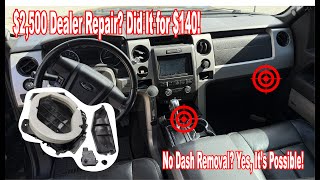
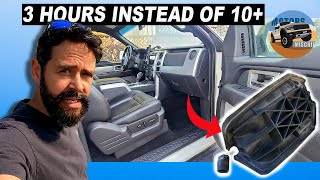
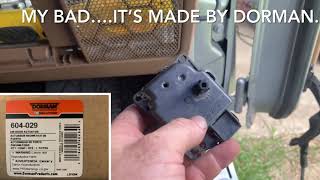
Outcome: The owner found forum videos showing a method to replace the actuator without removing the dash by working through the glove box and bending a metal bracket. The repair cost $40 for a Dorman actuator and a few hours of difficult labor.
Lesson: On notoriously difficult jobs, the official repair procedure is not the only option. Community-developed shortcuts save over $1,000 in labor.
2014 Jeep Wrangler JK at 85K miles
A loud clicking sound started from behind the glove box on startup.
What they tried:
- Disconnected the actuator's electrical connector to stop the noise temporarily.
Outcome: Purchased a new actuator online for $30. Following a tutorial, they replaced the part by removing the glove box in under an hour, avoiding a $200 shop charge.
Lesson: For many vehicles, this is a manageable DIY project. Unplugging the actuator is a safe, temporary way to silence it until repair.
Ford vehicle with B1083 and B11F0
After an A/C service, the recirculation flap stopped working, throwing codes B1083 and B11F0. The owner assumed the new actuator was faulty.
What they tried:
- Checked all related fuses, which were fine. Prepared to order another actuator.
Outcome: Inspection of the electrical connector revealed a pin bent during the previous repair. Straightening the pin restored function and cleared the codes.
Lesson: If a code appears immediately after a repair, inspect connector pins for damage before replacing a part a second time.
How to Prevent This Code From Triggering
- Replace the cabin air filter regularly (Every 12,000-15,000 miles or annually) — A clogged filter restricts airflow, straining actuators. A missing filter allows debris to jam the recirculation door, burning out the motor.
- Clean the cowl and windshield base area (Every 3-6 months, especially in the fall) — Keeping the fresh air intake free of leaves prevents debris from being sucked into the system and jamming the recirculation door.
- Use the HVAC system regularly (Weekly) — Cycling the climate control functions keeps the actuator gears and motor from seizing up due to lack of use.
- Perform an occasional system reset (Annually or after battery replacement) — Forcing recalibration by pulling the HVAC fuse ensures the control module maintains accurate door position data.
Frequently Asked Questions
Why do I see different definitions for code B1083 online?
Manufacturers reuse 'B' (Body) codes for different systems. While B1083 commonly refers to the HVAC recirculation actuator, Nissan uses it for seatbelt pretensioners, and some Jeeps use it for ABS sensors. Always use a manufacturer-specific scanner to avoid misdiagnosis.
I replaced the actuator but the code came back. What now?
First, inspect the wiring harness connector for bent or pushed-back pins, which is a common cause of repeat codes. Second, ensure the recirculation door isn't physically jammed with debris. Finally, perform an HVAC system calibration via a scan tool or battery disconnect to sync the new part.
Can I fix a B1083 code myself?
It depends entirely on the vehicle's design. On cars like the Honda Civic, the actuator is easily accessible behind the glove box for a quick DIY repair. On vehicles like the 2009-2014 Ford F-150, it requires extensive dashboard disassembly best left to professionals.
How much does it cost to fix code B1083?
The part costs $20 to $150, but labor dictates the total bill. Easily accessible actuators cost $100-$200 in labor to replace. If the dashboard requires removal, labor costs frequently exceed $1,000.
What is the clicking noise in my dash?
Repetitive clicking is the classic symptom of a failed blend door or recirculation actuator. It is the sound of broken plastic gears inside the actuator slipping as the motor tries to move the door.
Why can't I clear my foggy windshield?
If the recirculation door is stuck in the 'recirculate' position, the HVAC system cannot pull in fresh, dry air from outside. It continuously circulates moist cabin air, making it impossible to defog the windows effectively.
What's the difference between code B1083 and B1081?
Both codes indicate failed HVAC actuators, but they control different doors. B1083 controls the air source (inside vs. outside), while B1081 controls the temperature blend door for a specific climate zone.
Key Takeaways
- Code B1083 indicates a failure in the HVAC recirculation door actuator, which controls whether your car pulls in fresh outside air or recirculates cabin air.
- A repetitive clicking noise from the dashboard lasting 10 to 30 seconds on startup is the most common symptom of stripped plastic gears inside the actuator.
- Repair costs range from $120 for easily accessible actuators to over $1,200 for vehicles like the 2009-2014 Ford F-150 that require full dashboard removal.
- Always verify the code definition with a manufacturer-specific scanner, as Nissan and Jeep reuse B1083 for unrelated, critical safety systems like seatbelt pretensioners.
Helpful Videos
Shop the Parts Behind B1083
Below are the parts most often responsible for code B1083, ranked by how frequently each one is the actual culprit (per the diagnosis above). Tap any to see what we have for your vehicle.



The information in this article is provided for general reference and educational purposes only. Vehicle specifications, procedures, and part compatibility can vary by production date, trim level, and region. Always consult your vehicle's factory service manual and verify part numbers before purchasing or performing repairs. Safety-critical components such as airbags, seat belts, and braking systems should be installed by a qualified professional.
- 🧭 Diagnostic Flowchart
- 🎬 Helpful Videos
- 🛍️ Shop This Part
- What Does B1083 Mean?
- Can I Drive With B1083?
- Common Causes
- Symptoms
- Common Fixes & Costs
- Used vs. New Parts: Buying Guide
- What Happens If You Wait — Timeline
- Cost of Not Fixing It
- Diagnosis Steps
- When This Code Triggers (Freeze-Frame Conditions)
- Related Codes
- Climate & Environmental Factors
- How to Talk to a Mechanic About This Code
- Where to Take It: Dealer vs Independent vs Chain
- When to Walk Away From the Repair
- What Scan Tool You Need for This Code
- How to Clear the Code After You Fix It
- Will This Fail Emissions / State Inspection?
- Most Commonly Affected Vehicles
- Manufacturer-Specific Notes
- Real Owner Stories
- 2013 Ford F-150 with 110K miles
- 2014 Jeep Wrangler JK at 85K miles
- Ford vehicle with B1083 and B11F0
- How to Prevent This Code From Triggering
- Frequently Asked Questions
- Why do I see different definitions for code B1083 online?
- I replaced the actuator but the code came back. What now?
- Can I fix a B1083 code myself?
- How much does it cost to fix code B1083?
- What is the clicking noise in my dash?
- Why can't I clear my foggy windshield?
- What's the difference between code B1083 and B1081?
- Key Takeaways
- 🎟️ Get 5% Off