

OBD-II Code B1084: A Manufacturer-Specific Body Fault
What B1084 means, why it triggers, and how to fix it across different car brands
- Verify the exact B1084 definition for your specific make, model, and year before buying parts, as this code indicates entirely different failures across brands.
- Stop driving immediately if your B1084 code triggers an airbag or SRS warning light, as the system will not deploy in a crash.
- Clean the small slotted grille on your lower dashboard with compressed air first if your B1084 code relates to a climate control sensor fault.
- Expect repair costs to range from $0 for a DIY sensor cleaning to over $1,200 for replacing a moisture-damaged LED headlight assembly on modern vehicles.
What Does B1084 Mean?
Code B1084 is a non-standardized Body Control Module (BCM) code, meaning its definition changes drastically between car manufacturers. It indicates anything from a faulty cabin temperature sensor to a shorted seatbelt pre-tensioner. For many vehicles (like Subaru), it points to a 'Passenger Compartment Temperature Sensor Circuit Malfunction', disabling automatic climate control. On Nissan, Honda, or Chrysler, it signifies critical faults with airbag pre-tensioners, LED headlights, or heated seats. The first step is verifying the code's exact meaning for your specific make, model, and year.
Technical definition: The SAE/ISO definition for B1084 is not uniform. Common manufacturer-specific definitions include 'Passenger Compartment Temperature Sensor Circuit Malfunction,' meaning the sensor's signal is out of range, missing, or inconsistent. Other definitions include 'Right-hand Front Seat Belt Pre-Tensioner Circuit Shorted', 'Left Heated Seat Switch Input Circuit Performance', or 'Right Side LED Headlight Circuit Malfunction'. The code sets when the controlling module detects voltage or resistance outside the pre-programmed acceptable range for that specific circuit.
Can I Drive With B1084?
Yes, But With Caution. Driving with B1084 depends entirely on its manufacturer-specific definition. If it relates to climate control or heated seats, driving is safe but comfort features will fail. However, if the code indicates an airbag fault (common on Nissan) or a headlight failure (common on Honda), it poses a severe safety risk. A faulty airbag will not deploy in a crash, and a dead headlight impairs visibility. Diagnose and repair safety-related B1084 codes immediately.
Common Causes
- Faulty Component (Sensor, Switch, Pre-tensioner, LED Driver) (Very Common) — The specific component the code points to is the most frequent failure point. Cabin temp sensors, heated seat switches, seatbelt pre-tensioners, and LED headlight driver modules fail from age, wear, or internal short circuits.
- Damaged Wiring or Corroded Connectors (Common) — Wires leading to the component break, fray, or short to ground. Connectors loosen, suffer moisture contamination, or have pins back out, interrupting the signal.
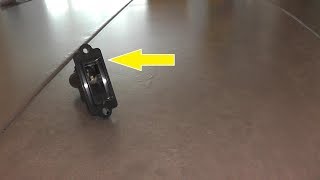
- Clogged Sensor Aspirator Tube (Climate Version) (Common) — For the climate control variant, the sensor uses a small fan (aspirator) to draw in cabin air. Dust or debris clogs this fan, insulating the sensor and triggering the code.
- Low Battery Voltage or Software Glitch (Uncommon) — A weak battery or sudden voltage spike causes the Body Control Module (BCM) to lose settings or report false communication errors. A dealer-installed software update is sometimes required to fix underlying logic errors.
- Blown Fuse (Rare) — A blown fuse for the corresponding system (HVAC, SRS, Lighting) cuts power to the sensor or control module. This is a fast, cheap check but rarely the root cause.
- Aftermarket Component Interference (Rare) — Installing aftermarket remote starters, alarms, or LED headlights interferes with the BCM circuits, causing unexpected codes like B1084.
Symptoms
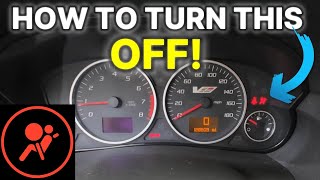
- Warning Light on Dashboard — The vehicle illuminates a warning light. Depending on the fault, this is the Check Engine Light, a dedicated HVAC/Service light, or the red SRS/Airbag light.
- Specific Feature Inoperative — The heated seat refuses to turn on, the specific headlight remains dark, or the remote start is disabled (common in Ford trunk latch faults).
- Automatic Climate Control Failure — The system blows hot air when set to cold, fan speeds fluctuate erratically, or the A/C compressor refuses to engage.
- Incorrect Temperature Display — The temperature reading on the dashboard or climate control display sticks or shows an impossible temperature (e.g., -40°F on a hot day).
Diagnostic Flowchart
Tap your situation to follow the diagnostic path that matches what you're seeing on this code.
Common Fixes & Costs
- Replace Passenger Compartment Temperature Sensor — Parts: $20-$80, Labor: $75-$150, ~1 hr book time (DIY)
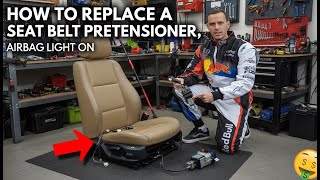
- Replace Seat Belt Pre-tensioner Assembly — Parts: $200-$500, Labor: $100-$250, ~1.2 hr book time (Professional)
- Replace Headlight Assembly or LED Driver (Honda) — Parts: $250-$1200, Labor: $150-$400, ~2 hr book time (Professional)
- Repair or Replace Damaged Wiring/Connector — Parts: $10-$50, Labor: $120-$350, ~1.5 hr book time (Intermediate)
- Replace Heated Seat Switch or Element — Parts: $50-$400, Labor: $50-$300, ~1.5 hr book time (Intermediate)
Used vs. New Parts: Buying Guide
When a used part is worth it: For expensive components like LED headlight assemblies, a used part from a low-mileage vehicle offers significant savings. Used sensors or switches are not recommended. For seatbelt pre-tensioners, a professional rebuild service is safer than a used part with an unknown history.
Donor-vehicle mileage cap: roughly under 60000 miles for the part to have meaningful remaining life.
Donor quality checklist:
- For headlights, verify there is no internal condensation, hazing, or broken mounting tabs.
- For electronic modules, check for corrosion on pins and ensure the part number matches exactly.
- Never buy a used seatbelt pre-tensioner from a vehicle involved in a collision.
Decision logic:
- If Part is a sensor or switch under $100 → Buy new; the risk of a faulty used part outweighs the small savings.
- If Part is a seatbelt pre-tensioner (SRS component) → Buy new OEM or use a professional rebuild service for safety reasons.
- If Part is an expensive headlight assembly (> $500) → Buy a warrantied, low-mileage used part if inspected carefully.
Warranty tradeoff: Used parts typically have a 30-90 day warranty. Aftermarket new parts offer 1-year to limited lifetime warranties. OEM parts have a 1-year warranty.
Worst-case if a used part fails: $200-$500 if a used part fails after the warranty period, requiring repeat labor and a new part.
What Happens If You Wait — Timeline
- Immediate (Safety Faults): For Nissan (SRS) or Honda (Headlight), a critical safety system disables. The airbag warning light illuminates, or a headlight goes out. (MPG impact: 0%% · Added cost: $0, but the potential cost of an accident is immeasurable.)
- 0-3 Months (Convenience Faults): For Subaru (Climate) or Chrysler (Heated Seat), a comfort feature fails. The A/C blows incorrect temperatures or the seat refuses to heat. (MPG impact: 0%% · Added cost: $0)
- 3-6 Months (Moisture-Related Faults): On a Honda with a leaking headlight seal, intermittent fogging allows corrosion to destroy the LED driver board. The fault becomes permanent. (MPG impact: 0%% · Added cost: $500-$900. A $20 reseal job escalates to a full headlight assembly replacement.)
- 6+ Months (Ignored Wiring/Module Faults): An intermittent short in a wiring harness causes heat damage to the connector or the control module itself, leading to parasitic battery drain. (MPG impact: 0%% · Added cost: $150-$800. Requires a new harness pigtail, a new battery, and eventual module replacement.)
Cost of Not Fixing It
- Immediate: If related to an airbag (Nissan), the SRS system is disabled and will not deploy in a crash. If related to a headlight (Honda), visibility is dangerously reduced. (Added cost: Potentially infinite (in case of injury).)
- 1-6 months: For climate sensor faults, automatic A/C fails. For headlight faults caused by moisture, continued neglect allows corrosion to destroy the entire assembly instead of just the driver module. (Added cost: $500-$900)
- 6+ months: Continued operation with a disabled safety feature remains a high risk. A faulty BCM or shorted wiring eventually causes parasitic battery drain. (Added cost: $200 (for a new battery if drained).)
Diagnosis Steps
- Verify the Code Definition for Your Vehicle
Before any physical diagnosis, use a scanner or search online for 'B1084 [Your Car's Make, Model, and Year]' to confirm the exact meaning. Assuming it is a climate sensor on a Nissan will lead to incorrect, costly repairs.
Tools: OBD-II Scanner, Internet Access (Beginner) - Check for Related Network (U) Codes
Use an advanced scanner to check all modules. Communication codes (starting with 'U', like U0164) take priority. A 'U' code indicates the module itself is offline, making B1084 a secondary symptom. Fix the network issue first.
Tools: Advanced OBD-II Scanner (Advanced) - Inspect the Relevant Component and Connector
Locate the component specified by your vehicle's definition. Visually inspect the wiring for burns, breaks, or corrosion. Unplug the connector and check for bent, loose, or corroded pins.
Tools: Flashlight, Trim Removal Tools (Beginner) - Check Fuses
Locate the interior fuse box using the owner's manual. Inspect the fuse for the specific system (HVAC, SRS/Airbag, Lighting). Replace any blown fuses.
Tools: Fuse puller or needle-nose pliers (Beginner) - Test Component Resistance
Use a multimeter set to Ohms (Ω) to test the component. A typical climate sensor reads 2-2.5 kΩ at room temperature and decreases when warmed. A Nissan seatbelt pre-tensioner must read between 2 and 3 ohms. Infinite resistance indicates a dead component.
Tools: Multimeter, Hairdryer (for temp sensor) (Intermediate) - Test Circuit Voltage and Ground
With the key on and component unplugged, test the connector harness with a multimeter set to DC Volts. One pin must have a reference voltage (typically 5V). Another pin must have a solid ground (near 0V). Missing voltage points to wiring or module failure.
Tools: Multimeter (Intermediate) - Analyze Live Data
Use a scan tool to read BCM or HVAC live data. Monitor the PID for the affected sensor. For a climate sensor at 77°F, the reading should be around 2.5V. A reading stuck at 0V, 5V, or -40°F confirms a hard circuit fault.
Tools: Advanced OBD-II Scanner (Advanced)
When This Code Triggers (Freeze-Frame Conditions)
- System Voltage: 11.5-14.5V (During key-on, engine-off (KOEO) self-test or key-on, engine-running (KOER) operation.)
- Component State: Active (Code sets when the affected system is activated (e.g., headlights turned on, A/C set to 'Auto', heated seat switched on).)
- Time Since Start: 0-30 seconds (For SRS/airbag faults, the code sets during the initial system self-check immediately after turning the key.)
- Ambient Temperature: Any (Extreme cold causes temporary sensor reading errors, triggering the code until the cabin warms up.)
Related Codes
- P0070 - P0074 — These codes relate to the Ambient (Outside) Air Temperature Sensor. If you have B1084 (inside sensor) and a P007x code, suspect a shared wiring issue or faulty control module.
- B10C1 — Indicates an 'Open' circuit for the interior temperature sensor. B1084 is a general malfunction, while B10C1 points directly to a broken wire, unplugged connector, or completely dead sensor.
- U0164 — Means 'Lost Communication With HVAC Control Module'. If present alongside B1084, fix the communication problem first. The B1084 is a symptom of the module being offline.
- B0021 / B0022 — Common SRS codes for seat belt pre-tensioner deployment loops. On a Nissan, these codes accompany B1084 to specify if the circuit resistance is too high or too low.
Climate & Environmental Factors
- High Humidity / Moisture: Causes failure in Honda LED headlight assemblies. Moisture bypasses seals, causing condensation that shorts out the internal LED driver circuit boards.
- Dust and Debris: Impacts the climate control version of B1084. Dust clogs the aspirator grille, insulating the sensor and preventing accurate cabin temperature readings.
- Extreme Cold: Causes temporary malfunction of temperature sensors. Sub-zero temperatures push sensor resistance out of the expected range, triggering a code that clears when the cabin warms up.
How to Talk to a Mechanic About This Code
Say this: "I have a B1084 code on my [Make, Model, Year] and the [symptom, e.g., 'airbag light is on,' 'A/C is blowing hot']. I need a diagnostic to confirm what this manufacturer-specific code means for my car and to pinpoint the fault."
Establishes that you know B1084 is manufacturer-specific, preventing the shop from guessing or replacing the wrong part. It directs them to perform a proper diagnosis based on your exact vehicle.
Avoid saying:
- 'My check engine light is on, can you look at it?' (This is a Body or SRS light, not a check engine light).
- 'Just fix the B1084 code.' (Authorizes repair without diagnosis, risking incorrect parts).
- 'I looked online and it's probably the temp sensor.' (Don't diagnose for them; describe symptoms).
Questions to ask before authorizing the repair:
- What did you determine the B1084 code means for my specific vehicle?
- Can you show me the failed part or the test results (e.g., resistance reading)?
- If it's an airbag component, are your technicians certified for SRS repairs?
- Have you checked for any Technical Service Bulletins or warranty extensions for this issue?
Where to Take It: Dealer vs Independent vs Chain
- Dealer:
Best for: SRS/Airbag related faults (e.g., Nissan pre-tensioner) due to liability and specialized tools., Vehicles where a software update or warranty extension applies (e.g., Chrysler heated seats, Honda headlights).
Downsides: Highest labor rates., Prefers replacing entire expensive assemblies rather than attempting wiring repairs. (Typical cost: +50% vs. baseline) - Independent Shop:
Best for non-safety faults on out-of-warranty vehicles. For airbag lights, a dealer is the safer choice.
Best for: Out-of-warranty convenience faults (e.g., Subaru climate sensor, Ford trunk switch)., Diagnosing and repairing wiring or connector issues.
Downsides: Must verify they have an advanced scan tool capable of reading Body (B) and SRS codes. (Typical cost: +0% vs. baseline) - Chain Shop:
Avoid. The risk of incorrect diagnosis and paying for unnecessary parts is very high.
Best for: Not recommended for this type of diagnosis.
Downsides: Technicians lack training for advanced body/SRS diagnostics., High likelihood of misdiagnosis using basic scanners that cannot read B-codes. (Typical cost: -10% vs. baseline)
When to Walk Away From the Repair
If the estimated repair cost exceeds 40-50% of the car's private-party value, consider selling or trading in the vehicle instead of repairing it.
- Car worth $3000, fix is $1200: Borderline. The repair is 40% of the car's value. If it is a safety fault (airbag), fixing it is necessary to sell, but consider selling 'as-is' at a discount.
- Car worth $15000, fix is $600: Fix it. The repair cost is low relative to the vehicle's value and restores full safety and functionality.
- Car worth $4000, fix is $2500: Walk away. The repair cost is over 60% of the car's value. It is not economically sensible to proceed.
What Scan Tool You Need for This Code
Minimum: A scanner that reads and clears manufacturer-specific codes from the Body Control Module (BCM) and Supplemental Restraint System (SRS/Airbag) module.
A cheap, engine-only code reader will NOT see B1084. It only reads Powertrain ('P') codes. You will see 'No Codes Found' even with an airbag light on.
Budget: Autel AutoLink AL619 / Foxwell NT301 (~$90) — These entry-level tools explicitly add ABS and SRS system diagnostics. They read and clear the B1084 code, which is the minimum needed for diagnosis.
Mid-range: BlueDriver Pro / Innova 5610 (~$120-350) — Provides full-system access to read all modules. Adds live data streaming to see what the sensor reports in real-time (e.g., cabin temp sensor voltage).
How to Clear the Code After You Fix It
- Use an advanced OBD-II scan tool capable of reading BCM/SRS codes to clear the fault.
- For SRS codes, disconnect the battery for 15 minutes BEFORE the repair, and reconnect AFTER.
- Cycle the ignition and operate the repaired component (e.g., turn on headlights, activate heated seat) to confirm the fix.
Drive cycle (~15 minutes): A specific drive cycle is not required for B-codes. After clearing the code, start the vehicle and operate the affected system. For an SRS code, the light remains off after the initial self-test if fixed. For HVAC, operate all modes to confirm the repair.
Readiness monitors affected: None
Watch out for:
- Using a basic engine-only code reader that cannot access or clear Body (B) or SRS codes.
- Failing to disconnect the battery before working on SRS components, risking accidental airbag deployment.
- Clearing the code without fixing the root cause, resulting in the code returning immediately.
Will This Fail Emissions / State Inspection?
No — by itself this code doesn't fail OBD inspection (but it can keep readiness monitors from setting, which causes a separate fail).
- California: A B-code will not fail the OBD-II emissions (smog) check. However, a non-operative headlight is grounds for a citation and fails visual safety inspections.
- New York: NYS requires an annual safety inspection. An illuminated airbag warning light or a non-functional headlight causes an automatic failure, preventing registration renewal.
- Texas: The annual inspection includes safety items. Required lights (headlights) must be operational to pass.
Most Commonly Affected Vehicles
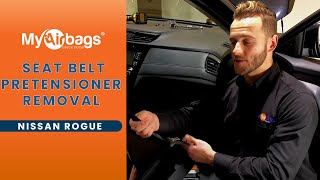
- Nissan Rogue, Frontier, Titan, Altima (2005-2018) — Defines B1084 as 'Right-hand Front Seat Belt Pre-Tensioner Circuit Shorted'. This is a critical SRS fault. The issue is usually the pre-tensioner itself or the yellow wiring connector under the passenger seat.
- Honda Accord, Civic, Pilot, Ridgeline (2016-2022) — Defines B1084 as 'Right Side LED Headlight Circuit Malfunction'. Common after moisture enters the assembly. TSB 19-042 extends the warranty for 2016-17 Accords for DRL failures.
- Chrysler/Dodge/Jeep Town & Country, Grand Caravan, 300 (2008-2018) — Defines B1084 as 'Left Heated Seat Switch Input Circuit Performance'. Indicates a stuck switch or broken heating element wire. TSB 24-001-14 REV. A addresses this via a software update.
- Ford Mustang, F-150, Escape (2005-2014) — Defines B1084 as 'Trunk Lamp Circuit Failure' or a trunk/hood closure switch fault. This disables the remote start system, which requires all doors and lids to register as closed.
- Hyundai/Kia Sonata, Optima, Sorento (2011-2018) — Indicates a fault in the 'Driver Seat Heater Switch' circuit. The switch assembly or the heating element in the seat cushion is the usual culprit.
- Subaru Outback, Forester, Impreza (2010-2019) — Aligns with the standard definition of 'Passenger Compartment Temperature Sensor Circuit Malfunction'. The sensor is located behind a small grille on the lower dash.
- Chevrolet/GMC Silverado, Sierra, Tahoe (2007-2014) — Defines B1084 as an 'Audio output #6 circuit open' fault, resulting in no sound from a specific speaker. Usually a wiring issue or factory amplifier fault.
- Volkswagen/Audi Jetta, Golf, Tiguan, A4 (2008-2017) — Relates to 'Component Protection Active'. This anti-theft feature disables modules (like the radio) if swapped between vehicles without dealer programming.
Manufacturer-Specific Notes
- Nissan: B1084 is almost exclusively an airbag system code for the right-hand front seat belt pre-tensioner. A common failure point is the yellow wiring connector under the passenger seat.
- Honda: Uses B1084 for LED headlight system faults. Honda issued warranty extension 19-042 covering DRL LEDs for 10 years/unlimited miles on 2016-17 Accords due to this exact failure.
- Chrysler/Dodge/Jeep: Points to a problem with the driver's heated seat switch or element. TSB 24-001-14 REV. A requires a module software update at a dealership to resolve false triggers.
- Ford: Signals a 'Trunk Lamp Circuit Failure' or a fault with the hood/trunk ajar switch. This is a critical input that disables the remote start system if the vehicle thinks the trunk is open.
Real Owner Stories
2016 Honda Accord with 75,000 miles
The passenger side LED daytime running light (DRL) failed. A 'Headlight System Problem' message appeared, and a B1084 code was stored.
What they tried:
- Checked fuses, which were all good.
- Took the car to the dealer after finding forum discussions about the issue.
Outcome: The dealer replaced the entire passenger-side headlight assembly under Honda's extended warranty (TSB 19-042), which covers DRLs for 10 years/unlimited miles. The repair was free.
Lesson: For 2016-2017 Honda Accords, always check eligibility under TSB 19-042 before paying for a headlight repair.
2013 Chrysler Town & Country with 110,000 miles
The driver's heated seat turned on for two seconds and immediately shut off. Code B1084 was present.
What they tried:
- Unplugged and replugged connectors under the seat with no change.
- Removed the seat cushion cover and found a broken wire within the heating pad element.
Outcome: The owner soldered the broken wire in the heating element and insulated it. The DIY repair cost $0, saving a $150 diagnostic fee and the cost of a new heating element.
Lesson: On Chrysler vehicles, a heated seat that turns on then off indicates an open circuit, frequently caused by a broken wire in the seat cushion element.
2012 Nissan Frontier with Airbag Light
The red SRS/Airbag warning light flashed on the dashboard. No other symptoms were present.
What they tried:
- Used a basic OBD-II scanner which showed no codes.
- Took the vehicle to a shop with an advanced scanner, which pulled code B1084: 'Right-hand Front Seat Belt Pre-Tensioner Circuit Shorted'.
Outcome: The mechanic found the pre-tensioner resistance was out of spec (open circuit). Replacing the passenger seat belt pre-tensioner assembly resolved the issue for $450.
Lesson: A B1084 on a Nissan is a critical SRS fault. A basic scanner cannot read these codes; an advanced tool is required. Professional replacement is highly recommended.
2015 Subaru Forester with A/C issues
Automatic climate control blew air at incorrect temperatures and the A/C compressor engaged intermittently.
What they tried:
- Located the in-cabin temperature sensor behind a small grille on the lower dashboard.
- Used compressed air to blow out dust and lint clogging the sensor's aspirator fan.
Outcome: After cleaning the sensor, the automatic climate control functioned correctly. The fix was free and took less than 15 minutes.
Lesson: For the climate control variant of B1084, always clean the sensor grille and aspirator with compressed air first, as dust buildup is the most common cause.
How to Prevent This Code From Triggering
- Clean the cabin temperature sensor grille (Annually) — Dust and debris clog the sensor's aspirator fan. Compressed air ensures proper airflow and accurate temperature readings.
- Protect under-seat wiring (Ongoing habit) — Avoid placing heavy items under front seats to protect wiring harnesses for seatbelt pre-tensioners (Nissan) and heated seats (Chrysler) from physical damage.
- Inspect headlight seals after heavy rain (Periodically) — Early detection of condensation allows you to reseal the unit with silicone before moisture destroys the expensive internal LED driver module.
- Use dielectric grease on exposed connectors (When performing any related repair) — Applying dielectric grease to connector seals prevents moisture intrusion and corrosion, stopping intermittent electrical faults.
Frequently Asked Questions
Can I fix a B1084 code myself?
Yes, if it is a simple climate sensor cleaning or replacement. However, if the code relates to the SRS/airbag system (Nissan) or requires dashboard removal, take it to a professional. Mishandling airbag components poses severe safety risks.
How much does it cost to fix B1084?
Costs vary widely based on the manufacturer definition. A DIY sensor cleaning is free, while a professional climate sensor replacement costs $150-$250. Replacing a Honda LED headlight assembly or Nissan seatbelt pre-tensioner ranges from $300 to over $1,200.
Where is the passenger compartment temperature sensor located?
The passenger compartment temperature sensor sits behind a small, slotted grille on the dashboard. Common locations include the lower dash panel near the driver's knee, by the ignition switch, or in the overhead console.
What is the most common mistake when diagnosing B1084?
The most costly mistake is failing to verify the code's definition for your specific vehicle. A technician might replace a cabin temperature sensor on a Nissan, when the B1084 code actually points to a seat belt pre-tensioner fault. Always confirm the exact definition before buying parts.
Will clearing the code fix the problem?
No, clearing the code only turns the warning light off temporarily. The code returns as soon as the control module runs its self-test and detects the ongoing electrical fault. You must repair the underlying broken wire or failed component.
Why does my scan tool say B1084 is for a seatbelt or headlight?
Unlike standardized 'P' (Powertrain) codes, 'B' (Body) codes are assigned differently by each manufacturer. A B1084 on a Nissan means something completely different than a B1084 on a Honda or Ford. Always verify the definition for your specific make and model.
What does 'Service HVAC System' mean?
This message appears when the vehicle's computer detects a fault in the heating, ventilation, or air conditioning system. Code B1084 (climate sensor variant) frequently triggers this warning. It indicates a component failure that prevents the automatic climate control from functioning correctly.
Key Takeaways
- Verify the exact B1084 definition for your specific make, model, and year before buying parts, as this code indicates entirely different failures across brands.
- Stop driving immediately if your B1084 code triggers an airbag or SRS warning light, as the system will not deploy in a crash.
- Clean the small slotted grille on your lower dashboard with compressed air first if your B1084 code relates to a climate control sensor fault.
- Expect repair costs to range from $0 for a DIY sensor cleaning to over $1,200 for replacing a moisture-damaged LED headlight assembly on modern vehicles.
Helpful Videos
Shop the Parts Behind B1084
Below are the parts most often responsible for code B1084, ranked by how frequently each one is the actual culprit (per the diagnosis above). Tap any to see what we have for your vehicle.



The information in this article is provided for general reference and educational purposes only. Vehicle specifications, procedures, and part compatibility can vary by production date, trim level, and region. Always consult your vehicle's factory service manual and verify part numbers before purchasing or performing repairs. Safety-critical components such as airbags, seat belts, and braking systems should be installed by a qualified professional.
- 🧭 Diagnostic Flowchart
- 🎬 Helpful Videos
- 🛍️ Shop This Part
- What Does B1084 Mean?
- Can I Drive With B1084?
- Common Causes
- Symptoms
- Common Fixes & Costs
- Used vs. New Parts: Buying Guide
- What Happens If You Wait — Timeline
- Cost of Not Fixing It
- Diagnosis Steps
- When This Code Triggers (Freeze-Frame Conditions)
- Related Codes
- Climate & Environmental Factors
- How to Talk to a Mechanic About This Code
- Where to Take It: Dealer vs Independent vs Chain
- When to Walk Away From the Repair
- What Scan Tool You Need for This Code
- How to Clear the Code After You Fix It
- Will This Fail Emissions / State Inspection?
- Most Commonly Affected Vehicles
- Manufacturer-Specific Notes
- Real Owner Stories
- 2016 Honda Accord with 75,000 miles
- 2013 Chrysler Town & Country with 110,000 miles
- 2012 Nissan Frontier with Airbag Light
- 2015 Subaru Forester with A/C issues
- How to Prevent This Code From Triggering
- Frequently Asked Questions
- Can I fix a B1084 code myself?
- How much does it cost to fix B1084?
- Where is the passenger compartment temperature sensor located?
- What is the most common mistake when diagnosing B1084?
- Will clearing the code fix the problem?
- Why does my scan tool say B1084 is for a seatbelt or headlight?
- What does 'Service HVAC System' mean?
- Key Takeaways
- 🎟️ Get 5% Off