

OBD-II Code B1088: A Manufacturer-Specific Deep Dive
What B1088 means, why it triggers, and how to fix it on your vehicle
- For 2019 and newer Ford and Lincoln vehicles, code B1088 is almost always a software glitch requiring a dealer to reprogram the Driver Door Module (DDM).
- On Nissan vehicles, B1088 indicates a critical failure in the driver's seat belt pre-tensioner circuit and disables the airbag system.
- Before replacing a $150 master window switch, check the 15-amp fuse powering the Driver Door Module to rule out a simple power loss.
- Always read the two-digit code suffix (like B1088:87) using an advanced scan tool, as ':87' specifically means a total loss of communication on the LIN bus.
What Does B1088 Mean?
Code B1088 is a manufacturer-specific Body (B) code signifying a communication failure or circuit fault. On modern Ford and Lincoln vehicles, it indicates the Driver Door Module (DDM) lost communication with the master window switch panel over the Local Interconnect Network (LIN) bus. The DDM expects a signal but receives nothing. For other manufacturers, this code points to entirely different systems, such as airbags or audio.
Technical definition: The SAE/ISO definition for B1088 is a Local Interconnect Network (LIN) bus communication fault. On 2019+ Ford and Lincoln vehicles, B1088:87 means 'LIN Bus B Missing Message 🎬 Watch: A quick explanation of the B1088-87 fault code.', indicating the Driver Door Module (DDM) cannot communicate with the master window switch. Other manufacturers use B1088 for different faults: a seat belt pre-tensioner short (Nissan), a power liftgate fault (Hyundai), or an audio output issue (Chevrolet/GMC).
Can I Drive With B1088?
Yes, But With Caution. For the common Ford/Lincoln door switch failure, the vehicle is safe to drive as this code does not affect the powertrain or brakes. However, you cannot operate the driver's side windows or mirrors, creating a safety hazard in traffic. If the code indicates an airbag fault (common on Nissan), do not drive until the safety system is repaired.
Common Causes
- Driver Door Module (DDM) Software Glitch (Very Common) — On 2019 and newer Ford and Lincoln vehicles, this code stems almost exclusively from a known software bug in the Driver Door Module. Ford issued multiple Technical Service Bulletins (TSBs) requiring a software update to resolve this.
- Blown Fuse or Loss of Power to the Switch (Common) — The master window switch requires dedicated power and ground to communicate. A blown fuse takes the switch offline, causing the DDM to post a 'Missing Message' code. This is the most frequently overlooked hardware cause.
- Faulty Driver's Master Window Switch (Common) — The switch panel's internal circuit board can short out or break, stopping LIN bus signals. This is the primary hardware failure point if a software update or fuse replacement does not fix the issue.
- Broken or Damaged Door Jamb Wiring (Less Common) — Wires inside the flexible rubber boot between the door and body fatigue from repeated opening and closing. A severed LIN bus, power, or ground wire completely halts communication.
- Faulty Airbag System Component (Nissan-specific) (Less Common) — On Nissan vehicles, B1088 indicates a short circuit in the driver's seat belt pre-tensioner. This triggers the SRS/airbag warning light and disables the safety restraint system.
- Water Intrusion into a Connector (Rare) — Body seam leaks (like on the 2019 Lincoln MKC) allow water into critical electrical connectors. Moisture causes corrosion, disrupting communication between door modules and triggering B1088.
- Faulty Driver Door Module (DDM) Hardware (Rare) — If reprogramming fails, the code returns immediately, and wiring tests perfectly, the DDM hardware itself has failed and requires replacement.
Symptoms
- Driver's window and mirror switches do not work — The entire master switch panel on the driver's door becomes unresponsive. Switches on passenger doors typically continue to function.
- Airbag (SRS) light is on — On Nissan and select other brands, this code flags a safety restraint system failure, illuminating the red airbag warning light.
- Functions work intermittently — On affected Ford vehicles, switches sometimes resume working after the vehicle sits off for hours (entering 'deep sleep' 🎬 See this quick tip for Ford Explorer window issues.). This temporary reset confirms a software glitch.
- Power door locks are inoperative from the driver's door — The power lock button on the driver's door fails alongside the windows and mirrors.
- Service vehicle warning light is on — A general 'wrench' or 'service vehicle' light illuminates on the dashboard to indicate a stored Body (B) code.
Common Fixes & Costs
- Reprogram Driver Door Module (DDM) 🎬 Watch: How professional Ford flash reprogramming works. — Parts: $0, Labor: $150-$250, ~1.0 hr book time (Professional)
- Replace Blown Fuse — Parts: $1-$5, Labor: $0-$50, ~0.1 hr book time (Beginner)
- Replace Driver's Master Window Switch — Parts: $70-$150, Labor: $75-$150, ~0.7 hr book time (DIY)
- Repair Wiring in Door Jamb — Parts: $5-$20, Labor: $150-$300, ~1.5 hr book time (Intermediate)
- Replace Airbag Seat Belt Pre-tensioner — Parts: $150-$300, Labor: $150-$300, ~1.5 hr book time (Professional)
Used vs. New Parts: Buying Guide
When a used part is worth it: A used OEM master window switch from a non-flood-damaged vehicle is a cost-effective alternative for older vehicles out of warranty.
Donor-vehicle mileage cap: roughly under 60000 miles for the part to have meaningful remaining life.
Donor quality checklist:
- Verify the donor vehicle was not scrapped due to flood damage.
- Match the part number exactly, including suffix letters, to ensure feature compatibility.
- Avoid switches with peeling chrome or worn graphics, indicating heavy use.
Decision logic:
- If Vehicle is a 2019+ Ford/Lincoln → Do not buy parts. Schedule a dealer software update.
- If Vehicle is under warranty → Use a new OEM part installed by the dealer for free.
- If Budget is the primary concern on an older vehicle → Buy a used OEM switch for better fitment than cheap aftermarket options.
- If Reliability is paramount → Buy a new OEM or premium aftermarket switch (e.g., Standard Motor Products).
Warranty tradeoff: Used parts offer 30-90 day warranties. New aftermarket parts offer 1-year to lifetime warranties. New OEM parts carry 1-2 year warranties.
Worst-case if a used part fails: 150
Cost of Not Fixing It
- Immediate (Ford/Lincoln): Inability to operate the driver's window or mirror creates a safety hazard in traffic. (Added cost: 0)
- Immediate (Nissan): The driver's seat belt pre-tensioner is disabled, and the SRS system will not function correctly in a collision. (Added cost: 0)
- Long-term: Driving with a disabled airbag system carries severe legal and insurance liability implications in an accident. (Added cost: 5000)
Diagnosis Steps
- Read the Code and Suffix
Use an advanced OBD-II scanner to confirm B1088. Note any two-digit suffix, like :87 (Missing Message) or :83 (Signal Calculation Incorrect), as this dictates the diagnostic path.
Tools: Advanced OBD-II Scan Tool (Beginner) - Check for Technical Service Bulletins (TSBs)
Search for TSBs related to your VIN. For Ford/Lincoln, TSBs like SSM 50458 explicitly state the required fix is a DDM software update, saving hours of hardware troubleshooting.
Tools: Internet Access, VIN (Beginner) - Check Fuses First
Locate and inspect the fuses powering the Driver Door Module and Master Window Switch (e.g., fuse F14 on a 2021 Escape). A blown fuse perfectly mimics a dead module.
Tools: Owner's Manual, Fuse Puller (Beginner) - Test Power and Ground at the Switch
Remove the door panel and unplug the master switch. Use a multimeter to verify battery voltage (>11V) at the power pin and less than 0.5 ohms of resistance at the ground pin.
Tools: Multimeter, Trim Removal Tools, Wiring Diagram (Advanced) - Inspect the Door Jamb Wiring
Pull back the rubber boot between the driver's door and the body. Inspect the wires for breakage, chafing, or corrosion, paying special attention to the LIN bus wire.
Tools: Flashlight (Intermediate) - Perform a LIN Bus Voltage Check
Probe the LIN bus wire with the key on. A healthy bus fluctuates between 9-11V. A steady 0V indicates a short to ground; a steady 12V indicates a short to power or an open circuit.
Tools: Multimeter, Back-probe Kit (Advanced) - Scan Tool Live Data Analysis
Navigate to the DDM live data PIDs. If the 'LIN Bus Status' reads 'Fault' or 'Inactive' while power and ground are verified, the switch or wiring has failed.
Tools: Advanced Scan Tool (Advanced) - Analyze the LIN Bus Signal with an Oscilloscope
Probe the LIN bus wire at the switch. A healthy signal shows square waves switching between 0V and battery voltage. A flat or noisy line confirms a circuit or module failure.
Tools: Oscilloscope, Wiring Diagram (Expert) - Isolate the Fault
If the LIN signal is dead at the switch but power/ground are good, the switch failed. If the signal is good at the switch but dead at the DDM, repair the wiring. If the signal reaches the DDM but the code persists, replace the DDM.
Tools: Multimeter, Wiring Diagram (Expert)
When This Code Triggers (Freeze-Frame Conditions)
- Battery Voltage: 11.8-12.6V (Key On, Engine Off)
- Ignition Status: RUN (The fault logged while the vehicle's ignition was on.)
- Module State: Active/Awake (The Driver Door Module was awake and operating, not in a low-power sleep state.)
Related Codes
- B1087 — The companion code for the Passenger Door Module. Seeing both indicates a systemic issue like a shared power fault or Body Control Module error.
- B1088:87 — The ':87' suffix means 'Missing Message', indicating total communication loss. Focus diagnostics on power, ground, and severed LIN wires.
- B1088:83 — The ':83' suffix means 'Signal Calculation Incorrect'. The DDM receives data, but it is corrupt, pointing to an internal switch failure or software glitch.
- U0208 — A generic 'Lost Communication With Seat Control Module A' code. Seeing this alongside B1088 suggests a broader CAN bus network failure.
Climate & Environmental Factors
- High Humidity and Road Salt: Moisture and salt corrode connector pins, increasing resistance and disrupting sensitive LIN bus voltage signals.
- Extreme Cold: Freezing temperatures make wire insulation brittle, accelerating cracking and breakage inside the flexing door jamb boot.
How to Clear the Code After You Fix It
- Perform the specified repair (e.g., reprogram DDM, replace switch, fix wiring).
- Use an OBD-II scan tool to clear the Diagnostic Trouble Code from the Driver Door Module or Body Control Module.
- Cycle the ignition off, then on, and test all related functions to confirm the repair.
Drive cycle (~5 minutes): A specific drive cycle is not required. After clearing the code, functionality restores immediately if the repair was successful.
Readiness monitors affected: None
Watch out for:
- Disconnecting the battery does not permanently clear the code if the root cause remains.
- The code returns immediately if the underlying software, hardware, or wiring fault still exists.
- Readiness monitors track emissions (P-codes) and are unaffected by B-codes.
Will This Fail Emissions / State Inspection?
No — by itself this code doesn't fail OBD inspection (but it can keep readiness monitors from setting, which causes a separate fail).
- California: A B-code does not fail the OBD-II smog check. However, an illuminated SRS light indicates a safety defect requiring immediate repair.
- New York: An illuminated airbag light results in an advisory on the inspection report but does not cause an automatic failure.
- Texas: This code does not cause an emissions failure. Driving with a known safety defect like a faulty airbag light carries legal liability.
Most Commonly Affected Vehicles
- Ford Explorer (2020-2022) — Highly prone to the DDM software glitch documented in TSBs SSM 50082 and SSM 50458.
- Lincoln Aviator (2020-2022) — Shares the Explorer platform and identical DDM software issues (TSB SSM 53288).
- Ford Escape (2020-2022) — Affected by the DDM software fault (SSM 50458). Some models also had a door check arm recall that interfered with wiring.
- Ford Bronco Sport (2021-2022) — Included in TSB SSM 50458 for DDM communication failures requiring a reprogram.
- Lincoln Corsair (2020-2022) — Listed in Ford/Lincoln TSB SSM 50458 for the DDM software issue.
- Ford Maverick (2022-2022) — Included in TSB SSM 50458 for the DDM software glitch.
- Nissan Frontier, NP300, NX (1996-2021) — B1088 indicates a fault with the driver's side seat belt pre-tensioner, triggering the airbag light.
- Chevrolet / GMC Various (2010-2023) — B1088 defines an 'Audio output #7 circuit high' fault within the sound system.
- Hyundai Tucson, Kona (2015-2023) — B1088 indicates a 'Power Liftgate Power Supply Fault'.
Manufacturer-Specific Notes
- Ford / Lincoln: For 2019+ models, B1088:87 almost always points to a software glitch requiring a DDM reprogram per TSB SSM 50458.
- Nissan: B1088 means 'Left-hand Front Seat Belt Pre-Tensioner Circuit Shorted'. This is a critical airbag system fault.
- Mazda: B1088:88 indicates a LIN communication error associated with the Front Body Control Module and auto light/rain sensors.
Frequently Asked Questions
Can I fix code B1088 myself?
If the cause is a blown fuse or broken wire, yes. However, the most common cause on 2019+ Fords is a software glitch requiring professional dealer tools. Replacing the switch is a DIY-friendly job if hardware is the proven culprit.
Why did my driver's window and mirrors stop working all at once?
The master switch panel communicates with the Driver Door Module over a single data wire called the LIN bus. When that communication link breaks due to a software bug or hardware failure, all functions controlled by that switch fail simultaneously.
Will replacing the battery fix code B1088?
No, replacing the battery will not fix the underlying problem. Disconnecting the battery temporarily resets the module, but the code and symptoms will return quickly.
The dealer wants to charge me to update software for B1088. Is this a real repair?
Yes, for many modern Ford and Lincoln vehicles, a software update is the official repair. The code stems from a known bug in the module's software, requiring a reprogram with an updated version from the manufacturer.
How do I know if B1088 is a door switch or an airbag problem?
Check for Technical Service Bulletins (TSBs) for your specific VIN or use an advanced scanner to read the manufacturer-specific definition. Symptoms dictate the system: an illuminated airbag light points to a Nissan safety issue, while dead door controls point to a Ford communication fault.
I replaced the master switch and the problem is still there. What's next?
This is a common misdiagnosis on 2019+ Ford and Lincoln vehicles, where the root cause is a software issue in the Driver Door Module. Check the switch circuit fuse, verify wiring integrity, and schedule a DDM software update at a dealership.
Can a 'deep sleep' fix the B1088 code on my Ford?
Letting the vehicle sit locked for several hours allows it to enter a 'deep sleep' mode, temporarily resetting the module and restoring function. This is not a permanent fix. The only permanent solution is a dealership software update.
What is a LIN Bus?
A Local Interconnect Network (LIN) is a low-cost, single-wire communication network used to connect intelligent sensors and actuators. It allows a primary module to talk to its own components without cluttering the main vehicle CAN bus.
Key Takeaways
- For 2019 and newer Ford and Lincoln vehicles, code B1088 is almost always a software glitch requiring a dealer to reprogram the Driver Door Module (DDM).
- On Nissan vehicles, B1088 indicates a critical failure in the driver's seat belt pre-tensioner circuit and disables the airbag system.
- Before replacing a $150 master window switch, check the 15-amp fuse powering the Driver Door Module to rule out a simple power loss.
- Always read the two-digit code suffix (like B1088:87) using an advanced scan tool, as ':87' specifically means a total loss of communication on the LIN bus.
Helpful Videos

Shop the Parts Behind B1088
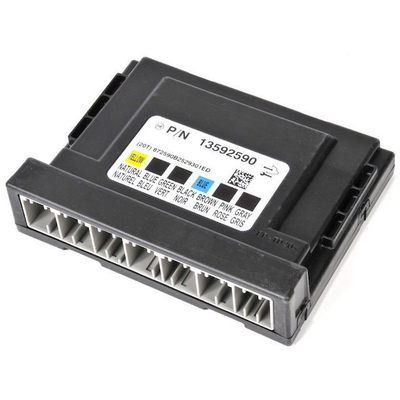
Below are the parts most often responsible for code B1088, ranked by how frequently each one is the actual culprit (per the diagnosis above). Tap any to see what we have for your vehicle.



The information in this article is provided for general reference and educational purposes only. Vehicle specifications, procedures, and part compatibility can vary by production date, trim level, and region. Always consult your vehicle's factory service manual and verify part numbers before purchasing or performing repairs. Safety-critical components such as airbags, seat belts, and braking systems should be installed by a qualified professional.
- 🎬 Helpful Videos
- 🛍️ Shop This Part
- What Does B1088 Mean?
- Can I Drive With B1088?
- Common Causes
- Symptoms
- Common Fixes & Costs
- Used vs. New Parts: Buying Guide
- Cost of Not Fixing It
- Diagnosis Steps
- When This Code Triggers (Freeze-Frame Conditions)
- Related Codes
- Climate & Environmental Factors
- How to Clear the Code After You Fix It
- Will This Fail Emissions / State Inspection?
- Most Commonly Affected Vehicles
- Manufacturer-Specific Notes
- Frequently Asked Questions
- Can I fix code B1088 myself?
- Why did my driver's window and mirrors stop working all at once?
- Will replacing the battery fix code B1088?
- The dealer wants to charge me to update software for B1088. Is this a real repair?
- How do I know if B1088 is a door switch or an airbag problem?
- I replaced the master switch and the problem is still there. What's next?
- Can a 'deep sleep' fix the B1088 code on my Ford?
- What is a LIN Bus?
- Key Takeaways
- 🎟️ Get 5% Off