

OBD-II Code B1104: Driver Airbag Circuit Fault
The Ultimate 2026 Guide to B1104: What It Means, Why It Triggers, and How to Fix It
- Code B1104 completely disables the driver's airbag, creating an immediate safety risk that requires repair before driving.
- A broken clockspring causes over 90% of B1104 codes, typically disabling the horn and steering wheel controls simultaneously.
- Verify your vehicle's specific code definition, as B1104 indicates non-airbag faults like low voltage or keyless entry issues on GM, Subaru, and Suzuki models.
- Replacing the clockspring requires a Steering Angle Sensor (SAS) calibration using a mid-range or advanced scan tool to clear ESC/Traction Control warnings.
- Stop DIY diagnosis and hire a professional if the clockspring tests good, as probing live airbag circuits risks accidental deployment and severe injury.
What Does B1104 Mean?
B1104 is a diagnostic trouble code (DTC) from the Supplemental Restraint System (SRS). It indicates the airbag control module detects an open circuit or electrical fault in the driver's side airbag wiring inside the steering wheel. This fault immediately deactivates the driver's airbag to prevent unintended deployment.
Technical definition: The official definition for B1104 is "Driver Frontal Stage 1 Squib Circuit Open". A 'squib' is the pyrotechnic detonator that ignites the airbag propellant. An 'open circuit' means a break or high resistance exists between the control module and the squib. The system sends a low-current monitoring signal through the circuit; if the resistance falls outside the specified 1.5 to 3.5 ohms range, it triggers the DTC.
Can I Drive With B1104?
No — Do Not Drive. The B1104 code deactivates the driver's airbag, meaning it WILL NOT deploy in a collision. While the vehicle operates mechanically, losing this primary safety system poses an immediate, critical risk. Repair it before driving.
Common Causes
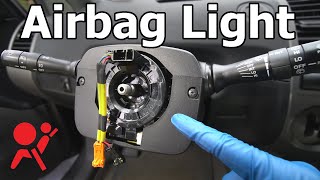
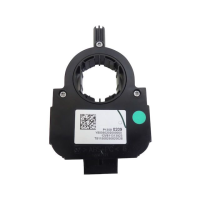
- Faulty Clockspring (Spiral Cable) (Very Common) — The clockspring is a coiled ribbon of wires in the steering column that maintains electrical connections while the wheel turns. Constant flexing makes it the number one cause of failure for this code.
- Damaged Wiring or Loose Connectors (Common) — Connectors become loose or corroded at the airbag module (yellow connectors), the clockspring, or the SRS control module. Wires also get pinched or frayed during unrelated steering column repairs.
- Improper Installation or Steering Repair (Uncommon) — Rotating the steering wheel more than one full turn while the steering linkage is disconnected snaps the clockspring's internal ribbon. Additionally, failing to perfectly center a new clockspring during installation breaks it on the first turn.
- Faulty Driver's Airbag Module (Less Common) — The airbag unit itself, containing the inflator and squib, fails internally. This happens far less frequently than a clockspring or wiring issue.
- Low Battery Voltage (Rare) — During vehicle startup, battery voltage below 10.6 volts for over 16 seconds causes the SRS module to fail its self-test and set a false code, particularly on GM vehicles.
- Faulty Airbag Control Module (SRS/SDM) (Rare) — The main computer controlling the airbag system fails. This is an expensive, uncommon cause considered only after exhausting all other possibilities.
- Manufacturer-Specific Electrical Faults (BCM) (Rare) — On specific vehicles (like Suzuki), B1104 points directly to a Body Control Module or Telematic Control Module communication issue, completely unrelated to the airbag.
Symptoms
- Airbag Warning Light On — The primary symptom. The dashboard light (a person with an airbag or 'SRS') stays illuminated after the initial startup check.
- Horn Not Working — The horn's electrical circuit runs through the clockspring. A broken clockspring ribbon disables the horn simultaneously with the airbag.
- Steering Wheel Controls Inoperative — Buttons for the radio, cruise control, or phone on the steering wheel stop working, as they rely on the clockspring's connections.
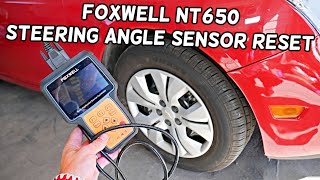
- Traction/Stability Control (ESC) Light On — The Steering Angle Sensor (SAS) integrates with the clockspring. A fault disrupts 🎬 See how to calibrate the steering angle sensor with a scanner the SAS signal, triggering the traction or stability control warning light.
- Rubbing or Grinding Noise from Steering Column — A physically broken clockspring makes a scraping, clicking, or grinding sound when turning the steering wheel.
Diagnostic Flowchart
Tap your situation to follow the diagnostic path that matches what you're seeing on this code.
Common Fixes & Costs
- Replace the Clockspring
— Parts: $50 - $400, Labor: $150 - $300, ~1.5 hr book time
(Professional)
: OEM
: OEM
: OEM - Steering Angle Sensor (SAS) Calibration — Parts: $0, Labor: $50 - $150, ~0.7 hr book time (Intermediate)
- Repair Wiring or Secure Connectors — Parts: $5 - $20, Labor: $100 - $250, ~1.5 hr book time (Intermediate)
- Replace the Driver's Airbag Module — Parts: $500 - $1000+, Labor: $75 - $150, ~1 hr book time (Professional)
- Replace the Airbag Control Module (SRS/SDM) — Parts: $400 - $1200+, Labor: $100 - $300, ~2 hr book time (Professional)
Used vs. New Parts: Buying Guide
When a used part is worth it: Never use a used clockspring or airbag module. These are critical safety components with unknown wear histories. Only consider used parts for non-safety trim pieces.
Donor quality checklist:
- Do not buy used clocksprings. You cannot verify how many steering rotations it has endured or if it was centered properly upon removal.
Decision logic:
- If The part is for a safety system like an airbag. → Buy a new OEM or high-quality aftermarket part.
Warranty tradeoff: Used parts offer a 30-day warranty at best. New OEM parts carry a 1-year warranty and guarantee safety compliance.
Worst-case if a used part fails: $200 - $400 if a used clockspring fails shortly after installation, requiring a second round of labor costs.
What Happens If You Wait — Timeline
- Immediate: The B1104 code is set, the airbag warning light illuminates, and the driver's airbag is immediately deactivated. (MPG impact: 0%% · Added cost: $0 (Immediate critical safety risk))
- 0 days - 2 weeks: Related functions like the horn and steering wheel controls fail intermittently or completely. (MPG impact: 0%% · Added cost: $0 (Loss of horn function adds safety risk))
- At next state safety inspection: Vehicle fails the mandatory safety inspection, preventing legal registration renewal. (MPG impact: 0%% · Added cost: $200 - $800 (Forced cost of repair))
- Long-Term (6+ months): A severely damaged clockspring ribbon causes a short circuit, blowing fuses for other systems. (MPG impact: 0%% · Added cost: $50 - $100)
Cost of Not Fixing It
- Immediate: The driver's airbag is disabled and will not deploy in an accident, creating a critical safety risk of severe injury or death. (Added cost: N/A (Safety Risk))
- At Next Inspection: In states with safety inspections, an illuminated airbag light is an automatic failure, preventing legal vehicle operation. (Added cost: $200 - $800 (Cost of eventual repair))
- Long-Term: Continued flexing of a damaged clockspring causes a short circuit, blowing fuses for other systems. (Added cost: $50 - $100)
Diagnosis Steps
- Verify Symptoms
Confirm the airbag light is on. Test the horn, all steering wheel buttons, and note any unusual noises when turning the wheel. Simultaneous failure of the horn and buttons confirms a faulty clockspring.
Tools: None (Beginner) - Scan for Codes
Use an OBD-II scanner capable of reading SRS/Body ('B') codes. Confirm B1104 is present and document any communication codes ('U' codes) or 'Stage 2' faults (like B0002).
Tools: SRS-capable OBD-II Scanner (Beginner) - Check Battery & Fuses
Check the battery voltage; it must be above 12.4 volts with the engine off. A weak battery triggers false codes. Inspect the SRS system fuses for a blown fuse indicating a deeper short circuit.
Tools: Multimeter, Fuse Puller (Beginner) - Visual Inspection (Safety First!)
CRITICAL: Disconnect the negative battery terminal and wait 15 minutes. Visually inspect the yellow airbag connectors under the dash and at the steering column for damage, loose plugs, or pinched wires.
Tools: Wrench/Socket for battery terminal (Intermediate) - Live Data Scan Tool PIDs Check
Access the SRS module's live data. Look for 'Driver Squib 1 Resistance'. A healthy circuit reads between 1.5 and 3.5 ohms. A reading of 'Open' or over 4.0 ohms confirms the fault. Wiggle the steering wheel to see if the value fluctuates, indicating a failing clockspring.
Tools: Advanced Bi-Directional Scanner (Advanced) - Steering Angle Sensor Data Check
View the PID for the Steering Angle Sensor while turning the wheel. Erratic, frozen, or nonsensical data strongly points to a clockspring assembly failure.
Tools: Advanced Bi-Directional Scanner (Advanced) - Test Clockspring Continuity
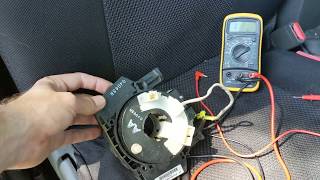
Remove the steering wheel and airbag. Disconnect the clockspring. Use a multimeter to check for continuity on each pin from one side of the clockspring to the other while slowly rotating it. An 'OL' reading indicates a broken internal wire.
Tools: Multimeter, Socket Set, Trim Removal Tools, Screwdrivers (Advanced) - Airbag Squib Resistance Simulation
Connect a 2.0-3.0 ohm SRS resistor tool to the vehicle-side connector where the airbag plugs in. Reconnect the battery, clear the codes, and see if B1104 returns. If the code disappears, the airbag module itself is faulty. If it returns, the wiring or clockspring is the issue.
Tools: Airbag/SRS Resistor Test Tool Set (2.0-3.0 ohms) (Professional) - Professional Diagnosis
If the clockspring tests good and the simulation points to a wiring issue, stop DIY efforts. Hire a professional to trace the harness or test the SRS control module.
Tools: Professional Scan Tool, Wiring Diagrams (Professional)
When This Code Triggers (Freeze-Frame Conditions)
- System State: Ignition ON (The SRS module performs a primary self-check of all components for 6-7 seconds immediately after turning the ignition ON.)
- Driver Squib 1 Resistance: > 4.0 Ohms or 'OPEN' (The module expects resistance between 1.5-3.5 ohms. A reading outside this range triggers the code.)
- System Voltage: 12.0 - 14.8 Volts (Very low voltage (<10.6V) causes a false self-test failure on certain models.)
- Vehicle Speed: 0 mph (The initial fault is detected when the vehicle is stationary during its startup sequence.)
Related Codes
- B0001 — Identical code for 'Driver Frontal Stage 1 Deployment Control'. The specific code varies by manufacturer, but the diagnosis is exactly the same.
- B0002 — Refers to 'Driver Frontal Stage 2 Deployment Control'. Seeing B1104 and B0002 together strongly confirms a failed clockspring or disconnected main harness.
- U0155 — Means 'Lost Communication With Instrument Panel'. A complete clockspring failure severs both the airbag and CAN bus wires, triggering B1104 and U0155 simultaneously.
- 00588 (VAG) — The Volkswagen/Audi equivalent of B1104, meaning 'Airbag Igniter; Driver Side (N95): Resistance too High'.
Climate & Environmental Factors
- Extreme Cold: Low temperatures cause plastic clockspring components to become brittle and crack. Metal contacts contract, leading to intermittent high resistance and false codes that disappear as the cabin warms up.
- High Humidity / Moisture: Moisture causes corrosion on delicate pins inside airbag connectors. This increases electrical resistance, triggering the B1104 code.
- Extreme Heat: High temperatures cause the expansion of electrical components, leading to intermittent disconnections or resistance changes.
How to Talk to a Mechanic About This Code
Say this: "I have an airbag light on with code B1104. My horn and steering wheel buttons have also stopped working. I'd like to schedule a diagnosis to confirm the fault is in the clockspring circuit before replacing any parts."
This directs the technician to the most likely cause, requests a specific diagnostic confirmation, and prevents them from starting with expensive, less likely fixes like the airbag module.
Avoid saying:
- 'My airbag light is on, can you just fix it?'
- 'I need a new clockspring.'
- 'Just do whatever you think is necessary.'
Questions to ask before authorizing the repair:
- What was the resistance reading on the driver squib circuit live data?
- Does my vehicle require a Steering Angle Sensor (SAS) calibration afterward, and is that included in the labor quote?
- Are you using an OEM or an aftermarket part, and what is the warranty?
- Have you visually inspected the connectors at the clockspring and airbag module?
Where to Take It: Dealer vs Independent vs Chain
- Dealer:
Best for: Hyundai and Kia vehicles (2011-2016) covered by a 15-year/unlimited mileage clockspring warranty., Vehicles still under the factory bumper-to-bumper warranty., Complex cases requiring SRS control module programming.
Downsides: Significantly higher labor rates and OEM part costs., Defaults to replacing entire assemblies rather than smaller components. (Typical cost: +50% vs. baseline) - Independent Shop:
Best fit for most vehicles. A reputable independent shop offers the best balance of cost and quality for this common job. For affected Hyundai/Kia models, start at the dealer.
Best for: Out-of-warranty vehicles where cost is a factor., Routine clockspring replacements.
Downsides: Quality varies widely; vet the shop for ASE certifications., Lacks immediate access to the latest manufacturer technical service bulletins. (Typical cost: +0% vs. baseline) - Chain Shop:
AVOID for this repair. The safety risk associated with an improper airbag system repair is too high.
Best for: Simple, routine maintenance like oil changes.
Downsides: Technician skill is highly variable., Lacks the expertise required for safety-critical airbag system repairs., High pressure to upsell services. (Typical cost: -10% vs. baseline)
When to Walk Away From the Repair
If the estimated repair cost exceeds 50% of your car's private-party value, seriously consider selling or trading in the vehicle.
- Car worth $8000, fix is $650: Fix it. This is a critical safety repair well below the 50% threshold.
- Car worth $3500, fix is $650: Fix it. A disabled airbag makes the car unsafe and difficult to sell.
- Car worth $3000, fix is $1800: Walk away. The repair cost exceeds 50% of the car's value, indicating a complex fault like a failed control module.
What Scan Tool You Need for This Code
Minimum: An OBD-II scanner that reads and clears Supplemental Restraint System (SRS/Airbag) codes.
A standard $20 scanner only reads engine codes ('P' codes) and cannot communicate with the airbag module. It shows 'no codes found' even with the airbag light on.
Budget: Autel MaxiCheck ML629 / Autolink AL619 (~$90) — Reads and clears codes from the Engine, Transmission, ABS, and SRS modules. This is the minimum tool required to clear the code after repair.
Mid-range: Foxwell NT630 Plus / Launch CRP123X (~$150) — Reads/clears SRS codes and performs Steering Angle Sensor (SAS) calibration, which is essential after replacing the clockspring.
Professional: Autel MaxiCOM MK808 / Launch X431 Series (~$450-900) — Provides full bidirectional control, views live squib resistance data, and performs all necessary resets and calibrations.
Rent vs buy: Buy. Free loaner tools at auto parts stores cannot read SRS codes. Investing in a midrange tool is necessary for the follow-up SAS calibration.
How to Clear the Code After You Fix It
- Ensure all components are correctly installed and connected.
- Reconnect the negative battery terminal.
- Use an SRS-capable OBD-II scan tool to access the SRS module.
- Select the option to 'Clear Codes' or 'Erase DTCs'.
Drive cycle: No drive cycle is required. SRS codes are 'latching' and must be cleared manually with a scan tool. The light will not go out on its own.
Readiness monitors affected: None
Watch out for:
- Using a basic engine code reader that cannot communicate with the SRS module.
- Forgetting to clear the code after the repair and assuming the fix failed.
- If the light returns immediately after clearing, the repair was unsuccessful or the wrong part was used.
Will This Fail Emissions / State Inspection?
No — by itself this code doesn't fail OBD inspection (but it can keep readiness monitors from setting, which causes a separate fail).
- California: Will NOT fail an emissions (smog) test. The airbag system is not part of the emissions inspection.
- New York: Will NOT fail a safety inspection. The inspector notes the airbag light as an advisory, but it is not a cause for rejection.
- Texas: Will NOT fail inspection. Annual safety inspections are eliminated for non-commercial vehicles as of 2025.
- General Note: States with strict annual safety inspections (e.g., Virginia, Pennsylvania, Massachusetts) WILL fail a vehicle for an illuminated airbag warning light.
Most Commonly Affected Vehicles
- Hyundai Elantra, Sonata, Santa Fe, Genesis (2011-2016) — Subject to warranty extensions for clockspring failure (TSB 21-BE-003H-1), extending coverage to 15 years/unlimited miles.
- Kia Sorento, Optima, Forte, Rio (2011-2015) — Covered by a 15-year/unlimited mileage warranty extension (WTY012) for clocksprings.
- Nissan Altima, Rogue, Sentra, Versa (2007-2019) — A widely reported issue requiring year-specific part numbers verified by VIN.
- Ram 1500, 2500/3500 (2009-2018) — Clockspring issues frequently trigger the Electronic Stability Control (ESC) light alongside the airbag light.
- Volkswagen Jetta, Golf, Passat, GTI (2005-2015) — Extremely common failure. The equivalent VAG group code is 00588.
- Honda Accord, Civic, CR-V (2003-2012) — Clockspring replacement is a frequent repair, often presenting with horn failure as the first symptom.
- Toyota Camry, Corolla, RAV4, Prius (2007-2014) — A broken clockspring on these models often causes communication codes like U0155.
- Ford Focus, Fusion, Explorer (2008-2016) — Commonly affected by clockspring failure leading to airbag lights and loss of steering wheel controls.
- Chevrolet Silverado, Tahoe, Cobalt, Aveo (2005-2014) — On some GM vehicles, B1104 indicates an audio fault or a low voltage condition, not an airbag circuit fault.
Manufacturer-Specific Notes
- General Motors (GM): B1104 indicates 'Passenger Seat Occupant Classification System Voltage Out of Range' or an audio fault triggered by low system voltage, not a driver airbag code.
- Subaru: B1104 is defined as 'ACC power supply circuit is open' or 'Lost Communication with TCM', relating to Adaptive Cruise Control or the transmission.
- Suzuki: B1104 indicates a fault in the 'Luggage Antenna Circuit' for the keyless entry system or 'Lost Communication With Telematic Control Module'.
- Jeep: B1104 relates to a short circuit in the front door speaker amplifier unit.
- Hyundai / Kia: Both manufacturers issued 15-year/unlimited mileage warranty extensions for the clockspring on popular 2011-2016 models. Check TSBs 21-BE-003H-1 and WTY012.
Real Owner Stories
2014 Hyundai Elantra GT at ~190,000 km
Airbag light came on and cruise control stopped working.
Outcome: The dealership replaced the clockspring for free under an extended warranty program. The owner paid nothing.
Lesson: For Hyundai/Kia vehicles from 2011-2016, always check for extended warranties (like TSB 21-BE-003H-1) before paying for a clockspring repair.
2013 Nissan Altima 2.5SL
Horn stopped working and blew the new fuse immediately after replacement.
Outcome: Found a horn wire rubbed through its insulation, causing a direct short to ground. Taping the wire fixed the issue.
Lesson: If a fuse blows instantly, it indicates a short circuit. Visually trace the circuit's wiring for chafing before replacing expensive parts.
2011 Chevy HHR
'Service Airbag' warning appeared shortly after purchasing the used vehicle.
Outcome: An Autel scanner revealed code B1000-00, pointing to a failure of the main Sensing and Diagnostic Module (SDM), requiring professional programming.
Lesson: Don't assume the problem is a simple loose connector. Invest in an SRS-capable scanner to read the specific code before attempting repairs.
How to Prevent This Code From Triggering
- Apply Dielectric Grease to Connectors (During any related repair) — Applying dielectric grease to electrical connector seals blocks moisture, preventing corrosion that causes high resistance.
- Avoid Turning the Wheel When Stationary (Daily habit) — Turning the steering wheel while the car is not moving ('dry steering') puts maximum stress on the clockspring's internal ribbon.
- Secure the Clockspring During Repairs (During any steering column service) — Tape the clockspring to prevent it from rotating freely when the steering wheel is removed, ensuring it doesn't snap upon reinstallation.
- Maintain Battery Health (Annual check) — A weak battery causes voltage drops during startup, triggering false SRS codes on certain vehicles.
Frequently Asked Questions
Will my driver's airbag deploy with a B1104 code?
No. The SRS control module disables the driver's airbag to prevent accidental deployment when it detects a B1104 fault. It will not function in a crash until you repair the fault and clear the code.
What happens if I ignore the airbag light?
Ignoring the light means driving without a functional driver's airbag, posing a severe safety risk. Additionally, an illuminated airbag warning light triggers an automatic failure during mandatory state safety inspections.
I replaced the clockspring, but the airbag light is still on. What's wrong?
SRS fault codes are 'latching' and do not clear automatically after a repair. You must manually erase the code using an OBD-II scanner with SRS capabilities. If the light returns immediately, the new part is faulty, installed incorrectly, or a different circuit fault exists.
Why did my ESC/Traction Control light turn on after replacing the clockspring?
The Steering Angle Sensor (SAS) is typically integrated with the clockspring and loses its calibration during replacement. You must use a scan tool with SAS functionality to perform a relearn procedure. This recalibration turns off the ESC/Traction Control light.
Is it safe to replace a clockspring or airbag myself?
Only qualified technicians should work on the airbag system due to the explosive charges that cause serious injury or death if handled improperly. Always disconnect the battery and wait at least 15 minutes before starting work to minimize risk. A failed DIY attempt often costs more than a professional repair.
Why did my horn and radio buttons stop working when the airbag light came on?
The clockspring acts as the single electrical conduit for the airbag, horn, and all steering wheel-mounted controls. When its internal ribbon cable breaks, it severs the connection for all these components simultaneously. This combined failure is the definitive symptom of a broken clockspring.
Can I test an airbag with my multimeter?
Never probe an airbag squib with a standard multimeter, as the tool's electrical current easily triggers deployment. Most airbag connectors feature shorting bars that prevent accurate readings anyway. Professionals use specialized low-current tools or resistor substitutes to test the circuit safely.
Key Takeaways
- Code B1104 completely disables the driver's airbag, creating an immediate safety risk that requires repair before driving.
- A broken clockspring causes over 90% of B1104 codes, typically disabling the horn and steering wheel controls simultaneously.
- Verify your vehicle's specific code definition, as B1104 indicates non-airbag faults like low voltage or keyless entry issues on GM, Subaru, and Suzuki models.
- Replacing the clockspring requires a Steering Angle Sensor (SAS) calibration using a mid-range or advanced scan tool to clear ESC/Traction Control warnings.
- Stop DIY diagnosis and hire a professional if the clockspring tests good, as probing live airbag circuits risks accidental deployment and severe injury.
Helpful Videos
Shop the Parts Behind B1104
Below are the parts most often responsible for code B1104, ranked by how frequently each one is the actual culprit (per the diagnosis above). Tap any to see what we have for your vehicle.



The information in this article is provided for general reference and educational purposes only. Vehicle specifications, procedures, and part compatibility can vary by production date, trim level, and region. Always consult your vehicle's factory service manual and verify part numbers before purchasing or performing repairs. Safety-critical components such as airbags, seat belts, and braking systems should be installed by a qualified professional.
- 🧭 Diagnostic Flowchart
- 🎬 Helpful Videos
- 🛍️ Shop This Part
- What Does B1104 Mean?
- Can I Drive With B1104?
- Common Causes
- Symptoms
- Common Fixes & Costs
- Used vs. New Parts: Buying Guide
- What Happens If You Wait — Timeline
- Cost of Not Fixing It
- Diagnosis Steps
- When This Code Triggers (Freeze-Frame Conditions)
- Related Codes
- Climate & Environmental Factors
- How to Talk to a Mechanic About This Code
- Where to Take It: Dealer vs Independent vs Chain
- When to Walk Away From the Repair
- What Scan Tool You Need for This Code
- How to Clear the Code After You Fix It
- Will This Fail Emissions / State Inspection?
- Most Commonly Affected Vehicles
- Manufacturer-Specific Notes
- Real Owner Stories
- 2014 Hyundai Elantra GT at ~190,000 km
- 2013 Nissan Altima 2.5SL
- 2011 Chevy HHR
- How to Prevent This Code From Triggering
- Frequently Asked Questions
- Will my driver's airbag deploy with a B1104 code?
- What happens if I ignore the airbag light?
- I replaced the clockspring, but the airbag light is still on. What's wrong?
- Why did my ESC/Traction Control light turn on after replacing the clockspring?
- Is it safe to replace a clockspring or airbag myself?
- Why did my horn and radio buttons stop working when the airbag light came on?
- Can I test an airbag with my multimeter?
- Key Takeaways
- 🎟️ Get 5% Off