

OBD-II Code B1107: A Manufacturer-Specific Body Control Module Fault
The Ultimate Guide to B1107: What it means, why it triggers, and exactly how to fix it.
- B1107 is a manufacturer-specific code that points to a melted turn signal connector on a Jeep, but indicates a critical airbag system failure on a Nissan.
- Over 80% of B1107 codes stem from three specific failures: a melted Jeep tail light connector, broken Ford door jamb wires, or a tripped Nissan airbag sensor.
- Never ignore a B1107 code on a Nissan or Subaru, as it disables the SRS system and prevents airbags from deploying during a collision.
- Always search your specific vehicle year and make with the B1107 code before buying parts, as a $20 wiring pigtail often fixes what looks like a $300 module failure.
- Check for Technical Service Bulletins (TSBs) immediately; for example, 2020 Jeep Renegades often just need a 1-hour dealer software update (TSB #08-054-20) rather than new parts.
What Does B1107 Mean?
B1107 is a manufacturer-specific body control module (BCM) code. Its definition changes entirely based on your vehicle's make. On a Jeep, it indicates a failed rear turn signal. On a Nissan, it points to a critical failure in the airbag diagnostic unit.
Technical definition: The SAE/ISO definition for B1107 varies by manufacturer. Common definitions include 'Diagnosis Sensor Unit' (Nissan), 'Rear Left Turn Light-Circuit Short To Battery Or Open' (Jeep/FCA), and 'Driver Door Ajar Switch Circuit Failure' (Ford). Subtype codes like B1107-15 (Circuit Short To Battery or Open) pinpoint the exact electrical fault.
Can I Drive With B1107?
Yes, But With Caution. You can drive the vehicle, but a critical safety system is compromised. A turn signal fault (Jeep/FCA) risks a collision and a traffic ticket. An airbag fault (Nissan/Subaru) completely disables the SRS system, meaning airbags will not deploy in an accident. Address this code immediately.
Common Causes
- Burnt Turn Signal Bulb or Damaged Connector (Jeep/FCA) (Very Common) — On Fiat-Chrysler vehicles, this code triggers from a burnt-out turn signal bulb or a corroded socket. Jeep Renegades frequently suffer from a melted ground pin in the tail light wiring connector due to excessive heat from a poor connection.
- Broken Wires in Door Harness (Ford) (Very Common) — On Ford Explorers (2002-2005), wires inside the flexible rubber boot between the driver's door and the body break from repeated flexing. This severs the circuit and causes a constant B1107 door ajar fault.
- Failed SRS Diagnostic Sensor Unit (Nissan/Infiniti) (Common) — On Nissan and Infiniti, B1107 indicates an internal fault within the Supplemental Restraint System (SRS) diagnostic unit. This unit stores crash data after an accident (even a minor one) and requires a specialized reset or replacement.
- Faulty Occupant Detection System (ODS) Sensor (Subaru) (Common) — Subaru vehicles log B1107 when the passenger seat's Occupant Detection System fails. This disables the passenger airbag. A recall (WRA-24) covers some 2020-2022 models for this exact sensor failure.
- Faulty Door Ajar Switch or Latch (Ford) (Common) — Dirt and moisture ingress into the door latch assembly causes the internal door ajar switch to seize. This sends a constant 'door open' signal to the BCM.
- BCM Software Glitch (Jeep) (Less Common) — On 2020 Jeep Renegades built before March 21, 2020, a software bug in the Body Control Module falsely triggers B1107. The fix is a dealer-performed software update per TSB #08-054-20.
- Internal Module Failure (BCM/ECU) (Rare) — Subtype codes like B1107-12 indicate the module's internal memory (RAM/ROM) failed a self-test. This requires replacing the entire Body Control Module or ECU.
Symptoms
- Turn signal blinks rapidly (hyperflash) or fails — The dashboard turn signal indicator flashes quickly, or the exterior bulb fails to illuminate. This is the primary symptom for Jeep, Fiat, and Chrysler.
- Airbag warning light remains illuminated — The SRS light stays on, indicating the airbag system is disabled. This is the primary symptom for Nissan and Subaru.
- 'Door Ajar' warning light stays on — The dashboard indicates a door is open when all are closed. This keeps the interior dome light on and disables power locks. Common on Ford.
- Passenger airbag OFF indicator illuminated — On Subarus, the 'Passenger Airbag OFF' light stays lit even with an adult in the seat, confirming an Occupant Detection System fault.
- Erratic instrument cluster displays — Mercedes-Benz vehicles exhibit erratic gauge behavior or random warning lights due to a general cluster control fault.
Diagnostic Flowchart
Tap your situation to follow the diagnostic path that matches what you're seeing on this code.
Common Fixes & Costs
- Replace Tail Light Connector Pigtail — Parts: $20-$50, Labor: $100-$150, ~1.0 hr book time (Intermediate)
- Repair Broken Wires in Door Harness — Parts: $5-$10, Labor: $125-$250, ~2.0 hr book time (Intermediate)
- Airbag Module Crash Data Reset (Mail-in Service) — Parts: $0, Labor: $50-$100, ~1.0 hr book time (DIY)
- Replace Door Latch Assembly/Switch — Parts: $50-$150, Labor: $150-$300, ~1.5 hr book time (Intermediate)
- Reprogram Body Control Module (BCM) — Parts: $0, Labor: $100-$250, ~1.0 hr book time (Pro Only)
- Replace Occupant Detection System (ODS) Sensor Mat — Parts: $200-$400, Labor: $250-$500, ~3.0 hr book time (Pro Only)
DIY vs Professional
- Replace Tail Light Connector Pigtail — Beginner:
- Repair Broken Wires in Door Harness — Beginner:
- Airbag Module Crash Data Reset — Beginner:
- Replace ODS Sensor Mat — Beginner:
- BCM Reprogramming — Beginner:
Used vs. New Parts: Buying Guide
When a used part is worth it: Buy used for mechanical parts like a Ford door latch assembly. Never buy used electronic modules (SRS/BCM) due to programming complexities and the risk of inheriting hidden faults.
Donor-vehicle mileage cap: roughly under 80000 miles for the part to have meaningful remaining life.
Donor quality checklist:
- Verify the part number matches your original unit exactly.
- Ensure the donor vehicle was not in a collision (crucial for SRS parts).
- Avoid parts from flood-damaged vehicles.
Decision logic:
- If The fault is a Nissan/Subaru SRS module with stored crash data → Use a mail-in 'Reset Service' on your ORIGINAL module. It is cheaper than new and avoids VIN programming issues.
- If The fault requires a replacement BCM → Buy new. A used BCM requires $150+ in dealership programming and may still fail to integrate with your vehicle's immobilizer.
- If The part is a mechanical door latch → A used part is a smart choice if priced below 50% of a new OEM unit.
Warranty tradeoff: Used parts carry 30-day warranties. New aftermarket parts offer 1-year to lifetime warranties. Mail-in SRS reset services guarantee the crash data is permanently cleared.
Worst-case if a used part fails: $500 (Cost of buying a second module and paying for reprogramming if the used module fails).
What Happens If You Wait — Timeline
- Immediate: Airbag system disables (Nissan/Subaru). Turn signal hyperflashes (Jeep). 'Door Ajar' light illuminates (Ford). (MPG impact: 0%% · Added cost: $0 (Immediate safety and legal risk))
- 1-4 weeks: The constantly illuminated interior dome light (Ford) drains the battery completely. (MPG impact: 0%% · Added cost: $150-$250 (Cost of a replacement battery))
- 1-6 months: The poor ground connection (Jeep) generates extreme heat, melting the connector into the tail light housing. (MPG impact: 0%% · Added cost: $250-$400 (Requires full tail light assembly replacement))
- 6+ months: The vehicle automatically fails annual safety inspections. Broken wires (Ford) short against the chassis, destroying the Body Control Module. (MPG impact: 0%% · Added cost: $500-$1000+ (Cost to replace and program a new BCM))
Cost of Not Fixing It
- Immediate: Airbags will not deploy in a crash (Nissan/Subaru). Inability to signal turns creates a collision hazard and risks a traffic ticket (Jeep). (Added cost: $0 (Immense safety and legal risk))
- 1-4 Weeks: A constantly illuminated interior dome light (Ford door ajar fault) drains the battery, leading to a no-start condition. (Added cost: $150-$250 (Cost of a new battery or jump start service))
- 1-6 Months: A poor ground connection generates extreme heat, melting the tail light connector and permanently damaging the tail light housing (Jeep). (Added cost: $250-$400 (Escalates from a $20 pigtail repair to a full assembly replacement))
Diagnosis Steps
- Identify the Specific Code Definition for Your Vehicle
Search your car's make, model, and the code (e.g., '2019 Jeep Renegade B1107'). This dictates whether you are diagnosing an airbag, lighting, or door system.
Tools: Internet access (Beginner) - Check for Technical Service Bulletins (TSBs)
Search for TSBs related to your specific vehicle and code. For a 2020 Jeep Renegade, TSB #08-054-20 dictates a BCM software update, saving hours of unnecessary physical diagnosis.
Tools: Internet access (Beginner) - Perform a Targeted Visual Inspection
Inspect the area identified in Step 1. For Jeep, remove the tail light and check the connector for melted plastic. For Ford, peel back the rubber boot in the door jamb and look for severed wires. For Subaru/Nissan, check wiring under the passenger seat.
Tools: Flashlight, trim removal tools (Beginner) - Check Related Fuses
Locate the fuse box and test all fuses related to the faulty system ('BCM', 'SRS', 'Turn Signals'). Replace any blown fuses and retest the system.
Tools: Fuse puller, multimeter (Beginner) - Test the Component via Swapping
For a turn signal issue, swap the bulb from the working side to the broken side. If the problem moves, replace the bulb. If it stays, the fault is in the socket or wiring.
Tools: Basic hand tools (Beginner) - Scan Tool Live Data Analysis
Use an OBD-II scanner with live data. For a door ajar fault, monitor the 'Driver Door Status' PID; it must change from 'Open' to 'Closed' when operating the latch. If the data remains static, the sensor or circuit is dead.
Tools: OBD-II scanner with live data (Intermediate) - Circuit Testing with a Multimeter
Unplug the affected component. Set a multimeter to DC Volts to verify power delivery (e.g., pulsing 12V for a turn signal). Switch to Ohms (Ω) and check resistance between the connector's ground pin and the chassis. A reading of 'O.L.' confirms a broken ground wire.
Tools: Digital multimeter (Advanced) - Isolate the Control Module
If all wiring and components test perfectly, the control module (BCM or SRS) is faulty. Perform a hard reset by disconnecting the battery for 15 minutes. If the code returns immediately, the module requires professional replacement or reprogramming.
Tools: Socket set (Advanced)
When This Code Triggers (Freeze-Frame Conditions)
- System Voltage: 11.5-14.5V (Normal operating voltage; code sets immediately if voltage drops below module thresholds.)
- Ignition Status: ON / RUN (Fault is detected during the module's power-on self-test.)
- Vehicle Speed: 0 MPH (B-codes typically set at startup before the vehicle moves.)
- Component Status: Active / On (The code sets the exact millisecond the faulty component (turn signal, door switch) is activated.)
Related Codes
- B1108 — The direct equivalent code for the opposite side of the vehicle (e.g., Rear Right Turn Light). Shares identical diagnostic procedures.
- B1007 / B1008 — Front turn signal circuit codes. On 2020 Jeep Renegades, a single BCM software glitch triggers B1007, B1008, B1107, and B1108 simultaneously.
- U-prefix codes (e.g., U1300) — A short to ground causing B1107 often crashes the local data network, triggering a U-code for 'loss of communication'. Fixing the B1107 short resolves the U-code.
- B100A / B100B — Stop and park light circuit codes. When these appear alongside B1107 on a Jeep, it guarantees the main tail light connector ground pin is melted.
Climate & Environmental Factors
- High Humidity / Heavy Rain: Water penetrates poorly sealed tail light assemblies, causing rapid corrosion and short circuits. This directly causes the Jeep Renegade tail light connector failure.
- Freezing Temperatures: Cold weather makes wire insulation brittle. Repeated flexing of the door harness in freezing temperatures snaps the wires, triggering the Ford door ajar fault.
How to Talk to a Mechanic About This Code
Say this: "I have a B1107 code on my [Make/Model]. Based on the symptoms, I believe the issue is with the [turn signal connector / door ajar wiring / airbag sensor]. I need a diagnostic to confirm the specific circuit fault before authorizing any parts replacement."
This proves you are an informed customer. It directs the technician to the exact failure point, preventing them from quoting a $400 module replacement for a $5 broken wire.
Avoid saying:
- 'My airbag light is on, can you fix it?'
- 'Just fix whatever is wrong with it.'
- 'I have a B1107 code, just replace the module.'
Questions to ask before authorizing the repair:
- Did you physically inspect the tail light connector for melted pins, or are you just quoting a full assembly replacement?
- Did you test the wiring inside the door jamb boot, or are you just replacing the latch?
- Can you confirm if this is a wiring fault, or does the SRS module actually need a reset? Did you check for TSBs?
- Will you provide a written estimate detailing parts and labor before starting work?
Where to Take It: Dealer vs Independent vs Chain
- Dealer:
Mandatory for software updates and recalls. Overly expensive for simple wiring or connector repairs.
Best for: Vehicles under warranty., Known TSBs requiring software updates (e.g., 2020 Jeep Renegade BCM flash)., Safety recall repairs (e.g., Subaru ODS sensor)., Complex diagnostics on Mercedes-Benz or VW/Audi.
Downsides: Highest labor rates., Will replace entire assemblies (tail lights, door latches) instead of repairing connectors or wires. (Typical cost: +50% vs. baseline) - Independent Shop:
The best choice for 80% of B1107 repairs. Ensure the shop specializes in automotive electrical diagnostics.
Best for: Out-of-warranty vehicles with physical wiring faults (Ford door wiring, Jeep tail light connector)., Removing airbag modules for mail-in reset services.
Downsides: May lack access to dealer-only software updates or calibration tools for Subaru ODS sensors. (Typical cost: +0% vs. baseline) - Chain Shop:
Avoid entirely. The manufacturer-specific nature of B1107 requires expertise these shops do not possess.
Best for: Replacing a burnt-out turn signal bulb.
Downsides: Technicians lack the specialized diagnostic tools and experience required for complex B-codes., High risk of misdiagnosis and unnecessary module replacement. (Typical cost: -10% vs. baseline)
When to Walk Away From the Repair
If the estimated repair cost exceeds 50% of the car's private-party value, seriously consider selling the vehicle.
- Car worth $4000, fix is $2200: Walk away. The repair cost is over half the car's value. Sell as-is with full disclosure of the airbag light.
- Car worth $15000, fix is $750: Fix it. The repair cost is a small fraction of the value and resolves a critical safety issue.
- Car worth $2500, fix is $400: Borderline. Consider the car's overall reliability. If other major repairs are looming, it is time to sell.
What Scan Tool You Need for This Code
Minimum: A scanner capable of reading manufacturer-specific Body (B-prefix) and SRS (Airbag) codes. Generic $20 engine-only readers cannot see B1107.
Basic readers only access the powertrain control module (engine/emissions). B1107 lives in the Body Control Module or SRS module, requiring advanced access.
Budget: BlueDriver Pro (~$100) — Reads and clears enhanced Body and Airbag codes via a smartphone app. Views live data to test door and seat sensors. Excellent for DIY diagnosis.
Mid-range: Foxwell NT510 Elite (~$125) — Provides dedicated, handheld access to BCM and SRS modules. Loads OE-level software for specific brands (like Jeep) for deep, accurate diagnostics.
Professional: Autel MaxiCOM MK808BT (~$450) — Offers full bidirectional control. Actively commands door lock actuators and reads sensor voltages directly from the BCM. Required for Subaru ODS calibration.
Rent vs buy: Buy. AutoZone loaner scanners typically cannot read B-codes or SRS codes. A capable scanner like the BlueDriver is a mandatory investment for this repair.
How to Clear the Code After You Fix It
- For lighting/door faults: Use an OBD-II scan tool to clear the code from the BCM.
- For airbag faults (Nissan/Subaru): Mail the SRS module to a specialist for a 'crash data reset'. A standard scanner cannot clear this code.
- Perform a hard reset by disconnecting the negative battery terminal for 15 minutes to clear residual BCM glitches.
Drive cycle (~30 minutes): Drive for 30 minutes at varied city and highway speeds. Operate all doors, turn signals, and seat sensors to ensure the BCM registers normal operation and the code does not return.
Readiness monitors affected: None. B-codes do not affect emissions readiness monitors.
Watch out for:
- Attempting to clear a Nissan/Subaru airbag code with a basic scanner fails; the module retains the fault until professionally reset.
- Clearing the code without fixing the broken wire or melted connector results in the code returning instantly.
Will This Fail Emissions / State Inspection?
No — by itself this code doesn't fail OBD inspection (but it can keep readiness monitors from setting, which causes a separate fail).
- California: An airbag light or B-code will not fail the smog test. However, a non-functional turn signal violates vehicle code and risks a citation.
- New York: An illuminated airbag warning lamp is an advisory and does not fail the inspection. A non-working turn signal results in an automatic safety inspection failure.
- Texas: Texas mandates a strict safety inspection. A non-functional turn signal or an illuminated airbag light results in an automatic failure.
Most Commonly Affected Vehicles
- Jeep Renegade (2019-2023) — Extremely prone to a melted ground pin in the rear left tail light connector (B1107-15). 2020 models built before 03/21/2020 require a BCM software update per TSB #08-054-20.
- Ford Explorer (2002-2005) — Frequently experiences broken ground wires in the driver's door jamb boot, triggering a 'Driver Door Ajar Switch Circuit Failure'.
- Nissan Altima, Sentra, NV Series (2012-2020) — Logs a B1107 'Diagnosis Sensor Unit' fault in the SRS module after an accident or severe low-voltage event. Requires a specialized module reset.
- Subaru Outback, Legacy (2020-2022) — Indicates an Occupant Detection System (ODS) failure. Covered under safety recall WRA-24 for faulty sensors preventing passenger airbag deployment.
- Fiat 500 (2012-2019) — Shares electrical architecture with Jeep. B1107-15 indicates a 'Rear Left Turn Light-Circuit Short To Battery Or Open' fault.
- Chrysler/Dodge Grand Caravan, Ram (2010-2020) — Sub-code B1107-12 indicates a severe 'ECU Internal Memory Failure' requiring module replacement.
- Chevrolet Cruze, Sonic (2011-2019) — Points to an 'audio output #9 circuit low voltage' fault, causing sound system issues rather than safety failures.
- Volkswagen / Audi Various (2008-2018) — Triggered by an intermittent fault in the 'Control Module for Seat Occupied Recognition' circuit. Requires VCDS software to diagnose.
Manufacturer-Specific Notes
- Jeep / Fiat / Chrysler: The code strictly points to a lighting circuit fault. The melted ground pin on the tail light connector is the definitive cause 90% of the time.
- Nissan / Infiniti: B1107 specifically means 'Diagnosis Sensor Unit' and relates to the airbag system. A standard scanner cannot clear this code; the SRS module must be reprogrammed by a specialist.
- Ford: Associated with a 'Driver Door Ajar Switch Circuit Failure'. The root cause is almost always broken wires in the flexible door boot, not a failed latch switch.
- Subaru: Relates to the passenger's seat Occupant Detection System (ODS). Replacing any ODS component requires a mandatory 'Re-zeroing' calibration using a dealer-level scan tool.
- Mercedes-Benz: The definition is a generic 'dash / sash cluster / circuit / control' fault. A generic OBD-II scanner is useless; a dealer-level diagnostic tool is mandatory to pinpoint the sub-system.
Real Owner Stories
2019 Jeep Renegade at 45K miles - Melted Connector
The rear left turn signal hyperflashed and failed to illuminate. Code B1107-15 was active.
What they tried:
- Replaced the turn signal bulb, but the problem persisted.
- Inspected the tail light connector based on forum advice.
Outcome: Found the center ground pin on the tail light connector completely melted. Spliced in a new Dorman 645-560 pigtail for $25. The repair took 45 minutes and permanently cleared the code.
Lesson: Always inspect the Jeep tail light connector for melted pins before buying a new tail light assembly. It is the definitive point of failure.
2004 Ford Explorer at 130K miles - Broken Wire Misdiagnosis
The 'Door Ajar' light stayed on constantly, draining the battery overnight.
What they tried:
- Sprayed WD-40 into the door latch, which worked for one day.
- Received a $400 quote to replace the door latch assembly.
Outcome: Peeled back the rubber boot in the driver's door jamb and found the black ground wire severed. Spliced in a 6-inch section of new wire for $5. The light turned off immediately.
Lesson: For a Ford 'Door Ajar' fault, check the wiring harness boot before replacing the expensive latch assembly.
2017 Nissan Altima at 35K miles - Loose Seat Connector
The airbag warning light illuminated intermittently without any collision history.
What they tried:
- Dealer replaced the battery for $280, but the light returned.
- Second shop quoted $2,900 for a new side airbag module.
Outcome: An independent electrical specialist found a loose connector under the driver's seat. Cleaned and reseated the connector for a $120 diagnostic fee. The code never returned.
Lesson: Intermittent Nissan/Subaru airbag faults often stem from poor connections under the seats. Always verify wiring integrity before authorizing a multi-thousand dollar module replacement.
How to Prevent This Code From Triggering
- Apply Dielectric Grease to Connectors (Whenever a bulb is replaced or a connector is serviced) — Creates a waterproof seal that blocks moisture and road salt, preventing the corrosion that destroys Jeep tail light connectors.
- Install Protective Wire Loom (During any wiring repair) — Adding split loom to wires in high-flex areas (like Ford door jambs) prevents insulation from rubbing through and severing the circuit.
- Lubricate Door Latches (Annually) — Spraying white lithium grease into the latch mechanism prevents dirt from seizing the internal door ajar switch.
- Maintain Battery Health (Ongoing) — Prevents low-voltage spikes during startup that corrupt data in sensitive SRS modules, falsely triggering B1107 on Nissans.
Frequently Asked Questions
Can I fix a B1107 code myself?
Replacing a turn signal bulb or splicing a broken wire is a manageable DIY task. However, fixing a faulty airbag module or reprogramming a BCM requires professional tools. Stop DIYing and visit a shop if the repair involves the SRS system.
Will clearing the code make it go away?
Clearing the code with a scanner only works temporarily; it returns immediately if the underlying electrical fault remains. For Nissan/Subaru airbag codes, a standard scanner cannot even clear the code. You must fix the hardware issue first.
Why is my airbag light on with code B1107?
On Nissan and Subaru vehicles, B1107 specifically flags a component failure within the Supplemental Restraint System (SRS). The vehicle disables the airbags as a safety precaution and illuminates the warning light. Do not drive the vehicle until this is repaired.
My turn signal is blinking fast. Is that related to B1107?
Yes, on Jeep, Fiat, and Chrysler vehicles, a fast-blinking turn signal (hyperflash) is the primary symptom of a B1107 circuit fault. It indicates a burnt-out bulb or an open circuit in the wiring. Inspect the tail light connector for melted pins.
What are common misdiagnosis mistakes for B1107?
The biggest mistake is replacing expensive parts without testing the wiring circuit first. Technicians often replace a $200 Ford door latch when the real problem is a $5 broken wire in the door jamb. Always verify the wiring integrity before condemning a module.
My scan tool shows B1107-15. What do the numbers mean?
The two digits after the dash are a subtype identifier specifying the exact nature of the fault. For example, '-15' means 'Circuit Short To Battery or Open', while '-12' means 'ECU Internal Malfunction'. These sub-codes drastically reduce diagnostic time.
How much does it cost to fix a B1107 code?
Costs range from $10 for a DIY wire repair on a Ford to $700+ for a Subaru ODS sensor replacement at a dealer. A Jeep tail light connector repair at an independent shop typically costs $150-$200. A mail-in airbag module reset for a Nissan runs $50-$100.
The B1107 code is active, but everything seems to be working. What should I do?
This indicates an intermittent fault or a software glitch, such as the known BCM bug on 2020 Jeep Renegades. Do not ignore it, as intermittent faults in safety systems like airbags can fail during a crash. Have a professional diagnose the system to ensure it is fully operational.
Key Takeaways
- B1107 is a manufacturer-specific code that points to a melted turn signal connector on a Jeep, but indicates a critical airbag system failure on a Nissan.
- Over 80% of B1107 codes stem from three specific failures: a melted Jeep tail light connector, broken Ford door jamb wires, or a tripped Nissan airbag sensor.
- Never ignore a B1107 code on a Nissan or Subaru, as it disables the SRS system and prevents airbags from deploying during a collision.
- Always search your specific vehicle year and make with the B1107 code before buying parts, as a $20 wiring pigtail often fixes what looks like a $300 module failure.
- Check for Technical Service Bulletins (TSBs) immediately; for example, 2020 Jeep Renegades often just need a 1-hour dealer software update (TSB #08-054-20) rather than new parts.
Shop the Parts Behind B1107
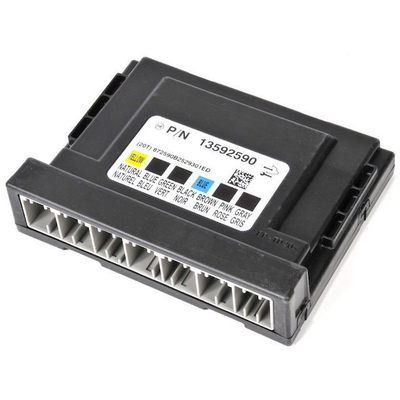
Below are the parts most often responsible for code B1107, ranked by how frequently each one is the actual culprit (per the diagnosis above). Tap any to see what we have for your vehicle.




The information in this article is provided for general reference and educational purposes only. Vehicle specifications, procedures, and part compatibility can vary by production date, trim level, and region. Always consult your vehicle's factory service manual and verify part numbers before purchasing or performing repairs. Safety-critical components such as airbags, seat belts, and braking systems should be installed by a qualified professional.
- 🧭 Diagnostic Flowchart
- 🛍️ Shop This Part
- What Does B1107 Mean?
- Can I Drive With B1107?
- Common Causes
- Symptoms
- Common Fixes & Costs
- DIY vs Professional
- Used vs. New Parts: Buying Guide
- What Happens If You Wait — Timeline
- Cost of Not Fixing It
- Diagnosis Steps
- When This Code Triggers (Freeze-Frame Conditions)
- Related Codes
- Climate & Environmental Factors
- How to Talk to a Mechanic About This Code
- Where to Take It: Dealer vs Independent vs Chain
- When to Walk Away From the Repair
- What Scan Tool You Need for This Code
- How to Clear the Code After You Fix It
- Will This Fail Emissions / State Inspection?
- Most Commonly Affected Vehicles
- Manufacturer-Specific Notes
- Real Owner Stories
- 2019 Jeep Renegade at 45K miles - Melted Connector
- 2004 Ford Explorer at 130K miles - Broken Wire Misdiagnosis
- 2017 Nissan Altima at 35K miles - Loose Seat Connector
- How to Prevent This Code From Triggering
- Frequently Asked Questions
- Can I fix a B1107 code myself?
- Will clearing the code make it go away?
- Why is my airbag light on with code B1107?
- My turn signal is blinking fast. Is that related to B1107?
- What are common misdiagnosis mistakes for B1107?
- My scan tool shows B1107-15. What do the numbers mean?
- How much does it cost to fix a B1107 code?
- The B1107 code is active, but everything seems to be working. What should I do?
- Key Takeaways
- 🎟️ Get 5% Off