

OBD-II Code B1108: Driver's Door Ajar Circuit Malfunction
What B1108 means, why it triggers, and how to fix it
- Code B1108 indicates the Body Control Module (BCM) detects a continuous ground signal, making the computer think the driver's door is permanently closed.
- The two most immediate symptoms are a dome light that fails to illuminate and a radio that stays on after the key is removed.
- On 2019-2020 Jeep Renegades and Fiat 500s, B1108 is a known pattern failure indicating a melted ground pin in the right rear tail light connector, not a door issue.
- Repair costs range from $5 for a DIY wire splice to over $460 for a replacement door latch assembly on luxury vehicles.
- Do not replace the Body Control Module (BCM) unless you have ruled out broken wires in the door jamb and tested the switch with a multimeter showing infinite resistance.
What Does B1108 Mean?
Code B1108 indicates the Body Control Module (BCM) receives a continuous 'closed' signal from the driver's door ajar switch circuit, even when the door is open. The computer detects a 'short to ground' in the wiring or switch, preventing it from recognizing the door's actual position.
Technical definition: The most common Society of Automotive Engineers (SAE) definition for B1108 is 'Driver Door Ajar Switch Circuit Short to Ground' or 'Driver Door Central Locking Motor Commanded Position Not Reachable'. This confirms the Body Control Module (BCM) detects a continuous closed-circuit signal from the driver's door switch.
Can I Drive With B1108?
Yes. Yes, the vehicle is safe to drive. This code typically only affects convenience features like the dome light or the 'door ajar' dashboard warning. However, on models like the Jeep Renegade where this code indicates a tail light failure, driving without a functional brake or turn signal is a significant safety hazard that risks a traffic ticket and requires immediate repair.
Common Causes
- Failed or Sticking Door Ajar Switch (Very Common) — The door ajar switch—either a standalone plunger or integrated into the door latch—is the most frequent failure point. It sticks in the 'closed' position or fails internally, sending a constant ground signal to the BCM.
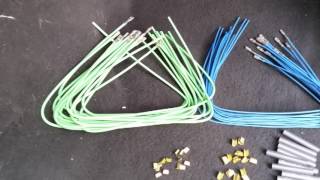
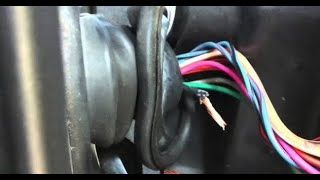
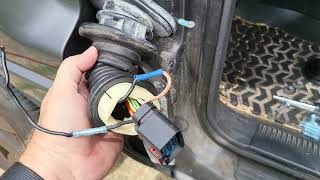
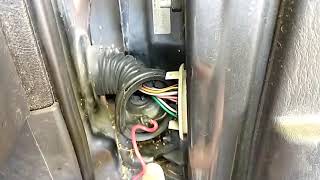
- Damaged or Corroded Wiring in Door Jamb (Very Common) — Wires passing through the flexible rubber boot between the door and the chassis chafe and break from constant flexing. A broken wire shorting against the metal body, or a corroded connector creating an unintended ground path, is a classic cause on older SUVs. 🎬 See how to repair broken door jamb wiring on a Jeep.
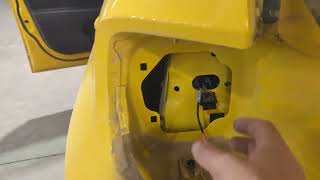
- Burnt Tail Light Connector Ground Pin (Jeep/Fiat) (Very Common) — On specific models like the 2019-2020 Jeep Renegade and Fiat 500, B1108 does not relate to the door. It indicates a known design flaw where the ground pin in the rear right tail light connector overheats and melts, causing an open circuit.
- Misaligned Door or Striker (Less Common) — If the car door sags or the door striker is out of alignment, it fails to make proper contact with the switch plunger, preventing the switch from activating when the door opens.
- Water Intrusion or Faulty Body Control Module (BCM) (Rare) — Water leaking into the cabin damages the BCM or a related junction box, shorting multiple circuits simultaneously. In rare cases, the BCM itself fails internally, though this is only considered after ruling out wiring and switch faults.
Symptoms
- Dome light does not turn on when driver's door is opened — The interior lights fail to illuminate when you open the driver's door, but work correctly when other doors open.
- 'Door Ajar' warning light does NOT appear on the dash — When the driver's door is open, the corresponding warning light on the instrument cluster remains off.
- Radio stays on after turning off the car — The 'Retained Accessory Power' feature, which normally turns off the radio when you open the door, fails to deactivate because the car thinks the door is still closed.
- Fast-blinking turn signal (Jeep/Fiat) — On Jeep Renegade and Fiat 500 models, a primary symptom of B1108 is a rapid-flashing right turn signal on the dashboard, indicating the common tail light connector failure.
- Alarm and Power Lock Malfunctions — The factory alarm arms incorrectly or behaves unpredictably, and central locking motors fail to lock or unlock the doors properly.
Diagnostic Flowchart
Tap your situation to follow the diagnostic path that matches what you're seeing on this code.
Common Fixes & Costs
- Replacing the Door Ajar Switch — Parts: $15-$75, Labor: $50-$150, ~0.8 hr book time (DIY)
- Replacing the Door Latch Assembly — Parts: $100-$460, Labor: $150-$250, ~1.5 hr book time (Intermediate)
- Repairing Damaged Wiring — Parts: $5-$20, Labor: $100-$250, ~2 hr book time (Intermediate)
- Repairing Tail Light Connector (Jeep/Fiat) — Parts: $5-$250, Labor: $100-$450, ~1.2 hr book time (DIY)
- Replacing the Body Control Module (BCM) — Parts: $250-$800, Labor: $150-$400, ~2.5 hr book time (Professional)
DIY vs Professional
- Replacing the Door Ajar Switch/Latch Assembly — Beginner: No, this is best for an intermediate DIYer.
Tools: Trim removal tool set, socket set, Torx driver set, flashlight. - Repairing Damaged Wiring — Beginner: No, this is for intermediate to advanced DIYers.
Tools: Multimeter, wire strippers, wire crimpers, heat shrink tubing, heat gun or soldering iron and solder. - Repairing Tail Light Connector (Jeep/Fiat) — Beginner: Yes, the DIY ground wire bypass is achievable for a motivated beginner.
Tools: Drill with small bit, 14-gauge wire, ring terminal, spade connector, wire stripper/crimper. - Replacing the Body Control Module (BCM) — Beginner: No, this is a professional-only repair.
Tools: Advanced bi-directional scan tool with programming capabilities, socket set.
Used vs. New Parts: Buying Guide
When a used part is worth it: For a complete door latch assembly, a used OEM part from a low-mileage vehicle is a cost-effective alternative to a new aftermarket part. For simple plunger switches or wiring pigtails, always buy new.
Donor-vehicle mileage cap: roughly under 70000 miles for the part to have meaningful remaining life.
Donor quality checklist:
- Verify the part number matches exactly.
- Avoid parts from vehicles in regions that use heavy road salt to prevent corrosion issues.
- For latch assemblies, visually inspect for excessive wear or rust on mechanical components.
Decision logic:
- If The failed part is a simple plunger switch or wiring connector → buy new; the cost is low and reliability is high.
- If The failed part is a complete latch assembly and the vehicle is over 10 years old → a new aftermarket assembly offers a good balance of cost and warranty. A used OEM part is a budget option but carries risk.
- If The BCM is the confirmed failure → buy a new or professionally remanufactured unit with a warranty. A used BCM is highly risky due to programming requirements.
Warranty tradeoff: Used parts from salvage yards typically have a 30-90 day warranty. New aftermarket parts carry a 1-year to limited lifetime warranty. New OEM parts usually have a 1-2 year warranty.
Worst-case if a used part fails: $200-$400 if a used latch assembly fails prematurely, requiring repeat labor costs for removal and reinstallation.
What Happens If You Wait — Timeline
- Immediate (First Occurrence): Code B1108 is set. Dome light, 'door ajar' dash light, and retained accessory power for the driver's door stop working. For Jeep/Fiat, the right rear light assembly is non-functional. (MPG impact: 0%% · Added cost: $0 for standard fault. Potential $100-$300 traffic ticket for lighting fault.)
- 1-3 months: The issue remains a persistent annoyance. For the Jeep/Fiat tail light fault, the high resistance at the faulty ground pin generates continuous heat when other lights in the cluster are on, melting the surrounding plastic connector housing. (MPG impact: 0%% · Added cost: $0 for standard fault. For lighting fault, risk increases to $50-$150 as the connector housing requires replacement in addition to the pigtail.)
- 3-12 months: For a standard door switch fault caused by a wiring short in the door jamb, constant flexing causes adjacent wires to fail, leading to issues with door locks or speakers. For the Jeep/Fiat, the heat damages the tail light circuit board itself. (MPG impact: 0%% · Added cost: $100-$250 for potential additional wiring repair or tail light circuit board replacement.)
- 12+ months: No significant further degradation is expected for a simple switch failure. For the Jeep/Fiat, in a worst-case scenario, the melting connector damages the main body harness, requiring a significantly more complex wiring repair. (MPG impact: 0%% · Added cost: $400+ for extensive harness repair in the rare worst-case scenario.)
Cost of Not Fixing It
- Immediate: Loss of convenience features like the dome light and retained accessory power. For Jeep/Fiat models, this causes a non-functional right rear turn signal and brake light, creating a major safety hazard. (Added cost: $100-$300 (potential traffic ticket for lighting failure))
- 1-6 months: Continued inconvenience. On Jeep/Fiat models, heat from the faulty tail light connector melts the surrounding plastic housing, increasing repair complexity. (Added cost: $50-$150 (potential for more extensive wiring or housing replacement))
- 6+ months: No significant escalating damage occurs for a standard door switch fault. The primary cost remains the persistent safety risk on vehicles where it affects exterior lighting. (Added cost: Negligible for standard fault; high risk of accident-related costs for lighting fault.)
Diagnosis Steps
- Verify the Symptoms and Code Definition
Confirm the exact symptoms. Use a scan tool to check the specific definition of B1108 for your vehicle's make and model year. For a Jeep Renegade, this code points to the tail light, not the door.
Tools: OBD-II Scanner (Beginner) - Inspect the Jeep/Fiat Tail Light Connector
If diagnosing a 2019+ Jeep Renegade or Fiat 500, skip the door. Access the rear right tail light assembly, unplug the 5-pin connector, and inspect the center ground pin for melting, charring, or discoloration.
Tools: Trim removal tools, Flashlight (Beginner) - Locate and Manually Test the Door Ajar Switch
Find the switch in the door jamb or latch mechanism. Press and release plunger switches to check for binding. For latch-integrated switches, spray electrical contact cleaner into the latch and open/close the door firmly several times to free a stuck mechanism.
Tools: Flashlight, Electrical contact cleaner (Beginner) - Inspect the Door Jamb Wiring
Pull back the rubber boot running between the driver's door and the car's frame. Inspect the wires inside for cracking, chafing, or breaks. A broken wire touching the metal frame is a primary cause of this code.
Tools: Trim removal tool (Intermediate) - Test the Switch with a Multimeter
Unplug the switch connector. Set a multimeter to continuity or resistance (Ohms). Touch the probes to the switch terminals. A good switch shows infinite resistance (OL) in one state and near zero Ohms (<1 Ω) in the other. Near zero Ohms in both states means the switch failed short and requires replacement.
Tools: Multimeter, trim removal tools (Intermediate) - Test the Circuit for a Short to Ground
Keep the switch unplugged. Set the multimeter to continuity. Attach one probe to a bare metal chassis ground. Touch the other probe to the signal wire in the harness connector. A beep or low resistance reading confirms the wire is shorted to ground between the connector and the BCM.
Tools: Multimeter (Advanced) - Perform a Voltage Drop Test
Connect the multimeter's red lead to the battery positive and the black lead to the switch's power feed wire. With the key on, the reading must be close to 0V. Move the black lead to the switch's ground wire and the red lead to the battery negative. A reading above 0.1V indicates high resistance in the ground circuit.
Tools: Multimeter (Advanced) - Check BCM Data Stream
Using an advanced scan tool, access the BCM live data stream. Find the 'Driver Door Ajar Status' parameter. It must change from 'Closed' to 'Open' when you open the door. A status stuck on 'Closed' confirms the BCM receives a constant ground signal, isolating the issue to the wiring or switch.
Tools: Advanced Bi-Directional Scan Tool (Professional) - Test CAN Bus Network Resistance
If network codes (e.g., U0199) are present, test the CAN bus. With the vehicle off and battery disconnected, measure resistance between CAN High (Pin 6) and CAN Low (Pin 14) at the OBD-II port. A healthy network reads approximately 60 Ohms. Readings of 120 Ohms, below 50 Ohms, or 'OL' indicate network wiring faults.
Tools: Multimeter, Vehicle Wiring Diagram (Advanced)
When This Code Triggers (Freeze-Frame Conditions)
- Battery Voltage: 11.5-14.8V (The code sets whenever the BCM is powered on (Key On).)
- Ignition Status: RUN (The BCM actively monitors the door circuit status when the ignition is on.)
- Door Ajar Switch Input: Closed / Grounded (The BCM detects a continuous ground signal from the driver's door switch circuit, which is the direct trigger for the fault.)
- Time Since Fault Detection: < 1 second (This is an electrical fault detected and logged by the BCM almost instantaneously.)
Related Codes
- B1109 — This is the opposite code, for 'Driver Door Ajar Switch Circuit Open'. It means the computer thinks the door is always open. If you see B1108 and B1109 together, suspect a failing BCM or a major wiring harness problem causing erratic signals.
- B10D7 — This is a PATS (Passive Anti-Theft System) key-related code on Ford vehicles. If it appears with B1108, it strongly suggests a failing Body Control Module (BCM) since the BCM manages both security and body functions.
- U0199 — This code means 'Lost Communication With Door Control Module'. If you see U0199 with B1108, stop diagnosing the switch. The problem is on the vehicle's data network, requiring diagnosis of module power/ground and CAN bus wiring.
- B1107 — On Jeep Renegades, this is the corresponding code for the left rear tail light. Seeing B1107 and B1108 together confirms a failure pattern on both sides due to the design flaw in the tail light connectors.
Climate & Environmental Factors
- High Humidity and Moisture: Accelerates corrosion on wiring, connectors, and switch components. Moisture creates unintended electrical paths to ground, directly causing a B1108 code, especially in coastal areas or regions using road salt.
- Cold/Freezing Temperatures: Moisture inside the door latch mechanism freezes, causing the switch or latch to stick in one position. Applying a silicone or dry graphite lubricant to the latch mechanism prevents freezing.
How to Talk to a Mechanic About This Code
Say this: "I have a B1108 code and my symptoms are [dome light won't turn on / fast blinking turn signal]. For my [Make, Model, Year], I know this is caused by a few specific things. Can I book an hour of diagnostic time to specifically test the [door ajar switch and wiring / rear tail light connector and ground] before we talk about replacing any major parts?"
This shows you've done your research and guides the technician toward the most likely, and often cheapest, fixes first. It frames the conversation around methodical diagnosis rather than immediately replacing expensive assemblies like the door latch or BCM.
Avoid saying:
- 'My car's electrical is acting weird.' (Too vague, invites a long, expensive diagnostic process)
- 'Just fix the B1108 code.' (Doesn't account for the different causes, especially the Jeep/Fiat TSB)
- 'I think I need a new computer.' (Never suggest the most expensive fix first)
Questions to ask before authorizing the repair:
- If you're recommending a new door latch assembly, did you first confirm the switch is bad and the wiring is good with a multimeter?
- For my Jeep/Fiat, did you physically inspect the tail light connector for melting before diagnosing the door?
- If you're recommending a wiring repair, what is your method (solder and heat shrink, butt connectors) and do you warranty the connection?
- Can you show me the failed part and where the failure is?
Where to Take It: Dealer vs Independent vs Chain
- Dealer:
Recommended for the specific Jeep/Fiat tail light TSB or if the vehicle is under warranty. For a standard door switch/wiring fault on an out-of-warranty car, an independent shop is more cost-effective.
Best for: Vehicles under warranty, Confirmed manufacturer-specific TSBs (like the Jeep Renegade tail light issue), Complex diagnostics involving multiple network ('U') codes alongside B1108
Downsides: Highest labor rates, often 1.5-2x an independent shop., Defaults to replacing a full assembly (e.g., door latch) rather than attempting a simpler wiring repair. (Typical cost: +40% vs. baseline) - Independent Shop:
Best fit for most B1108 scenarios, especially on common vehicles like Ford, GM, and older Jeeps. A good auto electric specialist is ideal.
Best for: Out-of-warranty vehicles with common B1108 causes (bad switch, broken wire in door jamb)., Owners looking for a better price and a direct relationship with the technician.
Downsides: Quality varies greatly; look for ASE certifications and good reviews., May lack awareness of very recent or obscure TSBs, potentially leading to misdiagnosis on affected models. (Typical cost: +0% vs. baseline) - Chain Shop:
AVOID for this code. B1108 requires specific diagnostic steps, not just reading a code. The risk of misdiagnosis and unnecessary parts replacement is high.
Best for: Simple, unrelated maintenance like oil changes or tires.
Downsides: Technician skill varies dramatically; not typically equipped for in-depth electrical diagnosis., High pressure to upsell common items; misdiagnoses the electrical fault and recommends unnecessary services. (Typical cost: -10% vs. baseline)
When to Walk Away From the Repair
If the estimated repair cost exceeds 50% of the car's private-party value, seriously consider selling or trading it in instead of repairing it.
- Car worth $4000, fix is $350: Fix it. A $350 repair for a wiring or switch issue is well below the threshold and restores important functionality.
- Car worth $3000, fix is $1800: Walk away. A BCM replacement costing $1800 on a $3000 car is not a sound financial decision. The repair cost is 60% of the car's value.
- Car worth $15000, fix is $700: Fix it. A $700 repair for a new door latch assembly on a higher-value vehicle is easily justifiable.
What Scan Tool You Need for This Code
Minimum: A scanner that reads Body Control Module (BCM) codes and displays BCM live data.
A basic $20 code reader only shows powertrain ('P') codes and misses body ('B') codes like B1108. Even if it sees the code, without live data, you cannot perform the key diagnostic step of watching the 'Door Ajar Switch' status change from 'Open' to 'Closed' in real-time.
Budget: BlueDriver Pro (~$100) — Connects to a smartphone app and reads BCM codes and displays live data streams for many vehicle makes, which is sufficient for diagnosing a standard B1108 fault.
Mid-range: Foxwell NT510 Elite / XTOOL D7 (~$180) — These handheld scanners offer robust access to BCM, ABS, and SRS modules, providing reliable live data. They offer limited bi-directional controls (like commanding the dome light on) which helps confirm circuit integrity.
Professional: Autel MaxiCOM MK808S / Launch CRP919E (~$450-650) — Offers full bi-directional control, allowing a technician to command door locks, lights, and other BCM functions independently to isolate faults. Provides comprehensive OEM-level data and diagnostics for complex issues involving network codes.
Rent vs buy: For a one-time diagnosis, many auto parts stores like AutoZone offer a 'Loan-A-Tool' program where you borrow a capable OBD-II scanner for free after leaving a refundable deposit. Buy a scanner only if you plan to perform your own diagnostics regularly.
How to Clear the Code After You Fix It
- Use an OBD-II scan tool to clear the B-codes from the Body Control Module.
- Disconnect the negative battery terminal for 15 minutes to perform a hard reset on all modules.
- Open and close the driver's door several times to confirm the 'door ajar' indicator and dome light function correctly.
Drive cycle (~5 minutes): A formal drive cycle is not required for this body code. After clearing the code, operate the affected component (the driver's door) multiple times with the ignition on to verify the repair. If the code does not return, the fix is successful.
Readiness monitors affected: None
Watch out for:
- Simply disconnecting the battery fails to clear the code from the BCM's memory; using a scan tool is mandatory.
- The code returns immediately if the underlying electrical short remains unrepaired.
- Confusing a B-code (Body) with a P-code (Powertrain); B1108 does not affect emissions readiness monitors or require a complex drive cycle.
Will This Fail Emissions / State Inspection?
No — by itself this code doesn't fail OBD inspection (but it can keep readiness monitors from setting, which causes a separate fail).
- General: A B1108 code is a body fault and does NOT illuminate the Check Engine Light or affect emissions readiness monitors. It will not cause a failure of an OBD-II emissions test.
- California: The smog check ignores B-codes. However, if the code is on a Jeep/Fiat and causes a non-functional turn signal, the vehicle fails a separate safety inspection.
- New York: The NYS safety inspection requires all lighting to be functional. A B1108 code on a Jeep Renegade disabling the turn signal results in an immediate safety inspection failure.
- Texas: The annual safety inspection requires functional turn signals and stop lamps. A vehicle with a B1108 code causing a lighting failure fails this portion of the inspection.
Most Commonly Affected Vehicles
- Ford F-150 (2004-2008) — The door ajar switch is integrated into the door latch assembly, a very common failure point requiring replacement of the entire latch.
- Jeep Grand Cherokee (WJ) (1999-2004) — These models are notorious for wires breaking inside the flexible rubber boot between the driver's door and the body.
- Ford Ranger (1998-2011) — Prone to both switch failure and wiring issues in the door jamb area.
- Ford Escape (2013-2019) — Presents with multiple door lock codes (B1108, B1109, etc.) and U-codes, pointing to a larger network or BCM issue rather than a simple switch failure.
- Chevrolet / GMC Silverado / Sierra (2007-2013) — Failures of the switch inside the door latch assembly are common, similar to the F-150.
- Jeep Renegade (2019-2020) — B1108 specifically indicates a burnt ground pin in the rear right tail light connector, a known design flaw addressed in TSB #08-054-20.
- Fiat 500 (2012-2019) — Similar to the Jeep Renegade, B1108 on a Fiat 500 points to a tail light circuit fault, not a door switch.
- Audi A8, A4, Q7 (2005-2018) — The door ajar switch is part of the door lock actuator assembly. Failure of this assembly is common and costly to replace.
Manufacturer-Specific Notes
- Ford / Lincoln / Mercury: The definition is typically 'Driver Door Central Locking Motor Commanded Position Not Reachable'. The switch is part of the latch and not sold separately. Ford has issued multiple Customer Satisfaction Programs for failing door latches related to freezing temperatures or water intrusion.
- GM (Chevrolet / GMC): The definition relates to the door lock motor. Like Ford, the switch is frequently integrated into the door latch assembly.
- Jeep / Chrysler / Dodge: On older models like the WJ Grand Cherokee, the code points to broken wires in the door jamb. On newer models like the 2019-2020 Renegade, B1108-15 specifically means 'Rear Right Turn Light-Circuit Short To Battery Or Open' due to a burnt ground pin in the tail light connector.
- Fiat: On vehicles like the Fiat 500, B1108 indicates 'Rear Right Turn Light-Circuit Current Below Threshold' (B1108-18), pointing to a tail light issue, not a door switch.
Real Owner Stories
2019 Jeep Renegade with 45K miles
The dashboard suddenly showed a fast-blinking right turn signal indicator, and a friend confirmed the entire right rear tail light assembly was dead. An OBD-II scan revealed code B1108.
What they tried:
- Initially thought it was a burnt-out bulb and replaced it, which did not solve the problem.
- Searched online forums for 'Jeep Renegade B1108' and discovered the common burnt ground pin issue.
Outcome: Owner performed a DIY fix found on a forum. They bypassed the melted center ground pin on the tail light connector by drilling a small hole, running a new 14-gauge ground wire from the tail light circuit board to a clean chassis ground point inside the trunk. Total cost was under $10 for wire and connectors. The code cleared and all lights functioned correctly.
Lesson: On specific vehicles like the 2019-2020 Jeep Renegade, B1108 is a known pattern failure for the tail light, not the door. Always check the connector's center pin for melting before buying any parts. A simple DIY ground wire saves hundreds over the official pigtail/board replacement.
2017 Ford F-150 XLT with 60K miles
During cold weather (below freezing), the driver's door would not latch shut after being opened. The 'door ajar' warning light stayed on, and the owner had to manually hold the door closed while driving. Code B1108 was present.
What they tried:
- Took the truck to the dealer, who performed a recall repair for frozen door latches.
- The problem returned a few weeks later during the next cold snap. The dealer then suggested replacing the entire door latch assembly again at the owner's cost.
Outcome: Frustrated with the recurring issue even after the recall fix, the owner liberally sprayed the latch mechanism with silicone lubricant. This prevented moisture from freezing inside the latch. The problem did not return for the rest of the winter.
Lesson: For issues related to freezing temperatures, the root cause is moisture intrusion, not just a faulty part. Preventative measures like lubricating the latch mechanism are a more effective long-term solution than repeated parts replacement.
2012 Ford Focus with 110K miles
The car began exhibiting bizarre electrical issues: the dome light wouldn't work, the radio stayed on, and power locks acted erratically. A scan showed B1108, B1109 (passenger door ajar open), and multiple 'U' (network) codes.
What they tried:
- The owner first suspected the driver's door switch and tested it with a multimeter; it worked correctly.
- Confused by the multiple, contradictory codes, they took it to an independent mechanic specializing in electrical diagnosis.
Outcome: The mechanic diagnosed water intrusion into the Body Control Module (BCM). A leak from a poorly sealed windshield allowed water to drip onto the BCM's main connector, causing corrosion and shorting multiple circuits. The fix involved repairing the windshield seal, cleaning the BCM connector, and replacing a few corroded pins. Total repair cost was $450.
Lesson: Multiple, seemingly unrelated body and network codes appearing simultaneously almost never point to individual component failures. The problem is central, such as a failing BCM, a compromised data network, or water damage affecting a major electrical junction.
How to Prevent This Code From Triggering
- Lubricate Door Latch Mechanisms (Once per year (before winter)) — Applying a quality silicone or white lithium grease spray into the latch assembly displaces moisture and prevents it from freezing, which is a common cause of stuck switches and mechanical failures in cold climates.
- Inspect and Clean Door Drains (Every 6 months) — Doors have drain holes at the bottom. If they become clogged with leaves and debris, water fills the door cavity, submerging connectors and the latch assembly, leading to corrosion and electrical shorts.
- Treat Door Jamb Wiring Boot (Every 2-3 years) — The rubber boot in the door jamb becomes dry and brittle over time. Applying a rubber and vinyl protectant keeps it flexible, reducing the chance of it tearing and exposing the delicate wiring harness to the elements.
- Check for and Seal Cabin Water Leaks (After any windshield replacement or if you notice damp carpets) — Water leaks from windshields, sunroofs, or cowl vents drip directly onto critical electronics like the Body Control Module (BCM), causing widespread electrical faults, including B1108. Proactively sealing leaks prevents catastrophic electronic failure.
Frequently Asked Questions
Why doesn't my dome light turn on when I open my driver's door?
This is the most common symptom of code B1108. The car's computer receives a false 'closed' signal due to a faulty switch or shorted wire. Because it doesn't know the door is open, it never commands the light to turn on.
Can a B1108 code drain my battery?
No, B1108 itself does not drain your battery. The fault makes the car think the door is always closed, which keeps interior lights off. The opposite code (B1109), indicating the door is always open, is the one that drains batteries by keeping modules awake.
I have a B1108 code, but my car isn't a Ford or Chevy. What is it?
Always verify the exact code definition for your specific vehicle make and year using a scan tool. For example, on a 2019-2020 Jeep Renegade or Fiat 500, B1108 points to a melted ground pin in the rear right tail light assembly. On a Nissan, it refers to the airbag diagnosis sensor unit.
What does it mean if I have B1108 and U0199 or B1109 together?
Seeing multiple body or network codes simultaneously indicates a system-wide failure rather than a single bad switch. This points to a central issue like a failing Body Control Module (BCM), a damaged main wiring harness, or water intrusion. Stop testing the door switch and diagnose the CAN bus network or BCM power/ground.
My 'door ajar' light is always ON. Is that a B1108 code?
No. A light that stays ON means the circuit is open, triggering a different code like B1109. Code B1108 means the circuit is shorted to ground, preventing the light from ever turning ON for the driver's door.
How much does it cost to fix a B1108 code?
Repair costs range from $5 for a DIY wire splice to over $700 for a luxury vehicle door latch assembly replacement at a dealership. Repairing a broken wire in the door jamb typically costs $105 to $270. If the Body Control Module requires replacement, expect to pay $400 to $1,200.
What is a TSB and why is it important for code B1108?
A Technical Service Bulletin (TSB) is a manufacturer document detailing a known pattern failure and its official fix. For B1108, TSBs are critical diagnostic shortcuts. For instance, Jeep TSB #08-054-20 identifies B1108 as a tail light defect, saving technicians hours of wasted time testing the driver's door.
Key Takeaways
- Code B1108 indicates the Body Control Module (BCM) detects a continuous ground signal, making the computer think the driver's door is permanently closed.
- The two most immediate symptoms are a dome light that fails to illuminate and a radio that stays on after the key is removed.
- On 2019-2020 Jeep Renegades and Fiat 500s, B1108 is a known pattern failure indicating a melted ground pin in the right rear tail light connector, not a door issue.
- Repair costs range from $5 for a DIY wire splice to over $460 for a replacement door latch assembly on luxury vehicles.
- Do not replace the Body Control Module (BCM) unless you have ruled out broken wires in the door jamb and tested the switch with a multimeter showing infinite resistance.
Helpful Videos

Shop the Parts Behind B1108
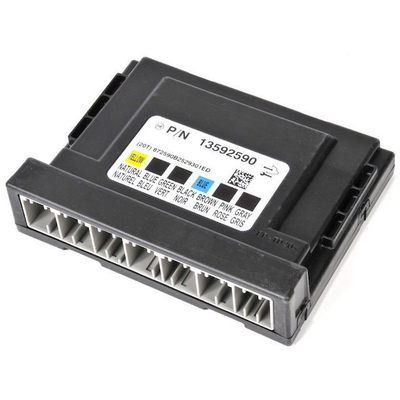
Below are the parts most often responsible for code B1108, ranked by how frequently each one is the actual culprit (per the diagnosis above). Tap any to see what we have for your vehicle.



The information in this article is provided for general reference and educational purposes only. Vehicle specifications, procedures, and part compatibility can vary by production date, trim level, and region. Always consult your vehicle's factory service manual and verify part numbers before purchasing or performing repairs. Safety-critical components such as airbags, seat belts, and braking systems should be installed by a qualified professional.
- 🧭 Diagnostic Flowchart
- 🎬 Helpful Videos
- 🛍️ Shop This Part
- What Does B1108 Mean?
- Can I Drive With B1108?
- Common Causes
- Symptoms
- Common Fixes & Costs
- DIY vs Professional
- Used vs. New Parts: Buying Guide
- What Happens If You Wait — Timeline
- Cost of Not Fixing It
- Diagnosis Steps
- When This Code Triggers (Freeze-Frame Conditions)
- Related Codes
- Climate & Environmental Factors
- How to Talk to a Mechanic About This Code
- Where to Take It: Dealer vs Independent vs Chain
- When to Walk Away From the Repair
- What Scan Tool You Need for This Code
- How to Clear the Code After You Fix It
- Will This Fail Emissions / State Inspection?
- Most Commonly Affected Vehicles
- Manufacturer-Specific Notes
- Real Owner Stories
- 2019 Jeep Renegade with 45K miles
- 2017 Ford F-150 XLT with 60K miles
- 2012 Ford Focus with 110K miles
- How to Prevent This Code From Triggering
- Frequently Asked Questions
- Why doesn't my dome light turn on when I open my driver's door?
- Can a B1108 code drain my battery?
- I have a B1108 code, but my car isn't a Ford or Chevy. What is it?
- What does it mean if I have B1108 and U0199 or B1109 together?
- My 'door ajar' light is always ON. Is that a B1108 code?
- How much does it cost to fix a B1108 code?
- What is a TSB and why is it important for code B1108?
- Key Takeaways
- 🎟️ Get 5% Off