

OBD-II Code B1126: Driver-Side Airbag Circuit Fault
What B1126 means, why it triggers, and how to fix it
- Code B1126 indicates an electrical fault in the driver's side airbag circuit, automatically disabling the airbag and increasing injury risk in a crash by up to 50%.
- Over 80% of B1126 codes stem from damaged wiring or a loose yellow connector under the driver's seat, rather than a failed airbag module.
- Verify your vehicle's specific code definition, as B1126 triggers power window or climate control faults—not airbag warnings—on Honda, Acura, and Mitsubishi models.
- Check for Technical Service Bulletins (TSBs) before replacing parts; 2019-2023 Mazda3 and CX-30 models have a known factory wiring flaw requiring a specific $400-$800 harness modification.
What Does B1126 Mean?

Code B1126 indicates the airbag control module (SRS or SAS) detected an electrical fault in the driver's side airbag circuit, typically located inside the seat bolster. To prevent unexpected deployment, the computer automatically disables this specific airbag.
Technical definition: Code B1126 indicates the Supplemental Restraint System (SRS) module detected a fault in the driver-side side airbag deployment circuit. The most frequent variation is B1126:13 (open circuit or high resistance). Other variants include B1126:11 (short to ground) and B1126:12 (short to power), each pinpointing a specific electrical failure type.
Can I Drive With B1126?
Yes, But With Caution. Yes, the vehicle drives normally, but the driver's side airbag is disabled and will not deploy in a crash. Driving with a malfunctioning airbag system increases your risk of severe injury in a frontal collision by 40-50%. Have the vehicle serviced immediately; continued driving is inadvisable except in emergencies.
Common Causes

- Damaged or Strained Wiring Under the Driver's Seat (Very Common) — Wires under the seat or inside the seat back stretch, pinch, or break from the seat moving back and forth, items stored under the seat, or occupant movement.
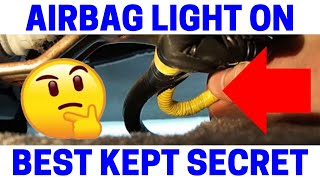
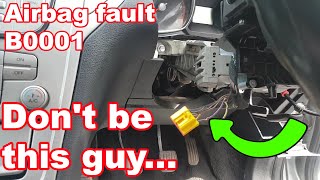
- Loose or Corroded Electrical Connector (Common) — The main electrical plug under the driver's seat (usually a large yellow connector) becomes loose, or its metal pins corrode and lose grip, causing a poor connection.
- Manufacturer Design Flaw (e.g., Mazda TSB) (Common) — On 2019-2023 Mazda3 and CX-30 models, the factory seat wiring harness is routed incorrectly, causing strain and failure. Mazda issued Technical Service Bulletins (TSBs) to address this specific flaw.
- Water Damage or Spills (Uncommon) — Spilled liquids or aggressive interior detailing seep into the under-seat connector, causing pin corrosion and high electrical resistance.
- Faulty Clock Spring (Less Common) — While B1126 typically points to the side airbag, a fault in the steering column's clock spring sometimes manifests as this code on specific vehicle architectures.
- Faulty Driver-Side Side Airbag Module (Rare) — The airbag module itself fails internally, causing an open or short circuit. Consider this only after ruling out all wiring and connector issues.
- Aftermarket Modifications (Rare) — Installing aftermarket seats, audio equipment, or remote starts often interferes with or damages the SRS wiring harness.
- Faulty Occupant Classification System (OCS) Sensor (Rare) — On certain Ford models, a passenger seat weight sensor failure triggers unpredictable SRS faults, including B1126.
- Faulty SAS (Airbag) Control Module (Very Rare) — The main airbag control computer rarely fails for a single airbag fault. It is expensive and should be the absolute last component replaced.
Symptoms

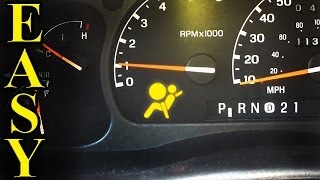
- Airbag Warning Light On — The SRS warning light illuminates and stays on continuously.
- Intermittent Airbag Light — The light toggles randomly when moving the driver's seat, strongly indicating a loose under-seat connection.
- Failed Safety Inspection — An illuminated airbag light causes an automatic safety inspection failure in states like VA, PA, and MA.
- Message on Information Display — The instrument cluster displays a warning like 'SRS Airbag Service Urgent'.
- Driver-Side Airbag is Disabled (also visible on scanner) — The SRS module deactivates the driver's side airbag, preventing deployment in a crash.
Diagnostic Flowchart
Tap your situation to follow the diagnostic path that matches what you're seeing on this code.
Common Fixes & Costs
- Repairing Wiring or Connector Under Seat — Parts: $10-$70, Labor: $100-$400, ~1.5 hr book time (Intermediate)
- Performing Manufacturer TSB (e.g., Mazda Harness Modification) — Parts: $20-$50, Labor: $400-$800, ~3.5 hr book time (Professional)
- Replacing Driver-Side Side Airbag Module — Parts: $200-$600, Labor: $100-$200, ~1.5 hr book time (Professional)
- Resetting Airbag Control Module (after accident) — Parts: $50-$100, Labor: $100-$200, ~1 hr book time (Intermediate)
- Replacing SAS (Airbag) Control Module — Parts: $200-$800, Labor: $150-$300, ~1.5 hr book time (Professional)
DIY vs Professional
- Repairing Wiring or Connector Under Seat 🟢 Beginner
Tools: Wrench set, flashlight, trim removal tools, multimeter, wire strippers, crimping tool, heat shrink, zip ties. - Performing Manufacturer TSB 🟢 Beginner
Tools: Vehicle-specific tools, trim removal tools, manufacturer diagnostic software (e.g., Mazda MDARS) for reprogramming. - Replacing Driver-Side Side Airbag Module 🟢 Beginner
Tools: Wrench set, trim removal tools, torque wrench. - Resetting Airbag Control Module 🟢 Beginner
Tools: Wrench set, trim removal tools. - Replacing SAS (Airbag) Control Module 🟢 Beginner
Tools: Wrench set, trim removal tools, manufacturer diagnostic software.
Used vs. New Parts: Buying Guide
When a used part is worth it: Buying a used side airbag module makes sense for older, high-mileage vehicles where a new OEM part is cost-prohibitive. Purchase only from reputable, certified automotive recyclers.
Donor-vehicle mileage cap: roughly under 100000 miles for the part to have meaningful remaining life.
Donor quality checklist:
- Ensure the part is from a vehicle not involved in a major collision.
- Verify the part is a non-deployed, original equipment (OEM) part.
- Purchase from a certified recycler who inspects and warranties the part.
- Avoid parts from flood-damaged vehicles, as moisture compromises electronics.
Decision logic:
- If The vehicle is under warranty or has a known TSB → Use a new OEM part as part of the official repair procedure.
- If The cost of a new OEM part is less than $300 → Buy new for peace of mind and guaranteed reliability.
- If The vehicle is over 10 years old and budget is the primary concern → A certified used OEM airbag is a reasonable choice, provided it has a warranty.
Warranty tradeoff: Used parts from recyclers typically offer a 30-90 day warranty. New OEM parts purchased and installed at a dealer come with a 12-month/12,000-mile warranty. Aftermarket parts are not recommended for airbag systems.
Worst-case if a used part fails: $300-$600. The primary risk is that the used part is faulty, requiring you to pay for the part and labor a second time.
What Happens If You Wait — Timeline
- Instant: The SRS module disables the driver's side airbag. The airbag warning light turns on. There are no physical driving symptoms.
- Next state inspection: The illuminated airbag light results in an automatic inspection failure in jurisdictions with safety checks (e.g., VA, PA, MA).
- In case of a minor to moderate side-impact accident: The driver's side airbag fails to deploy. The driver sustains more severe head and torso injuries. Insurance claims become complicated.
- In case of a severe side-impact accident: The lack of a deploying side airbag turns a survivable crash into a fatal one. The seatbelt alone fails to prevent fatal head or chest trauma.
Cost of Not Fixing It
- Immediate: The driver's side airbag is disabled and will not deploy in an accident, significantly increasing the risk of serious injury or death. (Added cost: N/A (Safety Risk))
- Next Vehicle Inspection: The vehicle automatically fails safety inspections in states like VA, PA, and MA, preventing registration renewal. (Added cost: $20-$50 (Failed inspection fee) + cost of eventual repair)
- In Case of Accident: Insurance companies may reduce claim payouts or argue negligence if you knowingly drove with a disabled safety system. (Added cost: Potentially thousands in uncovered damages or liability.)
Diagnosis Steps
- Read the Full Code
Use an SRS-capable OBD-II scanner. Note the full code, including suffixes like ':13' (open circuit) or ':11' (short to ground), to determine the exact electrical fault.
Tools: SRS-capable OBD-II Scanner (Beginner) - Check for Manufacturer TSBs
Search online for your vehicle's make, model, year, and 'B1126 TSB'. Manufacturers like Mazda have specific, documented repair procedures for this code.
Tools: Internet access (Beginner) - Visually Inspect Under the Driver's Seat
Locate the large yellow connector under the driver's seat. Check for loose connections, stretched wires, or items stored under the seat damaging the harness.
Tools: Flashlight (Beginner) - Disconnect Battery and Reseat Connector
WARNING: Disconnect the negative battery terminal and wait 15 minutes for the backup capacitor to discharge. Unplug the yellow under-seat connector, inspect pins for corrosion, and reconnect securely to test if the code clears.
Tools: Wrench set, safety glasses (Intermediate) - Perform a 'Wiggle Test' with Live Data
With an SRS scanner displaying live resistance data for the driver's side airbag, gently wiggle the under-seat wiring harness. If resistance jumps to 'OL' (Over Limit), you found the exact location of the wiring break.
Tools: Advanced SRS-capable OBD-II Scanner (Advanced) - Test Circuit Resistance with a Multimeter
With the battery disconnected and airbag module unplugged, measure resistance across the circuit pins on the vehicle harness side. Compare to manufacturer specs (typically 1.8-5.0 ohms). WARNING: Never probe an airbag module directly; the multimeter current triggers deployment.
Tools: Digital multimeter, vehicle-specific wiring diagram (Advanced) - Isolate the Fault with a Dummy Resistor
Connect a 2.0-3.0 ohm diagnostic resistor to the vehicle harness in place of the airbag. If the B1126 code clears, the airbag module is faulty. If the code remains, the fault is in the wiring harness or SAS module.
Tools: Airbag system diagnostic resistor (2.0-3.0 ohm), OBD-II scanner (Advanced) - Check for Shorts to Ground or Power
For B1126:11 or B1126:12 codes, use a multimeter to check for continuity between the airbag circuit wires and the vehicle's chassis ground or a power source.
Tools: Digital multimeter, vehicle-specific wiring diagram (Advanced)
When This Code Triggers (Freeze-Frame Conditions)
- System State: Ignition ON (The SRS module performs a self-check of all circuits immediately upon vehicle startup.)
- Battery Voltage: 11-14 Volts (A low battery sometimes causes spurious SRS codes, but B1126 typically indicates a persistent circuit fault.)
- Fault Type: Open Circuit / High Resistance (This is the most common condition recorded, pointing to a broken wire or bad connection.)
- Event Trigger: Power-On Self-Test (POST) (Unlike engine codes, this fault is almost always detected during the initial system check, not during a specific driving event.)
Related Codes
- B1127 — Identical fault for the passenger-side side airbag. Often appears alongside B1126 if a TSB affects both front seats.
- B1126:13 — Specifies 'open circuit or high resistance.' Strongly points to a broken wire, loose pin, or corroded connector.
- B1126:11 — Specifies 'short to ground.' Indicates the power/signal wire is touching the vehicle's metal frame.
- B1126:12 — Specifies 'short to power.' Indicates the signal wire is touching a power source.
- B0016 (Chevrolet) — A 'Driver Seat Belt Pretensioner Deployment Loop Open' fault. While a different component, the root cause is identical: a wiring issue under the seat.
- B1826 (Toyota) — The equivalent fault for an open circuit in the driver's airbag. Frequently caused by a loose or damaged connector.
Climate & Environmental Factors
- High Humidity / Moisture: Moisture from spills or humid climates penetrates electrical connectors, causing pin corrosion and triggering a B1126:13 (high resistance) fault.
- Extreme Cold: Cold weather contracts plastic and metal, causing marginal electrical connections to temporarily open. The light often appears on cold starts and disappears as the cabin warms.
- Road Salt: Salt-laden moisture accelerates corrosion of under-seat wiring and connectors if tracked into the cabin.
- Temperature Cycles: Repeated hot/cold cycling degrades wiring insulation and connector housings, eventually breaking the connection.
How to Talk to a Mechanic About This Code
Say this: "I have an airbag warning light and my scanner shows code B1126. Please start by inspecting the under-seat harness and checking for any relevant TSBs before quoting a new airbag module."
This signals you are an informed customer, directs the technician to the most common failure point first, and prevents them from immediately quoting a costly airbag replacement.
Avoid saying:
- My airbag light is on, can you fix it?
- Just do whatever it takes to turn the light off.
- I think I need a new airbag.
Questions to ask before authorizing the repair:
- Did you find a specific open or short in the wiring, or a corroded connector?
- Did you check for any Technical Service Bulletins for my vehicle's VIN related to this code?
- If you are recommending an airbag module replacement, how did you rule out the wiring harness as the cause?
- What is the warranty on this specific repair and the parts used?
Where to Take It: Dealer vs Independent vs Chain
- Dealer:
Best choice if a known TSB applies or the vehicle is under warranty. Otherwise, it is an expensive option for a simple wiring fix.
Best for: Vehicles under the 5-year/60,000-mile safety restraint warranty., Models with known TSBs requiring proprietary software updates, like 2019-2023 Mazdas., Complex electrical issues where factory diagnostic tools are superior.
Downsides: Highest labor rates., Quicker to replace entire components rather than perform detailed wiring repairs. (Typical cost: +50% vs. baseline) - Independent Shop:
Excellent fit for common wiring/connector repairs, provided the shop has certified technicians experienced in SRS diagnostics.
Best for: Out-of-warranty vehicles where the cause is likely a common wiring or connector failure., Owners looking for a more affordable diagnostic and repair cost., Shops specializing in vehicle electronics or a specific car brand.
Downsides: Quality and experience with SRS systems varies greatly., Lacks access to the latest TSBs or required software updates for certain manufacturers. (Typical cost: +0% vs. baseline) - Chain Shop:
AVOID. Airbag system repairs are safety-critical and require expertise not typically found at general service chain shops.
Best for: Simple, unrelated maintenance like oil changes or tires.
Downsides: Technicians lack specialized training for complex SRS diagnostics., High pressure to sell parts leads to recommendations for unnecessary module replacements. (Typical cost: -10% vs. baseline)
When to Walk Away From the Repair
If the estimated airbag repair cost exceeds 40-50% of the car's private-party value, consider selling it as-is with full disclosure.
- Car worth $8000, fix is $400: Fix it. This is a relatively low-cost repair that restores a critical safety feature and the car's value.
- Car worth $5000, fix is $2200: Walk away. The repair cost is nearly half the car's value. It is not economically sensible.
- Car worth $2500, fix is $1200: Borderline. Get a second opinion to confirm the diagnosis and cost. If the car is otherwise in great shape, it might be worth it; if not, sell.
What Scan Tool You Need for This Code
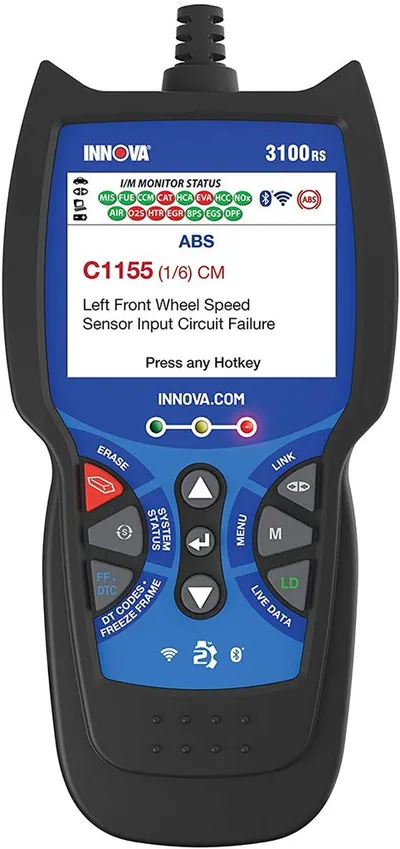
Minimum: An OBD-II scanner that reads and clears Supplemental Restraint System (SRS) / Airbag codes. Standard engine-only code readers will NOT work.
A basic $20 scanner only reads 'P' (powertrain) codes. It cannot communicate with the SRS module to read 'B' (body) codes like B1126.
Budget: Autel AutoLink AL619 (~$80) — Reads and clears SRS codes on most major models. It identifies the B1126 code and allows you to clear it after the repair.
Mid-range: Foxwell NT630 Plus (~$150) — Displays live data for the airbag circuit, allowing you to perform a 'wiggle test' by watching resistance values to pinpoint a break.
Professional: Autel MaxiCOM MK808 / MK906BT (~$500-1200) — Offers OEM-level diagnostics, live data graphing, and bidirectional control for SAS module reprogramming after TSB repairs.
Rent vs buy: Most auto parts stores do NOT rent out scanners with SRS capabilities due to liability. Buying a budget SRS-capable scanner is a worthwhile investment.
How to Clear the Code After You Fix It
- Ensure the physical fault (e.g., broken wire, bad connector) is fixed.
- Reconnect the negative battery terminal if disconnected.
- Use an SRS-capable OBD-II scan tool to access the airbag control module.
- Select the option to 'Clear DTCs' or 'Erase Codes'.
- Cycle the ignition off, then on. The airbag light illuminates for 6-7 seconds during self-test, then turns off if fixed.
Drive cycle (~1 minutes): No complex drive cycle is needed. After clearing the code, the system re-checks itself at the next key-on event. If the fault is fixed, the light stays off; if not, it reappears immediately.
Watch out for:
- Using a standard OBD-II scanner that cannot read SRS codes will not work.
- Simply disconnecting the battery will not clear a persistent B1126 code from the module's memory.
- If the code was set due to an accident (hard code), it cannot be cleared with a scanner and the module requires a professional reset service.
Will This Fail Emissions / State Inspection?
No — by itself this code doesn't fail OBD inspection (but it can keep readiness monitors from setting, which causes a separate fail).
- California: An airbag light does NOT cause a California smog check failure, as it is not emissions-related.
- New York: An illuminated airbag light is an advisory and does not cause an automatic NYS safety inspection failure, though inspectors must note it.
- Texas: The airbag system is not inspected in Texas; the vehicle passes with the light on.
- Virginia / Pennsylvania: Considered a safety defect and causes automatic inspection failure.
Most Commonly Affected Vehicles
- Mazda Mazda3, CX-30 (2019-2023) — A known factory flaw with the seat wiring harness causes strain and triggers code B1126:13. Mazda issued TSBs (08-003-23a, 08-001/22) requiring a new short cord and software update.
- Ford Mondeo, S-Max, Galaxy (2006-2015) — Commonly reported due to high resistance from poor pin connections in the airbag system's connectors under the seat or at the restraint control module.
- Chevrolet / GM Silverado, Equinox (2007-2017) — B1126 is defined as 'Driver Deployment Loop Open'. Diagnosis focuses on an open circuit in the driver's airbag harness or faulty connectors.
- Jaguar XF, XJ (2008-2015) — Frequently related to wiring under the driver's seat becoming frayed or disconnected from frequent seat adjustments.
- Volvo S60, XC60, S40 (2000-2018) — Triggers an 'SRS Airbag Service Urgent' message, frequently traced to high resistance in connectors under the seat for the side airbag (SIPS).
- Nissan March, Altima, Qashqai (2008-2018) — B1126 refers to a 'Diagnosis Sensor Unit' fault within the airbag module itself, requiring a module reset after an accident.
- Subaru Outback, Forester (2009-2014) — B1126 points to a general 'Airbag ECU Malfunction', often caused by failed solder joints on the overhead passenger airbag indicator light.
- Porsche Boxster (718) (2017-Present) — Common on sports cars where seat movement and vehicle dynamics stress wiring connections under the driver's seat.
Manufacturer-Specific Notes
- Mazda: 2019-2023 Mazda3 and CX-30 models have a known factory flaw causing B1126:13. TSB 08-003-23a requires installing a modified short cord and reprogramming the SAS module.
- Honda / Acura: B1126 is a 'Driver Side Power Window Motor Pulse Error'—not an airbag code. Do not follow SRS diagnostics on these brands.
- Mitsubishi: B1126 is an HVAC code for 'In/out select damper circuit open'. It relates to the fresh air motor, not airbags.
- Ford: The code is often caused by high resistance in the multiplugs under the seat or at the main restraint control module under the center console.
- Nissan: B1126 points to a 'Diagnosis Sensor Unit' fault, meaning the module stored crash data and requires a professional reset or replacement.
Real Owner Stories
2014 Mazda 6 with intermittent airbag light
Owner reported the airbag light coming on intermittently for years. A 2023 scan showed a B1126 code. The light turned off for months at a time after wiggling the under-seat connectors.
What they tried:
- Repeatedly reseating the yellow connectors under both front seats.
- Getting multiple dealer scans confirming the fault.
Outcome: The temporary fix of reseating the connector confirms a connection issue. The permanent fix requires repairing or replacing the wiring harness pigtail under the affected seat.
Lesson: An intermittent airbag light that changes with seat movement is almost certainly a wiring issue under the seat. Don't immediately replace the expensive airbag module; the fault is likely in the wiring.
2009 Ford Mondeo with B1126-11 after battery change
Airbag light appeared intermittently after replacing a dead battery. A scan revealed code B1126-11, indicating a short to ground.
What they tried:
- Initially assumed it was a glitch from the low voltage event.
- Visually inspected under-seat connectors but saw no obvious damage.
Outcome: The fault was a short to ground in the driver's side airbag circuit. The fix involves using a multimeter to find where the circuit touches ground, often in the harness under the seat or steering column.
Lesson: Don't assume an airbag light is a 'glitch' after a battery change. A persistent light indicates a hard fault. A specific code like B1126:11 requires a different diagnostic approach than the common B1126:13.
2021 Mazda3 with B1126:13 at 30,000 miles
Airbag light came on with code B1126:13. The owner was aware of the TSB for this common issue.
What they tried:
- Took the vehicle to the dealership for diagnosis.
Outcome: The dealership confirmed the fault was covered by Mazda's TSB 08-003-23a. The repair involved installing a new 'short cord', rerouting the harness, and reprogramming the SAS module under warranty.
Lesson: Always check for TSBs. For 2019-2023 Mazda3 and CX-30 models, B1126:13 is a known factory issue with a specific repair. Going to the dealer is the correct first step.
DIY Repair on a Chevy Traverse using a resistor
Owner had an airbag light due to an open circuit. Unable to source a replacement part, they opted for a temporary diagnostic bypass.
What they tried:
- Scanned the vehicle to confirm the fault location.
- Cut the connector off the faulty airbag.
- Inserted a 2.2 ohm resistor into the vehicle-side harness connector.
Outcome: Plugging in the 2.2 ohm resistor completed the circuit, tricking the SRS module and turning the airbag light off.
Lesson: This demonstrates a professional diagnostic technique, NOT a repair. Using a 2.2-ohm resistor isolates the fault but permanently disables the airbag. Never use this as a permanent solution.
How to Prevent This Code From Triggering
- Never store items under the front seats (Daily habit) — Items like water bottles or umbrellas roll around and snag, stretch, or break the delicate airbag wiring and its yellow connector.
- Be gentle when moving the seat (When adjusting seat) — Slamming the seat all the way back or forward repeatedly strains the wiring harness over time, eventually causing an internal wire to break.
- Use caution during interior cleaning (During cleaning/detailing) — Aggressive vacuuming dislodges the under-seat connector. Spraying cleaning liquids directly onto the carpet allows moisture to seep into the connector, causing corrosion.
- Apply dielectric grease during repairs (When a connector is replaced or serviced) — Applying a small amount of dielectric grease to the seal helps keep moisture out, preventing future corrosion on the pins.
- Address water leaks immediately (As needed) — Leaky door seals or clogged sunroof drains lead to damp carpets. Moisture enters under-seat connectors and the main SAS control module, causing widespread SRS faults.
Frequently Asked Questions
Can I fix code B1126 myself?
Simple visual checks and securely reconnecting the under-seat connector (after disconnecting the battery for 15 minutes) can be done by a DIYer. Any work involving cutting, splicing, or testing airbag wires requires a professional due to deployment risks.
My mechanic wants to replace the airbag and computer right away. Is this necessary?
Not usually. The most frequent cause is a simple wiring or connector issue that costs much less to fix. Insist on a thorough diagnosis of the wiring harness first and ask if there are any TSBs for your vehicle.
Is a flashing airbag light different from a solid one?
Yes. A solid airbag light typically points to a general system fault like B1126. A flashing light often points specifically to a problem with the Occupant Classification System (OCS) in the passenger seat.
Can I just use a resistor to turn the light off permanently?
This is a dangerous and illegal practice for permanent repairs. While a 2.2-ohm resistor tricks the computer into turning the light off, the airbag remains disabled and will not deploy in a crash. Resistors are strictly for temporary professional diagnostics.
Why is the connector under the seat always yellow?
Yellow sheathing and connectors identify Supplemental Restraint System (SRS) wiring. This safety standard warns technicians they are working with the airbag system, which contains explosive charges.
Will clearing the code with my scanner fix the problem?
No. If the underlying electrical fault exists, the code reappears immediately or upon the next startup. Clearing the code only removes it temporarily from the module's memory.
Does this code mean I was in an accident?
Not usually. This code indicates an electrical circuit fault, not a deployment event. However, on some Nissans, B1126 points to a sensor unit fault requiring a reset after crash data is stored.
What is the difference between B1126:13 and B1126:11?
B1126:13 means 'open circuit or high resistance,' usually a broken wire or bad connection. B1126:11 means 'short to ground,' meaning the wire is touching the vehicle's metal body.
Key Takeaways
- Code B1126 indicates an electrical fault in the driver's side airbag circuit, automatically disabling the airbag and increasing injury risk in a crash by up to 50%.
- Over 80% of B1126 codes stem from damaged wiring or a loose yellow connector under the driver's seat, rather than a failed airbag module.
- Verify your vehicle's specific code definition, as B1126 triggers power window or climate control faults—not airbag warnings—on Honda, Acura, and Mitsubishi models.
- Check for Technical Service Bulletins (TSBs) before replacing parts; 2019-2023 Mazda3 and CX-30 models have a known factory wiring flaw requiring a specific $400-$800 harness modification.
Helpful Videos
Shop the Parts Behind B1126
Below are the parts most often responsible for code B1126, ranked by how frequently each one is the actual culprit (per the diagnosis above). Tap any to see what we have for your vehicle.



The information in this article is provided for general reference and educational purposes only. Vehicle specifications, procedures, and part compatibility can vary by production date, trim level, and region. Always consult your vehicle's factory service manual and verify part numbers before purchasing or performing repairs. Safety-critical components such as airbags, seat belts, and braking systems should be installed by a qualified professional.
- 🧭 Diagnostic Flowchart
- 🎬 Helpful Videos
- 🛍️ Shop This Part
- What Does B1126 Mean?
- Can I Drive With B1126?
- Common Causes
- Symptoms
- Common Fixes & Costs
- DIY vs Professional
- Used vs. New Parts: Buying Guide
- What Happens If You Wait — Timeline
- Cost of Not Fixing It
- Diagnosis Steps
- When This Code Triggers (Freeze-Frame Conditions)
- Related Codes
- Climate & Environmental Factors
- How to Talk to a Mechanic About This Code
- Where to Take It: Dealer vs Independent vs Chain
- When to Walk Away From the Repair
- What Scan Tool You Need for This Code
- How to Clear the Code After You Fix It
- Will This Fail Emissions / State Inspection?
- Most Commonly Affected Vehicles
- Manufacturer-Specific Notes
- Real Owner Stories
- 2014 Mazda 6 with intermittent airbag light
- 2009 Ford Mondeo with B1126-11 after battery change
- 2021 Mazda3 with B1126:13 at 30,000 miles
- DIY Repair on a Chevy Traverse using a resistor
- How to Prevent This Code From Triggering
- Frequently Asked Questions
- Can I fix code B1126 myself?
- My mechanic wants to replace the airbag and computer right away. Is this necessary?
- Is a flashing airbag light different from a solid one?
- Can I just use a resistor to turn the light off permanently?
- Why is the connector under the seat always yellow?
- Will clearing the code with my scanner fix the problem?
- Does this code mean I was in an accident?
- What is the difference between B1126:13 and B1126:11?
- Key Takeaways
- 🎟️ Get 5% Off