

OBD-II Code B1127: Passenger Airbag System Fault
What B1127 means, why it triggers, and how to fix it
- Code B1127 disables your entire airbag system, increasing frontal crash fatality risk by up to 32%.
- Verify your manufacturer's specific definition, as B1127 means a door lock failure on Hondas and an audio fault on some Chevrolets.
- Fix 80% of B1127 codes by safely disconnecting the battery for 15 minutes and reseating the yellow connector under the passenger seat.
- Stop DIY diagnosis and tow to a professional if a 2.2-ohm resistor tool confirms the fault lies inside the airbag module or Restraints Control Module.
What Does B1127 Mean?
B1127 indicates the Restraints Control Module (RCM) detects an electrical problem with the passenger-side airbag circuit. This usually involves the small airbag located in the side of the passenger seat bolster. The problem is an open circuit (like a broken wire), a short circuit, or a resistance value outside the system's specifications.
Technical definition: The most common technical definition for B1127 is a fault within the 'Passenger-side side air bag module circuit,' indicating a short to ground, short to power, open circuit, high resistance, or low resistance. However, this definition is not universal. For Hondas, B1127 means 'Driver's Door Key Cylinder Switch Input Circuit Malfunction', while for Nissans, it indicates a generic 'Diagnosis Sensor Unit' fault.
Can I Drive With B1127?
Yes, But With Caution. You can physically drive the vehicle, but the entire airbag system is disabled as a fail-safe. In a crash, the airbags will not deploy. According to the IIHS, frontal airbags reduce driver fatalities by 29% and front-seat passenger fatalities by 32%. Driving without a functional airbag system significantly increases the risk of serious injury or death.
Common Causes
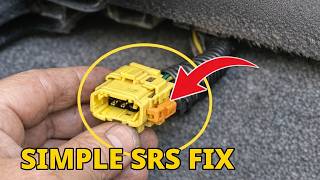
- Loose or Corroded Connector Under Passenger Seat (Very Common) — The yellow airbag system connector under the passenger seat is the most frequent culprit. Items pushed under the seat, or passenger movement, loosen this connector or introduce dirt, creating high resistance that triggers the code.
- Damaged Wiring Harness in or Around the Seat (Common) — The wires leading to the side airbag module or the occupant sensor mat stretch, pinch, or fray from the seat moving back and forth over time. On 2019-2023 Mazda3 models, this is a known design flaw requiring a specific TSB repair.
- Faulty Occupant Classification System (OCS) Sensor (Common) — This sensor mat inside the seat cushion detects a passenger's weight. A failure in this mat or its wiring triggers related airbag faults, especially on Hyundai and Kia vehicles which have warranty extensions for this exact part.
- Faulty Side Airbag Module (Less Common) — The actual airbag unit (squib) located inside the passenger seat bolster fails internally. Suspect this only after thoroughly testing the wiring and connectors.
- Depleted SRS Backup Battery After Main Battery Failure (Uncommon) — The SRS module has its own internal backup power. If the vehicle's main battery drains completely, it causes a voltage spike or drop that the SRS module interprets as a hard fault, setting code B1127 even after recharging the main battery.
- Water Intrusion and Corrosion (Uncommon) — Spilled liquids or leaks from a sunroof allow water to seep into the floor, corroding the under-seat connectors or the main RCM itself. On Chevrolet Silverado 1500s, water enters the under-hood fuse box and corrodes the main SRS fuse.
- Faulty Restraints Control Module (RCM) (Rare) — The main computer controlling the entire airbag system fails, but this is extremely rare. Rule out all wiring and sensor issues before condemning the module.
Symptoms
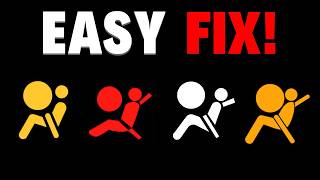
- Solid Airbag Warning Light is On — The light stays illuminated on the dashboard as long as the fault is present, indicating the entire SRS system is disabled.
- Flashing Airbag Warning Light — A flashing light indicates a significant and intermittent problem with the SRS, such as a connection losing contact as the vehicle moves. This requires immediate attention.
- Passenger Airbag 'OFF' Light Incorrectly Lit — The light indicating the passenger airbag is deactivated stays on even when an adult is seated, pointing directly to an issue with the OCS sensor mat.
- Inability to Pass Safety Inspection — An active airbag warning light results in an automatic failure of a vehicle safety inspection in jurisdictions that mandate them.
- Erratic Power Door Locks (Honda-specific) — On Honda models where B1127 relates to the door key cylinder, the power locking system acts erratically as the module receives conflicting lock/unlock signals.
Diagnostic Flowchart
Tap your situation to follow the diagnostic path that matches what you're seeing on this code.
Common Fixes & Costs
- Securing and Cleaning Under-Seat Connector — Parts: $0-$15, Labor: $100-$180, ~1.0 hr book time (DIY)
- Repairing Damaged Airbag Wiring Harness — Parts: $10-$50, Labor: $200-$450, ~2.0 hr book time (Intermediate)
- Replacing Side Airbag Module (in seat)
— Parts: $300-$800, Labor: $150-$300, ~1.5 hr book time
(Professional)
2019-2023 Mazda 3: OEM BCKA-57-KC0 (Alt: N/A (OEM recommended due to TSB))
2015-2017 Ford F-150: OEM FL3Z-14B321-E (Alt: Dorman (various)) - Replacing Occupant Classification Sensor (OCS Mat)
— Parts: $450-$800, Labor: $150-$250, ~1.5 hr book time
(Professional)
2011-2013 Hyundai Sonata: OEM 88931-3Q000 (Alt: N/A (OEM recommended)) - Replacing Driver's Door Lock Actuator (Honda-specific)
— Parts: $50-$200, Labor: $100-$250, ~1.2 hr book time
(Intermediate)
2006-2011 Honda Civic: OEM 72150-SNA-A14 (Alt: Dorman 937-568) - Replacing Main SRS/Airbag Control Module
— Parts: $400-$1,200, Labor: $150-$300, ~1.8 hr book time
(Professional)
2019-2023 Mazda 3: OEM BCKA-57-K30G (Alt: N/A (OEM required for programming))
2006-2011 Honda Civic: OEM 77960-SNA-A22 (Alt: Cardone)
Used vs. New Parts: Buying Guide
When a used part is worth it: Used parts are highly risky for SRS systems. A used side airbag module from a low-mileage, non-crashed donor vehicle is a budget option if the part number matches exactly. For the main SRS Control Module (RCM), it is always better to have your original module professionally reset than to buy a used one.
Donor-vehicle mileage cap: roughly under 60000 miles for the part to have meaningful remaining life.
Donor quality checklist:
- Verify the donor vehicle was not in a collision.
- Match the OEM part number exactly; airbag system components are highly specific.
- Avoid parts from flood-damaged or rust-belt vehicles due to corrosion risk.
- For an RCM, using a reset service on your original module avoids VIN incompatibility issues.
Decision logic:
- If The faulty part is the main SRS Control Module (RCM) → Send the original module for a professional reset service ($50-$150) to avoid programming issues.
- If The faulty part is the side airbag module (squib) → New OEM is safest. Use a used OEM part only if from a verified low-mileage, non-crashed donor.
- If The part is wiring or a connector → Always use new, high-quality wiring and connectors for repairs. Never use used wiring.
Warranty tradeoff: Used parts offer a 30-90 day warranty and carry significant safety risk. New OEM parts carry a 1-year warranty. Professional module reset services typically offer a lifetime warranty.
Worst-case if a used part fails: $500-$2000 if a used part fails, including repeat labor and programming fees. The ultimate cost is the system failing to deploy in a crash.
What Happens If You Wait — Timeline
- 0-1 month: Airbag light turns on. The entire SRS system is disabled as a fail-safe. In a crash, no airbags will deploy. (MPG impact: 0%% · Added cost: $0)
- 1-6 months: The light remains on permanently. The vehicle automatically fails any mandatory safety inspection. (MPG impact: 0%% · Added cost: $50-$200 in failed inspection fees or fines.)
- 6-12 months: If the cause is water intrusion, corrosion spreads to adjacent pins and other modules on the floor, compounding electrical issues. (MPG impact: 0%% · Added cost: $500-$1500 if corrosion damages the main RCM or nearby electronics.)
- 12+ months: The ultimate cost remains a non-functional airbag system. A simple connector issue left ignored leads to a catastrophic failure of the safety system during an accident. (MPG impact: 0%% · Added cost: The incalculable cost of injury prevented by a functional airbag system.)
Cost of Not Fixing It
- Immediate: The entire airbag system is disabled. In the event of a crash, no airbags will deploy, dramatically increasing the risk of serious injury or death. (Added cost: N/A)
- Ongoing: The vehicle automatically fails mandatory safety inspections in many states and jurisdictions. (Added cost: $50-$200 in failed inspection fees and potential fines.)
- Long-term: Ignoring root causes like water intrusion leads to further corrosion and damage to other nearby modules or wiring harnesses. (Added cost: $500-$1500+ if other electronic modules are damaged.)
Diagnosis Steps
- Read the Full Code and Research Definition
Use an SRS-compatible OBD-II scanner to read the code. Note any suffixes (like B1127:13 for 'open circuit'). Immediately search online for your car's make, model, year, and the B1127 code to verify if it means an airbag fault, a door lock issue (Honda), or an audio fault (Chevy).
Tools: OBD-II Scanner (SRS/Airbag compatible), Internet access (Beginner) - Safely Inspect and Reseat the Main Connector
Disconnect the negative battery terminal and wait 15 minutes. Look under the passenger seat for pinched wires or foreign objects. Disconnect the main yellow connector, inspect for bent or corroded pins, apply electrical contact cleaner, and reconnect it firmly. Clear the codes to see if the light returns.
Tools: Wrench for battery terminal, flashlight, contact cleaner (Intermediate) - Analyze Live Resistance Data
Using an advanced scan tool, view the live data for the passenger-side airbag circuit resistance. A healthy circuit reads between 2.0 and 3.5 ohms. Wiggle the under-seat harness while watching the data. A sudden jump in resistance (e.g., >4.0 ohms) pinpoints an intermittent open in the wiring.
Tools: Advanced OBD-II Scanner with Live Data (Advanced) - Isolate the Fault with a Resistor Tool
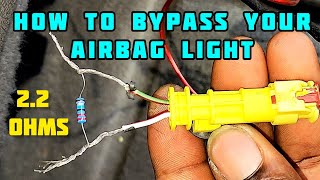
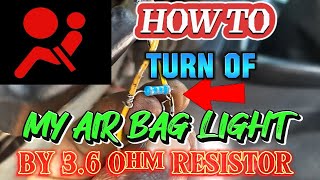
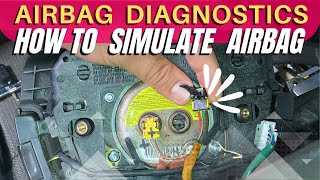
Disconnect the battery and wait 15 minutes. Disconnect the harness leading to the side airbag module. Connect a 2.2-2.7 ohm airbag diagnostic resistor across the harness terminals going to the RCM. Clear the codes. If B1127 disappears, the wiring and RCM are good, and the airbag module itself is faulty.
Tools: Airbag diagnostic resistor set (2.0-3.0 ohms) (Advanced) - Test Wiring Harness Integrity
With the battery, airbag module, and RCM disconnected, use a multimeter to test the two wires between the RCM and the airbag connector. Check for continuity (near 0 ohms) on each wire, and ensure there is no continuity to a known good ground (short to ground) or to power (short to power).
Tools: Multimeter, vehicle-specific wiring diagram (Advanced) - Professional Component Replacement
If wiring is good and a resistor tool points to the airbag module or RCM, stop DIY diagnosis and tow the vehicle to a professional. Replacing these components requires module programming and carries a high risk of accidental deployment.
Tools: Professional diagnostic and programming tools (Professional)
When This Code Triggers (Freeze-Frame Conditions)
- System Voltage: 11.5-14.5V (Normal operating voltage; fault sets at key-on during the SRS self-test.)
- Vehicle Speed: 0 mph (The SRS module performs a comprehensive self-check when the ignition is first turned on, before the vehicle moves.)
- Component Resistance: > 4.0 Ohms (The module continuously monitors circuit resistance; the fault triggers when resistance exceeds the programmed threshold.)
- Ignition Cycles Since Fault: 0 (The code sets and the light illuminates on the exact ignition cycle the fault is first detected.)
Related Codes
- B1126 — The direct counterpart to B1127, indicating the same circuit fault for the DRIVER-side side airbag module. If both appear, it suggests a systemic issue like a faulty RCM or a shared power/ground problem.
- B1448 — This Hyundai/Kia specific code means 'Occupant Classification System (OCS) Mat Defect.' If this appears with B1127, the problem is the passenger seat weight sensor mat.
- B1193 / B1231 — Common on Ford vehicles, these codes mean 'Crash Data Stored.' If present alongside B1127, an impact occurred, and the RCM locked itself. The RCM must be professionally reset or replaced before B1127 clears.
- B0020 — A general code for a 'Passenger Airbag Circuit Issue.' B1127 is a more specific version of this code. If you see B0020 on a basic scanner, B1127 confirms the issue is specifically with the side airbag module circuit.
Climate & Environmental Factors
- High Humidity / Water Intrusion: Moisture is a primary cause of corrosion on the delicate pins inside airbag system connectors. High humidity or water spills accelerate this process, increasing electrical resistance and triggering B1127.
- Extreme Cold/Hot Cycles: Repeated temperature swings cause electrical connectors and wires to expand and contract. This micro-movement wears away protective coatings on terminals, leading to oxidation and high resistance. The airbag light often appears on very cold days due to metal contracting and creating a poor connection.
How to Talk to a Mechanic About This Code
Say this: "I have an airbag light on and my scanner shows code B1127 for the passenger side airbag circuit. I'd like to schedule a diagnostic. Please start by inspecting the connector under the passenger seat, as I know this is a common failure point. If you have a scanner that reads live SRS resistance data, that would be helpful."
This signals you are an informed customer. It directs the technician to the most likely and cheapest-to-fix cause first, preventing them from starting with a costly module replacement diagnosis.
Avoid saying:
- 'My airbag light is on, can you just fix it?'
- 'I think I need a new airbag.'
- 'Just do whatever it takes to turn the light off.'
Questions to ask before authorizing the repair:
- Did you find a problem with the under-seat connector or wiring? Can you show me?
- If you are recommending an airbag module or RCM replacement, what specific tests did you perform to rule out a wiring issue?
- If the car is a 2019+ Mazda3, did you follow the procedure in TSB 08-003-23a before recommending parts?
- Will this repair require any module programming, and is that included in the quote?
Where to Take It: Dealer vs Independent vs Chain
- Dealer:
Best for: Vehicles under warranty, Vehicles with known TSBs for this code (like the 2019+ Mazda3), Complex cases requiring manufacturer-specific software for programming.
Downsides: Highest labor rates, May replace expensive modules rather than perform detailed wiring repairs. (Typical cost: +50% vs. baseline) - Independent Shop:
Best fit for most common scenarios. A good independent shop easily handles the most frequent causes (connectors, wiring) for less than a dealer. If you have a specific vehicle with a known TSB, the dealer is the safer bet.
Best for: Out-of-warranty vehicles where the cause is likely a common wiring or connector issue., Getting a second opinion on a high dealership quote., Vehicles where the code has a non-airbag meaning (e.g., Honda door lock).
Downsides: Shop must have an advanced scanner capable of reading/clearing SRS codes., Technician must be experienced with airbag system safety protocols. (Typical cost: +0% vs. baseline) - Chain Shop:
AVOID. Airbag system repair is a safety-critical task that should not be entrusted to a general-service chain shop.
Best for: Not recommended for airbag system repairs.
Downsides: Technicians lack the specialized training and tools for SRS diagnosis., High risk of misdiagnosis or improper handling of safety components., Store policies prohibit them from working on airbag systems. (Typical cost: -10% vs. baseline)
When to Walk Away From the Repair
If the estimated repair cost for the airbag system exceeds 30-40% of the car's private-party value, and the car has other needs, carefully consider your options. Unlike an engine issue, this is a pure safety failure.
- Car worth $5000, fix is $2200: Walk away. A $2,200 repair on a $5,000 car is not a sound financial decision. The risk of other age-related failures is high.
- Car worth $15000, fix is $450: Fix it. A $450 wiring repair is a small price to pay to restore the critical safety system of a valuable vehicle.
- Car worth $3000, fix is $1500: Walk away. The repair cost is 50% of the car's value. It is not economical to proceed.
What Scan Tool You Need for This Code
Minimum: An OBD-II scanner that specifically reads and clears Supplemental Restraint System (SRS) or airbag 'B' codes. A basic $20 engine code reader will NOT work.
A standard OBD-II scanner only communicates with the engine control unit (ECU). The airbag system is controlled by a separate module (RCM/SAS). You need a scanner with software that accesses body control modules to see and clear codes like B1127.
Budget: BlueDriver Bluetooth Pro or Autel ML629 (~$100) — Reads and clears SRS codes, views freeze-frame data, and provides some live data. Sufficient for confirming the code and clearing it after a simple repair like cleaning a connector.
Mid-range: Foxwell NT630 Plus or Launch CRP129X (~$250) — Offers comprehensive live data, including graphing the resistance of the airbag circuit in real-time. Invaluable for diagnosing intermittent connection issues by wiggling wires and watching for resistance spikes.
Professional: Autel MaxiCOM MK808 or Launch X431 (~$500-1200) — Provides full bidirectional control and manufacturer-specific functions. Performs module programming and recalibration, required for replacing the main RCM or performing the Mazda TSB software update.
Rent vs buy: Most auto parts stores do NOT rent out SRS-capable scanners due to liability. If this is a one-time fix, it is more cost-effective to pay a shop the ~$150 diagnostic fee. Buy a scanner only if you plan to do your own car maintenance regularly.
How to Clear the Code After You Fix It
- Ensure all repairs are complete and connectors are secure.
- Reconnect the negative battery terminal.
- Use an SRS-capable OBD-II scan tool to clear the diagnostic trouble code from the Restraints Control Module.
- Cycle the ignition off, wait 10-15 seconds, then turn it back on.
- Verify the airbag warning light illuminates for its self-check (approx. 6 seconds) and then turns off.
Drive cycle (~10 minutes): An extensive drive cycle is not required. After clearing the code, the module re-runs its internal self-test on the next key-on event. If the fault is fixed, the light stays off.
Readiness monitors affected: None directly. The SRS system is separate from the powertrain/emissions readiness monitors.
Watch out for:
- Using a basic engine code reader that cannot access or clear SRS 'B' codes.
- Failing to fix the root cause, causing the code to return instantly upon the next key cycle.
- Not waiting at least 15 minutes after disconnecting the battery before starting work, risking accidental deployment.
- Attempting to clear the code with a scanner when the module has stored 'crash data' from an accident.
Will This Fail Emissions / State Inspection?
No — by itself this code doesn't fail OBD inspection (but it can keep readiness monitors from setting, which causes a separate fail).
- California: An airbag light will NOT cause a failure of the California Smog Check, as the SRS system is not part of the emissions test.
- New York: An illuminated airbag warning light is an advisory item, not an automatic failure for a safety inspection, though individual shops may have stricter policies.
- Texas: As of 2025, most non-commercial vehicles are exempt from annual safety inspections. An airbag light is not a specified failure item, but you remain legally responsible for maintaining a safe vehicle.
Most Commonly Affected Vehicles
- Mazda Mazda3, CX-30 (2019-2023) — Extremely common due to a wiring harness design flaw in the front seats. Mazda issued TSBs (08-003-23a, 08-001/22) with a specific wiring modification and SAS module software update.
- Ford F-150, S-Max, Mondeo (2007-2017) — Often related to issues with under-seat connectors or the seat belt pre-tensioner circuit. The 2017 F-150 was recalled for faulty passenger airbag inflators (Recall 17S26).
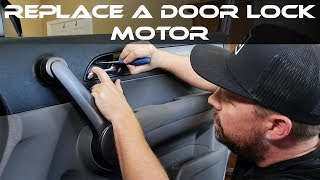
- Honda Civic, Accord (2006-2011) — On these vehicles, B1127 points to a fault in the driver's door key cylinder switch, not the airbag system. Diagnosis focuses on the door lock actuator and its wiring.
- Nissan Altima, NP300, Lafesta (2012-2020) — B1127 is a general code for 'Diagnosis Sensor Unit' fault, requiring the main airbag module to be reset or replaced, especially after an accident stores crash data.
- Chevrolet / GMC Silverado 1500, Sierra 1500 (2013-2023) — Water intrusion into the under-hood fuse box causes corrosion on the SRS fuse. On 2022-2023 models, B1127 refers to an audio system fault related to the amplifier.
- Hyundai / Kia Sonata, Optima, Santa Fe, Accent (2006-2016) — Known for issues with the Occupant Classification System (OCS) sensor mat in the passenger seat. Hyundai issued a warranty extension (TXX6) for this part.
- Subaru Outback, Forester (2010-2014) — This code is frequently traced back to the yellow connector under the passenger seat developing high resistance from items stored under the seat.
Manufacturer-Specific Notes
- Mazda: For 2019+ Mazda3 and CX-30 models, the cause is a wiring harness design flaw. The official fix (TSB 08-003-23a) is a specific wiring modification and a software update for the SAS module. Simply replacing the airbag module will not fix the issue.
- Honda: The B1127 code definition is completely unrelated to the airbag system. It indicates a 'Driver's Door Key Cylinder Switch Input Circuit Malfunction'. Diagnosis focuses on the driver's door lock actuator and wiring.
- Nissan: The code is defined as a generic 'DIAGNOSIS SENSOR UNIT' fault. This points to an internal error in the main SRS Airbag Control Module, which must be professionally reset (especially after an accident) or replaced.
- Ford: Ford airbag faults are commonly traced to corrosion on the pins of various connectors in the system, leading to high resistance readings. A healthy pre-tensioner circuit reads around 2.2-2.4 ohms; a reading over 4.0 ohms triggers an open circuit fault.
Real Owner Stories
2019 Mazda3 with 45,000 miles
Airbag warning light came on permanently. Code read as B1127:13.
Outcome: The dealership performed the repair outlined in Mazda TSB 08-003-23a, modifying the wiring harness inside the passenger seat and reprogramming the SAS control module. The light has not returned.
Lesson: For 2019+ Mazda3s, this code is caused by a known TSB issue. Do not let a shop replace the airbag module before performing the wiring modification and software update.
2015 Nissan Altima with 100,000+ miles
SRS light came on. The dealership quoted $3,000 for a new airbag module and clock spring.
Outcome: The independent mechanic diagnosed a dirty connector under the passenger seat. The mechanic cleaned the connector, costing just two hours of labor. The $3,000 repair was avoided.
Lesson: Always start with the simplest cause. A high repair quote from a dealership warrants a second opinion, as misdiagnosis is common and costly.
2008 Honda Civic
Airbag light was on with code B1127. The owner noticed the power door locks were also acting erratically.
Outcome: The owner replaced the driver's door lock actuator assembly. This resolved the conflicting lock/unlock signals, clearing the B1127 code and turning off the airbag light.
Lesson: The definition of a trouble code varies dramatically between manufacturers. On many Hondas, B1127 has nothing to do with the airbags.
2013 Ford F-150 after a minor accident
After a minor front-end collision where airbags did not deploy, the airbag light stayed on with code B1127.
Outcome: The Restraints Control Module (RCM) stored 'crash data' from the impact, locking the module. The owner sent the RCM to a specialist service ($50) to wipe the crash data, which permanently cleared the code.
Lesson: If B1127 appears after any physical impact, the RCM has stored crash data. This requires a professional reset service or a new module.
How to Prevent This Code From Triggering
- Avoid Storing Items Under Seats (Daily habit) — Objects like water bottles or shoes physically impact the yellow airbag connector, causing it to loosen. They also snag and stretch the wiring harness, leading to open circuits.
- Apply Dielectric Grease to Connectors (During any related repair) — Applying dielectric grease to the seal blocks moisture and prevents pin corrosion, a primary cause of high resistance faults in humid climates.
- Limit Extreme Seat Track Movement (Daily habit) — Repeatedly sliding the seat to its absolute forward and backward limits stresses the wiring harness over many years. Keep the seat within a moderate range of travel.
Frequently Asked Questions
Is it safe to drive my car with code B1127?
While the car drives normally, it is not safe. The B1127 code means the entire Supplemental Restraint System (SRS) is disabled. In an accident, none of the airbags will deploy, significantly increasing the risk of injury.
What's the difference between a solid and a flashing airbag light?
A solid light indicates a fault is detected and the system is disabled. A flashing light indicates a more severe or intermittent fault, such as a failing clock spring or a loose connection actively losing contact. Both require immediate diagnosis.
Can I just clear the code to turn the light off?
You can clear the code with a scanner, but if the underlying electrical fault exists, the RCM detects it on the next startup cycle. The light will come back on immediately, and your airbags remain disabled.
Can I sell a car with the airbag light on?
Legally, you can sell the car privately if you fully disclose the issue in writing. However, selling a vehicle with a known safety defect exposes you to liability. Dealerships will significantly reduce trade-in value or refuse the vehicle outright.
My airbag light came on after my battery died. What should I do?
If the code appeared immediately after replacing a dead battery, it is often a spurious code caused by low system voltage. Drive the car for a few cycles to allow the system to self-check and clear the code. If it persists, the voltage drop corrupted a setting in the RCM, requiring a professional reset.
What is the most common misdiagnosis for B1127?
The most common mistake is assuming the code means the same thing on all cars, leading to wasted money on airbag parts for a Honda door lock issue. Another major error is replacing the passenger airbag module on a 2019+ Mazda3 without performing the required TSB wiring modification. Always verify the manufacturer-specific definition first.
My car was in a minor accident and now has this code. What does that mean?
If the code appeared after an impact, the main airbag module (RCM) stored 'crash data' and locked itself. You must have the module professionally reset (around $50) or replaced before the B1127 code can clear. Physical wiring repairs alone will not turn the light off.
Key Takeaways
- Code B1127 disables your entire airbag system, increasing frontal crash fatality risk by up to 32%.
- Verify your manufacturer's specific definition, as B1127 means a door lock failure on Hondas and an audio fault on some Chevrolets.
- Fix 80% of B1127 codes by safely disconnecting the battery for 15 minutes and reseating the yellow connector under the passenger seat.
- Stop DIY diagnosis and tow to a professional if a 2.2-ohm resistor tool confirms the fault lies inside the airbag module or Restraints Control Module.
Helpful Videos
Shop the Parts Behind B1127
Below are the parts most often responsible for code B1127, ranked by how frequently each one is the actual culprit (per the diagnosis above). Tap any to see what we have for your vehicle.



The information in this article is provided for general reference and educational purposes only. Vehicle specifications, procedures, and part compatibility can vary by production date, trim level, and region. Always consult your vehicle's factory service manual and verify part numbers before purchasing or performing repairs. Safety-critical components such as airbags, seat belts, and braking systems should be installed by a qualified professional.
- 🧭 Diagnostic Flowchart
- 🎬 Helpful Videos
- 🛍️ Shop This Part
- What Does B1127 Mean?
- Can I Drive With B1127?
- Common Causes
- Symptoms
- Common Fixes & Costs
- Used vs. New Parts: Buying Guide
- What Happens If You Wait — Timeline
- Cost of Not Fixing It
- Diagnosis Steps
- When This Code Triggers (Freeze-Frame Conditions)
- Related Codes
- Climate & Environmental Factors
- How to Talk to a Mechanic About This Code
- Where to Take It: Dealer vs Independent vs Chain
- When to Walk Away From the Repair
- What Scan Tool You Need for This Code
- How to Clear the Code After You Fix It
- Will This Fail Emissions / State Inspection?
- Most Commonly Affected Vehicles
- Manufacturer-Specific Notes
- Real Owner Stories
- 2019 Mazda3 with 45,000 miles
- 2015 Nissan Altima with 100,000+ miles
- 2008 Honda Civic
- 2013 Ford F-150 after a minor accident
- How to Prevent This Code From Triggering
- Frequently Asked Questions
- Is it safe to drive my car with code B1127?
- What's the difference between a solid and a flashing airbag light?
- Can I just clear the code to turn the light off?
- Can I sell a car with the airbag light on?
- My airbag light came on after my battery died. What should I do?
- What is the most common misdiagnosis for B1127?
- My car was in a minor accident and now has this code. What does that mean?
- Key Takeaways
- 🎟️ Get 5% Off