

OBD-II Code B1130: Light Switch Failure & Manufacturer Variations
What B1130 means, why it triggers, and how to fix it across all major brands
- Code B1130 definitions vary by brand: it indicates a Light Switch Failure on Ford/GM, a critical Airbag Fault on Nissan/Infiniti, or a Power Window Fault on Honda.
- Test the 12V power, 0Ω ground, and 7-11V LIN bus signal at the multifunction switch connector before spending $150+ on a replacement switch.
- A B1130 code on a Nissan or Infiniti disables the entire SRS system; utilize a $50 professional module reset service before paying $1,200+ for a dealer replacement.
- Replacing a Body Control Module (BCM) costs $450 to $1,200 and requires proprietary dealer software to program the anti-theft system and sync the VIN.
What Does B1130 Mean?
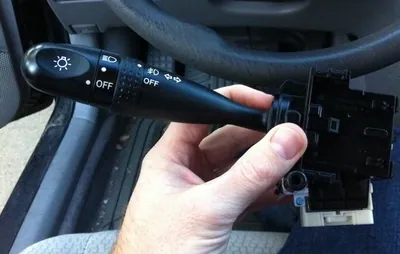
B1130 is a manufacturer-specific Body (B-series) code. On Ford, GM, and Chrysler vehicles, it means the Body Control Module (BCM) lost communication with the headlight and turn signal switch assembly. The computer sends a command to turn on the lights, but receives no confirmation signal from the switch.
Technical definition: The SAE/OBD-II definition for B1130 varies by manufacturer. The most common definition is 'Lost Communication With Light Switch Module'. However, it means 'Ignition Power Supply' on Mitsubishi, 'Front Passenger Power Window Motor Pulse Error' on Honda, and 'SRS RF Side Airbag Module Circuit' on Nissan/Infiniti. This guide focuses on the primary 'Light Switch Module' definition while detailing critical variations.
Can I Drive With B1130?
Yes, But With Caution. Yes, but with extreme caution. A light switch failure disables headlights, taillights, or turn signals, creating a severe safety hazard that dramatically increases collision risk. On Nissan or Infiniti vehicles, this signifies a critical airbag failure; stop driving and tow the vehicle to a shop, as airbags will not deploy in a crash.
Common Causes

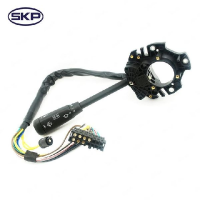
- Defective Multifunction/Headlight Switch (Very Common) — The switch assembly controlling headlights and turn signals is the primary failure point. Internal contacts wear out, corrode, or break, interrupting the signal to the BCM.
- Blown Fuse (Common) — A fuse protecting the lighting circuit, the switch, or the BCM blows due to a short circuit or overload. This simple cause must be checked first.
- Wiring, Connector, or Ground Issues (Common) — Pinched wires, corroded connectors, loose BCM plugs, or a failed LIN bus circuit interrupt communication between the switch and the BCM.
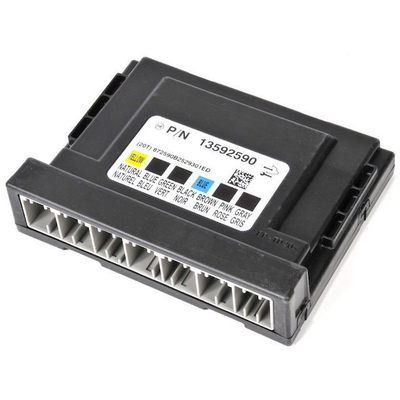
- Faulty Body Control Module (BCM) (Less Common) — The BCM itself fails, preventing it from communicating with the light switch. This is a documented issue on specific Ford Transit models.
- BCM Software or Configuration Error (Rare) — After a battery disconnect or jump-start, the BCM loses its 'as-built' configuration data and fails to recognize the light switch module.
Symptoms

- Exterior lights (headlights, turn signals, high beams) fail to operate or act erratically — The primary symptom is a total or intermittent failure of the exterior lights to respond to the switch.
- Lights are stuck on and won't turn off — A short circuit in the switch or a BCM failure causes the lights to remain on, rapidly draining the battery.
- Airbag warning light is illuminated (Nissan/Infiniti specific) — On Nissan and Infiniti vehicles, this code points to a fatal fault in the side airbag module circuit.
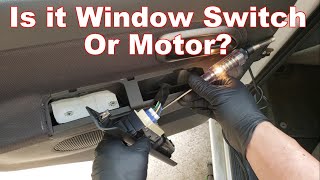
- Passenger power window is inoperative (Honda specific) — On Honda models, this code indicates a failure of the passenger-side power window motor or its internal pulse sensor. 🎬 See how to diagnose if your window motor is bad.
Diagnostic Flowchart

Tap your situation to follow the diagnostic path that matches what you're seeing on this code.
Common Fixes & Costs
- Replace Headlight/Multifunction Switch — Parts: $75-$350, Labor: $80-$170, ~1.5 hr book time (Intermediate)
- Replace Blown Fuse — Parts: $1-$10, Labor: $0, ~0.1 hr book time (DIY)
- Repair Damaged Wiring or Reseat Connectors — Parts: $0-$30, Labor: $60-$300, ~2 hr book time (Professional)
- Reset or Replace Airbag Module (Nissan-specific) — Parts: $50-$1150, Labor: $100-$376, ~2.5 hr book time (Professional)
- Replace Passenger Window Motor (Honda-specific) — Parts: $150-$400, Labor: $100-$200, ~1.8 hr book time (Intermediate)
- Replace Body Control Module (BCM) — Parts: $300-$800, Labor: $150-$400, ~2.5 hr book time (Professional)
DIY vs Professional
- Replace Blown Fuse — Beginner: True
- Replace Multifunction Switch — Beginner: False
- Replace BCM — Beginner: False
- Replace Airbag Module (Nissan) — Beginner: False
- Replace Window Motor (Honda) — Beginner: True
Used vs. New Parts: Buying Guide
When a used part is worth it: A used OEM multifunction switch from a low-mileage vehicle is a cost-effective option for older, out-of-warranty cars, often outperforming cheap aftermarket parts.
Donor-vehicle mileage cap: roughly under 80000 miles for the part to have meaningful remaining life.
Donor quality checklist:
- Match the part number exactly; switches look identical but have different internal wiring.
- Ensure the donor vehicle was not scrapped due to flood damage.
- Inspect connector pins for corrosion.
Decision logic:
- If The part is a safety-critical component like an airbag module → buy new OEM or use a professional reset service. Never buy a used airbag.
- If The vehicle is less than 10 years old and the cost difference is under $100 → buy new OEM or a reputable aftermarket brand for warranty protection.
- If The budget is extremely tight and the part is a simple switch → a used part is acceptable, but carries no warranty.
Warranty tradeoff: Salvage yard parts have a 30-90 day warranty. New aftermarket parts offer 1-year to lifetime warranties. New OEM parts carry a 12-month/12,000-mile warranty.
Worst-case if a used part fails: $200-$400 if a used switch fails, requiring you to pay for parts and labor twice.
What Happens If You Wait — Timeline
- 0-1 month (Light Switch Fault): Intermittent failure. Turn signals fail to cancel, or headlights require jiggling the switch. The B1130 code is stored. (MPG impact: 0%% · Added cost: $0)
- 1-3 months (Light Switch Fault): A specific function fails completely, or lights get stuck on, causing a dead battery. Results in jump starts and traffic citations. (MPG impact: 0%% · Added cost: $150-$350)
- Immediate (Nissan Airbag Fault): The airbag warning light illuminates. The entire SRS system is disabled instantly, guaranteeing non-deployment in a crash. (MPG impact: 0%% · Added cost: Potentially infinite (severe injury or death).)
- 3+ months (All Faults): Guaranteed failure of state safety inspections. Ignoring an airbag light leads to insurance claim denial for negligent maintenance. (MPG impact: 0%% · Added cost: $500+)
Cost of Not Fixing It
- Immediate: Inoperative lights create a severe collision risk. Nissan/Infiniti airbag failures guarantee non-deployment in a crash. (Added cost: $100-$250+)
- 0-3 months: Traffic citations for non-functional lights cost $85 to $200. Lights stuck on will destroy the battery, requiring a replacement. (Added cost: $150-$350)
- 3+ months: Guaranteed failure of state safety inspections. Ignoring an airbag light leads to insurance claim denial or increased liability after an accident. (Added cost: $500+)
Diagnosis Steps
- Verify the Code's Meaning
Confirm what B1130 means for your specific Make and Model. A B1130 on a Ford is a lighting issue; on a Nissan, it is an airbag issue; on a Honda, it is a window issue. Misinterpreting the code guarantees incorrect repairs.
Tools: OBD-II scanner, vehicle-specific service information (Beginner) - Check All Related Fuses
Locate all fuse boxes. Inspect every fuse related to 'Headlights,' 'Lighting,' 'BCM,' or 'SRS'. Pull each fuse and visually check if the metal strip is broken. Replace blown fuses with the exact same amperage.
Tools: Fuse puller, owner's manual (Beginner) - Systematically Test All Switch Functions
Test every function on the multifunction switch: parking lights, headlights, high beams, and turn signals. Note exactly which functions fail to narrow down specific internal circuit faults.
Tools: None (Beginner) - Inspect Connectors at Switch and BCM
Remove steering column shrouds to access the switch connector. Inspect for loose pins or corrosion. Locate the BCM (often under the dash) and ensure its main electrical connectors are fully seated.
Tools: Screwdriver set, trim removal tools (Intermediate) - Perform a Switch Continuity Test
With the switch unplugged, use a multimeter set to continuity. Test between the input pin and the corresponding output pin as you activate each function. A failure to beep confirms a bad switch.
Tools: Multimeter, vehicle-specific wiring diagram (Intermediate) - [PRO TIP] Test for Power and Ground at the Switch
Unplug the switch connector. Check for battery voltage (~12.6V) at the power pin. Check for continuity (near 0 Ω) between the ground pin and a clean chassis ground. A lack of either indicates a wiring problem, not a switch problem.
Tools: Multimeter, vehicle-specific wiring diagram (Advanced) - [PRO TIP] Test the LIN Bus Signal
With the switch plugged in and ignition on, connect the positive multimeter probe to the LIN wire and negative to ground. A healthy LIN bus shows a fluctuating voltage (7-11V). A reading of 0V or a steady 12V indicates a short or open wire.
Tools: Multimeter, back-probe kit, vehicle-specific wiring diagram (Advanced) - Scan BCM Live Data
Using an advanced OBD-II scanner, look for live data PIDs related to the light switch. As you move the switch, the scanner status must change. If it doesn't, but wiring tested good, the switch is defective.
Tools: Advanced OBD-II scanner (bi-directional capable) (Advanced) - [ADVANCED] Honda Window Motor Amperage Test
For Honda B1130, clamp an ammeter around a motor wire and operate the switch. A high current draw (10-12 Amps) with no movement proves the motor is seized. No current draw points to a switch or wiring fault.
Tools: Clamp-on ammeter, trim removal tools (Advanced) - [ADVANCED & CRITICAL] Nissan Airbag Circuit Test
For Nissan B1130, NEVER use a multimeter on the airbag module; this triggers deployment. Disconnect the battery and plug a 2.2 Ohm dummy resistor into the harness. If the code clears, the original module is faulty. This requires professional execution.
Tools: 2.2 Ohm airbag dummy load resistor, OBD-II scanner, professional service information (Professional)
When This Code Triggers (Freeze-Frame Conditions)
- Vehicle State: Key On or Engine Running (The BCM sets this code when it fails to receive a signal from the light switch module upon request, happening immediately at key-on or when the driver uses a light function.)
- Battery Voltage: 11.5V - 14.5V (The code sets when system voltage is normal. While low voltage causes communication errors, B1130 specifically points to a failure on the LIN bus circuit.)
- Commanded State: On, Off, Park, Turn L/R (The fault logs when the BCM sends a command to the light switch module and the expected reply is not received within a specified timeframe.)
- Time Since Key-On: < 5 seconds (The fault is detected during the BCM's initial power-up sequence as it checks communication with all sub-modules.)
Related Codes
- U0140 — Means 'Lost Communication With Body Control Module.' If present with B1130, U0140 is the primary fault. Diagnose the BCM's power and ground first.
- B1088 — Indicates a fault on the Ford 'LIN Bus' wire. B1130 is the consequence of this fault. Focus diagnosis on testing the single LIN wire for an open or short.
- B1325 — A generic circuit malfunction code. Suggests a broader electrical problem, like a power supply issue affecting multiple accessories.
- B1131 (Honda) — Means 'Front Passenger Power Window Motor B-Pulse Malfunction'. Confirms a failure of the passenger window motor's internal position sensor.
Climate & Environmental Factors
- High Humidity / Water Intrusion: Moisture causes corrosion on BCM and switch connector pins, creating high resistance that interrupts the LIN bus signal.
- Extreme Cold: Freezing temperatures make plastic switch components brittle, accelerating mechanical failure inside the steering column.
How to Talk to a Mechanic About This Code
Say this: "My car has a B1130 code. For my [Ford/GM], I need a diagnostic to confirm if the fault is the multifunction switch, the LIN bus wiring, or the BCM. For my [Nissan/Infiniti], this is an airbag code requiring an SRS side impact module circuit diagnostic."
This immediately tells the shop you know the code is brand-specific. It focuses their diagnostic effort, prevents irrelevant repairs, and establishes you as an informed customer to reduce upselling.
Avoid saying:
- 'My check engine light is on, can you look at it?'
- 'The internet says I need a new light switch.'
- 'Just fix whatever's wrong.'
Questions to ask before authorizing the repair:
- Did you test for 12V power, ground, and the LIN bus signal at the switch connector before condemning the switch?
- For the Nissan airbag issue: Is the fault in the module or the wiring? Can the module be reset instead of replaced?
- If replacing the BCM: Does the quote include the mandatory proprietary software programming?
- Will you provide a detailed breakdown of parts and labor costs?
- What is your warranty on this specific repair, including both parts and labor?
Where to Take It: Dealer vs Independent vs Chain
- Dealer:
Recommended for Nissan airbag faults and BCM replacement. A necessary but expensive choice for complex programming.
Best for: Vehicles under factory warranty., Nissan/Infiniti airbag code B1130, due to critical safety liability., Confirmed Body Control Module (BCM) replacement requiring proprietary software for anti-theft programming.
Downsides: Highest labor rates and parts costs., Defaults to replacing entire expensive assemblies (e.g., BCM) when a simple module reset is possible. (Typical cost: +50% vs. baseline) - Independent Shop:
Best fit for the most common light switch and window motor versions of this code. Ensure they specialize in electrical diagnosis.
Best for: The common light switch failure on out-of-warranty Ford, GM, or Chrysler vehicles., Honda window motor faults., Shops specializing in automotive electrical diagnostics.
Downsides: Quality and expertise vary greatly., Lacks the expensive, brand-specific tools to program a new BCM or SRS module., Refuses liability for working on airbag systems. (Typical cost: +0% vs. baseline) - Chain Shop:
AVOID for diagnosing B1130. The diagnostic complexity and manufacturer variations guarantee incorrect repairs.
Best for: Simple, unrelated maintenance like oil changes or tires.
Downsides: Technicians lack the diagnostic equipment suited for complex, brand-specific body codes., High pressure to upsell leads to misdiagnosis (e.g., selling a battery when the issue is a module)., Incapable of performing BCM or SRS programming. (Typical cost: -10% vs. baseline)
When to Walk Away From the Repair
If the estimated repair cost exceeds 50% of the car's private-party value, sell or trade in the vehicle.
- Car worth $4500, fix is $1400: Borderline. A $1,400 airbag module replacement on a $4,500 Nissan Juke is 31% of the car's value. Explore a $50 module reset service before authorizing replacement.
- Car worth $9000, fix is $450: Fix it. A $450 multifunction switch replacement on a $9,000 Ford F-150 is 5% of the vehicle's value and restores critical safety functions.
- Car worth $3000, fix is $1800: Walk away. A $1,800 BCM replacement on a $3,000 older Ford Transit is 60% of the car's value. The repair cost is too high relative to the vehicle's worth.
What Scan Tool You Need for This Code
Minimum: A scanner that reads manufacturer-specific Body (B-series), Chassis (C-series), and Undefined (U-series) codes. A basic $20 engine-only reader will NOT see code B1130.
Generic readers only check the engine control module and display 'No Codes Found'. B1130 is stored in the Body Control Module (BCM) or SRS module, requiring a tool that communicates with auxiliary computers.
Budget: BlueDriver Pro (~$90) — Reads and clears codes from all modules, including BCM and SRS. Views live data from the BCM to confirm if the computer recognizes switch inputs. This is the minimum tool required for DIY diagnosis.
Mid-range: Foxwell NT510 Elite (~$180) — Offers bi-directional control to command the lights on directly from the scanner. If lights turn on via the scanner but not the switch, the switch is definitively bad.
Professional: Autel MaxiCOM MK808S (~$450) — Provides extensive bi-directional control, deep live data graphing, and access to service functions like BCM/SRS module resets and relearn procedures after part replacement.
Rent vs buy: Auto parts stores loan basic OBD-II readers for free, but these CANNOT read the B1130 code. You must buy a scanner with BCM/SRS capability to diagnose this fault.
How to Clear the Code After You Fix It
- Reconnect any disconnected components (battery, switch, BCM).
- Use an OBD-II scan tool to clear the B-series trouble codes.
- Cycle the ignition off, then on.
- Test all functions of the repaired system.
Drive cycle (~10 minutes): A formal drive cycle is not required. After clearing the code, operate the repaired component through all functions. For Honda window variants, a window initialization procedure is mandatory. For Nissan airbag variants, professional clearing with a capable scan tool is required.
Readiness monitors affected: None
Watch out for:
- Disconnecting the battery will not clear a B1130 code, especially an airbag fault.
- Failing to perform the specific relearn procedure (e.g., Honda window reset) causes the code to return immediately.
- If the root cause (frayed wire or faulty BCM) is not fixed, the code reappears instantly.
Will This Fail Emissions / State Inspection?
No — by itself this code doesn't fail OBD inspection (but it can keep readiness monitors from setting, which causes a separate fail).
- California: A B-code will not fail the OBD-II emissions check. However, inoperative headlights or an illuminated airbag light fails the visual safety inspection.
- New York: An illuminated airbag light or inoperative headlights/turn signals causes an immediate failure of the comprehensive safety check.
- Texas: An illuminated airbag light does not cause a failure. However, all required lighting must be functional to pass the safety inspection.
- Virginia: An illuminated airbag light or any defect with the headlights results in an automatic failure of the strict annual safety inspection.
Most Commonly Affected Vehicles
- Ford Transit Connect (2014-2018) — Frequently cited for B1130 due to a failing BCM or a poorly seated BCM connector. BCM replacement requires professional programming.
- Ford F-150 (2011-2014) — The multifunction switch is a high-failure item on these trucks, leading to lighting issues and B1130 codes.
- Ford Mondeo (European) (2007-2014) — Code appears after a battery disconnect, causing headlights to stick on. Reprogramming the BCM is required.
- Jeep Grand Cherokee (2005-2010) — The multifunction switch (L-H Switch Pack) is a known failure item costing $150-$300 to replace.
- Chevrolet Silverado 1500 (2007-2013) — Multifunction switch failures are common. On some GM models, B1130 points to an audio system fault.
- Honda Odyssey (2011-2017) — B1130 specifically means 'Front Passenger Power Window Motor A Pulse Error', completely unrelated to the lighting system.
- Nissan Juke (2011-2017) — A critical safety code for 'Right-hand Side Impact Airbag Module Circuit'. Professional service is mandatory.
- Hyundai Genesis (2014-2016) — Not an official DTC for Hyundai. Commonly confused with OEM part numbers like 92404-B1130 (Lamp Assembly).
- Land Rover Various (2010-2019) — Corresponds to a 'Light switch module' fault, indicating a communication failure with the BCM.
Manufacturer-Specific Notes
- Ford / General Motors / Chrysler: B1130 points to a communication problem between the multifunction switch and the BCM over the LIN bus. Ford TSB SSM 47100 addresses BCM configuration issues on Transits.
- Honda: B1130 relates to a 'Front Passenger Power Window Motor A Pulse Error' and has nothing to do with lighting. Service bulletin BTB 50513-50548 details the mandatory window reset procedure.
- Infiniti / Nissan: B1130 is a critical safety code for 'SRS RF Side Airbag Module Circuit'. A specific recall for the 2019 Juke (PG1C5) addresses an airbag that tears on deployment.
- Mitsubishi: B1130 means 'Ignition power supply' and indicates a mismatch between the keyless entry module and the main body computer.
- Hyundai / Kia: B1130 is not a valid trouble code. It is confused with OEM part numbers containing 'B1130'. Kia warranty extension WTY022 covers multifunction switch failures on Sedona models.
Real Owner Stories
2015 Ford Transit with 110K miles
Headlights and turn signals stopped working with code B1130. The turn signal relay clicked, but no lights activated.
What they tried:
- Checked all lighting and BCM fuses.
- Replaced the multifunction switch, but the problem persisted.
- Inspected wiring at the switch and BCM.
Outcome: A mechanic found the main electrical connector to the BCM was not fully seated. Firmly reconnecting the BCM plug restored all lighting functions.
Lesson: Check physical connections before replacing expensive parts. On Ford Transits, a poorly seated BCM connector mimics a failed component.
2012 Nissan Juke with 85K miles
The airbag warning light stayed on with code B1130, pointing to a right-side impact airbag module fault.
What they tried:
- Attempted a manual key-on/key-off airbag light reset procedure; the light returned immediately.
- Checked the wiring connector under the passenger seat.
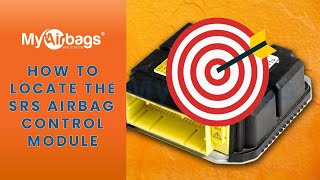
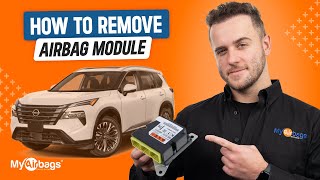
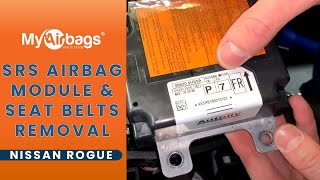
Outcome: The owner sent the SRS Airbag Control Module to a specialized reset service. For $50, the service cleared the hard codes. Reinstalling the module permanently fixed the issue, saving $1,150 over a dealer replacement.
Lesson: For a Nissan B1130 airbag code, a professional module reset service is a highly cost-effective first step that avoids expensive dealer programming.
2013 Honda Odyssey with 120K miles
The front passenger power window stopped working. A scan tool showed a B1130 body code.
What they tried:
- Confused by online search results pointing to light switches.
- Replaced the passenger window switch, but the window remained stuck.
- Tested the old switch with a multimeter and found it functional.
Outcome: The owner discovered B1130 means 'Front Passenger Power Window Motor A Pulse Malfunction' on Hondas. They replaced the window motor assembly and performed the mandatory window reset procedure, fixing the problem.
Lesson: Verify the code's meaning for your exact make. Misinterpreting B1130 on a Honda leads to replacing perfectly good parts.
How to Prevent This Code From Triggering
- Apply dielectric grease to connectors (When replacing a switch or accessing connectors) — Seals out moisture and prevents corrosion on connector pins, maintaining a strong LIN bus signal.
- Use a surge protector when jump-starting (Every time a jump-start is performed) — Absorbs voltage spikes that destroy sensitive electronics like the BCM.
- Clean battery terminals and chassis ground points (Every 2 years or during battery service) — Prevents electrical noise and voltage drops that disrupt module communication.
- Operate the multifunction switch gently (Daily habit) — Prevents premature mechanical failure of the plastic components and small electrical contacts inside the switch.
Frequently Asked Questions
Can I fix a B1130 code myself?
A DIYer can replace a blown fuse or a multifunction switch if it doesn't require airbag removal. However, wiring faults, BCM replacements, or Nissan airbag issues require professional service. BCM replacement always mandates dealer-level programming.
What is the most common mistake when diagnosing B1130?
The most common mistake is immediately replacing the multifunction switch without testing power, ground, and the LIN bus wire first. A bad wire or loose BCM connector mimics a failed switch. Always confirm the code's exact meaning for your specific vehicle brand before buying parts.
My battery died and now I have this code. Are they related?
Yes, a dead battery or jump-start causes voltage spikes that disrupt BCM communication. Ensure the battery is fully charged, clear the codes, and see if B1130 returns. If it returns, the module lost its configuration and requires professional reprogramming.
How much does it cost to fix code B1130?
The cost varies widely based on the root cause. A simple fuse costs under $10, while a shop-replaced multifunction switch ranges from $180 to $500. For Nissan airbag issues, module replacement exceeds $1,400, though a $50 reset service is a viable alternative.
Why are my headlights stuck on?
This happens when the internal contacts of the light switch melt in the 'on' position. It also occurs when the Body Control Module (BCM) fails and defaults to a 'lights on' state for safety. This is a documented issue on several Ford Transit Connect models.
Can I program a new BCM myself?
Generally, no. BCM programming requires proprietary software (like Ford's IDS/FDRS), security credentials for the anti-theft system (PATS), and specific procedural knowledge. Attempting this with basic tools risks immobilizing the vehicle, making professional programming mandatory.
What is a LIN Bus?
A Local Interconnect Network (LIN) is a single-wire communication network connecting intelligent switches to a main computer like the BCM. It is cheaper and simpler than the main CAN bus network. A fault on this single wire completely disables the connected component.
Key Takeaways
- Code B1130 definitions vary by brand: it indicates a Light Switch Failure on Ford/GM, a critical Airbag Fault on Nissan/Infiniti, or a Power Window Fault on Honda.
- Test the 12V power, 0Ω ground, and 7-11V LIN bus signal at the multifunction switch connector before spending $150+ on a replacement switch.
- A B1130 code on a Nissan or Infiniti disables the entire SRS system; utilize a $50 professional module reset service before paying $1,200+ for a dealer replacement.
- Replacing a Body Control Module (BCM) costs $450 to $1,200 and requires proprietary dealer software to program the anti-theft system and sync the VIN.
Helpful Videos
Shop the Parts Behind B1130
Below are the parts most often responsible for code B1130, ranked by how frequently each one is the actual culprit (per the diagnosis above). Tap any to see what we have for your vehicle.



The information in this article is provided for general reference and educational purposes only. Vehicle specifications, procedures, and part compatibility can vary by production date, trim level, and region. Always consult your vehicle's factory service manual and verify part numbers before purchasing or performing repairs. Safety-critical components such as airbags, seat belts, and braking systems should be installed by a qualified professional.
- 🧭 Diagnostic Flowchart
- 🎬 Helpful Videos
- 🛍️ Shop This Part
- What Does B1130 Mean?
- Can I Drive With B1130?
- Common Causes
- Symptoms
- Common Fixes & Costs
- DIY vs Professional
- Used vs. New Parts: Buying Guide
- What Happens If You Wait — Timeline
- Cost of Not Fixing It
- Diagnosis Steps
- When This Code Triggers (Freeze-Frame Conditions)
- Related Codes
- Climate & Environmental Factors
- How to Talk to a Mechanic About This Code
- Where to Take It: Dealer vs Independent vs Chain
- When to Walk Away From the Repair
- What Scan Tool You Need for This Code
- How to Clear the Code After You Fix It
- Will This Fail Emissions / State Inspection?
- Most Commonly Affected Vehicles
- Manufacturer-Specific Notes
- Real Owner Stories
- 2015 Ford Transit with 110K miles
- 2012 Nissan Juke with 85K miles
- 2013 Honda Odyssey with 120K miles
- How to Prevent This Code From Triggering
- Frequently Asked Questions
- Can I fix a B1130 code myself?
- What is the most common mistake when diagnosing B1130?
- My battery died and now I have this code. Are they related?
- How much does it cost to fix code B1130?
- Why are my headlights stuck on?
- Can I program a new BCM myself?
- What is a LIN Bus?
- Key Takeaways
- 🎟️ Get 5% Off