

OBD-II Code B1132: A Manufacturer-Specific Diagnostic Guide
What B1132 means, why it triggers, and how to fix it. IMPORTANT: The meaning of this code varies dramatically by car brand.
- The definition of code B1132 changes completely depending on the vehicle manufacturer, requiring brand-specific diagnostic steps.
- On Mitsubishi vehicles, B1132 indicates a starter circuit logic failure, often fixed by replacing a $30 under-hood relay (TSB-19-13-003).
- For Nissan and Infiniti, B1132 flags a shorted right-side airbag circuit, disabling the SRS system until the under-seat wiring is repaired or the module is reset.
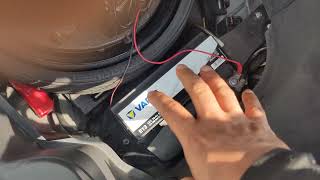
- Mercedes-Benz models log B1132 for a Battery Control Module communication failure, which stops the starter battery from charging and requires a $350+ module repair.
What Does B1132 Mean?
B1132 is a manufacturer-specific body control module (BCM) code. For Mitsubishi, it indicates a starter circuit fault. For Nissan and Infiniti, it flags a fault in the right-side airbag system. For Mercedes-Benz, it signals a communication error with the battery control module. For Peugeot, it points to a ride height sensor fault, and for older Fords, an O2 sensor circuit error.
Technical definition: B1132 lacks a standardized SAE/ISO definition. Automakers assign their own criteria: starter circuit logic failures (Mitsubishi), airbag side module circuit shorts (Nissan), battery module CAN bus communication errors (Mercedes-Benz), ride height sensor faults (Peugeot), or O2 sensor circuit faults (Ford).
Can I Drive With B1132?
Yes, But With Caution. You can drive, but risks vary by brand. Nissan/Infiniti: Airbags are disabled and will not deploy in a crash. Mercedes-Benz: Starter battery charging has failed; you will soon be stranded. Mitsubishi: Starter circuit fault causes unpredictable no-start conditions.
Common Causes
- Faulty Wiring or Connectors (Very Common) — Damaged wiring is the most frequent cause across all brands. Corroded, shorted, or broken wires interrupt critical signals. Moisture, vibration, or physical damage are the primary culprits, especially in vulnerable areas like under the passenger seat for Nissan airbag faults.
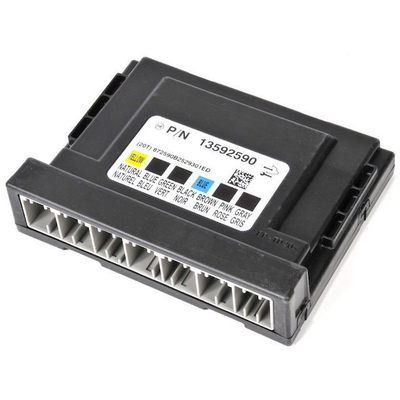
- Failed Control Module (Common) — Internal failure of a control module triggers this code. Depending on the brand, the failed unit is typically the Airbag Control Module (SRS), Engine Control Module (ECM), or Battery Control Module (BCM).
- Faulty Component (Sensor or Relay) (Common) — A specific system component has failed. This is often a starter relay in a Mitsubishi, a side impact sensor in a Nissan, or a battery sensor connected to the BCM in a Mercedes-Benz.
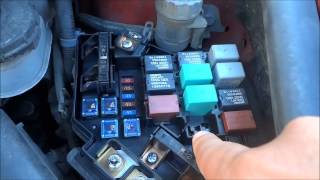
- Frozen Relays (Mitsubishi) (Less Common) — In extremely cold weather, Mitsubishi under-hood relays freeze and fail to close. This interrupts the starter circuit, causing a no-start condition and triggering B1132. Mitsubishi issued TSB-19-13-003 to address this with anti-freezing replacement relays. 🎬 Watch: A simple guide to replacing automotive relays
- Low Battery Voltage (Less Common) — Insufficient voltage causes communication errors between modules, leading to B1132. This is especially prevalent in Mercedes-Benz vehicles where the code directly relates to the battery control system.
- Post-Collision Data Lock (Nissan/Infiniti) (Rare) — After an accident, the Nissan/Infiniti SRS module stores crash data and locks itself. This triggers B1132 and requires a professional module reset or complete replacement.
Symptoms
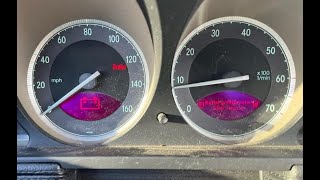
- Warning Light on Dashboard — The most common symptom. Expect a 'Power Supply System Error' (Mitsubishi), a flashing Airbag/SRS light (Nissan), or a red 'Battery - Visit Workshop!' message 🎬 Watch: Troubleshooting the Mercedes red battery warning light (Mercedes-Benz).
- Engine Will Not Start or Crank — On Mitsubishi vehicles, the starter circuit fails, resulting in an unpredictable no-start condition where the engine does not turn over.
- Airbag System Inoperative — On Nissan and Infiniti models, the illuminated airbag light indicates the Supplemental Restraint System (SRS) is disabled and will not deploy in a crash.
- Electrical Issues and Battery Drain — On Mercedes-Benz vehicles, the Battery Control Module fails to manage the dual-battery system, leading to a dead starter battery and secondary electrical glitches.
Diagnostic Flowchart
Tap your situation to follow the diagnostic path that matches what you're seeing on this code.
Common Fixes & Costs
- Repairing Damaged Wiring or Connectors — Parts: $5-$50, Labor: $100-$300, ~1.5 hr book time (Intermediate)
- Replacing a Faulty Relay (Mitsubishi) — Parts: $15-$50, Labor: $50-$150, ~0.5 hr book time (DIY)
- Resetting the SRS Airbag Module (Nissan/Infiniti) — Parts: $40-$80, Labor: $100-$250, ~1.5 hr book time (DIY)
- Repairing the BCM (Mercedes-Benz) — Parts: $300-$500, Labor: $100-$200, ~1.5 hr book time (Intermediate)
- Replacing a Control Module — Parts: $200-$1600, Labor: $150-$500, ~2.0 hr book time (Professional)
Used vs. New Parts: Buying Guide
When a used part is worth it: Buying used control modules is risky due to stored crash data or VIN-locking. It makes sense only for older vehicles where a new part is prohibitively expensive. Mailing your original module for repair is a safer alternative.
Donor-vehicle mileage cap: roughly under 100000 miles for the part to have meaningful remaining life.
Donor quality checklist:
- Verify the donor vehicle was not involved in a flood, fire, or major collision.
- Match the part number exactly. Do not assume different numbers are interchangeable.
- Purchase from a reputable recycler offering at least a 30-day warranty.
Decision logic:
- If Your original module can be repaired or reset → Repair your original module. It is cheaper and avoids dealer programming.
- If The vehicle is newer and the part is under $500 → Buy a new OEM part for reliability and warranty.
- If The vehicle is old, budget is tight, and repair is not an option → Buy a used module, but prepare for potential programming needs and a higher risk of failure.
Warranty tradeoff: Used parts carry a 30-90 day warranty. New OEM parts carry a 1-year or longer warranty. Repair services often provide a lifetime warranty on their work.
Worst-case if a used part fails: $300-$600 if a used module is faulty or requires dealer programming, forcing you to pay for diagnostic time and a second installation.
What Happens If You Wait — Timeline
- Immediate (Day 1): Warning light appears. Nissan/Infiniti airbags are disabled. Mitsubishi may fail to start. Mercedes displays a 'Visit Workshop' message. (MPG impact: 0%% · Added cost: $0)
- 1-4 Weeks: Nissan/Infiniti safety risk persists. Mitsubishi no-start becomes a recurring problem. Mercedes starter battery progressively loses charge. (MPG impact: 0%% · Added cost: $0)
- 1-3 Months: Mercedes starter battery fails completely, stranding the driver. Mitsubishi intermittent no-start leads to a tow. (MPG impact: 0%% · Added cost: $150-$500 (Towing fees + new starter battery))
- 3+ Months: Ignoring the fault leads to escalating risks. A simple wiring short degrades and damages the connected control module, turning a $200 repair into a $1500 replacement. (MPG impact: 0%% · Added cost: $500-$2000+ (Cost of a new control module or accident-related costs from disabled safety systems))
Cost of Not Fixing It
- Immediate: Nissan/Infiniti airbags are disabled, creating a major safety risk. Mitsubishi vehicles may fail to start. Mercedes displays a 'Visit Workshop' light. (Added cost: $0)
- 1-4 weeks: For Mercedes, the starter battery progressively loses charge, eventually stranding the driver and requiring a tow. (Added cost: $150-$500)
- Long-term: Driving with disabled airbags has catastrophic personal and financial costs in an accident. Continual no-start issues lead to unreliability and repeated towing fees. (Added cost: Potentially thousands in secondary costs or accident-related damages.)
Diagnosis Steps
- Identify Vehicle Manufacturer
The meaning of code B1132 changes completely based on the car's make. Identify your manufacturer to determine which system (Airbag, Starter, Battery) requires diagnosis.
Tools: Vehicle Owner's Manual (Beginner) - Scan for Other Codes
Check for accompanying trouble codes. A B1131 on a Mitsubishi points to a related starter circuit issue, while a U1000 on a Mercedes or Nissan suggests a wider CAN bus communication problem.
Tools: OBD-II Scanner (Beginner) - Check Battery and Charging System
Ensure the battery is fully charged and the alternator works correctly. Verify battery voltage is ~12.6V with the engine off and ~13.7-14.7V with the engine running. Low voltage causes module communication faults across all makes.
Tools: Multimeter (Intermediate) - Perform a Visual Inspection
Inspect the relevant system based on your make. Mitsubishi: Check wiring around the starter relay and fuse box. Nissan/Infiniti: Inspect the yellow airbag wiring under the front passenger seat. Mercedes-Benz: Check the battery control module in the trunk for water damage.
Tools: Flashlight (Beginner) - Test Specific Circuits
For a Nissan airbag code, disconnect the battery and SRS module. Measure resistance between the pins for the right side impact sensor. B1132 indicates a short, presenting as near 0 Ω resistance. Consult the service manual for specific pinouts.
Tools: Multimeter, Vehicle-Specific Wiring Diagram (Advanced) - Test Specific Components
For a Mitsubishi, test for voltage at the starter relay and signal wires from the KOS/OSS ECU. For a Peugeot, test the voltage signal from the ride height sensor as the suspension articulates.
Tools: Multimeter, Vehicle-Specific Service Manual (Advanced) - Isolate the Faulty Module
If wiring and components test okay, the control module is likely faulty. Disconnect other modules on the same communication network one by one to see if the fault disappears, isolating the source of the interference.
Tools: OBD-II Scanner, Vehicle-Specific Service Manual (Advanced) - Analyze Live Data
[ADVANCED] For Mitsubishi, monitor live data from the OSS-ECU and ECM. The fault sets when the 'Cranking signal' from the ECM is 'ON' while the 'Starter setting signal' from the OSS-ECU is 'OFF'. This confirms the logical inconsistency triggering B1132.
Tools: Advanced Bi-Directional Scan Tool (Advanced) - Analyze Bus Communication
[PRO TIP] For a Mercedes-Benz CAN fault, back-probe the CAN-B High and Low wires. A healthy signal shows two mirroring square waves. A flat line or heavy distortion confirms the BCM is flooding the network and causing the communication breakdown.
Tools: Oscilloscope, Wiring Diagram (Professional)
When This Code Triggers (Freeze-Frame Conditions)
- Ignition Status: ON or START (The fault is logged during the power-on self-test (Nissan airbag) or during a failed crank attempt (Mitsubishi starter).)
- System Voltage: 10.5V - 13.5V (Fault sets if voltage is low, confusing modules. For Mercedes, the code indicates a charging problem, so voltage degrades over time.)
- Vehicle Speed: 0 mph (Because these faults relate to startup or self-tests, the vehicle is stationary when the code is logged.)
- Module Status: Fault, No-Comms, or Logic Error (The freeze frame captures the specific state reported by the control module, such as 'Circuit Short' for a Nissan SRS or 'CAN Timeout' for a Mercedes BCM.)
Related Codes
- B1131 — On Mitsubishi vehicles, B1131 is a direct starter circuit fault. B1132 indicates a logic failure, while B1131 points to a physical fault in the starter relay control circuit.
- U1000 — A generic CAN communication fault code. When paired with B1132 on a Nissan or Mercedes, it implies a network wiring issue or another faulty module is disrupting all communication, rather than an isolated BCM failure.
- B1129 — On Nissan vehicles, this is the direct partner to B1132 for the front right side airbag module. B1129 indicates an OPEN circuit, while B1132 indicates a SHORT circuit.
- P1612 — On a Mitsubishi experiencing cold-weather issues, this engine code appears alongside B1132. The combination strongly points to the frozen relay issue described in TSB-18-13-003.
Climate & Environmental Factors
- Extreme Cold: On Mitsubishi vehicles, standard electrical relays freeze in temperatures below -10°C (14°F). This prevents the relay contacts from closing, interrupting the starter circuit and triggering B1132. TSB-19-13-003 addresses this with anti-freezing relays.
- High Humidity / Water Ingress: On Mercedes-Benz R230 models, the BCM is located in the trunk, an area susceptible to water leaks from clogged drains. Moisture corrodes the BCM's circuit board, causing communication failures. On Nissans, moisture under the passenger seat corrodes SRS connectors.
How to Talk to a Mechanic About This Code
Say this: "{'Nissan / Infiniti': 'I have a B1132 airbag code. Before quoting a new SRS module, please perform a pin-out test and inspect the wiring harness under the passenger seat, as this is the most common failure point.', 'Mercedes-Benz': 'I have a B1132 and a red battery warning light. Please verify if the BCM is communicating and if the starter battery receives a charge when the engine is running before quoting a new module or battery.', 'Mitsubishi': 'I have a B1132 code and an intermittent no-start. Please inspect the starter relay, check for voltage drop in the starter circuit, and reference TSB-19-13-003 for a frozen relay before diagnosing the ECU.'}"
This language proves you researched the specific failure for your vehicle. It directs the technician to the most likely, cheapest solution first, forcing them to rule out simple causes before recommending expensive module replacements.
Avoid saying:
- 'My airbag/battery light is on, can you fix it?' (Too vague, invites an expensive diagnostic process.)
- 'Just replace whatever is broken.' (Gives the shop a blank check.)
- 'I heard it's probably the SRS Module/BCM.' (Suggesting the most expensive part first leads them to quote it without a full diagnosis.)
Questions to ask before authorizing the repair:
- For Nissan: Can you show me the damage to the wiring harness or provide the resistance readings proving the circuit is shorted?
- For Mercedes: What was the charging voltage at the starter battery, and can you provide the fault printout from the diagnostic tool?
- For Mitsubishi: Did you test the original relay, and how did it fail?
- Is the recommended part a new OEM, used, or rebuilt part?
- What is the warranty on both the part and your labor?
Where to Take It: Dealer vs Independent vs Chain
- Dealer:
Recommended for Mercedes-Benz BCM faults due to proprietary diagnostic tools and programming needs. Expensive for other makes.
Best for: Vehicles under warranty., Complex Mercedes-Benz diagnostics requiring manufacturer-specific tools (XENTRY) and SCN coding.
Downsides: Highest labor rates and parts markups., Defaults to replacing entire modules rather than attempting component-level repairs. - Independent Shop:
Best choice for Nissan and Mitsubishi. For Mercedes, choose only an independent specialist with documented experience in Mercedes electrical systems.
Best for: Out-of-warranty vehicles., Diagnosing the common Nissan B1132 wiring fault., Handling the straightforward Mitsubishi relay replacement.
Downsides: Quality varies greatly; a shop specializing in your car's brand is crucial., Lacks expensive dealer-level tools required for programming new modules. - Chain Shop:
AVOID for diagnosing B1132. The manufacturer-specific nature makes these shops a poor choice.
Best for: Simple maintenance like oil changes, tires, and brakes.
Downsides: Technicians lack specialized training for complex electrical diagnostics., High pressure to sell parts leads to misdiagnosis.
When to Walk Away From the Repair
If the estimated repair cost exceeds 50% of the car's current private-party value, seriously consider selling or trading in the vehicle. For older or high-mileage cars, use a stricter 40% threshold.
- Car worth $3500, fix is $1800: Walk away. The repair cost is over 50% of the car's value. You risk another expensive failure soon.
- Car worth $15000, fix is $1600: Fix it. The repair cost is well below the threshold and restores a critical safety or reliability function.
- Car worth $8000, fix is $3500: Borderline. The cost approaches the 50% threshold. Get a second opinion and consider cheaper repair options, like a mail-in module repair.
What Scan Tool You Need for This Code
Minimum: A scanner that reads manufacturer-specific Body (B-codes) and Supplemental Restraint System (SRS) codes. A basic $20 engine code reader will NOT see code B1132.
B1132 is a Body Control Module code. Basic scanners only communicate with the Engine Control Unit. You need a tool that accesses the SRS module on a Nissan, the BCM on a Mercedes, or the KOS/OSS ECU on a Mitsubishi.
Budget: BlueDriver Pro Bluetooth Scanner (~$99) — Reads the B1132 code and other system codes (ABS, SRS) on most compatible vehicles. Allows you to clear the code after a repair.
Mid-range: Foxwell NT630 Plus / Autel MaxiLink ML629 (~$120-180) — Excels at reading/clearing Engine, ABS, and SRS codes. Provides live data streams to diagnose sensor functionality. Excellent for confirming the B1132 fault.
Professional: Autel MaxiCOM MK808 / Foxwell NT809 (~$450-800) — Offers full-system diagnostics and bi-directional control to test relays. Reads manufacturer-specific fault data pointing to exact communication failures. Essential for serious DIY diagnostics.
Rent vs buy: Auto parts stores offer free loaner tools, but they often cannot read SRS or BCM codes. To DIY the diagnosis, buy at least a budget-level scanner with SRS/Body code capability.
How to Clear the Code After You Fix It
- Reconnect the battery if it was disconnected for the repair.
- Use a compatible OBD-II scan tool to access the specific module (SRS, BCM, etc.) and select the 'Clear Codes' function.
- Turn the ignition off, then start the engine. The specific warning light (Airbag, Battery) should turn off.
Drive cycle (~15 minutes): A complex drive cycle is not required for B-codes. After clearing the code, start the engine and idle for 1 minute. Drive for 5-10 minutes with at least one stop and restart. If the warning light stays off, the fault is resolved.
Readiness monitors affected: None
Before emissions retest: drive at least 100 miles to fully set monitors.
Watch out for:
- For Nissan/Infiniti, 'hard codes' from a collision cannot be cleared with a standard scanner and require a specialist reset service.
- Clearing the code without fixing the root cause results in the code returning immediately.
- Disconnecting the battery clears emissions readiness monitors, requiring a lengthy drive cycle before passing a smog test.
Will This Fail Emissions / State Inspection?
No — by itself this code doesn't fail OBD inspection (but it can keep readiness monitors from setting, which causes a separate fail).
- California: An airbag light will NOT cause a failure of the California smog check, which is strictly an emissions test.
- New York: An illuminated airbag warning light is a safety defect and WILL cause the vehicle to fail the annual state safety inspection.
- Texas: An airbag light is NOT currently listed as a failure item for the Texas safety inspection, subject to inspector discretion.
Most Commonly Affected Vehicles
- Mercedes-Benz SL-Class (R230) (2003-2012) — Prone to Battery Control Module (BCM) failure, triggering the B1132 CAN communication fault. Early models had a board design highly susceptible to failure.
- Nissan Qashqai / Rogue Sport (2006-2013) — Commonly logs B1132 for a fault in the right-hand side impact airbag module circuit, often due to wiring issues under the passenger seat.
- Mitsubishi Outlander (2007-2019) — Sets B1132 for a starter circuit failure. Models from 2014-2019 are specifically mentioned in TSB-19-13-003 for frozen relays in cold climates.
- Nissan Titan (2004-2015) — Service manuals list B1132 as a fault related to the front right side airbag module circuit being shorted.
- Infiniti FX / G / QX series (2003-2013) — Uses the same SRS system logic as Nissan, where B1132 points to a fault with the right side airbag module or its circuit.
- Peugeot / Citroën Various with adjustable suspension (2004-2015) — B1132 indicates the front ride height sensor signal is too low, affecting suspension and headlamp leveling systems.
- Ford E-Series Van / F-150 (1997-2003) — On older Ford trucks, B1132 indicates 'O2 Sensor Not Switching - Sensor Indicates Rich' for the upstream sensor.
- Volkswagen Tiguan (2009-2017) — Logs a B1132 fault related to an electrical issue in the rear right door illumination circuit.
Manufacturer-Specific Notes
- Mitsubishi: B1132 means 'Starter Circuit Fail'. The ECU detects an illogical signal, such as receiving a crank command when the Keyless Operation ECU has not authorized a start. Common causes are damaged wiring, a faulty starter relay, or frozen relays in cold climates (TSB-19-13-003).
- Nissan / Infiniti: B1132 is an airbag system fault indicating a short in the right-hand side impact airbag circuit. This disables the SRS. The cause is almost always damaged wiring under the front passenger seat, not a faulty airbag module. Post-collision, the module stores crash data and requires a professional reset.
- Mercedes-Benz: B1132 means 'Fault in CAN communication with control unit BNS'. The BNS is the Battery Control Module managing the dual-battery system. This triggers a red 'Battery - Visit Workshop!' warning. The cause is frequently internal failure of the BCM due to age or water damage in the trunk.
- Ford: On late 90s/early 2000s models, B1132 means 'HO2S11 Sensor Not Switching (Indicates Rich)'. This points to a problem with the Bank 1, Sensor 1 oxygen sensor reading a stuck rich fuel mixture.
- Peugeot / Citroën: B1132 is defined as 'Front ride height sensor signal too low'. The fault is caused by a failed sensor, a broken linkage between the sensor and the suspension arm, or a wiring issue.
Real Owner Stories
2006 Nissan Titan with airbag light
Airbag light stayed on solid. Scan tool showed code B1132. Dealership quoted over $1,500 to replace the side airbag module.
What they tried:
- Tried the DIY key-on/key-off reset procedure multiple times, but the light returned.
- Took it to a dealership for diagnosis.
Outcome: The owner disconnected the battery, unplugged the yellow airbag connector under the passenger seat, cleaned the contacts, and secured the harness with zip ties to prevent pinching. The code cleared and did not return.
Lesson: On Nissan/Infiniti vehicles, always inspect the wiring harness under the passenger seat for damage before agreeing to replace the expensive SRS module. This is the most common cause for B1132.
2004 Mercedes-Benz SL600 with 'Visit Workshop' message
After replacing a dead starter battery, a red 'Battery - Visit Workshop!' message appeared. The new battery was not charging. Scanner revealed code B1132.
What they tried:
- Replaced the front starter battery.
- Visually inspected the Battery Control Module (BCM) in the trunk.
Outcome: The owner removed the original BCM and sent it to a mail-in repair service for $350. After reinstalling the repaired module, the system functioned correctly, the starter battery charged, and the code cleared.
Lesson: Replacing the battery will not fix a Mercedes B1132 code. The fault lies with the Battery Control Module. A mail-in repair of your original BCM is the most cost-effective solution.
2012 Mitsubishi Outlander with intermittent no-start
The vehicle intermittently failed to start in cold weather. Dashboard lights illuminated, but there was no crank. A 'Power Supply System Error' message appeared with code B1132.
What they tried:
- Tested the battery, which was fully charged.
- Jumped the starter motor directly, proving the starter worked.
- Inspected starter wiring for corrosion.
Outcome: The owner found Mitsubishi TSB-19-13-003 regarding frozen relays. They replaced the starter relay in the under-hood fuse box with the updated anti-freezing relay (Part No. 8627A049). The no-start condition was resolved.
Lesson: For a Mitsubishi with a no-start and code B1132 in a cold climate, suspect a frozen relay first. Replace the starter relay with the updated part before diagnosing complex ECU issues.
How to Prevent This Code From Triggering
- Secure Under-Seat Wiring (Nissan/Infiniti) (Once, or after any under-seat work) — The primary cause of B1132 on Nissans is the airbag harness getting pinched by seat movement. Use zip ties to secure the harness away from moving parts.
- Keep Trunk Drains Clear (Mercedes-Benz R230) (Annually) — Water leaks into the trunk cause BCM failure on the SL-Class. Clogged drains allow water to pool and reach the module, causing corrosion.
- Use a Battery Tender/Maintainer (If vehicle sits for more than 1-2 weeks) — Low system voltage causes communication glitches between control modules. A battery tender maintains stable voltage, protecting sensitive electronics like the BCM.
- Proactively Replace Relays (Mitsubishi in Cold Climates) (Once, before winter) — Original starter relays freeze and fail in harsh winters. Proactively replacing them with TSB-specified anti-freezing relays prevents no-start conditions.
Frequently Asked Questions
Can I just clear the B1132 code?
You can try, but the code returns immediately if the underlying fault remains. For Nissan/Infiniti post-crash faults, the code is stored as 'hard data' and cannot be cleared with a standard scanner. The module requires a professional reset service or replacement.
Why does my airbag light stay on with code B1132?
On Nissan or Infiniti vehicles, B1132 indicates a critical fault in the right-side airbag circuit. The vehicle disables the entire Supplemental Restraint System (SRS) for safety, illuminating the warning light. The airbags will not deploy in an accident until repaired.
My Mercedes shows B1132 but starts fine. What's the problem?
B1132 on a Mercedes indicates a communication failure with the Battery Control Module (BCM). While the car starts using the main consumer battery, the BCM is no longer charging the front starter battery. The starter battery will eventually die, leaving you stranded.
I replaced the battery on my Mercedes, why is the light still on?
Code B1132 points to a communication failure with the Battery Control Module (BCM), not a bad battery. The BCM itself has likely failed and cannot manage the dual-battery charging system. Replacing the battery will not fix the faulty control module.
What are common mistakes when diagnosing B1132?
The biggest mistake is replacing expensive control modules before testing wiring and relays. Technicians often wrongly condemn Nissan SRS modules when the actual fault is a pinched wire under the passenger seat. Always check simple causes and manufacturer Technical Service Bulletins (TSBs) first.
Is B1132 related to the starter or the airbag?
It depends entirely on your vehicle's manufacturer. B1132 relates to the starter system on Mitsubishis, the airbag system on Nissans, and the battery management system on Mercedes-Benz vehicles. Check the specific definition for your car's make before attempting any repairs.
What are the long-term consequences of ignoring B1132?
Ignoring B1132 on a Nissan means driving without functional airbags, risking severe injury in a crash. On a Mercedes or Mitsubishi, you face an unreliable vehicle that will eventually leave you stranded with a dead battery or a no-start condition. The underlying electrical fault will not resolve itself.
Key Takeaways
- The definition of code B1132 changes completely depending on the vehicle manufacturer, requiring brand-specific diagnostic steps.
- On Mitsubishi vehicles, B1132 indicates a starter circuit logic failure, often fixed by replacing a $30 under-hood relay (TSB-19-13-003).
- For Nissan and Infiniti, B1132 flags a shorted right-side airbag circuit, disabling the SRS system until the under-seat wiring is repaired or the module is reset.
- Mercedes-Benz models log B1132 for a Battery Control Module communication failure, which stops the starter battery from charging and requires a $350+ module repair.
Helpful Videos

Shop the Parts Behind B1132
Below are the parts most often responsible for code B1132, ranked by how frequently each one is the actual culprit (per the diagnosis above). Tap any to see what we have for your vehicle.


The information in this article is provided for general reference and educational purposes only. Vehicle specifications, procedures, and part compatibility can vary by production date, trim level, and region. Always consult your vehicle's factory service manual and verify part numbers before purchasing or performing repairs. Safety-critical components such as airbags, seat belts, and braking systems should be installed by a qualified professional.
- 🧭 Diagnostic Flowchart
- 🎬 Helpful Videos
- 🛍️ Shop This Part
- What Does B1132 Mean?
- Can I Drive With B1132?
- Common Causes
- Symptoms
- Common Fixes & Costs
- Used vs. New Parts: Buying Guide
- What Happens If You Wait — Timeline
- Cost of Not Fixing It
- Diagnosis Steps
- When This Code Triggers (Freeze-Frame Conditions)
- Related Codes
- Climate & Environmental Factors
- How to Talk to a Mechanic About This Code
- Where to Take It: Dealer vs Independent vs Chain
- When to Walk Away From the Repair
- What Scan Tool You Need for This Code
- How to Clear the Code After You Fix It
- Will This Fail Emissions / State Inspection?
- Most Commonly Affected Vehicles
- Manufacturer-Specific Notes
- Real Owner Stories
- 2006 Nissan Titan with airbag light
- 2004 Mercedes-Benz SL600 with 'Visit Workshop' message
- 2012 Mitsubishi Outlander with intermittent no-start
- How to Prevent This Code From Triggering
- Frequently Asked Questions
- Can I just clear the B1132 code?
- Why does my airbag light stay on with code B1132?
- My Mercedes shows B1132 but starts fine. What's the problem?
- I replaced the battery on my Mercedes, why is the light still on?
- What are common mistakes when diagnosing B1132?
- Is B1132 related to the starter or the airbag?
- What are the long-term consequences of ignoring B1132?
- Key Takeaways
- 🎟️ Get 5% Off