

OBD-II Code B1141: Side Airbag Sensor Circuit Malfunction
What B1141 means, why it triggers, and how to fix it
- Verify your vehicle's specific B1141 definition before buying parts, as it means 'Convertible Top Switch' on Ford Mustangs and 'Ambient Air Sensor' on Suzukis rather than an airbag fault.
- Inspect the wiring harness and yellow SRS connectors under the driver's seat for corrosion or loose pins before spending $300+ on a new side impact sensor.
- Disconnect the negative battery terminal and wait exactly 15 minutes to discharge the backup power before touching any airbag components to prevent accidental deployment.
- Swap the left and right side airbag sensors (if identical) to instantly determine if the sensor is dead; if the code changes to B1140, the sensor requires replacement.
- Do not drive with an active B1141 code, as the driver's side airbag is electronically disabled and increases your risk of fatal injury in a side-impact crash by 37%.
What Does B1141 Mean?
The B1141 code signifies the airbag control module detects a malfunction in the left (driver's side) side airbag sensor circuit. This sensor detects side-impact collisions and signals the module to deploy the airbags. When triggered, the dashboard airbag warning light illuminates and the driver's side airbag system disables as a precaution.
Technical definition: The official SAE/ISO definition for B1141 is 'Side Airbag Sensor Assembly (LH) Malfunction.' This indicates the airbag control module detects an open circuit, a short to ground, a short to power, or an internal sensor fault within the left side airbag sensor's wiring harness or the sensor itself. Definitions vary significantly by manufacturer.
Can I Drive With B1141?
Yes, But With Caution. You can still drive the car, but it presents a significant safety risk. The Supplemental Restraint System (SRS) disables the driver's side airbag, meaning it will not deploy in an accident. According to the Insurance Institute for Highway Safety (IIHS), side airbags with head protection reduce a car driver's risk of death in a driver-side crash by 37%. Driving with this code active removes this critical protection; get the vehicle serviced immediately.
Common Causes
- Damaged or Corroded Wiring/Connectors (Very Common) — Wires leading to the side airbag sensor under the seat, in the B-pillar, or under the carpet frequently fray or corrode. Connectors often loosen or suffer moisture contamination.
- Faulty Side Airbag Sensor (Common) — The sensor fails due to internal electronic faults, moisture intrusion, or physical damage from a previous minor impact.
- Water Intrusion / Leaks (Common) — Water leaking from clogged sunroof drains or bad door seals seeps under the carpet and corrodes the floor-mounted airbag sensor and its connectors.
- Faulty Clock Spring (Less Common) — A failed clock spring in the steering column triggers B1141. While it primarily serves the driver's front airbag, its wiring bundles with other SRS components, creating electrical cross-faults.
- Post-Collision Data Fault (Less Common) — If the vehicle was in an accident, the airbag control module stores crash data. This data keeps the airbag light on and requires a specialized EEPROM reset service, even if the physical sensor is intact.
- Faulty Airbag Control Module (SRS/ECU) (Rare) — The main airbag computer fails, misinterpreting signals and falsely reporting a sensor problem. Consider this only after thoroughly testing the sensor and wiring.
Symptoms
- Airbag Warning Light On — The SRS warning light on the instrument cluster remains illuminated. Some vehicles display a specific text warning like 'Check Airbag System'.
- Side Airbags Disabled — The vehicle's computer disables the faulty part of the airbag system. The driver's side airbags will not deploy in a collision.
- Horn or Steering Wheel Controls Not Working — If a faulty clock spring causes the code, the horn, cruise control, or steering wheel radio buttons also fail.
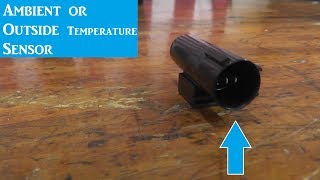
- Incorrect Outside Temperature Reading (Suzuki) — On many Suzuki models, B1141 points to a fault in the ambient air temperature sensor circuit, causing an incorrect outside temperature display and disabling automatic climate control. 🎬 See how to test and replace the ambient temperature sensor.
Diagnostic Flowchart
Tap your situation to follow the diagnostic path that matches what you're seeing on this code.
Common Fixes & Costs
- Repairing or Cleaning Wiring/Connector — Parts: $10-$30, Labor: $120-$250, ~1.5 hr book time (Intermediate)
- Replacing the Side Airbag Sensor — Parts: $70-$350, Labor: $110-$170, ~1.2 hr book time (DIY)
- Replacing the Clock Spring — Parts: $60-$450, Labor: $120-$200, ~1.3 hr book time (Intermediate)
- Resetting the Airbag Module — Parts: $0, Labor: $50-$150, ~0.8 hr book time (Professional)
- Replacing the Airbag Control Module — Parts: $400-$1,200, Labor: $120-$300, ~1.5 hr book time (Professional)
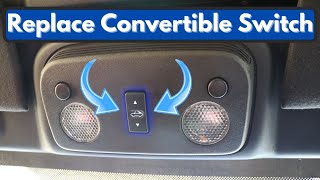
- Replacing Convertible Top Switch (Ford Mustang) — Parts: $35-$50, Labor: $50-$100, ~0.8 hr book time (DIY)
Used vs. New Parts: Buying Guide
When a used part is worth it: NEVER use a used side airbag sensor. These are single-use, critical safety components. A sensor from a salvaged vehicle may have hidden damage from the initial crash, moisture exposure, or improper handling.
Donor quality checklist:
- Avoid salvage yards for any SRS components.
- Risk of counterfeit parts that look identical but fail to function correctly.
- Part numbers must match exactly; superseded parts from the manufacturer are acceptable.
Decision logic:
- If The part is any component of the Supplemental Restraint System (SRS) → Always buy a new OEM or certified aftermarket part. The cost savings of a used part never justify the extreme safety risk.
- If Budget is the primary concern → Postpone the repair until a new, correct part is affordable. Do not install a used sensor as a temporary fix.
Warranty tradeoff: Used SRS components typically have no warranty and cannot be trusted. New OEM or high-quality aftermarket parts carry a warranty and meet federal safety standards.
Worst-case if a used part fails: The worst-case cost is the failure of the airbag to deploy in an accident, potentially resulting in severe injury or death.
What Happens If You Wait — Timeline
- Immediate: Airbag warning light illuminates. The airbag control module disables the driver's side airbag system as a safety precaution. (MPG impact: 0%% · Added cost: $0 (Safety risk is now active))
- Ongoing: The vehicle remains drivable, but the critical safety feature is non-functional. The risk of severe injury or death in a driver-side collision increases significantly. (MPG impact: 0%% · Added cost: N/A (Represents an unquantifiable safety liability))
- 1-12 months (Next State Inspection): The vehicle automatically fails its annual state safety inspection in most jurisdictions, leading to fines and an inability to legally register the vehicle. (MPG impact: 0%% · Added cost: $50-$200 in re-inspection fees and potential fines.)
- Long-term: If the root cause is a water leak, continued moisture exposure corrodes the wiring harness, floor pan, or other nearby electronic modules. (MPG impact: 0%% · Added cost: $500-$2000+ in additional repairs if corrosion spreads.)
Cost of Not Fixing It
- Immediate: Driver's side airbag system is disabled. In a side-impact collision, the risk of serious or fatal injury increases significantly. (Added cost: N/A (Safety Risk))
- Ongoing: Automatic failure of state safety inspections in many jurisdictions, leading to inability to legally register or operate the vehicle. (Added cost: $50-$200 in potential fines or re-inspection fees.)
- Long-term: No direct mechanical damage occurs to other systems. The primary cost remains the critical safety compromise and legal/registration issues. (Added cost: N/A)
Diagnosis Steps
- Read the Code and Freeze Frame Data
Use an OBD-II scanner capable of reading SRS/Body (B) codes to confirm B1141 is active. Document any other codes present and review the freeze frame data to understand the conditions under which the fault occurred.
Tools: SRS-capable OBD-II Scanner (Beginner) - Critical Safety Disconnect
Before proceeding with any physical inspection, you MUST disconnect the negative battery terminal and wait exactly 15 minutes. This discharges the system's backup power, preventing accidental airbag deployment.
Tools: Wrench set (Beginner) - Visual Inspection of Sensor and Harness
Locate the left side airbag sensor in the B-pillar or under the driver's seat. Visually inspect the sensor, connector, and wiring for chafing, cuts, or corrosion. Check for dampness under the carpet indicating a water leak.
Tools: Flashlight, Trim removal tools (Intermediate) - Swap the Side Sensors (If Applicable)
If the vehicle uses identical sensors for the left and right sides, swap them. Reconnect the battery, clear the codes, and cycle the ignition. If the code changes to B1140 (right side), the sensor is faulty. If B1141 returns, the problem is in the wiring or control module.
Tools: Wrench set, Trim removal tools (Intermediate) - Live Data Analysis (Pro Tip)
Using an advanced scan tool, observe the live data parameter for the 'Left Side Impact Sensor'. A healthy circuit shows 2.0 to 3.0 ohms. A fixed high resistance (e.g., 65 ohms) indicates an open circuit, while 0 ohms indicates a short circuit.
Tools: Advanced SRS-capable Scan Tool (Advanced) - Check Harness for Shorts and Opens (Pro Tip)
Perform the safety disconnect again. Disconnect the harness from the sensor and the main airbag control module. Use a multimeter to check continuity on each wire between the connectors (should be < 1.0 Ω). Check resistance between each wire and a body ground (should be OL).
Tools: Multimeter, Vehicle-specific wiring diagram (Advanced) - Check for Short to B+ (Pro Tip)
Reconnect the battery. With the sensor disconnected, turn the ignition ON. Measure the voltage between each terminal in the sensor's wiring harness connector and a known good body ground. Voltage near battery level indicates a short to power.
Tools: Multimeter, Vehicle-specific wiring diagram (Advanced) - Test the Clock Spring
If symptoms include a non-working horn or steering wheel buttons, test the clock spring for continuity through the spiral cable as the steering wheel turns. Due to direct airbag connections, stop DIY and go to a shop if you lack SRS experience.
Tools: Multimeter, Professional scan tool (Advanced) - Diagnose the Airbag Control Module (ECU)
If all wiring and sensors test perfectly, the airbag control module is faulty. This requires an advanced scan tool to check module communication and internal data. Professional diagnosis is mandatory at this stage.
Tools: Advanced scan tool, Oscilloscope (Professional)
When This Code Triggers (Freeze-Frame Conditions)
- System State: Ignition ON (The SRS module performs a self-test immediately upon power-up.)
- RPM: 0 or >600 (Fault detects with key-on-engine-off or while running.)
- Vehicle Speed: 0 mph (The fault is typically present at standstill during the initial system check.)
- Battery Voltage: 11.5-14.5V (Within normal operating voltage; low voltage causes separate issues.)
Related Codes
- B1140 — The code for the right (passenger) side airbag sensor. Swapping left and right sensors changes B1141 to B1140 if the sensor is faulty.
- B1142 — On Ford Mustang convertibles, B1142 indicates 'Convertible Top Full Up Position Switch Circuit Failure'. On Suzukis, it relates to the ambient air temp sensor.
- B1100 — Indicates a malfunction with the main Airbag ECU. If the B1141 sensor and wiring test perfectly, B1100 confirms the Airbag ECU is the culprit.
- P0070 — A generic powertrain code for the ambient air temperature sensor. Seeing this alongside B1141 on a Suzuki confirms the fault is the temperature sensor, not the airbag.
Climate & Environmental Factors
- Extreme Cold: On 2001-2003 Toyota Highlanders, temperatures around 0°F (-18°C) cause the airbag ECU to set a B1140 or B1141 code. TSB #EL003-03 requires replacing the ECU.
- High Humidity / Water Intrusion: Water leaking into the cabin saturates carpeting and corrodes side airbag sensors located on the floor or low in the B-pillars, creating high resistance.
How to Talk to a Mechanic About This Code
Say this: "I have an airbag warning light and a B1141 code, which points to the driver's side airbag sensor circuit. Before replacing any parts, I'd like you to perform a diagnostic that includes a visual inspection of the wiring and connector under the driver's seat and in the B-pillar, as I understand this is the most common cause. For my [Make, Model], could you also confirm this code doesn't have a manufacturer-specific meaning, like for a convertible top or temperature sensor?"
This signals you are an informed consumer, directing the mechanic to start with the most likely and cheapest-to-fix issue (wiring) rather than immediately replacing an expensive sensor. It prevents misdiagnosis on vehicles where B1141 is not an airbag code.
Avoid saying:
- 'My airbag light is on, can you fix it?'
- 'Just do whatever it takes to turn the light off.'
- 'My friend said it's probably the sensor, just change it.'
Questions to ask before authorizing the repair:
- What were the specific results of the wiring and connector inspection?
- If you are recommending a sensor replacement, what test did you perform to rule out a wiring issue?
- Can you show me the damaged part or corroded connector?
- What is the warranty on this specific repair, including both parts and labor?
- If the light returns for the same code, is there a diagnostic fee for the follow-up visit?
Where to Take It: Dealer vs Independent vs Chain
- Dealer:
Recommended if you suspect a complex module issue or have a vehicle with a known manufacturer quirk that an independent shop might miss.
Best for: Vehicles still under warranty, Known TSBs (Technical Service Bulletins) related to the code, Complex diagnostics requiring module replacement and VIN programming
Downsides: Highest labor rates, Less willing to perform simple wiring repairs, preferring to replace entire harnesses (Typical cost: +50% vs. baseline) - Independent Shop:
Best fit for most situations. Find a shop with good reviews and ASE-certified technicians specializing in electrical systems (A6 certification).
Best for: Out-of-warranty vehicles where cost is a factor, Diagnosing and repairing common wiring and sensor issues, Vehicles with common, well-documented B1141 faults
Downsides: Quality and expertise vary greatly; must vet the shop's experience with SRS systems, Lacks expensive, manufacturer-specific programming tools for newer vehicles (Typical cost: +0% vs. baseline) - Chain Shop:
AVOID. Airbag system repair is a safety-critical task that should not be trusted to a generalist chain shop focused on brakes and oil changes.
Best for: Not applicable for this type of repair.
Downsides: Technicians lack specialized training for SRS diagnostics and repair, High risk of misdiagnosis or improper repair due to the safety-critical nature of airbags, Business model focuses on high-volume, simple jobs, not complex electrical diagnostics (Typical cost: -10% vs. baseline)
When to Walk Away From the Repair
If the estimated repair cost for the B1141 code exceeds 40-50% of your car's private-party market value, pause and evaluate your options. An active airbag light makes a car difficult to sell privately and significantly reduces trade-in value.
- Car worth $4000, fix is $600: Fix it. The repair cost is a small fraction of the car's value and restores a critical safety feature, making it legally sellable and safe to drive.
- Car worth $3000, fix is $1500: Walk away. The repair cost is 50% of the car's value. It is not economically sensible to proceed unless the car is in otherwise perfect condition.
- Car worth $10000, fix is $750: Fix it. This is a routine cost of ownership for a vehicle of this value and is essential for safety and resale.
What Scan Tool You Need for This Code
Minimum: An OBD-II scanner that reads and clears Supplemental Restraint System (SRS) or Airbag codes (often advertised as '4-system' or 'All-system' scanner).
A standard $20 engine code reader CANNOT see SRS/airbag codes (B-prefix codes). It shows 'No Codes Found,' giving a false sense of security. You must use a tool designed to communicate with the SRS control module.
Budget: Autel MaxiLink ML629 (~$95) — Reads and clears codes for Engine, Transmission, ABS, and SRS on most 1996 and newer vehicles. It confirms the B1141 code and allows you to clear it after a repair.
Mid-range: Foxwell NT710 (~$300) — Provides full-system diagnostics, including live data graphing for the SRS module. This allows you to see resistance values from the sensor circuit in real-time, distinguishing an open/short circuit from a sensor failure.
Professional: Autel MaxiCOM MK808 / Topdon ArtiDiag Pro (~$300-500) — Offers professional-level, all-system diagnostics with advanced features like ECU coding and detailed live data. Provides comprehensive data and service functions for any issue.
Rent vs buy: Auto parts stores offer free loaner tools, but you must specifically ask for a scanner that reads SRS/Airbag codes. If available, renting is perfect for a one-time fix. If not, buying a budget pick like the ML629 is a wise investment.
How to Clear the Code After You Fix It
- Ensure the physical fault (e.g., bad sensor, broken wire) is corrected.
- Reconnect the negative battery terminal.
- Use an SRS-capable OBD-II scan tool to access the airbag module.
- Select the option to 'Clear/Erase Fault Codes'.
Drive cycle (~20 minutes): An SRS-specific drive cycle is not required. The system self-tests on each ignition cycle. After clearing the code, turn the ignition off, wait 30 seconds, then turn it back on. If the battery was disconnected, drive 15-20 minutes to reset emissions readiness monitors.
Readiness monitors affected: Evaporative System, Catalyst Monitor, O2 Sensor Monitor
Before emissions retest: drive at least 50 miles to fully set monitors.
Watch out for:
- Using a basic OBD-II scanner that cannot read or clear SRS (B-prefix) codes.
- Failing to fix the underlying electrical fault, causing the code to return instantly.
- Not waiting long enough after disconnecting the battery for the system's backup power to discharge.
Will This Fail Emissions / State Inspection?
Yes — this code typically fails an OBD-II emissions inspection.
- California: An illuminated airbag warning light is a safety defect and causes the vehicle to fail the mandatory safety inspection portion of the smog check.
- New York: The NYS DMV considers an illuminated airbag warning lamp an advisement only, not cause for rejection. However, some shops refuse to pass the vehicle out of liability concerns.
- Texas: An illuminated airbag light causes a vehicle to fail the state safety inspection. The official rule requires the SRS light to turn on and then off correctly.
Most Commonly Affected Vehicles
- Toyota Highlander (2001-2003) — Sets a B1140 or B1141 code in very cold temperatures (around 0°F or -18°C). TSB #EL003-03 requires replacing the center airbag ECU.
- Toyota Corolla (2003-2008) — Commonly cited for B1141 faults related to the side airbag sensor or the wiring harness under the seat. Verify the correct sensor part number with the VIN.
- Toyota Camry (2002-2006) — Prone to issues with the side airbag sensor circuits due to corrosion or wiring damage over time.
- Ford Mustang (2005-2014) — On convertible models, B1141 means 'Convertible Top Full Down Position Switch Circuit Failure'. It indicates a problem with the sensor confirming the top is retracted, not the airbag.
- Hyundai Sonata, Elantra, Santa Fe (2011-2015) — Experiences B1141 due to faulty sensors or loose, corroded connectors under the front seats.
- Nissan Qashqai (2006-2012) — B1141 points to the 'Diagnosis Sensor Unit' and frequently appears after an accident, requiring a professional module reset.
- Chevrolet Blazer EV (2024) — GM bulletin #PIP5983 states B1141 is an invalid software error code for this vehicle and should be ignored until an update is released.
Manufacturer-Specific Notes
- Toyota/Lexus: Relates to the left side airbag sensor. On 2001-2003 Highlanders, extreme cold triggers this code, requiring a new airbag ECU per TSB #EL003-03.
- Ford: On Mustang convertibles (2005-2014), B1141 means 'Convertible Top Full Down Position Switch Circuit Failure'. Diagnose the top's position switch, not the SRS.
- Suzuki: Points to a malfunction in the outside air temperature sensor circuit, affecting the temperature display and automatic climate control.
- Mitsubishi: Indicates an 'ESL Authenticate Timeout' related to the electronic steering lock and immobilizer system, often accompanied by a security warning light.
- General Motors (GM): For the 2024 Chevrolet Blazer EV, GM bulletin #PIP5983 states B1141 is an invalid software error code and should be ignored until an update is released.
Real Owner Stories
2007 Toyota Corolla, 150K miles
Airbag light came on intermittently at first, then stayed on permanently. No other symptoms.
What they tried:
- Checked the connector under the driver's seat, which looked clean and secure.
- A local mechanic read the B1141 code.
- Following a forum guide, they swapped the left and right side airbag sensors.
Outcome: After swapping the sensors, the code changed to B1140 (passenger side). This confirmed the sensor itself was faulty. A new sensor was installed, and the code cleared.
Lesson: If your vehicle has identical left and right side sensors, swapping them is a powerful and free diagnostic step to confirm if the sensor is the problem before buying a new one.
2006 Ford Mustang Convertible
Airbag light was on, and the convertible top would not retract. A basic scanner pulled code B1141.
What they tried:
- Initially thought it was a serious airbag issue.
- Searched online for 'Mustang B1141' and found it related to the convertible top.
Outcome: The owner discovered B1141 on this model indicates 'Convertible Top Full Down Position Switch Circuit Failure'. Replacing the faulty switch (Part No. AR3Z-15B691-AA) fixed both the warning light and the convertible top operation.
Lesson: Always verify the specific definition of a code for your exact make, model, and year. On some vehicles, B1141 has nothing to do with the airbag system.
2012 Hyundai Elantra, 110K miles
Airbag light on after the car's interior was detailed. Code B1141 was present.
What they tried:
- Took it to a mechanic who immediately suggested replacing the side airbag sensor for $450.
- Owner got a second opinion from a different shop.
Outcome: The second mechanic performed a detailed visual inspection. He found the cleaning crew had partially unplugged the main yellow airbag connector under the seat. He re-seated the connector, cleared the code, and the light stayed off for $120.
Lesson: Wiring and connector issues are the most common cause of B1141. Always perform a thorough visual inspection of the wiring under the seat before replacing expensive sensors.
2010 Suzuki SX4, 85K miles
Airbag light came on, the A/C stopped blowing cold air, and the outside temperature display showed -40°F.
What they tried:
- A scan showed code B1141.
- Owner searched for Suzuki-specific information for the code.
Outcome: On many Suzuki models, B1141 indicates a fault with the ambient air temperature sensor circuit, not the airbag. Repairing a corroded wire on the sensor behind the front bumper fixed the A/C, temperature display, and cleared the code.
Lesson: Pay attention to all symptoms. If an airbag code appears with seemingly unrelated issues like faulty A/C, it strongly suggests a manufacturer-specific code meaning.
How to Prevent This Code From Triggering
- Keep the area under the front seats clear. (Always) — Objects stored under the seat shift and snag or break delicate airbag sensor wiring and connectors.
- Clean sunroof and A/C evaporator drains annually. (Once per year) — Clogged drains cause water to overflow into the cabin, running down pillars or under the carpet and corroding airbag sensors.
- Apply dielectric grease to accessible SRS connectors. (During any related repair) — Dielectric grease seals out moisture and prevents corrosion on electrical connectors, a primary cause of high resistance faults.
- Be cautious when vacuuming or detailing the interior. (Every cleaning) — Aggressively jamming a vacuum nozzle under the seat dislodges connectors or forces moisture into them, triggering a fault.
- Inspect and clean door and trunk seals. (Twice per year) — Degraded rubber seals allow rainwater to seep into the cabin and pool on the floor, damaging SRS components.
Frequently Asked Questions
Is it safe to drive with a B1141 code?
While the vehicle operates mechanically, it is not safe. The code indicates the driver's side airbag is disabled and will not deploy in a crash. This increases the risk of serious or fatal injury in a side-impact collision by over 37%.
Can I fix the B1141 code myself?
A DIY repair is possible for intermediate mechanics if the issue is a corroded connector or a simple sensor swap. You must strictly follow safety procedures, especially disconnecting the battery for 15 minutes, to prevent accidental airbag deployment. Testing wiring against a diagram is best left to a professional.
How much does it cost to fix a B1141 code?
Costs vary widely based on the root cause. A simple wiring repair runs $150-$250, while replacing a side airbag sensor or clock spring typically costs $300-$600 including parts and labor. Replacing the main airbag control module is the most expensive fix, ranging from $600 to $1,500.
Will clearing the code fix the problem?
No. Clearing the code only turns the light off temporarily. The airbag control module performs a self-check every time you start the car, and if the underlying electrical fault exists, the code returns immediately.
What tells an airbag to deploy?
A central control module makes the decision based on data from multiple sensors. These include accelerometers measuring deceleration force and pressure sensors in the doors detecting rapid pressure changes. The system deploys only in collisions severe enough to warrant it.
What are common misdiagnosis pitfalls for B1141?
The biggest mistake is replacing the airbag sensor without testing the wiring first, as harness damage is extremely common. The second pitfall is ignoring the manufacturer-specific definition. On a Ford Mustang convertible, Suzuki, or Mitsubishi, this code has nothing to do with the airbag system.
Can I use a used airbag sensor or module?
It is strongly discouraged. Airbag components are critical, single-use safety devices, and a used sensor may have hidden crash damage. A used airbag control module contains crash data from its original vehicle and requires professional reprogramming to your car's VIN.
What is the difference between B1141 and B1142 on a Ford Mustang?
On a Mustang convertible, these codes relate to the convertible top's position sensors. B1141 indicates a fault with the 'top is fully down' switch circuit. B1142 indicates a fault with the 'top is fully up' switch circuit.
Key Takeaways
- Verify your vehicle's specific B1141 definition before buying parts, as it means 'Convertible Top Switch' on Ford Mustangs and 'Ambient Air Sensor' on Suzukis rather than an airbag fault.
- Inspect the wiring harness and yellow SRS connectors under the driver's seat for corrosion or loose pins before spending $300+ on a new side impact sensor.
- Disconnect the negative battery terminal and wait exactly 15 minutes to discharge the backup power before touching any airbag components to prevent accidental deployment.
- Swap the left and right side airbag sensors (if identical) to instantly determine if the sensor is dead; if the code changes to B1140, the sensor requires replacement.
- Do not drive with an active B1141 code, as the driver's side airbag is electronically disabled and increases your risk of fatal injury in a side-impact crash by 37%.
Helpful Videos

Shop the Parts Behind B1141
Below are the parts most often responsible for code B1141, ranked by how frequently each one is the actual culprit (per the diagnosis above). Tap any to see what we have for your vehicle.



The information in this article is provided for general reference and educational purposes only. Vehicle specifications, procedures, and part compatibility can vary by production date, trim level, and region. Always consult your vehicle's factory service manual and verify part numbers before purchasing or performing repairs. Safety-critical components such as airbags, seat belts, and braking systems should be installed by a qualified professional.
- 🧭 Diagnostic Flowchart
- 🎬 Helpful Videos
- 🛍️ Shop This Part
- What Does B1141 Mean?
- Can I Drive With B1141?
- Common Causes
- Symptoms
- Common Fixes & Costs
- Used vs. New Parts: Buying Guide
- What Happens If You Wait — Timeline
- Cost of Not Fixing It
- Diagnosis Steps
- When This Code Triggers (Freeze-Frame Conditions)
- Related Codes
- Climate & Environmental Factors
- How to Talk to a Mechanic About This Code
- Where to Take It: Dealer vs Independent vs Chain
- When to Walk Away From the Repair
- What Scan Tool You Need for This Code
- How to Clear the Code After You Fix It
- Will This Fail Emissions / State Inspection?
- Most Commonly Affected Vehicles
- Manufacturer-Specific Notes
- Real Owner Stories
- 2007 Toyota Corolla, 150K miles
- 2006 Ford Mustang Convertible
- 2012 Hyundai Elantra, 110K miles
- 2010 Suzuki SX4, 85K miles
- How to Prevent This Code From Triggering
- Frequently Asked Questions
- Is it safe to drive with a B1141 code?
- Can I fix the B1141 code myself?
- How much does it cost to fix a B1141 code?
- Will clearing the code fix the problem?
- What tells an airbag to deploy?
- What are common misdiagnosis pitfalls for B1141?
- Can I use a used airbag sensor or module?
- What is the difference between B1141 and B1142 on a Ford Mustang?
- Key Takeaways
- 🎟️ Get 5% Off