

OBD-II Code B1142: Side Airbag Sensor Malfunction & Manufacturer Quirks
The Ultimate 2026 Guide to What B1142 Means, Why It Triggers, and How to Fix It
- Verify your vehicle's specific B1142 definition first; it means a passenger window switch failure on 2008-2012 Hondas, but an ignition switch fault on 2011-2016 Ford trucks.
- Do not drive the vehicle until repaired, as the active B1142 code completely disables the 10+ airbags in your car's Supplemental Restraint System.
- Disconnect the negative battery terminal and wait exactly 15 minutes before touching any yellow airbag connectors to prevent accidental deployment.
- Check the passenger floorboard and door panels for water leaks, which cause 80% of the wiring corrosion responsible for side impact sensor faults.
What Does B1142 Mean?
B1142 is a Body Diagnostic Trouble Code (DTC) indicating the Airbag Control Module (ACM) detects a fault in a side airbag sensor circuit, typically on the passenger side. When triggered, the vehicle disables the entire airbag system. Crucially, this code's meaning varies by manufacturer: it flags an ignition switch fault on Ford F-Series trucks and a passenger power window switch failure on Honda/Acura models.
Technical definition: The standard SAE definition is 'Door Side Airbag Sensor (RH) Malfunction' or 'Right Side Door Sensor Open,' indicating an open circuit or signal failure. However, manufacturer-specific definitions override this: Ford defines it as 'Ignition Status 1: Signal Invalid,' and Suzuki defines it as a TPMS 'Receiver Error'.
Can I Drive With B1142?
No — Do Not Drive. Driving is possible, but it is not safe. With code B1142 active, the Supplemental Restraint System (SRS) is disabled as a fail-safe. In a collision, zero airbags will deploy. There is no grace period; the system remains compromised until the fault is repaired and the code is cleared.
Common Causes
- Faulty Passenger Power Window Switch (Honda/Acura) (Very Common) — On Honda and Acura models, the passenger door's power window switch shares a UART communication line with the airbag system. Liquid damage or an internal short in this switch disrupts the network, triggering B1142.
- Damaged or Corroded Wiring/Connectors (Very Common) — Wiring for side impact sensors runs through doors and along the B-pillar. Water leaks from clogged sunroof drains or bad door seals cause rapid corrosion on these connectors, creating open or shorted circuits.
- Faulty Ignition Switch (Ford) (Common) — On Ford trucks, code B1142:29 indicates the Body Control Module (BCM) received an invalid signal from the ignition switch. The switch fails to report the correct key position (OFF, ACC, RUN).
- Faulty Side Impact Sensor (Common) — The physical crash sensor inside the door or B-pillar fails internally due to age, constant vibration, or moisture intrusion.
- Low Battery / System Voltage (Less Common) — A weak battery causes voltage drops during engine cranking. This prevents the SRS module from completing its startup self-test, logging a false communication code.
- Faulty Airbag Control Module (ACM) (Rare) — The main SRS computer fails internally, incorrectly reporting a sensor problem or losing communication with the vehicle's data bus.
Symptoms
- Airbag Warning Light On — The SRS warning light illuminates permanently in the instrument cluster.
- Airbags Disabled — The vehicle disables the entire airbag system as a fail-safe.
- Passenger Door Electrical Failures (Honda/Acura) — The passenger-side power window, power mirror adjustment, and power locks stop working simultaneously.
- Intermittent No-Start (Ford) — The vehicle fails to crank or dies immediately after starting due to an invalid ignition switch signal.
- Code Returns Immediately After Clearing (scan-tool only — no driver-felt sign) — Clearing the code with a scan tool results in an instant reappearance upon the next key cycle, confirming a hard fault.
Diagnostic Flowchart
Tap your situation to follow the diagnostic path that matches what you're seeing on this code.
Common Fixes & Costs
- Replace Passenger Power Window Switch (Honda/Acura)
— Parts: $80-$250, Labor: $75-$150, ~0.7 hr book time
(DIY)
: OEM - Replace Ignition Switch (Ford)
— Parts: $50-$150, Labor: $100-$250, ~1.2 hr book time
(Intermediate)
: OEM - Clean or Repair Wiring/Connector — Parts: $5-$30, Labor: $150-$300, ~1.5 hr book time (Intermediate)
- Replace Side Impact Sensor
— Parts: $70-$400, Labor: $100-$200, ~1.5 hr book time
(Professional)
: OEM - Replace Airbag Control Module (ACM/SRS) — Parts: $400-$1,200, Labor: $150-$350, ~2.0 hr book time (Professional)
Used vs. New Parts: Buying Guide
When a used part is worth it: Buy used for non-safety components like a Honda passenger window switch or a Ford ignition switch to save money.
Donor-vehicle mileage cap: roughly under 120000 miles for the part to have meaningful remaining life.
Donor quality checklist:
- Match the part number exactly, including suffix letters.
- Avoid parts from flood-damaged vehicles.
- Inspect connector pins for green corrosion before purchasing.
Decision logic:
- If The faulty part is a side impact sensor or airbag module. → Buy new ONLY. Never install a used SRS deployment component. Its crash history is unknown.
- If The faulty part is a window switch (Honda) or ignition switch (Ford). → A used part is a reasonable choice if on a tight budget.
Warranty tradeoff: Used parts carry a 30-day exchange warranty. New aftermarket parts offer 1-year warranties. New OEM parts offer 12-month/12,000-mile warranties.
Worst-case if a used part fails: $150-$300 if a used part fails, representing repeat labor.
What Happens If You Wait — Timeline
- Immediately: Code B1142 sets, the airbag warning light illuminates, and the entire SRS system is disabled. Airbags will not deploy in a crash. (MPG impact: 0%% · Added cost: $0)
- Within months (if caused by water leak): Unaddressed water leaks cause corrosion to spread to other nearby connectors, failing power locks, speakers, or body control modules. (MPG impact: 0%% · Added cost: $200-$500 in wiring repair.)
- At next state safety inspection: The vehicle automatically fails safety inspections in strict states (NY, VA, PA), preventing legal registration renewal. (MPG impact: 0%% · Added cost: $50-$200 in re-inspection fees.)
Cost of Not Fixing It
- Immediately: The entire Supplemental Restraint System (SRS) is disabled. Airbags will not deploy in an accident. (Added cost: N/A)
- During your next vehicle inspection: The vehicle automatically fails safety inspections in states like New York, Virginia, and Pennsylvania. (Added cost: $50-$200 in inspection fees and fines.)
- In the event of a collision: Significantly increased risk of severe or fatal injury, plus potential insurance coverage denials for operating an unsafe vehicle. (Added cost: Potentially infinite.)
Diagnosis Steps
- Verify Manufacturer Definition
Use an advanced OBD-II scanner to read the full code. Verify the exact definition for your make and year using a service manual. Assuming it is an airbag sensor without verification is the most common diagnostic error.
Tools: OBD-II Scanner (SRS capable), Service manual (Beginner) - Test UART Communication Line (Honda/Acura)
Disconnect the passenger power window switch. Turn the ignition ON. Check the voltage on the UART wire at the passenger switch connector; it must be less than 1.0V. Higher voltage indicates a short to power or a failed master switch.
Tools: Multimeter, Service manual with pinouts (Advanced) - Test Ignition Status PID (Ford)
Connect a scan tool and view the Body Control Module (BCM) live data. Monitor the 'IGN_SW_STATE' PID. Cycle the key through OFF, ACC, RUN, and START. If the PID value does not match the physical key position, replace the ignition switch.
Tools: Advanced OBD-II Scanner (Advanced) - Inspect for Water Intrusion and Corrosion
Feel the carpet around the B-pillar and under the seats for dampness. Remove the door panel or B-pillar trim to access the sensor or switch. Look for green/white corrosion on the pins or damaged wiring.
Tools: Flashlight, Trim removal tools (Beginner) - Disconnect Battery and Inspect Connectors
Disconnect the negative battery terminal and wait exactly 15 minutes for the SRS capacitor to discharge. Unplug the suspect component and inspect both the component and harness pins for damage or backed-out terminals.
Tools: Wrench set, Trim removal tools (Intermediate) - Verify Sensor Circuit Integrity (Toyota/Generic)
With the battery disconnected and the sensor unplugged, use a multimeter to check for continuity on the signal and ground wires running to the SRS module. Check resistance between each terminal and body ground; it must be 1 MΩ or higher.
Tools: Multimeter, Wiring diagram (Advanced)
When This Code Triggers (Freeze-Frame Conditions)
- System Voltage: 10.5V - 14.5V (Logged during the Key-On Self-Test (KOST). Voltage below 11V indicates a battery issue caused the fault.)
- Ignition Status: ON (The fault triggers within seconds of turning the ignition key to the 'ON' position during the diagnostic sweep.)
- Component Status: Open Circuit / Invalid Signal (Logs the specific electrical state causing the failure, such as 'Open Circuit' for a Toyota sensor or 'Invalid' for a Ford ignition signal.)
Related Codes
- B1143 — The direct counterpart to B1142, indicating a fault with the left-hand (driver's side) door side airbag sensor.
- B0052 — A generic code for a passenger-side airbag sensor fault. B1142 provides the specific circuit failure (e.g., 'open circuit').
- U0151 — Means 'Lost Communication With Restraints Control Module'. If present alongside B1142, the entire SRS module has lost power or failed.
Climate & Environmental Factors
- High Humidity / Water Ingress: Heavy rain and high humidity accelerate failure rates. Moisture seeps into door panels, corroding the unprotected pins of airbag sensors and window switches, triggering the B1142 fault.
How to Talk to a Mechanic About This Code
Say this: "I have an airbag light on and a B1142 code. My vehicle is a [Your Make]. Based on my research, this code often points to the [passenger window switch / ignition switch], not the airbag itself. Can you diagnose the communication line before looking at expensive airbag parts?"
This signals you are an informed consumer. It directs the shop to the most likely fix, preventing them from wasting time on a misdiagnosis.
Avoid saying:
- 'My airbag light is on, can you fix it?'
- 'Just replace the airbag sensor.'
- 'Do whatever you think is best.'
Questions to ask before authorizing the repair:
- What is the specific definition of B1142 for my vehicle's make and model?
- Did you test the specific component my research pointed to (e.g., the Honda window switch)?
- Can you show me the corroded connector or the failed reading on your scan tool?
- What is the warranty on this specific repair?
Where to Take It: Dealer vs Independent vs Chain
- Dealer:
Recommended only if the diagnosis confirms a failed control module requiring manufacturer programming.
Best for: Vehicles under warranty., Complex cases requiring a new SRS Module to be programmed.
Downsides: Highest labor rates., More likely to recommend a full harness replacement over a simple wiring repair. (Typical cost: +50% vs. baseline) - Independent Shop:
Best choice. A good independent shop easily handles the manufacturer-specific quirks associated with this code at a fair price.
Best for: Out-of-warranty vehicles., Diagnosing common quirks (Honda window switch, Ford ignition switch, wiring corrosion).
Downsides: Shop quality varies. Ensure they have an advanced scanner that reads SRS codes. (Typical cost: +0% vs. baseline) - Chain Shop:
Avoid for diagnosis. The complexity of this code makes it a poor fit for chain shops.
Best for: Simple, pre-diagnosed parts replacement.
Downsides: Not equipped for in-depth electrical or SRS diagnostics., High risk of misdiagnosis. (Typical cost: -10% vs. baseline)
When to Walk Away From the Repair
If the total estimated repair cost exceeds 50% of your car's private-party market value, seriously consider selling the car as-is.
- Car worth $3500, fix is $1800: Walk away. The repair cost is over 50% of the car's value.
- Car worth $10000, fix is $450: Fix it. This is a low-cost repair that restores a critical safety feature.
- Car worth $5000, fix is $2200: Borderline. Get a second opinion to confirm the diagnosis and cost.
What Scan Tool You Need for This Code
Minimum: A scanner that reads and clears Supplemental Restraint System (SRS/Airbag) 'B' codes. Basic engine readers will NOT work.
A standard $20 scanner reports 'No Codes Found' even with the airbag light on. You cannot diagnose the problem or turn the light off.
Budget: BlueDriver Pro or Autel AutoLink AL619 (~$100) — Reads and clears SRS codes for most major brands, allowing you to identify the fault and reset the light.
Mid-range: Foxwell NT630 Plus or Launch Creader Elite (~$180) — Provides in-depth live data and special functions like ABS/SRS resets.
Professional: Autel MaxiCOM MK808 or XTOOL D7 (~$450-700) — Offers full bidirectional control. Essential for monitoring the Ford 'IGN_SW_STATE' PID or performing module programming.
Rent vs buy: Auto parts stores do not rent out SRS-capable scanners. You must buy one to DIY this repair.
How to Clear the Code After You Fix It
- Reconnect the negative battery terminal.
- Turn the ignition to the 'ON' position (do not start the engine).
- Connect an OBD-II scan tool with SRS/Airbag capabilities.
- Navigate to the SRS/Airbag Control Module menu and select 'Clear Fault Codes'.
- Turn the ignition 'OFF', wait 10 seconds, then turn it back 'ON' to verify the airbag light turns off after its 5-second self-check.
Drive cycle (~5 minutes): An emissions drive cycle is not required. The SRS module performs a self-test immediately upon key-on. A short 5-minute drive confirms the fix is stable over bumps.
Readiness monitors affected: None
Watch out for:
- Using a basic $20 engine code reader; it cannot see or clear SRS 'B' codes.
- Disconnecting the battery to clear the code; SRS hard codes require a scanner to erase.
- Clearing the code without fixing the root cause; the light returns instantly.
Will This Fail Emissions / State Inspection?
No — by itself this code doesn't fail OBD inspection (but it can keep readiness monitors from setting, which causes a separate fail).
- California: Will NOT fail a smog check. Airbag lights do not affect emissions testing.
- New York: Will fail the safety inspection. An illuminated airbag light is an automatic cause for rejection.
- Texas: Will NOT fail the safety inspection. The airbag system is not a required inspection item in Texas.
- Virginia / Pennsylvania: Will fail the safety inspection due to strict annual SRS functionality checks.
Most Commonly Affected Vehicles
- Honda Accord (2008-2012) — Caused by a communication failure on the UART line between the door multiplex unit and the passenger power window switch.
- Acura TL (2004-2008) — Frequently points to a communication loss with the passenger's power window switch assembly.
- Ford F-Series Trucks (F-150, F-250) (2011-2016) — Code B1142:29 indicates an invalid ignition status signal received by the Body Control Module (BCM).
- Toyota Camry (2002-2006) — Prone to legitimate faults in the right-hand door side airbag sensor circuit due to open wires or failed sensors.
- Toyota Echo (2002-2005) — Points to an open circuit in the right side door sensor on 2-door models.
- Nissan Titan (2004-2015) — Indicates a fault with the 'Diagnosis Sensor Unit' integrated into the Airbag Control Module.
- Chevrolet / GMC Silverado / Sierra (2007-2013) — Defined as 'Driver Seat Belt Pretensioner Circuit Resistance Low', pointing to the seatbelt buckle, not a side sensor.
- Mazda Mazda3 (2014-2018) — Code B1142:13 indicates an 'IG1 relay circuit malfunction' detected by the Front Body Control Module.
Manufacturer-Specific Notes
- Honda / Acura: The code is almost never the airbag sensor. It is a UART communication error caused by a faulty passenger power window switch.
- Ford / Lincoln: B1142:29 means the Body Control Module (BCM) received an invalid 'Ignition Status' signal from the ignition switch.
- Toyota: The code reliably points to an open or shorted circuit for the right-hand door impact sensor.
- Suzuki: Defines B1142 as a 'Receiver Error' related to the Tire Pressure Monitoring System (TPMS), not the airbag system.
- General Motors (GM): B1142 is defined as 'Driver Seat Belt Pretensioner Circuit Resistance Low', requiring diagnosis of the driver's seat belt buckle.
Real Owner Stories
2010 Honda Accord with B1142 and dead passenger window
The airbag light illuminated, and the passenger power window, power mirror, and trunk release stopped working simultaneously.
Outcome: Cleaning the switch contacts restored all functionality and cleared the code. The root cause was minor corrosion on the switch interrupting the UART communication line.
Lesson: On a Honda/Acura, B1142 is almost always the passenger door switch. Clean or replace the switch assembly before touching the airbag system.
2015 Ford F-150 with B1142:29 and intermittent no-start
The truck intermittently failed to start. The scanner showed B1142:29 (Ignition Status 1: Signal Invalid).
Outcome: The issue persisted until the ignition switch was replaced. The old switch sent garbled signals to the BCM regarding the key's position.
Lesson: Ford's B1142:29 is an ignition switch code, not an airbag code. Diagnose the switch signals via the BCM live data.
2011 Toyota Camry with B1142 and damp carpets
The airbag light came on after a week of heavy rain. The passenger-side floorboard was noticeably damp.
Outcome: Replacing the sensor did not fix the issue. The actual problem was a corroded wiring harness connector under the passenger seat, caused by a clogged sunroof drain leaking water into the cabin.
Lesson: Never replace an airbag sensor without first inspecting the wiring harness for water damage and corrosion.
How to Prevent This Code From Triggering
- Clear sunroof and cowl drainage paths (Once per year (Fall)) — Clogged drains force water into the cabin and door panels, directly causing the electrical corrosion that triggers B1142.
- Apply dielectric grease to door connectors (During any door panel repair) — Sealing electrical connectors (like window switches or airbag sensors) with dielectric grease blocks moisture intrusion.
- Keep liquids away from door switches (Daily habit) — Spilling drinks on a Honda/Acura passenger door switch fries the internal circuit board, instantly triggering this code.
Frequently Asked Questions
Is it safe to drive with code B1142?
No. The vehicle will drive normally, but the entire airbag system is disabled. In an accident, no airbags will deploy, drastically increasing injury risk.
Can I fix a B1142 code myself?
Yes, if the cause is a simple corroded connector or a Honda passenger window switch. Always disconnect the battery and wait 15 minutes before touching airbag components. Leave module programming to professionals.
Will my airbag light turn off by itself if I fix the problem?
No. Airbag faults are stored as hard codes. You must use an SRS-capable OBD-II scan tool to clear the code and turn off the warning light after the repair.
What happens if I ignore code B1142?
You will drive without a functional airbag system. You will also fail state safety inspections in strict states, preventing vehicle registration.
How much does it cost to diagnose a B1142 code?
Most repair shops charge a diagnostic fee ranging from $100 to $200. This covers the first hour of electrical troubleshooting.
Why does this code have so many different meanings?
Body ('B') codes are not strictly standardized across manufacturers. Brands repurpose B1142 for completely different systems like ignition switches or TPMS, making manufacturer-specific verification essential.
What is the most common misdiagnosis for B1142?
Replacing the airbag sensor on a Honda or Ford. On Hondas, the fault is usually the window switch; on Fords, it is the ignition switch.
Can a low battery cause an airbag light and a B1142 code?
Yes. Low voltage during engine cranking prevents the Airbag Control Module from initializing correctly. If the code appeared after a jump-start, charge the battery and clear the code to see if it returns.
Key Takeaways
- Verify your vehicle's specific B1142 definition first; it means a passenger window switch failure on 2008-2012 Hondas, but an ignition switch fault on 2011-2016 Ford trucks.
- Do not drive the vehicle until repaired, as the active B1142 code completely disables the 10+ airbags in your car's Supplemental Restraint System.
- Disconnect the negative battery terminal and wait exactly 15 minutes before touching any yellow airbag connectors to prevent accidental deployment.
- Check the passenger floorboard and door panels for water leaks, which cause 80% of the wiring corrosion responsible for side impact sensor faults.
Shop the Parts Behind B1142
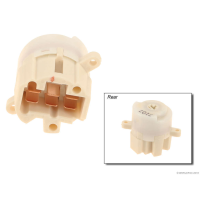
Below are the parts most often responsible for code B1142, ranked by how frequently each one is the actual culprit (per the diagnosis above). Tap any to see what we have for your vehicle.




The information in this article is provided for general reference and educational purposes only. Vehicle specifications, procedures, and part compatibility can vary by production date, trim level, and region. Always consult your vehicle's factory service manual and verify part numbers before purchasing or performing repairs. Safety-critical components such as airbags, seat belts, and braking systems should be installed by a qualified professional.
- 🧭 Diagnostic Flowchart
- 🛍️ Shop This Part
- What Does B1142 Mean?
- Can I Drive With B1142?
- Common Causes
- Symptoms
- Common Fixes & Costs
- Used vs. New Parts: Buying Guide
- What Happens If You Wait — Timeline
- Cost of Not Fixing It
- Diagnosis Steps
- When This Code Triggers (Freeze-Frame Conditions)
- Related Codes
- Climate & Environmental Factors
- How to Talk to a Mechanic About This Code
- Where to Take It: Dealer vs Independent vs Chain
- When to Walk Away From the Repair
- What Scan Tool You Need for This Code
- How to Clear the Code After You Fix It
- Will This Fail Emissions / State Inspection?
- Most Commonly Affected Vehicles
- Manufacturer-Specific Notes
- Real Owner Stories
- 2010 Honda Accord with B1142 and dead passenger window
- 2015 Ford F-150 with B1142:29 and intermittent no-start
- 2011 Toyota Camry with B1142 and damp carpets
- How to Prevent This Code From Triggering
- Frequently Asked Questions
- Is it safe to drive with code B1142?
- Can I fix a B1142 code myself?
- Will my airbag light turn off by itself if I fix the problem?
- What happens if I ignore code B1142?
- How much does it cost to diagnose a B1142 code?
- Why does this code have so many different meanings?
- What is the most common misdiagnosis for B1142?
- Can a low battery cause an airbag light and a B1142 code?
- Key Takeaways
- 🎟️ Get 5% Off