

OBD-II Code B1150: Airbag & Body Control Faults
Manufacturer-Specific Diagnosis for Toyota OCS, Honda Clusters, and Nissan Airbags
- Code B1150 is manufacturer-specific: it means an Occupant Classification System (OCS) failure on Toyotas, a gauge cluster communication error on Hondas, and a rear curtain airbag fault on Nissans.
- Over 80% of Toyota and Lexus B1150 codes are resolved by performing a 15-minute 'Zero Point Calibration' using a professional bi-directional scan tool.
- On Honda and Acura models, B1150 almost always pairs with code U0155, indicating a failed instrument cluster that requires a $150-$250 mail-in repair.
- Never assume B1150 is a passenger seat issue on a Nissan SUV; it specifically flags an open circuit in the driver's side rear roof curtain airbag.
- An active B1150 code completely disables the affected airbag circuits, increasing the risk of severe injury and causing an automatic failure during state safety inspections.
What Does B1150 Mean?
B1150 is a manufacturer-specific body code. On Toyota, Lexus, and Scion vehicles, it indicates an 'Occupant Classification System (OCS) Malfunction', meaning the passenger seat weight sensor has failed or lost calibration. On Honda and Acura, it signifies a 'Communication Bus Line Error', typically pointing to a failed instrument cluster. On Nissan, it flags an open circuit in the driver's side rear roof curtain airbag.
Technical definition: There is no universal SAE definition for B1150. Toyota defines it as 'Occupant Classification System Malfunction'. Honda defines it as 'Communication Bus Line Error'. Nissan defines it as 'Left-hand Rear Roof Panel Airbag Module Circuit Open'. Diagnosis requires matching the code to the specific vehicle make and year.
Can I Drive With B1150?
No — Do Not Drive. Do not drive the vehicle. A B1150 code indicates a critical fault in the Supplemental Restraint System (SRS). The system disables itself as a fail-safe, meaning airbags and seatbelt pretensioners will not deploy in a crash, drastically increasing the risk of serious injury or death. This is a non-negotiable safety issue requiring immediate repair.
Common Causes
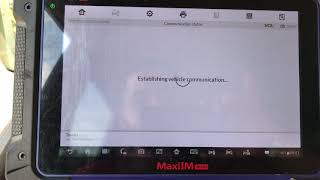
- Occupant Classification System (OCS) Requires Calibration (Toyota/Lexus) (Very Common) — The system's 'zero point' baseline erases after a battery disconnect, seat removal, or placing heavy items on the passenger seat. Recalibration with a bi-directional scan tool restores the baseline for an empty seat. 🎬 Watch: How to diagnose an occupancy classification fault.
- Faulty Occupant Classification System (OCS) Sensor Mat (Common) — The pressure sensor grid embedded in the passenger seat cushion fails from age, liquid spills, or physical damage (kneeling on the seat). A failed mat cannot report weight to the airbag module.
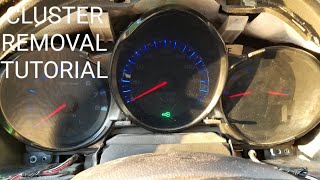
- Faulty Gauge Control Module (Honda/Acura) (Common) — On Hondas, B1150 is a 'Communication Bus Line Error'. The root cause is an internal hardware failure of the instrument cluster, which acts as the central gateway for the B-CAN data network. 🎬 See this walkthrough on replacing an Acura speedometer cluster.
- Loose or Corroded Under-Seat Wiring (Common) — The yellow SRS wiring harnesses under the front seats get kicked, stretched, or corroded by moisture, interrupting the OCS signal and triggering the fault.
- Water Intrusion into OCS ECU (Uncommon) — The OCS ECU sits under the passenger seat. Water from clogged A/C drains, sunroof leaks, or spilled drinks shorts the module circuit board, causing permanent failure.
- SRS Module Crash Data Stored (Less Common) — After an accident, the main SRS module permanently stores 'crash data' and locks itself, even if airbags did not deploy. This requires a specialized mail-in service to reset the EEPROM chip.
- Power or Ground Issues (Rare) — A weak 12V battery or a high-resistance chassis ground causes a system-wide voltage drop, leading to intermittent communication failures between modules.
- Software Mismatch in OCS ECU (Rare) — Replacing the OCS ECU on 2006-2007 Toyota/Lexus models triggers a fault if the software is incompatible. Data must be copied from the original module using dealer-level software.
Symptoms
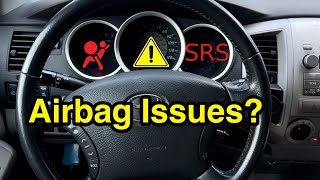
- Airbag Warning Light On — The primary symptom. The red airbag icon or 'SRS' text illuminates permanently on the instrument cluster.
- Passenger Airbag Indicator Malfunction — The 'PASSENGER AIRBAG OFF' light stays lit when an adult is seated, or the 'ON' light fails to illuminate, proving the system does not recognize the occupant.
- Multiple Warning Lights (Honda/Acura) — Because B1150 is a communication error on Hondas, the ABS, VSA, and Check Engine lights often illuminate simultaneously due to network failure.
- Error Message on Dashboard Display — Modern vehicles display a text warning such as 'Airbag System Malfunction' or 'Check SRS System' on the central multi-information display.
Diagnostic Flowchart
Tap your situation to follow the diagnostic path that matches what you're seeing on this code.
Common Fixes & Costs
- OCS Zero Point Calibration — Parts: $0, Labor: $120-$250, ~1.0 hr book time (Professional)
- Replace Airbag Occupant Sensor Mat
— Parts: $300-$800, Labor: $150-$300, ~2.0 hr book time
(Professional)
Toyota Sienna (2005-2009): OEM Part of seat assembly (Alt: Dorman 776UN26) - Repair or Replace Gauge Control Module (Honda/Acura)
— Parts: $150-$250 (Mail-in repair) / $500-$900 (New OEM), Labor: $100-$200, ~1.5 hr book time
(Intermediate)
Honda Accord (2008-2012): OEM 78100-TA0-A11 (Alt: Mail-in repair services recommended) - Replace Occupant Classification ECU
— Parts: $400-$700, Labor: $100-$200, ~1.5 hr book time
(Professional)
Toyota Sienna (2011-2020): OEM 89952-08011 (Alt: N/A) - Reset SRS Airbag Module (After Accident) — Parts: $50-$150 (Mail-in service), Labor: $100-$200, ~1.2 hr book time (Intermediate)
DIY vs Professional
- OCS Zero Point Calibration 🟢 Beginner
Tools: Professional bi-directional scan tool (e.g., Autel MaxiSys, Snap-on Solus). - Replace Airbag Occupant Sensor Mat 🟢 Beginner
Tools: Socket set, torque wrench, trim removal tools, hog ring pliers, professional scan tool. - Repair or Replace Gauge Control Module (Honda/Acura) 🟢 Beginner
Tools: Phillips head screwdriver, trim removal tools. - Reset SRS Airbag Module (After Accident) 🟢 Beginner
Tools: Socket set, trim removal tools. - Replace Occupant Classification ECU 🟢 Beginner
Tools: Socket set, professional scan tool.
Used vs. New Parts: Buying Guide
When a used part is worth it: For a Honda/Acura gauge cluster, a mail-in repair service for your original unit is the best option to preserve correct mileage. Never buy used safety components like OCS sensor mats or airbag modules due to unknown stress or water damage history.
Donor-vehicle mileage cap: roughly under 80000 miles for the part to have meaningful remaining life.
Donor quality checklist:
- Verify the donor vehicle was not flood-damaged.
- For gauge clusters, ensure the OEM part number matches exactly to retain trim-specific programming.
- Demand a minimum 30-day functional warranty from the salvage yard.
Decision logic:
- If The part is an OCS sensor mat or any airbag component → Buy new OEM. The safety risk of a used part outweighs the cost savings.
- If The part is a gauge cluster and a mail-in repair service is available → Choose the repair service. It costs $150-$250 and avoids odometer discrepancies and dealer programming fees.
- If The part is a gauge cluster and repair is not an option → Buy a used part from a low-mileage, accident-free donor, but expect to pay a dealer to correct the mileage.
Warranty tradeoff: Used parts carry a 30-90 day warranty. Mail-in cluster repairs often include a 1-year to lifetime warranty. New OEM parts have a 1-year warranty.
Worst-case if a used part fails: $300-$600 if a used part fails, representing repeat labor costs and the price of a replacement part.
What Happens If You Wait — Timeline
- Immediate (0 seconds): The SRS module detects a critical fault, illuminates the airbag warning light, and disables the affected components as a fail-safe. (MPG impact: 0%% · Added cost: $0 (Safety risk is the primary cost))
- First Drive Cycle: The airbag light remains constantly illuminated. The driver and passengers are no longer protected by the supplemental restraint system. (MPG impact: 0%% · Added cost: $0)
- 1 month - 1 year: The vehicle automatically fails mandatory state safety inspections (VA, PA, MA, NY), preventing legal registration renewal. (MPG impact: 0%% · Added cost: $20-$60 (Failed inspection fees))
- In case of an accident: Airbags fail to deploy, leading to severe injury. Insurance companies may argue negligence for driving with a disabled safety system, denying medical claims. (MPG impact: 0%% · Added cost: Potentially unlimited (Medical bills, liability))
Cost of Not Fixing It
- Immediate: The Supplemental Restraint System (SRS) disables itself. Airbags and seatbelt pretensioners will not deploy in a crash, drastically increasing the risk of severe injury or death. (Added cost: N/A (Critical Safety Risk))
- 1 month - 1 year: Automatic failure of state-mandated vehicle safety inspections (e.g., VA, PA, NY, MA). You cannot legally renew the vehicle's registration. (Added cost: $20-$60 (Failed inspection fee))
- In case of an accident: Insurance claim reduction or denial. Insurers argue that knowingly driving with a disabled safety system constitutes negligence, shifting liability for medical bills to the driver. (Added cost: Potentially unlimited (Medical bills, civil liability))
Diagnosis Steps
- Read Codes with an SRS-Capable Scanner
Use an OBD-II scanner that reads Body ('B') and SRS codes. Note the exact definition provided. Crucially, check for codes in both the main 'Airbag' module and the separate 'Occupant Detection' module.
Tools: OBD-II Scanner (with SRS/Body capability) (Beginner) - Check for Recalls and TSBs
Enter your VIN on the NHTSA website. Toyota and Nissan have issued specific Technical Service Bulletins (e.g., Toyota EL007-03) and warranty extensions for OCS failures. Dealerships perform recall repairs for free.
Tools: Vehicle Identification Number (VIN), Internet Access (Beginner) - Perform OCS Zero Point Calibration (Toyota/Lexus)
Resolves 80% of Toyota/Lexus B1150 codes. Use a bi-directional scan tool to command the 'Occupant Detection' module to relearn the weight of an empty seat. The seat must be completely empty during this 5-minute process.
Tools: Professional Bi-Directional Scan Tool (Intermediate) - Inspect Under-Seat Wiring and Connectors
Disconnect the 12V battery and wait 15 minutes. Visually inspect the yellow SRS wiring harnesses under the passenger seat. Firmly reseat all connectors and check for pinched wires or green corrosion.
Tools: Flashlight, 10mm Socket (for battery) (Beginner) - Live Data OCS Function Test
Access the Live Data stream for the Occupant Classification Module. Find the 'Occupant Status' parameter. With the seat empty, it must read 'Unoccupied'. Have an adult sit down; it must change to 'Occupied' within 5 seconds. No change confirms a dead sensor mat.
Tools: Professional Scan Tool (with Live Data) (Advanced) - CAN Bus Network Diagnosis (Honda/Acura)
Isolate the faulty module for communication errors. Disconnect the battery. Measure resistance between CAN-High (Pin 6) and CAN-Low (Pin 14) at the OBD port. 60 Ohms is normal. 120 Ohms indicates an open circuit, usually pointing to a failed instrument cluster.
Tools: Digital Multimeter, Wiring diagram (Advanced) - Inspect Specific Airbag Circuits (Nissan)
For Nissan models defining B1150 as 'Left-hand Rear Roof Panel Airbag Module Circuit Open', ignore the passenger seat. Inspect the wiring harness leading to the driver's side roof-mounted curtain airbag for damage or loose connectors.
Tools: Flashlight, Trim removal tools (Intermediate) - OCS Circuit Integrity Test
Disconnect the OCS ECU connector. Measure resistance between the sensor pins (e.g., FSR+ and FSR-) using a multimeter. An open circuit (OL) or short circuit (near-zero) confirms a failed sensor mat requiring seat cushion replacement.
Tools: Digital Multimeter, Vehicle-specific wiring diagram (Advanced)
When This Code Triggers (Freeze-Frame Conditions)
- Fault Trigger: Key-On Self-Test (The SRS module runs a self-test every time the ignition turns on. B1150 codes set during this initial check if a circuit fault or calibration loss is detected.)
- System Voltage: 11.5V - 14.5V (Momentary voltage drops below 11.5V during engine cranking trigger communication faults, especially on Honda/Acura networks.)
- Vehicle Speed: 0 mph (Because the code sets during the startup self-test, vehicle speed in the freeze frame data is universally zero.)
- Fault Frequency Counter: 1 to 254 (Indicates how many consecutive drive cycles the fault has been detected, differentiating between a hard failure and an intermittent wiring glitch.)
Related Codes
- B1650 — The direct equivalent of the Toyota B1150 code, used by Subaru and some Lexus models for 'Occupant Classification System Malfunction'. Causes and repairs are identical.
- U0155 — On Honda/Acura, this means 'Lost Communication With Instrument Panel Cluster'. It pairs with B1150 to confirm the instrument cluster is the root cause of the network failure.
- B1152 — On Lexus vehicles, this flags an 'OFF Indicator Open Driving Circuit'. It appears alongside B1150 if the 'PASSENGER AIRBAG OFF' light bulb burns out. Fix B1150 first.
- B1797 — Appears on 2006-2007 Toyota/Lexus vehicles after replacing the OCS ECU, indicating a software mismatch requiring dealer programming.
Climate & Environmental Factors
- High Humidity / Water Intrusion: Moisture is the primary enemy of the OCS. Wet seats from spilled drinks, rain, or wet clothing alter the capacitance of the sensor mat, triggering an immediate fault. Thoroughly dry the seat for 48 hours before diagnosing.
- Extreme Cold: Temperatures below freezing increase electrical resistance in aging connectors and lower battery voltage during cranking, triggering temporary communication faults that disappear once the cabin warms up.
How to Talk to a Mechanic About This Code
Say this: "I have an airbag light on and a B1150 code. My vehicle is a [Toyota/Honda/Nissan]. For a Toyota, I'd like a quote for a diagnostic and 'OCS Zero Point Calibration'. For a Honda, please check for communication codes like U0155 and inspect the gauge cluster. For a Nissan, the code points to a rear curtain airbag, not the seat."
This proves you understand the code is manufacturer-specific, preventing the shop from wasting time on the wrong diagnosis. It directs them to the most likely, cheapest first step (calibration for Toyota) and reduces the chance of being oversold.
Avoid saying:
- 'My airbag light is on, can you fix it?' (Too vague, invites a lengthy and expensive diagnostic process).
- 'I think I need a new passenger seat sensor.' (Don't suggest a specific, expensive part replacement; let them diagnose first).
- 'Just do whatever it takes to turn the light off.' (An open invitation for unnecessary repairs).
Questions to ask before authorizing the repair:
- For a Toyota/Lexus: Did you attempt the OCS Zero Point Calibration, and did it fail? Can you show me the failure in the live data?
- For a Honda/Acura: Can you confirm if code U0155 is also present? What is the cost to send my original cluster for repair versus replacing it with a used one?
- For a Nissan: Have you visually inspected the wiring for the driver's side rear curtain airbag?
- What is your warranty on this specific SRS repair, including labor?
Where to Take It: Dealer vs Independent vs Chain
- Dealer:
A safe but expensive choice. Best for complex, non-standard versions of the B1150 code or if an independent shop lacks the software for calibration.
Best for: Vehicles under warranty., Complex manufacturer-specific issues, like an OCS ECU software mismatch on a Lexus., Confirming the correct B1150 definition for your VIN if there is any doubt.
Downsides: Highest labor rates, typically 1.5-2x more than independent shops., May default to replacing an entire $1,500 seat assembly when only a $150 calibration is needed. (Typical cost: +50% vs. baseline) - Independent Shop:
Best fit for most B1150 scenarios. Verify they have the right diagnostic equipment to perform a Zero Point Calibration before booking.
Best for: Out-of-warranty vehicles., The most common B1150 faults, like OCS calibration on a Toyota or a gauge cluster swap on a Honda.
Downsides: The shop must own a professional-grade, bi-directional scan tool to perform SRS calibrations; not all do., Quality varies; vet the shop's reviews and ask if they frequently work on SRS systems. (Typical cost: +0% vs. baseline) - Chain Shop:
AVOID for B1150 diagnosis. This code requires specialized knowledge and tools that are not standard at chain locations. The risk of misdiagnosis is extremely high.
Best for: Simple jobs like oil changes and brakes.
Downsides: Technicians lack the specialized training and bi-directional tools for complex SRS diagnostics., High pressure to upsell leads to recommendations for unnecessary, expensive parts. (Typical cost: -10% vs. baseline)
When to Walk Away From the Repair
If the estimated repair cost for the B1150 fault exceeds 40-50% of your car's private-party market value, seriously consider selling the car as-is or trading it in.
- Car worth $4000, fix is $1800: Walk away. The repair cost is 45% of the car's value. It's not economically sensible to invest this much into an aging vehicle for a single repair.
- Car worth $12000, fix is $750: Fix it. The repair cost is only 6% of the car's value and restores a critical safety system.
- Car worth $3000, fix is $200: Fix it. A $200 calibration is a small price to pay to make the vehicle safe and legally inspectable.
What Scan Tool You Need for This Code
Minimum: A scanner that reads and clears SRS (Airbag) codes. A basic $20 engine-only code reader is useless for B1150.
A cheap scanner cannot communicate with the SRS module. It will not see the B1150 code. For the most common fix on Toyota/Lexus, the scanner must have bi-directional control to perform the 'Zero Point Calibration'.
Budget: Launch Creader Elite 200 (~$80) — Reads and clears SRS codes to confirm the B1150 fault. However, it lacks the bi-directional calibration function needed for the Toyota fix. Good for initial diagnosis only.
Mid-range: Foxwell NT530 (~$180) — Excellent choice for DIY. It is a bi-directional tool that reads/clears SRS codes and performs the OCS 'Zero Point Calibration' for Toyota/Lexus. You buy it with software for one specific manufacturer.
Professional: Autel MaxiCOM MK808S (~$500) — A full-featured professional tablet scanner. It easily performs OCS calibrations, reads live data from all modules, and handles virtually any diagnostic task for B1150 on any manufacturer.
How to Clear the Code After You Fix It
- Complete the physical repair (e.g., replace sensor, fix wiring).
- Perform the Zero Point Calibration using a bi-directional scan tool (mandatory for OCS repairs).
- Access the SRS/Airbag control module with the scan tool.
- Select 'Clear DTCs' or 'Erase Fault Codes'.
- Turn the ignition off for 10 seconds, then turn it back to 'ON'. The SRS light will illuminate for a 5-second self-check and turn off permanently if the fault is resolved.
Drive cycle (~5 minutes): SRS codes do not require a driving cycle. The reset is confirmed immediately by clearing the code and cycling the ignition. If the light stays off after the 5-second self-test, the system is functional.
Readiness monitors affected: None
Watch out for:
- Disconnecting the battery will NOT clear an SRS code and causes calibration loss on Toyotas.
- Basic $20 OBD-II engine code readers cannot see or clear SRS codes.
- Skipping the Zero Point Calibration after replacing a sensor guarantees the code will immediately return.
Will This Fail Emissions / State Inspection?
No — by itself this code doesn't fail OBD inspection (but it can keep readiness monitors from setting, which causes a separate fail).
- California: Will NOT fail. California smog checks test emissions only. An airbag light is not part of the inspection criteria.
- Texas: Will NOT fail. Texas vehicle inspections do not fail a car for an illuminated airbag light; only the Check Engine light causes an automatic failure.
- New York: Will NOT fail, but noted. The NYS DMV states an airbag warning lamp is an advisory item. The inspector must inform you, but it passes.
- Virginia / Pennsylvania / Massachusetts: WILL FAIL. These states enforce strict annual safety inspections where an illuminated airbag light is a critical defect resulting in automatic failure.
Most Commonly Affected Vehicles
- Toyota Sienna (2004-2020) — Extremely common B1150 due to OCS calibration loss or sensor mat failure.
- Lexus RX 330 / RX 350 (2004-2009) — Frequently logs B1150 for OCS faults. 2006-2007 models have unique OCS ECU software requirements if the module is replaced.
- Toyota Highlander (2004-2007) — Prone to B1150 indicating an Occupant Classification System Malfunction. Sensor replacement and calibration are standard fixes.
- Honda Accord / Civic (2005-2012) — B1150 is a 'Communication Bus Line Error' pointing to a faulty gauge control module (instrument cluster) acting as a network gateway.
- Nissan Pathfinder / Armada / Murano (2004-2015) — Uses a unique definition: 'Left-hand Rear Roof Panel Airbag Module Circuit Open'. Diagnosis focuses on the driver's side curtain airbag, not the OCS.
- Acura TL / MDX (2004-2008) — B1150 appears alongside U0155, indicating a failing instrument cluster disrupting the B-CAN network.
Manufacturer-Specific Notes
- Toyota / Lexus / Scion: The definition is always 'Occupant Classification System Malfunction'. The fix is almost always a 'Zero Point Calibration'. Mechanics frequently fail to check the separate 'Occupant Detection' ECU submodule, where the calibration function lives.
- Nissan: B1150 points to a specific 'Left-hand Rear Roof Panel Airbag Module' circuit on SUVs. Cheap scan tools incorrectly define it as 'Cylinder 4 Misfire Detected'. Always verify the definition with a Nissan-specific manual.
- Acura / Honda: The code means 'Communication Bus Line Error'. If it appears with U0155, the instrument cluster has failed. Honda has issued unpublicized 'goodwill' warranty extensions for cluster failures; check with a dealer before paying out of pocket.
Real Owner Stories
2009 Toyota Sienna with Airbag Light
Owner had a persistent airbag light. A basic scan revealed B1150, but clearing the code failed.
What they tried:
- Attempted to clear the code using a $30 scanner, but it immediately returned.
Outcome: A technician identified a lost OCS calibration. Using a professional scan tool, they accessed the 'Occupant Detection' module and performed a 'Zero Point Calibration'. The light went out immediately, costing $150 for the diagnostic fee.
Lesson: On Toyotas, the fix for B1150 is usually a software calibration, not a part replacement. You must use a scanner capable of accessing the specific 'Occupant Detection' submodule.
2011 Honda Accord with Multiple Warning Lights
The instrument cluster stopped working after a water leak, triggering code B1150 and U0155.
What they tried:
- Took the car to an independent mechanic.
Outcome: The mechanic diagnosed a failed gauge cluster and installed a used replacement. While this fixed the communication error, the odometer now showed the donor car's mileage (25k miles instead of 120k).
Lesson: For Honda/Acura B1150 with U0155, the instrument cluster is the culprit. A mail-in repair service for your original cluster is vastly superior to a used part because it preserves your correct mileage.
2008 Nissan Pathfinder with B1150
An owner experienced a B1150 code and assumed it was the passenger seat sensor based on generic internet searches.
What they tried:
- Wasted 4 hours tearing apart the passenger seat wiring.
Outcome: After consulting a Nissan service manual, the owner discovered B1150 means 'Left-hand Rear Roof Panel Airbag Module Circuit Open'. The actual problem was a pinched wire in the driver's side roof pillar.
Lesson: Never assume B1150 is an OCS code. For Nissan SUVs, it points to a completely different airbag circuit. Always verify the code's definition for your exact make and model.
How to Prevent This Code From Triggering
- Avoid placing heavy, sharp, or electronic items on the passenger seat (Daily habit) — Heavy point loads damage the delicate pressure-sensitive OCS mat. Laptops and phones interfere with capacitive-type sensors, triggering false codes.
- Protect under-seat wiring from damage (During interior cleaning) — Kicking feet or aggressive vacuuming snags the critical yellow SRS connectors. Ensure floor mats do not jam into the wiring harnesses.
- Keep the passenger seat and floor area dry (Always) — Water from spills or open windows seeps into the OCS sensor mat and under-seat ECU, causing permanent electrical shorts.
Frequently Asked Questions
Can I reset the B1150 code by disconnecting the battery?
No. SRS codes are stored in non-volatile memory. Disconnecting the battery will not clear the code and often causes the OCS system to lose its calibration. You must clear the code with a capable scan tool after completing the repair.
Is it safe to drive with the B1150 code?
No. The code signifies a fault that forces the SRS computer to disable part or all of the airbag system as a fail-safe. In an accident, your airbags and seatbelt pretensioners will not deploy.
My mechanic replaced the OCS sensor but the light is still on. What's wrong?
After replacing an OCS sensor, a 'Zero Point Calibration' is mandatory. The system will not recognize the new part until this electronic reset is performed. Ensure the mechanic performs this step in the 'Occupant Detection' module, not the main 'Airbag' module.
Can I use an OCS 'bypass module' to turn the light off?
No. These aftermarket devices trick the SRS module into thinking the OCS is working, which is highly dangerous. It causes the passenger airbag to deploy with a child in the seat or prevents deployment for an adult.
My airbag light came on after my passenger seat got wet. Could that be the cause?
Yes. On vehicles with capacitive OCS sensors, moisture in the seat cushion alters the sensor's readings and triggers a fault code. The seat must be thoroughly dried before further diagnosis.
What is 'Zero Point Calibration'?
This scan tool function commands the Occupant Classification ECU to measure the electronic value of the empty passenger seat and store it as the 'zero' baseline. This calibration is required anytime the sensor, ECU, or seat is replaced, or if the system's memory is lost.
The light came on after an accident where airbags didn't deploy. Why?
During a collision, crash sensors send data to the SRS module. Even if airbags do not deploy, the module records 'crash data' and locks itself, turning on the warning light. This requires a specialized $50-$150 mail-in service to reset the module's internal memory.
Can using my laptop on the passenger seat cause the B1150 code?
Yes. On vehicles with sensitive capacitive OCS sensors, placing electronic devices on the seat interferes with the sensor's electromagnetic field and triggers a fault. Keep laptops and phones off the passenger seat to prevent this.
Key Takeaways
- Code B1150 is manufacturer-specific: it means an Occupant Classification System (OCS) failure on Toyotas, a gauge cluster communication error on Hondas, and a rear curtain airbag fault on Nissans.
- Over 80% of Toyota and Lexus B1150 codes are resolved by performing a 15-minute 'Zero Point Calibration' using a professional bi-directional scan tool.
- On Honda and Acura models, B1150 almost always pairs with code U0155, indicating a failed instrument cluster that requires a $150-$250 mail-in repair.
- Never assume B1150 is a passenger seat issue on a Nissan SUV; it specifically flags an open circuit in the driver's side rear roof curtain airbag.
- An active B1150 code completely disables the affected airbag circuits, increasing the risk of severe injury and causing an automatic failure during state safety inspections.
Helpful Videos
Shop the Parts Behind B1150
Below are the parts most often responsible for code B1150, ranked by how frequently each one is the actual culprit (per the diagnosis above). Tap any to see what we have for your vehicle.


The information in this article is provided for general reference and educational purposes only. Vehicle specifications, procedures, and part compatibility can vary by production date, trim level, and region. Always consult your vehicle's factory service manual and verify part numbers before purchasing or performing repairs. Safety-critical components such as airbags, seat belts, and braking systems should be installed by a qualified professional.
- 🧭 Diagnostic Flowchart
- 🎬 Helpful Videos
- 🛍️ Shop This Part
- What Does B1150 Mean?
- Can I Drive With B1150?
- Common Causes
- Symptoms
- Common Fixes & Costs
- DIY vs Professional
- Used vs. New Parts: Buying Guide
- What Happens If You Wait — Timeline
- Cost of Not Fixing It
- Diagnosis Steps
- When This Code Triggers (Freeze-Frame Conditions)
- Related Codes
- Climate & Environmental Factors
- How to Talk to a Mechanic About This Code
- Where to Take It: Dealer vs Independent vs Chain
- When to Walk Away From the Repair
- What Scan Tool You Need for This Code
- How to Clear the Code After You Fix It
- Will This Fail Emissions / State Inspection?
- Most Commonly Affected Vehicles
- Manufacturer-Specific Notes
- Real Owner Stories
- 2009 Toyota Sienna with Airbag Light
- 2011 Honda Accord with Multiple Warning Lights
- 2008 Nissan Pathfinder with B1150
- How to Prevent This Code From Triggering
- Frequently Asked Questions
- Can I reset the B1150 code by disconnecting the battery?
- Is it safe to drive with the B1150 code?
- My mechanic replaced the OCS sensor but the light is still on. What's wrong?
- Can I use an OCS 'bypass module' to turn the light off?
- My airbag light came on after my passenger seat got wet. Could that be the cause?
- What is 'Zero Point Calibration'?
- The light came on after an accident where airbags didn't deploy. Why?
- Can using my laptop on the passenger seat cause the B1150 code?
- Key Takeaways
- 🎟️ Get 5% Off