

Ultimate B1156 OBD-II Code Guide: Airbag Fault, Heated Seat, or Wiper Issue?
The Definitive Resource to Diagnose and Fix B1156 Based on Your Vehicle's Make
- Code B1156 means a disabled airbag system on Toyotas, a broken driver's heated seat on Fords, or a faulty wiper switch on Hondas.
- On Toyota and Lexus vehicles, B1156 disables the entire airbag system due to a right-front impact sensor fault, requiring immediate repair for crash safety.
- For Ford F-150s, B1156 indicates a broken driver's seat heating element or a melted module connector under the passenger seat, which can be diagnosed by checking for 0.0 amps of current draw.
- Never probe or replace Toyota airbag components without first disconnecting the negative battery terminal and waiting 15 minutes to prevent accidental deployment.
- Before replacing a $150 Toyota impact sensor, swap the left and right front sensors; if the code changes to B1158, the sensor is bad, but if B1156 remains, the wiring is faulty.
What Does B1156 Mean?
B1156 is a manufacturer-specific body trouble code. For Toyota and Lexus, it signals a critical fault in the right-hand (passenger side) front impact sensor, disabling the entire airbag system. For Ford, it indicates a broken driver's heated seat element. For Honda, it points to a windshield wiper communication error.
Technical definition: The SAE/ISO definition for B1156 varies by manufacturer. Toyota defines it as 'Front Airbag Sensor (RH) Malfunction' (an open or short circuit). Ford defines it as 'Driver Seat: Circuit Resistance Below Threshold'. Honda defines it as 'Gauge Control Module Lost Communication with Combination Switch Control Unit'.
Can I Drive With B1156?
Yes, But With Caution. The vehicle is mechanically operational. However, if the code indicates an airbag system fault (Toyota/Lexus), the entire Supplemental Restraint System (SRS) is disabled. In a collision, airbags will not deploy. Limit driving strictly to reaching a repair facility.
Common Causes
- Damaged or Corroded Wiring/Connectors (Very Common) — Road debris, salt, and water intrusion cause corrosion (green/white powder) on connectors. Impacts or improper repairs break wires, causing open or short circuits in the airbag or heated seat harness.
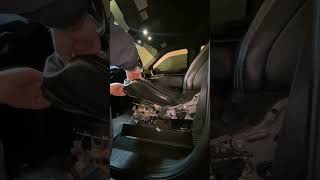
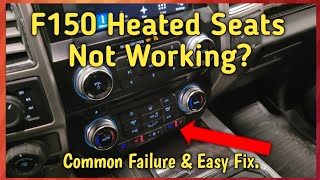
- Failed Heated Seat Element (Ford) (Common) — Thin wires inside the Ford F-150 driver's seat heating pad break from occupant weight, causing an open circuit. This is the primary cause of B1156 on modern Fords. 🎬 See how to fix common F-150 heated seat failures easily.
- Faulty Front Airbag Sensor (RH) (Common) — Toyota sensors fail from age, vibration, or internal electronic faults. These accelerometers lose calibration or short internally over time.
- Low Battery Voltage (Common) — The SRS module performs a self-test during startup. A weak battery provides insufficient voltage, failing the test and logging a false B1156 code.
- Faulty Airbag Control Module (Less Common) — The central SRS computer fails internally, requiring replacement and programming. A specific recall covers 2003-2004 Toyota Corollas for this exact failure.
- Improper Repairs or Accident Damage (Less Common) — Previous front-end collisions damage the impact sensor or its wiring harness. Incorrectly spliced wires or using the wrong replacement sensor triggers this code.
Symptoms
- Airbag Warning Light On — For Toyota/Lexus, the SRS/airbag light on the dashboard illuminates constantly.
- Heated Seat Not Working (Ford) — The driver's heated seat fails to turn on or shuts off immediately. The button indicator light flashes or remains dark.
- Wipers Inoperative (Honda) — The windshield wipers work intermittently or fail completely.
- Failed Safety Inspection — An active airbag warning light results in an automatic failure in jurisdictions requiring safety inspections.
- Airbags Will Not Deploy (scan-tool only — no driver-felt sign) — With an active B1156 airbag fault, the entire SRS system goes offline and fails to function in a collision.
Diagnostic Flowchart
Tap your situation to follow the diagnostic path that matches what you're seeing on this code.
Common Fixes & Costs
- Repairing Damaged Wiring or Connectors — Parts: $10-$60, Labor: $125-$350, ~1.5 hr book time (Intermediate)
- Replacing the Heated Seat Element (Ford) — Parts: $35-$120, Labor: $200-$320, ~2.0 hr book time (DIY)
- Replacing the Front Airbag Impact Sensor (Toyota) — Parts: $70-$150, Labor: $100-$250, ~1.0 hr book time (DIY)
- Replacing the Airbag Control Module (SRS/SDM) — Parts: $200-$1200, Labor: $250-$650, ~2.0 hr book time (Professional)
Used vs. New Parts: Buying Guide
When a used part is worth it: Never buy a used Toyota airbag sensor due to unknown crash or flood history. Buy new aftermarket Ford heated seat elements, as they are inexpensive and used elements carry a high risk of premature failure.
Donor-vehicle mileage cap: roughly under 50000 miles for the part to have meaningful remaining life.
Donor quality checklist:
- For airbag components, only purchase from a Certified Automotive Recycler (CAR) guaranteeing the part is non-deployed.
- Verify the part number matches exactly.
- Avoid parts with any signs of corrosion, water damage, or physical stress.
Decision logic:
- If The part is a safety-critical SRS component like an airbag sensor or module. → Buy new OEM or a new part from the original OEM supplier (e.g., Denso). The safety risk of a faulty used part is too high.
- If The part is a Ford heated seat element. → Buy a new aftermarket element. They are affordable and readily available.
Warranty tradeoff: Used SRS components offer 30-90 day warranties at best. New OEM parts carry a 1-year or longer warranty.
Worst-case if a used part fails: $500-$2000 if a used airbag sensor fails, requiring repeat labor and a new part. Crash costs are incalculable.
What Happens If You Wait — Timeline
- Immediate (Toyota/Airbag Fault): The Airbag Control Module detects the fault, illuminates the SRS warning light, and disables the entire Supplemental Restraint System. Airbags will NOT deploy. (MPG impact: 0%% · Added cost: $0)
- 0-6 Months (Toyota/Airbag Fault): The vehicle automatically fails safety inspections in many states. Insurance claims are complicated or denied in an accident. (MPG impact: 0%% · Added cost: $50-$200 in failed inspection fees.)
- 6+ Months (Toyota/Airbag Fault): Driving with a disabled safety system normalizes the risk, increasing the odds of severe injury in a crash and creating significant legal liability. (MPG impact: 0%% · Added cost: Incalculable personal injury cost.)
- 0-6+ Months (Ford/Heated Seat Fault): The driver's heated seat is inoperative. If caused by a short or melting connector, continued use damages the Seat Control Module. (MPG impact: 0%% · Added cost: $300+ for a replacement Seat Control Module.)
Cost of Not Fixing It
- Immediate: For an airbag fault (Toyota), the entire SRS system is disabled. Airbags and pretensioners will not deploy in a collision. (Added cost: N/A)
- 0-3 Months: Vehicle fails state safety inspections checking for an illuminated airbag light. For a Ford/Honda fault, the heated seat or wipers remain inoperative. (Added cost: $50-$200 in failed inspection fees.)
- 3+ Months: For an airbag fault, continued driving normalizes a severe safety risk and complicates insurance claims in an accident. For a Ford heated seat short circuit, the Seat Control Module may sustain permanent damage. (Added cost: $300+ for a replacement Seat Control Module.)
Diagnosis Steps
- Verify Code and Manufacturer-Specific Definition
Use an OBD-II scanner capable of reading SRS/Body codes to confirm B1156 is active. Immediately research the code's meaning for your exact make and model. A B1156 on a Toyota Tacoma is an airbag issue; on a Ford F-150, it is a heated seat.
Tools: SRS-capable OBD-II Scanner (Beginner) - SAFETY: Disconnect Battery
If diagnosing an airbag system fault (Toyota/Lexus), disconnect the negative battery terminal and wait 15 minutes. This discharges the SRS module's backup power capacitors, preventing accidental airbag deployment.
Tools: 10mm Wrench (Beginner) - Visual Inspection (Ford - Heated Seat)
Look under the passenger seat for the Seat Control Module (SCM). Inspect the main electrical connector for melted plastic or corroded pins. Inspect the wiring entering the driver's seat cushion for obvious breaks.
Tools: Flashlight (Intermediate) - Visual Inspection (Toyota - Airbag Sensor)
Locate the right-front impact sensor bolted to the radiator core support behind the front grille. Inspect the bright yellow wiring harness, sensor, and connector for physical damage, cracks, or green corrosion.
Tools: Flashlight (Intermediate) - Pro Tip: Sensor Swap Test (Toyota)
If the wiring looks good, swap the identical left and right front impact sensors. Reconnect the battery and clear the codes. If the fault code changes to B1158 (Left Front Airbag Sensor), the sensor is faulty. If B1156 returns, the wiring or module is bad.
Tools: 10mm Socket, Ratchet (Intermediate) - Pro Tip: Heated Seat Element Test (Ford)
With the heated seat on, back-probe the connector at the seat. If you read 12V+ on the power wire but 0V on the wire exiting the seat bottom cushion, the bottom heating element is broken (open circuit).
Tools: Digital Multimeter (Advanced) - Pro Tip: Circuit Test (Toyota - At the Module)
Disconnect the harness from the main Airbag Control Module. Identify the two wires for the RH front sensor (+SR and -SR). Measure the resistance between these pins. A healthy circuit reads between 754 and 886 Ω. Infinite resistance means an open wire; near-zero means a short.
Tools: Digital Multimeter, Vehicle-specific wiring diagram (Advanced)
When This Code Triggers (Freeze-Frame Conditions)
- Ignition Status: ON (The SRS module performs a self-test every time the ignition turns on. Most B1156 codes log within the first 6-10 seconds of startup.)
- System Voltage: 9V - 16V (A code sets during engine cranking if battery voltage drops excessively, causing the module's self-test to fail.)
- Circuit Resistance (Toyota): < 754 Ω or > 886 Ω (The Airbag Control Module continuously monitors front impact sensor circuit resistance. Readings outside this range indicate a short or open circuit.)
- Communication Status (Honda): No Signal (Triggers when the Gauge Control Module receives no signal from the Combination Switch (wiper stalk) for a specified period.)
Related Codes
- B1157 — On Toyota vehicles, B1156 and B1157 both point to a 'Front Airbag Sensor (RH) Malfunction'. They target the exact same component and circuit.
- B1158 / B1159 — The direct counterparts to B1156/B1157, but for the left-hand (driver side) front impact sensor.
- B1100 — Indicates a failure of the main Airbag Control Module itself, rather than a sensor circuit.
- B272C — On Ford F-150s, B1156 is often accompanied by B272C 'Driver Differential Temperature Fault,' pointing to a Thermo Electric Device (TED) failure.
Climate & Environmental Factors
- High Humidity / Moisture: Moisture penetrates sensor housings and electrical connectors, causing corrosion on pins. This leads to high resistance and short circuits that trigger a B1156 fault.
- Cold Weather: Extreme cold causes metal contacts within electrical connectors to contract, leading to loose connections. A weak battery's performance also drops in the cold, making a voltage-related B1156 code more likely.
- Road Salt (Rust Belt Regions): Corrosive salt brine sprays into the engine bay, aggressively attacking the vulnerable front impact sensors on Toyotas and accelerating wiring failures.
How to Talk to a Mechanic About This Code
Say this: "For a Toyota: 'I have a B1156 code for the passenger front airbag sensor. Can you diagnose if the issue is the sensor, wiring, or module?' For a Ford: 'I have a B1156 code and my driver's heated seat isn't working. Can you inspect the seat heating element and the module connector under the passenger seat?'"
This directs the shop to the correct system, saving diagnostic time and preventing a shop from misdiagnosing an airbag fault on a Ford or vice-versa.
Avoid saying:
- 'My airbag light is on, can you fix it?' (Too vague for a Ford/Honda).
- 'Just fix the B1156 code.' (Leads to replacing parts without diagnosing wiring).
- 'My friend said it's the sensor, just replace it.'
Questions to ask before authorizing the repair:
- For Toyota: Did you test the wiring harness resistance and check for shorts, or are you just recommending a new sensor?
- For Toyota: If the sensor is bad, can you show me the old part?
- For Ford: Did you find a melted connector at the seat module, or is the heating element in the seat cushion open-circuit?
Where to Take It: Dealer vs Independent vs Chain
- Dealer:
Recommended for the Toyota/Lexus airbag fault due to the safety-critical nature of the repair. Unnecessarily expensive for Ford or Honda faults.
Best for: Toyota/Lexus airbag system faults, especially on vehicles with open recalls., Vehicles still under warranty.
Downsides: Highest labor rates and part costs., May replace an entire harness instead of repairing a single wire. (Typical cost: +50% vs. baseline) - Independent Shop:
Best fit for Ford and Honda faults. A strong option for the Toyota airbag fault if the shop has ASE-certified technicians experienced in SRS work.
Best for: Ford heated seat repair., Honda wiper system diagnosis., Out-of-warranty Toyota airbag faults at shops with strong SRS experience.
Downsides: Quality and experience with SRS systems vary widely. (Typical cost: +0% vs. baseline) - Chain Shop:
AVOID for diagnosis and repair of B1156. The risk of misdiagnosis or improper handling of safety components is too high.
Best for: Simple jobs like battery testing.
Downsides: Not equipped or trained for SRS diagnostics or complex interior upholstery work. (Typical cost: -10% vs. baseline)
When to Walk Away From the Repair
If the estimated repair cost exceeds 40-50% of the car's private-party value, consider alternatives.
- Car worth $4000, fix is $600: Fix it. This is a reasonable cost to restore a critical safety feature (Toyota) or a key comfort feature (Ford).
- Car worth $3000, fix is $1800: Walk away. The repair cost is over 50% of the vehicle's value.
- Car worth $25000, fix is $500: Fix it. The repair cost is minor compared to the vehicle's value.
What Scan Tool You Need for This Code
Minimum: A scanner that reads 'B' (Body), 'SRS' (Supplemental Restraint System), or 'Airbag' codes. A basic engine-only code reader will NOT see code B1156.
A standard $20 OBD-II reader only communicates with the powertrain control module ('P' codes). B1156 is a body control module code, which is invisible to basic readers.
Budget: Autel AutoLink AL619 / Foxwell NT630 Plus (~$90) — Specifically designed to read and clear codes from ABS and SRS/Airbag systems. This is the minimum tool required to get the code.
Mid-range: BlueDriver Pro Scan Tool / FORScan with adapter (~$120) — Reads SRS/Body codes and provides live data. For Ford, FORScan software shows live current draw from the heated seat element, confirming an open circuit without a multimeter.
Professional: Autel MaxiCOM MK808 / XTOOL D7 (~$500-800) — Offers full bidirectional control to test components, provides manufacturer-level diagnostics, and performs system calibrations if a module is replaced.
Rent vs buy: Most auto parts stores offer free scanning services, but their in-store tools may not read SRS codes. Buying a capable scanner is a worthwhile investment for any DIYer dealing with B codes.
How to Clear the Code After You Fix It
- Ensure the underlying fault is repaired.
- Reconnect the negative battery terminal.
- Use an SRS-capable OBD-II scan tool to access the 'B' (Body) module.
- Select 'Clear DTCs' from the SRS/Airbag menu.
Drive cycle (~1 minutes): SRS codes do not require a drive cycle. Turn the ignition ON (without starting the engine). The airbag light should illuminate for 6-7 seconds and turn off. If it stays on, the fault remains.
Readiness monitors affected: None. SRS/Airbag status does not affect powertrain emissions readiness monitors.
Watch out for:
- Using a basic engine-only scanner that cannot communicate with the SRS module.
- Failing to fix the root cause. The code reappears instantly on the next ignition cycle if the fault exists.
- Disconnecting the battery will NOT clear an active SRS code from non-volatile memory.
Will This Fail Emissions / State Inspection?
No — by itself this code doesn't fail OBD inspection (but it can keep readiness monitors from setting, which causes a separate fail).
- California: An airbag light will NOT cause a failure of the California Smog Check, which is strictly an emissions test.
- New York: An illuminated airbag light is currently an advisory during the safety inspection but is NOT grounds for failure. Check latest NYS DMV rules as legislation frequently changes.
- Texas: An airbag light will NOT cause a failure of the Texas state safety inspection.
- Virginia / Pennsylvania: In states with comprehensive safety inspections, an illuminated airbag warning light is an automatic failure.
Most Commonly Affected Vehicles
- Toyota Corolla / Matrix (2003-2008) — Extremely common. The 2003-2004 models were also under recall for faulty airbag control modules.
- Toyota Tacoma (2005-2015) — The front sensor harness on the lower radiator support is highly vulnerable to damage.
- Toyota Tundra / Sequoia (2005-2007) — Shares SRS components with other affected Toyotas and included in related airbag recalls.
- Pontiac Vibe (2003-2008) — A joint venture with Toyota (based on the Matrix), it uses identical SRS components and suffers identical faults.
- Ford F-150 / F-Series Super Duty (2015-2020) — Code B1156 means 'Driver Seat: Circuit Resistance Below Threshold.' Almost always a failed heating element in the seat cushion or a melted connector on the seat module.
- Honda Civic (2006-2011) — B1156 means 'Gauge Control Module Lost Communication with Combination Switch Control Unit,' pointing to a wiper switch fault.
- Chrysler / Dodge / Jeep Various (2005-2012) — Indicates 'Right Rear Heated Seat Switch Supply Voltage Circuit Low,' a fault related to the rear heated seats.
Manufacturer-Specific Notes
- Toyota / Lexus / Pontiac (Vibe): Consistently refers to 'Front Airbag Sensor (RH) Malfunction'. Diagnosis focuses on the sensor on the radiator support and its wiring.
- Ford: Refers to 'Driver Seat: Circuit Resistance Below Threshold,' a fault in the driver's heated seat element. It is not an airbag code.
- Acura / Honda: Indicates 'Gauge Control Module Lost Communication with Combination Switch Control Unit,' a fault related to the wiper switch function.
Real Owner Stories
2018 Ford F-150 Lariat with B1156
The driver's heated seat stopped working in cold weather. The cooling function and passenger seat worked perfectly.
Outcome: The owner diagnosed a failed seat bottom heating element and replaced it themselves in one hour. The repair was successful.
Lesson: A diagnostic tool showing live data (current draw) confirms an open circuit instantly, saving you from needlessly replacing the control module.
2007 Toyota Corolla with intermittent airbag light
The SRS/airbag light illuminated intermittently on cold or damp days, showing code B1156 for the right front impact sensor.
Outcome: The owner cleaned the connector pins and applied dielectric grease to prevent moisture intrusion. After clearing the code, the light stayed off permanently.
Lesson: For intermittent electrical faults, always check the physical connector first. Cleaning the connection saves hundreds of dollars compared to replacing a sensor.
2015 Ford F-150 with inoperative heated seats
The driver's heated seat stopped working, accompanied by a faint smell of burning plastic from under the passenger seat.
Outcome: The owner purchased a replacement pigtail connector (Motorcraft WPT-928) and split the single ground wire into two using a spare pin location to double the ground path. The fix was successful.
Lesson: A burning smell is a critical clue. The F-150 seat module connector is a known failure point; upgrading the ground connection provides a robust, long-term solution.
How to Prevent This Code From Triggering
- Apply Dielectric Grease to At-Risk Connectors (Once, or whenever connectors are serviced) — Applying a thin layer of dielectric grease to the outside of Toyota airbag sensor connectors blocks moisture and road salt from causing pin corrosion.
- Check and Clear Cowl and Sunroof Drains (Annually (Fall)) — Clogged drains cause water to leak into the cabin, pooling under seats and corroding the Ford seat control module connector.
- Avoid Kneeling on Seats (Daily habit) — Ford heating elements consist of fine wires. Kneeling on the seat breaks these fragile wires, causing an open circuit and a B1156 code.
- Perform Periodic Undercarriage Washes (Monthly during winter) — Regularly washing the undercarriage and engine bay removes corrosive salt brine that attacks airbag sensors and wiring.
Frequently Asked Questions
Is it safe to drive with code B1156?
If the code is for a Toyota airbag fault, it is unsafe because the airbags will not deploy in a crash. If it is for a Ford heated seat or Honda wipers, the vehicle is safe to drive. Verify your manufacturer's specific definition first.
Can I fix B1156 myself?
Intermediate DIYers can replace a Ford heated seat element or a Toyota impact sensor. When working on any airbag component, you must disconnect the battery and wait 15 minutes to prevent accidental deployment. Leave airbag control module replacements to professionals.
Will clearing the code fix the problem?
No. B1156 is a hard code indicating a persistent electrical fault. It returns immediately upon the next system self-test if the underlying issue remains.
What's the biggest mistake when diagnosing B1156?
Assuming the code means the same thing on all cars. Technicians who fail to verify the manufacturer-specific definition waste hours diagnosing an airbag sensor on a Ford when the actual problem is the heated seat.
Can a weak battery cause code B1156?
Yes. The SRS module is highly sensitive to voltage drops during its startup self-check. If your airbag light is intermittent in cold weather, test your battery and alternator before replacing SRS parts.
Where is the B1156 airbag sensor located on my Toyota?
The front impact sensors bolt to the radiator core support behind the front grille. Look for a small black box with a bright yellow electrical connector. The RH sensor is on the passenger side.
My scanner doesn't show a B1156 code, but the airbag light is on. Why?
Basic $20 OBD-II scanners only read powertrain (P) codes from the engine. You need an advanced scanner capable of reading body (B) and SRS codes to see B1156.
Key Takeaways
- Code B1156 means a disabled airbag system on Toyotas, a broken driver's heated seat on Fords, or a faulty wiper switch on Hondas.
- On Toyota and Lexus vehicles, B1156 disables the entire airbag system due to a right-front impact sensor fault, requiring immediate repair for crash safety.
- For Ford F-150s, B1156 indicates a broken driver's seat heating element or a melted module connector under the passenger seat, which can be diagnosed by checking for 0.0 amps of current draw.
- Never probe or replace Toyota airbag components without first disconnecting the negative battery terminal and waiting 15 minutes to prevent accidental deployment.
- Before replacing a $150 Toyota impact sensor, swap the left and right front sensors; if the code changes to B1158, the sensor is bad, but if B1156 remains, the wiring is faulty.
Helpful Videos
Shop the Parts Behind B1156
Below are the parts most often responsible for code B1156, ranked by how frequently each one is the actual culprit (per the diagnosis above). Tap any to see what we have for your vehicle.



The information in this article is provided for general reference and educational purposes only. Vehicle specifications, procedures, and part compatibility can vary by production date, trim level, and region. Always consult your vehicle's factory service manual and verify part numbers before purchasing or performing repairs. Safety-critical components such as airbags, seat belts, and braking systems should be installed by a qualified professional.
- 🧭 Diagnostic Flowchart
- 🎬 Helpful Videos
- 🛍️ Shop This Part
- What Does B1156 Mean?
- Can I Drive With B1156?
- Common Causes
- Symptoms
- Common Fixes & Costs
- Used vs. New Parts: Buying Guide
- What Happens If You Wait — Timeline
- Cost of Not Fixing It
- Diagnosis Steps
- When This Code Triggers (Freeze-Frame Conditions)
- Related Codes
- Climate & Environmental Factors
- How to Talk to a Mechanic About This Code
- Where to Take It: Dealer vs Independent vs Chain
- When to Walk Away From the Repair
- What Scan Tool You Need for This Code
- How to Clear the Code After You Fix It
- Will This Fail Emissions / State Inspection?
- Most Commonly Affected Vehicles
- Manufacturer-Specific Notes
- Real Owner Stories
- 2018 Ford F-150 Lariat with B1156
- 2007 Toyota Corolla with intermittent airbag light
- 2015 Ford F-150 with inoperative heated seats
- How to Prevent This Code From Triggering
- Frequently Asked Questions
- Is it safe to drive with code B1156?
- Can I fix B1156 myself?
- Will clearing the code fix the problem?
- What's the biggest mistake when diagnosing B1156?
- Can a weak battery cause code B1156?
- Where is the B1156 airbag sensor located on my Toyota?
- My scanner doesn't show a B1156 code, but the airbag light is on. Why?
- Key Takeaways
- 🎟️ Get 5% Off