

OBD-II Code B1168: A Comprehensive Guide for 2026
The Ultimate Resource for Diagnosing and Fixing B1168 Across All Major Brands
- Code B1168 has completely different meanings across brands: it indicates a gauge cluster failure on Hondas, a steering angle sensor fault on VW/Audi, and a critical airbag short on Toyotas.
- On 2006-2011 Honda Civics, B1168 is almost always caused by cracked solder joints inside the instrument cluster, which frequently fail when temperatures drop below 40°F.
- Never replace a module without testing the battery first; a resting voltage below 12.2V or an alternator output under 13.7V triggers false B1168 communication errors.
- Confirm a faulty Honda instrument cluster by performing a parasitic draw test; if the draw exceeds 85mA and drops when you pull the 'Meter' fuse, the cluster requires repair.
- Do not drive Toyotas with a B1168 code, as it indicates a shorted left curtain airbag that fails to deploy in a collision.
What Does B1168 Mean?
Code B1168 is a manufacturer-specific code, meaning its definition changes drastically depending on your vehicle. For Honda and Acura, it means the Powertrain Control Module (PCM) lost its communication link with the instrument cluster. When they cannot communicate, your gauges stop working, give incorrect readings, or the entire cluster shuts down. However, for brands like Volkswagen, Toyota, or Ford, this code points to completely different systems, such as steering sensors or airbags.
Technical definition: The most common official definition for B1168 is: Gauge Control Module Lost Communication with the Powertrain Control Module (PCM). However, this is highly brand-specific. On Volkswagen/Audi, it refers to the Steering Angle Sensor needing calibration. On Toyota models, it indicates a 'Left Inflatable Curtain (Side Airbag) Short Circuit to Positive.'
Can I Drive With B1168?
Yes, But With Caution. Driving is not recommended. You lose critical information like your speed, fuel level, and engine temperature, creating an immediate safety hazard. In some Hondas, this fault engages the anti-theft system and causes a no-start condition. Ignoring the issue also masks severe underlying problems that normally trigger a warning light, leading to catastrophic engine damage if the vehicle overheats unnoticed.
Common Causes
- Faulty Instrument Cluster (Gauge Control Module) (Very Common) — The circuit board inside the instrument cluster fails due to cracked or cold solder joints. This is a widespread issue on 2006-2011 Hondas where the internal electronics separate over time, causing intermittent or total gauge failure.
- Damaged or Corroded Wiring/Connectors (Common) — The wires or plugs connecting the instrument cluster to the PCM are a frequent point of failure. Vibration causes wires to rub through their insulation, and moisture leads to corrosion on the connector pins, disrupting the CAN bus signal.
- Low Battery Voltage or Charging System Issues (Common) — A weak battery or a failing alternator causes widespread electronic issues, including communication errors between modules. Automotive computers require a stable voltage (12.2V to 14.7V) to transmit data correctly.
- Blown Fuse (Less Common) — A blown fuse supplying power to the instrument cluster or a related communication module severs the connection. This is usually the result of an underlying short circuit.
- Faulty Powertrain Control Module (PCM) (Uncommon) — The main engine computer fails internally, preventing it from communicating with other modules on the network. This is a last-resort diagnosis after ruling out wiring and cluster faults.
- Improperly Installed Aftermarket Devices (Rare) — Poorly installed aftermarket accessories like remote starters or alarms tapped into the vehicle's CAN bus wiring introduce electrical interference, disrupting communication and triggering a B1168 code.
Symptoms
- Instrument Gauges Stop Working or Behave Erratically — The speedometer, tachometer, fuel gauge, and temperature gauge drop to zero, get stuck, or flicker intermittently. Digital displays like the odometer may also go blank or show pixelated characters.
- Multiple Warning Lights On — The dashboard illuminates various warning lights (Check Engine, ABS, Airbag) simultaneously because the cluster is no longer receiving status updates from the vehicle's other modules.
- Dead Battery (Parasitic Drain) — The car battery dies after sitting for a day or two. A faulty cluster fails to power down correctly when the ignition is off, drawing continuous current and draining the battery overnight. 🎬 Watch: How to diagnose a parasitic draw from a faulty cluster.
- No-Start or Crank-No-Start Condition — In certain Honda and Acura models, a communication failure between the PCM and gauge cluster prevents the engine from starting because the immobilizer system cannot validate the key.
Diagnostic Flowchart
Tap your situation to follow the diagnostic path that matches what you're seeing on this code.
Common Fixes & Costs
- Repairing the Instrument Cluster (Mail-in Service) — Parts: $150 - $250, Labor: $100 - $200 (for removal and reinstallation), ~1.5 hr book time (Intermediate)
- Recalibrating Steering Angle Sensor (VW/Audi)
— Parts: $0, Labor: $100 - $200, ~0.8 hr book time
(Professional)
VW Jetta/Golf (2015-2022): OEM 5K0953569AL (Alt: Febi, Vemo) - Repairing Damaged Wiring or Connectors — Parts: $10 - $50, Labor: $150 - $300, ~2.0 hr book time (Professional)
- Replacing the Instrument Cluster
— Parts: $300 - $800, Labor: $150 - $300 (includes programming), ~1.2 hr book time
(Intermediate)
Honda Civic (2006-2011): OEM 78200-SVA-A01 (Alt: Cardone (Remanufactured)) - Replacing the Powertrain Control Module (PCM)
— Parts: $500 - $1,200, Labor: $150 - $300 (includes programming), ~1.5 hr book time
(Professional)
Honda Civic (2006-2008): OEM 37820-RNA-A59 (Alt: Cardone (Remanufactured))
DIY vs Professional
- Replacing a Blown Fuse 🟢 Beginner
Tools: Fuse puller, owner's manual. - Repairing the Instrument Cluster (Soldering) 🟢 Beginner
Tools: Trim removal tools, screwdrivers, soldering iron, solder, magnifying glass. - Replacing the Instrument Cluster 🟢 Beginner
Tools: Trim removal tools, socket set. - Recalibrating Steering Angle Sensor (VW/Audi) 🟢 Beginner
Tools: A VAG-COM (VCDS) cable and software or an OBDeleven device. - Replacing the Powertrain Control Module (PCM) 🟢 Beginner
Tools: Socket set, diagnostic scan tool for programming.
Used vs. New Parts: Buying Guide
When a used part is worth it: A used instrument cluster from a salvage yard is a budget-friendly option for older vehicles where the cost of a new part is prohibitive. It makes sense if you verify the donor vehicle's mileage and confirm the part number is an exact match.
Donor-vehicle mileage cap: roughly under 100000 miles for the part to have meaningful remaining life.
Donor quality checklist:
- Match the part number exactly; clusters from the same model year have different programming.
- Avoid parts from flood-damaged vehicles or those with obvious physical damage.
- Ask for a short-term functional warranty (30-90 days) from the salvage yard.
Decision logic:
- If The failure is a common, repairable issue (like Honda Civic solder joints) → use a mail-in repair service — it is cheaper than new and retains your original mileage/VIN programming.
- If Vehicle is newer and the part cost is high → consider a professionally remanufactured unit, which comes with a warranty and replaces failure-prone components.
- If A used cluster is the only option → budget for professional programming ($100-$200) to correct the mileage and VIN to avoid a no-start condition.
Warranty tradeoff: Used parts typically have a 30-day warranty covering only the part. Remanufactured and new parts offer a 1-year to lifetime warranty, providing greater peace of mind.
Worst-case if a used part fails: $300 - $500 if a used cluster is dead on arrival, requiring repeat labor costs and the purchase of another part.
What Happens If You Wait — Timeline
- 0-1 month: Code sets, MIL illuminates. Gauges are intermittently unresponsive on cold startup but correct themselves as the car warms up. (MPG impact: 0%% · Added cost: $0)
- 1-3 months: Gauge failures become frequent. The car unexpectedly enters a 'no-start' condition due to the immobilizer. A parasitic drain begins, causing a weak battery after sitting. (MPG impact: 0%% · Added cost: $150 - $300 (Towing costs, premature battery wear))
- 3-6 months: The instrument cluster is completely dead. Driving is a constant safety risk due to no speedometer or warning lights. The dead temperature gauge creates a high risk of undetected engine overheating. (MPG impact: 0-5%% · Added cost: $250 - $600 (Cost of a new battery and alternator stressed by constant drain, plus speeding tickets))
- 6+ months: Catastrophic engine failure occurs due to undetected overheating. The lack of a temperature gauge means the driver doesn't notice until the cylinder head warps or the head gasket blows. (MPG impact: N/A% · Added cost: $1,500 - $4,000 (Head gasket replacement or complete engine rebuild))
Cost of Not Fixing It
- Immediate: Safety risk from lack of speed, fuel, or temperature information. Potential for speeding tickets or being stranded. In some Hondas, the car will not start. (Added cost: $0 - $300 (Towing, tickets))
- 1-3 months: A parasitic drain from a faulty cluster prematurely wears out the battery, requiring replacement. Masking other warning lights leads to unaddressed problems. (Added cost: $150 - $250 (New battery))
- 3+ months: Ignoring a temperature gauge failure leads to severe engine overheating, causing a blown head gasket or a cracked engine block. (Added cost: $1,500 - $4,000 (Engine repair/replacement))
Diagnosis Steps
- Verify the Code's Meaning
Use a reliable source to confirm what B1168 means for your specific vehicle's make, model, and year. Misinterpreting the code is the #1 cause of misdiagnosis. A Honda B1168 requires a completely different diagnostic path than a VW B1168.
Tools: OBD-II Scanner, Vehicle-Specific Service Manual (Beginner) - Test the Battery and Charging System
Use a multimeter to check the battery voltage (12.6V with the engine off) and the alternator output (13.7-14.7V with the engine running). Unstable voltage causes electronic modules to malfunction and set communication codes.
Tools: Multimeter (Beginner) - Inspect Fuses
Check all vehicle fuse boxes for any fuses related to the 'Instrument Cluster,' 'Gauges,' 'Meter,' or 'BCM.' A blown fuse is a simple but frequently overlooked cause.
Tools: Fuse Puller, Owner's Manual (Beginner) - Check for Other Trouble Codes
Use an advanced OBD-II scanner to read Body (B) and Network (U) codes. Codes like U0155 (Lost Communication with IPC) confirm a cluster issue, while codes like B1178 point to a broader network failure that must be fixed first.
Tools: Advanced OBD-II Scanner (Beginner) - Inspect Wiring, Connectors, and Grounds
Visually inspect the wiring harness going to the instrument cluster and PCM. Look for chafed wires, and unplug connectors to check for corrosion. Gently tap on the cluster or connectors while the system is on to reveal intermittent connections.
Tools: Trim Removal Tools, Flashlight, Socket Set (Intermediate) - Check Specific Pin Voltages (Honda/Acura)
Use a wiring diagram to identify the main power and ground pins on the instrument cluster's connector. Verify +12V at the ignition supply wire and a solid ground at the ground wire to rule out a power supply issue.
Tools: Multimeter, Vehicle-Specific Wiring Diagram, T-pins (Advanced) - Test CAN Bus Wiring with a Multimeter
With the battery disconnected, measure the resistance between the CAN High and CAN Low pins at the OBD-II port (pins 6 and 14). A healthy network reads 60 Ohms. A reading of 120 Ohms suggests a break in the circuit.
Tools: Multimeter, Vehicle Wiring Diagram (Advanced) - Perform a Parasitic Draw Test
Disconnect the negative battery terminal and connect a multimeter in series set to measure Amps. After the vehicle sleeps (60 minutes), the draw should be under 85mA. If higher, pull the 'Meter' fuse. If the draw drops, the cluster is faulty.
Tools: Multimeter with 10A Amp setting (Advanced) - Check Steering Angle Sensor Live Data (VW/Audi)
Connect a compatible scan tool and view live data for the Steering Angle Sensor (G85). With the steering wheel perfectly straight, the angle should read between -1.5 and +1.5 degrees. If the value is off, the sensor requires calibration.
Tools: VCDS, OBDeleven, or equivalent VW/Audi Scan Tool (Advanced) - Check CAN Bus Signal with an Oscilloscope
Connect an oscilloscope to CAN High and CAN Low to view the signal waveform. Look for signal reflections, noise, or dropouts that indicate wiring faults or a failing module that a multimeter misses.
Tools: Automotive Oscilloscope, Wiring Diagram (Professional)
When This Code Triggers (Freeze-Frame Conditions)
- Vehicle Speed: 20-55 mph (The code often sets during steady-state driving, not necessarily during acceleration or deceleration.)
- Engine RPM: 1400-2500 (Typical engine speed during normal cruise conditions when the communication loss is detected.)
- Engine Coolant Temp: 175-205°F (80-96°C) (The engine is usually at full operating temperature when the fault is registered.)
- Battery Voltage: 13.5-14.5V (The fault typically occurs when the charging system is active and voltage is stable, ruling out a low-voltage trigger.)
Related Codes
- B1169 — Often appears with B1168 in Honda vehicles. B1168 indicates a loss of Engine Messages, while B1169 indicates a loss of Automatic Transmission Messages. Seeing both suggests a wider communication problem.
- B1178 — Points to a general F-CAN Communication Line Error on Hondas. If present alongside B1168, B1178 must be diagnosed first as it indicates a network-wide problem.
- U0155 — The generic SAE code for 'Lost Communication With Instrument Panel Cluster'. It is the standardized equivalent of the Honda B1168 definition.
- B1160 — Indicates a 'Gauge Control Module Internal Error' on Hondas. If this appears alongside B1168, it strongly suggests the instrument cluster itself is faulty rather than a wiring issue.
Climate & Environmental Factors
- Cold Weather: A primary trigger for intermittent cluster failure in Honda models. Low temperatures cause cracked solder joints on the circuit board to contract and create an open circuit, leading to gauge failure. The issue resolves as the cabin warms up.
- High Humidity / Moisture: Significantly increases the rate of corrosion on wiring harness connectors, pins, and chassis grounds. This corrosion adds resistance and disrupts communication signals between modules.
- Road Salt: In regions that use de-icing chemicals, corrosion of under-vehicle wiring is accelerated. This affects CAN bus wiring or modules located lower in the vehicle, leading to network communication codes.
How to Talk to a Mechanic About This Code
Say this: "I have a B1168 code and need a diagnostic. For my [Make/Model], I believe this relates to [cluster communication/steering sensor calibration/airbag circuit]. I'd like you to start by checking [power and ground at the cluster / if a G85 relearn procedure will complete / the wiring to the left curtain airbag]. Please don't replace any modules until we've ruled out wiring, grounds, and calibration."
This signals you've done your research and directs the technician to the most likely starting points. It prevents them from immediately quoting an expensive module replacement without performing basic electrical diagnostics first.
Avoid saying:
- 'My gauges are acting weird, can you fix it?'
- 'My check engine light is on, I don't know why.'
- 'Just do whatever it takes to fix it.'
Questions to ask before authorizing the repair:
- For Honda: Did you test the power, ground, and communication lines at the cluster connector? What were the voltage and resistance readings?
- For VW/Audi: Did you attempt the steering angle sensor basic setting/calibration? Did it complete successfully?
- For Toyota: Have you inspected the wiring harness for the side curtain airbag for any visible damage or shorts?
- What is the warranty on this specific repair, including both parts and labor?
Where to Take It: Dealer vs Independent vs Chain
- Dealer:
Recommended for Toyota (airbag) and complex programming. A fallback option for other makes if independent shops are unsuccessful.
Best for: Vehicles under warranty., Toyota B1168 (airbag system diagnosis)., VW/Audi B1168 if an independent shop's calibration fails., Any repair requiring module programming (new cluster, PCM).
Downsides: Highest labor rates., Defaults to replacement over repair (e.g., new cluster vs. soldering repair). (Typical cost: +50% vs. baseline) - Independent Shop:
Best fit for the common Honda/Acura cluster fault, provided the shop has strong electrical diagnostic skills. A good starting point for VW/Audi.
Best for: Out-of-warranty Honda/Acura with cluster communication issues., Diagnosing wiring, ground faults, and parasitic draws., VW/Audi B1168 if they own VCDS or a pro-level scan tool.
Downsides: Diagnostic skill varies greatly; ensure they specialize in electronics., Lacks manufacturer-specific tools for programming or advanced calibration. (Typical cost: +0% vs. baseline) - Chain Shop:
AVOID. This type of complex electronic diagnosis is outside their typical expertise and has a high risk of misdiagnosis.
Best for: Simple, unrelated maintenance like oil changes or tire rotations.
Downsides: Technicians lack the specialized training for complex network or module diagnostics., High pressure to sell parts leads to misdiagnosis and unnecessary replacement of expensive components. (Typical cost: -10% vs. baseline)
When to Walk Away From the Repair
If the total estimated repair cost exceeds 50% of your car's current private-party market value, seriously consider if the investment is worthwhile.
- Car worth $3500, fix is $1500: Walk away. The repair costs nearly half the car's value. This money is better put towards a down payment on a more reliable vehicle.
- Car worth $12000, fix is $900: Fix it. The repair cost is well under the threshold and is a reasonable expense to keep a valuable car fully functional and safe.
- Car worth $5000, fix is $250: Fix it. This is a relatively low-cost repair (likely a mail-in cluster service or sensor calibration) that restores critical functionality and value to the car.
What Scan Tool You Need for This Code
Minimum: A scanner that reads manufacturer-specific Body (B) and Network (U) codes. For VW/Audi, it must perform 'Basic Settings' for the steering angle sensor.
A cheap, generic OBD-II reader only sees Powertrain (P) codes. It will not see the B1168 code on most vehicles, leaving you completely blind to the problem.
Budget: BlueDriver Pro or OBDeleven (for VW/Audi) (~$100) — BlueDriver reads the manufacturer-specific B-codes on Honda/Toyota. OBDeleven is specifically for VW/Audi and performs the required Steering Angle Sensor calibration (G85 relearn).
Mid-range: Foxwell NT510 Elite or Autel MK808 (~$300) — Offers full-system diagnostics to read codes from all modules. These units provide bidirectional control and special functions like steering angle calibration.
Professional: Launch X431 CRP919XBT or Autel MaxiCOM MK906BT (~$500-1200) — Provides dealer-level diagnostics, including advanced coding, module programming, and full bidirectional control to test wiring and components without replacing them.
Rent vs buy: Buy. AutoZone's free loaner tool is rarely advanced enough to read B-codes or perform calibrations. For this code, buying a capable scanner like a BlueDriver or brand-specific tool is a necessary investment.
How to Clear the Code After You Fix It
- Reconnect any disconnected components.
- Use a compatible OBD-II scan tool to clear the Diagnostic Trouble Code (DTC) from the appropriate module.
- For VW/Audi, perform the Steering Angle Sensor (G85) calibration procedure.
- Perform a drive cycle to allow the vehicle's systems to re-verify the repair.
Drive cycle (~20 minutes): Start the engine from cold. Idle for 3 minutes. Drive for 7 minutes in stop-and-go city traffic. Drive for 7 minutes at a steady highway speed (55-65 mph). Let the vehicle idle for 30 seconds before turning it off. Allow the vehicle to sit for several minutes to ensure modules enter sleep mode correctly.
Readiness monitors affected: This is a B-Code, so it does not directly affect primary emissions readiness monitors. However, clearing the code resets these monitors, requiring a full drive cycle before an emissions test.
Before emissions retest: drive at least 50 miles to fully set monitors.
Watch out for:
- Disconnecting the battery does not clear the code from all modules and is not a substitute for a proper scan tool.
- If the root cause is not fixed, the code returns almost immediately after being cleared.
- For VW/Audi, failing to perform the G85 steering angle sensor calibration results in the code returning instantly.
Will This Fail Emissions / State Inspection?
Yes — this code typically fails an OBD-II emissions inspection.
- California: While B-codes are not emissions codes, an illuminated Check Engine Light resulting from the communication failure causes an automatic failure. Clearing codes resets emissions readiness monitors, which must be 'Ready' to pass.
- New York: The NYS inspection includes a scan for any trouble codes that turn on the Malfunction Indicator Lamp (MIL). A B1168 that triggers the Check Engine Light results in an emissions failure.
- Texas: In counties requiring emissions testing, an active code that illuminates the Check Engine Light causes the vehicle to fail the OBD-II portion of the inspection.
Most Commonly Affected Vehicles
- Honda Civic (2006-2011) — Extremely common issue caused by failing solder joints on the instrument cluster's circuit board.
- Honda CR-V (2007-2011) — Frequently experiences this code due to communication line errors between the gauge module and the PCM.
- Honda Accord (2003-2007) — Prone to this code, with causes ranging from wiring issues to PCM failure.
- Acura TL (2004-2008) — Shares architecture with Honda models and suffers from the same gauge cluster communication faults.
- Audi / Volkswagen A4, A5, Q3, Golf, Jetta (2015-2022) — B1168 points to a Steering Angle Sensor (G85) calibration issue, often triggered by improper mechanical repair or battery replacement.
- Chevrolet Cruze, Malibu, Equinox (2010-2017) — B1168 indicates 'Audio Output Circuit High Voltage,' a fault related to the sound system, not the gauges.
- Toyota Various (e.g., Land Cruiser, Corolla) (2005-2018) — Code B1168 is defined as 'Left Inflatable Curtain (Side Airbag) Short Circuit to Positive.' This is a critical safety system fault.
- Ford F-150, Expedition (2015-2020) — Related to the Power Running Board (PRB) motor's Hall-effect sensor, indicating a circuit failure for the left-hand running board.
- Mitsubishi Mirage (2015) — An 'ACC system fail' code related to the Keyless Operation System (KOS), indicating a mismatch between the ignition switch position and power mode status.
Manufacturer-Specific Notes
- Volkswagen / Audi: For VAG cars, B1168 means 'Steering Angle Sensor: Missing Calibration'. It appears after a wheel alignment, battery replacement, or steering component work. The fix is to recalibrate the sensor using a scan tool with security code 19249 or 40168.
- Toyota: B1168 is an SRS code for 'Short in Curtain Shield Squib LH Circuit'. This is a safety-critical fault. Do not measure resistance directly on squib circuits due to the risk of airbag deployment. This work requires a professional.
- Ford: On Ford trucks, B1168 is related to the Power Running Board motor's Hall-effect sensor. Repair involves inspecting the motor and wiring for damage, with motor replacement being a common fix.
- Mitsubishi: On the Mirage, B1168 is an 'ACC system fail' code related to the Keyless Operation System. TSB-19-42B-004 addresses this specific diagnostic procedure, often pointing to a bad ACC relay or faulty ETACS-ECU.
- Honda / Acura: Despite the high frequency of this failure on 2006-2011 Civics, there are no active recalls. The failure is almost always due to cracked solder joints on the cluster PCB. A mail-in repair service is the most cost-effective alternative to replacement.
Real Owner Stories
2001 Honda Civic at 30K miles with intermittent gauges
For over a year, the entire instrument cluster randomly failed to turn on when starting the car. Sometimes it worked for days, then failed for days. All other electronics like the radio and lights worked normally.
Outcome: Using a soldering station, the owner re-soldered the faulty connector pins on the circuit board. After reassembly, the problem was permanently fixed, saving them from a $530 dealer replacement cost.
Lesson: For intermittent cluster issues on older Hondas, the root cause is almost always cracked solder joints on the main circuit board. A 'tap test' on the dash helps confirm this. DIY soldering is highly effective and much cheaper than replacement.
2018 VW/Seat with B1168 after accident repair
After repairing front-end damage and replacing the airbag, the car ran but had a persistent B1168 code for 'Steering Angle Sensor: Missing Calibration'. Live data showed the steering angle stuck at 0.0 degrees.
Outcome: The owner took the car to a VAG dealer. The dealer found the sensor's memory was wiped during the power loss from the accident. They programmed it as a new sensor first, then performed the standard calibration procedure successfully.
Lesson: On VW/Audi vehicles, B1168 is a calibration issue. If the standard 'relearn' procedure fails, a major electrical event likely corrupted the module's programming, requiring a dealer-level tool to re-flash it before it accepts calibration.
2002 Honda Civic with a parasitic battery drain
The car's battery died after sitting for a day or two. The battery and alternator tested good, leading the owner to suspect a parasitic draw.
Outcome: Pulling the 'Meter' fuse caused the 100mA draw to drop to a normal 30mA level. This confirmed the instrument cluster was faulty and failing to enter 'sleep mode'. The owner sent the cluster to a mail-in repair service.
Lesson: A parasitic battery drain is a classic symptom of a B1168-related cluster fault. If your battery dies overnight but tests good, perform a parasitic draw test. If the current drops significantly when you pull the instrument cluster fuse, the cluster is the culprit.
How to Prevent This Code From Triggering
- Apply Dielectric Grease to Connectors (During any repair involving connectors) — Dielectric grease seals electrical connectors from moisture and salt, preventing the pin corrosion that leads to network communication errors.
- Ensure Stable Battery Voltage (Ongoing) — Automotive computer modules require a stable voltage (12.2V+ at rest, 13.7-14.7V running). A weak battery causes voltage drops that corrupt data packets, triggering communication codes.
- Clean Battery Terminals and Chassis Grounds (Every 12 months or with oil change) — Corrosion on battery terminals or main chassis grounds adds resistance to the electrical system, lowering the voltage supplied to sensitive modules like the instrument cluster.
Frequently Asked Questions
What is the biggest mistake when diagnosing code B1168?
The biggest mistake is assuming the code means 'Instrument Cluster Failure' for all cars. A technician might waste hours diagnosing a Honda's cluster when the B1168 on a VW is for a steering sensor. Always verify the code's definition for your specific vehicle before starting any repairs.
Can a bad instrument cluster drain my battery?
Yes, this is a common symptom. A faulty instrument cluster fails to enter its low-power 'sleep mode' when the car is turned off, creating a parasitic draw that drains a healthy battery in one or two days. A normal draw should be under 50-85mA.
Why did my mechanic say the steering angle sensor needs a 'G85 relearn'?
This is the standard fix for a B1168 code on modern VW and Audi vehicles. The G85 sensor loses its center position memory after a battery replacement, wheel alignment, or suspension work. A 'relearn' procedure using a diagnostic tool resets this position.
Can I fix code B1168 myself?
Simple fixes like a blown fuse are DIY-friendly, but most causes require advanced skills. Inspecting wiring is possible for a hobbyist, but properly testing CAN bus resistance or programming a module requires professional tools. Take the vehicle to a specialized shop if basic multimeter tests pass.
Why do my gauges intermittently stop working and then fix themselves?
This is a classic symptom of a loose connection, a poor ground wire, or failing solder joints on the instrument cluster's circuit board. Temperature changes, especially cold weather, cause the electrical contact to temporarily separate and restore.
Will replacing the battery fix code B1168?
Only if the code was caused by very low voltage from a dying battery. If the battery and charging system test fine (12.6V off, 13.7-14.7V running), replacing the battery will not fix a wiring or module communication issue.
Does a replacement instrument cluster need to be programmed?
Yes, in almost all modern vehicles. The new cluster requires programming with the vehicle's correct mileage and Vehicle Identification Number (VIN). Failure to do so causes a no-start condition, incorrect functionality, or legal issues related to odometer fraud.
What is the difference between B-codes, U-codes, and P-codes?
P-codes relate to the engine and transmission, while B-codes relate to cabin components like the instrument cluster or airbags. U-codes indicate communication errors between the various computer modules. B1168 is a B-code, but it often points to a network problem, which is why U-codes like U0155 frequently accompany it.
Key Takeaways
- Code B1168 has completely different meanings across brands: it indicates a gauge cluster failure on Hondas, a steering angle sensor fault on VW/Audi, and a critical airbag short on Toyotas.
- On 2006-2011 Honda Civics, B1168 is almost always caused by cracked solder joints inside the instrument cluster, which frequently fail when temperatures drop below 40°F.
- Never replace a module without testing the battery first; a resting voltage below 12.2V or an alternator output under 13.7V triggers false B1168 communication errors.
- Confirm a faulty Honda instrument cluster by performing a parasitic draw test; if the draw exceeds 85mA and drops when you pull the 'Meter' fuse, the cluster requires repair.
- Do not drive Toyotas with a B1168 code, as it indicates a shorted left curtain airbag that fails to deploy in a collision.
Helpful Videos
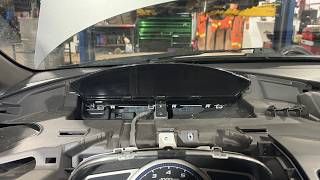
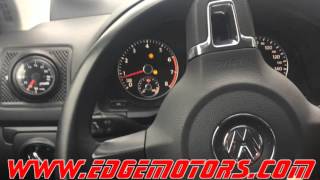
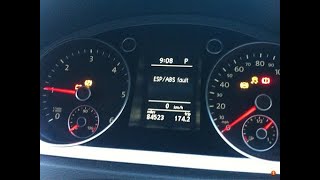
Shop the Parts Behind B1168
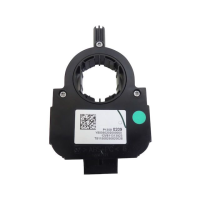
Below are the parts most often responsible for code B1168, ranked by how frequently each one is the actual culprit (per the diagnosis above). Tap any to see what we have for your vehicle.

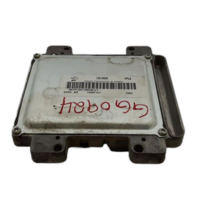

The information in this article is provided for general reference and educational purposes only. Vehicle specifications, procedures, and part compatibility can vary by production date, trim level, and region. Always consult your vehicle's factory service manual and verify part numbers before purchasing or performing repairs. Safety-critical components such as airbags, seat belts, and braking systems should be installed by a qualified professional.
- 🧭 Diagnostic Flowchart
- 🎬 Helpful Videos
- 🛍️ Shop This Part
- What Does B1168 Mean?
- Can I Drive With B1168?
- Common Causes
- Symptoms
- Common Fixes & Costs
- DIY vs Professional
- Used vs. New Parts: Buying Guide
- What Happens If You Wait — Timeline
- Cost of Not Fixing It
- Diagnosis Steps
- When This Code Triggers (Freeze-Frame Conditions)
- Related Codes
- Climate & Environmental Factors
- How to Talk to a Mechanic About This Code
- Where to Take It: Dealer vs Independent vs Chain
- When to Walk Away From the Repair
- What Scan Tool You Need for This Code
- How to Clear the Code After You Fix It
- Will This Fail Emissions / State Inspection?
- Most Commonly Affected Vehicles
- Manufacturer-Specific Notes
- Real Owner Stories
- 2001 Honda Civic at 30K miles with intermittent gauges
- 2018 VW/Seat with B1168 after accident repair
- 2002 Honda Civic with a parasitic battery drain
- How to Prevent This Code From Triggering
- Frequently Asked Questions
- What is the biggest mistake when diagnosing code B1168?
- Can a bad instrument cluster drain my battery?
- Why did my mechanic say the steering angle sensor needs a 'G85 relearn'?
- Can I fix code B1168 myself?
- Why do my gauges intermittently stop working and then fix themselves?
- Will replacing the battery fix code B1168?
- Does a replacement instrument cluster need to be programmed?
- What is the difference between B-codes, U-codes, and P-codes?
- Key Takeaways
- 🎟️ Get 5% Off