

OBD-II Code B1169: Instrument Cluster Communication Failure
What B1169 means, why it triggers, and how to fix it
- Code B1169 flags a CAN bus communication failure between the Powertrain Control Module (PCM) and the instrument cluster, appearing almost exclusively on Honda and Acura vehicles.
- Test your battery first, as voltage drops below 12.4V are the number one cause of module communication errors.
- Do not replace the $500+ instrument cluster without first checking the main engine grounds and disconnecting any aftermarket stereos or alarms.
- Expect severe drivability issues, including a completely dead dashboard, a "Christmas tree" of warning lights, or an engine that cranks but refuses to start due to immobilizer lockout.
- If B1169 appears alongside B1168, diagnose them as a single CAN bus fault rather than two separate module failures.
What Does B1169 Mean?
Code B1169 indicates a communication failure between the Powertrain Control Module (PCM) and the instrument cluster (Gauge Control Module). These components continuously exchange data over the Controller Area Network (CAN) bus. When the PCM stops receiving automatic transmission data from the gauge cluster, it triggers B1169, instantly disabling dashboard gauges and warning lights.
Technical definition: Honda and Acura define B1169 as "Gauge Control Module Lost Communication with the PCM (A/T Message)." This specifies a severed CAN bus link preventing automatic transmission data from reaching the gauge cluster. It almost always triggers alongside code B1168, which flags a loss of engine data communication.
Can I Drive With B1169?
Yes, But With Caution. You can physically drive the vehicle, but doing so is highly dangerous and illegal in most jurisdictions. A dead instrument cluster removes your access to the speedometer, fuel level, engine temperature, and critical warning lights. Driving without a functional speedometer risks significant traffic fines. More importantly, you cannot monitor engine temperature or oil pressure, meaning a minor mechanical issue easily escalates into catastrophic engine failure before you notice it.
Common Causes
- Weak or Failing Battery (Very Common) — CAN bus networks require stable voltage to transmit data. An aging battery or loose terminal drops system voltage below 12.4V, instantly disrupting communication between electronic modules and triggering B1169.
- Damaged Wiring or Loose Grounds (Common) — Wiring harnesses connecting the gauge cluster to the PCM frequently fray, short, or corrode. Loose or heavily corroded main engine grounds (like the G101 ground on Honda Civics) sever the CAN bus connection entirely.
- Improperly Installed Aftermarket Accessories (Common) — Incorrectly spliced aftermarket alarms, stereos, or remote starters introduce electrical noise into the CAN bus or draw power from communication circuits, instantly severing module communication.
- Faulty Gauge Control Module (Instrument Cluster) (Less Common) — The instrument cluster's internal circuit board fails due to degraded solder joints. This often manifests as an intermittent problem that worsens during extreme hot or cold temperature shifts.
- PCM Software/Firmware Glitch (Rare) — The PCM's software occasionally develops glitches that drop network communication. Dealerships resolve this by flashing the PCM with the latest manufacturer firmware update.
- Faulty Powertrain Control Module (PCM) (Rare) — The PCM itself rarely fails physically. When it does, it stops communicating with all modules, triggering a cascade of U-codes (like U0100) alongside B1169.
Symptoms
- Instrument Cluster or Displays Dead/Intermittent — The entire instrument panel, including the speedometer, tachometer, fuel gauge, and digital odometer, goes completely blank or randomly shuts off while driving.
- Engine Cranks But Will Not Start — The anti-theft immobilizer system requires a security handshake between the PCM and the gauge cluster. If communication fails, the PCM locks out the fuel injectors, preventing the engine from starting.
- Multiple Warning Lights Illuminated — A severed CAN bus connection creates a "Christmas tree" effect on the dashboard, illuminating unrelated warning lights (Check Engine, ABS, Airbag, VSA) simultaneously.
- Inaccurate or Frozen Gauges — Gauges freeze in their last known position, such as the speedometer stuck at 45 mph while parked, or the fuel gauge reading full when the tank is empty.
Diagnostic Flowchart
Tap your situation to follow the diagnostic path that matches what you're seeing on this code.
Common Fixes & Costs
- Replace Vehicle Battery — Parts: $150-$250, Labor: $25-$50, ~0.5 hr book time (DIY)
- Repair Wiring or Grounds — Parts: $10-$50, Labor: $150-$400, ~2.5 hr book time (Professional)
- Repair Instrument Cluster (Mail-in Service) — Parts: $0, Labor: $150-$300, ~1.5 hr book time (Intermediate)
- Replace Instrument Cluster
— Parts: $300-$900, Labor: $150-$250, ~1.5 hr book time
(Professional)
Honda Civic (2006-2011): OEM ['78120-SNA-A13', '78200-SVB-A01']
Honda Accord (2003-2007): OEM ['78100-SDA-A44', '78100-SDB-A21'] - Replace Powertrain Control Module (PCM) — Parts: $600-$1200, Labor: $150-$300, ~1.5 hr book time (Professional)
DIY vs Professional
- Replace Vehicle Battery — Beginner: True
Tools: Wrench set, battery terminal brush - Repair Wiring or Grounds — Beginner: False
Tools: Multimeter, wiring diagrams, wire strippers, soldering iron, heat shrink tubing. - Repair Instrument Cluster (Mail-in) — Beginner: False
Tools: Trim removal tools, screwdriver. - Replace Instrument Cluster — Beginner: False
Tools: Trim removal tools, socket set, bi-directional diagnostic tool for programming. - Replace Powertrain Control Module (PCM) — Beginner: False
Tools: Socket set, specialized programming tools.
Used vs. New Parts: Buying Guide
When a used part is worth it: A used instrument cluster from a salvage yard is cost-effective for older vehicles, provided you find a part with the exact same OEM number. However, it still requires professional mileage programming.
Donor-vehicle mileage cap: roughly under 100000 miles for the part to have meaningful remaining life.
Donor quality checklist:
- Verify the OEM part number matches your original cluster exactly.
- Ensure the donor vehicle was not scrapped due to flood damage.
- Inspect the rear connector pins for green corrosion.
Decision logic:
- If The failure is a known issue (like 8th Gen Civic digital displays) → Use a professional mail-in repair service. They replace the faulty components with upgraded parts, preventing the issue from recurring.
- If Vehicle is newer or has low mileage → Purchase a new OEM part for reliability and a manufacturer warranty.
- If Budget is the primary concern → A used part is viable, but factor in the $100-$200 cost of mandatory mileage programming.
Warranty tradeoff: Used parts typically carry a 30-day warranty. Mail-in remanufactured units often include a 1-year to lifetime warranty. New OEM parts carry the standard manufacturer warranty.
Worst-case if a used part fails: $400-$700 if a used cluster is faulty, requiring repeat labor, a second part purchase, and a second programming fee.
What Happens If You Wait — Timeline
- 0-1 month: Intermittent cluster flickering or a single no-start event. Code B1169 is stored but clears easily. No other perceived symptoms. (MPG impact: 0%% · Added cost: $0)
- 1-3 months: The instrument cluster fails frequently on cold starts. The vehicle intermittently fails to start due to immobilizer lockout, requiring multiple key cycles. (MPG impact: 0%% · Added cost: $100-$250 (potential towing service))
- 3-6 months: The instrument cluster remains dead permanently. Driving without a speedometer becomes a constant legal risk. The immobilizer may permanently lock out the ignition. (MPG impact: 0%% · Added cost: $150-$500 (potential traffic citation))
- 6+ months: Driving without instrumentation means you cannot monitor engine temperature or oil pressure. A minor coolant leak escalates into catastrophic engine damage without warning. (MPG impact: N/A% · Added cost: $3000-$8000 (engine replacement))
Cost of Not Fixing It
- Immediate: Inability to monitor vehicle speed, which is a serious safety risk and illegal. You risk a significant traffic fine. (Added cost: $150-$500 (traffic citation))
- 0-1 month: The immobilizer system loses communication with the PCM, preventing the engine from starting and leaving you stranded. (Added cost: $100-$250 (towing service))
- 1-6 months: Driving without engine temperature or oil pressure warnings leads to catastrophic engine damage if a separate mechanical issue develops unnoticed. (Added cost: $3000-$8000 (engine replacement))
Diagnosis Steps
- Check the Battery and Charging System
Use a multimeter to verify the battery holds at least 12.4V with the engine off and 13.7-14.7V while running. Clean all terminal corrosion with a wire brush and tighten the clamps. Low voltage is the primary cause of CAN bus errors.
Tools: Multimeter, Battery Terminal Brush (Beginner) - Disconnect Aftermarket Accessories
If you recently installed an aftermarket stereo, alarm, or remote starter, disconnect it completely. Clear the codes and test drive. If the cluster works, the accessory was improperly spliced into the CAN bus network.
Tools: Screwdriver, Trim Removal Tools (Beginner) - Perform a Visual Inspection of Wiring and Grounds
Inspect the wiring harnesses behind the instrument cluster and at the PCM. Look for pinched wires or rodent damage. Locate the main engine and chassis grounds (refer to a service manual) and ensure they are tight and free of rust.
Tools: Flashlight, Socket Set (Beginner) - Scan for All Stored Trouble Codes
Use an OBD-II scanner capable of reading B-codes and U-codes. If B1169 appears alongside B1168, the fault is isolated to the cluster-PCM link. If U0100 appears in the ABS or Airbag modules, the PCM or main CAN bus is failing.
Tools: Advanced OBD-II Scanner (Intermediate) - Inspect Instrument Cluster Connectors
Remove the dashboard trim to access the rear of the instrument cluster. Disconnect the electrical plugs and inspect the pins for green corrosion or bent terminals. Apply dielectric grease and firmly re-seat the connectors.
Tools: Trim Removal Tools, Screwdriver (Intermediate) - Test CAN Bus Resistance and Voltage
Disconnect the battery. Measure resistance across the CAN High and CAN Low pins at the diagnostic port; it must read exactly 60 ohms. Reconnect the battery, turn the ignition ON, and measure voltage: CAN High requires 2.6-3.5V, and CAN Low requires 1.5-2.4V.
Tools: Multimeter, Vehicle-Specific Wiring Diagram (Advanced) - Oscilloscope Waveform Analysis
Connect an oscilloscope to the CAN High and Low lines. A healthy CAN bus displays a clean, mirrored square waveform. Distortion, noise, or rounded edges indicate a shorted wire or a corrupted module flooding the network.
Tools: Oscilloscope, Back-probe Pins (Advanced)
When This Code Triggers (Freeze-Frame Conditions)
- System Voltage: < 12.4V (The code frequently sets during engine cranking if a weak battery causes voltage to plummet, disrupting module boot-up sequences.)
- Vehicle Speed: 0-65 mph (The communication failure happens at any speed. If it occurs while driving, the speedometer instantly drops to zero.)
Related Codes
- B1168 — B1168 indicates 'Gauge Control Module Lost Communication with ECM/PCM (Engine Messages).' It almost always appears with B1169 because a severed CAN bus link drops both engine and transmission messages simultaneously.
- B1178 — Indicates an 'F-CAN Communication Line Error.' Seeing B1178 alongside B1169 strongly points to a physical wiring short or open on the CAN bus network, rather than a failed module.
- U0100 — A generic code for 'Lost Communication With ECM/PCM.' If the ABS or Airbag modules also report U0100, the PCM is offline. If only the gauge cluster reports B1169, the fault is isolated to the cluster's specific wiring.
- B1170 — Indicates 'Gauge Control Module Lost Communication with ABS Modulator.' Present with B1169, it suggests the gauge cluster's internal networking chip has failed entirely.
Climate & Environmental Factors
- Cold Weather: Extreme cold exacerbates failing solder joints inside the instrument cluster. Owners frequently report the cluster failing on cold mornings and resuming function as the cabin warms up.
- Humidity: High humidity or leaking windshields introduce moisture behind the dashboard, corroding the instrument cluster's circuit board and connector pins, triggering communication shorts.
How to Talk to a Mechanic About This Code
Say this: "I have a B1169 code on my Honda, and the instrument cluster is intermittent. I tested the battery and it holds 12.6V. I need a diagnostic to test the CAN bus communication between the PCM and the gauge control module."
This proves you've done basic homework and focuses their diagnostic efforts on wiring and module testing, preventing them from charging you for a simple battery test.
Avoid saying:
- 'My dashboard is acting weird.'
- 'The check engine light is on, can you just fix it?'
- 'I think I need a new instrument cluster.' (Never diagnose the part for them)
Questions to ask before authorizing the repair:
- Did you test the CAN bus wiring for proper 60-ohm resistance between the cluster and the PCM?
- Did you inspect the main engine grounds for corrosion?
- If the cluster needs replacement, does the quote include the mandatory mileage programming?
- What is the warranty on the repair, whether it's a wiring fix or a module replacement?
Where to Take It: Dealer vs Independent vs Chain
- Dealer:
A strong option if you suspect a software issue or if an independent shop fails to diagnose the network problem.
Best for: Vehicles under warranty, Cases requiring a PCM software update, Complex electrical issues requiring manufacturer-specific diagnostic tools (like the Honda HDS).
Downsides: Highest labor rates and parts costs, Often default to replacing expensive modules rather than repairing a wiring fault. (Typical cost: +50% vs. baseline) - Independent Shop:
Best fit for most cases. Choose a well-reviewed shop with strong electrical diagnostic skills to avoid unnecessary module replacements.
Best for: Out-of-warranty vehicles, Diagnosing and repairing wiring, connector, or ground issues, Shops specializing in automotive electronics or Honda/Acura vehicles.
Downsides: Diagnostic capabilities vary; ensure the shop has extensive CAN bus experience., May lack access to the latest manufacturer firmware updates. (Typical cost: +0% vs. baseline) - Chain Shop:
Acceptable for a free battery check, but avoid for diagnosing the B1169 code itself due to its electrical complexity.
Best for: Free battery testing and replacement.
Downsides: Technicians lack the specialized training for complex CAN bus diagnostics., High pressure to sell parts leads to misdiagnosis, such as recommending a new cluster for a bad ground wire. (Typical cost: -10% vs. baseline)
When to Walk Away From the Repair
If the estimated repair cost for the instrument cluster issue exceeds 50% of your car's private-party value, consider selling the vehicle as-is.
- Car worth $4000, fix is $1000: Fix it. This is a significant repair but well below the threshold.
- Car worth $2000, fix is $1200: Walk away. The repair cost is over half the car's value. Put the money towards a replacement vehicle.
- Car worth $8000, fix is $900: Fix it. This is a reasonable cost to restore full functionality and safety.
What Scan Tool You Need for This Code
Minimum: A scanner that reads manufacturer-specific body codes (B-codes) and views live data from multiple modules (PCM, ABS, SRS).
A basic $20 code reader only sees generic P-codes (powertrain). For a communication error like B1169, you must see which modules are online and which are reporting errors.
Budget: Innova 1000 / MUCAR BT200 Max (~$100) — Reads engine, ABS, and SRS codes. Crucial for confirming if the communication problem is isolated to the cluster or widespread across the network.
Mid-range: Innova 5610 / Foxwell NT510 Elite (~$350) — Offers bi-directional control, allowing you to send commands to the cluster to test its function. This isolates the fault between the wiring and the module itself.
Professional: Autel MaxiCOM MK808 / XTOOL D8S (~$500-900) — Provides full bi-directional control, ECU coding, and topology mapping to visually see which modules are offline. This is dealer-level diagnostics for complex network issues.
Rent vs buy: For a one-time CAN bus issue like B1169, paying a professional for one hour of diagnostic time is more effective than buying a mid-range scanner.
How to Clear the Code After You Fix It
- Reconnect the battery if disconnected for repair.
- Use an OBD-II scan tool to clear B1169 and any related U-codes.
- Perform a complete Honda-specific drive cycle to reset readiness monitors and recalibrate modules.
Drive cycle (~30 minutes): Begin with a cold start (engine off for 6+ hours). Idle for 3 minutes with A/C on. Drive at a steady 55 mph for 5 minutes. Perform 20 minutes of mixed city/highway driving, including coasting (deceleration without brakes). Idle for 2 minutes before shutting down.
Readiness monitors affected: Catalyst monitor, EVAP system monitor, O2 sensor monitor
Before emissions retest: drive at least 50 miles to fully set monitors.
Watch out for:
- Clearing the code without completing a drive cycle leaves readiness monitors incomplete, guaranteeing an emissions test failure.
- The code returns immediately upon startup if the root CAN bus short or module failure remains unaddressed.
Will This Fail Emissions / State Inspection?
Yes — this code typically fails an OBD-II emissions inspection.
- California: A communication failure prevents OBD readiness monitors from setting. California's BAR regulations require all monitors to be set, resulting in an automatic smog check failure.
- New York: The NYS DMV inspection includes an OBD-II scan. If B1169 prevents readiness monitors from completing their checks, the vehicle fails the emissions test.
- Texas: In emissions-testing counties, the vehicle undergoes an OBD-II test. B1169 prevents the system from reporting 'ready', leading to a failure.
Most Commonly Affected Vehicles
- Honda Civic (2006-2011) — Extremely common on the 8th generation Civic. Often caused by a corroded G101 engine ground or internal failure of the upper digital display.
- Honda Accord (2003-2007) — Prone to this communication error. TSB 04-023 addresses backlight failure on the radio and climate control display, which shares the cluster assembly.
- Honda CR-V (2007-2011) — Communication failures between the gauge module and PCM are a known issue. A TSB exists related to low battery voltage causing erratic cluster operation.
- Honda Element (2003-2011) — Frequently appears alongside B1168 due to degraded cluster solder joints.
- Acura MDX (2007-2013) — Shares a similar electrical architecture with Honda models and experiences identical gauge cluster communication faults.
- Chevrolet Silverado (2007-2013) — On GM vehicles, B1169 indicates an 'Audio Output Circuit Open', affecting the sound system, not the instrument cluster.
- Ford F-150 (2009-2014) — For Ford models, B1169 indicates a fault with the Power Running Board (PRB) module.
- Mitsubishi Mirage (2014-2015) — On the Mirage, B1169 relates to the Keyless Operation System (KOS), addressed in TSB-19-42B-004.
Manufacturer-Specific Notes
- Honda/Acura: This code is highly specific to Honda and Acura's unique Gauge Control Module architecture. It almost always requires diagnosing the CAN bus link directly behind the dashboard.
- Mitsubishi: Mitsubishi uses B1169 to flag a fault in the Keyless Operation System (KOS). TSB-19-42B-004 adds specific diagnostic procedures for 2014-2015 Mirage models.
- Chevrolet/GM: GM vehicles use B1169 to indicate an 'Audio [+] output circuit open,' requiring stereo wiring diagnostics rather than instrument cluster testing.
- Ford: Ford assigns B1169 to the Power Running Board (PRB) module, demonstrating how B-codes (Body codes) vary wildly between manufacturers.
Real Owner Stories
2008 Honda Civic Si with 150K miles
Owner experienced an intermittent crank-no-start condition. The instrument cluster randomly died, and codes B1168 and B1169 were stored.
What they tried:
- Tested the battery, which passed.
- Checked all interior fuses, finding none blown.
- A mechanic inspected the G101 ground connection on the engine block, a known weak point for 8th Gen Civics.
Outcome: The G101 ground was heavily corroded. The mechanic cleaned the terminal and re-fastened it to the block. This restored stable CAN bus voltage, resolving the no-start issue and clearing the codes permanently.
Lesson: Always inspect main engine and chassis grounds before replacing expensive modules. A $0 ground cleaning fixes B1169 more often than a $500 cluster replacement.
2007 Honda CR-V with 120K miles
After replacing a dead battery, the dashboard illuminated every warning light (ABS, VSA, Airbag) and stored code B1169. The vehicle drove normally.
What they tried:
- Disconnected the new battery for 30 minutes to reset modules, but the lights returned immediately.
- Took the vehicle to a shop, which confirmed the new battery and alternator were healthy.
- The shop performed the Honda-specific drive cycle required after a battery disconnect.
Outcome: After a 20-minute drive cycle, the modules recalibrated, re-established communication, and all warning lights turned off. The B1169 code cleared itself.
Lesson: Replacing a dead battery on modern Hondas triggers a cascade of communication codes. Always perform the manufacturer-recommended drive cycle to allow systems to reset before paying for diagnostics.
2009 Acura MDX with 110K miles
An aftermarket stereo was installed. The next day, the vehicle refused to start, the instrument cluster was dead, and an OBD-II scanner could not communicate with the PCM.
What they tried:
- Checked the battery and all fuses.
- Disconnected the new stereo completely.
- With the stereo removed, the scanner communicated with the PCM and pulled code B1169.
Outcome: The stereo installer incorrectly tapped a power wire into the CAN bus communication line, shorting the network. Using a proper adapter harness restored the CAN bus, bringing the cluster and ignition back online.
Lesson: Improperly installed aftermarket electronics instantly crash CAN bus networks. If B1169 appears after an installation, disconnect the new device immediately to see if communication returns.
How to Prevent This Code From Triggering
- Maintain a Healthy Battery and Charging System (Test annually after 3 years) — Low voltage from a failing battery is the primary cause of communication errors. Stable voltage is mandatory for sensitive CAN bus electronics.
- Address Windshield or Sunroof Leaks Promptly (As needed) — Moisture seeping behind the dashboard corrodes the instrument cluster's circuit board and connectors, causing permanent communication shorts.
- Use Proper Harnesses for Aftermarket Electronics (During any installation) — Splicing into random wires disrupts the CAN bus network. Always use vehicle-specific wiring harnesses to prevent drawing power from communication circuits.
- Clean Key Engine Ground Connections (Every 60,000 miles) — Engine and chassis grounds corrode over time. A poor ground destabilizes the 2.5V CAN bus signals, triggering intermittent communication faults.
Frequently Asked Questions
Can I fix a B1169 code myself?
You can easily test the battery and visually inspect wiring yourself. However, diagnosing a bad module or a CAN bus short requires professional bi-directional scan tools and an oscilloscope. Stop DIYing and consult a shop if basic voltage and ground checks pass.
What is the most common misdiagnosis for a B1169 code?
The most common mistake is replacing the $500+ instrument cluster without testing the CAN bus wiring. A simple short or open wire between the cluster and the PCM triggers this exact code. Always verify 60 ohms of resistance across the CAN High and CAN Low wires before condemning the module.
Why are B1168 and B1169 almost always set together?
B1168 flags lost "Engine Messages" while B1169 flags lost "A/T Messages," both originating from the PCM. When the gauge cluster loses its PCM connection, it drops all messages simultaneously. Seeing both codes confirms a severed communication link between these two specific modules.
Will replacing the instrument cluster fix the B1169 code?
Replacing the cluster only fixes the code if the cluster's internal electronics have failed. If a wiring short, bad ground, or faulty PCM is the root cause, a new cluster changes nothing. Proper CAN bus diagnosis is mandatory before buying expensive replacement parts.
Does the mileage need to be programmed on a new instrument cluster?
Yes, the vehicle's exact mileage must be programmed into the replacement instrument cluster. This requires specialized bi-directional scan tools to ensure legal compliance. Dealerships or specialized speedometer repair shops typically handle this programming.
Why did my car not start with a B1169 code?
Modern immobilizer systems require a security "handshake" between the key, the instrument cluster, and the PCM. If the B1169 communication failure severs this link, the PCM locks out the ignition. The engine will crank, but the fuel injectors will not fire.
Can a bad ground cause a B1169 code?
Yes, a loose or corroded ground wire disrupts the sensitive 2.5V signals on the CAN bus network. On Honda Civics, a corroded G101 engine ground is a notorious trigger for B1169. Always clean and tighten main grounds before replacing modules.
Key Takeaways
- Code B1169 flags a CAN bus communication failure between the Powertrain Control Module (PCM) and the instrument cluster, appearing almost exclusively on Honda and Acura vehicles.
- Test your battery first, as voltage drops below 12.4V are the number one cause of module communication errors.
- Do not replace the $500+ instrument cluster without first checking the main engine grounds and disconnecting any aftermarket stereos or alarms.
- Expect severe drivability issues, including a completely dead dashboard, a "Christmas tree" of warning lights, or an engine that cranks but refuses to start due to immobilizer lockout.
- If B1169 appears alongside B1168, diagnose them as a single CAN bus fault rather than two separate module failures.
Shop the Parts Behind B1169
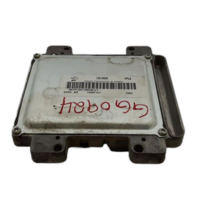
Below are the parts most often responsible for code B1169, ranked by how frequently each one is the actual culprit (per the diagnosis above). Tap any to see what we have for your vehicle.



The information in this article is provided for general reference and educational purposes only. Vehicle specifications, procedures, and part compatibility can vary by production date, trim level, and region. Always consult your vehicle's factory service manual and verify part numbers before purchasing or performing repairs. Safety-critical components such as airbags, seat belts, and braking systems should be installed by a qualified professional.
- 🧭 Diagnostic Flowchart
- 🛍️ Shop This Part
- What Does B1169 Mean?
- Can I Drive With B1169?
- Common Causes
- Symptoms
- Common Fixes & Costs
- DIY vs Professional
- Used vs. New Parts: Buying Guide
- What Happens If You Wait — Timeline
- Cost of Not Fixing It
- Diagnosis Steps
- When This Code Triggers (Freeze-Frame Conditions)
- Related Codes
- Climate & Environmental Factors
- How to Talk to a Mechanic About This Code
- Where to Take It: Dealer vs Independent vs Chain
- When to Walk Away From the Repair
- What Scan Tool You Need for This Code
- How to Clear the Code After You Fix It
- Will This Fail Emissions / State Inspection?
- Most Commonly Affected Vehicles
- Manufacturer-Specific Notes
- Real Owner Stories
- 2008 Honda Civic Si with 150K miles
- 2007 Honda CR-V with 120K miles
- 2009 Acura MDX with 110K miles
- How to Prevent This Code From Triggering
- Frequently Asked Questions
- Can I fix a B1169 code myself?
- What is the most common misdiagnosis for a B1169 code?
- Why are B1168 and B1169 almost always set together?
- Will replacing the instrument cluster fix the B1169 code?
- Does the mileage need to be programmed on a new instrument cluster?
- Why did my car not start with a B1169 code?
- Can a bad ground cause a B1169 code?
- Key Takeaways
- 🎟️ Get 5% Off