

Ultimate Guide to OBD-II Code B1176: A Manufacturer-Specific Body Fault
The definitive guide to what B1176 means, its manufacturer-specific causes, and expert-level diagnosis and fixes.
- The meaning of code B1176 is entirely dependent on your vehicle's manufacturer. It most commonly refers to a fuel sensor (Honda), a latch switch (Ford/Lincoln), or an immobilizer system (VW/Audi).
- For Ford and Lincoln owners, always check for Technical Service Bulletins (TSBs), simple mechanical adjustments (hood alignment), and broken wires in the door boot before replacing expensive parts. Numerous recalls exist for faulty door latches, so check your VIN for coverage.
- For Honda and Acura owners, the problem is almost always located in or around the fuel tank, involving the fuel gauge sending unit or its wiring. Advanced diagnosis involves checking the sender's resistance (approx. 3-110 Ω) and testing the signal wire for a short to ground.
- For Volkswagen and Audi owners, the equivalent code 01176 is a critical fault that will cause a no-start condition and requires diagnosing the key, immobilizer reader coil (approx. 20-30 Ω resistance), and related wiring.
- Ignoring this code can lead to significant secondary problems, such as a dead battery from a parasitic drain, the security risk of unlocked doors, or the safety hazard of running out of fuel.
What Does B1176 Mean?

Code B1176 is a Body Control Module (BCM) code whose meaning changes completely depending on your vehicle's manufacturer. For Honda and Acura, it indicates a short circuit in the fuel level sensor. For Ford, Lincoln, and Mazda, it points to a fault in a latch switch, such as for a door or the hood. For Volkswagen and Audi, the equivalent code (01176) indicates a problem with the immobilizer system, specifically that the key's signal is too weak.
Technical definition: The formal SAE/ISO definition for B1176 is not universal, as it is a manufacturer-specific Body ('B') code. Common definitions include 'Fuel Level Sensor (Fuel Gauge Sending Unit) Circuit Short' (common on Honda/Acura), a circuit malfunction for a specific latch switch (common on Ford/Mazda), or 'Key: Signal too Low' (on VAG vehicles as code 01176). On modern Ford products, it is often accompanied by a Failure Type Code like ':19', indicating 'Circuit Current Above Threshold', which helps pinpoint an electrical short.
Can I Drive With B1176?

Yes, But With Caution. Driving is possible, but not recommended for long. Depending on the manufacturer, you face different risks. For Ford/Lincoln, a false 'door ajar' warning can prevent doors from locking, creating a security risk, and the interior lights may stay on, causing a parasitic drain that can kill a healthy battery in as little as 4-5 days. For Honda/Acura, an inaccurate fuel gauge creates a high risk of running out of fuel, which can be dangerous depending on your location. For VW/Audi, this code (01176) indicates an immobilizer fault that will prevent the car from starting at all.
Common Causes


- Faulty Door/Hood Latch Assembly (Ford/Lincoln/Mazda) 🔴 Very Common → Shop Hood Latch Assembly — The micro-switch inside the door or hood latch assembly fails or gets stuck, sending an incorrect 'open' or 'fault' signal to the BCM. This is the most frequent cause on affected Ford, Lincoln, and Mazda vehicles.
- Faulty Fuel Gauge Sending Unit (Honda/Acura) 🔴 Very Common — The sending unit, a variable resistor located in the fuel tank, wears out or fails electrically, causing a short in the circuit. This is the primary cause on affected Honda and Acura models.
- Broken or Shorted Wiring Harness 🟠 Common — Wires leading to a latch switch or fuel sending unit can become chafed, corroded, or broken. This is especially common in high-flex areas like the rubber boot between a door and the body on Ford F-150s, leading to a false door ajar signal.
- Faulty Immobilizer Reader Coil (Volkswagen/Audi) 🟠 Common — On VW and Audi vehicles, the reader coil around the ignition switch can fail, preventing it from reading the key's transponder chip. This triggers code 01176 and a no-start condition.
- Control Module Software Glitch (Ford/Lincoln) 🟠 Common — On some vehicles, like the 2020-2023 Lincoln Aviator, the code can be triggered by overly sensitive software. A dealer-installed software update is the first-line fix, as noted in Technical Service Bulletin (TSB) SSM 51788 for vehicles built before Oct 12, 2022.
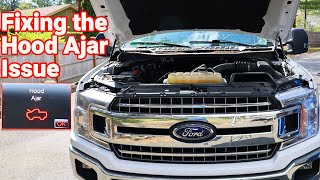
- Poor Latch/Hood Alignment (Ford/Lincoln) 🟡 Less Common — On Ford F-150s (2021-2024), a 'Hood Ajar' warning with code B1176 can be caused by simple misalignment. Adjusting the rubber bump stops under the hood to ensure it presses firmly on the latch switch is a common fix outlined in TSB SSM 52468.
- Faulty Key or Key Battery (Volkswagen/Audi) 🟡 Less Common — For VW/Audi's 01176 code, a weak battery in the key fob or a damaged transponder chip inside the key can cause the 'Signal too Low' fault. Trying a spare key is a quick diagnostic step.
- Poor Electrical Connections 🟡 Less Common — A loose or corroded connector at the component (latch, fuel tank unit, immobilizer coil) or at the Body Control Module can cause an intermittent signal and trigger the code.
- Faulty Gauge Control Module or BCM ⚪ Rare — It is possible for the control module that reads the sensor data to fail internally, but this is uncommon. All other possibilities, like wiring and the sensor itself, should be ruled out first. A bad BCM can cause many unrelated codes to appear simultaneously.
Symptoms
- Inaccurate or Erratic Fuel Gauge (Honda/Acura) — The fuel gauge may be stuck on full, empty, or fluctuate randomly, not reflecting the actual amount of fuel in the tank.
- 'Door Ajar' or 'Hood Ajar' Warning Light (Ford/Lincoln/Mazda) — A persistent warning message appears on the dashboard, even when all doors and the hood are securely closed.
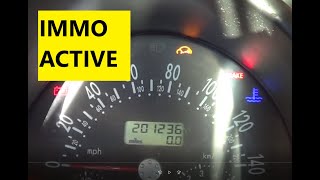
- Engine Will Not Start (Volkswagen/Audi) — With code 01176, the engine may crank but will not fire, or it may not crank at all. The immobilizer warning light on the dashboard will typically be flashing.
- Parasitic Battery Drain — If the vehicle thinks a door is open, it may keep the interior lights and certain control modules awake, causing a slow drain that can kill the battery overnight or over several days.
- Remote Start is Disabled (Ford/Lincoln) — The vehicle's remote start feature will not work because the computer thinks the hood or a door is open as a safety precaution.
- Blinking Low Fuel Light (Honda/Acura) — The low fuel warning light may blink continuously, regardless of the fuel level, indicating a fault in the sensor circuit.
- Alarm System Inoperative or False Alarms — The security system may not arm if it detects an open door or hood. Conversely, it may trigger unexpectedly.
Diagnosis Steps
- Identify Your Vehicle's System
First, determine what this code means for your specific car. Honda/Acura means a fuel system issue. Ford/Lincoln/Mazda means a latch switch issue. Volkswagen/Audi means an immobilizer issue (code 01176). All subsequent steps depend on this.
Tools: Owner's Manual or Google Search 🟢 Beginner - Visual Inspection & Simple Checks
For Ford F-150 'Hood Ajar' issues, check hood alignment. Adjust the two rubber bump stops on the radiator support so the hood closes tighter. For VW/Audi, try a spare key to rule out a faulty key. For all vehicles, check for obvious wiring damage near the component.
Tools: None, Spare Key 🟢 Beginner - Check for TSBs and Software Updates (Ford/Lincoln)
For vehicles like the Lincoln Aviator (2020-2023), contact a dealer and reference TSB SSM 51788. A software update for the door control module may be the required fix, especially for models built before October 12, 2022. For F-150s, reference TSB SSM 52468 regarding hood alignment. 🎬 Watch this quick fix for F-150 hood ajar warnings.
Tools: Phone, Vehicle VIN 🟢 Beginner - Inspect Door Harness Boot (Ford/Lincoln)
For 'Door Ajar' issues on trucks like the F-150, carefully pull back the rubber boot between the driver's or passenger's door and the body. Broken wires in this high-flex area are a very common cause of this code. Look for wires that are completely severed or have cracked insulation.
Tools: Flashlight, Trim Removal Tools (optional) 🟡 Intermediate - Test the Latch Switch Circuit (Ford/Lincoln/Mazda)
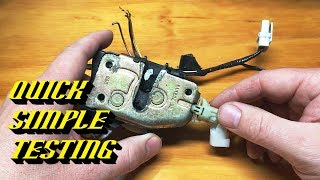
Disconnect the electrical connector from the suspect latch. Use a paperclip or jumper wire to bridge the two terminals in the wiring harness connector. If the 'Ajar' light on the dash goes out, the wiring and BCM are good, confirming the latch assembly itself is faulty 🎬 See how to test and replace a door ajar switch. and needs replacement.
Tools: Jumper Wire or Paperclip, Pliers 🟡 Intermediate - Isolate the Faulty Component (Honda/Acura)
Turn the ignition off and disconnect the 4-pin connector at the fuel tank unit. Turn the ignition back on. If the fuel gauge now drops to empty, it confirms the wiring is likely okay and the fuel gauge sending unit itself is faulty. 🎬 Watch this walkthrough for diagnosing Honda fuel sensor shorts. If the gauge remains stuck on full or the code B1176 returns immediately, proceed to the next step.
Tools: Socket Set or Trim Tools (to access fuel tank unit) 🟡 Intermediate - Pro Tip: Test for Short to Ground (Honda/Acura)
If the previous step did not isolate the sending unit, the wiring is likely shorted. Disconnect the gauge control module connector (often a 32-pin or 36-pin connector behind the instrument cluster). Using a multimeter set to continuity (beep mode), test between the fuel level signal wire terminal (check a wiring diagram for your specific pin number) and a clean chassis ground. If you get continuity (a beep), it confirms a short to ground in the wiring harness that must be found and repaired.
Tools: Multimeter, Vehicle-specific Wiring Diagram, Trim Removal Tools 🟠 Advanced - Pro Tip: Measure Fuel Sender Resistance (Honda/Acura)
With the fuel sending unit removed from the vehicle, connect a multimeter set to Ohms (Ω) across its two main terminals. Manually move the float arm. The resistance should change smoothly without any dropouts. A reading of zero or near-zero ohms confirms the unit is internally shorted, triggering B1176. A typical Honda sender should read approximately 3-5 Ω when full and 105-110 Ω when empty. Any reading below 3 Ω is considered a short.
Tools: Multimeter 🟠 Advanced - Advanced: Scan Tool Live Data (Ford/Lincoln)
Using a professional scan tool (like FORScan), monitor the Body Control Module (BCM) live data PIDs for the door ajar switches (e.g., 'DDM_DR_STATUS', 'PDM_DR_STATUS'). The value should read 'Closed' when the door is shut. If a door is closed but the PID reads 'Ajar' or 'Open', it confirms a fault in that specific door's circuit. This helps pinpoint which door is the problem without guesswork.
Tools: Professional OBD-II Scan Tool (Ford-specific) 🟠 Advanced - Advanced: Immobilizer Coil Resistance Test (VW/Audi)
For code 01176, disconnect the immobilizer reader coil connector at the ignition switch. Using a multimeter set to Ohms (Ω), measure the resistance between the two pins of the coil itself. The expected resistance is typically between 20-30 Ω. A reading significantly outside this range, especially an open circuit (OL) or a short (near 0 Ω), indicates a faulty reader coil.
Tools: Multimeter, Trim Removal Tools 🟠 Advanced
Common Fixes & Costs
- Adjust Hood Latch and Bump Stops (Ford) — Parts: $0, Labor: $0-$100 🛠️ DIY
- Replace Hood Latch Assembly (with integrated sensor) — Parts: $70-$120, Labor: $100-$250 🛠️ DIY
- Repair Broken Wires in Door Harness — Parts: $5-$20, Labor: $150-$350 🟡 Intermediate
- Replace Fuel Gauge Sending Unit (often part of fuel pump assembly) — Parts: $150-$400, Labor: $250-$450 🔴 Professional
- Replace Door Latch Assembly (with integrated sensor) — Parts: $100-$920 (Varies widely by model), Labor: $150-$300 🟡 Intermediate
- Replace Immobilizer Reader Coil (VW/Audi) — Parts: $50-$150, Labor: $150-$250 🟡 Intermediate
- Perform Software Update at Dealership (Ford/Lincoln) — Parts: $0, Labor: $100-$200 🔴 Professional
Most Commonly Affected Vehicles
- Lincoln Aviator (2020-2023) — Prone to B1176:19 for a 'Door Ajar' fault. TSB SSM 51788 advises a software update as the first fix for models built before 10/12/2022. If that fails, the expensive 'soft-close' door latch assembly (Part No. LC5Z-54219A65-G) needs replacement.
- Ford F-150 (2021-2024) — Commonly sets B1176 for a 'Hood Ajar' warning. TSB SSM 52468 recommends checking hood alignment before replacing the latch assembly (Part No. ML3Z-16700-B). Also known for door ajar issues from broken wires in the door jamb harness.
- Ford C-Max / Edge / Explorer (2012-2018) — Frequently experiences 'Door Ajar' warnings due to a failed micro-switch inside the door lock actuator assembly, which triggers a B-code like B1176. This issue was subject to a massive recall (NHTSA 16V-549).
- Honda Accord (2008-2012) — Frequently experiences B1176 due to a short in the fuel level sensor circuit or a faulty fuel gauge sending unit. The fuel pump assembly for a 3.5L V6 is part number 17045-TA1-L00.
- Honda Civic (2006-2011) — Well-documented for B1176 indicating a 'Fuel Level Sensor Circuit Short'. Part numbers for the sending unit can vary based on build location (e.g., 17047-SNA-A00 for Japan-built, 17047-SNA-A30 for US/Canada-built). Some models had a warranty extension for potential fuel tank cracks.
- Honda CR-V (2011-2016) — Sets B1176 when the gauge control module detects a short in the fuel gauge sending unit circuit. Diagnosis involves checking for a short to ground on the signal wire.
- Volkswagen Golf, Jetta, Polo (2002-2010) — Triggers fault code 01176 (VAG-equivalent) for 'Key: Signal too Low', indicating an immobilizer fault. This is often caused by a bad ignition switch reader coil or faulty key.
- Audi A3, A4, A6 (2000-2008) — Shares the 01176 'Key: Signal too Low' fault with Volkswagen. A known issue on some models is the wiring harness to the reader coil being too short or failing, requiring an updated part.
Manufacturer-Specific Notes
- Honda / Acura: For these brands, B1176 exclusively refers to a 'Fuel Level Sensor Circuit Short'. The main symptoms are an erratic fuel gauge and/or a blinking low fuel light. Diagnosis focuses on testing the sending unit's resistance and checking the signal wire for a short to ground. Honda has offered warranty extensions for fuel system components, including fuel pumps and injectors, on various models, which may cover related failures.
- Ford / Lincoln: The meaning varies by model. On F-150s, it's often the hood latch switch (TSB SSM 52468). On Aviators, it's a door latch switch (TSB SSM 51788). The suffix ':19' is common, meaning 'Circuit Current Above Threshold'. Ford has issued numerous recalls and warranty extensions for faulty door latches across many models and years (e.g., NHTSA recalls 23V502, 20S15, 16V-549) due to the risk of doors unlatching while driving. Always check for recalls before paying for a repair.
- Mazda: Similar to Ford, Mazda uses B1176 to indicate a fault in a door latch switch circuit, specifically noting a 'short to ground'. The diagnostic process of jumping the connector pins is also applicable.
- Volkswagen / Audi: These brands use a different code format. The equivalent fault is 01176, which means 'Key: Signal too Low'. This is an immobilizer issue that causes a no-start condition, a completely different symptom set from the latch or fuel gauge issues on other brands.
Related Codes
- B1177 — This is the direct counterpart to B1176, indicating an 'open' circuit for the same sensor. B1176 (short) means the circuit has an improper connection to ground, while B1177 means there is a break in the wire or a failed-open component. A multimeter test on the signal wire would show continuity to ground for B1176 but infinite resistance (OL) for B1177.
- P0462 — Fuel Level Sensor 'A' Circuit Low. This is a powertrain (P-code) equivalent of the B1176 code on Honda vehicles. The PCM sets P0462 while the Gauge Module sets B1176. Seeing both codes together is a strong confirmation that the fault lies in the fuel level sending unit or its wiring, not the control modules themselves.
- 17978 / P1570 — Engine Start Blocked by Immobilizer. On Volkswagen/Audi vehicles, this powertrain code is often stored in the ECU along with the 01176 code in the immobilizer module. They point to the same failure: the car is not starting because the key is not being recognized correctly.
- B1175:19, B11C0:19, B11C1:19 — On Ford and Lincoln vehicles, these codes are for other door latch modules (e.g., passenger front, driver rear, passenger rear). They often appear alongside B1176, especially when the cause is a software glitch or low vehicle voltage, as noted in TSBs for the Lincoln Aviator.
DIY vs Professional
Climate & Environmental Factors
- Cold Weather: On Ford vehicles, cold temperatures can cause materials in the door latch micro-switch to contract, preventing the switch from making proper contact. This can lead to an intermittent 'Door Ajar' warning that appears on cold mornings and disappears as the cabin warms up.
- Humidity and Road Salt: In humid climates or areas with heavy road salt use (the 'Salt Belt'), moisture and salt can penetrate the door latch assembly. This corrodes the internal micro-switch and electrical connectors, leading to a permanent 'Door Ajar' fault and triggering codes like B1176.
Frequently Asked Questions
What does the ':19' mean on a Ford code B1176:19?
The ':19' is a Failure Type Code (FTC) used by Ford. It specifically means 'Circuit Current Above Threshold'. This indicates the control module has detected that the electrical circuit is drawing too much current, which is a classic sign of a short circuit to ground in the component or wiring.
Can a weak car battery cause code B1176?
Yes, absolutely. On modern vehicles with sensitive electronics like the Lincoln Aviator, low system voltage during engine cranking can cause modules to temporarily malfunction and incorrectly set codes like B1176. Ford TSB SSM 51788 explicitly states this as a possible cause. Always ensure your battery is fully charged and healthy before diagnosing electronic faults.
Why does my remote start not work with code B1176?
If your code is for a hood or door ajar warning, the remote start is disabled by the vehicle's computer as a non-negotiable safety feature. The system will not start the engine if it thinks the hood or a door is open.
How do I fix a parasitic battery drain from a B1176 code?
The drain is caused by the car thinking a door is open, which keeps interior lights and control modules 'awake'. The only way to fix the drain is to fix the root cause of the code—be it a bad latch, broken wire, or misalignment. As a temporary measure, you can manually turn off the dome light override switch and pull the fuse for interior lighting, but some modules may still remain active and drain the battery slowly.
What is the most common misdiagnosis for this code?
For Ford vehicles, the most common mistake is immediately replacing an expensive door or hood latch without first checking for simple mechanical issues like hood alignment, debris in the latch, or broken wires in the door harness. For VW/Audi, a technician might waste time on the fuel or body systems if they don't know that code 01176 points to the immobilizer.
Is it safe to drive with an inaccurate fuel gauge?
It is not ideal. While the car will run fine, you risk running out of fuel unexpectedly, which can leave you stranded in an unsafe location. If you have this issue, use your trip odometer to track mileage after each fill-up as a backup until the repair is made.
Can I just clear the B1176 code?
You can clear the code with an OBD-II scanner, but if the underlying hardware or wiring fault still exists, the code will return almost immediately after the control module runs its self-test, usually upon the next key cycle. Clearing the code does not fix the problem.
Helpful Videos
Shop the Parts Behind B1176
Below are the parts most often responsible for code B1176, ranked by how frequently each one is the actual culprit (per the diagnosis above). Tap any to see what we have for your vehicle.



The information in this article is provided for general reference and educational purposes only. Vehicle specifications, procedures, and part compatibility can vary by production date, trim level, and region. Always consult your vehicle's factory service manual and verify part numbers before purchasing or performing repairs. Safety-critical components such as airbags, seat belts, and braking systems should be installed by a qualified professional.
- 🎬 Helpful Videos
- 🛍️ Shop This Part
- What Does B1176 Mean?
- Can I Drive With B1176?
- Common Causes
- Symptoms
- Diagnosis Steps
- Common Fixes & Costs
- Most Commonly Affected Vehicles
- Manufacturer-Specific Notes
- Related Codes
- DIY vs Professional
- Climate & Environmental Factors
- Frequently Asked Questions
- What does the ':19' mean on a Ford code B1176:19?
- Can a weak car battery cause code B1176?
- Why does my remote start not work with code B1176?
- How do I fix a parasitic battery drain from a B1176 code?
- What is the most common misdiagnosis for this code?
- Is it safe to drive with an inaccurate fuel gauge?
- Can I just clear the B1176 code?
- 🎟️ Get 5% Off