

OBD-II Code B1181: Driver's Airbag Squib Circuit Open
The Ultimate Guide to What B1181 Means, Why It Triggers, and How to Fix It for Good
- Code B1181 disables the entire airbag system, preventing deployment in a crash due to an open electrical circuit.
- A broken steering wheel clock spring causes over 90% of B1181 faults, often accompanied by a dead horn or steering wheel buttons.
- Always disconnect the negative battery terminal and wait 15 minutes before inspecting yellow airbag connectors to prevent accidental deployment.
- Never test an airbag module directly with a multimeter; use a 2.0-2.5 ohm SRS simulator resistor to safely isolate the fault.
What Does B1181 Mean?
B1181 signifies your car's Supplemental Restraint System (SRS) module detected a break or excessively high resistance in the driver's side airbag electrical circuit. This specific circuit, known as the squib circuit, is the pathway for the electrical charge that ignites the propellant to deploy the airbag in a crash. Upon detecting this open circuit, the SRS module immediately illuminates the airbag warning light and deactivates the entire system to prevent unpredictable behavior or accidental deployment.
Technical definition: The official SAE/ISO definition for B1181 is "Driver's Squib Circuit Open". This indicates the Occupant Restraint Controller (ORC) or SRS module detected resistance in the driver's airbag deployment circuit higher than the manufacturer's specified range (typically > 3.5 ohms), signaling an open circuit. For vehicles with dual-stage airbags, this code points to a fault in the second-stage deployment circuit.
🎬 Watch: How to fix B1181 by installing a new clock springCan I Drive With B1181?
No — Do Not Drive. No. While the vehicle drives mechanically, it is unsafe. Code B1181 confirms the entire airbag system is disabled as a fail-safe. In a collision, no airbags or seatbelt pretensioners will deploy, drastically increasing the risk of severe injury or death. Driving also guarantees failure of vehicle safety inspections and creates significant legal liability if sold without disclosure and repair.
Common Causes
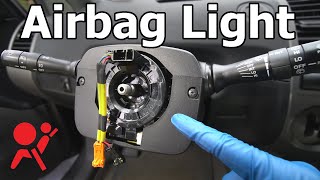
- Faulty Airbag Clock Spring (Spiral Cable) (Very Common) — This causes over 90% of B1181 codes. The clock spring is a rotary electrical connector inside the steering column allowing the wheel to turn while maintaining a connection to the airbag, horn, and steering wheel controls. The delicate internal ribbon cable fatigues and snaps from millions of rotations, creating an open circuit.
- Incorrectly Installed or Faulty Aftermarket Part (Common) — Using a cheap aftermarket clock spring frequently causes the code to return. These parts often fail to meet precise OEM resistance specifications or break prematurely. Rotating a new clock spring before it is properly centered and locked during installation instantly snaps the internal ribbon cable.
- Loose or Corroded Connectors (Common) — The airbag system uses distinctive yellow connectors. A poor connection under the driver's dashboard, at the steering column base, or directly at the airbag module introduces high resistance. Vibrations, previous repairs, or moisture intrusion lead to this fault.
- Damaged Wiring Harness or Pinched Wires (Less Common) — Delicate airbag wiring in the steering column or dash is easily pinched, stretched, or improperly reconnected during unrelated repairs (like ignition switch replacement). Wires also chafe against sharp metal edges over time, creating a physical break in the circuit.
- Dust/Contamination in Clock Spring (Less Common) — In high-dust environments, contaminants work into the clock spring housing. This foreign material interferes with the electrical contacts on the ribbon cable, leading to an intermittent or permanent open circuit. This specific issue triggered recalls for several Jeep Wrangler models.
- Defective Driver's Airbag Module (Squib) (Rare) — The squib is the small pyrotechnic igniter inside the airbag module. It occasionally fails internally, causing an open circuit. This is diagnosed by substituting a 2.0-2.5 ohm SRS diagnostic resistor in place of the airbag; if the code clears, the airbag module is condemned.
- Failed Airbag Control Module (SRS/ORC) (Very Rare) — The SRS control module itself rarely fails, but an internal fault causes it to incorrectly report an open circuit. This is the absolute last resort diagnosis after the wiring, clock spring, and airbag module are definitively proven functional.
Symptoms
- Airbag Warning Light On — The primary symptom is the constant illumination of the airbag (SRS) warning light on the instrument cluster. The system performs a self-check on startup; if the light stays on, it indicates a hard fault.
- Horn Not Working — Because the horn's electrical circuit passes through the clock spring, a broken ribbon cable causes the horn to fail simultaneously with the airbag light coming on.
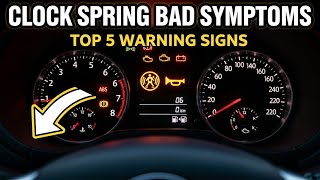
- Steering Wheel Controls Inoperative — Cruise control, radio volume, and hands-free phone buttons located on the steering wheel stop working. 🎬 Watch: Top 5 symptoms of a bad clock spring Their wiring is bundled with the airbag and horn circuits in the clock spring.
- Failed Vehicle Safety Inspection — An active airbag warning light is an automatic failure of required safety inspections in most jurisdictions, preventing legal vehicle registration.
- Airbags Will Not Deploy (scan-tool only — no driver-felt sign) — The SRS module disables the entire system when code B1181 is present to prevent accidental deployment, meaning no airbags function in an accident.
Diagnostic Flowchart
Tap your situation to follow the diagnostic path that matches what you're seeing on this code.
Common Fixes & Costs
- Replace Airbag Clock Spring (OEM) — Parts: $250-$450, Labor: $150-$250, ~1.5 hr book time (Intermediate)
- Replace Airbag Clock Spring (Aftermarket) — Parts: $30-$150, Labor: $150-$250, ~1.5 hr book time (Intermediate)
- Repair Wiring or Reseat Connector — Parts: $0-$30, Labor: $150-$300, ~2.0 hr book time (Intermediate)
- Replace Driver's Airbag Module — Parts: $700-$1500, Labor: $100-$200, ~0.8 hr book time (Professional)
- Replace Airbag Control Module (SRS/ORC) — Parts: $200-$800, Labor: $150-$250, ~1.5 hr book time (Professional)
Used vs. New Parts: Buying Guide
When a used part is worth it: Buying a used clock spring is highly discouraged as it is a primary wear-and-tear item. A used part is likely close to failure itself. Only consider it for very old, low-value vehicles where the budget is extremely tight and the part is sourced from a verified low-mileage donor.
Donor-vehicle mileage cap: roughly under 50000 miles for the part to have meaningful remaining life.
Donor quality checklist:
- Verify the donor vehicle's mileage is under 50,000.
- Ensure the part number matches exactly, including revisions.
- Avoid parts from vehicles involved in a frontal collision.
- Check connectors for corrosion or bent pins.
Decision logic:
- If The part is a critical safety component like a clock spring → Buy a new OEM part for maximum reliability and safety.
- If Budget is the primary concern → Buy a new aftermarket part from a reputable brand (e.g., Dorman), accepting a slightly higher risk of premature failure.
- If The vehicle is over 15 years old and has low resale value → A used part from a low-mileage donor is a last-resort option.
Warranty tradeoff: Used parts offer a 30-90 day warranty. Aftermarket new parts usually come with a 1-year to limited lifetime warranty. New OEM parts offer the best guarantee of quality and fitment, typically with a 1-year warranty.
Worst-case if a used part fails: $200-$500 if a used or cheap aftermarket part fails, requiring repeat labor and another replacement part.
What Happens If You Wait — Timeline
- Immediate (First Key-On): SRS module detects the open circuit during its self-test. The airbag warning light illuminates. The entire airbag system is disabled as a fail-safe. (MPG impact: 0%% · Added cost: $0)
- First Drive: The driver discovers the horn, cruise control, or steering wheel radio buttons no longer function, confirming the clock spring as the failure point. (MPG impact: 0%% · Added cost: $0)
- Next Vehicle Inspection: The vehicle automatically fails its safety inspection due to the illuminated airbag light, preventing legal registration renewal. (MPG impact: 0%% · Added cost: $20-$50 (for the failed inspection fee))
- Upon Attempted Sale: Resale value is significantly diminished. Selling requires full written disclosure of the safety defect to avoid legal liability. (MPG impact: 0%% · Added cost: $500-$3000+ (in lost resale value and potential liability))
Cost of Not Fixing It
- Immediate: Complete deactivation of the entire airbag system. In a collision, no airbags deploy, dramatically increasing the risk of severe injury or death. (Added cost: N/A)
- At Next Vehicle Inspection: Guaranteed failure of the vehicle's safety inspection in any jurisdiction checking for an illuminated airbag warning light. (Added cost: $20-$50 (for the failed inspection fee))
- Upon Sale of Vehicle: Significant reduction in vehicle resale value (20-40%). Creates major legal liability for the seller if the fault is not disclosed in writing. (Added cost: $500 - $3000+ (in lost value and potential legal fees))
Diagnosis Steps
- Confirm the Code with an SRS-Capable Scanner
Use an OBD-II scanner that reads Supplemental Restraint System (SRS) codes to verify B1181 is the active fault. Generic engine code readers cannot see SRS codes.
Tools: OBD-II Scanner (with SRS/Airbag capability) (Beginner) - MANDATORY SAFETY: Depower the SRS System
Disconnect the negative battery terminal. Wait exactly 15 minutes before working on any airbag components. This allows the backup power capacitors within the SRS module to fully discharge, eliminating the risk of accidental deployment.
Tools: 10mm wrench or socket (Beginner) - Live Data Analysis with Scan Tool
Using an advanced SRS scanner, access the live data stream. Look for the driver's airbag squib circuit resistance. A healthy circuit shows 2.0-3.5 ohms. A reading of 'OL' (Over Limit) or 'OPEN' confirms the B1181 fault. Turn the steering wheel slowly; if resistance jumps to OL only at certain angles, the clock spring is failing.
Tools: Advanced SRS Scan Tool (Advanced) - Visual Inspection of Circuit Connectors
Inspect all visible yellow airbag connectors at the base of the steering column and behind the airbag itself. Look for pushed-out pins, corrosion, or connectors that are not fully seated and locked.
Tools: Flashlight, trim removal tools (Beginner) - The Shorting Bar Continuity Trick
With the airbag removed and unplugged, disconnect the lower clock spring connector at the steering column base. The internal shorting bar on the lower connector shorts the pins together. Measure resistance between the two pins on the upper (airbag side) connector. Near-zero ohms proves the clock spring is intact. Infinite resistance (OL) proves the clock spring is broken internally.
Tools: Multimeter, connector pin probes (Advanced) - Test the Airbag Module (Squib) with a Simulator
NEVER use a multimeter on the airbag module itself; the current deploys the airbag. Disconnect the airbag and plug a 2.0-2.5 ohm SRS load tool into the clock spring connector. Reconnect the battery and clear codes. If B1181 stays away, the wiring is good, and the airbag module is faulty.
Tools: SRS load tool/simulator resistor kit (2.0-2.5 ohms) (Advanced) - Isolate and Test the Harness
If the clock spring and airbag module are good, disconnect the harness at the clock spring base and the SRS module. Check for continuity on each wire from end to end. A lack of continuity confirms a broken wire in the dash harness.
Tools: Multimeter, vehicle-specific wiring diagram (Professional) - Final Diagnosis: The SRS Control Module
If all wiring, connectors, the clock spring, and the airbag module test perfectly, the SRS control module has failed internally. This requires a dealer-level scan tool to perform advanced module self-tests.
Tools: Advanced diagnostic scan tool (Professional)
When This Code Triggers (Freeze-Frame Conditions)
- Fault Status: Active/Current (The SRS module runs a self-test on every key-on cycle. An open circuit is an immediate, hard fault detected within seconds of starting the vehicle.)
- Driver Squib 1 Resistance: Over Limit / 99 Ohms / OPEN (A healthy circuit reads between 2.0-3.5 ohms. The B1181 code sets when the module detects resistance far exceeding this range, indicating a broken wire.)
- System Voltage: 11.5V - 14.5V (The SRS module records system voltage to rule out low/high voltage as a cause for module malfunction.)
- Ignition Cycles Since Fault: 0-255 (The SRS module counts the number of times the vehicle started since the fault was first detected. A low number indicates a recent failure.)
Related Codes
- B1186 — The opposite of B1181. Indicates a short in the driver's squib circuit. A B1181 fault shows infinite resistance (OL), while B1186 shows zero resistance between the wires.
- B1801 / B1811 — Manufacturer-specific codes (Toyota/Lexus/Subaru) for dual-stage airbags. B1801 is stage one; B1811 is stage two. B1181 often corresponds directly to the B1811 fault.
- B1193 — Indicates an open in the passenger's squib circuit. The fault is on the passenger side, but diagnostic principles are identical to B1181.
- B1049 — Common on Nissan vehicles, translating to "Driver Airbag Module Open". It reinforces that the clock spring is the most likely failure point.
Climate & Environmental Factors
- Extreme Temperatures: Extreme cold causes electrical connectors to contract and become loose, creating an open circuit. The plastic ribbon inside a clock spring also becomes brittle and snaps in freezing weather.
- High Humidity / Moisture: Moisture and high humidity lead to corrosion on the delicate pins within the airbag system's yellow connectors. This corrosion increases resistance and causes the B1181 fault.
- Dust and Debris: In dusty environments, fine particles work into the clock spring mechanism. This contamination abrades the delicate ribbon cable and interferes with electrical contacts.
How to Talk to a Mechanic About This Code
Say this: "I have an airbag light on, and my scanner is showing code B1181, Driver's Squib Circuit Open. My horn and steering wheel controls are also not working. I'd like to book a diagnostic appointment to confirm that the clock spring has failed."
This language shows you have done your research and identified the most likely cause. It focuses the technician's diagnostic path, saving time. Mentioning the associated symptoms strongly supports the clock spring diagnosis.
Avoid saying:
- 'My airbag light is on, can you fix it?' (Too vague, invites a costly, open-ended diagnostic process.)
- 'I think I need a new airbag.' (Incorrectly diagnoses the problem and suggests a very expensive, likely unnecessary repair.)
- 'Just replace the clock spring.' (Don't authorize a repair without a professional diagnosis first to avoid paying for a part you may not need.)
Questions to ask before authorizing the repair:
- Did you confirm the open circuit is in the clock spring itself? How was this tested?
- Will you be using an OEM or an aftermarket clock spring? What is the warranty on the part and the labor?
- Does the estimate include scanning and clearing the SRS module codes after the physical repair is complete?
- If the airbag light comes back on immediately, is the diagnostic to find out why covered?
Where to Take It: Dealer vs Independent vs Chain
- Dealer:
Recommended only if the vehicle is under warranty or if you've exhausted other options. For a straightforward clock spring replacement, a dealer is not the most cost-effective choice.
Best for: Vehicles under warranty or covered by a specific recall for the clock spring., Complex cases where the clock spring, wiring, and airbag module have been ruled out., Owners who prioritize OEM parts and a manufacturer-backed warranty above all else.
Downsides: Highest labor rates and parts costs, often 1.5-2x more than an independent shop., Less willing to diagnose and more inclined to replace entire assemblies. (Typical cost: +75% vs. baseline) - Independent Shop:
Best fit for most owners. An experienced independent mechanic diagnoses and replaces a clock spring efficiently and more affordably than a dealer.
Best for: Out-of-warranty vehicles where cost is a factor., Owners who want more options, such as using a high-quality aftermarket part to save money.
Downsides: Shop quality and technician experience vary; choose a shop with good reviews and ASE certifications., May not have the latest dealer-level tools for complex module programming. (Typical cost: +0% vs. baseline) - Chain Shop:
AVOID. Airbag system repair is a critical safety function that must be handled by a specialized technician at a dealership or reputable independent shop.
Best for: Not recommended for airbag system diagnostics or repair.
Downsides: Technician skill varies dramatically., Often lack specialized SRS diagnostic tools required for airbag systems., Business model encourages upselling unnecessary services. (Typical cost: +0% vs. baseline)
When to Walk Away From the Repair
If the total estimated repair cost for the B1181 code ($400-$800) exceeds 40-50% of your car's current private-party market value, seriously consider selling the car as-is.
- Car worth $8000, fix is $700: Fix it. The repair cost is less than 10% of the vehicle's value and is critical for safety and resale.
- Car worth $3000, fix is $700: Borderline. The repair is nearly 25% of the car's value. If the car is otherwise in good condition, fixing it is reasonable.
- Car worth $1500, fix is $700: Walk away. The repair cost is almost 50% of the car's value. It is not economically sensible to perform this repair.
What Scan Tool You Need for This Code
Minimum: A scan tool with SRS/Airbag system access. A basic $20 engine code reader WILL NOT work; it cannot see or clear codes from the airbag control module.
Code B1181 is stored in the Supplemental Restraint System (SRS) module, not the Engine Control Unit (ECU). Without an SRS-capable scanner, you cannot read the code, view live resistance data, or clear the code after the repair.
Budget: Autel AutoLink AL619 (~$65) — Reads and clears engine, ABS, and SRS (airbag) codes on most major vehicle makes. It retrieves the B1181 code and clears it after the repair is done.
Mid-range: BlueDriver Pro / Foxwell NT510 Elite (~$120-180) — Offers live data streaming. This allows you to see the driver squib circuit resistance in real-time, confirming a broken clock spring by watching the resistance change as you turn the steering wheel.
Professional: Autel MaxiCOM MK808 / Launch CRP129X (~$350-450) — Full bidirectional scan tools offering comprehensive diagnostics across all vehicle modules. Provides professional-level capabilities like active tests and access to manufacturer-specific data.
Rent vs buy: Most auto parts stores do NOT rent out SRS-capable scanners due to liability. If you plan to do the repair yourself, you must buy a scanner. Budget options under $100 make it a worthwhile purchase.
How to Clear the Code After You Fix It
- Ensure the physical fault (e.g., broken clock spring) is correctly repaired.
- Reconnect the negative battery terminal.
- Use an SRS-capable OBD-II scan tool to access the Supplemental Restraint System module.
- Select the function to 'Clear DTCs' or 'Erase Fault Codes'.
- Cycle the ignition off, wait 10 seconds, then cycle it back on to confirm the airbag light stays off.
Drive cycle: No drive cycle is required. The SRS system performs a complete self-test upon every key-on event. If the repair is successful and the code is cleared with a scanner, the light stays off immediately.
Readiness monitors affected: None directly. The SRS system is separate from the emissions system.
Watch out for:
- Disconnecting the battery does NOT clear a B1181 code; it must be cleared with a proper scan tool.
- Using a generic $20 engine code reader fails; it cannot communicate with the SRS module.
- If the code returns immediately, the root cause was not fixed, the new part is faulty, or a connector is not fully seated.
Will This Fail Emissions / State Inspection?
Yes — this code typically fails an OBD-II emissions inspection.
- California: An illuminated airbag warning light is an automatic failure of the mandatory safety inspection. You cannot complete registration without fixing the SRS fault.
- New York: An illuminated airbag warning light is technically an advisement, not a cause for rejection. However, individual shops frequently refuse to pass the vehicle due to liability.
- Texas: An illuminated airbag light is not listed as a specific failure item in Texas, but many large chain inspection stations refuse to pass the vehicle on safety grounds.
Most Commonly Affected Vehicles
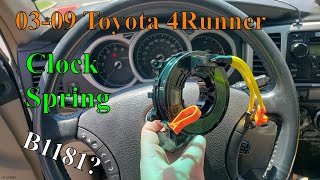
- Toyota 4Runner (2003-2009) — Extremely common issue due to clock spring failure. The OEM part number is 84306-07040.
- Toyota Corolla (2009-2010) — Clock spring failure is a well-documented cause for B1181 in this generation. Subject of a voluntary safety recall.
- Toyota Land Cruiser (1998-2007) — Owners report B1181 caused by a faulty spiral cable (clock spring), even at very high mileage (over 300k miles).
- Lexus ES300 / GX470 (2003-2007) — Prone to B1181 caused by a faulty spiral cable (clock spring). Diagnostic process is identical to Toyota models.
- Scion xB (2004-2006) — Frequently reported code, with the clock spring being the overwhelming cause.
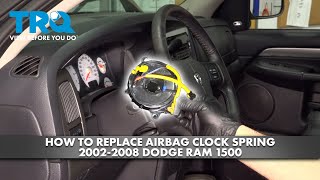
- Dodge/Ram 1500/2500 (2006-2012) — A very common failure item. The clock spring is often integrated with the steering angle sensor. Common replacement part number is 56049795AE.
- Nissan Titan (2004-2015) — Clock spring failure is a known weakness. Relevant part numbers include 25560-9FD8A.
- Volkswagen Jetta (Bora) (1998-2005) — This generation (MK4) is known for airbag electrical faults related to the clock spring and harness connectors.
- Subaru Ascent (2019-2022) — Presents with equivalent codes B1801 and B1811, pointing to a fault in the driver's dual-stage airbag circuit.
Manufacturer-Specific Notes
- Toyota/Lexus/Subaru: Uses the terminology "Open in D Squib Circuit" and uses codes B1801 or B1811 alongside B1181. Multiple recalls exist for spiral cable damage across various models.
- Dodge/Chrysler/Jeep: Failing clock springs are extremely common and often sold as an assembly with the steering angle sensor. Multiple recalls exist for Jeep Wranglers due to dust ingestion causing failure.
- Ford: Ford's definition is sometimes ambiguous. An equivalent code refers to the "Driver Pretensioner Circuit Fault," pointing to the seatbelt buckle rather than the steering wheel airbag.
- GM: On older GM vehicles, B1181 relates to an audio output circuit, completely unrelated to airbags. Always verify the full code description with a capable scanner.
Real Owner Stories
2005 Toyota Land Cruiser at 313K miles
Airbag light stayed on. Horn and cruise control still worked. Dealer diagnosed code B1181.
What they tried:
- Based on forum research, the owner decided to replace the clock spring as a DIY job.
Outcome: Replaced the clock spring with a new OEM part. The airbag light went out and stayed off. The owner saved hundreds of dollars compared to the dealer quote.
Lesson: Even if other steering wheel functions work, the clock spring is still the culprit for a B1181 code. On high-mileage vehicles, this is a highly likely mechanical failure.
2003 Lexus GX470, mileage unknown
Airbag light was on with code B1181. The owner previously replaced the clock spring to fix non-working steering wheel controls. Power to controls was restored, but B1181 remained.
What they tried:
- First replacement was an aftermarket clock spring which fixed the controls but not the airbag light.
- The owner posted on a forum asking if the new aftermarket part was faulty.
Outcome: The immediate advice was to question the quality of the non-OEM part. The strong implication was a faulty aftermarket part caused the persistent code.
Lesson: If B1181 remains after replacing the clock spring with an aftermarket part, the new part is the primary suspect. Using a quality OEM part is cheaper in the long run.
2004 Pontiac Vibe at 145K miles
Solid SRS airbag light appeared. Owner self-diagnosed code B1181 by jumping pins on the OBD connector.
What they tried:
- The owner ordered a cheap $10 clock spring from eBay as a first step, acknowledging the risk of 'throwing parts' at the problem.
Outcome: The owner waited for the part to arrive. This highlights a common DIY thought process: starting with the cheapest part.
Lesson: Starting with the cheapest part wastes time and money if it's not the correct fix. A $10 clock spring is highly likely to be defective out of the box.
2004 Toyota 4Runner, post-accident rebuild
Airbags deployed and were replaced. The airbag light remained on with code B1181. Horn and radio controls did not work.
What they tried:
- The owner fixed the horn/radio issue himself, but the airbag light was still on.
- A technician found the codes would clear but the light remained, indicating a crash data lock in the SRS module.
Outcome: The SRS module needed to be professionally reset or replaced because it stored crash data, keeping the light on even after physical repairs.
Lesson: If the vehicle was in an accident where airbags deployed, the SRS control module must be professionally reset or replaced to clear stored crash data.
How to Prevent This Code From Triggering
- Be Gentle with the Steering Wheel (Daily habit) — Avoid turning the steering wheel to its absolute lock with force. This puts maximum stress on the internal ribbon cable of the clock spring, accelerating breakage.
- Use Dielectric Grease on Connectors (During any related repair) — Applying a small amount of dielectric grease to connector seals prevents moisture intrusion and corrosion, which causes high resistance faults over time.
- Secure New Clock Spring During Installation (During replacement) — Ensure the new clock spring remains centered and does not rotate until the steering wheel is installed. Rotating it before installation snaps the new ribbon cable instantly.
- Perform Careful Repairs (During any dash/steering column work) — Be mindful of the bright yellow airbag wiring loom. Avoid pinching, stretching, or stressing these wires to prevent creating an open circuit.
- Regularly Wash Vehicle Undercarriage (Seasonally, especially in salt-belt states) — Washing away road salt prevents corrosion on all electrical components, including externally mounted SRS impact sensors and wiring.
Frequently Asked Questions
Is it safe to drive with code B1181?
No. The airbag warning light signifies the entire Supplemental Restraint System (SRS) is offline. In an accident, the airbags will not deploy, leading to severe injury or death.
Can I fix code B1181 myself?
An experienced DIYer can replace a clock spring, but it involves removing a live pyrotechnic device. Strict adherence to safety procedures, especially disconnecting the battery for 15 minutes, is mandatory. If you lack experience with SRS systems, take the vehicle to a certified professional.
Will disconnecting the battery clear the B1181 code?
No. B1181 is a hard fault indicating a permanent physical open circuit. The SRS module re-detects the fault immediately upon startup, turning the light back on.
I replaced the clock spring, but the B1181 code is still on. What's next?
Re-verify every connector is perfectly seated. If using a cheap aftermarket clock spring, the new part is likely faulty. Otherwise, test the wiring harness between the clock spring and the SRS module for breaks.
What is a 'squib' and a 'squib circuit'?
A 'squib' is the small pyrotechnic igniter inside the airbag module that starts the inflation reaction. The 'squib circuit' is the electrical path from the SRS control module, through the clock spring, to the squib itself.
Can I sell a car with the airbag light on?
Selling a car with a known safety system fault requires full written disclosure to the buyer to avoid legal liability. A car with an active airbag light suffers a 20-40% reduction in resale value. Many buyers and dealerships refuse to purchase it as-is.
My horn and cruise control also stopped working. Is that related?
Yes. This is the classic symptom of a failed clock spring. The internal ribbon cable containing the wiring for the airbag, horn, and steering wheel buttons has snapped, severing all connections simultaneously.
Key Takeaways
- Code B1181 disables the entire airbag system, preventing deployment in a crash due to an open electrical circuit.
- A broken steering wheel clock spring causes over 90% of B1181 faults, often accompanied by a dead horn or steering wheel buttons.
- Always disconnect the negative battery terminal and wait 15 minutes before inspecting yellow airbag connectors to prevent accidental deployment.
- Never test an airbag module directly with a multimeter; use a 2.0-2.5 ohm SRS simulator resistor to safely isolate the fault.
Helpful Videos


Shop the Parts Behind B1181
Below are the parts most often responsible for code B1181, ranked by how frequently each one is the actual culprit (per the diagnosis above). Tap any to see what we have for your vehicle.



The information in this article is provided for general reference and educational purposes only. Vehicle specifications, procedures, and part compatibility can vary by production date, trim level, and region. Always consult your vehicle's factory service manual and verify part numbers before purchasing or performing repairs. Safety-critical components such as airbags, seat belts, and braking systems should be installed by a qualified professional.
- 🧭 Diagnostic Flowchart
- 🎬 Helpful Videos
- 🛍️ Shop This Part
- What Does B1181 Mean?
- Can I Drive With B1181?
- Common Causes
- Symptoms
- Common Fixes & Costs
- Used vs. New Parts: Buying Guide
- What Happens If You Wait — Timeline
- Cost of Not Fixing It
- Diagnosis Steps
- When This Code Triggers (Freeze-Frame Conditions)
- Related Codes
- Climate & Environmental Factors
- How to Talk to a Mechanic About This Code
- Where to Take It: Dealer vs Independent vs Chain
- When to Walk Away From the Repair
- What Scan Tool You Need for This Code
- How to Clear the Code After You Fix It
- Will This Fail Emissions / State Inspection?
- Most Commonly Affected Vehicles
- Manufacturer-Specific Notes
- Real Owner Stories
- 2005 Toyota Land Cruiser at 313K miles
- 2003 Lexus GX470, mileage unknown
- 2004 Pontiac Vibe at 145K miles
- 2004 Toyota 4Runner, post-accident rebuild
- How to Prevent This Code From Triggering
- Frequently Asked Questions
- Is it safe to drive with code B1181?
- Can I fix code B1181 myself?
- Will disconnecting the battery clear the B1181 code?
- I replaced the clock spring, but the B1181 code is still on. What's next?
- What is a 'squib' and a 'squib circuit'?
- Can I sell a car with the airbag light on?
- My horn and cruise control also stopped working. Is that related?
- Key Takeaways
- 🎟️ Get 5% Off