

OBD-II Code B1185: Airbag System Fault
What B1185 means, why it triggers, and how to fix it
- Code B1185 disables the entire Supplemental Restraint System (SRS), meaning airbags and pretensioners will not deploy in a crash.
- Check the yellow wiring connectors under the front seats first, as loose connections cause over 50% of these faults.
- If the horn and steering wheel buttons fail simultaneously with the airbag light, replace the clock spring (typically a $200-$500 repair).
- Never replace an Airbag Control Module after a minor accident without first trying a $50-$150 mail-in crash data reset service.
- Always disconnect the negative battery terminal and wait 30 minutes before touching any yellow SRS connectors to prevent accidental deployment.
What Does B1185 Mean?
B1185 is a body trouble code signaling a critical failure within the Supplemental Restraint System (SRS). The main computer detected an electrical fault in an airbag, seat belt pretensioner, or connecting wiring. The computer turns on the airbag warning light and shuts down the entire system to prevent accidental deployment.
Technical definition: The official definition of B1185 differs by manufacturer because there is no universal SAE standard. For Toyota, it is 'Short in P Squib (2nd step) Circuit' (passenger airbag inflator). For Nissan, it is 'Left-hand Front Seat Belt Buckle Pre-Tensioner Shorted'. For Subaru, it is 'AIRBAG ECU MALFUNCTION' (stored crash data). In all cases, it indicates a critical SRS fault rendering the system inoperative.
Can I Drive With B1185?
No — Do Not Drive. It is not safe to drive. When code B1185 is present, the vehicle's computer disables the entire Supplemental Restraint System (SRS). In a crash, the airbags and seat belt pretensioners will NOT deploy, significantly increasing the risk of serious injury or death. While the vehicle mechanically operates, its critical safety features are non-functional.
Common Causes
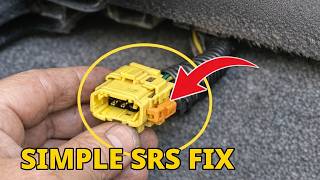
- Damaged or Loose Wiring/Connectors (Very Common) — Airbag wiring routed under seats or through the steering column gets tugged, corroded, or damaged. Loose connectors, especially the yellow ones under the front seats, 🎬 Watch: How to fix loose under-seat SRS connectors create open or short circuits that trigger the code.
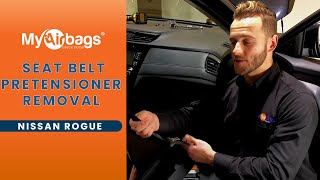
- Faulty Seat Belt Pretensioner or Buckle (Common) — Modern seat belts use a pyrotechnic pretensioner to tighten the belt in a crash. The system monitors this circuit, and a short or high resistance sets the code. This is a primary failure point on Nissan vehicles.
- Faulty Clock Spring (Common) — The clock spring is a coiled wire in the steering column maintaining electrical connection for the driver's airbag, horn, and steering wheel buttons. It wears out and breaks over time, causing an open circuit to the driver's airbag.
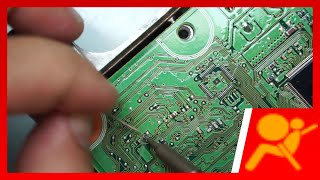
- Stored Crash Data in Airbag Control Module (Common) — After any collision, the Airbag Control Module stores crash data. This locks the module and illuminates the airbag light, even if airbags did not deploy. On Subarus, this presents as a B1185 code requiring a professional module reset. 🎬 See how to reset Subaru airbag modules and clear crash data
- Faulty Passenger Occupant Detection System (ODS) (Common) — The passenger seat contains a weight sensor and control module to determine airbag activation. A failed sensor mat or loss of calibration triggers an SRS fault and disables the passenger airbag.
- Faulty Airbag Module (Squib) (Less Common) — The squib contains the pyrotechnic charge inflating the airbag. The SRS computer continuously checks its electrical resistance. An internal fault in the squib sets the code, common in passenger airbags on older Toyotas.
- Faulty Airbag Control Module (SRS/ECU) (Rare) — The SRS 'brain' fails due to internal shorts, water damage, or age. However, stored crash data is far more common than spontaneous internal hardware failure.
- Radio Frequency Interference (RFI) (Rare) — Aftermarket electronic devices like cheap phone chargers or LED lights emit radio frequencies interfering with the SRS module. This interference mimics a system fault, a known issue on GM vehicles per TSB PIC5650K.
Symptoms
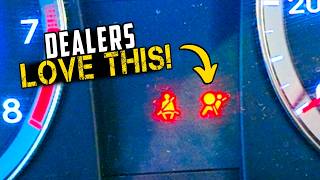
- Airbag or SRS Warning Light On — This is the most common and often the only symptom. The light stays illuminated on the dashboard, indicating the system is disabled.
- Horn Not Working — If the clock spring fails, the horn stops working simultaneously because its wiring runs through the same component.
- Steering Wheel Controls Not Working — Cruise control, radio volume, and other buttons on the steering wheel stop functioning if the clock spring breaks.
- Passenger Airbag 'OFF' Light Illuminated — If the fault is in the Occupant Detection System, the passenger airbag 'OFF' indicator stays lit even when an adult is in the seat.
- Seat Belt Light Stays On — If the fault is in the seat belt buckle sensor, the seat belt warning light stays on even when buckled.
Diagnostic Flowchart
Tap your situation to follow the diagnostic path that matches what you're seeing on this code.
Common Fixes & Costs
- Repair or Reconnect Wiring — Parts: $5-$20, Labor: $100-$300, ~1.5 hr book time (Intermediate)
- Replace Seat Belt Pretensioner/Buckle Assembly
— Parts: $150-$400, Labor: $150-$300, ~1 hr book time
(Intermediate)
: OEM
: OEM
: OEM - Replace Clock Spring
— Parts: $50-$450, Labor: $150-$350, ~1.5 hr book time
(Intermediate)
: OEM
: OEM
: OEM - Reset Airbag Control Module (after an accident) — Parts: $0, Labor: $50-$150, ~1.5 hr book time (Professional)
- Replace Airbag Control Module (SRS ECU)
— Parts: $200-$1,200, Labor: $150-$300, ~1.5 hr book time
(Professional)
: OEM
: OEM
: OEM
Used vs. New Parts: Buying Guide
When a used part is worth it: For non-pyrotechnic electronic components like the Airbag Control Module (SRS ECU), a used part from a reputable auto recycler is a cost-effective option, provided it comes from a vehicle with no crash history and the part number matches exactly. For a clock spring, a used OEM part is more reliable than a cheap new aftermarket one.
Donor-vehicle mileage cap: roughly under 100000 miles for the part to have meaningful remaining life.
Donor quality checklist:
- Verify the donor vehicle was not involved in a collision to avoid modules with stored crash data.
- Match the OEM part number exactly. Superseded or similar numbers are not compatible.
- Avoid parts from flood-damaged vehicles, as moisture causes hidden corrosion and failure.
Decision logic:
- If The part contains a pyrotechnic charge (e.g., any airbag, seat belt pretensioner/buckle). → Always buy new OEM. It is unsafe and illegal to install used pyrotechnic devices.
- If The part is an Airbag Control Module. → A used module is acceptable if the part number is identical and it has no stored crash data. A professional reset of your original module is often the cheapest and most reliable option.
- If The part is a clock spring. → New OEM is best. A high-quality aftermarket part is a good second choice. A used OEM part is preferable to a low-quality new aftermarket part.
Warranty tradeoff: Used parts typically have a 30-90 day warranty. Aftermarket new parts offer a 1-year to limited lifetime warranty. New OEM parts carry a 1-year warranty.
Worst-case if a used part fails: $300-$800 if a used electronic module is faulty or has hidden crash data, requiring repeat labor for removal and the cost of another part or a reset service.
What Happens If You Wait — Timeline
- 0-1 Day (Immediate): The B1185 code is set, the airbag light turns on, and the entire SRS system is disabled by the control module as a failsafe. (MPG impact: 0%% · Added cost: $0)
- 1 Day - 6 Months: The vehicle remains in a high-risk state. An intermittent fault (like a loose wire) is aggravated by vibration and temperature changes, becoming a permanent 'hard fault'. (MPG impact: 0%% · Added cost: $0-$50)
- Approaching Vehicle Inspection: The vehicle automatically fails its safety inspection in most states due to the illuminated airbag light, preventing legal registration. (MPG impact: 0%% · Added cost: $250-$800)
- At Time of Accident or Resale: If an accident occurs, the airbags will not deploy, leading to potentially catastrophic injuries. If trying to sell the car, the value is significantly diminished by a known safety system fault. (MPG impact: 0%% · Added cost: $1,000-$3,000+ (diminished value) or Incalculable (personal injury))
Cost of Not Fixing It
- Immediate: Total failure of the airbag and seatbelt pretensioner systems. In an accident, safety devices will not deploy, drastically increasing the risk of serious injury or death. (Added cost: N/A)
- Next Vehicle Inspection: Guaranteed failure of the state safety inspection in most jurisdictions. This prevents legal vehicle registration. (Added cost: $20-$50 (cost of failed inspection))
- Ongoing: Significantly reduced resale value. A known, active safety system fault makes the car difficult to sell legally and ethically. (Added cost: $1000-$3000+ (diminished vehicle value))
- Long-Term: Ignoring a simple wiring or sensor fault masks a more severe underlying issue with the Airbag Control Module, leading to complex and expensive repairs later. (Added cost: $500-$1500+)
Diagnosis Steps
- Scan for Codes with an SRS-Capable Scanner
Use an OBD-II scanner that reads SRS (airbag) codes. A basic engine code reader will not work. Note the specific definition of B1185 for your vehicle's make.
Tools: SRS-capable OBD-II Scanner (Beginner) - Test Steering Wheel Functions
Check if the horn, cruise control, and steering wheel buttons work. If they fail alongside the airbag light, the clock spring is the culprit.
Tools: None (Beginner) - Disconnect the Battery (Critical Safety Step)
Before touching any SRS wiring, disconnect the negative battery terminal and wait at least 30 minutes. This discharges backup power, preventing accidental airbag deployment.
Tools: Wrench set (Beginner) - Perform a Thorough Visual Inspection
Look under the driver and passenger seats for loose or disconnected yellow connectors. Inspect seat belt buckles for debris and check for water intrusion near the center console.
Tools: Flashlight (Beginner) - Advanced: Analyze Live Data PIDs
Using an advanced scan tool, monitor live data Parameter IDs (PIDs) for the SRS module. Look for circuit resistance values (e.g., 'Driver Squib Resistance'). Values should be stable between 2.0-3.5 ohms. Erratic or 'OPEN' readings confirm a circuit fault.
Tools: Advanced Scan Tool with Live Data (Advanced) - Advanced: Perform a 'Wiggle Test'
With a scan tool graphing the resistance PID of the suspect circuit, gently wiggle the connectors under the seat and at the airbag module. Resistance spikes or dropouts indicate a loose connection.
Tools: Advanced Scan Tool with Live Data, Trim removal tools (Advanced) - Advanced: Measure Component Circuit Resistance
Using a multimeter set to ohms (Ω), measure the resistance of the component indicated by the code. A normal squib or pretensioner reads 2.0 to 3.5 ohms. 'OL' indicates a broken wire; below 1.0 ohm indicates a short.
Tools: Multimeter, Vehicle-specific service manual (Advanced) - Check the Airbag Control Module
Inspect the airbag control module for water damage or corrosion. If the vehicle was in a prior accident, the module has stored crash data and requires a professional reset.
Tools: Socket set, Trim removal tools (Advanced) - Isolate the Fault with a Resistor Tool
Substitute the suspect component (e.g., airbag) with a 2.2 to 2.5 ohm resistor tool. If the code clears, the component is faulty. If it remains, the fault is in the wiring harness or control module.
Tools: Airbag circuit diagnostic tool/resistor set (Professional)
When This Code Triggers (Freeze-Frame Conditions)
- System State: Key-On Self-Test (The SRS module performs a self-test every time the ignition is turned to the 'ON' position. The B1185 code is set during this initial check if a circuit fault is detected.)
- Component Resistance: Out of Range (High or Low) (The module continuously monitors the electrical resistance of all pyrotechnic components. The code triggers if a circuit's resistance goes above or below the specified range (e.g., <1.0Ω or >4.0Ω).)
- Battery Voltage: 9-16 Volts (A low main battery sometimes causes the SRS module's backup battery to deplete, triggering various system faults.)
- Fault Type: Current/Active (The code is stored as 'active' as long as the electrical fault persists. If the fault is intermittent, it stores as a 'history' code, but the light remains on until cleared.)
Related Codes
- B1193 — A common code on Ford and Mazda vehicles for 'Crash Data Stored.' This is functionally equivalent to the crash data condition triggering a B1185 on a Subaru. The airbag module must be reset or replaced.
- B1000, B1115 — On Subaru vehicles, these codes indicate a general 'Airbag ECU Malfunction.' They appear together after a collision when crash data is stored, requiring a module reset.
- B0026 / B0001 — Universal SAE codes for 'Driver Frontal Deployment Loop Open'. They are functionally identical to a B1185 caused by a broken clock spring. The problem is in the steering column.
- B0052 / B0053 — Generic SAE codes related to the 'Seat Belt Pretensioner Deployment Loop.' A B0052 fault on a GM vehicle is diagnostically similar to a B1185 on a Nissan, pointing to a seat belt buckle circuit problem.
Climate & Environmental Factors
- Cold Weather: Extreme cold causes electrical connectors to contract, leading to intermittent open circuits or high resistance. This illuminates the airbag light on cold mornings, which may turn off once the cabin warms up.
- High Humidity: Moisture in the air or from water leaks leads to corrosion on the pins of SRS connectors and control modules. This corrosion increases circuit resistance, triggering fault codes.
How to Talk to a Mechanic About This Code
Say this: "I have an airbag light on and my scanner shows code B1185. I'd like to schedule a diagnostic appointment. Based on my vehicle's make, I suspect it might be the [clock spring/seat belt buckle/crash data], so could you please start the diagnosis there?"
This shows you've done your research and guides the technician toward the most likely cause, saving diagnostic time. It prevents them from starting with a broad, expensive exploratory process.
Avoid saying:
- 'My airbag light is on, can you just reset it?'
- 'Just fix whatever is wrong with the SRS system.'
- 'I have no idea what's wrong, just tell me how much to fix it.'
Questions to ask before authorizing the repair:
- What specific component did your tests identify as faulty?
- If it's the module, did you confirm there is no crash data stored before recommending replacement?
- Can you show me the resistance reading from the faulty part?
- What is the warranty on both the part and your labor for this specific repair?
Where to Take It: Dealer vs Independent vs Chain
- Dealer:
Best for: Vehicles under warranty, Complex cases requiring manufacturer-specific diagnostic tools and software updates, Repairs involving module replacement and VIN programming
Downsides: Highest labor rates, Prefers to replace entire assemblies rather than repair individual components (Typical cost: +50% vs. baseline) - Independent Shop:
Best fit for most common repairs. An experienced independent shop handles the majority of B1185 causes, like wiring, clock springs, and pretensioners, at a lower cost than the dealer.
Best for: Out-of-warranty vehicles with common, well-documented B1185 causes (e.g., clock spring, seat belt buckle), Shops with strong reputations and certified technicians (ASE), Cost-conscious owners
Downsides: Quality and expertise vary widely, Lacks the latest manufacturer-specific diagnostic tools for complex issues (Typical cost: +0% vs. baseline) - Chain Shop:
AVOID. Airbag system repairs require specialized knowledge beyond the scope of most chain shops. The risk of improper repair or misdiagnosis is high.
Best for: Not generally recommended for SRS/airbag diagnostics
Downsides: Technician experience with complex electrical and safety systems is limited, High pressure to upsell leads to misdiagnosis and unnecessary parts replacement (Typical cost: -10% vs. baseline)
When to Walk Away From the Repair
If the estimated repair cost for the B1185 code exceeds 50-60% of your car's private-party value, seriously consider selling the car as-is or trading it in.
- Car worth $4500, fix is $2200: Borderline. The repair is nearly half the car's value. Get a second opinion, but it may be time to walk away.
- Car worth $15000, fix is $800: Fix it. The repair cost is a small fraction of the vehicle's value and is critical for safety.
- Car worth $3000, fix is $2000: Walk away. The repair cost is not economically viable. The money is better put toward a replacement vehicle.
What Scan Tool You Need for This Code
Minimum: A scanner that reads and clears Supplemental Restraint System (SRS) or airbag codes. A basic engine-only code reader will not work.
A standard $20-$50 OBD-II scanner only accesses the powertrain control module (engine and transmission). It cannot communicate with the SRS module where the B1185 code is stored. You will see 'no codes' while the airbag light is on.
Budget: BlueDriver Pro (~$100) — Connects to a smartphone app and reads/clears SRS codes for most major manufacturers. It provides live data, helping identify intermittent wiring issues.
Mid-range: Foxwell NT630 Plus / Autel MaxiLink ML629 (~$150) — Dedicated handheld units providing comprehensive SRS diagnostics. They read and clear codes, view live sensor data, and perform component tests. They are more robust and faster than app-based scanners.
Professional: Autel MaxiCOM MK808BT (~$500) — Offers bidirectional control, allowing the user to command specific components to test their function. It provides OEM-level diagnostics, performs module programming, and is essential for professional-level troubleshooting.
Rent vs buy: Most auto parts stores do NOT rent out SRS-capable scanners due to liability concerns. If you plan to do any of your own diagnostics beyond simple check engine lights, buying a budget-friendly SRS-capable scanner is a worthwhile investment.
How to Clear the Code After You Fix It
- Ensure the physical fault (e.g., broken wire, faulty component) has been correctly repaired.
- Reconnect the negative battery terminal if it was disconnected for the repair.
- Use an SRS-capable OBD-II scan tool to connect to the Airbag Control Module.
- Select the option to 'Clear Codes' or 'Reset SRS'. A standard engine code reader cannot perform this function.
- Turn the ignition off, then back on. The airbag light illuminates for a few seconds for a self-test and then turns off. If it stays on, the fault has not been properly fixed.
Drive cycle (~5 minutes): An extensive drive cycle is not required for the SRS system. The system self-tests upon every key-on event. After clearing the code, turn the vehicle off and start it again. If the light stays off, the repair was successful.
Watch out for:
- Using a basic engine code reader, which cannot communicate with the SRS module.
- Failing to fix the root cause of the problem. The code returns immediately at the next key-on cycle if the fault still exists.
- Attempting to clear 'crash data' with a scan tool. Crash data is stored in hard memory and requires professional module resetting or replacement.
Will This Fail Emissions / State Inspection?
Yes — this code typically fails an OBD-II emissions inspection.
- California: While the airbag light itself is not part of the emissions (smog) check, it causes a failure of the separate, required vehicle safety inspection.
- New York: An illuminated airbag (SRS) warning light is an automatic failure of the annual NYS safety inspection.
- Texas: The airbag system is not an officially listed inspection item for the Texas state safety inspection. However, inspection stations fail a vehicle for an illuminated airbag light at their discretion, citing general safety.
Most Commonly Affected Vehicles
- Nissan Rogue, Qashqai (2007-2020) — The code points specifically to a short circuit in the driver's side seat belt buckle pretensioner. The wiring connector under the seat is a primary failure point.
- Toyota Corolla, Highlander, Land Cruiser (2003-2008) — This generation sets a B1185/57 variant, indicating a short in the passenger airbag igniter circuit (squib). Diagnosis focuses on the passenger airbag wiring.
- Ford Focus, Fusion, Edge (2012-2018) — Issues with the Restraints Control Module (RCM), clock spring, and seat belt pretensioners are common. A fault triggering B1185 on another make logs as B1193 ('crash data stored') on a Ford.
- Chevrolet Cruze, Equinox, Silverado (2010-2018) — Per TSB PIC5650K, radio frequency interference from aftermarket devices plugged into power outlets causes intermittent SRS and security system codes.
- Hyundai Elantra, Sonata (2011-2017) — These models experience airbag lights due to high resistance in the driver's airbag circuit (faulty clock spring) or issues requiring module recoding after replacement.
- Subaru Outback, Forester, WRX, BRZ (2010-2024) — B1185 is a general code for an 'Airbag ECU Malfunction,' requiring a module reset after an accident. This applies to Denso modules containing Renesas processors.
- Chrysler 300 (2014-2024) — These cars are prone to airbag lights caused by faulty passenger seat occupant sensors and the wiring underneath.
- Honda Insight (2012) — In a rare variation, the 2012 Insight uses B1185 to indicate a communication loss between the gauge control module and the hybrid system's motor control module.
Manufacturer-Specific Notes
- Toyota: Toyota uses a sub-code, like B1185/57, to provide specific diagnostic information about the fault location, in this case, the passenger airbag's second-stage inflator.
- Subaru: B1185 indicates the airbag module stored crash data, even from a minor incident where airbags did not deploy. The module must be professionally reset.
- Nissan: B1185 points directly to the driver's seat belt buckle assembly, making it a highly specific point of failure.
- Honda: Honda uses B1185 for different systems depending on the model. On a 2012 Insight, it points to a communication issue with the hybrid powertrain control.
- General Motors (Chevrolet/GMC): GM TSB PIC5650K notes intermittent SRS faults are caused by Radio Frequency Interference (RFI) from aftermarket devices like phone chargers or LED lights.
Real Owner Stories
2016 Nissan Rogue at 75K miles
Airbag light came on intermittently at first, then stayed on. Scan showed B1185 for 'Left-hand Front Seat Belt Buckle Pre-Tensioner Shorted'.
What they tried:
- Checked the yellow connector under the driver's seat; it seemed secure.
- Tried clearing the code, but it came back immediately.
Outcome: Replaced the driver's side seat belt buckle assembly (OEM part #86842-4BA7A). The repair cost around $250 for the part and 1 hour of labor. The light was cleared and did not return.
Lesson: On many Nissan models, B1185 specifically points to the driver's seat belt buckle. Don't waste time on other components until you have tested or replaced this high-failure-rate part.
2015 Subaru WRX at 50K miles
Vehicle was in a minor front-end collision where airbags did NOT deploy. After repairs, the airbag light was on with code B1185 'AIRBAG ECU MALFUNCTION'.
What they tried:
- Shop tried to clear the code with a professional scanner, but it was a 'hard code' and would not erase.
- The dealership quoted over $900 to replace the Airbag Control Module.
Outcome: Owner removed the module themselves, sent it to a mail-in reset service for about $60. After reinstalling the reset module, the code was gone and the system functioned normally.
Lesson: On a Subaru, if B1185 appears after any level of accident, it means 'crash data' is stored. A module reset service is vastly cheaper than replacement and should be the first step.
2005 Toyota Corolla at 140K miles
Airbag light came on, along with the horn and steering wheel radio controls stopping working at the same time.
What they tried:
- A shop scanned the car and found a code for high resistance in the driver's squib circuit.
- Owner initially bought a cheap aftermarket clock spring online for $40.
- A mechanic installed the cheap part, but the airbag light came back two days later.
Outcome: The owner purchased a higher-quality OEM clock spring for around $200 and had it installed. The problem was resolved permanently. The initial failed repair cost them wasted time and labor.
Lesson: When multiple steering wheel functions (airbag, horn, buttons) fail simultaneously, the clock spring is the culprit. Avoid the cheapest aftermarket options for this part, as poor quality leads to a repeat failure.
2017 Chevy Silverado with various electronics
Airbag light would come on intermittently, sometimes with a 'Service Theft System' message. No specific pattern, and codes were varied and inconsistent.
What they tried:
- Technician could not duplicate the issue at the shop.
- Inspected wiring harnesses and found no visible damage.
Outcome: Following GM TSB PIC5650K, the technician asked the owner about aftermarket accessories. The owner had a cheap, high-power USB-C phone charger plugged into the 12V outlet. Removing the charger completely solved the intermittent electrical issues.
Lesson: For intermittent and difficult-to-diagnose SRS faults, always unplug ALL aftermarket electronics (phone chargers, dash cams, LED lights) before beginning repairs. Radio Frequency Interference (RFI) causes phantom codes.
How to Prevent This Code From Triggering
- Do not store items under the front seats (Daily habit) — Objects like water bottles, umbrellas, or bags get pushed under the seat and damage the delicate wiring and connectors for the seat belt pretensioners and Occupant Detection System (ODS) sensor mat.
- Use high-quality, certified aftermarket electronics (When adding accessories) — Cheap, uncertified phone chargers, dash cams, and LED lights emit radio frequency interference (RFI) that confuses the SRS module, triggering false fault codes. This is a known issue per GM TSB PIC5650K.
- Keep the vehicle cabin dry and address water leaks promptly (During/after rain or car washes) — Water leaking into the cabin seeps under the carpet and corrodes the Airbag Control Module, which is mounted on the floor under the center console. This corrosion causes permanent damage.
- Protect under-hood wiring from rodents (If parking outdoors in rural areas) — Manufacturers use soy-based wire insulation that attracts rodents. Rodents chewing on SRS sensor wiring causes an open or short circuit. Using rodent-repellent tape or sprays prevents this damage.
- Be careful when performing DIY interior work (During repairs/modifications) — When removing seats or dashboard panels, it is easy to forget to reconnect an SRS connector or to not seat it fully. Always double-check all yellow connectors before reconnecting the battery.
Frequently Asked Questions
Can I reset the B1185 code by disconnecting the battery?
No. SRS codes are stored in hard memory. Disconnecting the battery is a required safety step, but it will not clear the code or fix the problem. The fault must be repaired and cleared with an SRS-capable scan tool.
Is it safe to drive with the B1185 code?
No, it is not safe. The vehicle will drive, but the entire airbag and seatbelt pretensioner system is disabled. In an accident, none of these safety devices will deploy.
Will my car pass inspection with the airbag light on?
In most jurisdictions, an illuminated airbag light is an automatic safety inspection failure. You cannot legally register or sell a vehicle with a known SRS fault in many states.
My car was in a minor accident and now has this code. Do I need new airbags?
Not necessarily. If the airbags did not deploy, the Airbag Control Module likely stored crash data and locked the system. Send the module to a specialist for a reset service, which costs $50-$150 and is cheaper than replacement.
What is a common misdiagnosis for this code?
A common misdiagnosis is immediately replacing the Airbag Control Module when the code is generic. Often, the true cause is stored crash data requiring a reset, or a separate component like a seat belt pretensioner or loose wire.
Could my phone charger be causing the airbag light?
Yes. GM TSB PIC5650K confirms low-quality aftermarket electronics plugged into 12V outlets emit radio frequency interference (RFI) that disrupts the SRS system. Unplug all chargers and dash cams to see if the code clears before starting expensive repairs.
Why are the airbag system connectors always yellow?
This is an industry-standard safety convention. The bright yellow color warns technicians they are dealing with the Supplemental Restraint System. It signals the presence of explosive components requiring special handling precautions.
What is the difference between B1185 and B1193 on a Ford?
While B1185 means many things on other cars, Ford uses B1193 to indicate 'Crash Event Storage Full and Locked'. If you see B1193, it confirms the vehicle was in an accident. The Restraints Control Module (RCM) must be reset or replaced.
Key Takeaways
- Code B1185 disables the entire Supplemental Restraint System (SRS), meaning airbags and pretensioners will not deploy in a crash.
- Check the yellow wiring connectors under the front seats first, as loose connections cause over 50% of these faults.
- If the horn and steering wheel buttons fail simultaneously with the airbag light, replace the clock spring (typically a $200-$500 repair).
- Never replace an Airbag Control Module after a minor accident without first trying a $50-$150 mail-in crash data reset service.
- Always disconnect the negative battery terminal and wait 30 minutes before touching any yellow SRS connectors to prevent accidental deployment.
Helpful Videos


Shop the Parts Behind B1185
Below are the parts most often responsible for code B1185, ranked by how frequently each one is the actual culprit (per the diagnosis above). Tap any to see what we have for your vehicle.



The information in this article is provided for general reference and educational purposes only. Vehicle specifications, procedures, and part compatibility can vary by production date, trim level, and region. Always consult your vehicle's factory service manual and verify part numbers before purchasing or performing repairs. Safety-critical components such as airbags, seat belts, and braking systems should be installed by a qualified professional.
- 🧭 Diagnostic Flowchart
- 🎬 Helpful Videos
- 🛍️ Shop This Part
- What Does B1185 Mean?
- Can I Drive With B1185?
- Common Causes
- Symptoms
- Common Fixes & Costs
- Used vs. New Parts: Buying Guide
- What Happens If You Wait — Timeline
- Cost of Not Fixing It
- Diagnosis Steps
- When This Code Triggers (Freeze-Frame Conditions)
- Related Codes
- Climate & Environmental Factors
- How to Talk to a Mechanic About This Code
- Where to Take It: Dealer vs Independent vs Chain
- When to Walk Away From the Repair
- What Scan Tool You Need for This Code
- How to Clear the Code After You Fix It
- Will This Fail Emissions / State Inspection?
- Most Commonly Affected Vehicles
- Manufacturer-Specific Notes
- Real Owner Stories
- 2016 Nissan Rogue at 75K miles
- 2015 Subaru WRX at 50K miles
- 2005 Toyota Corolla at 140K miles
- 2017 Chevy Silverado with various electronics
- How to Prevent This Code From Triggering
- Frequently Asked Questions
- Can I reset the B1185 code by disconnecting the battery?
- Is it safe to drive with the B1185 code?
- Will my car pass inspection with the airbag light on?
- My car was in a minor accident and now has this code. Do I need new airbags?
- What is a common misdiagnosis for this code?
- Could my phone charger be causing the airbag light?
- Why are the airbag system connectors always yellow?
- What is the difference between B1185 and B1193 on a Ford?
- Key Takeaways
- 🎟️ Get 5% Off