

OBD-II Code B1195: Airbag Control Module Malfunction
What B1195 means, why it triggers, and how to fix it
- Code B1195 disables your entire airbag system, increasing the risk of driver fatalities in frontal crashes by 29%.
- A weak battery dropping below 12.4 volts frequently triggers a false B1195 code, making a battery test the mandatory first diagnostic step.
- Water intrusion from blocked A/C or sunroof drains destroys floor-mounted airbag modules, requiring a $400 to $1,400 replacement.
- Modules locked with crash data after an accident require a specialized $50 to $150 mail-in EEPROM reset service, as standard OBD-II scanners cannot clear them.
- Always check the NHTSA database for safety recalls before replacing parts, as manufacturers like Kia and VW have issued free repairs for this exact module failure.
What Does B1195 Mean?
The B1195 code indicates an internal failure within the Airbag Control Module (also known as the SRS Module or ECU). This computer acts as the brain of the airbag system. When this code triggers, the dashboard airbag warning light illuminates, and the entire airbag system shuts down, preventing deployment during an accident.
Technical definition: The official SAE/ISO definition for code B1195 is "Airbag ECU Malfunction". This indicates that the Supplemental Restraint System (SRS) control module has detected an internal error or failure within its own circuitry, memory, or programming. This primary code confirms the module itself is the source of the fault.
Can I Drive With B1195?
Yes, But With Caution. You can drive the vehicle, but the airbag system is disabled and will not deploy in a crash. It is critical to get this repaired immediately for your safety. According to the NHTSA, frontal airbags reduce driver fatalities in frontal crashes by 29% and front-seat passenger fatalities by 32%. Driving without a functional airbag system removes this critical layer of protection and causes an automatic failure of any vehicle safety inspection.
Common Causes
- Internal Airbag Control Module (ECU) Failure (Very Common) — The airbag control module fails due to age, cracked solder joints, or internal short circuits. This often triggers B1195 alone or alongside a B1000 code.
- Low Battery Voltage (Common) — A weak battery dropping below 12.4 volts, or a recent jump-start, causes voltage fluctuations. The sensitive airbag module interprets this as a fault and stores a false B1195 code.
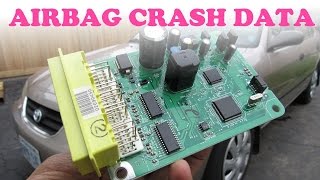
- Stored Crash Data (Common) — If the vehicle experiences an accident severe enough to deploy airbags or pretensioners, the module stores permanent crash data and locks itself. This requires a professional EEPROM reset or complete module replacement. 🎬 See the full process for SRS module EEPROM removal and reset
- Water Intrusion (Less Common) — Blocked A/C evaporator or sunroof drains leak water directly onto floor-mounted airbag modules. This causes immediate circuit board corrosion and complete module failure.
- Damaged Wiring or Connectors (Less Common) — Wiring leading to the module becomes damaged, corroded, or disconnected. Rodents chewing wires or technicians disturbing under-seat connectors frequently cause this.
- Faulty Peripheral Sensors (Rare) — A failed front impact or seat weight sensor sends corrupt data to the control module, forcing it to log an internal fault. This typically presents with sensor-specific codes like B0095.
Symptoms
- Airbag or SRS warning light is on — This is the most common and often the only symptom. The light stays on continuously while the engine is running.
- Airbags will not deploy in a crash — With this fault code active, the entire Supplemental Restraint System (SRS) is disabled as a safety measure. This is the most dangerous symptom.
- Passenger airbag "OFF" light remains illuminated — The passenger airbag deactivation light stays on even when an adult occupies the seat, indicating a fault in the occupant classification system monitored by the main module.
- Seat belt pre-tensioners are disabled — The SRS module controls the seat belt pre-tensioners, which tighten the belts in a crash. When the system is disabled, this feature fails to function.
- Inability to communicate with SRS module (scan-tool only — no driver-felt sign) — In cases of severe internal failure, a standard OBD-II scanner cannot establish communication with the airbag control module.
Diagnostic Flowchart
Tap your situation to follow the diagnostic path that matches what you're seeing on this code.
Common Fixes & Costs
- Replacing a Weak or Dead Battery — Parts: $150-$250, Labor: $20-$50, ~0.5 hr book time (DIY)
- Resetting the Airbag Control Module (Post-Accident) — Parts: $0, Labor: $50-$150, ~1.5 hr book time (Professional)
- Replacing the Airbag Control Module (ECU)
— Parts: $250-$1000, Labor: $150-$400, ~2 hr book time
(Professional)
Subaru Legacy/Outback (2005-2014): OEM ['98221AG15A', '98221AJ07A'] (Alt: {"brand": "Dorman (Remanufactured)", "part_number": "Varies", "price_comparison": "Often 30-50% less than new OEM"})
Nissan Frontier (1997-2020): OEM ['98820-9BU8A', '98820-9BU2D', '98820-9BP9A']
Jaguar XF (2010-2015): OEM ['CX23-14D374-AE', 'GX7314D374AJ'] - Clearing Blocked A/C or Sunroof Drains — Parts: $0-$20, Labor: $100-$250, ~1 hr book time (DIY)
- Repairing Damaged Wiring or Connectors
— Parts: $10-$50, Labor: $150-$400, ~2.5 hr book time
(Professional)
Universal: OEM [] (Alt: {"brand": "Dorman", "part_number": "Varies (e.g., Air Bag Module Connectors)", "price_comparison": "Cost-effective solut)
Used vs. New Parts: Buying Guide
When a used part is worth it: A used Airbag Control Module is a cost-effective option for older vehicles, provided it comes from a vehicle that was not in an accident. It must be an exact part number match and requires professional VIN programming.
Donor-vehicle mileage cap: roughly under 100000 miles for the part to have meaningful remaining life.
Donor quality checklist:
- Verify the donor vehicle did not have airbags deployed.
- Ensure the part number matches your original module exactly.
- Avoid modules from flood-damaged or high-humidity environments.
- Purchase from a reputable seller offering a warranty and return policy.
Decision logic:
- If The original module only has crash data stored and is not physically damaged → Reset the original module. This is the cheapest option and retains the original VIN programming.
- If The original module is water-damaged or has a severe internal hardware fault → Buy a new OEM part. This guarantees compatibility and reliability.
- If The vehicle is older and budget is the primary concern → A used part from a reputable source is acceptable, but factor in the cost of professional programming.
Warranty tradeoff: Used parts typically have a 30-90 day warranty. New aftermarket parts offer a 1-year to limited lifetime warranty. New OEM parts carry the manufacturer's standard parts warranty.
Worst-case if a used part fails: $200-$500 if a used part is faulty or incompatible, covering repeat labor for installation and programming attempts.
What Happens If You Wait — Timeline
- Immediate (0 days): Code B1195 sets, the airbag warning light turns on, and the entire SRS system disables. The safety system is completely non-functional. (MPG impact: 0%% · Added cost: $0)
- First Inspection Cycle (0-2 years): The vehicle automatically fails any state safety inspection due to the illuminated airbag light, resulting in fines and registration denial. (MPG impact: 0%% · Added cost: $50-$200 in fines and re-inspection fees)
- Ongoing: If the root cause is a water leak, continued moisture exposure corrodes other wiring and components under the carpet, causing widespread electrical failures. (MPG impact: 0%% · Added cost: $200-$1000+ for additional electrical diagnosis and repairs)
- At Time of Sale/Trade-in: The vehicle's resale value diminishes significantly. An active airbag light deters buyers and reduces the vehicle's value by $1000 or more. (MPG impact: 0%% · Added cost: $1000+ in lost vehicle value)
Cost of Not Fixing It
- Immediate: Complete failure of the airbag system. Airbags and seatbelt pretensioners will not deploy in a crash, drastically increasing the risk of serious injury or death. (Added cost: N/A)
- Ongoing: Guaranteed failure of any state vehicle safety inspection, leading to fines and an inability to renew registration. (Added cost: $50-$200 in fines and re-inspection fees)
- At Resale: Significant reduction in vehicle resale value. A persistent airbag light deters buyers and dealers, leading to low offers. (Added cost: $1000+)
Diagnosis Steps
- Check for Relevant Recalls and TSBs
Before replacing parts, check for open safety recalls or Technical Service Bulletins (TSBs) for your vehicle's year and model. Manufacturers like Kia and Volkswagen have issued recalls for issues causing airbag module failure, resulting in a free dealership repair.
Tools: Internet access (NHTSA website) (Beginner) - Check Battery Voltage and System Power
Ensure the vehicle's battery is healthy. Use a multimeter to verify at least 12.4 volts with the engine off and over 14 volts with the engine running. A weak battery or recent jump-start frequently triggers this code.
Tools: Multimeter (Beginner) - Scan and Attempt to Clear Codes
Use a professional-grade OBD-II scanner capable of reading SRS codes. Record all codes. Try to clear them. If the code triggers from a temporary low-voltage glitch, it will not return. If B1195 returns immediately, it indicates a hard fault requiring physical repair.
Tools: SRS-capable OBD-II Scanner (Beginner) - Safely Depower the SRS System
Before touching any SRS components, you MUST depower the system. Disconnect the negative battery terminal first, then the positive. Wait at least 20 minutes for the backup capacitors to discharge. This prevents accidental airbag deployment.
Tools: Wrench set (Intermediate) - Inspect the Airbag Control Module and Connectors
Locate the airbag control module (typically under the center console or front seats). Visually inspect the module and wiring connectors for physical damage, corrosion, or loose connections. Look for water stains on the carpet or module housing.
Tools: Basic hand tools (sockets, screwdrivers), Flashlight (Intermediate) - Check Power and Ground at the Module
Using a vehicle-specific wiring diagram, identify the power and ground pins on the module's main connector. With the battery reconnected and ignition ON, verify 12V+ at the power pin and less than 0.5 Ohms at the ground pin. A loss of power or ground causes the module to fail.
Tools: Multimeter, vehicle-specific wiring diagram (Advanced) - Determine if Module Needs Reset or Replacement
If the battery, wiring, power, and ground test perfectly, the module itself is the problem. If the vehicle was in an accident, the module contains crash data and requires a professional reset. If no accident occurred, the module failed internally and requires replacement and programming.
Tools: None (Intermediate)
When This Code Triggers (Freeze-Frame Conditions)
- System Voltage: 11.5-14.5V (The code sets during startup if battery voltage is low, or during operation if a charging system fault occurs.)
- Vehicle Speed: 0 mph (The fault is detected during the initial power-on self-test before the vehicle moves.)
- Engine RPM: 0 or 700-900 RPM (The internal module check occurs at key-on, engine-off, or immediately after starting while at idle.)
- Time Since Start: < 10 seconds (The SRS module performs an internal integrity check immediately upon receiving power.)
Related Codes
- B1000 — B1000 is a generic code for an ECU malfunction. Seeing B1000 and B1195 together confirms the fault is within the airbag control module itself. On many GM models, B1000 is the primary code for this fault.
- U0151 — This code means "Lost Communication With Restraints Control Module." B1195 indicates an internal failure, while U0151 indicates a problem with the wiring or vehicle network between the airbag module and other computers.
- B1620 — This code indicates an internal hardware or memory fault within the Airbag Control Unit. Seeing B1620 alongside B1195 is a definitive sign of module failure, notably in Kia vehicles.
- B0095 — This code relates to a fault in a specific impact sensor circuit. Always diagnose the specific sensor code (B0095) first before suspecting the main control module.
Climate & Environmental Factors
- High Humidity / Water Intrusion: Moisture from direct water leaks (blocked A/C drains, sunroof drains, or flood damage) infiltrates the airbag control module. This causes immediate circuit board corrosion, short circuits, and complete module failure.
- Extreme Temperatures: Extreme heat cycles over many years degrade electronic components and solder joints within the airbag control module, leading to premature failure.
- Road Salt: Salt-laden moisture tracked into the vehicle accelerates corrosion aggressively if it reaches floor-mounted airbag modules.
How to Talk to a Mechanic About This Code
Say this: "I have an airbag warning light and my scanner shows code B1195. I need a diagnostic to confirm if it's an internal module failure, a wiring issue, or a false code from a low voltage event. Please check for related codes in other systems."
This signals you understand the common causes and prevents a shop from immediately quoting a costly module replacement without proper diagnosis.
Avoid saying:
- 'My airbag light is on, can you fix it?' (too vague, invites a high quote)
- 'Just replace the airbag computer.' (Don't diagnose for the mechanic)
- 'Do whatever it takes to turn the light off.' (This leads to unnecessary, expensive repairs)
Questions to ask before authorizing the repair:
- What specific tests did you perform to conclude the module failed?
- Did you inspect the module and its connectors for water damage or corrosion?
- If the module needs replacement, does the new one require programming to my vehicle's VIN?
- What is the warranty on the replacement module and the labor?
Where to Take It: Dealer vs Independent vs Chain
- Dealer:
Best for: Vehicles under warranty or with an open safety recall for the airbag system., Complex cases requiring vehicle-specific programming and calibration tools.
Downsides: Significantly higher labor rates and parts costs., Defaults to module replacement instead of investigating simpler wiring issues. (Typical cost: +50% vs. baseline) - Independent Shop:
Best fit for most out-of-warranty scenarios. A reputable independent shop accurately diagnoses and repairs B1195 causes at a lower cost than a dealer.
Best for: Out-of-warranty vehicles where cost is a major factor., Diagnosing common failure points like water intrusion or battery-related false codes.
Downsides: Quality and expertise vary; ensure the shop has experience with SRS systems., Lacks access to the latest manufacturer-specific software updates. (Typical cost: +0% vs. baseline) - Chain Shop:
AVOID for diagnosing the B1195 code itself. Only use them if you are certain the issue is just a dead battery.
Best for: Simple, unrelated repairs like battery replacement.
Downsides: Lacks specialized tools and training for complex SRS diagnostics and module programming., High potential for misdiagnosis, leading to unnecessary parts replacement. (Typical cost: -10% vs. baseline)
When to Walk Away From the Repair
If the estimated repair cost for the airbag system exceeds 40-50% of your car's private-party value, seriously consider selling the car as-is or trading it in.
- Car worth $4000, fix is $2000: Walk away. The repair cost is 50% of the car's value. The money is better put towards a replacement vehicle.
- Car worth $12000, fix is $1800: Fix it. The repair cost is only 15% of the vehicle's value and is a critical safety repair.
- Car worth $2500, fix is $1500: Walk away. The repair cost is 60% of the car's value. It is not economically viable.
What Scan Tool You Need for This Code
Minimum: A scanner that specifically reads and clears Supplemental Restraint System (SRS) or airbag codes. A basic engine-only code reader will not work.
A standard $20 OBD-II scanner only sees engine and emissions codes. It cannot communicate with the SRS module, making diagnosis impossible.
Budget: BlueDriver Pro (~$119) — Reads and clears SRS/airbag codes, provides freeze-frame data, and generates repair reports with likely causes for your specific vehicle.
Mid-range: Autel MaxiLink ML629 / Foxwell NT630 Plus (~$120-150) — Offers dedicated SRS/ABS diagnostics, views live data from SRS sensors, and functions without a smartphone app.
Professional: Autel MaxiCOM MK808 / XTOOL D7 (~$450-600) — Provides full system diagnostics, bidirectional control to test components, and performs necessary programming/calibration functions for new airbag control modules.
Rent vs buy: Auto parts stores do NOT rent scanners capable of reading SRS codes due to liability. For a one-time fix, pay a shop for a professional diagnosis. Buy a scanner only if you regularly perform your own car repairs.
How to Clear the Code After You Fix It
- Reconnect the negative battery terminal last.
- Use an SRS-capable OBD-II scan tool to clear the fault codes.
- Turn the ignition off, then on again, and wait for the airbag light to self-test (it turns on for a few seconds, then turns off).
- Perform required sensor calibrations (like the passenger seat weight sensor) if the module was replaced.
Drive cycle (~10 minutes): An SRS code does not require a complex drive cycle. After clearing the code, a simple 10-minute drive with a few key-off/key-on cycles confirms the repair. The airbag light must remain off.
Readiness monitors affected: None
Watch out for:
- Using a basic OBD-II scanner that cannot read or clear SRS codes.
- Forgetting to wait 20 minutes after disconnecting the battery before working on the system.
- Not addressing the root cause (e.g., water leak, bad battery) before clearing the code.
- Attempting to clear a 'crash data' code with a scanner; it requires a professional reset service.
Will This Fail Emissions / State Inspection?
Yes — this code typically fails an OBD-II emissions inspection.
- California: An illuminated airbag (SRS) warning light is an automatic failure of the state's safety inspection.
- New York: During the annual safety inspection, the SRS light must illuminate during the bulb check and then turn off. If it stays on, the vehicle fails.
- Texas: The airbag warning lamp is a required inspection item. If the light is on or malfunctions, the vehicle fails the safety inspection.
Most Commonly Affected Vehicles
- Subaru Legacy, Outback, Forester, Impreza (2005-2014) — These models frequently log B1195 as a general Airbag ECU Malfunction, often accompanied by B1000, strongly indicating an internal module failure.
- Nissan Frontier, Maxima (1997-2020) — On these models, B1195 specifically points to a short-to-ground in the right-hand front roof panel curtain airbag circuit. Diagnosis must focus on that specific airbag and its wiring.
- Jaguar XF (2010-2015) — On the XF, B1195-13 indicates an open circuit in a passenger-side front impact sensor, frequently caused by rodent damage to the wiring harness.
- Ford F-150 (2009-2014) — Internal module failure is a common cause. Replacement part costs for these years average $500-$600, with labor costs between $159 and $233.
- Chevrolet Silverado, Traverse (2008-2015) — Often presents as a B1000 code. The airbag module (SDM) sits under the driver's seat and is highly susceptible to water damage from floor leaks or car wash overspray.
- Hyundai Genesis, Accent, Elantra (2014-2016) — On the 2014-2016 Genesis, a B1195 code associates with a faulty Side Crash Pad Switch Assembly (Part No. 93700-B1195-WYB).
- Kia Sedona, Sorento, Soul (2011-2019) — Safety recall SC226 on 2017-2019 models involves an Airbag Control Unit manufacturing defect where the cover damages the circuit board, triggering the airbag light.
- Volkswagen Tiguan, Golf, Jetta (2018-2021) — Recall 21V-892 addresses a blocked A/C drain tube causing water to leak onto the airbag control module, leading to damage and unexpected airbag deployment.
Manufacturer-Specific Notes
- Nissan: For Nissan, especially the Frontier, B1195 points directly to a short circuit in the right-hand roof curtain airbag or its wiring, not a general module failure. See TSB NTB18-080 for procedures on returning the system to 'User Mode'.
- Subaru: Subaru uses B1195 as a generic code for an internal airbag module failure. It guarantees the module needs a reset (if crash data is present) or replacement.
- Jaguar: On the XF, B1195 triggers from an open circuit in a front impact sensor (B1195-13), frequently caused by rodent damage to the wiring harness.
- Kia: Safety recall SC226 for 2017-2019 Sedona, Soul, and Forte models addresses a manufacturing defect where the Airbag Control Unit cover damages an internal memory chip, illuminating the airbag light.
- Volkswagen: Recall 21V-892 addresses a blocked air conditioner drain causing water to leak directly onto the airbag control module, leading to failure or inadvertent deployment.
Real Owner Stories
BMW E46 with airbag light after battery died
The owner left the key in the ignition overnight, draining the battery. After jump-starting, the airbag warning light remained on.
What they tried:
- Drove the car several times, hoping the light would turn off.
- Attempted to clear codes with a basic OBD-II scanner.
Outcome: Used an SRS-capable scanner to access the airbag module. The scanner found a stored low-voltage fault. Clearing the specific SRS code turned the light off permanently.
Lesson: A dead battery or jump-start frequently triggers a false airbag light. The code stores in the SRS module's memory and requires an SRS-capable scanner to clear.
2012 Nissan Sentra with 150k miles and airbag light on
The airbag light came on while preparing to sell the vehicle. The owner debated the repair cost versus the impact on trade-in value.
What they tried:
- Considered selling the car 'as-is' with full disclosure.
Outcome: The dealer significantly reduced the trade-in offer due to the active airbag light, which represents a major safety liability.
Lesson: An active airbag light lowers your vehicle's trade-in or private sale value by more than the cost of the repair.
Jeep Wrangler JL with airbag light after dual-battery replacement
After replacing both batteries, the owner had an airbag light and a seatbelt warning light illuminate.
What they tried:
- Used an SRS-capable scanner to erase the codes, but they returned immediately.
- Inspected under-seat wiring for damage.
Outcome: The internal sensor in the seatbelt buckle assembly failed coincidentally at the same time. Replacing the seatbelt buckle assembly resolved the fault.
Lesson: A 'hard fault' that won't clear indicates a real component failure. Do not assume a new code is related to the last repair performed.
2005 Chevy Tahoe with B1000 code and water intrusion
The airbag light illuminated with code B1000. The owner noted damp floor carpets.
What they tried:
- Initially suspected a complex electrical failure.
Outcome: A leaking windshield seal allowed rainwater to soak the carpet and corrode the floor-mounted airbag module (SDM). Replacing the module and fixing the windshield leak solved the issue.
Lesson: For codes B1195 or B1000, always check for water damage first. A costly module replacement fails again if the underlying leak remains unfixed.
How to Prevent This Code From Triggering
- Regularly clear debris from sunroof and A/C evaporator drains (Once a year (spring/fall)) — Blocked drains leak water into the cabin, saturating carpets and destroying floor-mounted airbag control modules.
- Check for and repair any water leaks from window seals or body seams (During/after heavy rain) — Leaks allow moisture to accumulate under carpets, leading to hidden corrosion of sensitive electronics like the SRS module.
- Use high-quality, all-weather floor mats (Always) — Rubber floor mats contain spills and melting snow, preventing salt-laden water from soaking into the carpet and reaching floor-mounted electronics.
- Maintain a healthy battery and clean terminals (Every oil change) — A weak battery causes low-voltage spikes during startup, corrupting the airbag module's memory and falsely triggering fault codes.
- Pay attention to the airbag light during startup (Every time you drive) — The SRS light must come on for a few seconds as a self-check and then go off. If it stays on, it indicates an immediate problem requiring diagnosis.
Frequently Asked Questions
Can I reset the airbag light myself by disconnecting the battery?
No, disconnecting the battery will not clear an airbag code like B1195. The fault stores in the module's permanent memory and requires a specialized SRS-capable scan tool to clear. Codes resulting from crash data cannot be cleared with a scanner and require a professional mail-in reset service.
Is it cheaper to reset my airbag module or replace it?
Resetting the module is significantly cheaper, costing $50-$150 compared to $400-$1,400 for a new module and programming. Resetting is only viable if the module has stored crash data and lacks physical damage like corrosion. Water-damaged modules must be replaced.
My airbag light came on after my battery died. Is it a serious problem?
A low voltage event from a dead battery frequently triggers a false B1195 code. Fully charge or replace the battery, then clear the code with an SRS-capable scan tool. If the code stays away, the system is fully functional.
What is a common misdiagnosis when I see an airbag light?
Mechanics frequently misdiagnose B1195 by replacing expensive impact sensors when the actual root cause is a water-damaged Airbag Control Module. Always inspect floor-mounted modules for corrosion or water intrusion before replacing peripheral sensors.
My airbag light came on after a car wash. What should I do?
This indicates water has reached the main airbag module or a wiring connector. Sometimes the light turns off after the area completely dries over 48 hours. If it persists, you must perform a diagnostic scan to locate the short circuit.
What does SRS, ECU, and ACM stand for?
SRS stands for Supplemental Restraint System, encompassing the airbags and seatbelt pretensioners. ECU (Electronic Control Unit) and ACM (Airbag Control Module) refer to the airbag system's main computer. Mechanics use these terms interchangeably.
Will my car pass a safety inspection with the B1195 code?
No. An illuminated airbag warning light causes an automatic failure for safety inspections in all jurisdictions requiring them. The system must be fully functional with no active fault codes to pass.
Can I replace the airbag module myself?
DIY replacement is highly discouraged due to the risk of accidental airbag deployment. Furthermore, new modules require dealer-level tools for VIN programming and sensor calibration. An improperly installed module will not function in a crash.
Key Takeaways
- Code B1195 disables your entire airbag system, increasing the risk of driver fatalities in frontal crashes by 29%.
- A weak battery dropping below 12.4 volts frequently triggers a false B1195 code, making a battery test the mandatory first diagnostic step.
- Water intrusion from blocked A/C or sunroof drains destroys floor-mounted airbag modules, requiring a $400 to $1,400 replacement.
- Modules locked with crash data after an accident require a specialized $50 to $150 mail-in EEPROM reset service, as standard OBD-II scanners cannot clear them.
- Always check the NHTSA database for safety recalls before replacing parts, as manufacturers like Kia and VW have issued free repairs for this exact module failure.
Helpful Videos

Shop the Parts Behind B1195
Below are the parts most often responsible for code B1195, ranked by how frequently each one is the actual culprit (per the diagnosis above). Tap any to see what we have for your vehicle.



The information in this article is provided for general reference and educational purposes only. Vehicle specifications, procedures, and part compatibility can vary by production date, trim level, and region. Always consult your vehicle's factory service manual and verify part numbers before purchasing or performing repairs. Safety-critical components such as airbags, seat belts, and braking systems should be installed by a qualified professional.
- 🧭 Diagnostic Flowchart
- 🎬 Helpful Videos
- 🛍️ Shop This Part
- What Does B1195 Mean?
- Can I Drive With B1195?
- Common Causes
- Symptoms
- Common Fixes & Costs
- Used vs. New Parts: Buying Guide
- What Happens If You Wait — Timeline
- Cost of Not Fixing It
- Diagnosis Steps
- When This Code Triggers (Freeze-Frame Conditions)
- Related Codes
- Climate & Environmental Factors
- How to Talk to a Mechanic About This Code
- Where to Take It: Dealer vs Independent vs Chain
- When to Walk Away From the Repair
- What Scan Tool You Need for This Code
- How to Clear the Code After You Fix It
- Will This Fail Emissions / State Inspection?
- Most Commonly Affected Vehicles
- Manufacturer-Specific Notes
- Real Owner Stories
- BMW E46 with airbag light after battery died
- 2012 Nissan Sentra with 150k miles and airbag light on
- Jeep Wrangler JL with airbag light after dual-battery replacement
- 2005 Chevy Tahoe with B1000 code and water intrusion
- How to Prevent This Code From Triggering
- Frequently Asked Questions
- Can I reset the airbag light myself by disconnecting the battery?
- Is it cheaper to reset my airbag module or replace it?
- My airbag light came on after my battery died. Is it a serious problem?
- What is a common misdiagnosis when I see an airbag light?
- My airbag light came on after a car wash. What should I do?
- What does SRS, ECU, and ACM stand for?
- Will my car pass a safety inspection with the B1195 code?
- Can I replace the airbag module myself?
- Key Takeaways
- 🎟️ Get 5% Off