

OBD-II Code B1207: A Comprehensive Guide for Mechanics and DIYers
What B1207 means, why it triggers, and how to fix it on any make
- Verify your vehicle's specific B1207 definition first, as it means a critical airbag failure on Fords but a harmless climate control glitch on Hondas.
- On Ford and Mazda models, B1207 triggers an automatic fuel pump shut-off, causing a 'crank, no start' condition that is frequently misdiagnosed as a bad fuel pump.
- Inspect the front impact sensor wiring behind the grille first; corrosion in this exposed harness causes over 80% of B1207 codes on Ford vehicles.
- Do not drive a vehicle with an active B1207 SRS code, as the entire airbag system is disabled and will not deploy in a collision.
What Does B1207 Mean?
B1207 is a manufacturer-specific Body Diagnostic Trouble Code (DTC). On Ford, Mazda, and Jaguar vehicles, it indicates a 'Crash Input Hardwired Signal Failure'—a critical airbag system fault. The Restraints Control Module (RCM) detects an electrical problem with a primary crash sensor, cannot trust the signal, and disables the airbags. Conversely, on Honda, Toyota, or Kia, B1207 points to unrelated, non-safety systems like climate control or keyless entry. You must verify the code's definition for your specific year, make, and model before diagnosing.
Technical definition: The SAE J2012 definition for this code is not standardized. The most common manufacturer interpretations are: - **Ford/Mazda/Jaguar:** 'Crash Input Hardwired Signal Failure'. Indicates an open, short, or abnormal voltage on the circuit between a frontal impact sensor and the RCM. - **Nissan:** 'Diagnosis Sensor Unit'. Points to an internal fault within the SRS Airbag Control Module itself. - **Honda/Acura:** 'Climate Control Unit Lost Communication with Gauge Control Module'. A communication bus error. - **Toyota/Lexus:** 'SMART ECU COMMUNICATION STOP'. A fault in the keyless entry system. - **GM/Volkswagen:** 'Electronic Instrument Cluster Switch-1 Assembly Circuit Short To Battery'.
Can I Drive With B1207?
No — Do Not Drive. Do not drive. When this code indicates a Supplemental Restraint System (SRS) fault, the airbags will not deploy in a collision. On many Ford and Mazda vehicles, an intermittent crash sensor fault triggers the fuel pump shut-off while driving, causing the engine to stall in traffic. Have the vehicle towed and repaired immediately.
Common Causes
- Damaged or Corroded Wiring/Connectors (Very Common) — This is the leading cause for the Ford/Mazda variant. The wiring to front impact sensors sits behind the bumper, exposed to water, road salt, and debris. This causes wires to break or connector pins to corrode, creating an open or short circuit.
- Faulty Crash/Impact Sensor (Common) — The sensor fails internally from moisture intrusion, age, or physical damage from a minor bump that didn't deploy the airbags. It stops sending a valid signal to the RCM.
- Faulty Airbag Control Module (RCM/SRS) (Common) — The module fails internally, often logging a U3000 code alongside B1207. On Nissan vehicles, B1207 specifically points to this internal module failure. It also stores permanent 'crash data' after an accident, disabling the system until professionally reset or replaced. 🎬 Learn how to reset Nissan SRS modules after an accident
- Blown Airbag System Fuse (Less Common) — A short circuit elsewhere in the SRS system blows the fuse providing power to the RCM or the impact sensors, triggering a fault code.
- Low 12V Battery Voltage (Rare) — On sensitive electronic systems, particularly in EVs like the Nissan Leaf, a weak 12V battery causes voltage drops during startup, triggering random communication and module fault codes.
- Poor Ground Connection (Rare) — The RCM and its sensors require a clean chassis ground. Corrosion or a loose ground strap introduces electrical noise and resistance, leading to intermittent faults.
Symptoms
- Airbag Warning Light is On — The most common symptom. The light, showing an airbag icon or the letters 'SRS', remains illuminated as long as the fault is active.
- Engine Cranks But Does Not Start — A defining symptom on Ford and Mazda vehicles. The RCM interprets the B1207 code as a crash event and commands the Powertrain Control Module to shut off the fuel pump. The usual 2-second priming hum of the fuel pump will be absent.
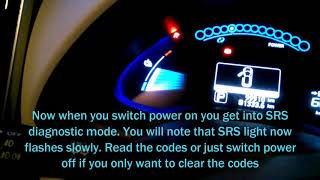
- Airbag Light Flashing a Pattern (LFC) — On pre-2005 vehicles, the airbag light flashes a two-digit Lamp Fault Code (LFC) instead of staying solid. For example, code '24' is two flashes, a pause, then four flashes.
- Airbag System Disabled (also visible on scanner) — The entire Supplemental Restraint System (SRS) is offline. Airbags, pre-tensioners, and related safety devices will not function in a crash.
Diagnostic Flowchart
Tap your situation to follow the diagnostic path that matches what you're seeing on this code.
Common Fixes & Costs
- Repairing Damaged Wiring or Connectors — Parts: $10-$50, Labor: $150-$300, ~1.5 hr book time (Intermediate)
- Replacing a Front or Side Crash Sensor
— Parts: $70-$150, Labor: $75-$150, ~0.8 hr book time
(DIY)
Ford Focus (2012-2018): OEM CP9Z-14B004-A (Alt: Dorman 590-271)
Ford Fiesta (2011-2017): OEM DG13-14C676-AA (Alt: Dorman 590-233) - Resetting the Airbag Control Module (RCM) — Parts: $50-$100, Labor: $75-$150, ~1.0 hr book time (DIY)
- Replacing the Airbag Control Module (RCM)
— Parts: $400-$1200, Labor: $150-$350, ~1.8 hr book time
(Professional)
Nissan Leaf (2013-2020): OEM 98820-3NF0A (Varies by VIN) (Alt: N/A)
DIY vs Professional
- Repairing Damaged Wiring or Connectors — Beginner: No
Tools: Multimeter, wire strippers, soldering iron or quality crimp connectors, heat shrink tubing, wiring diagram. - Replacing a Front or Side Crash Sensor — Beginner: Yes
Tools: Basic socket set, trim removal tools, flashlight. - Resetting the Airbag Control Module (RCM) — Beginner: Yes (Removal/Installation only)
Tools: Basic socket set, trim removal tools. - Replacing the Airbag Control Module (RCM) — Beginner: No
Tools: Professional scan tool, access to manufacturer software subscriptions, socket set.
Used vs. New Parts: Buying Guide
When a used part is worth it: For crash sensors, a used part from a warrantied auto recycler is a budget-friendly option for older vehicles. For the Airbag Control Module (RCM), buying a used module is NOT recommended, as it is programmed to the donor car's VIN. Send your ORIGINAL module to a specialist for a reset service instead.
Donor-vehicle mileage cap: roughly under 80000 miles for the part to have meaningful remaining life.
Donor quality checklist:
- Verify the donor vehicle was not in a flood or a collision affecting that specific sensor.
- Match the OEM part number exactly; seemingly identical parts have different internal calibrations.
- Avoid parts with any visible corrosion on the housing or electrical connector pins.
Decision logic:
- If The part is an Airbag Control Module (RCM) → Buy a new OEM part and have it programmed, or send your original part for a professional reset service. Do not buy a used one.
- If The part is a crash sensor and the vehicle is < 10 years old → Buy a new OEM or high-quality aftermarket part for maximum reliability and warranty.
- If The part is a crash sensor and the vehicle is > 10 years old → A used sensor from a reputable recycler is an acceptable budget option, but new is preferred.
Warranty tradeoff: Used parts typically offer a 30-90 day functional warranty. New aftermarket parts usually have a 1-year to limited lifetime warranty. A professional RCM reset service often comes with a lifetime warranty.
Worst-case if a used part fails: $200-$500 if a used sensor fails after the warranty period, requiring repeat diagnosis, purchase, and labor.
What Happens If You Wait — Timeline
- Immediate: Code B1207 sets during a key-on self-test. The airbag warning light illuminates, and the entire SRS system is disabled.
- 0-2 Weeks (Ford/Mazda specific): The vehicle intermittently or permanently refuses to start, interpreting the fault as a crash event and cutting fuel.
- At Annual Inspection: The vehicle automatically fails any state-mandated safety inspection that checks for warning lights, preventing registration renewal.
- In the Event of an Accident: A collision occurs, and the disabled airbags do not deploy. Occupant injuries are far more severe than they would have been otherwise.
Cost of Not Fixing It
- Immediate: The entire Supplemental Restraint System is disabled. In an accident, airbags will not deploy, drastically increasing the risk of severe injury or death. (Added cost: N/A (Safety Risk))
- 0-1 Month: On many Ford/Mazda models, the vehicle refuses to start, leaving you stranded. The vehicle fails mandatory state safety inspections. (Added cost: $100-$300 (Towing, failed inspection fees))
- 1+ Months: Continued operation of a vehicle with a known critical safety defect carries significant liability and insurance coverage implications in the event of an accident. (Added cost: Potentially unlimited (Medical bills, legal liability))
Diagnosis Steps
- Confirm Code Definition & Scan All Modules
Use a professional-grade OBD-II scanner capable of reading all vehicle modules (SRS, BCM, PCM). Confirm the exact definition of B1207 for the specific vehicle. Record all DTCs. Codes like U3000 or B10A2 appearing with B1207 provide vital diagnostic clues.
Tools: SRS-capable OBD-II Scanner, Online Repair Database (Beginner) - Visual Inspection of Front Sensors
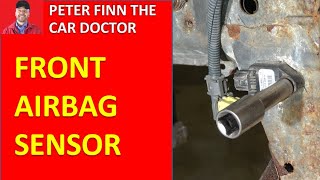
For crash sensor faults, locate the front impact sensor(s) bolted to the radiator core support behind the bumper. Inspect the sensor, connector, and wiring harness. Look for green/white corrosion, chafed wires, and damage from previous impacts.
Tools: Flashlight, Inspection Mirror (Beginner) - Check 12V Battery and SRS Fuses
Test the 12V battery. A voltage below 12.4V causes erratic electronic issues on modern cars. Consult the owner's manual to locate and test every fuse labeled 'SRS', 'Airbag', or 'RCM'.
Tools: Multimeter, Fuse Puller (Beginner) - Sensor Circuit Integrity Test (Multimeter)
Disconnect the battery. Disconnect the suspect crash sensor and the RCM. Set your multimeter to resistance (Ω). Check for continuity (less than 1 Ω) on each wire between the sensor connector and the RCM to find an open circuit. Check for continuity between each wire and a clean chassis ground; anything other than infinite resistance (OL) indicates a short to ground.
Tools: Multimeter, Wiring Diagram, Basic Hand Tools (Intermediate) - Test the Crash Sensor (Substitution)
Directly testing a modern digital crash sensor is inconclusive. Replace the suspect sensor with a known-good part. If the code clears and stays cleared, the original sensor was faulty.
Tools: Known-Good Crash Sensor, Basic Hand Tools (Intermediate) - Inspect RCM Connections and Grounds
Locate the RCM (often under the center console). Disconnect its connectors and inspect for corrosion or pushed-out pins. Locate the main ground point for the RCM and ensure it is clean, tight, and rust-free.
Tools: Basic Hand Tools, Socket Set (Intermediate) - RCM Diagnosis and Crash Data Check
If all wiring and sensors test good, the fault lies with the RCM. If the vehicle has a history of accidents, the module has 'crash data' stored. The module must be sent to a specialist for a reset service or replaced entirely.
Tools: Professional Scan Tool (Advanced)
When This Code Triggers (Freeze-Frame Conditions)
- System State: Key-On Self-Test (The fault is detected immediately when the ignition is turned on and the RCM performs a self-check of all sensors.)
- Vehicle Speed: 0 mph (The code sets during the startup self-test while the vehicle is stationary.)
- Battery Voltage: 11.8V - 12.6V (The fault logs based on the resting battery voltage available during the KOEO (Key On, Engine Off) self-test.)
Related Codes
- U3000 — Means 'Control Module Internal Failure'. If U3000 is present with B1207, it strongly indicates the Restraints Control Module (RCM) itself has failed and needs to be replaced or reset.
- B10A2 — Another code for 'Crash Input', frequently appearing with B1207 on Ford products. Both point to a fault in the front impact sensor system and are diagnosed together.
- U0154 — Means 'Lost Communication With Restraint Occupant Classification System'. The wiring damage causing B1207 may have also damaged the CAN bus wires running alongside it.
Climate & Environmental Factors
- High Humidity / Rain / Water Intrusion: A primary environmental cause for the Ford/Mazda variant. Moisture gets into connectors or chafed wiring in the vulnerable front bumper area, causing corrosion that triggers the B1207 code.
- Road Salt (Winter Climates): Road salt accelerates the corrosive effect on sensor wiring and connectors, leading to rapid deterioration of electrical contacts and insulation.
- Extreme Cold: Low temperatures cause plastic connectors and wire insulation to become brittle and crack. It also causes metal contacts to contract, leading to intermittent open circuits.
How to Talk to a Mechanic About This Code
Say this: "I have an airbag warning light on and a B1207 code. My vehicle is a [Make/Model]. I need a diagnostic to confirm the code's meaning for my car and isolate the fault. If it's a Ford and won't start, please be aware the B1207 code cuts fuel to the engine."
This tells the mechanic you know B1207 is manufacturer-specific and requires proper diagnosis. Mentioning the no-start issue on a Ford saves them from wasting time on the fuel system. It frames the conversation around diagnosis, not just 'fixing the light'.
Avoid saying:
- 'My airbag light is on, can you just reset it?'
- 'I have a B1207 code, just replace the front sensor.'
- 'Just fix whatever's wrong so the light goes off.'
Questions to ask before authorizing the repair:
- What is the specific definition of B1207 for my vehicle?
- What diagnostic steps did you take to confirm the failure (e.g., wiring continuity test, sensor substitution)?
- If the module needs replacement, does the new one require programming to my vehicle's VIN?
- What is the warranty on the parts and labor for this specific repair?
Where to Take It: Dealer vs Independent vs Chain
- Dealer:
A safe but costly option. Necessary if a new airbag control module must be installed and programmed.
Best for: Vehicles under warranty., Complex cases requiring module replacement and programming., When you want a guaranteed, albeit expensive, fix.
Downsides: Highest labor rates., Defaults to expensive module replacement over a more affordable wiring repair or module reset service. (Typical cost: +75% vs. baseline) - Independent Shop:
Best fit for most scenarios, especially the common Ford/Mazda wiring issues. Vet the shop for ASE certifications and good reviews on electrical diagnostics.
Best for: Out-of-warranty vehicles., Diagnosing and repairing common wiring or sensor faults., Removing the airbag module to be sent out for a reset service.
Downsides: Shop must have an SRS-capable scan tool and technicians experienced with airbag systems., May not be able to program a new control module if required. (Typical cost: +0% vs. baseline) - Chain Shop:
AVOID. Airbag system repair is a safety-critical task that is beyond the scope of most chain shops.
Best for: Simple maintenance like tires and oil changes.
Downsides: Technicians generally lack the specialized training and tools for SRS diagnosis., High risk of misdiagnosis or being sold unnecessary parts. (Typical cost: -10% vs. baseline)
When to Walk Away From the Repair
If the estimated repair cost exceeds 50% of the car's private-party value, seriously consider not fixing it. However, because B1207 indicates a critical safety failure, the decision is also about liability.
- Car worth $4000, fix is $2200: Walk away. The repair cost is over half the car's value. Selling a car with a known, major safety defect is risky.
- Car worth $12000, fix is $800: Fix it. The cost is well within the threshold and restores a critical safety feature.
- Car worth $2500, fix is $500: Borderline. While the repair is cheap relative to the car's value, consider the car's overall condition and other potential issues before investing.
What Scan Tool You Need for This Code
Minimum: An OBD-II scanner that can read and clear codes from the Supplemental Restraint System (SRS) / Airbag module. A basic engine-only code reader will not see this code.
A standard $20 scanner only communicates with the Powertrain Control Module. B1207 is a Body code stored in the Restraints Control Module, which is invisible to basic readers. You need a tool that accesses these other systems to even know the code exists.
Budget: BlueDriver Pro Bluetooth Scanner (~$100) — Reads and clears SRS/airbag codes on most major makes, displays freeze frame data, and generates repair reports. Sufficient for confirming the code and clearing it after a repair.
Mid-range: Foxwell NT630 Plus or Autel MaxiLink ML629 (~$150) — Dedicated handheld units that excel at diagnosing Engine, ABS, and SRS systems. The Foxwell offers bi-directional controls for ABS/SRS active tests, helping pinpoint faults more accurately.
Professional: Autel MaxiCOM MK808 / MK808BT (~$500-800) — Offers full-system diagnostics, extensive live data graphing, and bidirectional controls. Essential for a serious DIYer or independent shop needing to diagnose complex electrical issues across all vehicle modules.
Rent vs buy: Most auto parts stores do NOT rent out SRS-capable scanners due to liability. If this is a one-time fix, pay a shop for the initial diagnosis. Buy a scanner only if you plan to do your own diagnostics regularly.
How to Clear the Code After You Fix It
- Ensure the physical repair is complete.
- Disconnect the negative battery terminal and wait at least 15 minutes for the system's capacitors to discharge.
- Reconnect the battery.
- Use an SRS-capable OBD-II scan tool to access the Restraints Control Module (RCM) and select the 'Clear Codes' function.
Drive cycle (~15 minutes): The SRS system performs a self-test every time the ignition is turned on; a lengthy drive cycle is not required. After clearing the code, cycle the ignition. The airbag light should illuminate briefly and turn off. Take a short 15-minute drive to confirm the fault does not return.
Readiness monitors affected: Catalyst, EVAP System, O2 Sensor, O2 Sensor Heater
Before emissions retest: drive at least 50 miles to fully set monitors.
Watch out for:
- Attempting to clear the code without performing the physical repair causes the code to return immediately.
- Using a standard, powertrain-only OBD-II reader that cannot communicate with the SRS/RCM module.
- Forgetting to disconnect the battery before the repair carries a risk of accidental airbag deployment.
- Disconnecting the battery resets all emissions readiness monitors, causing an immediate emissions test failure until a drive cycle is completed.
Will This Fail Emissions / State Inspection?
No — by itself this code doesn't fail OBD inspection (but it can keep readiness monitors from setting, which causes a separate fail).
- California: An airbag light will NOT cause a failure of the emissions-focused Smog Check. California does not have a separate mandatory safety inspection for most vehicles.
- New York: An illuminated airbag warning light is an automatic failure of the annual state safety inspection. The vehicle cannot be legally driven until repaired.
- Texas: By law, the airbag system is not a required item on the annual safety inspection checklist. However, some inspection stations refuse to pass a vehicle with the light on due to liability concerns.
Most Commonly Affected Vehicles
- Ford Focus (2011-2018) — Extremely common for the front impact sensor wiring to corrode. The sensor is located on the radiator support, exposed to the elements.
- Ford Fiesta (2011-2019) — Frequently exhibits the 'crank no start' symptom with code B1207. This is often misdiagnosed as a faulty ignition switch or fuel pump before the SRS module is scanned.
- Ford Kuga / Escape (2013-2019) — Shares the same platform and electrical vulnerabilities as the Focus, making front crash sensor circuit faults common.
- Mazda CX-5 (2014-2017) — Logs a B1207 code related to the airbag system. A B1207:86 variant points to a communication error between the SAS (airbag) control module and the Rear Body Control Module.
- Nissan Leaf (2010-2020) — B1207 is defined as 'Diagnosis Sensor Unit' and indicates an internal fault in the SRS Airbag Control Module. The only fix is to have the module reset by a specialist or replaced.
- Honda Accord / Insight (2006-2012) — B1207 is not a safety code on these models. It means 'Climate Control Unit Lost Communication with Gauge Control Module'. Diagnosis focuses on checking communication wiring.
- Toyota / Lexus Prius / Various (2004-2015) — B1207 means 'SMART ECU COMMUNICATION STOP', related to the keyless entry and start system, not the airbags.
Manufacturer-Specific Notes
- Ford / Mazda: The link between B1207 and the fuel cut-off is critical. Mechanics unfamiliar with this waste significant time replacing fuel system components when the root cause is in the airbag system.
- Nissan: Uniquely defines B1207 as an internal failure of the SRS control module ('Diagnosis Sensor Unit'). If you have this code on a Leaf, the module is the problem; a reset service is the most common fix.
- Acura / Honda: Consistently uses B1207 to denote a communication failure between the Climate Control Unit and the Gauge Control Module. This has no impact on safety systems.
- Toyota / Lexus: Assigns B1207 to the keyless entry system ('SMART ECU COMMUNICATION STOP'). Symptoms include issues with push-to-start or remote unlocking, not an airbag light.
Real Owner Stories
2012 Ford Focus with 110K miles
Airbag light came on intermittently, then stayed on. A week later, the car cranked but would not start, leaving the owner stranded.
What they tried:
- Tested the battery, which was good.
- Scanned with a basic OBD-II reader, which showed no codes.
- A mechanic with an SRS scanner found code B1207, 'Crash Input Hardwired Signal Failure'.
- Visual inspection revealed the wiring harness to the front crash sensor was green with corrosion.
Outcome: The mechanic cut out the corroded wire section and replaced it using a weatherproof butt connector and heat shrink. The code cleared, and the car started immediately.
Lesson: On a Ford with a 'crank no start' issue, always scan the SRS module for codes like B1207 before replacing the fuel pump. The problem is often simple wiring corrosion.
2015 Nissan Leaf SV at 75K miles
Airbag light appeared with no other symptoms. The vehicle drove normally.
What they tried:
- Checked the 12V battery, which was healthy.
- An independent EV shop pulled B1207, defined for Nissan as 'Diagnosis Sensor Unit'.
- The shop confirmed all external wiring to the SRS module was intact.
Outcome: The diagnosis pointed to an internal failure of the SRS control module. The owner removed the module and mailed it to an online reset service for $50. After reinstalling the reset module, the light stayed off.
Lesson: For Nissan vehicles, B1207 almost always means the SRS module itself has an internal fault. A professional reset service is a highly cost-effective alternative to dealer replacement.
2007 Honda Accord with 150K miles
The airbag light was NOT on. The climate control display was blank, and the A/C and fan controls would not respond.
What they tried:
- Checked all fuses related to HVAC and interior electronics; all were good.
- A shop scanned the vehicle and found B1207 in the Body Control Module, defined as 'Climate Control Unit Lost Communication with Gauge Control Module'.
Outcome: The technician found a damaged communication wire behind the dashboard, repaired it, and cleared the codes. The climate controls started working immediately.
Lesson: Never assume a code's meaning. On a Honda, B1207 has nothing to do with airbags and is purely an electronics communication issue.
How to Prevent This Code From Triggering
- Apply Dielectric Grease to Exposed Connectors (Once, or during any front-end service) — Dielectric grease is a non-conductive, waterproof sealant. Applying it to the crash sensor connector creates a barrier against moisture and road salt, preventing the corrosion that causes most B1207 faults.
- Regular Undercarriage Washes in Winter (Monthly during winter in salt-belt regions) — Road salt spray is highly corrosive. Washing the undercarriage removes salt buildup before it damages sensitive SRS sensor circuits.
- Maintain a Healthy 12V Battery (Test annually after 3 years of age) — A weak 12V battery causes voltage drops during startup self-tests, leading to spurious module communication errors and SRS fault codes.
- Use Weatherproof Repair Techniques (Whenever repairing exterior wiring) — Never use simple electrical tape for exterior repairs. Use adhesive-lined heat shrink tubing or weatherproof butt connectors to create a permanent, moisture-proof seal.
Frequently Asked Questions
Why won't my Ford start with an airbag code B1207?
The Restraints Control Module detects a crash sensor fault and assumes a crash occurred. To prevent a post-collision fire, it disables the fuel pump. This built-in safety feature results in a 'crank, no start' condition.
Can I just reset the airbag light for B1207?
You can clear the code with a scanner, but it returns instantly if the underlying electrical fault hasn't been repaired. This is a 'hard fault' indicating a continuous problem. The light only stays off after the physical repair is complete.
Where is the B1207 crash sensor located?
For the common Ford/Mazda application, the primary front crash sensor is located on the radiator core support, between the headlights and near the hood latch mechanism.
What is the difference between resetting and replacing an airbag module?
Resetting clears 'crash data' from your original module after an accident, making it reusable for about $50-$100. Replacing involves purchasing a new module ($500+), which must then be programmed to your vehicle's VIN by a dealer.
Can a low car battery cause an airbag code?
Yes. A weak 12V battery causes widespread electronic issues and voltage drops during startup. Modules fail to initialize correctly, leading to communication errors and random fault codes, especially on EVs like the Nissan Leaf.
Is it safe to drive with the B1207 code?
No. When the code relates to the SRS system, your airbags will not deploy in an accident. It is not safe for you or your passengers.
What is a Lamp Fault Code (LFC) or flashing airbag light?
On older cars, the airbag module flashes the warning light in a specific pattern to indicate a code number instead of requiring a scanner. For example, code 46 is four flashes, a pause, then six flashes. This allows for basic diagnosis without a scan tool.
Why does B1207 mean so many different things?
Powertrain codes (starting with 'P') are highly standardized. However, Body codes (starting with 'B') are proprietary, giving manufacturers freedom to assign the same code number to completely different electronic systems.
Key Takeaways
- Verify your vehicle's specific B1207 definition first, as it means a critical airbag failure on Fords but a harmless climate control glitch on Hondas.
- On Ford and Mazda models, B1207 triggers an automatic fuel pump shut-off, causing a 'crank, no start' condition that is frequently misdiagnosed as a bad fuel pump.
- Inspect the front impact sensor wiring behind the grille first; corrosion in this exposed harness causes over 80% of B1207 codes on Ford vehicles.
- Do not drive a vehicle with an active B1207 SRS code, as the entire airbag system is disabled and will not deploy in a collision.
Helpful Videos

Shop the Parts Behind B1207
Below are the parts most often responsible for code B1207, ranked by how frequently each one is the actual culprit (per the diagnosis above). Tap any to see what we have for your vehicle.



The information in this article is provided for general reference and educational purposes only. Vehicle specifications, procedures, and part compatibility can vary by production date, trim level, and region. Always consult your vehicle's factory service manual and verify part numbers before purchasing or performing repairs. Safety-critical components such as airbags, seat belts, and braking systems should be installed by a qualified professional.
- 🧭 Diagnostic Flowchart
- 🎬 Helpful Videos
- 🛍️ Shop This Part
- What Does B1207 Mean?
- Can I Drive With B1207?
- Common Causes
- Symptoms
- Common Fixes & Costs
- DIY vs Professional
- Used vs. New Parts: Buying Guide
- What Happens If You Wait — Timeline
- Cost of Not Fixing It
- Diagnosis Steps
- When This Code Triggers (Freeze-Frame Conditions)
- Related Codes
- Climate & Environmental Factors
- How to Talk to a Mechanic About This Code
- Where to Take It: Dealer vs Independent vs Chain
- When to Walk Away From the Repair
- What Scan Tool You Need for This Code
- How to Clear the Code After You Fix It
- Will This Fail Emissions / State Inspection?
- Most Commonly Affected Vehicles
- Manufacturer-Specific Notes
- Real Owner Stories
- 2012 Ford Focus with 110K miles
- 2015 Nissan Leaf SV at 75K miles
- 2007 Honda Accord with 150K miles
- How to Prevent This Code From Triggering
- Frequently Asked Questions
- Why won't my Ford start with an airbag code B1207?
- Can I just reset the airbag light for B1207?
- Where is the B1207 crash sensor located?
- What is the difference between resetting and replacing an airbag module?
- Can a low car battery cause an airbag code?
- Is it safe to drive with the B1207 code?
- What is a Lamp Fault Code (LFC) or flashing airbag light?
- Why does B1207 mean so many different things?
- Key Takeaways
- 🎟️ Get 5% Off