

Ultimate Guide to OBD-II Code B1214: Passenger Seatbelt Pretensioner Fault
What B1214 means, why it triggers, and how to fix it for good
- Code B1214 indicates a passenger seatbelt pretensioner circuit failure, instantly disabling the entire airbag system and making the vehicle unsafe to drive.
- The #1 cause is a loose yellow SRS connector under the passenger seat, which you can often fix for $0 by disconnecting the battery for 30 minutes and reseating the plug.
- Verify your manufacturer's specific code definition; while B1214 is a critical airbag fault for Ford and GM, it indicates a harmless parking sensor failure on many Hyundai and Kia models.
- A healthy pretensioner reads between 1.7 and 3.0 ohms of resistance; readings outside this range confirm a faulty component requiring replacement or rebuild.
- Always disconnect the negative battery terminal and wait 30 minutes before touching any yellow SRS wiring to prevent accidental, explosive airbag deployment.
What Does B1214 Mean?

B1214 means the Restraints Control Module (RCM) detects a problem with the passenger's seatbelt pretensioner. This component uses a small pyrotechnic charge to explosively tighten the belt milliseconds before an impact, holding the passenger securely. When this code illuminates the airbag warning light, assume the entire airbag and safety restraint system (SRS) is offline and non-functional.
Technical definition: The standard technical definition for B1214 is "Passenger Seatbelt Retractor Pretensioner Deployment Control Circuit Malfunction." The RCM constantly monitors the electrical resistance of the pretensioner's deployment circuit. If the resistance falls outside the expected 1.7-3.0 ohm range (indicating an open or short circuit), the RCM sets code B1214 and illuminates the airbag warning light.
Can I Drive With B1214?
No — Do Not Drive. No. A B1214 code signifies a critical fault in the Supplemental Restraint System (SRS). In a collision, the entire airbag and seatbelt pretensioner system is disabled and WILL NOT deploy, drastically increasing the risk of serious injury.
Common Causes

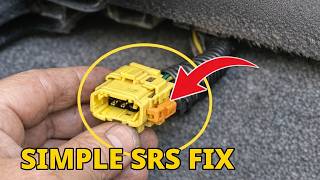
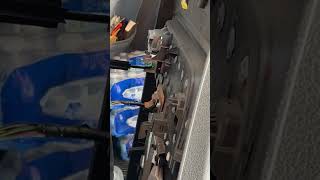
- Loose or corroded electrical connector under the passenger seat. (Very Common) — Items stored under the seat bump and loosen the main yellow SRS connector. 🎬 Watch: How to clean and secure the under-seat SRS connector. Moisture from spills or humidity causes corrosion on the pins, interrupting the signal.
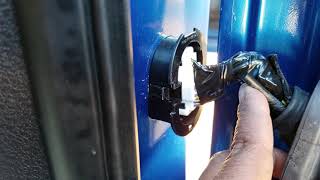
- Damaged wiring harness. (Common) — Wires leading to the pretensioner get pinched, frayed, or broken by the seat moving back and forth. This is highly common in the flexible door boot on trucks with rear-door-mounted retractors. 🎬 See this walkthrough for repairing broken rear door wiring harnesses.
- Faulty passenger seatbelt pretensioner assembly. (Common) — The pretensioner itself, containing a pyrotechnic charge and internal resistor, fails internally. This requires full replacement or a mail-in rebuild.
- Spilled liquid or moisture in the passenger seat. (Common) — Spilling a drink or leaving a window open in the rain introduces moisture into the passenger seat's internal sensors, short-circuiting the wiring and triggering the code.
- Broken seat position sensor wiring (GM Specific). (Common) — On 2007-2014 GM SUVs, wires for the seat position sensor break from normal seat movement, triggering a 'Service Air Bag' message and logging pretensioner-related codes.
- Previous accident history. (Less Common) — If the vehicle was in a minor accident, the pretensioner fired or the RCM stored a permanent 'crash data' fault. This locks the module until professionally reset.
- Faulty Occupant Classification System (OCS) Sensor. (Less Common) — The OCS sensor mat within the passenger seat cushion fails. A fault here causes the RCM to log a pretensioner code as a secondary issue.
- Faulty Restraints Control Module (RCM). (Rare) — The main computer controlling the airbag system fails internally. This is the absolute last component to suspect after ruling out all wiring and pretensioner faults.
Symptoms

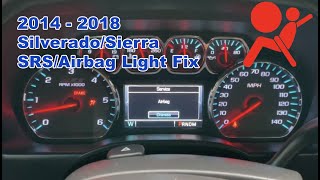
- Airbag warning light is on — The primary symptom. A red or yellow icon of a person with an airbag remains solidly lit on the dashboard.
- Message on the instrument cluster — The driver information center displays a "Service Airbag System" or "Service Safety Restraint System" warning.
- Seatbelt is locked or won't retract — If the pretensioner deployed during a past accident, the seatbelt locks tight and refuses to retract or pull out.
- Flashing airbag light — Older Ford models flash a specific pattern (Lamp Fault Code) before staying solid. A 2-4 flash code points directly to this issue.
- Persistent chime or beep — A recurring chime accompanies the warning light to alert the driver of the critical SRS fault.
Diagnostic Flowchart
Tap your situation to follow the diagnostic path that matches what you're seeing on this code.
Common Fixes & Costs
- Secure or clean the under-seat connector — Parts: $0, Labor: $0-$150, ~0.5 hr book time (DIY)
- Replace Passenger Seatbelt Pretensioner/Retractor Assembly — Parts: $200-$550 (OEM part), Labor: $150-$350, ~1.5 hr book time (Intermediate)
- Repair/Rebuild Seatbelt Pretensioner (Mail-in Service) — Parts: $65-$120, Labor: $150-$250 (for removal/reinstallation), ~1.5 hr book time (DIY)
- Reset Airbag Module (Mail-in Service) — Parts: $50-$150, Labor: $150-$250 (for removal/reinstallation), ~1.5 hr book time (Intermediate)
- Replace Restraints Control Module (RCM) / Airbag Module — Parts: $250-$1200+, Labor: $150-$400 (plus programming fees), ~2.0 hr book time (Professional)
Used vs. New Parts: Buying Guide

When a used part is worth it: Due to extreme liability, buying used pyrotechnic pretensioners is highly discouraged. A mail-in repair service for your original part is a safer, reliable alternative. Only buy used if sourcing a non-explosive wiring pigtail.
Donor-vehicle mileage cap: roughly under 50000 miles for the part to have meaningful remaining life.
Donor quality checklist:
- Verify the donor vehicle was not in a flood; moisture destroys SRS components.
- Ensure the part never deployed. You cannot visually inspect the internal pyrotechnic charge.
- Part number must match exactly. SRS components are specific to make, model, year, and trim.
- Avoid parts from vehicles with a theft history.
Decision logic:
- If The part is a pyrotechnic device (pretensioner, airbag). → Buy new OEM or use a certified mail-in repair service. The safety risk of a used explosive part is too high.
- If The required part is a simple connector or wiring pigtail. → A used pigtail from a reputable auto recycler is acceptable if spliced correctly using heat-shrink connectors.
Warranty tradeoff: Used parts carry a 30-day warranty covering only the part. New OEM parts carry a 12-month/12,000-mile warranty. Reputable mail-in repair services offer lifetime warranties on their rebuilds.
Worst-case if a used part fails: Incalculable. The worst-case failure is the safety system failing to deploy in a crash, resulting in serious injury or death.
What Happens If You Wait — Timeline
- Immediate: Code B1214 sets, illuminating the airbag warning light. The entire SRS system disables instantly as a fail-safe and will not deploy in a crash. (MPG impact: 0%% · Added cost: $0 (Safety risk is incalculable))
- 1 week - 3 months: The vehicle automatically fails any state safety inspection that checks for an active airbag light, preventing legal registration renewal. (MPG impact: 0%% · Added cost: $100-$200 (Fines or re-inspection fees))
- 3 - 12 months: Moisture-induced corrosion on the connector pins 'wicks' up the copper wire, destroying the wiring harness. A free connector cleaning escalates into a complex wire repair. (MPG impact: 0%% · Added cost: $250-$500 (Cost to repair a section of wiring harness))
- 12+ months: Sustained high resistance or intermittent shorts stress the driver circuits within the Restraints Control Module (RCM), permanently damaging the computer. (MPG impact: 0%% · Added cost: $500-$1500+ (Cost of a new RCM plus programming))
Cost of Not Fixing It
- Immediate: The entire Supplemental Restraint System (airbags and pretensioners) is disabled. This drastically increases the risk of serious or fatal injury for all occupants. (Added cost: N/A (Safety Risk))
- Ongoing: The vehicle automatically fails annual state safety inspections, preventing legal registration and use of the vehicle. (Added cost: $100 - $300 (Fines, inability to register vehicle))
- Long-term: Ignoring a corroded connector allows moisture to destroy the wiring harness or short out the Restraints Control Module (RCM), turning a $0 fix into a $1,500 replacement. (Added cost: $500 - $1500)
Diagnosis Steps

- Read the Full Fault Code with a Capable Scanner
Use an OBD-II scanner that reads SRS/Airbag codes. Note the full code, including manufacturer-specific suffixes (e.g., B1214:13 for an open circuit). This dictates the entire diagnostic path.
Tools: SRS-capable OBD-II Scanner (Beginner) - Visually Inspect Under the Passenger Seat
Look for loose items that bumped the wiring. Identify the bright yellow primary SRS connector. Check if it is fully seated and look for pinched wires or signs of spilled liquids.
Tools: Flashlight (Beginner) - Disconnect and Reconnect the SRS Connector
SAFETY FIRST: Disconnect the negative battery terminal and wait 30 minutes for backup capacitors to discharge. Unplug the yellow connector under the seat, inspect pins for corrosion, and reconnect it firmly until it clicks. Reconnect the battery and check if the light turns off.
Tools: 10mm wrench for battery terminal, small flathead screwdriver (Beginner) - Analyze Live SRS Data (Pro Tip)
Access the live data stream for the RCM on your scanner. Find 'Passenger Pretensioner Resistance'. A healthy circuit shows 1.7 to 3.0 ohms. Wiggle the wiring harness under the seat; if resistance jumps to O.L. (Open Limit), you found the exact location of the broken wire.
Tools: SRS-capable OBD-II Scanner with Live Data (Intermediate) - Test the Pretensioner Circuit Resistance
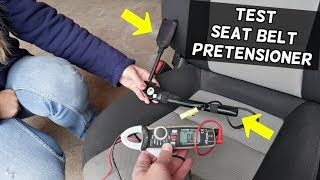
With the battery disconnected, unplug the pretensioner. Measure resistance across the two pins on the pretensioner assembly. A good unit reads 1.7 to 3.0 ohms. An infinite reading (O.L.) confirms the pretensioner is internally broken and requires replacement. Use thin probes to bypass the connector's shorting bar.
Tools: Digital Multimeter, thin probe pins (Advanced) - Simulate the Pretensioner (Pro Tip)
Plug a 2.0 to 3.0-ohm test resistor into the vehicle-side harness connector to simulate a good pretensioner. Reconnect the battery and clear codes. If B1214 does NOT return, the wiring and RCM are perfect, and the pretensioner itself is faulty.
Tools: 2.0-3.0 Ohm Resistor (or SRS test resistor set) (Advanced) - Test the Wiring Harness for Continuity and Shorts
With the battery disconnected and components unplugged, check for continuity on the two wires between the RCM and the pretensioner. Resistance must be under 0.5 ohms. Check each wire for a short to ground against the chassis; any reading other than infinite indicates a short.
Tools: Multimeter, vehicle-specific wiring diagram (Advanced) - Component Replacement and System Reset
Replace the faulty component (pretensioner, pigtail, or RCM). You MUST clear the fault code from the RCM using an SRS-capable scanner. If crash data is present, mail the RCM out for a reset service.
Tools: Socket set, trim removal tools, SRS-capable OBD-II Scanner (Professional)
When This Code Triggers (Freeze-Frame Conditions)
- System State: Key ON (The Restraints Control Module (RCM) performs a self-test of all SRS components every time the ignition turns to the 'ON' position.)
- Component Resistance: Outside 1.7-3.0 Ohms (The code sets the instant the RCM's self-test detects the pretensioner circuit's resistance is too high (open) or too low (shorted).)
- System Voltage: 9-16 Volts (The self-test runs based on the vehicle's main electrical power. A low main battery sometimes causes erratic SRS faults, though this is rare for a specific circuit code like B1214.)
- Crash Data Status: Crash Event Stored (If the vehicle was in a prior accident, the RCM stores permanent 'crash data', locking the module and presenting as a component fault code.)
Related Codes
- B1211 — The equivalent code for the Driver's seatbelt pretensioner. The diagnostic process is identical but focused on the driver's side components.
- B0052 / B0053 — Relates to the Passenger Occupant Classification System (OCS). A fault in the OCS sensor mat (from a spilled drink) causes the RCM to flag a B1214 code. Always check for OCS codes.
- B0010-B0028 — Relates to main airbag deployment loops. B1214 specifically points to the pretensioner circuit, while B0017 points to the main passenger airbag inflator in the dashboard.
- U0170 — Means 'Lost Communication With Restraints Control Module.' If you see U0170, the main airbag computer is offline and cannot report a specific circuit fault like B1214. Fix U0170 first.
Climate & Environmental Factors
- High Humidity / Moisture: High humidity, rain intrusion, or spilled liquids cause moisture to seep into connectors. This creates corrosion on the pins, increasing circuit resistance and triggering the B1214 code.
- Extreme Temperature Cycles: Extreme shifts from hot to cold cause electrical connectors to expand and contract, loosening the connection over time and creating intermittent open circuits.
- Road Salt: Salt-laden moisture tracked into the vehicle is highly corrosive and rapidly accelerates the degradation of under-seat connectors and wiring.
How to Talk to a Mechanic About This Code
Say this: "I have an airbag warning light on, and my scanner shows code B1214 for the passenger seatbelt pretensioner. I'd like to schedule a diagnostic. Can you please start by inspecting the wiring and connector under the passenger seat before quoting a full pretensioner replacement?"
This signals you know the most common, cheapest fix and prevents a shop from immediately quoting a $600 repair. It directs them to follow a logical, cost-effective diagnostic path.
Avoid saying:
- 'My airbag light is on, can you fix it?' (Invites expensive guesswork)
- 'Just replace whatever is broken.'
- 'I heard it's probably the pretensioner, can you give me a price for that?' (Skips the cheap diagnostic steps)
Questions to ask before authorizing the repair:
- Did you check the resistance on the pretensioner itself? What was the exact ohm reading?
- Did you find a fault in the wiring harness or the component?
- If the pretensioner needs replacement, is the price for a new OEM part? What is the warranty?
- Can you confirm you have the tools to properly clear the SRS codes after the repair?
Where to Take It: Dealer vs Independent vs Chain
- Dealer:
A safe but expensive choice. They fix it correctly but at the highest possible cost. Good for peace of mind if budget is not a concern.
Best for: Vehicles under warranty., Complex, manufacturer-specific SRS issues., When you want guaranteed OEM parts and procedures, regardless of cost.
Downsides: Highest labor rates, often $150-$250 per hour., Quick to replace an entire $500 assembly rather than perform a $50 targeted wiring repair. (Typical cost: +50% vs. baseline) - Independent Shop:
Best fit for most consumers. A good independent shop easily diagnoses a wiring vs. component fault and offers flexible repair options (like using a pigtail connector) that dealers refuse.
Best for: Out-of-warranty vehicles where cost is a factor., Diagnosing common and well-documented faults like B1214., Building a long-term relationship with a trusted mechanic.
Downsides: Quality varies. Ensure the shop is ASE-certified and comfortable with airbag system repairs., Some shops refuse to work on SRS systems due to liability concerns. (Typical cost: +0% vs. baseline) - Chain Shop:
AVOID. SRS repair requires specific expertise and carries significant safety liability. This is not a job for a general-purpose chain shop.
Best for: Simple, non-safety-critical jobs like tires and oil changes.
Downsides: Technician skill with complex SRS diagnostics is highly variable., High pressure to upsell services; often lack specific SRS-capable scan tools. (Typical cost: -10% vs. baseline)
When to Walk Away From the Repair
If the estimated repair cost exceeds 40-50% of the car's private-party value, evaluate your options. For a critical safety issue, the threshold is slightly higher.
- Car worth $4000, fix is $2200: Walk away. The repair cost is over 50% of the car's value. It is not economically sensible to proceed.
- Car worth $12000, fix is $800: Fix it. This is well below the threshold and restores a critical safety feature, preserving the car's value.
- Car worth $2500, fix is $1500: Walk away. The car is near the end of its life, and this repair is too costly relative to its value.
What Scan Tool You Need for This Code
Minimum: A scan tool that reads and clears Supplemental Restraint System (SRS/Airbag) codes. A basic engine-only code reader will not work.
A standard $20 OBD-II reader only sees 'P' (Powertrain) codes. B1214 is a 'B' (Body) code stored in the airbag module. You need a tool that accesses this separate system to read the fault and clear the light.
Professional: Autel MaxiCOM MK808 / MK900-BT (~$450-700) — Full bidirectional control, all-system access, and advanced functions like module coding. Professional-grade equipment that is overkill for most one-time users.
Rent vs buy: Auto parts stores like AutoZone do NOT rent out SRS-capable scanners due to liability. Buying a budget pick like the BlueDriver is your most cost-effective option, as it is cheaper than a single diagnostic hour at a shop.
How to Clear the Code After You Fix It
- Reconnect the pretensioner and RCM components.
- Reconnect the negative battery terminal.
- Use an SRS-capable OBD-II scan tool to access the Restraints Control Module (RCM) and select 'Clear Codes'.
- Turn the ignition off, start the vehicle, and verify the airbag light performs its 6-second self-check and stays off.
Drive cycle (~10 minutes): SRS codes do not require a complex drive cycle. After clearing the code with a scanner, a 10-minute test drive confirms the light stays off, verifying the electrical fault is resolved.
Watch out for:
- A basic $20 engine code reader cannot communicate with the SRS module to clear the code.
- Disconnecting the battery does NOT clear an active SRS fault code from the module's permanent memory.
- If the light returns immediately, the underlying electrical fault (broken wire, faulty part) remains unfixed.
- If the vehicle was in an accident, the code will not clear because 'crash data' is stored. The module requires a professional reset.
Will This Fail Emissions / State Inspection?
No — by itself this code doesn't fail OBD inspection (but it can keep readiness monitors from setting, which causes a separate fail).
- California: An airbag light does NOT fail a California Smog Check, which strictly tests emissions. The SRS system is excluded.
- New York: An active airbag warning light fails the New York state safety inspection.
- Texas: An active airbag warning light fails the Texas state safety inspection.
- Virginia: An active airbag warning light is an automatic failure of the Virginia state safety inspection.
Most Commonly Affected Vehicles
- Ford F-150 (2009-2014) — Extremely common. Caused by a loose under-seat connector or frayed wiring in the flexible boot of the rear door jamb on SuperCab models.
- Ford F-250/F-350 Super Duty (2011-2016) — Frequently points to an open circuit (B1214:13) in the passenger pretensioner wiring. Wiggling the under-seat harness is the primary diagnostic step.
- Chevrolet / GMC Tahoe, Yukon, Suburban, Silverado, Sierra (2007-2014) — A broken wire at the seat position sensor connector triggers a 'Service Air Bag' message. GM issued special coverage adjustment 14332 for this issue.
- Ford Escape (2001-2007) — Caused by the wiring connector under the passenger seat getting damaged from items stored under the seat.
- Mazda Tribute (2001-2007) — Mechanically identical to the Ford Escape, sharing the exact same under-seat wiring connector failures.
- Ford Fiesta (2011-2019) — The passenger seatbelt retractor pretensioner is a known failure point requiring full assembly replacement.
- Porsche Macan (2015-2016) — Code B121400 triggers from moisture in the passenger seat (spilled drink). TSB ATI-1602 6956 states drying the seat resolves the issue.
- Volkswagen Passat, GTI (2018-2020) — Code B121400 indicates a spilled drink interfering with the occupant detection sensor mat.
- Nissan Various (2004-2015) — B1214 is not an SRS code on Nissan. It indicates an 'OCS Sensor Malfunction', pointing to a problem with the passenger seat weight sensor mat.
Manufacturer-Specific Notes
- Ford / Mazda: Suffixes pinpoint the fault: B1214:11 is a short to ground, :12 is a short to power, :13 is an open circuit, and :1A is low resistance. A healthy pretensioner reads 1.7-2.78 ohms.
- Hyundai / Kia: B1214 is NOT an SRS code. It means "Rear Left Sensor Fault" for the parking assist system. Hyundai issued a recall for 2012-2013 Veloster models for this issue (Recall 242).
- Toyota / Lexus: B1214 indicates a "Door System Communication Bus Malfunction (+B Short)." This points to a wiring issue within the body's communication network, not the airbags.
- Porsche: On the 2015-2016 Macan, TSB ATI-1602 6956 notes code B121400 is caused by spilled drinks in the passenger seat and is fixed by drying the sensor area.
- General Motors: GM issued Special Coverage Adjustment #14332 for 2008-2013 Enclave, Acadia, Outlook, and Traverse vehicles to address corrosion in the airbag wiring connectors under the front seats.
Real Owner Stories
2012 Ford F-150 SuperCab with intermittent airbag light
Airbag light cycled on and off, eventually staying solid. FORScan tool showed code B1214:13-8B, indicating an open circuit in the passenger pretensioner.
What they tried:
- Checked the yellow connector under the passenger seat; it was secure.
- Inspected wiring in the rear door jamb where the seatbelt retractor is located and found a wire with cracked insulation at a sharp bend.
Outcome: Spliced the damaged wire and secured the harness to prevent sharp bends. After clearing the code with FORScan, the light stayed off. Total cost was $0 for a small piece of wire and electrical tape.
Lesson: On Ford trucks with retractors in the rear door, the wiring in the door jamb's flexible boot is a major failure point and requires careful inspection.
2005 GMC Sierra with constant airbag light
Airbag light was on constantly. A scan revealed a passenger pretensioner fault. Inspection showed several wires completely broken off from the main under-seat connector.
What they tried:
- Considered replacing the entire $400 harness.
- Opted to repair by repinning the connector.
Outcome: The owner sourced a new connector pigtail and spliced it in. The root cause was wires catching in the seat track. Rerouting the harness prevented a repeat failure.
Lesson: A severed connector requires a targeted pigtail replacement, not a full harness. Routing the repaired wires away from the seat track is critical.
2013 Hyundai Elantra with no airbag light but a 'Rear Left Sensor Fault'
The reverse parking aid system stopped working and the dash indicator flashed. The airbag warning light remained off.
What they tried:
- Scanned the car and found code B1214.
- Researched the code and discovered it does not relate to the airbag system on this model.
Outcome: The code pointed to a fault in the Rear Parking Assistant System (RPAS). The problem was a faulty rear left parking sensor, not an SRS component.
Lesson: Always verify the code definition for your specific Make and Model. For many Hyundai/Kia vehicles, B1214 is a parking sensor issue, not a critical safety fault.
How to Prevent This Code From Triggering
- Enforce a 'no-stuff-under-the-seat' rule. (Daily habit) — Objects sliding under the seat bump the yellow SRS connector loose or damage its wires. Keeping this area clear prevents 80% of B1214 codes.
- Apply dielectric grease to connector pins. (Once, during any under-seat maintenance) — A thin layer of dielectric grease on the connector pins creates a waterproof barrier, preventing moisture from causing high-resistance corrosion faults.
- Secure under-seat wiring away from the seat track. (Once, as a proactive check) — Factory wiring routes too close to the seat's metal slide mechanism. Using a zip tie to pull the harness away from moving parts prevents severed wires.
- Add protective wire loom/sleeving. (Once, if wiring is exposed or in a high-risk area) — Adding split loom tubing or high-quality electrical tape to vulnerable wiring (e.g., F-150 door jambs) provides critical defense against abrasion and physical damage.
Frequently Asked Questions
Is it safe to drive with code B1214?
No. When the airbag light is on, the entire Supplemental Restraint System (SRS) is disabled as a fail-safe. In an accident, the airbags and seatbelt pretensioners will not deploy.
What are the most common misdiagnosis mistakes for B1214?
The biggest mistake is assuming B1214 is always an airbag code. On Hyundai, Kia, and Toyota models, it often refers to parking sensors or communication bus errors. Another pitfall is replacing the expensive pretensioner when the actual fault is a simple corroded under-seat connector.
What is the resistance of a good seat belt pretensioner?
A healthy seat belt pretensioner reads between 1.7 and 3.0 ohms when measured with a multimeter. Readings outside this range, like O.L. (open) or near zero (short), confirm a faulty pretensioner.
What is the yellow connector under my seat for?
Any bright yellow connector or wiring loom in a modern vehicle is dedicated to the Supplemental Restraint System (SRS). This includes airbags, pretensioners, and impact sensors. Manufacturers use this universal color to warn technicians of the high-stakes, explosive nature of these components.
I fixed the loose connector but the light is still on. What now?
While some vehicles turn the light off on the next startup, many require you to manually clear the code from the Restraints Control Module (RCM) using an SRS-capable scan tool. If the vehicle was in an accident, the RCM stores 'crash data' which requires a professional module reset.
Can I use a regular multimeter to test airbag components?
Yes, but with extreme caution. You must FIRST disconnect the car battery and wait at least 30 minutes before testing the resistance of a disconnected component. NEVER use a multimeter on a live, connected SRS circuit, as the meter's voltage easily triggers an explosive deployment.
My car is a Hyundai and I got code B1214, but my airbag light isn't on. Why?
For many Hyundai and Kia vehicles, B1214 is not an airbag code. It indicates a fault with the rear-left parking assist sensor. This disables the parking sensor system but is not a safety concern like an airbag fault.
Key Takeaways
- Code B1214 indicates a passenger seatbelt pretensioner circuit failure, instantly disabling the entire airbag system and making the vehicle unsafe to drive.
- The #1 cause is a loose yellow SRS connector under the passenger seat, which you can often fix for $0 by disconnecting the battery for 30 minutes and reseating the plug.
- Verify your manufacturer's specific code definition; while B1214 is a critical airbag fault for Ford and GM, it indicates a harmless parking sensor failure on many Hyundai and Kia models.
- A healthy pretensioner reads between 1.7 and 3.0 ohms of resistance; readings outside this range confirm a faulty component requiring replacement or rebuild.
- Always disconnect the negative battery terminal and wait 30 minutes before touching any yellow SRS wiring to prevent accidental, explosive airbag deployment.
Helpful Videos
Shop the Parts Behind B1214
Below are the parts most often responsible for code B1214, ranked by how frequently each one is the actual culprit (per the diagnosis above). Tap any to see what we have for your vehicle.




The information in this article is provided for general reference and educational purposes only. Vehicle specifications, procedures, and part compatibility can vary by production date, trim level, and region. Always consult your vehicle's factory service manual and verify part numbers before purchasing or performing repairs. Safety-critical components such as airbags, seat belts, and braking systems should be installed by a qualified professional.
- 🧭 Diagnostic Flowchart
- 🎬 Helpful Videos
- 🛍️ Shop This Part
- What Does B1214 Mean?
- Can I Drive With B1214?
- Common Causes
- Symptoms
- Common Fixes & Costs
- Used vs. New Parts: Buying Guide
- What Happens If You Wait — Timeline
- Cost of Not Fixing It
- Diagnosis Steps
- When This Code Triggers (Freeze-Frame Conditions)
- Related Codes
- Climate & Environmental Factors
- How to Talk to a Mechanic About This Code
- Where to Take It: Dealer vs Independent vs Chain
- When to Walk Away From the Repair
- What Scan Tool You Need for This Code
- How to Clear the Code After You Fix It
- Will This Fail Emissions / State Inspection?
- Most Commonly Affected Vehicles
- Manufacturer-Specific Notes
- Real Owner Stories
- 2012 Ford F-150 SuperCab with intermittent airbag light
- 2005 GMC Sierra with constant airbag light
- 2013 Hyundai Elantra with no airbag light but a 'Rear Left Sensor Fault'
- How to Prevent This Code From Triggering
- Frequently Asked Questions
- Is it safe to drive with code B1214?
- What are the most common misdiagnosis mistakes for B1214?
- What is the resistance of a good seat belt pretensioner?
- What is the yellow connector under my seat for?
- I fixed the loose connector but the light is still on. What now?
- Can I use a regular multimeter to test airbag components?
- My car is a Hyundai and I got code B1214, but my airbag light isn't on. Why?
- Key Takeaways
- 🎟️ Get 5% Off