

Mini Cooper B1214: Not a Fault Code, But a Test Plan for Knock Sensor Issues (2D9B)
On a 2007-2014 Mini Cooper, B1214 is not a fault code but the name of a diagnostic test plan run with dealer software. If you see this code, it's almost always in relation to the actual fault code 2D9B, which points to a problem with the knock sensor or its circuit. The fix can range from a simple software update to replacing the knock sensor, which is a labor-intensive job.
- B1214 is not a fault code on a Mini; it's a diagnostic test plan ID within the ISTA software.
- The actual fault you need to address is 2D9B, which points to the knock sensor circuit.
- For N16 engines, especially in cold weather, check for TSB M120113 first. A simple DME software update may be the only fix needed.
- If hardware replacement is needed, the knock sensor is the most likely culprit, but its replacement is labor-intensive (3-4 hours) as it requires removing the intake manifold.
- Proper installation is critical: the mounting surface must be clean and the bolt torqued to exactly 20 Nm.
- On N16 engines, a faulty thermostat can also trigger code 2D9B, so it should be considered if sensor/wiring checks pass.
What's Unique About the 2007-2014 Mini COOPER
Unlike many other manufacturers where a B-code might indicate a body control module fault, on a second-generation Mini it is simply a procedural name within the diagnostic software. The confusion arises because this test plan ID can appear on diagnostic reports. The key takeaway for Mini owners is to ignore the 'B1214' and focus on the real fault code it's associated with, which is almost always 2D9B (Knock Sensor, Signal).
Diagnostic Flowchart
Tap your situation to follow the diagnostic path that matches what you're seeing on this vehicle.
Generation note: This range primarily covers the second-generation Mini Cooper, often referred to by its chassis code R56 (for the Hardtop/Hatch). The issues and fixes are generally consistent across the models in this year range, including the Clubman (R55), Convertible (R57), Coupe (R58), Roadster (R59), and Countryman (R60), as they share the same Prince engine family (N12, N14, N16, N18) and electronics.
Symptoms You May Notice
- Check Engine Light (Service Engine Soon lamp) is on
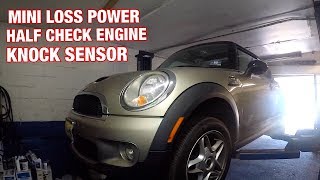
- Reduced engine power or temporary 'limp mode', sometimes described as feeling like the e-brake is on. 🎬 Watch: How a faulty knock sensor causes power loss.
- Engine may feel sluggish or hesitate on acceleration.
- Audible engine knocking or pinging (in rare cases, as the DME usually defaults to a safe timing map).
- Poor fuel economy.
- In some cases, the fault only appears under specific conditions, like steady-state cruising or light acceleration after a cold start.
- Replacing spark plugs or ignition coils when the issue is actually the knock sensor circuit. One owner on North American Motoring had coils and plugs replaced, which did not solve the 2D50/2D9B codes.
- Replacing the knock sensor when the actual root cause is a DME software issue that requires an update, as per TSB M120113.
- Assuming the knock sensor is bad when the wiring harness leading to it is damaged or has a corroded connector. A confirmed fix on a forum was a broken wire inside the connector housing itself.
Most Likely Causes
- DME Software Calibration Error 🔴 High Probability A specific TSB (M120113) was issued for N16 engines, stating that a DME calibration error causes increased knock sensor sensitivity in very cold weather (below -5°C or 23°F), falsely triggering code 2D9B. This issue is known to occur during cold starts as the engine warms up.
How to confirm: The fault typically appears during cold starts in winter months on a vehicle with an N16 engine. A dealer or specialist with up-to-date ISTA/P software can check the vehicle's software integration level. The TSB specifies programming the vehicle to integration level R056-13-07-500 or higher.
Typical fix: Reprogramming the DME (Engine Control Module) with updated software. The TSB explicitly states not to replace any parts for this specific condition.
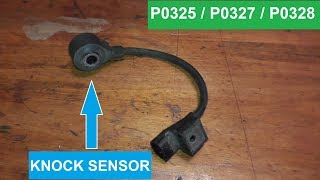
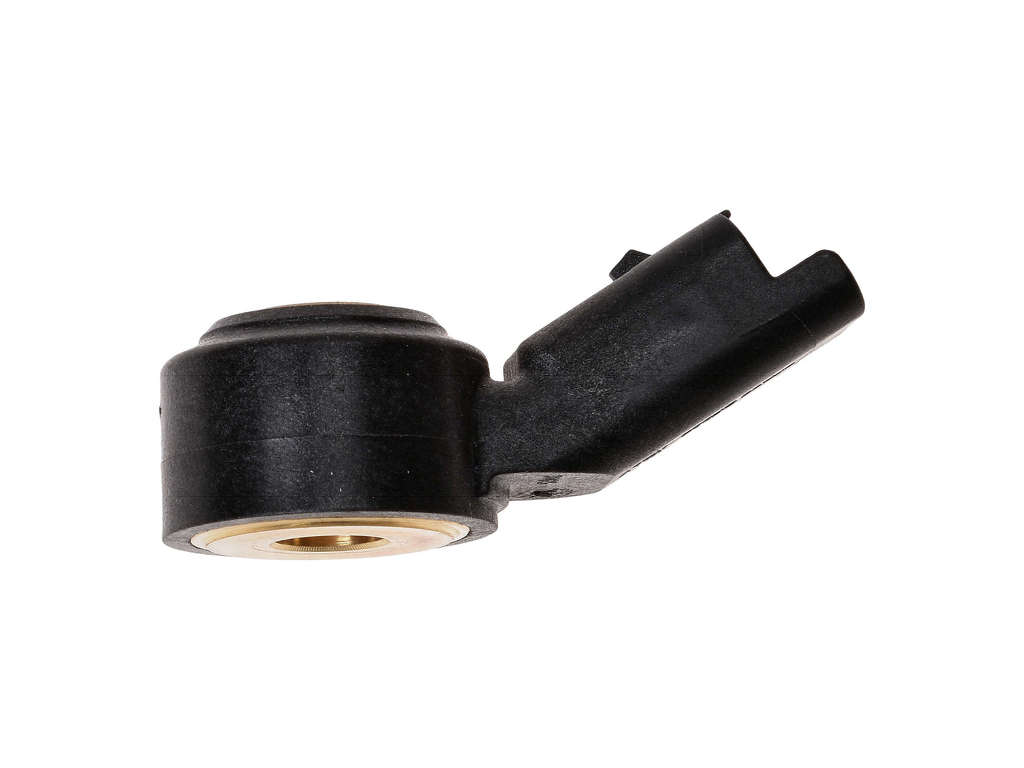
Est. part cost: $0 (labor for programming will apply) - Failed Knock Sensor 🟡 Medium Probability → Shop Ignition Knock (Detonation) Sensor The knock sensor is a piezoelectric crystal that can fail over time due to constant heat cycles and engine vibration. It is located on the back of the engine block, below the intake manifold, making it subject to intense heat.
How to confirm: After ruling out the software issue, a technician can test the sensor's circuit. With the ignition on, one wire should be ground (~0V) and the other should have a reference voltage of around 2.5V. A user on the ScannerDanner forum with code 2D9B diagnosed a wiring issue by finding an incorrect voltage of 1.6V on both wires at the ECU plug.
Typical fix: Replace the knock sensor. This requires removing the intake manifold 🎬 See this walkthrough on testing and replacing the sensor. for access. The job is estimated to take around 4 hours.
Est. part cost: $50-$100 - Improper Knock Sensor Installation or Connection ⚪ Low Probability → Shop Ignition Knock (Detonation) Sensor The sensor is sensitive to mounting torque. If it's too loose, too tight, or if the mounting surface on the block is dirty, it can't properly detect engine vibrations. TSB M120412 specifically calls out checking this. Over-torquing can make the sensor overly sensitive, while under-torquing can prevent it from detecting knock at all.
How to confirm: Visually inspect the sensor's electrical connector for corrosion or damage. Check that the sensor is securely mounted to the engine block. A service manual specifies a torque of 20 Nm (approx. 15 ft-lbs), while another source lists 22 Nm (16 ft-lbs). The mounting surface must be clean.
Typical fix: Clean the mounting surface, reinstall the sensor to the correct torque specification, and ensure the electrical connector is clean and secure.
Est. part cost: $0
Rare But Worth Checking
- Faulty Thermostat:
Diagnosis Steps
- Scan the DME for fault codes. Confirm that 2D9B is present. Note any other codes, especially 2D50 or any thermostat-related faults.
- Check for TSB M120113 applicability. If you have an N16 engine and the fault occurs in cold weather (below 23°F/-5°C), the primary suspect is the DME software. Consult a dealer to check if the software integration level is R056-13-07-500 or higher.
- If software is not the issue, perform a visual inspection. The sensor is located on the back of the engine block, below the intake manifold. This is difficult to access. Check the wiring harness for any signs of damage, chafing, or corrosion at the connector.
- Test the knock sensor circuit. With the ignition on and sensor connected, backprobe the connector. You should find approximately 2.5V on the signal wire and a good ground (~0V) on the other. If access is too difficult, you can test from the DME connector itself. A reading of ~5V can indicate an open circuit, while 0V can indicate a short.
- If wiring and voltage are suspect, check the sensor's installation. This requires removing the intake manifold. Once accessed, ensure the sensor is torqued correctly to 20-22 Nm on a clean surface.
- If no issues are found with the sensor or its installation, and you have an N16 engine, consider TSB M120412, which suggests replacing the thermostat as the next step.
- If all other steps pass, the knock sensor itself is likely faulty and should be replaced.
Parts You'll Likely Need
- Knock Sensor
(OEM #13627552114)— This sensor is the most common hardware failure that triggers the 2D9B fault code. It is the same part for N12, N14, N16, and N18 engines.
Trusted brands: Bosch, VEMO, Genuine Mini
OEM price range: $75-$120
Aftermarket price range: $19-$80 - Knock Sensor Mounting Bolt
(OEM #07129905859)— Mini recommends replacing the single-use microencapsulated fastener. If reusing the old bolt, new thread locker must be applied.
Trusted brands: Genuine Mini
OEM price range: $5-$10
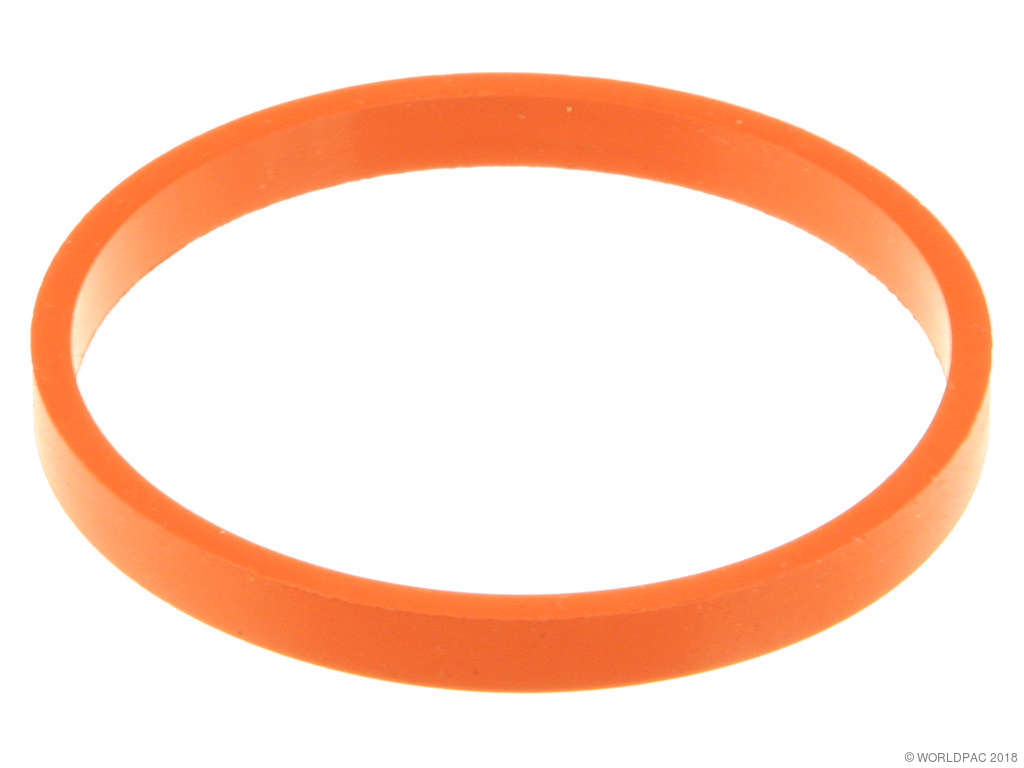
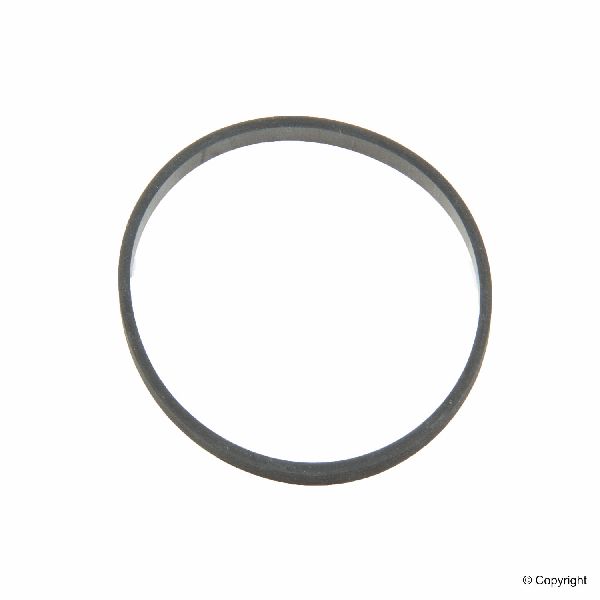
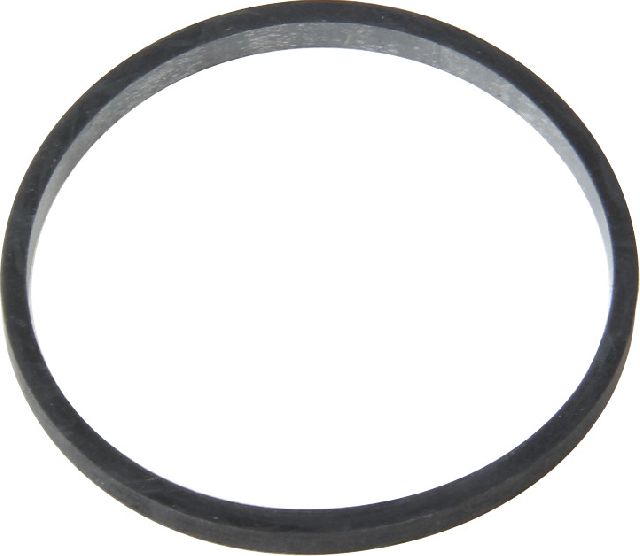
Aftermarket price range: $2-$5 - Intake Manifold Gasket Set — The intake manifold must be removed to access the knock sensor. The gaskets are considered one-time use and should be replaced to prevent vacuum leaks.
Trusted brands: Victor Reinz, Elring, Genuine Mini
OEM price range: $30-$50
Aftermarket price range: $15-$25
Related Codes That Often Appear With This One
- 2D50 — This code for 'Super Knocking' can sometimes appear alongside 2D9B, as both relate to the engine's knock control system. A user on North American Motoring reported having both codes appear together consistently, even after replacing the knock sensor, coils, and plugs.
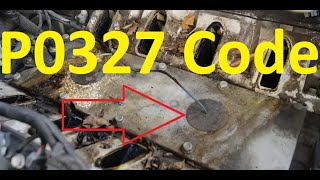
- P0327 / P0328 — These are the generic OBD-II equivalents for Knock Sensor Circuit Low (P0327) or High (P0328). The Mini-specific 2D9B code often translates to one of these generic codes on standard scanners. 🎬 Learn more about diagnosing P0327 circuit low codes.
Technical Service Bulletins (TSBs) & Recalls
- M120113: Addresses fault code 2D9B on N16 engines in cold climates, linking it to the B1214 test plan. Recommends a DME software update to integration level R056-13-07-500 or higher instead of parts replacement.
- M120412: For N16 engines, instructs technicians to check knock sensor installation (20 Nm torque) for code 2D9B. If the sensor and connection are good, it directs them to replace the thermostat.
Platform-Specific Known Issues
- N16 Engine Cold Weather Software Glitch: On models with the N16 engine, fault code 2D9B can be falsely triggered by a software sensitivity issue in ambient temperatures below -5°C (23°F), as documented in TSB M120113. The fix is a software update to level R056-13-07-500 or higher, not a part replacement.
- N16 Engine Thermostat Link: TSB M120412 indicates that for N16 engines, if the knock sensor and its wiring/installation are confirmed to be good, a faulty thermostat can be the root cause of code 2D9B.
- Difficult Access for Replacement: The knock sensor is located on the engine block, below the intake manifold and above the starter motor. Replacing it is a labor-intensive job, with repair guides estimating around 4 hours, as the entire intake manifold assembly must be removed for access.
Mechanic-Grade Diagnostic Values
- Knock sensor signal wire voltage (KOEO, sensor connected) — expected: ~2.5V DC. Failure: A reading of ~5V (open circuit), ~0V (short to ground), or an otherwise incorrect voltage (e.g., 1.6V) points to a fault in the sensor or wiring.
- Knock sensor ground wire voltage (KOEO, sensor connected) — expected: ~0V DC. Failure: Voltage significantly above 0V indicates a bad ground connection. One user reported 1.6V on the ground wire at the ECU plug, indicating a wiring fault.
- Knock sensor mounting bolt torque — expected: 20-22 Nm (15-16 ft-lbs). Failure: Incorrect torque can cause the sensor to be either too sensitive or not sensitive enough, leading to false codes or missed knock events. The mounting surface must also be clean.
Hidden / Shadow Codes Worth Checking
- 61/3: This is not a DME fault code, but an error code that appears within the ISTA diagnostic software when executing the 'B1214 M KNOCK SENSOR' test plan under specific cold-weather conditions outlined in TSB M120113. (see via Appears in the ISTA/D dealer diagnostic tool during the guided test plan for fault 2D9B.)
Scan Tool Commands That Help
- ISTA: B1214 M KNOCK SENSOR — This is the official guided test plan initiated to diagnose the fault code 2D9B.
- ISTA: Read/Delete Fault Memory — Used to check for all stored codes at the beginning of diagnosis and to clear them after a repair is performed.
- ISTA: Diagnosis Scan / Call Up ECU Functions — Allows a technician to view live engine operating values, such as timing advance and knock control parameters, to see how the system is behaving in real-time.
- ISTA: Reset Adaptations — After replacing components, resetting engine adaptations can be necessary to ensure the DME relearns values for the new parts.
Wiring & Ground Locations
- DME Connector (e.g., X60004) — The main engine computer (DME) is located in the engine compartment, typically on the left side. The knock sensor wires run from the sensor on the engine block to a specific multi-pin connector at the DME.. Testing for voltage and continuity directly at the DME pins is a valid diagnostic step when the sensor itself is difficult to access. This can quickly determine if the fault is in the wiring harness or the ECU itself.
- Engine Ground Strap — A thick cable connecting the engine block to the vehicle's chassis, often found near the gearbox or engine mount.. A corroded or failed main engine ground can cause a host of electrical issues and erratic sensor readings. While not a direct cause of 2D9B, checking the main grounds is a fundamental step in any electrical diagnosis.
Real Owner Repair Stories
- Reddit user in r/MINI (2009 John Cooper Works (N14 engine)) — Randomly goes into limp mode, throwing code P0328 (Knock sensor 1 high input).
❌ Tried (didn't work) Initial diagnosis pointed to a wiring issue, but the user needed a diagram to test.
✅ What actually fixed it The user later confirmed the fix: the wire had broken off internally at the pin inside the sensor's electrical connector. Re-pinning the connector resolved the issue permanently. - North American Motoring user (2009 fJCW (N14 engine), 68k miles) — Yellow half-engine light, limp mode, especially when cruising in 6th gear after acceleration. Codes 2D50 and 2D9B consistently present.
❌ Tried (didn't work) DME software update, Replaced MAF sensor, Replaced valve cover, Replaced VANOS solenoid, Replaced knock sensor, Replaced both O2 sensors, Replaced all 4 ignition coils and spark plugs, Walnut blast cleaning of intake valves
✅ What actually fixed it The story is a cautionary tale; despite replacing nearly every related component, the fault persisted. The owner's last update stated the car was at the dealer for further diagnosis, highlighting that the root cause can be extremely elusive and not one of the common component failures.
When the Usual Fixes Don't Work
- While replacing the knock sensor is a common fix, it is not a guaranteed solution. In one documented case on North American Motoring, a 2009 JCW with code 2D9B had the knock sensor, ignition coils, spark plugs, O2 sensors, and VANOS solenoid replaced, and even had a walnut blast service performed, yet the fault continued to occur. This indicates the problem can sometimes lie deeper within the wiring harness or even the DME, and simply replacing parts can become very expensive without a definitive diagnosis.
Model Year Variations Within This Range
- 2007-2010 (Cooper S/JCW): These years primarily use the N14 turbocharged direct-injection engine. This engine is significantly more prone to carbon buildup on the intake valves compared to the later N18 engine (2011+). This makes the N14 more susceptible to real engine knock caused by carbon deposits, which can be misdiagnosed as a sensor fault when code 2D9B appears.
- 2011-2014 (Cooper - Non-S): Base Cooper models in these years use the N16 engine. This specific engine is the subject of two key Technical Service Bulletins (TSBs) related to code 2D9B: one for a cold-weather software glitch (M120113) and another linking the fault to a bad thermostat (M120412).
Helpful Videos

Used OEM Parts in Stock
New Aftermarket Parts Available


The information in this article is provided for general reference and educational purposes only. Vehicle specifications, procedures, and part compatibility can vary by production date, trim level, and region. Always consult your vehicle's factory service manual and verify part numbers before purchasing or performing repairs. Safety-critical components such as airbags, seat belts, and braking systems should be installed by a qualified professional.
- Mini COOPER:
- 🧭 Diagnostic Flowchart
- 🎬 Helpful Videos
- 🛍️ Shop This Part
- What's Unique About the 2007-2014 Mini COOPER
- Symptoms You May Notice
- Most Likely Causes
- Rare But Worth Checking
- Diagnosis Steps
- Parts You'll Likely Need
- Related Codes That Often Appear With This One
- Technical Service Bulletins (TSBs) & Recalls
- Platform-Specific Known Issues
- Mechanic-Grade Diagnostic Values
- Hidden / Shadow Codes Worth Checking
- Scan Tool Commands That Help
- Wiring & Ground Locations
- Real Owner Repair Stories
- When the Usual Fixes Don't Work
- Model Year Variations Within This Range
- 🎟️ Get 5% Off