

OBD-II Code B1216: Multi-System Fault Guide
What B1216 means, why it triggers, and how to fix it for Hyundai, Ford, GM, Toyota, and more
- Code B1216 requires manufacturer-specific diagnosis, pointing to a rear center-right parking sensor on Hyundai/Kia, an overhead SOS switch on GM/Ford, or a right power sliding door on Toyota.
- For 2012-2014 Hyundai Velosters, B1216 indicates a water-damaged rear parking sensor that poses an immediate fire risk and requires the free NHTSA 23V-132 recall service.
- Before buying parts, visually inspect the affected component's wiring harness for green or white corrosion caused by road salt and water intrusion, which accounts for over 50% of these circuit failures.
- If your scanner shows 3 or 4 parking sensor codes simultaneously, do not replace all sensors; unplug them one by one to identify the single shorted sensor pulling down the shared 12V LIN bus communication line.
What Does B1216 Mean?
B1216 is a body trouble code (B-code) indicating a fault with an electronic accessory, but its meaning varies strictly by manufacturer. For Hyundai and Kia vehicles, it signals a fault with the rear center-right parking sensor 🎬 See this guide on how to diagnose faulty parking sensors. On Ford and General Motors (Chevrolet, GMC) vehicles, it points to a circuit problem with the emergency/roadside assistance (SOS) button in the overhead console. For Toyota models like the Sienna, it indicates a communication failure with the right-hand power sliding door's 🎬 Watch: How to repair a Toyota Sienna power sliding door control unit.
Technical definition: The SAE J2012 definition for B1216 is 'Emergency & Road Side Assistance Switch Circuit Short to Ground.' However, manufacturers assign it to other systems, including 'Rear Center Right Sensor Fault' (Hyundai/Kia) and 'Rear Door ECU RH Communication Stop' (Toyota). The fault indicates the controlling module—such as the Body Control Module (BCM) or Parking Assist Module (PAM)—has detected an open circuit, short to ground, short to power, or abnormal signal in the specified circuit.
Can I Drive With B1216?
Yes, But With Caution. Yes, for most vehicles. B1216 typically disables convenience features like parking sensors, SOS buttons, or power sliding doors without affecting drivability. However, if your Hyundai allows the engine to start in any gear without pressing the brake pedal, do not drive it; tow it immediately to prevent unintended movement.
Common Causes
- Faulty or Dirty Rear Parking Sensor (Very Common) — This is the primary cause on Hyundai and Kia vehicles. The sensor fails internally due to water intrusion or vibration. Alternatively, dirt, ice, or thick bumper stickers block its surface, preventing it from sending or receiving ultrasonic signals.
- Faulty Emergency Assistance (SOS) Switch (Common) — On Ford and GM vehicles, the switch assembly in the overhead console fails. This results from an internal short circuit, a stuck button from physical wear, or liquid damage from a leaky roof/windshield seal.
- Damaged Wiring or Corroded Connector (Common) — Wiring and connectors for bumper-mounted sensors or roof consoles are exposed to the elements and physical stress. Water intrusion, road salt, and chafing against the vehicle frame cause corrosion on connector pins or breaks in the wires, resulting in an open or shorted circuit.
- Single Sensor Pulling Down LIN Bus (Common) — On systems where multiple sensors share a single communication wire (a LIN bus), one internally shorted sensor corrupts the data signal for the entire circuit. The control module loses communication with all sensors, setting multiple codes (e.g., B1214, B1215, B1216, B1217) simultaneously.
- Blown Fuse (Less Common) — A fuse protecting the specific circuit blows, cutting power and triggering the code. This is a secondary symptom caused by an underlying short circuit. For specific Hyundai recalls, the fix involves replacing the original 10A fuse with a 4A fuse to prevent fire risk.
- Aftermarket Accessories or Poor Repairs (Less Common) — Improperly installed aftermarket equipment, like trailer hitch wiring or remote starters, interferes with or damages the wiring harness for the parking sensors, causing a short or open circuit.
- Faulty Control Module (BCM, PAM, TCCM) (Rare) — The computer controlling the faulty system fails. Suspect module failure only after ruling out all sensor, switch, and wiring faults.
- Software Glitch (Rare) — A module sets a false code due to a software anomaly. Manufacturers release software updates via Technical Service Bulletins (TSBs) to reflash the module and resolve the error.
Symptoms
- Parking Assist System Inoperative — The system turns off automatically, accompanied by a 'Service Park Assist' message on the instrument cluster. It does not beep or show objects on the display when the vehicle is in reverse.
- Emergency (SOS) Button Inoperative or Lit — The roadside assistance button does not light up or respond when pressed. The indicator light stays on continuously, and the system cannot initiate a call.
- Power Sliding Door Malfunction (Toyota) — On the Toyota Sienna, the right-side power sliding door fails to open or close electronically, or only opens partially due to a communication loss with the door's control module.
- Warning Light on Dashboard — A specific warning light for the park aid system illuminates, or the general Check Engine Light comes on.
- Rattling from Overhead Console (GM) — On GM trucks and SUVs, a rattling noise from the overhead console accompanies the code. Loose mounting screws cause the rattle and stress the SOS switch wiring, leading to failure.
- Vehicle Starts in Any Gear (Rare Hyundai Issue) — In a severe fault scenario involving the ECM, specific Hyundai models exhibit a B1216 code while allowing the engine to start without the brake pedal pressed and with the shifter in any gear. This requires an immediate tow.
Diagnostic Flowchart
Tap your situation to follow the diagnostic path that matches what you're seeing on this code.
Common Fixes & Costs
- Replace a Faulty Rear Parking Sensor
— Parts: $20-$180, Labor: $100-$350, ~2 hr book time
(Intermediate)
Hyundai Veloster (2012-2013): OEM 95720-2V100 (Alt: Dorman 684-051)
Kia Sorento (2011-2015): OEM 95720-2P500 (Alt: Check compatibility by VIN) - Replace Emergency (SOS) Assistance Switch
— Parts: $40-$200, Labor: $75-$175, ~0.8 hr book time
(DIY)
Chevrolet Silverado / GMC Sierra (2014-2018): OEM 22895730 (Alt: Dorman 625-500)
Ford F-150 (2015-2020): OEM FL3Z-13B808-AB (Alt: Check compatibility by VIN) - Repair Damaged Wiring or Connector — Parts: $10-$60, Labor: $150-$300, ~2 hr book time (Intermediate)
- Replace Power Sliding Door Motor/Cable Assembly
— Parts: $300-$750, Labor: $250-$500, ~4 hr book time
(Professional)
Toyota Sienna (2011-2020, Right Side): OEM 85005-08016 (Motor), 85620-08042 (Cable Assembly) (Alt: Dorman 924-550 (Cable Kit)) - Replace the Body Control Module (BCM) — Parts: $250-$800, Labor: $200-$500, ~2.5 hr book time (Professional)
Used vs. New Parts: Buying Guide
When a used part is worth it: For purely mechanical or cosmetic parts, used is acceptable. For electronic components related to B1216, buying used is not recommended due to high failure rates and exposure to elements.
Donor-vehicle mileage cap: roughly under 50000 miles for the part to have meaningful remaining life.
Donor quality checklist:
- Match the part number exactly; superseded numbers from the dealer are best.
- Avoid sensors from vehicles in rust-belt states due to corrosion risk.
- Ask for a photo of the connector pins to check for corrosion before purchasing.
Decision logic:
- If The part is an electronic sensor or switch → Buy new (OEM or reputable aftermarket). The risk of a used part failing shortly after installation is high.
- If The vehicle is very old (>15 years) and the new part is unavailable → A used part from a low-mileage vehicle is a reasonable gamble, but accept the risk of premature failure.
Warranty tradeoff: Used parts have a 30-90 day warranty. New aftermarket parts offer a 1-year to limited lifetime warranty. New OEM parts have a 1-year/12,000-mile warranty.
Worst-case if a used part fails: $200-$500 if a used part fails after the warranty period, representing the repeated labor cost.
What Happens If You Wait — Timeline
- Immediate: For Hyundai Veloster (Recall 23V-132): A short circuit occurs in the rear parking sensor due to water intrusion. The 'Service Park Assist' light comes on. (MPG impact: 0%% · Added cost: $0, but immediate fire risk exists. Total vehicle loss exceeds $5,000.)
- 0-3 Months: For standard sensor/switch fault: The associated feature is inoperative. A warning message is displayed. The risk of a low-speed parking collision increases. (MPG impact: 0%% · Added cost: $0, unless a parking accident occurs. A minor bumper scrape repair costs $250-$600.)
- 3-12 Months: For Toyota Sienna door fault: Continued use of the failing door with a frayed cable puts strain on the drive motor. The door begins to jam. (MPG impact: 0%% · Added cost: The repair escalates from a cable replacement ($400) to needing a full motor and cable assembly ($1,600-$1,800).)
- 6-18+ Months: For unaddressed wiring corrosion: Corrosion on a connector pin travels up the copper wire under the insulation. An intermittent fault becomes a permanent open circuit. (MPG impact: 0%% · Added cost: $500-$1000 (Cost of harness section replacement and significant diagnostic labor).)
Cost of Not Fixing It
- Immediate: For Hyundai Veloster recall: Risk of fire, even when the vehicle is parked and off. This leads to total vehicle loss. (Added cost: Total loss of vehicle ($5,000+))
- 0-6 Months: For standard parking sensor fault: Loss of parking aid function, increasing the risk of a low-speed collision. (Added cost: $800-$2000 (Cost of bumper repair and paint after a minor impact))
- Ongoing: For SOS switch fault: The emergency assistance system will not function, preventing you from calling for help in an accident. (Added cost: Incalculable)
- 1-12+ Months: For Toyota Sienna sliding door fault: Continued use causes the frayed cable to jam, burning out the door motor. (Added cost: $1500-$2500 (Full motor, cable, and latch assembly replacement))
Diagnosis Steps
- Identify the Faulty System
Confirm what B1216 means for your specific vehicle. If your parking sensors failed (Hyundai/Kia), focus on the rear bumper. If the SOS button is dead (Ford/GM), start with the overhead console. If a sliding door is stuck (Toyota), focus there.
Tools: OBD-II Scanner (Beginner) - Visual Inspection and Cleaning
For parking sensors, locate the rear center-right sensor. Clean its surface of dirt, snow, or ice. Inspect the sensor face for cracks. Look under the bumper at the wiring for chafing or loose connections.
Tools: Cleaning cloth, water (Beginner) - Check the Fuse
Consult your owner's manual to find the fuse for the affected system ('Parking Aid Module,' 'Telematics,' 'ECU-B'). Pull the fuse and inspect the metal strip. Replace it if blown, but expect it to blow again if a short circuit exists.
Tools: Owner's manual, fuse puller (Beginner) - Inspect the Component Connector
Unplug the electrical connector at the parking sensor or SOS switch. Inspect the pins for green or white corrosion, bent pins, or moisture. Clean corrosion with electrical contact cleaner and ensure the connector clicks securely back into place.
Tools: Trim removal tools, socket set, electrical contact cleaner (Intermediate) - Isolate the Faulty Component (Multiple Codes)
If you have multiple parking sensor codes (B1215, B1216, B1217), one sensor is shorting the circuit. Unplug the sensors one at a time, clearing codes after each. When the other codes disappear, the currently unplugged sensor is the faulty unit.
Tools: Tools to access sensors, OBD-II Scanner (Advanced) - Swap Components (Parking Sensor)
If you suspect the rear center-right sensor is bad, swap it with an adjacent sensor. Clear the codes and rescan. If the code changes to follow the sensor (e.g., B1217), the sensor is bad. If B1216 returns, the wiring is faulty.
Tools: Tools to remove sensors (may require bumper removal) (Advanced) - Test SOS Switch with Multimeter
For Ford/GM faults, unplug the SOS switch connector. Set a multimeter to resistance (Ω). Connect the leads to the switch pins. Unpressed, it reads 'OL' (infinite resistance). Pressed, resistance drops to near 0 Ω. If it doesn't, replace the switch.
Tools: Multimeter, trim removal tools (Intermediate) - Test LIN Bus Signal Voltage
For Hyundai/Kia sensors, put the vehicle in reverse with the ignition on (engine off). Backprobe the LIN signal wire at the sensor connector. Set a multimeter to DC Volts. A healthy signal toggles rapidly between ~1V and ~12V. A steady 0V or 12V indicates a line fault.
Tools: Multimeter with backprobe attachments, wiring diagram (Advanced) - Scan Tool Live Data Analysis
Use an advanced scan tool to access the Parking Assist Module live data. Look for the distance reading or voltage of the rear-center-right sensor. A faulty sensor shows an 'Erratic' status or a fixed distance value (e.g., 255 cm) with no object present.
Tools: Advanced Bi-Directional Scan Tool (Professional) - Advanced LIN Bus Voltage Analysis
Connect an oscilloscope to the LIN bus wire. A healthy signal is a square wave toggling between battery voltage (>9.6V) and a low voltage (<2.4V). A flat line at 12V means no communication; a flat line at 0V means a short to ground.
Tools: Oscilloscope, backprobe attachments, wiring diagram (Professional)
When This Code Triggers (Freeze-Frame Conditions)
- System Voltage: 12.0-14.5V (The fault was recorded when system voltage was in the normal operating range.)
- Ignition Status: ON (The code sets when the ignition is on, powering the relevant control module.)
- Gear Position (for Parking Sensor fault): Reverse (For Hyundai/Kia, the fault is logged when the vehicle is shifted into reverse, activating the park assist system.)
- Component Status: Active/Commanded ON (The code sets when the control module attempts to read from or activate the component and detects a circuit error.)
Related Codes
- B1215 — Indicates a 'Rear Center Left Sensor Fault.' If B1215 and B1216 appear together, a shared wiring issue or one sensor shorting the communication bus is the likely cause.
- B1217 — Indicates a 'Rear Right Sensor Fault.' Seeing B1215, B1216, and B1217 together strongly suggests a systemic problem. Diagnose by unplugging sensors one by one to restore communication.
- U0121 — Indicates 'Lost Communication With ABS Control Module.' If a U-code appears with B1216, it points toward a wider vehicle network problem, such as a damaged CAN bus wire, rather than an isolated component fault.
- B1102 — Indicates 'Battery Voltage Low.' Weak batteries cause modules to malfunction and set false communication codes like B1216. Ensure battery voltage is above 12.0V before diagnosing electronic faults.
Climate & Environmental Factors
- Road Salt & Humidity: Saltwater is a highly effective electrolyte that dramatically accelerates corrosion on wiring, connector pins, and circuit boards. Components on the bumper and undercarriage are most vulnerable. The green or white crust seen on connectors is a direct result of this process, leading to open or short circuits.
- Cold Weather & Ice: A layer of ice or slush directly on the sensor's face obstructs its ultrasonic signals, causing the system to shut down or emit a continuous false warning tone. Water seeping into micro-cracks freezes and expands, breaking internal components.
- Water Intrusion (Rain/Car Washes): For GM vehicles, water leaking past the windshield seal drips directly into the overhead console, shorting out the SOS switch. For the Hyundai Veloster, water enters the parking sensor housing and shorts the internal circuit board, creating a fire risk.
How to Talk to a Mechanic About This Code
Say this: "I have a B1216 code and my [parking sensors / SOS button / power sliding door] is not working. Based on my vehicle, the code points to the [rear center-right parking sensor circuit / overhead SOS switch / right sliding door ECU]. Can you start the diagnosis there and check for wiring or connector corrosion before recommending a full component replacement?"
This signals you have researched the specific meaning of the code for your car. It directs the technician to the most likely point of failure, saving diagnostic time and preventing a broad, expensive search.
Avoid saying:
- 'My check engine light is on.' (This is a Body code, not a Check Engine code).
- 'Just fix whatever is wrong with the park assist.' (This gives the shop a blank check to replace parts without proper diagnosis).
- 'My friend said it's probably a bad sensor, just replace it.' (Never ask for a specific repair without a diagnosis; if you're wrong, you pay for the part and labor for nothing).
Questions to ask before authorizing the repair:
- Did you find the fault in the component itself, the wiring, or the connector? Can you show me the damaged part or a photo of the corrosion?
- If multiple parking sensors failed, did you confirm one sensor was shorting the LIN bus, or are you recommending replacing all of them?
- For a GM/Ford, is there any evidence of a water leak causing the SOS switch to fail?
- Is this repair covered by a warranty, recall, or manufacturer customer support program?
- What is the warranty on the recommended parts and labor?
Where to Take It: Dealer vs Independent vs Chain
- Dealer:
Go here FIRST if your vehicle is under a recall or warranty extension for this specific issue. Otherwise, an independent shop is more cost-effective.
Best for: Vehicles with a known recall (Hyundai Veloster) or Customer Support Program (Toyota Sienna), as the fix will be free., Vehicles still under the bumper-to-bumper warranty., Rare cases requiring a Body Control Module (BCM) replacement and programming.
Downsides: Highest labor rates, often $150-$250 per hour., More inclined to replace an entire assembly rather than repair a single wire. (Typical cost: +50% vs. baseline) - Independent Shop:
Best overall fit for most B1216 scenarios. A good independent shop easily handles sensor swaps, wiring repairs, and switch replacements at a lower cost than the dealer.
Best for: Out-of-warranty vehicles where cost is a factor., Diagnosing and repairing common failures like bad sensors, wiring shorts, or faulty switches., Getting a second opinion on a high dealer quote.
Downsides: Cannot perform free recall or warranty work., May lack the expensive, manufacturer-specific tools to program a new BCM if needed. (Typical cost: +0% vs. baseline) - Chain Shop:
AVOID for initial diagnosis. Their business model is not well-suited for complex, manufacturer-specific electrical faults like B1216.
Best for: Simple, non-diagnostic work. For B1216, this is not a recommended starting point.
Downsides: Technician skill varies widely., Often lack the advanced diagnostic tools and wiring diagrams to accurately trace a body code fault., High pressure to upsell common services rather than perform detailed electrical diagnosis. (Typical cost: -10% vs. baseline)
When to Walk Away From the Repair
If the estimated repair cost exceeds 40-50% of the car's private-party value, reconsider the repair. For older, high-mileage cars, this threshold is lower.
- Car worth $3500, fix is $450: Fix it. The cost is well under the threshold and restores a key safety/convenience feature.
- Car worth $10000, fix is $1800: Fix it, but confirm it's not covered by a warranty extension first. The cost is significant but below the threshold for a valuable vehicle.
- Car worth $2000, fix is $1200: Walk away. The repair cost is over 50% of the car's value. It is not financially sound to invest this much into an older vehicle for a non-essential system.
What Scan Tool You Need for This Code
Minimum: A code reader that reads and clears Body (B-prefix) codes from the Body Control Module (BCM). A basic engine-only code reader will not see this code.
A $20 engine code reader won't detect a B1216 code. You need a tool that communicates with the vehicle's body modules and displays live data to confirm the fault.
Budget: BlueDriver Pro or similar Bluetooth scanner (~$100) — Connects to a smartphone app and reads manufacturer-specific B-codes. It displays live data from the BCM, allowing you to see the status of each parking sensor or switch.
Mid-range: Foxwell NT510 Elite or Autel MaxiCOM MK808 (~$150-500) — Offers full-system diagnostics, including reading B-codes and viewing live data. Includes bi-directional controls, allowing you to command a module to perform a self-test to confirm if a switch or sensor is working.
Professional: Launch X431 series or Topdon Phoenix Lite 2 (~$500-1200) — Provides professional, dealer-level diagnostics. Features advanced bi-directional controls, comprehensive live data graphing, and coding functions if a module needs replacement.
How to Clear the Code After You Fix It
- Use an OBD-II scan tool to clear the code from the Body Control Module.
- Cycle the ignition off and then on.
- Operate the repaired system (put the car in reverse, press the SOS button, operate the sliding door) to confirm the fix.
Drive cycle (~5 minutes): A specific drive cycle is not required. After clearing the code, the module re-evaluates the circuit status the next time the system is activated.
Readiness monitors affected: None
Watch out for:
- Disconnecting the battery does not clear the code from the module's memory.
- The code reappears instantly if the underlying electrical fault has not been properly repaired.
- Forgetting to operate the specific system after clearing the code to verify the repair is complete.
Will This Fail Emissions / State Inspection?
No — by itself this code doesn't fail OBD inspection (but it can keep readiness monitors from setting, which causes a separate fail).
- California: A B-code like B1216 does not illuminate the Malfunction Indicator Lamp (MIL) and does not affect emissions readiness monitors. It will not cause a smog check failure.
- New York: B1216 will not cause an emissions failure. It is not on the list of specific items checked during the safety inspection.
- Texas: This code does not relate to emissions and will not cause a test failure in the 17 counties requiring testing.
Most Commonly Affected Vehicles
- Hyundai Veloster (2012-2014) — Subject to NHTSA Recall 23V-132. Water intrusion into the rear parking sensors causes a short circuit, triggering this code and posing a fire risk even when the vehicle is off. The dealer replaces the 10A fuse with a 4A fuse and inspects/replaces sensors.
- Hyundai Accent, Elantra, i30 (2012-2018) — These models log B1216 to indicate a fault with the rear center-right parking sensor due to individual sensor failure or wiring issues on the LIN bus.
- Kia Sorento, Sportage (2011-2018) — Kia uses B1216 to specify a fault in the Rear Parking Assist System, pointing directly to the rear center-right sensor.
- Chevrolet Silverado, Tahoe, Suburban (2014-2020) — B1216 points to a circuit fault in the overhead console's Emergency/Roadside Assistance (SOS) switch. Water leaks from windshield frame seam welds drip into this area and cause shorts.
- GMC Sierra, Yukon (2014-2020) — These models experience the identical B1216 fault related to the SOS switch in the overhead console. Loose mounting screws for the console are a common related issue.
- Ford F-150, Explorer (2011-2019) — B1216 typically relates to a circuit short in the Emergency Assistance switch, not the parking sensors. Parking aid faults on Fords usually set C-prefix codes.
- Toyota Sienna (2011-2020) — B1216 indicates a communication loss with the right-side power sliding door's control unit, caused by a frayed door cable or failed latch motor. 2011-2018 models have a Customer Support Program (ZKD) extending cable warranty to 10 years.
- Volkswagen Jetta, Tiguan (2012-2018) — A single faulty parking sensor shorts to ground, disabling the entire Park Assist system and causing multiple related fault codes to appear.
Manufacturer-Specific Notes
- Hyundai/Kia: These brands consistently use B1216 to identify a fault with the rear center-right parking sensor. NHTSA Campaign 23V-132 for the 2012-2013 Veloster addresses a fire risk from water in this sensor.
- Toyota: On the Sienna minivan, B1216 specifically points to a communication failure with the control module for the right-hand power sliding door. Toyota issued Customer Support Program ZKD extending warranty coverage for the door cable assembly.
- Ford/General Motors: These brands use B1216 to indicate a fault with the Emergency/SOS assistance switch circuit. For GM trucks, check for TSBs related to water leaks in the overhead console area.
- Honda: Honda vehicles use a 'B12' service reminder, which simply means it is time for an oil change, tire rotation, and filter replacement. It is completely unrelated to the B1216 diagnostic trouble code.
Real Owner Stories
2013 Hyundai Veloster with 85,000 miles
The 'Service Park Assist' message appeared on the dash and the system stopped working. The code scanner showed B1216. The owner also noticed the shifter was sometimes difficult to move out of Park.
What they tried:
- Ignored the issue, assuming it was a faulty sensor.
- Took it to the dealership after receiving a recall notice.
Outcome: The dealer performed NHTSA Recall 23V-132. They replaced the 10A fuse for the parking assist module with a 4A fuse and inspected the sensors. The rear center-right sensor showed water intrusion and was replaced. The repair was free under the recall.
Lesson: For affected Hyundai Velosters, this code indicates a serious fire risk. Address it immediately via the free dealer recall. Symptoms include a dead park assist or a shifter stuck in Park.
2016 GMC Sierra 1500 at 70,000 miles
The red light on the SOS button in the overhead console stayed on constantly, and the system was dead. A B1216 code was stored. The owner noticed a faint water stain on the headliner.
What they tried:
- Removed the overhead console to inspect the SOS switch.
- Found moisture and corrosion on the switch's electrical connector.
Outcome: The owner cleaned the connector, but the fault remained. They replaced the SOS switch (OEM Part #22895730) for $50, which fixed the code. The root cause was a water leak from the windshield frame seam welds (GM TSB 17-NA-214). The owner applied clear seam sealer around the windshield to prevent recurrence.
Lesson: On GM trucks, B1216 is caused by water leaking into the overhead console. Fix the source of the water leak (windshield seal or sunroof drains) before replacing the switch, or the new part will fail.
2015 Toyota Sienna XLE with 110,000 miles
The right-side power sliding door would not open with the button and made a grinding noise. A scan tool revealed code B1216, 'Rear Door ECU RH Communication Stop'.
What they tried:
- Took the van to the dealership, who quoted $1,800 to replace the motor and cable assembly.
- Researched online and found this is a common failure due to a frayed door cable.
Outcome: The owner discovered Toyota Customer Support Program ZKD, which extended the warranty for the power sliding door cable to 10 years. The dealer confirmed coverage and replaced the cable assembly for free. An aftermarket cable kit costs $50-$150, but the DIY repair is highly labor-intensive.
Lesson: On a Toyota Sienna, B1216 points to the sliding door. Always check for Customer Support Programs, as Toyota acknowledged the high failure rate of door cables on 2011-2018 models.
2014 Kia Sorento with 95,000 miles
The parking sensor system failed, and the scan tool showed B1214, B1215, B1216, and B1217 simultaneously.
What they tried:
- Assumed the control module was bad since all sensors failed at once.
- Consulted a diagnostic guide suggesting a single shorted sensor.
Outcome: The owner unplugged the rear sensors one by one. After unplugging the rear center-right sensor (B1216), the other three codes disappeared and the system partially worked. Replacing the single faulty $60 sensor fixed the entire system.
Lesson: If you get multiple parking sensor codes at once, one faulty sensor is shorting the shared communication line. Diagnose by isolating components instead of replacing everything.
How to Prevent This Code From Triggering
- Apply Dielectric Grease to Exposed Connectors (Once every 1-2 years or during any related repair) — Dielectric grease is a non-conductive sealant. Applying it to the rubber seals and around the pins of connectors prevents water and road salt from causing corrosion.
- Regularly Clean Parking Sensors (During every car wash or as needed) — Dirt, mud, snow, or ice blocks the ultrasonic waves from the sensors, causing the system to register a constant obstruction and shut down.
- Inspect and Secure Wiring Harnesses (During oil changes or tire rotations) — Visually check that wiring harnesses are properly secured and not rubbing against the frame. Chafing wears through insulation and causes a short to ground.
- Check for and Seal Body/Windshield Water Leaks (Annually or if you notice interior dampness) — For GM vehicles, water leaking from the windshield seal into the overhead console shorts the SOS switch. Sealing leaks prevents expensive electrical damage.
- Annual Rust-Proofing Treatment in Salt-Belt Regions (Once per year (preferably in spring)) — Oil-based rust-proofing sprays creep into seams and protect electrical components and wiring from the highly corrosive effects of road salt.
Frequently Asked Questions
Can I fix a B1216 code myself?
Yes, some fixes are DIY-friendly. Cleaning sensors, checking fuses, and replacing a plug-in SOS switch are straightforward. However, replacing a parking sensor requiring bumper removal or repairing wiring requires intermediate skills, and module replacement is strictly a professional job.
Will clearing the code make it go away?
You can clear the code with an OBD-II scanner, but it returns immediately if the underlying electrical fault remains. Clearing the code is a critical diagnostic step to determine if the fault is current or intermittent.
Why does the code mean different things on different cars?
While powertrain codes (P-codes) are highly standardized, manufacturers have freedom with body codes (B-codes). They assign them to their own specific electronic systems, leading to completely different meanings for the same code number across brands.
I have four parking sensor codes at once. Are all four sensors bad?
It is highly unlikely all four sensors failed. A single failed sensor often shorts the shared LIN bus communication wire, causing the control module to lose contact with the entire harness. Unplug the sensors one by one to isolate the single faulty unit.
Is the B1216 recall on the Hyundai Veloster serious?
Yes, NHTSA Campaign 23V-132 addresses a defect where water enters the parking sensor and causes an electrical short. This creates a fire risk even when the car is parked and turned off. Owners of affected 2012-2014 Velosters must get the free dealer repair immediately.
What is a LIN bus and why does it matter for code B1216?
A LIN bus is a single-wire communication network connecting multiple smart components to one control module. If one sensor shorts this wire, it blocks all other sensors from communicating. This triggers multiple fault codes and total system failure from one broken part.
My Honda shows a 'B12' service code. Is this the same as B1216?
No, they are completely different. The 'B12' message on a Honda dashboard is a routine maintenance reminder for an oil change, tire rotation, and filter replacement. B1216 is a diagnostic trouble code indicating a specific electrical circuit failure.
Can a loose overhead console cause code B1216?
Yes, on GM trucks, a loose overhead console vibrates and stresses the SOS button wiring. This constant movement eventually breaks the wire or causes a short circuit, triggering code B1216. Tightening the console screws prevents this damage.
My parking sensors don't work but I don't have code B1216. Why?
Your car likely uses a different code family for parking aid issues, such as Ford's C-prefix chassis codes. Manufacturers assign dozens of unique B-codes for body systems. Focus on diagnosing the physical symptoms rather than expecting a universal code number.
Key Takeaways
- Code B1216 requires manufacturer-specific diagnosis, pointing to a rear center-right parking sensor on Hyundai/Kia, an overhead SOS switch on GM/Ford, or a right power sliding door on Toyota.
- For 2012-2014 Hyundai Velosters, B1216 indicates a water-damaged rear parking sensor that poses an immediate fire risk and requires the free NHTSA 23V-132 recall service.
- Before buying parts, visually inspect the affected component's wiring harness for green or white corrosion caused by road salt and water intrusion, which accounts for over 50% of these circuit failures.
- If your scanner shows 3 or 4 parking sensor codes simultaneously, do not replace all sensors; unplug them one by one to identify the single shorted sensor pulling down the shared 12V LIN bus communication line.
Helpful Videos
Shop the Parts Behind B1216
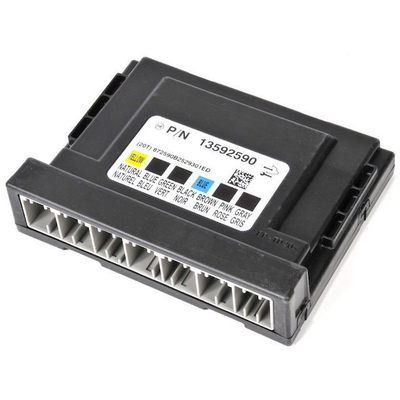
Below are the parts most often responsible for code B1216, ranked by how frequently each one is the actual culprit (per the diagnosis above). Tap any to see what we have for your vehicle.



The information in this article is provided for general reference and educational purposes only. Vehicle specifications, procedures, and part compatibility can vary by production date, trim level, and region. Always consult your vehicle's factory service manual and verify part numbers before purchasing or performing repairs. Safety-critical components such as airbags, seat belts, and braking systems should be installed by a qualified professional.
- 🧭 Diagnostic Flowchart
- 🎬 Helpful Videos
- 🛍️ Shop This Part
- What Does B1216 Mean?
- Can I Drive With B1216?
- Common Causes
- Symptoms
- Common Fixes & Costs
- Used vs. New Parts: Buying Guide
- What Happens If You Wait — Timeline
- Cost of Not Fixing It
- Diagnosis Steps
- When This Code Triggers (Freeze-Frame Conditions)
- Related Codes
- Climate & Environmental Factors
- How to Talk to a Mechanic About This Code
- Where to Take It: Dealer vs Independent vs Chain
- When to Walk Away From the Repair
- What Scan Tool You Need for This Code
- How to Clear the Code After You Fix It
- Will This Fail Emissions / State Inspection?
- Most Commonly Affected Vehicles
- Manufacturer-Specific Notes
- Real Owner Stories
- 2013 Hyundai Veloster with 85,000 miles
- 2016 GMC Sierra 1500 at 70,000 miles
- 2015 Toyota Sienna XLE with 110,000 miles
- 2014 Kia Sorento with 95,000 miles
- How to Prevent This Code From Triggering
- Frequently Asked Questions
- Can I fix a B1216 code myself?
- Will clearing the code make it go away?
- Why does the code mean different things on different cars?
- I have four parking sensor codes at once. Are all four sensors bad?
- Is the B1216 recall on the Hyundai Veloster serious?
- What is a LIN bus and why does it matter for code B1216?
- My Honda shows a 'B12' service code. Is this the same as B1216?
- Can a loose overhead console cause code B1216?
- My parking sensors don't work but I don't have code B1216. Why?
- Key Takeaways
- 🎟️ Get 5% Off