

OBD-II Code B1232: Manufacturer-Specific Fault Guide
The Ultimate Guide to B1232: What it means for Ford, Honda, Hyundai, and more. Causes, symptoms, and pro-level fixes.
- Code B1232 is manufacturer-specific: it means a PATS anti-theft failure on Fords, an A/C evaporator sensor short on Hondas, and a seat belt buckle fault on Hyundais.
- For Ford and Mazda vehicles, B1232 causes a crank-no-start condition and requires a $40-$95 plug-and-play PATS transceiver replacement.
- On Honda, Acura, and VW models, this code disables the A/C compressor and requires a $750 to $1,200 dashboard-out repair to replace a $30 evaporator temperature sensor.
- For Hyundai, Volvo, and Nissan, B1232 disables the driver's airbag as a failsafe, requiring an immediate $100-$250 seat belt buckle replacement to restore crash protection.
- Because B1232 is a Body Control Module (BCM) code, a standard $20 OBD-II reader cannot see it; you must use an advanced scanner like the $60 Autel AP200 to read and clear it.
What Does B1232 Mean?
B1232 is a manufacturer-specific Body Control Module (BCM) code, meaning its definition changes completely based on your vehicle. On Ford, Mazda, and Lincoln, it indicates a Passive Anti-Theft System (PATS) transceiver antenna failure. On Honda, Acura, and Volkswagen, it points to a shorted A/C evaporator temperature sensor. On Hyundai, Nissan, and Volvo, it signifies a broken driver's seat belt buckle switch. On certain Chevrolets, it indicates a 'CD player ON signal circuit low'.
Technical definition: The official SAE/ISO definition for B1232 is manufacturer-specific. Common definitions include 'Transceiver Module Antenna Failure' (Ford/Mazda), 'Evaporator Temperature Sensor Circuit Short' (Honda/Acura/Volkswagen), 'Driver's Seat Belt Switch Fault' (Hyundai/Nissan/Volvo), and 'CD Player ON Signal Circuit Low' (Chevrolet).
Can I Drive With B1232?
Yes, But With Caution. Driving is possible but strongly discouraged. On Ford/Mazda, the vehicle will eventually refuse to start, leaving you stranded. For seat belt faults (Hyundai/Volvo/Nissan), the SRS module disables the airbag as a failsafe, eliminating crash protection. For HVAC faults (Honda/Acura/VW), the only risk is a non-working A/C. Diagnose the specific manufacturer fault immediately to avoid being stranded or unsafe.
Common Causes
- [Anti-Theft System] Defective PATS transceiver module (Very Common) — On Ford and Mazda vehicles, the anti-theft transceiver ring around the ignition lock cylinder fails, preventing the module from reading the chip in your key.
- [HVAC System] Faulty evaporator temperature sensor (Very Common) — For Honda, Acura, and VW vehicles, the thermistor measuring the A/C evaporator's temperature shorts internally, triggering this code.
- [Seat Belt System] Faulty seat belt buckle switch (Common) — In Hyundai, Volvo, and Nissan vehicles, the internal switch detecting a fastened seat belt fails due to debris buildup or mechanical wear.
- [All Systems] Damaged wiring or poor connections (Common) — Wires connecting the transceiver, evaporator sensor, or buckle switch to their respective control modules fray, corrode, or short to ground, disrupting the signal.
- [Anti-Theft System] Weak vehicle battery (Common) — On Ford PATS-equipped vehicles, low battery voltage during cranking causes communication errors between modules, triggering a B1232 code and a no-start condition even with a healthy transceiver.
- [Anti-Theft System] Poor solder joints on the instrument cluster (Less Common) — On Ford models where the immobilizer is integrated into the instrument cluster (like the Focus), cracked solder joints on the main connector 🎬 Watch this walkthrough for intermittent no-starts and flashing theft lights. cause communication failures and PATS codes.
- [Anti-Theft System] Damaged ignition lock cylinder housing (Less Common) — A cracked plastic housing for the ignition lock cylinder prevents the transceiver ring from sitting correctly, blocking it from reading the key chip.
- [Anti-Theft System] Aftermarket remote starters or audio equipment (Rare) — Improperly installed aftermarket electronics interfere with the PATS communication circuit or keep modules awake, causing data bus faults.
- [General] Faulty Control Module (Rare) — The control module itself (PCM, BCM, or Climate Control Unit) fails and cannot process the signal from the relevant sensor or switch.
Symptoms
- [Anti-Theft System] Engine cranks but will not start — On affected Ford/Mazda vehicles, the engine turns over but the PATS system disables the fuel injectors, preventing ignition.
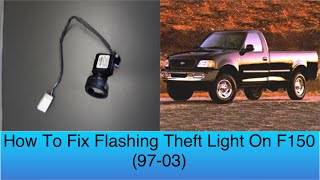
- [Anti-Theft System] Flashing theft or security light — The dashboard anti-theft light flashes rapidly. After one minute, it flashes a two-digit code (like 1-6 for code 16) indicating the specific fault area. 🎬 Watch: How to fix a flashing theft light on F-150s.
- [HVAC System] Air conditioning blows warm air or works intermittently — On Honda/Acura/VW vehicles, the climate control unit receives a shorted signal and prevents the compressor from engaging to avoid evaporator freeze-up. 🎬 See how to test and replace an evaporator temperature sensor. The system blows warm air constantly or cycles sporadically.
- [Seat Belt System] Airbag or seat belt warning light remains on — For vehicles where the code relates to the seat belt, the primary symptom is an illuminated SRS/airbag or seat belt warning light on the instrument cluster.
- [Audio System] No sound from speakers or CD player malfunction — On specific Chevrolet models, this code relates to an audio system fault, resulting in dead speakers or an unresponsive radio.
Diagnostic Flowchart
Tap your situation to follow the diagnostic path that matches what you're seeing on this code.
Common Fixes & Costs
- [Anti-Theft System] Replace the PATS Transceiver Module — Parts: $40-$95, Labor: $75-$150, ~0.8 hr book time (Intermediate)
- [Seat Belt System] Replace the Seat Belt Buckle Assembly — Parts: $75-$200, Labor: $100-$250, ~1.2 hr book time (Intermediate)
- [HVAC System] Replace the Evaporator Temperature Sensor — Parts: $30-$70, Labor: $750-$1200, ~7 hr book time (Professional)
- Repair Damaged Wiring — Parts: $10-$30, Labor: $125-$400, ~2 hr book time (Professional)
- [Anti-Theft System] Replace and Reprogram Ignition Key — Parts: $50-$150, Labor: $75-$150, ~0.8 hr book time (Professional)
- [Anti-Theft System] Repair Instrument Cluster Solder Joints — Parts: $0, Labor: $200-$500, ~2.5 hr book time (Professional)
Used vs. New Parts: Buying Guide
When a used part is worth it: For a simple electronic part like a PATS transceiver, a used part from a reputable seller is a cost-effective option. For all other common fixes, new is strongly recommended.
Donor-vehicle mileage cap: roughly under 60000 miles for the part to have meaningful remaining life.
Donor quality checklist:
- Verify part number exactly, especially for electronic modules.
- Ensure the seller offers a functional warranty (at least 30 days).
- Avoid parts from vehicles with flood or fire damage.
Decision logic:
- If The part is a safety component (Seat Belt Buckle) → Always buy new OEM. The history of a used part is unknown and it may fail in a crash.
- If The part requires extensive labor to install (Evaporator Temperature Sensor) → Always buy a new, high-quality part. The risk of a used part failing is too high.
- If The part is a simple, plug-and-play electronic module (PATS Transceiver) → Used is acceptable if the cost saving is significant (>50%) and it comes from a trusted source.
Warranty tradeoff: Used parts have a 30-90 day warranty. New aftermarket parts offer 1-year to limited lifetime warranties. New OEM parts offer a 1-2 year warranty.
Worst-case if a used part fails: $1000-$1500 if a used evaporator sensor fails after install, as you must pay for the 7+ hours of labor all over again.
What Happens If You Wait — Timeline
- Stage ?:
- Stage ?:
- Stage ?:
Cost of Not Fixing It
- Immediate: [Ford/Mazda Anti-Theft] Vehicle fails to start, leaving you stranded. (Added cost: $100-$300 (Towing and emergency diagnostic fees).)
- Immediate: [Hyundai/Volvo/Nissan Seat Belt] SRS Airbag for the driver is disabled, drastically increasing risk of serious injury or death in a crash. (Added cost: Incalculable (Medical costs, loss of life).)
- Ongoing: [Honda/Acura HVAC] A/C system will not produce cold air. (Added cost: $50-$150 (Cost of misdiagnosing as a refrigerant leak).)
Diagnosis Steps
- Confirm the Code's Meaning for Your Vehicle
Use an internet search for your specific '[Year Make Model] B1232 code' to confirm if it relates to the anti-theft system, HVAC, or seat belts. Do not proceed until you identify the affected system.
Tools: Internet access (Beginner) - [Anti-Theft] Observe the Theft Light and Try a Spare Key
On a Ford/Mazda, turn the key to 'ON' and watch the theft light. Rapid flashing indicates a PATS error. Wait one minute to see if it flashes a two-digit code (e.g., 1-6). Try starting the vehicle with a known-good spare key. If it starts, your primary key's transponder chip has failed.
Tools: Spare ignition key (Beginner) - [HVAC] Run Climate Control Self-Diagnosis
On Honda/Acura models, run a tool-free self-diagnostic test. Press and hold the 'Recirculation' and 'A/C' buttons, then turn the ignition to ON (II). The recirculation indicator blinks to output codes. For B1232, it blinks code '0A' or '9'.
Tools: None (Beginner) - [Seat Belt] Test the Buckle Switch
Disconnect the electrical connector under the driver's seat for the seat belt buckle. Set a multimeter to continuity mode. Probe the two switch pins and check for a state change (open to closed) as you insert and release the seat belt. No change confirms a faulty buckle switch.
Tools: Multimeter (Intermediate) - Inspect All Related Wiring and Connectors
Visually inspect the wiring harness for damage, chafing, or corrosion. Pay close attention to connectors under seats (for seat belt faults) or around the steering column (for anti-theft faults).
Tools: Flashlight, inspection mirror (Intermediate) - [Pro Tip - Anti-Theft] Test the PATS Transceiver Circuit
Access the 4-pin connector on the transceiver ring. Backprobe the connector with a multimeter. With the key ON, verify >10V between Pin 1 (Power) and Pin 2 (Ground). Check for continuity to ground on Pin 2 (< 5 ohms). This verifies the transceiver is receiving power.
Tools: Multimeter, trim removal tools (Advanced) - [Pro Tip - HVAC] Test the Evaporator Sensor Circuit
Disconnect the 2-pin connector for the evaporator temp sensor. Turn the ignition ON. Measure voltage on the harness side. One pin must show a 5V reference from the climate control unit. If 5V is present, the wiring is good, and the sensor has failed. If 0V, trace the wiring for an open or short.
Tools: Multimeter, vehicle-specific wiring diagram (Advanced) - [Pro Tip - HVAC] Measure Evaporator Sensor Resistance
Measure the resistance across the disconnected sensor's two pins. A reading near zero ohms indicates a short. Typical values: ~7.3-9.1 kΩ at 0°C (32°F), ~2.1-2.6 kΩ at 25°C (77°F). Compare your reading to the service manual chart.
Tools: Multimeter, thermometer, service manual (Advanced) - [Pro Tip] Analyze Scan Tool Live Data (PIDs)
Use an advanced scan tool to view live data. For Ford PATS, monitor 'PATS_STATUS' to identify the failure reason. For Honda HVAC, monitor 'Evaporator Temperature Sensor' voltage; a shorted sensor reads 0V. This differentiates a sensor failure from a wiring issue without disassembly.
Tools: Advanced bidirectional scan tool (Professional) - [Pro Tip - Anti-Theft] Check Fuel Pressure
During a PATS crank-no-start, the fuel pump primes, but injectors do not fire. Connect a fuel pressure gauge. Turn the key to 'ON'. Pressure should build to spec (35-55 PSI for Ford). Correct pressure with no start confirms an immobilizer fault, not a fuel pump failure.
Tools: Fuel pressure gauge (Advanced) - [Pro Tip - Anti-Theft] Analyze the PATS Communication Waveform
Backprobe the TX and RX lines at the transceiver connector with an oscilloscope. At key-on, verify a digital waveform on both lines. The RX line requires a 12V square wave. A flat line despite good power/ground confirms a failed transceiver or broken data wire.
Tools: Oscilloscope, wiring diagram (Professional)
When This Code Triggers (Freeze-Frame Conditions)
- Ignition Status: ON (Code sets during module self-test at key-on, before engine start.)
- Battery Voltage: 11.8V - 12.6V (Static voltage present at key-on. Low voltage (<11.5V) induces communication faults.)
- Engine RPM: 0 (For anti-theft and SRS faults, the code sets before the engine starts.)
- A/C Request (for HVAC faults): ON (For HVAC-related B1232, the fault logs when the A/C system activates and detects the sensor circuit short.)
Related Codes
- B1600 — Appears with B1232 on Ford vehicles. B1232 points to the transceiver antenna circuit failing, while B1600 ('Non-PATS Key') means the module did not receive a valid key signal. B1232 causes B1600.
- P1260 — A Ford powertrain code meaning 'Theft Detected, Vehicle Immobilized.' The PCM sets P1260 when the PATS module reports a B1232 fault. Fix the B1232 first to resolve the P1260.
- B2103 — A Ford code meaning 'Transceiver Antenna Not Connected,' suggesting an open circuit. B1232 is a broader fault. TSB 01-6-2 groups them and gives the same fix: replace the transceiver module.
- B0070 — On vehicles where B1232 is a seat belt fault, you also see B0070 ('Driver Seat Belt Pretensioner'). B1232 relates to the buckle switch, while B0070 relates to the explosive pretensioner circuit.
Climate & Environmental Factors
- Cold Weather: Low temperatures reduce battery cranking amperage. On Ford PATS-equipped vehicles, a weak battery causes a voltage drop during startup, creating a communication error that triggers B1232 even if the anti-theft components are good.
- High Humidity: Moisture accelerates corrosion on electrical connectors. This affects the sensitive, low-voltage circuits used by seat belt buckle switches and evaporator temperature sensors, leading to failed signals.
How to Talk to a Mechanic About This Code
Say this: "{'for_ford_mazda_pats': 'I have a B1232 code and a flashing theft light on my [Make/Model], causing a no-start. Please test the PATS transceiver and its circuit before recommending a PCM replacement or key reprogramming.', 'for_honda_acura_hvac': 'My [Make/Model] has a B1232 code and the A/C is blowing warm. Can you please confirm the evaporator temperature sensor or its wiring is the fault before quoting the full dashboard-out repair?', 'for_hyundai_volvo_srs': "I have an airbag light on and code B1232. Could you please test the driver's seat belt buckle switch continuity to confirm it failed before ordering a replacement part?"}"
This language shows you've done your research and directs the mechanic to the most likely cause. It prevents them from starting with the most expensive repairs and focuses them on a specific, testable component.
Avoid saying:
- 'My car won't start, I think it's the computer.'
- 'My airbag light is on, can you just fix it?'
- 'The A/C is broken, just do whatever it takes.'
Questions to ask before authorizing the repair:
- Can you confirm you tested the specific component (transceiver, sensor, or switch) and it failed?
- For the Honda A/C repair, is the quoted labor based on the standard book time for dashboard removal?
- For the seat belt repair, are you using a new OEM part?
- What is the warranty on both the parts and labor for this specific repair?
Where to Take It: Dealer vs Independent vs Chain
- Dealer:
Best for: Vehicles under warranty., Safety system repairs (airbags/seat belts) where OEM parts and procedures are critical., Complex, intermittent electronic issues, like a Ford PATS communication problem (flashing code 16)., Checking for related recalls or warranty extensions.
Downsides: Highest labor rates., Defaults to replacing an entire assembly rather than attempting a targeted wiring repair. (Typical cost: +50% vs. baseline) - Independent Shop:
Best overall fit for the most common versions of this code (Ford transceiver, Hyundai buckle) on out-of-warranty cars. For the high-labor Honda A/C fix or any safety system repair, a dealer may be a better choice.
Best for: Out-of-warranty vehicles with common, well-documented B1232 faults., Straightforward parts replacement like the Ford PATS transceiver or a Hyundai seat belt buckle., Owners who have a trusted relationship with a shop known for strong diagnostic skills.
Downsides: Quality and diagnostic capabilities vary widely., May be less equipped for the high-labor Honda evaporator sensor replacement. (Typical cost: +0% vs. baseline) - Chain Shop:
AVOID. The complexity and varied nature of code B1232 make it a poor fit for the chain shop model. The risk of misdiagnosis is very high.
Best for: Simple maintenance like oil changes and tires, not complex diagnostics.
Downsides: Technicians lack the diagnostic depth for B-codes., Unlikely to have the tools or experience for PATS diagnostics, SRS systems, or major dashboard removal., High risk of misdiagnosis, leading to unnecessary repairs. (Typical cost: -10% vs. baseline)
When to Walk Away From the Repair
If the estimated repair cost exceeds 40-50% of the car's private-party value, seriously consider selling the car as-is or trading it in.
- Car worth $4000, fix is $1200: Walk Away (or live with it). This is for a Honda A/C repair. The cost is 30% of the car's value. Unless you live in a very hot climate, it's not economically sound to proceed.
- Car worth $5000, fix is $400: Fix it. This represents a Hyundai seat belt buckle replacement. This is a critical safety repair required to pass inspection, and the cost is well below the threshold.
- Car worth $3000, fix is $250: Fix it. This is for a Ford PATS transceiver replacement. The low repair cost makes the car fully functional again and prevents you from being stranded.
What Scan Tool You Need for This Code
Minimum: A scanner that reads manufacturer-specific Body (B), Chassis (C), and SRS (B) codes. Basic engine-only code readers will not see code B1232.
A $20 generic OBD-II reader only accesses Powertrain ('P') codes related to emissions. B1232 is a Body code stored in the BCM, SRS, or HVAC module. A basic reader reports 'No Codes Found' even when the airbag or theft light is on.
Budget: Autel AP200 or BlueDriver Pro (~$60) — These Bluetooth dongles perform an 'all-system scan,' allowing them to read and clear B-codes from modules like the BCM and SRS. This is the minimum needed to confirm the B1232 fault.
Mid-range: Foxwell NT510 Elite or FORScan with OBDLink EX adapter (~$180) — The Foxwell NT510 offers dealer-level diagnostics, including viewing live sensor data from the HVAC or SRS module. For Ford owners, FORScan runs PATS self-tests, views live PATS data, and performs key programming.
Professional: Autel MaxiCOM MK808 / MK906BT (~$500-1200) — Provides full bidirectional control to test components directly. You can command the A/C compressor clutch to engage or query the PATS module for detailed failure reasons.
Rent vs buy: Most auto parts store loaner tools are basic code readers that CANNOT read B-codes for airbag or body faults. If you need to diagnose a B1232, you must buy a capable scanner or pay a shop for a diagnostic.
How to Clear the Code After You Fix It
- Use an advanced OBD-II scan tool to clear codes from the relevant module (BCM, SRS, or HVAC).
- For Ford PATS, if the PCM was replaced, perform a 'Parameter Reset' using a capable scan tool.
- For Honda HVAC, run the climate control self-diagnosis again to confirm no codes return.
- Cycle the ignition off and on, then test the repaired system's function.
Drive cycle (~20 minutes): A specific drive cycle is not required for this Body code. Perform a cold start, idle for 2-3 minutes, then drive for 10-15 minutes to confirm the warning light stays off.
Readiness monitors affected: None
Watch out for:
- Clearing the code does not fix the problem; the code returns immediately if the hardware fault remains.
- Disconnecting the battery does not clear codes from all body modules.
- A Ford PATS 'Parameter Reset' requires having at least two programmed keys available.
Will This Fail Emissions / State Inspection?
No — by itself this code doesn't fail OBD inspection (but it can keep readiness monitors from setting, which causes a separate fail).
- California: A BCM code like B1232 does not cause a smog check failure. The test focuses on powertrain codes (P-codes) and MIL status.
- New York: An illuminated airbag light causes an immediate failure of the annual safety inspection.
- Virginia: The safety inspection fails a vehicle if the airbag warning light is on, indicating an SRS fault.
- Texas: The annual safety inspection includes checking for an illuminated airbag warning light, resulting in a failure.
Most Commonly Affected Vehicles
- Ford F-150, Mustang, Focus, Expedition, Ranger (1998-2014) — Highly prone to PATS transceiver antenna failure (B1232) or communication issues (flashing code 16), causing a no-start. TSB 01-6-2 specifically identifies replacing the transceiver module as the fix.
- Honda Civic, Accord, CR-V (2006-2022) — Commonly experiences a short in the evaporator temperature sensor circuit. For 2006-2011 Civics, the part number is often 80560-SNA-A01.
- Acura MDX, TL, TSX (2005-2018) — Shares HVAC system designs with Honda, making them equally susceptible to the evaporator temperature sensor fault.
- Mazda Mazda3, Mazda6, CX-7 (2009-2017) — Uses a similar anti-theft system to Ford and suffers from transceiver failures causing a no-start condition.
- Volvo S60, V70, XC90, XC60 (2005-2018) — B1232 relates to the seat belt buckle switch. Note the separate major recall (R10029) for the seat belt anchor cable on many of these same vehicles.
- Hyundai Elantra, i30, Tucson, Santa Fe (2009-2021) — Frequently associated with a fault in the driver's seat belt buckle switch, illuminating the airbag light.
- Nissan Qashqai, X-Trail, Micra (2008-2019) — Points to a fault in the seat belt warning system, typically the driver's buckle switch.
- Volkswagen Polo, Golf, Jetta (2005-2015) — Similar to Honda, B1232 indicates a fault with the A/C evaporator temperature sensor.
- Chevrolet Spark (2013-2020) — Indicates an audio system fault, specifically 'CD player ON signal circuit low'.
Manufacturer-Specific Notes
- Ford: Replacing the PATS transceiver module does NOT require reprogramming the keys. It is a plug-and-play part, making it an easy DIY fix for a no-start problem.
- Honda: Honda issued extended warranties for A/C condensers on many models, but this does not cover the evaporator core or temperature sensor. Always check with a dealer for 'goodwill' assistance.
- Volvo: While B1232 points to the buckle switch, check for safety recall R10029. The steel cable for the seat belt anchor fatigues and breaks, leading to a total loss of restraint in a crash.
- Hyundai: When replacing the seat belt retractor assembly, the new unit has a safety mechanism. The belt will not extend unless the assembly is held perfectly vertically, mimicking its installed position.
Real Owner Stories
2002 Ford F-150 with crank-no-start
Owner experienced an intermittent crank-no-start condition. The theft light flashed rapidly, then flashed code 16. The odometer displayed dashes.
What they tried:
- Replaced PCM relay
- Tried a spare key
- Replaced the PATS transceiver ring
Outcome: The issue was traced to a communication failure between the instrument cluster and the PCM, a common cause for PATS code 16. The repeated attempts to fix components failed because the root cause was a deeper electronic communication issue.
Lesson: On Fords, a B1232 accompanied by a flashing code 16 and dashes on the odometer points to a communication error. Check PCM power/ground and the instrument cluster before replacing the transceiver.
2008 Honda Civic with A/C blowing warm air
The air conditioning suddenly stopped blowing cold air. The owner suspected low refrigerant and almost bought a DIY recharge kit.
What they tried:
- Ran the built-in HVAC self-diagnostic test by holding the recirculation and rear defogger buttons while turning the key to 'ON'.
Outcome: The self-diagnostic test flashed a code indicating a short in the evaporator temperature sensor circuit. This confirmed the issue was electronic, not a refrigerant leak. The owner avoided wasting money on a recharge kit.
Lesson: Before assuming a refrigerant leak on a Honda, perform the free self-diagnostic test. It definitively identifies electronic faults like the evaporator sensor, preventing expensive misdiagnosis.
2013 Hyundai Elantra with airbag light on
The airbag warning light stayed on. A scan revealed code B1232, pointing to the driver's seat belt buckle.
What they tried:
- Cleaned the buckle with compressed air and a small brush.
- Tested the switch with a multimeter and found no change in continuity when latched.
Outcome: The multimeter test confirmed the internal switch failed. The owner replaced the driver's side seat belt buckle assembly. After clearing the codes, the airbag light stayed off.
Lesson: For a seat belt buckle code, start with a thorough cleaning. If that fails, a continuity test confirms a failed switch before you spend money on the replacement part.
How to Prevent This Code From Triggering
- [All Systems] Maintain a healthy battery (Test annually after 3 years) — Low battery voltage is a primary cause of electronic module communication errors, falsely triggering PATS faults on Fords.
- [Seat Belt System] Keep the seat belt buckle area clean (As needed) — Spilled drinks and food crumbs jam the switch that detects if the belt is latched, leading to a B1232 fault and a disabled airbag.
- [Anti-Theft System] Avoid large metal objects on your keychain (Daily habit) — Large metal keychains or other transponder keys interfere with the radio frequency signal between your car's key and the PATS transceiver.
- [HVAC System] Replace the cabin air filter regularly (Every 12-15k miles) — A clogged cabin air filter restricts airflow across the evaporator core, leading to excessive moisture buildup that corrodes the temperature sensor.
Frequently Asked Questions
What's the first thing I should try for a B1232 and a no-start on my Ford?
Ensure your battery is fully charged, as low voltage causes PATS errors. Next, try starting the car with a known-good spare key. If the spare works, the transponder chip in your primary key has failed, not the transceiver.
My Ford's theft light is flashing code 16. Is that related to B1232?
Yes. A flashing code 16 means a communication problem exists between the PATS module and the Powertrain Control Module (PCM). A failed transceiver (B1232) causes this communication loss, though a bad PCM power relay can also trigger it.
Why is the labor cost so high for the Honda A/C sensor replacement?
The evaporator temperature sensor sits deep inside the HVAC housing behind the dashboard. Replacing it requires a technician to evacuate the A/C refrigerant and completely remove the dashboard assembly. This labor-intensive process takes 5 to 8 hours.
Can a bad PATS transceiver drain my car battery?
Yes, though it is uncommon. A faulty PATS module or transceiver can fail to enter 'sleep' mode, creating a parasitic drain that kills a battery over several days.
Will clearing the B1232 code fix the problem?
No. Clearing the code only erases the fault from the module's memory. The code returns immediately on the next key cycle or A/C activation because the underlying hardware fault remains.
Is it safe to drive with a seat belt related B1232 code?
No. This code means the Supplemental Restraint System (SRS) module cannot confirm if the driver is buckled. As a failsafe, it disables the driver's airbags, leaving you with no airbag protection in a crash.
What are the most common misdiagnoses for a B1232?
For a Ford no-start, mechanics mistakenly replace the expensive PCM instead of the $50 PATS transceiver. For a Honda A/C problem, shops perform an expensive A/C recharge assuming a leak, when the issue is a shorted electronic sensor.
Key Takeaways
- Code B1232 is manufacturer-specific: it means a PATS anti-theft failure on Fords, an A/C evaporator sensor short on Hondas, and a seat belt buckle fault on Hyundais.
- For Ford and Mazda vehicles, B1232 causes a crank-no-start condition and requires a $40-$95 plug-and-play PATS transceiver replacement.
- On Honda, Acura, and VW models, this code disables the A/C compressor and requires a $750 to $1,200 dashboard-out repair to replace a $30 evaporator temperature sensor.
- For Hyundai, Volvo, and Nissan, B1232 disables the driver's airbag as a failsafe, requiring an immediate $100-$250 seat belt buckle replacement to restore crash protection.
- Because B1232 is a Body Control Module (BCM) code, a standard $20 OBD-II reader cannot see it; you must use an advanced scanner like the $60 Autel AP200 to read and clear it.
Helpful Videos
Shop the Parts Behind B1232
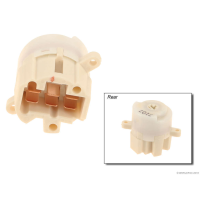
Below are the parts most often responsible for code B1232, ranked by how frequently each one is the actual culprit (per the diagnosis above). Tap any to see what we have for your vehicle.


The information in this article is provided for general reference and educational purposes only. Vehicle specifications, procedures, and part compatibility can vary by production date, trim level, and region. Always consult your vehicle's factory service manual and verify part numbers before purchasing or performing repairs. Safety-critical components such as airbags, seat belts, and braking systems should be installed by a qualified professional.
- 🧭 Diagnostic Flowchart
- 🎬 Helpful Videos
- 🛍️ Shop This Part
- What Does B1232 Mean?
- Can I Drive With B1232?
- Common Causes
- Symptoms
- Common Fixes & Costs
- Used vs. New Parts: Buying Guide
- What Happens If You Wait — Timeline
- Cost of Not Fixing It
- Diagnosis Steps
- When This Code Triggers (Freeze-Frame Conditions)
- Related Codes
- Climate & Environmental Factors
- How to Talk to a Mechanic About This Code
- Where to Take It: Dealer vs Independent vs Chain
- When to Walk Away From the Repair
- What Scan Tool You Need for This Code
- How to Clear the Code After You Fix It
- Will This Fail Emissions / State Inspection?
- Most Commonly Affected Vehicles
- Manufacturer-Specific Notes
- Real Owner Stories
- 2002 Ford F-150 with crank-no-start
- 2008 Honda Civic with A/C blowing warm air
- 2013 Hyundai Elantra with airbag light on
- How to Prevent This Code From Triggering
- Frequently Asked Questions
- What's the first thing I should try for a B1232 and a no-start on my Ford?
- My Ford's theft light is flashing code 16. Is that related to B1232?
- Why is the labor cost so high for the Honda A/C sensor replacement?
- Can a bad PATS transceiver drain my car battery?
- Will clearing the B1232 code fix the problem?
- Is it safe to drive with a seat belt related B1232 code?
- What are the most common misdiagnoses for a B1232?
- Key Takeaways
- 🎟️ Get 5% Off