

OBD-II Code B1238: Over Temperature Fault & Manufacturer-Specific Meanings
The Ultimate Guide to Diagnosing and Fixing B1238 Faults
- Identify your vehicle's specific B1238 definition first, as it means an HVAC failure on a Honda but a left rear power window fault on a Toyota.
- Listen for a clicking dashboard or check for a '--' outside temperature display to instantly pinpoint a failed blend door actuator or ambient air sensor.
- Perform a free HVAC recalibration by pulling the main climate control fuse for 60 seconds before buying any replacement parts.
- Use a bidirectional scan tool costing $150-$350 to command the blend door actuator from 0% to 100%, proving whether the motor or the wiring has failed.
- Expect repair costs to range from a $50 DIY ambient sensor replacement to a $2,000+ professional dashboard-out actuator repair.
What Does B1238 Mean?
B1238 is a Body-class Diagnostic Trouble Code (DTC) indicating an 'Over Temperature Fault'. Because it is manufacturer-specific, it points to an HVAC failure on most vehicles, but signifies power window, audio amplifier, or park assist sensor faults on others. Identifying the exact definition for your vehicle's make and model is the mandatory first step.
Technical definition: The SAE/ISO definition for code B1238 is assigned by manufacturers to various faults. Common definitions include 'Passenger's Air Mix Control Motor Circuit Fault' (Honda), 🎬 See this walkthrough for fixing Honda passenger air mix issues. 'Ambient Temperature Sensor Open (High)' (Hyundai/Kia), 'Left Rear Jam Protection Pulse Switch Circuit' (Toyota), 'Amplifier ON signal circuit high' (GM), or a Park Assist Sensor system fault (Dodge/Ram).
Can I Drive With B1238?
Yes, But With Caution. Driving with a B1238 code is safe as it does not affect the engine or primary safety systems. However, if the fault disables the defroster, it creates a severe visibility hazard. Driving with an obstructed windshield is illegal and requires immediate repair before operating the vehicle.
Common Causes

- Faulty HVAC Blend Door Actuator (Very Common) — This small electric motor controls the door mixing hot and cold air. The internal plastic gears strip, causing a clicking noise, or the motor burns out, becoming unresponsive.
- Failed Ambient Air Temperature Sensor (Common) — Located in the front grille, this sensor informs the climate control system of outside air temperature. Road debris or electronic failure causes it to send a voltage signal above the 4.9V threshold, triggering the code on makes like Hyundai and Kia.
- Wiring or Connector Issue (Common) — Wires leading to a sensor or actuator chafe, corrode, or break, resulting in an open circuit or short. Connectors loosen or accumulate moisture, especially on externally mounted sensors.
- Faulty Power Window Motor or Jam Protection Switch (Common On Specific Makes) — On Toyota vehicles, this code points directly to a malfunction in the left rear power window's jam protection circuit, integrated into the window motor assembly.
- Software Glitch or Need for Recalibration (Less Common) — Following a battery replacement, the control module loses calibration and fails to recognize component positions. Manufacturers occasionally issue Technical Service Bulletins (TSBs) requiring software updates to fix logic errors. 🎬 Watch: How to recalibrate your HVAC blend motor for free.
- Faulty Climate Control Unit or Body Control Module (BCM) (Rare) — The computer module managing the affected system fails internally. Consider this expensive failure only after thoroughly testing all related components and wiring.
- Binding or Jammed HVAC Door/Linkage (Rare) — The physical door or linkage inside the dashboard jams due to debris or mechanical failure, straining the actuator motor and setting a fault.
- Low Battery Voltage (Rare) — On Mazdas, a variant (B1238:16) sets if battery voltage drops, affecting power supply to modules like the audio amplifier. A weak battery causes unpredictable electronic glitches during startup.
Symptoms

- Incorrect temperature or airflow from vents — Air is stuck on full hot, full cold, or blows from the wrong locations (e.g., floor instead of defrost). This indicates a failed blend or mode door actuator. 🎬 Vea este video sobre el control de mezcla en Honda.
- Clicking or knocking noise from the dashboard — A repetitive clicking sound behind the dashboard when starting the car or changing temperature settings confirms a stripped gear in a blend door actuator.
- Inaccurate outside temperature display — The external temperature reading shows '--', a fixed value like 68°F/20°C, or a nonsensical number.
- Inoperable rear power window — On Toyota models, the left rear power window fails to operate due to a jam protection circuit fault.
- Parking assist system disabled — On Dodge and Ram trucks, the park assist system disables and displays a warning message on the dashboard.
- Automatic climate control fails — The 'Auto' setting cannot maintain cabin temperature due to incorrect data from a failed ambient air sensor.
Diagnostic Flowchart
Tap your situation to follow the diagnostic path that matches what you're seeing on this code.
Common Fixes & Costs
- Replace the Ambient Air Temperature Sensor — Parts: $20-$100, Labor: $90-$150, ~0.8 hr book time (DIY)
- Replace the HVAC Blend Door Actuator — Parts: $30-$150, Labor: $100-$2,000+, ~0.7 hr book time (Intermediate To Professional)
- Repair Wiring or Clean Connectors — Parts: $5-$25, Labor: $125-$375, ~2 hr book time (Intermediate)
- Replace Power Window Motor/Regulator Assembly — Parts: $150-$520, Labor: $120-$180, ~1.2 hr book time (Intermediate)
- Replace the Body Control Module (BCM) — Parts: $400-$800, Labor: $150-$250, ~1.5 hr book time (Professional)
DIY vs Professional
- Replace Ambient Air Temperature Sensor 🟢 Beginner
Tools: Basic hand tools (socket set, screwdriver, pliers). - Replace HVAC Blend Door Actuator 🟢 Beginner
Tools: Trim removal tools, small socket set (5.5mm, 7mm, 8mm). - Replace Power Window Motor/Regulator 🟢 Beginner
Tools: Door panel trim removal tool, socket set, screwdrivers. - Repair Wiring 🟢 Beginner
Tools: Multimeter, wire strippers, heat shrink tubing, soldering iron, wiring diagram. - Replace Body Control Module (BCM) 🟢 Beginner
Tools: Socket set, trim tools, manufacturer-specific diagnostic tool for programming.
Used vs. New Parts: Buying Guide
When a used part is worth it: For simple components like an ambient temperature sensor, a used part from a reputable salvage yard saves money. For electronic modules or complex mechanical parts like a window motor, the risk of premature failure is too high.
Donor-vehicle mileage cap: roughly under 100000 miles for the part to have meaningful remaining life.
Donor quality checklist:
- Match the part number exactly; visual similarities are deceiving.
- Ensure the donor vehicle did not have flood or fire damage.
- Verify the salvage yard offers a 30-90 day warranty.
Decision logic:
- If The part is a simple sensor and the new price is over $50 → A used part is a good value.
- If The part is an electric motor with plastic gears (e.g., blend door actuator) → Buy new. Used actuators have unknown wear on the gears and motor.
- If The labor to install the part requires dashboard removal → Always buy a new, high-quality part to avoid paying for the same difficult labor twice.
Warranty tradeoff: Used parts offer a 30-90 day functional warranty. New aftermarket parts come with a 1-year to limited lifetime warranty. New OEM parts carry a 12-month manufacturer warranty.
Worst-case if a used part fails: $200-1500 if a used part with high installation labor fails, requiring a repeat of the entire job.
What Happens If You Wait — Timeline
- 0-1 month: An intermittent fault occurs. A clicking noise is heard occasionally, or the outside temp display flickers. (MPG impact: 0%% · Added cost: $0)
- 1-4 months: The fault becomes persistent. The blend door actuator clicks every time the car starts, leading to loss of climate control comfort. (MPG impact: 0-5%% · Added cost: $0-$50)
- 4-12 months: A continuously straining blend door motor burns out completely. A physically binding HVAC door guarantees the replacement part will also fail. (MPG impact: 0-5%% · Added cost: $50-$250)
- 12+ months: A failed defroster function results in a traffic ticket or accident. Unresolved wiring issues short and damage the expensive BCM. (MPG impact: 0-5%% · Added cost: $200-$1000+)
Cost of Not Fixing It
- Immediate: Loss of comfort and convenience (incorrect cabin temperature, inoperable window). Severe safety hazard if the defroster is inoperative. (Added cost: Negligible)
- 1-6 months: A continuously clicking blend door actuator motor burns out completely. A faulty ambient temp sensor causes the A/C compressor to run inefficiently. (Added cost: $0 - $50)
- 6+ months: Ignoring a binding HVAC door puts continuous strain on the actuator, causing repeated failures of replacement parts. (Added cost: $50 - $200)
Diagnosis Steps
- Identify the Vehicle-Specific Code Definition
Search your exact make, model, and year plus 'B1238' to determine what the code means for your vehicle. Diagnosis is completely different for a Honda (HVAC) versus a Toyota (power window).
Tools: Internet access (Beginner) - Perform a Functional System Check
Start the car and operate the system related to the code definition. For HVAC, cycle the temperature from full hot to full cold and listen for clicking noises. For a window issue, operate the switch. For park assist, shift into reverse.
Tools: None (Beginner) - Attempt an HVAC System Recalibration
If the code appeared after a battery disconnect, the HVAC system lost its calibration. Pull the main HVAC fuse for 60 seconds, reinstall it, turn the ignition on, and leave the controls untouched for 2 minutes while the actuators re-learn their positions.
Tools: Fuse puller or scan tool (Intermediate) - Inspect the Component and Connector
Locate the suspect component (e.g., ambient temp sensor behind the grille, blend door actuator under the dash). Visually inspect the component and its electrical connector for damage, corrosion, or loose wiring.
Tools: Flashlight, trim removal tools (Beginner) - [Pro Tip] Command the Actuator with a Bidirectional Scan Tool
Connect a bidirectional scanner, navigate to the HVAC module, and command the actuator from 0% to 100%. If the actual position does not change while you hear the motor clicking, the internal gears are stripped. If the motor makes no noise, the motor or circuit failed.
Tools: Bidirectional scan tool (Professional) - [Pro Tip] Test Ambient Temp Sensor Resistance (Hyundai/Kia)
Disconnect the sensor and measure its resistance. A healthy sensor's resistance changes inversely with temperature: approx. 95.1 kΩ at 32°F (0°C), 30 kΩ at 77°F (25°C), and 11 kΩ at 122°F (50°C). An infinite resistance reading (OL) confirms an open, failed sensor.
Tools: Multimeter, service manual (Advanced) - [Pro Tip] Test Air Mix Control Motor Circuit (Honda)
Disconnect the passenger air mix motor 7-pin connector. Measure resistance between terminals 5 and 7; it must be 4.2 to 7.8 kΩ. Reconnect it and backprobe terminals 3 and 7; voltage must vary from ~1V (Max Cool) to ~4V (Max Hot) as you adjust the temperature.
Tools: Multimeter with backprobe pins, service manual (Advanced) - Inspect the Wiring Harness
Trace the wiring harness from the component back to the firewall. Look for chafed, pinched, or broken wires. Many intermittent electrical faults stem from poor harness conditions.
Tools: Flashlight (Intermediate) - Test the Component Circuit
Using a multimeter and wiring diagram, check for proper power, ground, and signal at the component's connector. For a 3-wire sensor, verify a 5V reference, a solid ground (<1Ω), and a variable signal voltage.
Tools: Multimeter, vehicle wiring diagram (Advanced)
When This Code Triggers (Freeze-Frame Conditions)
- Module Voltage: 12.0-14.5V (Normal operating voltage at time of fault.)
- Ignition Status: ON (The fault was logged when the vehicle's ignition was on.)
- Fault Frequency Counter: 1-255 (Indicates how many times the fault has occurred since it was first logged.)
- Outside Air Temperature: -40°F to 122°F (Shows the temperature reading from the ambient sensor when the fault was set; an illogical value pinpoints the fault.)
Related Codes
- P0073 — This powertrain code means 'Ambient Air Temperature Sensor Circuit High Input'. Seeing both P0073 and B1238 simultaneously confirms the ambient temp sensor or its circuit is the definitive problem.
- B1239 — Defined as 'Driver's Air Mix Door Driver Circuit'. B1238 is typically the passenger side, while B1239 is the driver's side. If both are present, suspect a shared power/ground issue.
- B1083 — Relates to a 'Recirculation Damper Actuator Circuit Malfunction'. B1238 affects air temperature, while B1083 affects the air source (fresh vs. recirculated).
- B1242 — A 'Wireless Door Lock Tuner Circuit Malfunction'. This illustrates that 'B' codes cover a wide range of non-powertrain systems, reinforcing the need for a precise definition.
Climate & Environmental Factors
- High Humidity: Moisture intrusion into electrical connectors promotes corrosion on pins, increasing electrical resistance and causing faulty readings or open circuits.
- Extreme Heat: Prolonged high temperatures make internal plastic actuator gears brittle and susceptible to stripping, while accelerating electric motor burnout.
- Extreme Cold: Cold weather makes plastic components less flexible, causing wiring insulation or actuator gears to crack when the system operates.
- Road Salt / Coastal Air: Salt accelerates corrosion on electrical terminals and connectors, leading to a higher incidence of wiring-related faults on exposed sensors.
How to Talk to a Mechanic About This Code
Say this: "I have a [Your Year/Make/Model] with a B1238 code and the symptom is [e.g., 'a clicking noise from the passenger dash', 'the outside temp reads --']. I believe this code points to the [specific system, e.g., 'passenger blend door actuator', 'ambient temp sensor']. I'd like to schedule a diagnostic to confirm the failure and get a quote for the specific repair."
This directs the technician to the correct system immediately and prevents a vague, expensive diagnostic process.
Avoid saying:
- 'My car has a B1238 code, can you fix it?'
- 'My A/C is acting weird.'
- 'Just fix whatever is wrong.'
Questions to ask before authorizing the repair:
- Can you confirm you tested the component's circuit for power, ground, and signal before recommending replacement?
- For a blend door actuator, were you able to command it with a scan tool to verify it failed?
- Does this repair require a system recalibration or programming afterward?
- Can you show me the old part once it's replaced?
Where to Take It: Dealer vs Independent vs Chain
- Dealer:
Recommended for in-warranty repairs or if an independent shop cannot solve an ambiguous module-related fault.
Best for: Vehicles under warranty., Complex, manufacturer-specific quirks (e.g., Toyota window fault, Dodge park assist ambiguity)., Repairs requiring proprietary software updates or BCM programming.
Downsides: Highest labor rates and parts costs., Defaults to replacing entire assemblies instead of repairing circuits. (Typical cost: +50% vs. baseline) - Independent Shop:
Best overall fit for most out-of-warranty B1238 repairs. Choose a shop with strong reviews for electrical and HVAC diagnostics.
Best for: Out-of-warranty vehicles with common B1238 faults (blend door actuators, ambient temp sensors)., Owners seeking better value and a direct relationship with the technician.
Downsides: Diagnostic capability varies; ensure they have modern bidirectional scan tools. (Typical cost: +0% vs. baseline) - Chain Shop:
Acceptable for a simple sensor swap if you confirmed the diagnosis yourself. Avoid for initial diagnosis of clicking dashboards.
Best for: Simple, unambiguous repairs like an easily accessible ambient air temperature sensor replacement.
Downsides: Technician skill varies greatly., Lacks the advanced bidirectional scan tools needed for proper actuator diagnosis., High pressure to upsell on vague symptoms. (Typical cost: -10% vs. baseline)
When to Walk Away From the Repair
If the estimated repair cost for the B1238 fault exceeds 50% of your car's private-party value, seriously consider selling or trading it in instead of repairing it.
- Car worth $3000, fix is $1800: Walk away. The repair cost is 60% of the car's value. It is not financially sound to invest this much into an older vehicle for a non-critical repair.
- Car worth $12000, fix is $1800: Fix it. The repair cost is 15% of the vehicle's value. This is a reasonable investment to restore full functionality.
- Car worth $5000, fix is $450: Fix it. A sub-$500 repair for a common issue like an ambient sensor is well below the threshold and restores comfort and safety features.
What Scan Tool You Need for This Code
Minimum: A scanner that reads manufacturer-specific Body (B) codes from the Body Control Module or HVAC module. A basic engine-only (P-code) reader is not sufficient.
A cheap $20 reader will not see the B1238 code. For diagnosing actuators, bidirectional controls (commanding the part to move) are essential to avoid replacing the wrong part.
Budget: Autel MaxiAP AP200 (~$60) — A Bluetooth dongle that reads B-codes and provides live data and service functions for one free vehicle make.
Mid-range: Foxwell NT510 Elite / XTOOL D7 (~$150-350) — Offers full-system diagnostics and bidirectional control, allowing you to command a blend door actuator to move, confirming if the actuator or circuit failed.
Professional: Autel MaxiCOM MK808 / Launch X431 Series (~$450-1200) — Provides professional-grade bidirectional control and OEM-level diagnostic functions to handle any variant of the B1238 code.
Rent vs buy: Parts store loaner tools are basic code readers that do not read B-codes or offer bidirectional control. You will need to buy a mid-range scanner for a proper B1238 diagnosis.
How to Clear the Code After You Fix It
- Reconnect any disconnected components.
- Use an OBD-II scan tool to clear the Diagnostic Trouble Code (DTC) from the relevant module (BCM or HVAC).
- Perform a system recalibration if required for HVAC actuators.
Drive cycle (~15 minutes): Start the vehicle and operate the affected system through its full range of functions. For HVAC, cycle from max heat to max cool, and through all vent modes. Drive for 15 minutes, allowing the system to run its self-tests. Re-scan for codes to confirm the fix.
Readiness monitors affected: Not applicable for most B-codes
Watch out for:
- Clearing the code does not fix the underlying mechanical or electrical issue; the code returns immediately.
- Forgetting to perform a recalibration procedure after replacing an HVAC actuator causes the new part to function incorrectly.
Will This Fail Emissions / State Inspection?
No — by itself this code doesn't fail OBD inspection (but it can keep readiness monitors from setting, which causes a separate fail).
- California: A B-code like B1238 does not illuminate the Check Engine Light and will not cause a smog check failure. The inspection focuses on powertrain (P-codes).
- New York: B1238 does not trigger the main check engine light and passes emissions. However, if the fault makes the defroster inoperable, it fails the safety portion of the inspection.
- Texas: The OBD-II test looks for emissions-related P-codes. A body code (B-code) is not part of the emissions test criteria and will not cause a failure.
Most Commonly Affected Vehicles
- Honda CR-V, Accord, Pilot (2008-2023) — B1238 specifically points to a fault in the passenger's air mix control motor. Diagnosis focuses exclusively on the passenger side blend door system.
- Hyundai Santa Fe, Veracruz, Accent, Veloster (2007-2016) — B1238 means 'Ambient Temperature Sensor Open (High)'. The system defaults to a fixed 68°F (20°C) reading and displays '--' on the dash.
- Kia Optima, Magentis, Rio (2010-2016) — Identical to Hyundai, B1238 signifies 'Ambient Temperature Sensor Open (High)'. The sensor is located behind the front bumper.
- Ford F-150, Explorer (2004-2014) — Commonly indicates a failed blend door actuator. Later models use multiple actuators, making identification of the correct one critical.
- Chevrolet / GMC Silverado, Sierra, Malibu (2007-2015) — Prone to blend door actuator failures. On the Malibu, 2008-2012 models are significantly more labor-intensive to repair than 2013-2015 models.
- Toyota Camry, Corolla, RAV4 (2005-2015) — B1238 is defined as 'Left Rear Jam Protection Pulse Switch Circuit'. Diagnosis focuses entirely on the left rear power window motor and wiring.
- Dodge / Ram Ram 1500, Durango (2009-2018) — B1238 points to either an HVAC actuator or a park assist sensor fault. A scan tool is required to determine which system is affected.
- Volkswagen Jetta, Golf (2010-2018) — Appears as a generic 'Over Temperature' fault. VWs are sensitive to low battery voltage, which triggers spurious body codes.
Manufacturer-Specific Notes

- Honda / Acura: The definition is 'A Problem in the Passenger's Air Mix Control Linkage, Door, or Motor'. Service manuals provide explicit continuity checks for the circuit between the climate control unit and the actuator.
- Hyundai / Kia: The definition is 'Ambient Temperature Sensor Open (High)'. The control module sets this code when it detects a voltage over 4.9V, entering a fail-safe mode of 68°F (20°C).
- Toyota: B1238 is defined as 'Left Rear Jam Protection Pulse Switch Circuit'. All diagnostic efforts must focus on the left rear power window motor, switch, and wiring.
- General Motors (GM): B1238 means 'Amplifier ON signal circuit high', related to the audio system. Check for symptoms like the stereo not turning on before disassembling the dashboard for an HVAC issue.
- Dodge / Ram: This code refers to either an HVAC actuator or a park assist sensor. For park assist faults, dirt or ice on a bumper sensor triggers the code.
- Mazda: The code appears as B1238:16, meaning 'Tuner and amp unit (TAU) low power supply voltage input'. This is triggered by a failing battery or alternator.
Real Owner Stories
2017 Honda CR-V with clicking dash
Owner heard a repetitive clicking noise from the passenger side of the dashboard. The passenger side vents blew air at the wrong temperature.
What they tried:
- Attempted an HVAC system reset by disconnecting the battery, but the noise returned.
Outcome: A mechanic diagnosed a failed passenger's air mix control motor. The part was replaced for $300. The actuator was accessible behind the glovebox, avoiding a full dashboard removal.
Lesson: For Honda, B1238 is specific to the passenger air mix motor. A clicking sound is a classic symptom. On many models, it is a relatively simple fix that does not require dashboard removal.
2013 Hyundai Elantra with incorrect temperature display
The dashboard's outside temperature display showed '--' and the automatic climate control malfunctioned. The dealer quoted over $450.
What they tried:
- Researched the issue online and found B1238 points to the ambient air temperature sensor.
Outcome: The owner purchased an aftermarket sensor for under $50 and replaced it themselves by clipping it into the front grille. This resolved the temperature display and A/C issues, saving $400.
Lesson: A high dealer quote for a B1238 on a Hyundai/Kia is often for a simple ambient temperature sensor replacement. It is an easy DIY fix requiring basic tools.
2016 Toyota Camry with inoperable rear window after battery change
After replacing the car battery, the driver's side master switch no longer operated the left rear power window.
What they tried:
- Suspected a faulty master window switch or a blown fuse.
Outcome: The owner learned Toyota power windows need re-initialization after a battery disconnect. By holding the window switch on the affected door, the system reset, and full functionality returned for free.
Lesson: On a Toyota, if B1238 appears after a battery change, always attempt the power window initialization procedure first before buying parts.
2010 Dodge Ram with 'Service Park Assist' message
The truck displayed a 'Service Park Assist' message, and the parking sensors stopped working permanently.
What they tried:
- Cleaned the sensors, providing a temporary fix.
- Checked the wiring harness behind the bumper for corrosion.
Outcome: The owner found one rear parking sensor failed. Replacing the single defective sensor restored the system.
Lesson: For Dodge/Ram, B1238 is ambiguous. Start by thoroughly cleaning the sensors. If that fails, diagnose the individual sensors and wiring before replacing the expensive control module.
How to Prevent This Code From Triggering
- Cycle HVAC System Controls Regularly (Monthly) — Moving the blend and mode doors through their full range prevents plastic gears and linkages from seizing from lack of use.
- Apply Lubricant to Accessible HVAC Linkages (Every 2-3 years) — Applying plastic-safe silicone grease to accessible linkages reduces strain on the actuator motor and prevents binding.
- Clean and Protect External Sensors (Annually or after winter) — Cleaning the ambient air temperature sensor and applying dielectric grease to the connector prevents moisture intrusion and corrosion.
- Avoid Abrupt, Extreme Temperature Changes (Daily habit) — Gradual temperature adjustments reduce stress on the blend door actuator's motor and gears, extending component life.
- Install a Protective Shield for the Ambient Temp Sensor (Once) — An aftermarket shield protects exposed sensors from road debris impact and reduces thermal inaccuracies caused by direct sunlight.
Frequently Asked Questions
Can I fix a B1238 code myself?
It heavily depends on the cause and your skill level. Replacing an ambient air temperature sensor is an easy DIY job. Replacing a blend door actuator ranges from a simple glovebox-area swap to a professional dashboard-out procedure.
What is the most common mistake when diagnosing B1238?
The biggest mistake is replacing a part without testing the circuit. For example, replacing the ambient temp sensor when the actual problem is a broken wire. Always use a multimeter to verify power, ground, and signal at the connector before buying parts.
Can a bad or dead battery cause a B1238 code?
Yes, a weak battery causes voltage to drop significantly during engine cranking, leading to unpredictable glitches in the BCM and HVAC controller. This triggers random codes like B1238. Disconnecting the battery also causes the HVAC system to lose its calibration, requiring a reset.
How do I perform an HVAC recalibration after replacing the battery?
Disconnect the battery or pull the main HVAC fuse for 60 seconds. Reconnect it, turn the ignition on without starting the engine, and leave the climate controls untouched for 3 minutes while the actuators re-learn their positions. Some vehicles require a scan tool to force this recalibration.
My mechanic quoted me $1,500 to fix this. Is that a rip-off?
Not necessarily. If the code is for a blend door actuator requiring full dashboard removal, an 8-12 hour job justifies a $1,500+ quote. This accounts for typical shop labor rates of $150-$200 per hour plus the part cost.
The code appeared after my car got wet. What should I check?
This strongly points to moisture intrusion in an electrical connector, most likely the exposed ambient air temperature sensor behind the front grille. Disconnect it and check for green or white corrosion on the pins. Dry it thoroughly with compressed air, apply dielectric grease to the seal, and reconnect it.
Will clearing the B1238 code fix the problem?
No, clearing the code only erases the fault from the module's memory. The code returns as soon as the module runs its self-test and detects the underlying mechanical or electrical fault. You must repair the root cause to keep the code away.
Key Takeaways
- Identify your vehicle's specific B1238 definition first, as it means an HVAC failure on a Honda but a left rear power window fault on a Toyota.
- Listen for a clicking dashboard or check for a '--' outside temperature display to instantly pinpoint a failed blend door actuator or ambient air sensor.
- Perform a free HVAC recalibration by pulling the main climate control fuse for 60 seconds before buying any replacement parts.
- Use a bidirectional scan tool costing $150-$350 to command the blend door actuator from 0% to 100%, proving whether the motor or the wiring has failed.
- Expect repair costs to range from a $50 DIY ambient sensor replacement to a $2,000+ professional dashboard-out actuator repair.
Helpful Videos
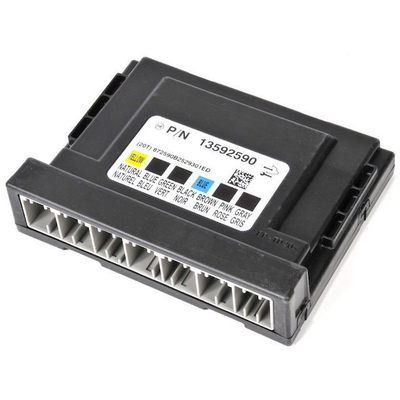
Shop the Parts Behind B1238
Below are the parts most often responsible for code B1238, ranked by how frequently each one is the actual culprit (per the diagnosis above). Tap any to see what we have for your vehicle.




The information in this article is provided for general reference and educational purposes only. Vehicle specifications, procedures, and part compatibility can vary by production date, trim level, and region. Always consult your vehicle's factory service manual and verify part numbers before purchasing or performing repairs. Safety-critical components such as airbags, seat belts, and braking systems should be installed by a qualified professional.
- 🧭 Diagnostic Flowchart
- 🎬 Helpful Videos
- 🛍️ Shop This Part
- What Does B1238 Mean?
- Can I Drive With B1238?
- Common Causes
- Symptoms
- Common Fixes & Costs
- DIY vs Professional
- Used vs. New Parts: Buying Guide
- What Happens If You Wait — Timeline
- Cost of Not Fixing It
- Diagnosis Steps
- When This Code Triggers (Freeze-Frame Conditions)
- Related Codes
- Climate & Environmental Factors
- How to Talk to a Mechanic About This Code
- Where to Take It: Dealer vs Independent vs Chain
- When to Walk Away From the Repair
- What Scan Tool You Need for This Code
- How to Clear the Code After You Fix It
- Will This Fail Emissions / State Inspection?
- Most Commonly Affected Vehicles
- Manufacturer-Specific Notes
- Real Owner Stories
- 2017 Honda CR-V with clicking dash
- 2013 Hyundai Elantra with incorrect temperature display
- 2016 Toyota Camry with inoperable rear window after battery change
- 2010 Dodge Ram with 'Service Park Assist' message
- How to Prevent This Code From Triggering
- Frequently Asked Questions
- Can I fix a B1238 code myself?
- What is the most common mistake when diagnosing B1238?
- Can a bad or dead battery cause a B1238 code?
- How do I perform an HVAC recalibration after replacing the battery?
- My mechanic quoted me $1,500 to fix this. Is that a rip-off?
- The code appeared after my car got wet. What should I check?
- Will clearing the B1238 code fix the problem?
- Key Takeaways
- 🎟️ Get 5% Off