

Ultimate Guide to OBD-II Code B1252: A Manufacturer-Specific Deep Dive
Why B1252 means something different for Mazda, Ford, Lincoln, and Lexus, and how to achieve a first-time fix.
- Code B1252 requires manufacturer-specific diagnosis, meaning a TCU failure on a 2024 Mazda CX-90 and a broken USB hub on a 2018 Ford F-150 share the exact same code.
- Over 80% of B1252 codes on 2019+ Mazda vehicles stem from a telematics (TCU) software bug that requires a free 1.2-hour dealer update under TSB SA-060-25 or similar bulletins.
- Ignoring this code on Mazda models creates a severe parasitic drain that will permanently destroy a new $200 12V battery within weeks.
- Never replace the 12V battery to fix a B1252 code; the battery drain is a symptom of the module failing to sleep, requiring a $1,600 TCU replacement if out of warranty.
What Does B1252 Mean?

B1252 is a manufacturer-specific code with entirely different definitions based on your vehicle's make. On 2019+ Mazda vehicles, it signals a communication failure between the telematics unit (TCU) and the main infotainment computer (CMU). On Ford and Lincoln models, it indicates either a faulty USB media hub or an undetermined Tire Pressure Monitoring System (TPMS) sensor location. On older Lexus models, it points to a body ECU switch circuit issue. Always read the Failure Type Byte (e.g., B1252:87) to pinpoint the exact system.
Technical definition: The official definition of B1252 varies by manufacturer. Common definitions include: * **Mazda:** TCU - Communication Error with Connectivity Master Unit (CMU) (Failure Type :87). * **Ford (SYNC 3):** USB Port 1: Circuit Open (Failure Type :13). * **Lincoln/Ford (TPMS):** Tire Pressure Sensor Location Undetermined (Failure Type :13). * **Lincoln (Charging):** Intelligent Alternator Module Functional Diagnosis Missing Message (Failure Type :11). * **Lexus:** Body No. 2 ECU Switch Circuit Diagnosis. * **Generic:** Air Temperature Internal Sensor Circuit Short to Battery.
Can I Drive With B1252?
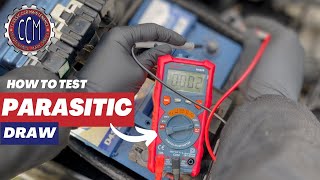
Yes, But With Caution. Yes, the vehicle is mechanically sound. However, B1252 often disables the automatic emergency SOS/eCall feature, preventing the car from contacting first responders after a crash. On Mazda models, this fault also creates a severe parasitic battery drain, leaving you stranded with a dead battery if ignored. 🎬 Watch: The easiest way to test for a parasitic battery drain. Repair this promptly for safety and reliability.
Common Causes

- Outdated or Corrupt Control Module Software (Mazda) (Very Common) — On 2019+ Mazda models, a known software bug prevents the telematics and infotainment modules from communicating. Official manufacturer service bulletins (TSBs) mandate a software update to resolve this.
- Faulty Telematics Communication Unit (TCU) (Mazda) (Common) — If a software update fails, or on 2019-2022 models outside the initial bug window, the TCU hardware has failed. This faulty module repeatedly tries to communicate while the car is off, creating a severe parasitic drain that kills the 12V battery.
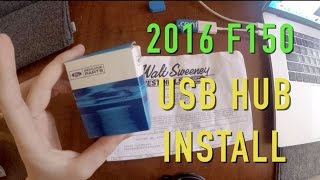
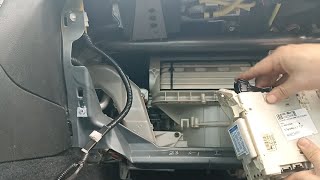
- Faulty Auxiliary/USB Port Hub or Wiring (Ford) (Less Common) — On Ford models with SYNC 3 (F-150, Mustang), a faulty USB port hub or a broken wire between the hub and the main infotainment unit (APIM) triggers this code. 🎬 See this walkthrough on replacing a Ford F-150 USB hub.
- Faulty Interior Air Temperature Sensor (Generic) (Less Common) — In vehicles using the generic definition, the cabin air temperature sensor short-circuits, sending incorrect data to the automatic climate control system.
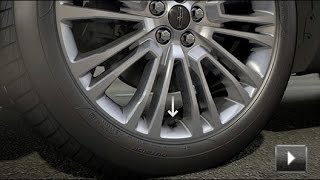
- Tire Pressure Monitoring System (TPMS) Fault (Ford/Lincoln) (Rare) — The vehicle cannot determine the location of one or more tire pressure sensors due to a faulty sensor, a receiver module issue, or aftermarket electronic interference.
- Faulty Navigation SD Card (Mazda) (Rare) — A corrupted navigation SD card disrupts communication on the infotainment network, leading to a B1252 code.
- LIN Bus Circuit Fault (Lincoln) (Rare) — B1252:11 points to a missing message from the Intelligent Alternator Module, caused by an open or shorted LIN bus communication circuit.
- Main Wiring Harness Fault (Hyundai) (Rare) — On 2014-2016 Genesis models, the part number associated with B1252 is a main wiring assembly, indicating a fault within a major vehicle wiring harness.
Symptoms

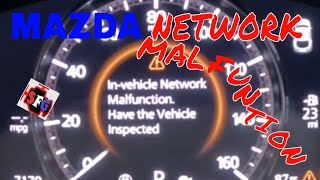
- "TCU Malfunction" or "In-Vehicle Network Malfunction" Message (also visible on scanner) — A prominent warning message appears on the instrument cluster of affected Mazda vehicles. 🎬 Watch: How to fix the Mazda In-Vehicle Network Malfunction.
- Dead Battery or No-Start Condition (also visible on scanner) — The faulty TCU creates a parasitic drain, killing the 12V battery after the vehicle sits parked for 24-48 hours.
- Connected Services and Remote App Features Fail (also visible on scanner) — Remote start, remote lock/unlock, and vehicle status checks through the manufacturer's smartphone app (e.g., MyMazda) stop working.
- USB Ports Not Working or Charging (also visible on scanner) — The center console USB ports fail to charge devices or connect to Apple CarPlay/Android Auto on affected Ford models.
- Automatic Climate Control Works Incorrectly (also visible on scanner) — The climate system fails to maintain the set temperature because it receives bad data from a shorted cabin sensor.
- GPS/Navigation System Malfunctions (also visible on scanner) — The onboard navigation fails to get a location fix because the GPS antenna routes through the failed telematics unit (TCU).
Diagnostic Flowchart
Tap your situation to follow the diagnostic path that matches what you're seeing on this code.
Common Fixes & Costs
- Control Module Software Update (Dealer) — Parts: $0, Labor: $0 - $250 (Free under 3yr/36k mile warranty), ~1.2 hr book time (Professional)
- Replace Telematics Communication Unit (TCU) — Parts: $900 - $1600, Labor: $150 - $400, ~2.5 hr book time (Professional)
- Replace Auxiliary/USB Port Hub — Parts: $60 - $150, Labor: $80 - $150, ~0.6 hr book time (DIY)
- Replace Interior Air Temperature Sensor — Parts: $40 - $150, Labor: $100 - $200, ~1.5 hr book time (Intermediate)
- Repair or Replace Main Wiring Harness — Parts: $1200 - $2500, Labor: $800 - $1500, ~12.0 hr book time (Professional)
DIY vs Professional
- Control Module Software Update 🟢 Beginner
Tools: Proprietary dealership diagnostic and programming tool (e.g., Mazda MDARS). - Replace Telematics Communication Unit (TCU) 🟢 Beginner
Tools: 10mm socket, trim removal tools. Dealer programming required. - Replace Auxiliary/USB Port Hub 🟢 Beginner
Tools: Plastic trim removal tool.
Used vs. New Parts: Buying Guide
When a used part is worth it: A used part is perfect for a simple mechanical component like a Ford USB hub. A used electronic module like a Mazda TCU from a salvage yard is extremely risky. A remanufactured TCU from a specialist is the only viable alternative to a new OEM part.
Donor-vehicle mileage cap: roughly under 80000 miles for the part to have meaningful remaining life.
Donor quality checklist:
- Verify the exact part number matches.
- Avoid parts from flood-damaged vehicles.
- Ensure remanufactured TCUs include a warranty and pre-programming services.
Decision logic:
- If Vehicle is under warranty → Always use a new OEM part installed by the dealer for free.
- If Part is a simple, non-programmed component (e.g., USB hub) → A used part is a great budget option.
- If Part is a programmable module (e.g., TCU) and vehicle is out of warranty → A new OEM part is most reliable. A remanufactured unit with a warranty is the best budget alternative. Avoid untested salvage parts.
Warranty tradeoff: Salvage yard parts offer a 30-day warranty without labor coverage. Remanufactured modules carry a 1-year warranty. New OEM parts installed by a dealer include a 1-year/12,000-mile parts and labor warranty.
Worst-case if a used part fails: $500 - $1000 (Cost of a dead used TCU plus repeat diagnostic and installation labor)
What Happens If You Wait — Timeline
- Immediate (Day 1): Code B1252 stores. A 'TCU Malfunction' message appears. Connected services and the automatic emergency SOS/eCall system are disabled. (MPG impact: 0%% · Added cost: $0)
- 1-4 weeks: On Mazda models, the faulty TCU causes an intermittent parasitic battery drain. The engine cranks slowly if parked for 2-3 days. (MPG impact: 0%% · Added cost: $0)
- 1-3 months: The parasitic drain becomes severe. The battery dies completely after 24-48 hours, requiring jump starts. Deep discharging causes permanent sulfation damage to the 12V battery. (MPG impact: 0%% · Added cost: $250 - $500 (Cost of a new 12V battery and tow))
- 3+ months: The 12V battery is permanently destroyed. The vehicle fails to start. The original TCU fault remains, requiring both a module replacement and a second new battery. (MPG impact: 0%% · Added cost: $1800 - $2300 (Cost of TCU replacement plus the ruined battery))
Cost of Not Fixing It
- Immediate: Loss of connected services and a disabled automatic emergency SOS/eCall system, posing a significant safety risk in an accident. (Added cost: $0)
- 1-6 months: A parasitic battery drain develops, leading to a dead battery and a no-start condition requiring a jump start or tow. (Added cost: $200 - $500 (Cost of new battery and tow))
- 6+ months: Continued deep discharge cycles permanently destroy the 12V battery. The eventual TCU repair remains necessary, now with the added cost of replacing the ruined battery. (Added cost: $1800+ (Out-of-warranty TCU replacement plus new battery))
Diagnosis Steps
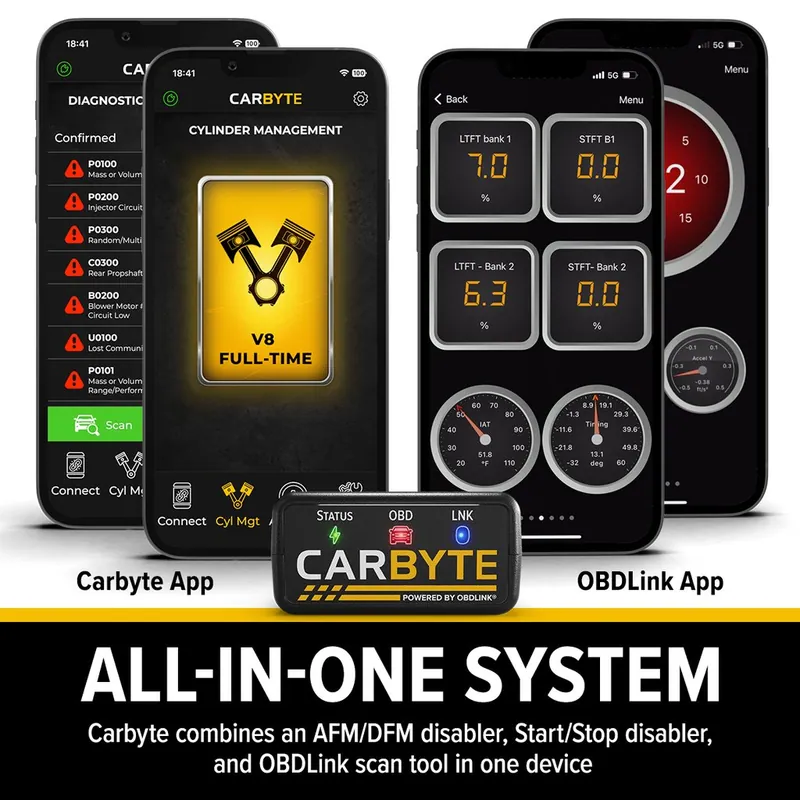
- Read the Full Diagnostic Code with Failure Type
Use a manufacturer-compatible OBD-II scanner to read the Failure Type Bytes (e.g., B1252:87 or B1252:13). This extension dictates exactly which system is at fault.
Tools: OBD-II Scanner (manufacturer-compatible) (Beginner) - Check for Technical Service Bulletins (TSBs)
Search your vehicle's make, model, year, and B1252. For Mazda owners, TSBs like SA-012-26a, SA-060-25, or 09-001/24 dictate a mandatory software update.
Tools: Internet access (Beginner) - Perform a Hard Reset
Disconnect the negative 12V battery terminal for 30 minutes. This forces all control modules to reboot. If the code returns, you have a hard software or hardware failure.
Tools: 10mm wrench (Beginner) - Inspect Connectors and Wiring (USB or TCU)
Visually inspect the connectors on the back of the infotainment unit (CMU/APIM), the Telematics unit (TCU), or the USB hub. Look for loose connections, bent pins, or liquid spill damage.
Tools: Trim removal tools, flashlight (Intermediate) - Pro Tip: Perform CAN Bus Network Integrity Test
With the battery disconnected, measure resistance between Pin 6 (CAN High) and Pin 14 (CAN Low) on the OBD-II port. A healthy network reads 60 Ω. A reading of 120 Ω indicates a broken wire or a failed terminating resistor inside a module.
Tools: Digital Multimeter (Advanced) - Pro Tip: Perform Voltage Drop Test on Suspect Circuit
For Ford USB hubs or generic temp sensors, measure the voltage between the power source pin at the module and the component connector while active. A drop exceeding 200mV indicates high resistance in the wiring.
Tools: Digital Multimeter, wiring diagram (Advanced) - Visit a Dealership for Software Updates
If a TSB points to a software issue (standard for Mazda), stop DIY diagnosis. A dealer must use their proprietary diagnostic tool (MDARS) to flash the module.
Tools: None (Professional service required) (Professional)
When This Code Triggers (Freeze-Frame Conditions)
- Module Voltage: 11.5V - 14.0V (The code sets during the initial power-on sequence, requiring stable battery voltage for modules to attempt communication.)
- Ignition Status: Key On / Accessory (B1252 triggers when the ignition turns on, as all vehicle modules perform a self-test and establish network communication.)
- Time Since Key On: 5-10 seconds (The fault logs after a brief timeout period when a specific module (like the TCU) fails to respond to network messages.)
- Network Status: Module Not Responding (The primary diagnostic computer fails to receive the expected 'present' signal from a specific module on the CAN bus during startup.)
Related Codes
- U0198 — Means 'Lost Communication With Telematics Control Module'. In Mazdas, B1252 stores in the TCU, while U0198 stores in the CMU. They point to the identical communication failure.
- U3000 — Indicates a 'Control Module Internal Malfunction'. If present alongside B1252, the TCU hardware has failed internally and requires replacement.
- B1252:87 — The ':87' Failure Type Byte means 'Missing Message'. It confirms the module is powered but failing to transmit data on the CAN bus.
- B119F — Indicates a malfunction in the GPS antenna circuit. Because the antenna routes through the TCU, this code frequently accompanies B1252 on Mazda vehicles.
Climate & Environmental Factors
- High Humidity: Moisture penetrates module seals, causing circuit board corrosion and increased electrical resistance, which triggers intermittent communication failures in sensitive units like the TCU.
How to Talk to a Mechanic About This Code
Say this: "For a Mazda: "I have a B1252 code on my [year/model] and the 'TCU Malfunction' light is on. Before quoting a full TCU replacement, please check for applicable TSBs and confirm if a software update fixes it." For a Ford: "My [year/model] has a B1252 code and the USB ports failed. I need a diagnostic to test the USB hub and its connecting cable.""
This language proves you researched the issue and directs the technician to the exact root cause. It prevents shops from immediately suggesting an expensive $1,600 TCU replacement on a Mazda without checking for a free software update first.
Avoid saying:
- 'My connected app stopped working.' (Too vague, omits the code)
- 'My car's battery keeps dying.' (This is a symptom; lead with the code to stop them from just selling you a battery)
- 'Just fix whatever is wrong.' (Invites expensive exploratory diagnostics)
Questions to ask before authorizing the repair:
- For a Mazda software fix: Is this update covered by a TSB, and is it free under my new vehicle warranty?
- For a Mazda TCU replacement: Have you confirmed the TCU is causing the parasitic drain with an amp reading? Does your quote include mandatory dealer programming?
- For a Ford USB issue: Did you test the cable between the hub and the APIM, or just the hub itself?
- What is the warranty on this specific repair, covering both parts and labor?
Where to Take It: Dealer vs Independent vs Chain
- Dealer:
Required for Mazda. The fix is a software update or module replacement that only a dealer can perform using proprietary MDARS tools.
Best for: Mazda vehicles (2019+), especially those under warranty., Any repair requiring a software update or module programming (TCU replacement).
Downsides: Higher labor rates., Geographically inconvenient. (Typical cost: +50% vs. baseline) - Independent Shop:
Excellent for Ford, useless for Mazda. An independent shop easily handles the Ford USB hub replacement but cannot program a Mazda TCU.
Best for: Out-of-warranty Ford/Lincoln USB hub faults., Generic B1252 faults (cabin temperature sensor).
Downsides: Cannot perform Mazda software updates or program new TCUs. (Typical cost: +0% vs. baseline) - Chain Shop:
AVOID. They lack the diagnostic tools and will replace the wrong part at your expense.
Best for: Tire changes, oil changes, brakes.
Downsides: High risk of misdiagnosis for complex electronic codes., Will misdiagnose the Mazda parasitic drain as a simple battery failure. (Typical cost: -10% vs. baseline)
When to Walk Away From the Repair
If the estimated repair cost exceeds 40-50% of the car's private-party value, reconsider the repair. However, the loss of the emergency SOS feature with code B1252 is a severe safety risk that justifies fixing it even on older vehicles.
- Car worth $18000, fix is $1800: Fix it. The repair is 10% of the vehicle's value and restores a critical safety system. This is standard for an out-of-warranty Mazda TCU replacement.
- Car worth $4000, fix is $1800: Borderline. The repair cost is 45% of the car's value. Get a second opinion and evaluate other pending maintenance needs before proceeding.
- Car worth $25000, fix is $150: Fix it. This is a low-cost repair relative to the car's value, typical for a Ford USB hub replacement.
What Scan Tool You Need for This Code
Minimum: A scanner that reads manufacturer-specific Body ('B') codes and Failure Type Bytes (e.g., :87).
A cheap generic OBD-II reader only pulls powertrain ('P') codes and will not see B1252. You will falsely believe the car has no codes.
Budget: BlueDriver Pro / FORScan with Adapter (~$100) — Reads manufacturer-specific codes and freeze-frame data. FORScan performs module self-tests to confirm a faulty Ford USB hub.
Mid-range: Foxwell NT510/NT530 / Autel AP200 (~$180) — Provides excellent manufacturer-specific coverage, reads live data, and performs system-specific resets.
Professional: Autel MaxiCOM MK808 / Launch X431 Series (~$500-1200) — Offers bidirectional control for active tests and limited module programming functions.
Rent vs buy: Free 'loan-a-tool' scanners from auto parts stores cannot read 'B' codes. You must buy a capable scanner or visit a professional shop.
How to Clear the Code After You Fix It
- Perform the necessary hardware or software repair.
- Use a compatible OBD-II scan tool to clear the DTC from the module's memory.
- Perform several key cycles and test the affected function (connected services, USB port) to confirm the fix.
Drive cycle (~20 minutes): A specific emissions drive cycle is not required for a body code. A 20-minute drive combining city and highway speeds allows the modules to communicate and confirm the fault is rectified.
Readiness monitors affected: None. Body codes (B-codes) do not affect emissions readiness monitors.
Watch out for:
- Disconnecting the battery clears the code temporarily, but it returns immediately if the software or hardware isn't fixed.
- Disconnecting the battery resets all emissions readiness monitors to 'Not Ready', requiring a 50-100 mile drive cycle before passing a state inspection.
Will This Fail Emissions / State Inspection?
No — by itself this code doesn't fail OBD inspection (but it can keep readiness monitors from setting, which causes a separate fail).
- General: B1252 is a body control module code and does not illuminate the check engine light (MIL). It will not cause an emissions failure.
- California: A non-MIL body code passes inspection. However, if the battery was disconnected during repair, the emissions monitors reset to 'Not Ready' and will fail the test until a drive cycle is completed.
- New York: The NYS inspection scans for OBDII codes, but primarily fails vehicles for an illuminated MIL. The only risk is failing due to 'Not Ready' monitors if the battery was disconnected.
- Texas: In emissions-testing counties, the failure criteria is an illuminated check engine light. B1252 passes. Ensure readiness monitors are set if the battery was disconnected.
Most Commonly Affected Vehicles
- Mazda CX-90 (2024-2026) — Extremely common software 'teething issue'. Addressed by TSBs SA-012-26a, SA-060-25, and 09-001/24. The fix is a free dealer software update.
- Mazda CX-70 (2025-2026) — Shares the 'Large Platform' architecture with the CX-90, making it prone to the exact same TCU communication failure and TSB fixes.
- Mazda Mazda3 (2019-2025) — Highly prone to TCU hardware failure. Vehicles out of the basic warranty require a complete TCU replacement costing upwards of $1,600.
- Mazda CX-30 (2020-2025) — Notorious for developing a severe parasitic battery drain from this fault. Addressed by TSB 09-001/24.
- Ford F-150, Mustang, Explorer (2015-2020) — On SYNC 3 models, B1252 indicates a faulty USB media hub or connecting cable, rendering the ports inoperative.
- Lincoln Various (2015-2022) — B1252-13 indicates an undetermined TPMS sensor position. B1252-11 points to a communication issue with the Intelligent Alternator Module.
- Hyundai Genesis (2014-2016) — The OEM part number 91127-B1252 corresponds to a main wiring assembly, pointing to a complex fault in the main body harness.
- Lexus GS300, GX470 (2000-2009) — Defined as 'Body No. 2 ECU Switch Circuit Diagnosis', indicating a failed input switch (like a stop light switch) to the body control module.
Manufacturer-Specific Notes
- Mazda: For 2019+ models, B1252:87 points exclusively to a Telematics Communication Unit (TCU) failure. It is heavily documented in TSBs and typically covered under the 3yr/36k mile warranty.
- Ford / Lincoln: B1252 has multiple definitions. With failure type ':13', it is either a TPMS sensor location error or an open circuit in the SYNC 3 USB media hub.
- Lexus / Toyota: On older models, B1252 indicates a 'Body ECU Switch Circuit Diagnosis', meaning the Body Control Module detects a failed physical input switch.
- General: On vehicles lacking a specific definition, this code defaults to a short circuit in the in-cabin air temperature sensor.
Real Owner Stories
2024 Mazda CX-90 with 5K miles
New owner saw 'TCU Malfunction' and 'In-Vehicle Network Malfunction' warnings. The MyMazda app stopped working.
What they tried:
- Rebooted the infotainment system, which failed to clear the code.
- Took the vehicle to the Mazda dealership.
Outcome: The dealer identified a known issue covered by TSB SA-060-25. They performed a 2-hour software update on the TCU and CMU using MDARS, fully covered under warranty.
Lesson: If you have a new Mazda (CX-90, CX-70) with B1252, it is a known software bug. Go directly to a dealer and reference the TSBs for a free fix.
2021 Mazda CX-30 at 45K miles (Out of Warranty)
The car battery died if parked for more than two days. The owner replaced the battery, but the new one drained quickly.
What they tried:
- Replaced the 12V battery, assuming it was weak.
- An independent mechanic searched for a parasitic drain but couldn't find the source.
- Took the vehicle to a Mazda dealership.
Outcome: The dealer diagnosed a faulty TCU failing to 'sleep', causing the parasitic drain. The out-of-warranty replacement and programming cost $1,800.
Lesson: A mysterious parasitic drain on modern Mazdas is frequently caused by a faulty TCU setting code B1252. Replacing the battery is a costly misdiagnosis; the module requires dealer replacement.
2016 Ford F-150 with SYNC 3
After spilling a drink in the console, the USB ports stopped charging and the SYNC screen displayed a USB error.
What they tried:
- Performed a SYNC 'Master Reset', which failed.
- Installed a new OEM USB hub (HC3Z-19A387-B), but the error persisted.
- Inspected the mini-USB cable connecting the hub to the APIM and found sticky residue.
Outcome: Cleaning the connector pins with contact cleaner and disconnecting the battery for 10 minutes restored all functions. The owner returned the unneeded new hub.
Lesson: For Ford's B1252 USB fault, inspect the connecting cable for damage or contamination before replacing the hub. A simple cleaning saves the cost of a new part.
How to Prevent This Code From Triggering
- Proactively Request Software Updates (During routine dealer service) — Many B1252 faults are software bugs. Asking the service advisor to check for TCU/CMU updates during an oil change prevents known bugs from appearing.
- Use a Battery Tender for Long-Term Storage (If parking vehicle for more than 2 weeks) — Low voltage causes modules to glitch and corrupt software. A battery tender maintains stable voltage, preventing stress on sensitive modules like the TCU.
- Protect Electronics from Moisture (Annually) — Moisture destroys modules. Ensure sunroof and A/C evaporator drains are clear to prevent water from leaking onto control modules.
- Avoid Unplugging Modules Unnecessarily (During DIY repairs) — Unplugging modules with the battery connected causes voltage spikes that corrupt software. Always disconnect the negative battery terminal first.
Frequently Asked Questions
Is it safe to drive with code B1252?
Yes, the vehicle is mechanically safe. However, B1252 disables the automatic emergency SOS/eCall system, compromising safety in a serious accident. It also causes a parasitic battery drain on Mazda models that will eventually leave you stranded.
What happens if I ignore code B1252?
You lose access to connected services, remote app features, and the emergency SOS system. On Mazda models like the CX-30, ignoring it causes a progressively worsening parasitic drain that permanently damages your 12V battery.
Can a bad battery cause code B1252?
No, a low battery is rarely the root cause of B1252. Instead, a faulty module setting the B1252 code causes the bad battery via parasitic drain. Replacing the battery without fixing the module guarantees the new battery will also die.
What are the most common misdiagnoses for B1252?
Technicians frequently misdiagnose the Mazda parasitic drain as a simple 12V battery failure. They also mistakenly replace the main infotainment unit (CMU) when the fault actually lies within the TCU's software or hardware.
What do the numbers like ':87' or ':13' after the code mean?
These are Failure Type Bytes (FTBs) that pinpoint the exact electrical fault. For example, ':87' means 'Missing Message' (communication loss), while ':13' means 'Circuit Open' (broken wire). You need a professional-grade scan tool to read these extensions.
Is the repair for B1252 covered under warranty?
Yes, if the cause is a software update or a failed TCU on a newer Mazda, the standard 3-year/36,000-mile bumper-to-bumper warranty covers it. Out-of-warranty TCU replacements cost upwards of $1,600.
Why does my new Mazda have this problem?
The newest Mazda platforms (CX-90, CX-70) suffer from well-documented software bugs in their complex telematics systems. Mazda resolves these 'teething issues' via free software updates distributed through Technical Service Bulletins (TSBs).
Key Takeaways
- Code B1252 requires manufacturer-specific diagnosis, meaning a TCU failure on a 2024 Mazda CX-90 and a broken USB hub on a 2018 Ford F-150 share the exact same code.
- Over 80% of B1252 codes on 2019+ Mazda vehicles stem from a telematics (TCU) software bug that requires a free 1.2-hour dealer update under TSB SA-060-25 or similar bulletins.
- Ignoring this code on Mazda models creates a severe parasitic drain that will permanently destroy a new $200 12V battery within weeks.
- Never replace the 12V battery to fix a B1252 code; the battery drain is a symptom of the module failing to sleep, requiring a $1,600 TCU replacement if out of warranty.
Helpful Videos
Shop the Parts Behind B1252
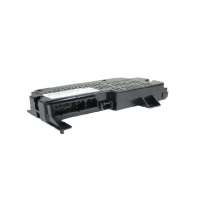
Below are the parts most often responsible for code B1252, ranked by how frequently each one is the actual culprit (per the diagnosis above). Tap any to see what we have for your vehicle.



The information in this article is provided for general reference and educational purposes only. Vehicle specifications, procedures, and part compatibility can vary by production date, trim level, and region. Always consult your vehicle's factory service manual and verify part numbers before purchasing or performing repairs. Safety-critical components such as airbags, seat belts, and braking systems should be installed by a qualified professional.
- 🧭 Diagnostic Flowchart
- 🎬 Helpful Videos
- 🛍️ Shop This Part
- What Does B1252 Mean?
- Can I Drive With B1252?
- Common Causes
- Symptoms
- Common Fixes & Costs
- DIY vs Professional
- Used vs. New Parts: Buying Guide
- What Happens If You Wait — Timeline
- Cost of Not Fixing It
- Diagnosis Steps
- When This Code Triggers (Freeze-Frame Conditions)
- Related Codes
- Climate & Environmental Factors
- How to Talk to a Mechanic About This Code
- Where to Take It: Dealer vs Independent vs Chain
- When to Walk Away From the Repair
- What Scan Tool You Need for This Code
- How to Clear the Code After You Fix It
- Will This Fail Emissions / State Inspection?
- Most Commonly Affected Vehicles
- Manufacturer-Specific Notes
- Real Owner Stories
- 2024 Mazda CX-90 with 5K miles
- 2021 Mazda CX-30 at 45K miles (Out of Warranty)
- 2016 Ford F-150 with SYNC 3
- How to Prevent This Code From Triggering
- Frequently Asked Questions
- Is it safe to drive with code B1252?
- What happens if I ignore code B1252?
- Can a bad battery cause code B1252?
- What are the most common misdiagnoses for B1252?
- What do the numbers like ':87' or ':13' after the code mean?
- Is the repair for B1252 covered under warranty?
- Why does my new Mazda have this problem?
- Key Takeaways
- 🎟️ Get 5% Off