

OBD-II Code B1277: A Manufacturer-Specific Body System Circuit Malfunction
The Ultimate Guide to Diagnosing and Fixing B1277 on Ford, Honda, GM, and More
- B1277 is a manufacturer-specific Body Control Module code; on Fords it indicates a reverse light failure, while on Hondas it signals a broken automatic headlight switch.
- Never replace the $500+ BCM first; over 80% of B1277 codes are solved by replacing a $40 switch or repairing a corroded wire.
- The BCM uses a resettable solid-state fuse; after fixing the physical short, you must use a bidirectional scanner to clear the code and restore power.
- Do not install aftermarket LED bulbs or trailer wiring directly into a BCM-controlled circuit without a relay, as drawing more than 7 amps triggers this code.
- Always diagnose and resolve 'U' network communication codes before troubleshooting B1277, as a CAN bus error causes false body codes.
What Does B1277 Mean?
B1277 is a body control module (BCM) code indicating a fault in an electrical circuit it monitors. This is not a universal code; its meaning is highly dependent on the vehicle manufacturer. On a Ford, it signifies a problem with the reverse light circuit. On a Honda, it points to the automatic headlight switch. For GM vehicles, it indicates a transfer case or communication issue, and on a Hyundai, it relates to the climate control system.
Technical definition: The Society of Automotive Engineers (SAE) does not provide a standardized definition for B1277, leaving it to manufacturers. The Body Control Module (BCM) sets this code when it detects an abnormal voltage reading—too high (short to power), too low (short to ground), or absent (open circuit)—on a specific circuit it controls. Common definitions include 'Reverse Lamp Circuit Malfunction' (Ford), 'Headlight Switch AUTO Position Circuit Malfunction' (Honda), 'Motor A or B Circuit Malfunction' for the transfer case encoder motor (GMC/Chevrolet), and 'Air Mix Potentiometer-TEMP Open' (Hyundai).
Can I Drive With B1277?
Yes, But With Caution. Driving is possible, but carries significant safety and legal risks. Depending on the vehicle, you will lose reverse lights, experience erratic headlights, or face unpredictable electrical issues. Lack of reverse lights is a safety hazard in parking lots and results in a traffic ticket in many jurisdictions. If the BCM is failing, it shuts off headlights while driving or disables other critical systems, creating a high-risk situation.
Common Causes
- Damaged Wiring or Water Intrusion (Very Common) — The wiring harness or connectors leading to the affected component are the most frequent culprits. Wires chafe against the frame, break internally, or suffer corrosion from water and road salt entering compromised seals in tail light housings or underbody connectors.
- Faulty Component Switch (Common) — The switch operating the circuit fails mechanically or electrically. This includes the transmission reverse lamp switch, steering column multi-function headlight switch, or transfer case selector switch. Internal contacts wear out, stopping the valid signal.
- Improperly Installed Aftermarket Accessories (Common) — Tapping into a BCM-controlled circuit to add high-power reverse lights, trailer wiring, or LED bulbs without a dedicated relay overloads the circuit. The BCM's internal protection then disables the circuit and logs code B1277.
- Faulty Body Control Module (BCM) or Software (Less Common) — An overload from a shorted wire damages the BCM's internal drivers. Alternatively, software anomalies require a hard reset or dealer update, such as Ford's recall 24S27 for F-150 lighting circuit logic.
- Improperly Installed Windshield (Rare) — On 2018-2021 Ford Expeditions, an aftermarket windshield's jumper harness for the auto-dimming mirror is sometimes wired incorrectly, creating a short that triggers a B1277 code for the reverse lamps.
- Foreign Object Intrusion (Rare) — A foreign object like a coin falls into an unused, upward-facing connector behind the dashboard, creating a short to ground and triggering the code for a seemingly unrelated circuit.
Symptoms
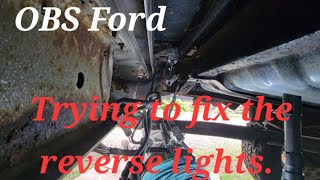
- Reverse Lights Not Working — The most common symptom on Ford vehicles. 🎬 Watch: Troubleshooting reverse light issues on a Ford F-150. The backup lights fail to illuminate when the vehicle is put in reverse.
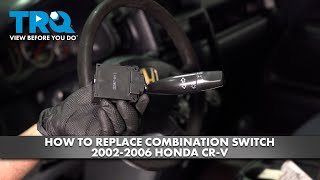
- Headlights Not Working in 'Auto' Mode — On Honda vehicles, the automatic headlight function stops working, though the headlights still function in the manual 'On' position. 🎬 See how to replace a Honda CR-V headlight switch.
- Service 4WD or Other System Warnings — On GM trucks, a B1277 code related to the transfer case triggers a 'Service 4WD' message on the instrument cluster.
- Reverse Lights Stuck On or Flickering — The backup lights stay illuminated even when not in reverse or flicker intermittently, indicating a short to power or a faulty switch.
- Inability to Control Cabin Temperature — For Hyundai models, this code points to a fault in the HVAC system's air mix actuator, preventing temperature adjustments.
Diagnostic Flowchart
Tap your situation to follow the diagnostic path that matches what you're seeing on this code.
Common Fixes & Costs
- Replacing a Faulty Switch (Reverse Lamp or Headlight) — Parts: $30-$150, Labor: $95-$200, ~1.0 hr book time (DIY)
- Repairing Damaged Wiring — Parts: $10-$50, Labor: $150-$600, ~1.5 hr book time (Intermediate)
- Clearing a 'Soft Code' in the BCM — Parts: $0, Labor: $0-$125, ~0.2 hr book time (DIY)
- Running a New Bypass Wire — Parts: $20-$40, Labor: $150-$300, ~2.0 hr book time (Advanced)
- Replacing the Body Control Module (BCM) — Parts: $250-$900, Labor: $250-$500, ~2.5 hr book time (Professional)
Used vs. New Parts: Buying Guide
When a used part is worth it: For simple mechanical parts like a transmission-mounted reverse light switch, a used part from a low-mileage vehicle is cost-effective. For a complex electronic part like a BCM, a used part is very risky and only makes sense if you have a guaranteed way to reprogram it.
Donor-vehicle mileage cap: roughly under 60000 miles for the part to have meaningful remaining life.
Donor quality checklist:
- For switches, ensure connectors are clean with no corrosion or melted plastic.
- For BCMs, match the part number exactly. Even with an exact match, it will not work without professional reprogramming.
- Avoid parts from flood-damaged or high-corrosion (rust-belt) vehicles.
Decision logic:
- If The part is a simple switch and a new aftermarket version is under $50 → Buy new. The small savings on a used part isn't worth the risk of it failing soon.
- If The part is the BCM → Favor a new OEM part or a remanufactured unit pre-programmed to your VIN. A used BCM is a last resort.
- If The vehicle is older (>10 years) and the budget is extremely tight → A used switch is acceptable, but a used BCM still carries a high risk of failure and programming costs.
Warranty tradeoff: Used parts typically have a 30-90 day warranty for part replacement only. New aftermarket parts carry a 1-year to limited lifetime warranty. New OEM parts carry a 1-2 year warranty.
Worst-case if a used part fails: $400-$1500 if a used BCM fails to program or fails shortly after installation, requiring you to pay for the part and labor twice.
What Happens If You Wait — Timeline
- 0-1 month: A specific function fails (e.g., reverse lights are out). The code B1277 is stored in the BCM. There is a safety/legal risk but no additional component damage. (MPG impact: 0%% · Added cost: $0-$250 (Potential traffic ticket))
- 1-6 months: If the cause is an intermittent short or a failing BCM, other random electrical glitches appear, such as flickering lights or erratic door locks. If the cause is a parasitic draw, the battery struggles to start the car. (MPG impact: 0%% · Added cost: $150-$350 (Cost of a new battery due to repeated draining))
- 6-12 months: A persistent short circuit repeatedly stresses the BCM's internal driver (FET), causing permanent damage to that specific circuit within the module. The problem goes from intermittent to permanent. (MPG impact: 0%% · Added cost: $300-$800 (Potential cost of a remanufactured BCM if the internal driver fails completely))
- 12+ months: In a worst-case scenario, an internally failing BCM creates noise on the CAN bus network, disrupting communication between other critical modules (Engine, Transmission, ABS). This leads to a cascade of failures, no-start conditions, or unpredictable behavior. (MPG impact: 0-5% (Indirectly, if communication with engine module is affected)% · Added cost: $1000-$2500+ (Cost of diagnosing complex network issues and replacing multiple modules))
Cost of Not Fixing It
- Immediate: Safety hazard from non-functioning lights (e.g., no reverse lights). Risk of traffic violations and fines. Inability to use certain features like 4WD. (Added cost: $50-$250 (Typical traffic ticket cost))
- 1-6 months: If caused by a faulty BCM, it leads to parasitic battery drain, resulting in a no-start condition and the need for a new battery. (Added cost: $150-$350 (Cost of a new battery and potential tow))
- 6+ months: An ignored internal BCM short damages other modules on the vehicle's data network, causing a cascade of difficult-to-diagnose electrical failures. (Added cost: $500-$2000+ (Cost of diagnosing and replacing other electronic modules))
Diagnosis Steps
- Retrieve Manufacturer-Specific DTCs
Use an advanced OBD-II scanner capable of reading body codes. A basic reader only shows 'B1277', but a professional tool provides the full code, such as 'B1277:11' (Circuit Short To Ground) or 'B1277:15' (Circuit Short To Battery or Open), which is critical for diagnosis.
Tools: Advanced OBD-II Scanner (Beginner) - Perform a Thorough Visual Inspection
Inspect the wiring harness associated with the symptom. Look for chafed wires near frame rails, melted insulation, and corrosion in connectors, paying close attention to trailer wiring harnesses and areas with previous repairs.
Tools: Flashlight, Inspection Mirror (Beginner) - Test the Component Switch for Continuity
With the switch disconnected, use a multimeter set to Ohms (Ω). Test the switch pins according to your vehicle's wiring diagram. For a simple on/off switch, you will see infinite resistance ('OL') when 'Off' and near-zero resistance (less than 1 Ohm) when 'On'.
Tools: Digital Multimeter, Wiring Diagram (Intermediate) - Check for BCM Reference Voltage
Disconnect the component's electrical connector. Using a multimeter set to DC Volts, probe the signal wire in the harness with the key on. You will see a reference voltage from the BCM (typically ~12V for Ford reverse switches, 4-5V for Honda headlight switches). No voltage points to a wiring or BCM issue.
Tools: Digital Multimeter, Wiring Diagram (Intermediate) - Test for a Short to Ground
Disconnect the battery, the component, and the corresponding connector at the BCM. Set your multimeter to Ohms (Ω). Place one probe on the circuit's signal/power wire at the component connector and the other probe on a clean metal ground on the chassis. Low resistance (under 5 Ohms) indicates a short to ground.
Tools: Digital Multimeter, Wiring Diagram (Advanced) - Test for an Open Circuit
With the battery, component, and BCM disconnected, keep your multimeter on Ohms (Ω). Place one probe on the signal wire pin at the BCM connector and the other probe on the same wire at the component connector. The reading must be under 1 Ohm. A reading of 'OL' means the wire is broken.
Tools: Digital Multimeter, Wiring Diagram (Advanced) - Perform a 'Wiggle Test'
Connect your multimeter as in the short or open test. While watching the meter, physically wiggle the wiring harness along its entire length. If the reading suddenly changes from 'OL' to low resistance, or vice-versa, you have isolated the intermittent fault.
Tools: Digital Multimeter, Wiring Diagram (Advanced) - Monitor Live Data with a Scan Tool
Monitor the BCM's live data PIDs for the affected circuit. The value must change state as you operate the control (e.g., shift into reverse, turn the headlight stalk). If the physical action is not reflected in the scan tool data, the problem is between the switch and the BCM.
Tools: Advanced OBD-II Scanner (Advanced) - Command the Component On with a Scan Tool
Use bidirectional controls to command the circuit on and off. While commanding it on, check for voltage at the BCM output pin. If the scan tool commands it on but there is no voltage output, and all wiring is confirmed good, the BCM's internal driver has failed.
Tools: Advanced OBD-II Scanner, Digital Multimeter (Advanced)
When This Code Triggers (Freeze-Frame Conditions)
- Battery Voltage: 11.5-12.5V (Key On, Engine Off (KOEO) during initial self-test.)
- Ignition Status: ON (The BCM tests most circuits when the ignition is turned on.)
- Component Command State: Active/Requested (Code sets when the specific function is requested (e.g., shifter moved to 'Reverse', headlight switch moved to 'Auto').)
- BCM Internal Temperature: Ambient to 150°F (Extreme temperatures are logged but are less common triggers than circuit faults.)
Related Codes
- B1277:11 — A Ford-specific suffix for 'Circuit Short To Ground'. It means the BCM has detected the circuit's power wire is electrically connected to the vehicle's chassis. Diagnosis involves checking for continuity between the power wire and a known good ground.
- B1277:15 — A Ford-specific suffix for 'Circuit Short To Battery or Open'. It indicates the BCM has detected either a break in the wire (open) or that the circuit is receiving voltage when it shouldn't be.
- B1275, B1276, B1278 — On Honda vehicles, these codes frequently accompany B1277. They correspond to failures in the 'Off', 'Parking', and 'On' positions of the headlight switch, respectively. Seeing them together confirms a faulty combination light switch assembly.
- U-codes (e.g., U1000, U1255) — Network communication codes. If you see a 'U' code alongside B1277, you must diagnose the communication issue first. A network fault prevents modules from talking to each other, causing false B1277 codes.
Climate & Environmental Factors
- High Humidity / Heavy Rain: Moisture penetrates compromised tail light assemblies, trailer wiring connectors, or exterior electrical connectors, causing corrosion and short circuits. This leads to DTCs like Ford's B1277:11 (Short to Ground).
- Road Salt (Rust Belt Regions): Corrosive slush gets kicked up into the undercarriage, accelerating corrosion on wiring harnesses, ground points, and exposed connectors, significantly increasing the likelihood of shorts or open circuits.
- Extreme Cold: Very low temperatures make wire insulation brittle and susceptible to cracking if flexed, allowing moisture ingress and causing failures.
How to Talk to a Mechanic About This Code
Say this: "I have a B1277 code on my vehicle and the specific circuit is not working. I'd like to schedule a diagnostic appointment. I want to rule out a wiring or switch issue before we consider replacing the Body Control Module."
This signals to the shop that you are informed, directs them to diagnose the most likely and least expensive causes first, and prevents an immediate and costly recommendation to replace the BCM.
Avoid saying:
- 'Just fix whatever's wrong'
- 'My check engine light is on, can you look at it?'
- 'The internet said to replace the BCM'
Questions to ask before authorizing the repair:
- Did you test the switch and the wiring for shorts, opens, and continuity?
- Were you able to command the component on and off using your scan tool?
- Can you show me the test results proving the wiring and component are good, but the BCM is not providing power?
- What is the warranty on this specific repair, including both parts and labor?
Where to Take It: Dealer vs Independent vs Chain
- Dealer:
Best for: Vehicles under warranty, Confirmed BCM failure requiring programming, Recalls or Technical Service Bulletins (TSBs) related to the code
Downsides: Highest labor rates ($150-$250/hr), Prefers replacing entire wiring harnesses rather than repairing a single wire, Less flexibility on using aftermarket or remanufactured parts (Typical cost: +50% vs. baseline) - Independent Shop:
Best fit for diagnosis and common repairs. A good independent shop specializing in electrical work is the ideal starting point. If they confirm a BCM replacement is needed, they send the car to a dealer for final programming.
Best for: Out-of-warranty vehicles, Diagnosing wiring, switch, or component-level faults, Cost-effective repairs like running a bypass wire
Downsides: Quality varies greatly; look for ASE certifications and good reviews on electrical work., May lack the specific software to program a new BCM if needed (Typical cost: +0% vs. baseline) - Chain Shop:
AVOID for initial diagnosis. The risk of misdiagnosis or a recommendation for an unnecessary BCM replacement is high. Only use if the problem has been pre-diagnosed as a simple, accessible part.
Best for: Simple component swaps like a known bad switch if the diagnosis is already clear
Downsides: Technician skill in complex electrical diagnosis is highly variable, Often lack the advanced, manufacturer-specific scan tools needed for BCM-level diagnostics and resets, High pressure to upsell common services rather than perform detailed diagnostics (Typical cost: -10% vs. baseline)
When to Walk Away From the Repair
If the estimated repair cost exceeds 50% of the car's private-party value, seriously consider selling or trading it in rather than repairing it.
- Car worth $4000, fix is $2200: Walk away. The repair cost is over 50% of the car's value.
- Car worth $12000, fix is $1200: Fix it. The repair cost is only 10% of the vehicle's value and well below the threshold.
- Car worth $3000, fix is $450: Fix it. Even on a low-value car, this repair is a small percentage of its worth and extends its life significantly.
What Scan Tool You Need for This Code
Minimum: A scanner that reads and clears manufacturer-specific Body Control Module (BCM) codes.
A basic $20 code reader only checks for generic engine codes (P-codes) and will not see 'B' codes like B1277. It cannot communicate with the BCM, so it cannot read the specific fault or perform the critical step of clearing the code to reset the BCM's internal circuit protection.
Budget: BlueDriver Pro (~$100) — Connects to a smartphone app and reads and clears enhanced codes from the BCM, ABS, and other modules for most major brands. It provides live data, which helps verify if a switch is working.
Mid-range: Innova 5610 or Foxwell NT510 Elite (~$350) — These are handheld tools with bidirectional control. This allows you to read the code and actively command the BCM to turn the circuit (like reverse lights) on and off, a crucial step for confirming if the BCM driver itself has failed.
Professional: Autel MaxiCOM MK808 / MK906BT or XTOOL D7 (~$500-1200) — Provides full, dealer-level bidirectional controls for all modules, advanced live data graphing, and special functions. For a Ford, a dedicated setup like a laptop with FORScan software and a compatible OBD-II adapter offers similar professional-level capability for a much lower cost.
Rent vs buy: Most auto parts store loaner tools are basic code readers and will NOT be sufficient for this code. If this is a one-time fix, it is more cost-effective to pay a shop's 1-hour diagnostic fee ($100-$180) than to buy a mid-range scanner. Buy a scanner only if you plan to do your own diagnostics regularly.
How to Clear the Code After You Fix It
- Fix the underlying short or open circuit first.
- Use a manufacturer-specific scan tool (e.g., FORScan) to clear DTCs from the Body Control Module (BCM).
- If a scanner is unavailable, perform a hard reset by disconnecting the negative battery cable for at least 30 minutes.
- Cycle the ignition and test the repaired function to confirm the fix.
Drive cycle (~10 minutes): A specific emissions drive cycle is not required for a B-code. After clearing the code, start the vehicle and operate the affected component multiple times to verify the repair.
Readiness monitors affected: None
Watch out for:
- Simply fixing the wiring or component is not enough; the BCM's internal FET protection must be reset by clearing the code.
- Disconnecting the battery is not a guaranteed method to reset the BCM's protected circuit mode and erases radio presets.
- The code returns immediately if the root cause has not been properly repaired.
Will This Fail Emissions / State Inspection?
No — by itself this code doesn't fail OBD inspection (but it can keep readiness monitors from setting, which causes a separate fail).
- California: A B-code will not cause a vehicle to fail the OBD-II portion of the smog check. However, if the code is for a lighting circuit, it fails a separate safety inspection if required.
- New York: The NYS inspection includes a check of all required lighting. If code B1277 causes the reverse lights to be inoperative, the vehicle fails the safety inspection.
- Texas: As of Jan 1, 2025, most non-commercial vehicles are exempt from the annual safety inspection. Emissions testing is still required in 17 counties, but a B-code does not affect the OBD-II emissions scan.
Most Commonly Affected Vehicles
- Ford F-Series Trucks (2011-2016) — Commonly a reverse light circuit fault (B1277:11 or B1277:15). Often caused by overloading the circuit with aftermarket trailer lights. The reverse lamp wire is typically Blue with a White stripe at the BCM connector.
- Ford Explorer (2020-2022) — Triggers for the reverse lamp circuit. On these models, the BCM directly controls the lights with no separate fuse, making BCM reset a mandatory step after fixing a short.
- Ford Expedition / Lincoln Navigator (2018-2021) — TSB SSM 50347 highlights that inoperative reverse lamps and code B1277 are caused by a shorted jumper harness from an improperly installed aftermarket windshield.
- Ford Mustang (2010-2014) — Sets for reverse lamp circuit shorts or opens. The reverse lamp switch on manual transmission models is a frequent point of failure.
- Honda CR-V (2017-2022) — Relates to a malfunction in the 'Auto' position circuit of the headlight switch. The switch part number is often 35255-TLA-A12. It is part of the combination switch assembly.
- Honda Odyssey (2011-2017) — Points to a failure in the headlight combination switch, specifically the 'Auto' headlight circuit, often appearing with codes B1275, B1276, and B1278.
- GMC / Chevrolet Trucks and SUVs (Silverado, Sierra) (2007-2014) — Often means 'Motor A or B Circuit Malfunction' (B1277:04), referring to the transfer case encoder motor. This prevents the vehicle from shifting into or out of 4WD.
- Hyundai Elantra (2011-2016) — Indicates a fault with the 'Air Mix Potentiometer' (actuator) in the HVAC system, part number often starts with 97159.
- Ford Edge (2019-2022) — Owners report B1277:11 (Reverse Light Short to Ground) in conjunction with rear position light failures, traced to wiring harness issues in the rear liftgate or bumper area.
Manufacturer-Specific Notes
- Ford: The BCM uses Field Effect Transistor (FET) protection, a solid-state, resettable 'fuse'. If it detects a short exceeding a specific threshold (e.g., > 7 Amps), it shuts the circuit down and sets B1277. After the physical short is repaired, the code MUST be cleared from the BCM with a capable scan tool to restore power.
- Honda: The code almost exclusively points to the multi-function light switch. The 'Auto' position has a dedicated circuit monitored by the BCM. Technicians use the HDS to monitor switch position data live; if the 'AUTO' value doesn't change when the switch is moved, the switch is condemned.
- General Motors (GM): The definition is completely different and relates to the 4WD system. Code B1277:04 ('Motor A or B Circuit Malfunction') points to an issue with the transfer case encoder motor or its wiring, leaving the vehicle stuck in 2WD or 4WD.
- Hyundai: This code is repurposed for the HVAC system. It signals a fault with an air blend door or mode door actuator/potentiometer, leading to symptoms like air blowing from the wrong vents or an inability to control temperature.
- Chrysler/Jeep/Dodge: While B1277 is not a common code for these brands, similar symptoms (flickering lights, dead circuits) are caused by an internal failure of the Totally Integrated Power Module (TIPM). The TIPM acts as both a fuse box and a control module, and its internal relays are a known failure point.
- Ford: Recall 23V-431 for 2022-2023 F-150 Lightning trucks addresses a rear light bar that fails due to moisture intrusion, causing inoperative reverse lights. While not directly a B1277 cause, it highlights the sensitivity of lighting systems to water damage.
Real Owner Stories
2011 Ford F-350 with aftermarket reverse lights
Owner bought a used truck and discovered the reverse lights were dead. The previous owner had wired in high-power halogen lamps directly to the reverse light circuit without a relay.
Outcome: The owner used FORScan software and found a stored B1277 code for 'reverse lamp circuit shorted to ground'. Clearing this DTC with the software reset the BCM's internal protection, and the reverse lights began working immediately.
Lesson: Overloading a BCM-controlled circuit trips its internal, resettable fuse (FET). Even after the overload is removed, the circuit stays dead until the specific BCM code is cleared with an advanced scan tool.
2021 Honda CR-V with Auto Headlight issues
The 'Auto' headlight function stopped working, though the headlights could still be turned on manually. The issue appeared intermittently at first, then became permanent.
Outcome: The dealer diagnosed a faulty combination switch (the stalk on the steering column). The specific circuit for the 'Auto' position had failed. Replacing the switch assembly (part # 35255-TLA-A12) and clearing the B1277 code resolved the problem.
Lesson: On modern Hondas, B1277 almost always points to the combination light switch. If other light functions work manually but 'Auto' does not, the switch itself is the culprit.
2002 GMC Sierra 2500 with 'No 4WD' problem
The driver pressed the 4WD button, the indicator light turned on, but the front wheels did not engage. There was no 'Service 4WD' message on the dash.
Outcome: Using a scan tool, the mechanic found a GM-specific B1277 code related to the transfer case encoder motor circuit. The encoder motor had failed. Replacing the encoder motor on the side of the transfer case restored 4WD operation.
Lesson: The same B1277 code has completely different meanings across brands. On GM trucks, it points to the 4WD system, not lights. Don't assume the cause based on another manufacturer's definition.
2015 Ford F-150 with no reverse lights after water intrusion
The owner noticed an inch of standing water inside the rear tail light assembly. Shortly after, both reverse lights stopped working.
Outcome: Water splashed onto the bulb socket, creating a short that tripped the BCM's FET protection. Because the fault occurred multiple times, the BCM permanently disabled the circuit and stored a DTC. The solution was to fix the water leak and use FORScan to clear the BCM code, restoring power.
Lesson: Water intrusion is a common cause of shorts that trigger B1277. Simply drying out the area is not enough; the BCM's protective mode must be reset electronically after the physical fault is corrected.
How to Prevent This Code From Triggering
- Apply dielectric grease to exterior connectors (Whenever they are disconnected (e.g., changing a bulb)) — Dielectric grease is a non-conductive, silicone-based lubricant that seals electrical connectors from moisture and oxygen, preventing the corrosion that causes shorts and open circuits.
- Inspect and secure wiring harnesses (Annually or during other under-vehicle service) — Visually check for wires rubbing against sharp metal edges of the frame or suspension components. Secure loose sections with zip ties to prevent chafing, which wears through insulation and causes a short to ground.
- Use a relay for high-power aftermarket accessories (During installation of any non-OEM electrical part) — Never wire high-power accessories like light bars directly into a BCM-controlled circuit. Use a relay. The relay draws high current directly from the battery, while the BCM circuit is only used as a low-current trigger, preventing overload.
- Regularly clean and check battery terminals and grounds (Every oil change or twice a year) — A stable voltage supply is critical for all electronic modules. Corroded battery terminals or loose chassis grounds cause voltage fluctuations and communication errors that trigger false codes.
Frequently Asked Questions
Can I just replace a fuse for code B1277?
Almost never. Modern vehicles use the Body Control Module (BCM) as an electronic, resettable fuse. There is no traditional user-replaceable fuse for this specific circuit.
I installed LED reverse lights, the code appeared, and now the old bulbs don't work either. What's wrong?
LED bulbs with incorrect resistance cause a momentary short, tripping the BCM's internal protection. The circuit remains disabled even after reinstalling original bulbs. You must clear this 'soft code' using an advanced scan tool or a 30-minute battery disconnect.
Will disconnecting the battery clear the B1277 code?
Sometimes, but it is not guaranteed. Disconnecting the battery performs a 'hard reset' that occasionally clears the BCM's protected circuit mode. The most reliable method is using a bidirectional scan tool to specifically clear the BCM codes.
My mechanic wants to replace the BCM immediately. Should I agree?
No, this is the absolute last step. The BCM costs $500-$1000+ and requires dealer programming. Insist the technician tests the wiring for shorts and verifies the physical switch before condemning the module.
🎬 Learn more about common symptoms of a bad BCM.Why are my reverse lights out but my scan tool says the code is for an 'Ambient Air Temperature Sensor'?
Generic scan tools often misinterpret manufacturer-specific codes. For example, a cheap reader confuses Ford's 'Reverse Lamp Short' with another brand's 'Ambient Air Sensor' definition. Always use a scanner capable of reading brand-specific body codes.
What is a BCM 'FET' and why does it matter?
A Field Effect Transistor (FET) is a solid-state electronic switch inside the BCM. When it detects an overload, it shuts the circuit off to prevent permanent damage. You must clear the code with a scanner to reset the FET after fixing the short.
Can a bad BCM drain my battery?
Yes. An internally failing BCM causes a parasitic battery drain. The module fails to enter 'sleep' mode or keeps a relay activated, draining the battery overnight.
Key Takeaways
- B1277 is a manufacturer-specific Body Control Module code; on Fords it indicates a reverse light failure, while on Hondas it signals a broken automatic headlight switch.
- Never replace the $500+ BCM first; over 80% of B1277 codes are solved by replacing a $40 switch or repairing a corroded wire.
- The BCM uses a resettable solid-state fuse; after fixing the physical short, you must use a bidirectional scanner to clear the code and restore power.
- Do not install aftermarket LED bulbs or trailer wiring directly into a BCM-controlled circuit without a relay, as drawing more than 7 amps triggers this code.
- Always diagnose and resolve 'U' network communication codes before troubleshooting B1277, as a CAN bus error causes false body codes.
Helpful Videos

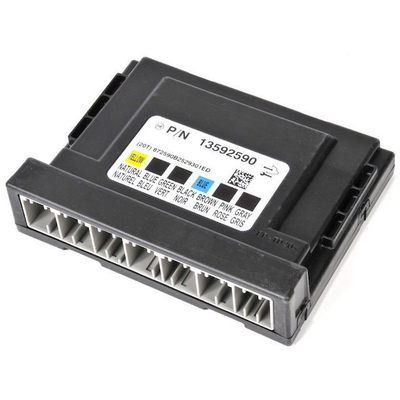
Shop the Parts Behind B1277
Below are the parts most often responsible for code B1277, ranked by how frequently each one is the actual culprit (per the diagnosis above). Tap any to see what we have for your vehicle.

The information in this article is provided for general reference and educational purposes only. Vehicle specifications, procedures, and part compatibility can vary by production date, trim level, and region. Always consult your vehicle's factory service manual and verify part numbers before purchasing or performing repairs. Safety-critical components such as airbags, seat belts, and braking systems should be installed by a qualified professional.
- 🧭 Diagnostic Flowchart
- 🎬 Helpful Videos
- 🛍️ Shop This Part
- What Does B1277 Mean?
- Can I Drive With B1277?
- Common Causes
- Symptoms
- Common Fixes & Costs
- Used vs. New Parts: Buying Guide
- What Happens If You Wait — Timeline
- Cost of Not Fixing It
- Diagnosis Steps
- When This Code Triggers (Freeze-Frame Conditions)
- Related Codes
- Climate & Environmental Factors
- How to Talk to a Mechanic About This Code
- Where to Take It: Dealer vs Independent vs Chain
- When to Walk Away From the Repair
- What Scan Tool You Need for This Code
- How to Clear the Code After You Fix It
- Will This Fail Emissions / State Inspection?
- Most Commonly Affected Vehicles
- Manufacturer-Specific Notes
- Real Owner Stories
- 2011 Ford F-350 with aftermarket reverse lights
- 2021 Honda CR-V with Auto Headlight issues
- 2002 GMC Sierra 2500 with 'No 4WD' problem
- 2015 Ford F-150 with no reverse lights after water intrusion
- How to Prevent This Code From Triggering
- Frequently Asked Questions
- Can I just replace a fuse for code B1277?
- I installed LED reverse lights, the code appeared, and now the old bulbs don't work either. What's wrong?
- Will disconnecting the battery clear the B1277 code?
- My mechanic wants to replace the BCM immediately. Should I agree?
- Why are my reverse lights out but my scan tool says the code is for an 'Ambient Air Temperature Sensor'?
- What is a BCM 'FET' and why does it matter?
- Can a bad BCM drain my battery?
- Key Takeaways
- 🎟️ Get 5% Off