

OBD-II Code B1289: Entertainment, Display & Body System Signal Fault
What B1289 means, why it triggers, and how to fix it for your specific vehicle
- Code B1289 has entirely different meanings across brands, so you must match your specific symptoms (dead radio, broken A/C, or stuck power seat) to your manufacturer before buying parts.
- On 2007-2014 GM trucks and SUVs, B1289 almost guarantees a shorted wire (Circuit 7066) under the headliner, which triggers a protective shutdown of the entire radio and display system.
- You can safely drive with a B1289 code, but GM owners will lose all audio functions, including turn signal clicks and critical safety warning chimes.
- Never replace a $500+ radio head unit on a GM vehicle without first testing the rear entertainment wiring harness for a short to ground, which costs under $25 to fix.
What Does B1289 Mean?
B1289 is a body control module (BCM) code indicating a communication failure or electrical short. Its meaning depends entirely on the manufacturer. Most commonly, it points to a well-known wiring short in the entertainment system of 2007-2014 GM trucks and SUVs that forces the radio and display screens to shut down. In other vehicles, it indicates a failed climate control air intake motor or a communication loss with the passenger power seat.
Technical definition: The formal definition for B1289 varies significantly by manufacturer. Always use a scanner that provides manufacturer-specific definitions for accurate diagnosis. * **General Motors (most common):** 'Video Display Brightness Control Signal Circuit' Fault (Open, Short to Ground, or Short to Power). The radio sets this code when it detects a fault on the wire (Circuit 7066) controlling the Rear Seat Entertainment (RSE) screen, shutting down the entire infotainment system as a protective measure. * **Lexus:** 'Passenger Seat ECU Communication Stop'. This indicates a communication failure between the passenger power seat control module and the main vehicle network gateway ECU. * **Generic SAE Definition:** 'Servo Motor Potentiometer Air Intake Right Circuit Open'. Many basic scanners use this definition, but it is incorrect for manufacturer-specific faults (especially GM), leading to expensive misdiagnosis. * **Ford:** Ford does not use the B1289 body code. It uses the powertrain code P1289 for 'Cylinder Head Temperature Sensor Circuit High', an unrelated engine issue. * **Nissan (Modified):** On vehicles with aftermarket ECUs (e.g., Haltech), the related code P1289 relates to the 'A/F Sensor 1 Lean to Rich Response Time', indicating a fueling issue, not a body fault.
Can I Drive With B1289?
Yes. The vehicle is mechanically safe to drive. This fault only affects body electronics like the radio, climate controls, or power seats. However, on GM vehicles, the loss of audio disables turn signal clicks and safety warning chimes, creating a potential distraction.
Common Causes
- Shorted or Broken Wire in Entertainment System Harness (Very Common) — On millions of 2007-2014 GM trucks and SUVs, the wire controlling the rear entertainment screen (Circuit 7066) rubs against a metal bracket under the headliner or behind the radio, causing a short to ground. This forces the main radio to shut down. GM covers this well-documented issue in Technical Service Bulletin #PIT4474E.
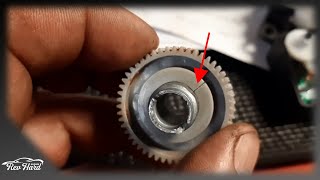
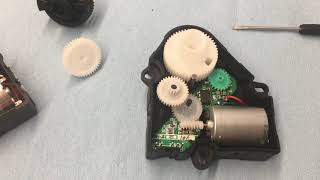
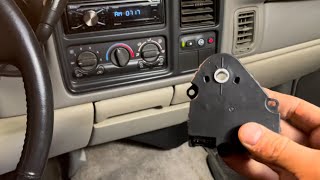
- Failed Climate Control Servo Motor / Actuator (Less Common) — When this code appears alongside incorrect air temperatures, a blinking A/C light, or improper airflow, the generic definition applies. The electric motor controlling an air intake or temperature blend door has failed, or its internal position sensor is malfunctioning. 🎬 Watch: How to repair a GM blend door actuator motor.
- Damaged Connectors or Poor Grounds (Less Common) — Loose, corroded, or broken ground wires and connectors for the radio, amplifier, or BCM cause unpredictable electrical drops. On GMT900 platforms, grounds like G301 (under passenger seat) or G303 (B-pillar) frequently loosen and trigger communication codes.
- Internal Radio or Head Unit Failure (Rare) — Occasionally, the fault lies inside the main radio head unit due to cracked solder joints on the circuit board from vibration and thermal cycles. This is a frequent misdiagnosis for the GM issue and should only be considered after proving the wiring harness is intact.
- Failed Passenger Seat Control ECU (Lexus) (Rare) — On Lexus models where B1289 means 'Passenger Seat ECU Communication Stop', the seat control module itself fails. This usually stems from internal component degradation, like leaking capacitors.
- Failed Body Control Module (BCM) (Very Rare) — The BCM rarely fails. Thoroughly diagnose all other possibilities, especially wiring and grounds, before condemning the module, which requires costly replacement and dealer programming.
Symptoms
- Blank or flashing radio/navigation screen — The center display screen goes completely black or flashes on and off before shutting down permanently.
- No sound from speakers, including chimes — When the radio shuts down, all audio stops. This disables music, Bluetooth, turn signal clicks, and safety warning chimes.
- Inoperative rear entertainment screen — The rear DVD player stops working because the fault lies in the wiring controlling this screen. It often defaults to full brightness before shutting off.
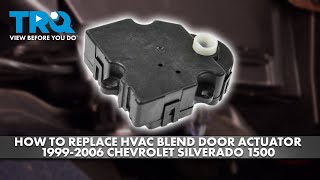
- Climate control system not working properly — If the fault relates to the HVAC system, the A/C light blinks, air temperature cannot be changed, or airflow comes from the wrong vents. 🎬 See this walkthrough for replacing Silverado heat and cool actuators.
- Passenger power seat is inoperative — On specific Lexus models, the passenger power seat cannot be adjusted due to lost communication with its control module.
Diagnostic Flowchart
Tap your situation to follow the diagnostic path that matches what you're seeing on this code.
Common Fixes & Costs
- Repair Entertainment System Wiring Harness (GM) — Parts: $5-$25, Labor: $200-$600, ~2.2 hr book time (Intermediate)
- Replace Climate Control Blend Door Actuator — Parts: $30-$150, Labor: $250-$500, ~2.5 hr book time (Professional)
- Replace Radio / Head Unit — Parts: $250-$1200, Labor: $100-$250, ~1.2 hr book time (Intermediate)
- Send Radio / Head Unit for Repair — Parts: $0, Labor: $250-$650, ~1.5 hr book time (Intermediate)
- Replace Passenger Seat Control ECU (Lexus) — Parts: $200-$800, Labor: $100-$200, ~1 hr book time (Intermediate)
Used vs. New Parts: Buying Guide
When a used part is worth it: A used OEM radio makes sense when the vehicle is older (10+ years), the budget is tight, and you can verify the used part is functional. It is a good option if the original unit has a confirmed internal, non-repairable failure.
Donor-vehicle mileage cap: roughly under 100000 miles for the part to have meaningful remaining life.
Donor quality checklist:
- Verify the part number exactly matches your original unit; options like navigation or Bose audio change the part number.
- Ask for the VIN of the donor vehicle to check compatibility and obtain the anti-theft code.
- Inspect photos for screen damage, scratches, or worn buttons.
- Prefer sellers offering a 30-90 day warranty.
Decision logic:
- If The known GM wiring short (Circuit 7066) has not been 100% ruled out → DO NOT buy any radio, new or used. Fix the wiring first.
- If The vehicle is less than 8 years old and the budget allows → Favor a new or remanufactured OEM unit for better reliability and warranty.
- If The issue is a common, repairable fault (like bad solder joints) → Send the original unit to a specialized electronics repair service, which is cheaper than replacement.
Warranty tradeoff: Used parts from salvage yards typically have a 30-90 day warranty. New OEM units purchased from and installed by a dealer carry the best warranty, often 12 months/12,000 miles.
Worst-case if a used part fails: $200-$400 if a used radio is faulty or requires dealer programming (theft-lock), adding labor fees on top of the part cost.
What Happens If You Wait — Timeline
- 0-1 month: For the GM wiring fault, the issue starts intermittently. The radio screen flashes or cuts out when going over a bump, then recovers. The B1289 code is stored. (MPG impact: 0%% · Added cost: $0)
- 1-3 months: The chafing on the wire worsens. The screen flashes for a few minutes upon startup before the radio's protective circuit shuts it down completely. All audio, including safety chimes, is lost. (MPG impact: 0%% · Added cost: $0)
- 3-6 months: The issue is a constant annoyance. The primary financial risk is misdiagnosis at this stage. (MPG impact: 0%% · Added cost: $500-$1500 (Cost of misdiagnosis if an owner replaces the radio instead of fixing the wire).)
- 6+ months: The electrical short itself will not cause further mechanical damage. The greatest cost is money wasted on an incorrect repair. (MPG impact: 0%% · Added cost: $1400-$2100+ (Total potential cost if the radio is replaced incorrectly AND the correct wiring repair is performed afterward).)
Cost of Not Fixing It
- Immediate: Loss of function for the radio, navigation screen, climate controls, or power seats. Loss of audible safety chimes and turn signal clicks on GM vehicles. (Added cost: 0)
- 0-6 months: Continued inconvenience. Potential for intermittent battery drain if the module does not fully shut down. (Added cost: 0-$200 (for battery replacement if drained))
- 6+ months: High likelihood of misdiagnosis. An owner frustrated with the issue replaces an expensive component like the head unit when the actual problem was a simple wiring repair. (Added cost: $500-$1500+)
Diagnosis Steps
- Scan for All Codes and Verify Symptoms
Use a professional OBD-II scanner capable of reading manufacturer-specific Body (B) codes. Confirm B1289 is present and note companion codes like B1265, B1288, or U0155. Match your symptoms (radio vs. climate vs. power seat) to the likely cause.
Tools: Professional OBD-II Scanner (Beginner) - Perform a Hard Reset (Power Cycle)
Disconnect the negative battery terminal for at least 30 minutes to force all electronic modules to reboot. On GM vehicles, if the radio works temporarily after reconnecting but fails again after a few minutes, it strongly confirms a persistent hardware short in Circuit 7066.
Tools: Wrench set (Beginner) - Visually Inspect the GM Wiring Harness
Carefully trace the wiring harness from the Rear Seat Entertainment (RSE) unit forward. Pay close attention to where it passes near metal roof braces under the headliner or behind the radio. Look for pinched, chafed, or exposed wires. The short frequently occurs near the passenger-side C-pillar.
Tools: Trim removal tools, flashlight (Intermediate) - [PRO TIP] Test the Specific GM Circuit at the RSE Connector
Lower the rear headliner to access the RSE video display connector. Disconnect it and turn the ignition ON. Use a multimeter set to Frequency (Hz) to probe Terminal 9 (Circuit 7066). A normal reading is a Pulse Width Modulated (PWM) signal between 100-300 Hz. An absent signal points to a wiring issue or faulty radio.
Tools: Multimeter (with Hz function), Trim removal tools, Vehicle-specific wiring diagram (Advanced) - [PRO TIP] Perform a Short-to-Ground Test on Circuit 7066
With the RSE connector and radio disconnected, set your multimeter to Resistance (Ω). Test for continuity between Terminal 9 on the harness side and a known good chassis ground. A reading under 5 ohms confirms a direct short to ground. An 'OL' reading indicates a broken wire.
Tools: Multimeter, Vehicle-specific wiring diagram (Advanced) - Inspect Climate Control Actuators
If symptoms point to an HVAC issue, locate the air intake and blend door actuators behind the passenger dashboard. With the vehicle running, change temperature settings. Listen for clicking or grinding noises, indicating a failing actuator with stripped internal gears.
Tools: Flashlight (Intermediate) - Diagnose Lexus Power Seat Fault
Check fuses for the power seat system. If intact, use a multimeter to check for 12V power and ground at the passenger seat control ECU connector under the seat. If power and ground are present, the communication line is broken or the seat ECU has failed.
Tools: Multimeter, Vehicle-specific wiring diagram (Intermediate) - Check Main Connectors and Ground Points
Disconnect and inspect the main connectors at the radio, BCM, and related modules. Look for corrosion or backed-out pins. On GM trucks, verify the tightness and cleanliness of ground points G301 and G303. Poor grounds cause floating voltages and trigger communication codes.
Tools: Socket set, trim removal tools (Intermediate) - [ADVANCED] Analyze Scan Tool Live Data PIDs
Using a bi-directional scan tool, access the BCM or Radio/HVAC module live data. For the GM fault, look for 'Circuit 7066 Status' reading 'Shorted to Ground'. For a climate fault, monitor 'Air Door Actuator Commanded Position' vs. 'Actual Position'. Discrepancies indicate a failing actuator.
Tools: Professional Bi-Directional Scan Tool (Advanced)
When This Code Triggers (Freeze-Frame Conditions)
- System Voltage: 11-14 Volts (Normal operating voltage; code sets during or after a low voltage event.)
- Ignition Status: RUN (The fault is detected when the vehicle is on and the relevant module is active.)
- Time Since Power-On: 2-5 minutes (For the GM short-circuit issue, the radio's protective mode engages a few minutes after starting the vehicle.)
- Module State: Active/Enabled (Code sets when the controlling module attempts to communicate with or command the faulty circuit.)
Related Codes
- B1288 — This code for the 'Video Display Mode Control Signal' is often stored alongside B1289 on GM vehicles. Their simultaneous appearance strongly confirms the single wiring short in Circuit 7066.
- B1265 — Also mentioned in GM TSB PIT4474E, this code relates to the entertainment system's power supply. Seeing B1265, B1288, and B1289 together is a definitive sign of the Circuit 7066 wiring issue.
- B1289 02 — This manufacturer-specific sub-code means 'Video Display Brightness Control Signal Short to Ground,' confirming the exact electrical nature of the GM wiring fault and ruling out an open circuit.
- U0155 — A generic communication code for 'Lost Communication With Instrument Panel Cluster'. It appears alongside B1289 on GM vehicles if the infotainment fault disrupts the low-speed GMLAN data bus.
Climate & Environmental Factors
- Humidity and Moisture: High humidity or water leaks accelerate corrosion on electrical connectors and ground points. Moisture wicks along wires, increasing resistance and causing intermittent open circuits or shorts.
- Extreme Temperature Cycles (Hot/Cold): Repeated expansion and contraction stress wiring and solder joints, leading to cracks. In cold weather, wire insulation becomes brittle and susceptible to cracking, exposing the conductor.
- Road Salt (Winter Climates): Salt spray infiltrates undercarriages and cabins, severely accelerating corrosion on exposed electrical components, ground straps, and module housings.
How to Talk to a Mechanic About This Code
Say this: "I have a 2012 GMC Yukon with a B1289 code and the radio screen is blank. I'd like to schedule a diagnostic, but please be aware of GM TSB PIT4474E. I want to authorize one hour of diagnostic time specifically to test for a short to ground on Circuit 7066 before any other parts are considered."
This signals you are an informed customer. It directs the technician to the most probable cause, prevents them from wasting time on incorrect diagnostic paths, and explicitly states that you do not authorize an expensive radio replacement without proof that the well-known wiring issue has been ruled out.
Avoid saying:
- 'My radio is broken, please fix it.' (Invites immediate, expensive replacement)
- 'The code is B1289, my scanner says it's an air intake motor.' (Spreads mis-information from a generic scanner)
- 'Just do whatever you think is best.' (Gives a blank check for unnecessary repairs)
Questions to ask before authorizing the repair:
- Did you find a short-to-ground on the remote enable circuit, as described in the TSB?
- Can you confirm you inspected the wiring harness under the headliner near the C-pillar and rear entertainment unit?
- What was the resistance reading between Terminal 9 of the RSE connector and chassis ground?
- If you are recommending a radio replacement, can you show me the test results proving the wiring harness is good?
Where to Take It: Dealer vs Independent vs Chain
- Dealer:
A safe, but expensive, bet. They will know about the TSB, but charge a premium for the fix. Best for owners who prioritize a guaranteed fix over minimum cost.
Best for: Vehicles still under any kind of warranty., Complex electrical issues where access to proprietary manufacturer software is required., When you want the highest probability the technician has seen the exact TSB before.
Downsides: Highest labor rate, typically 1.5-2x an independent shop., May be quick to recommend a full radio replacement if the wiring repair is deemed too time-consuming. (Typical cost: +50% vs. baseline) - Independent Shop:
Best fit, with a condition. Seek an independent shop with strong reviews for electrical or diagnostic work. They are most likely to perform the cost-effective wiring repair instead of a full component replacement.
Best for: Out-of-warranty vehicles where cost is a major factor., Shops that specialize in automotive electrical diagnosis., Building a long-term relationship with a trusted mechanic.
Downsides: A general-purpose shop may not be aware of this specific TSB and could misdiagnose the issue., Quality and expertise vary widely; vetting the shop's reputation for electrical work is crucial. (Typical cost: +0% vs. baseline) - Chain Shop:
AVOID for this repair. The risk of misdiagnosis and being sold an unnecessary, expensive head unit is extremely high.
Best for: Simple, routine maintenance like oil changes or tires.
Downsides: Technicians are least likely to have the specialized knowledge for this TSB-related issue., High pressure to sell parts leads to a quick, incorrect recommendation to replace the radio., Diagnostic skill is highly variable. (Typical cost: -10% vs. baseline)
When to Walk Away From the Repair
If the estimated repair cost exceeds 40-50% of the car's private-party value, you should pause and consider alternatives. However, since B1289 does not affect safety or driveability, the threshold is more about personal convenience vs. cost.
- Car worth $6000, fix is $450: Fix it. This is a very reasonable cost to restore a major function of the vehicle and is well below the threshold.
- Car worth $6000, fix is $1400: Get a second opinion. This quote likely involves replacing the head unit, which is probably a misdiagnosis. Seek another shop and mention TSB PIT4474E before authorizing.
- Car worth $3000, fix is $1400: Walk away. The repair cost is nearly 50% of the vehicle's value for a non-essential feature. This is not economically sensible.
What Scan Tool You Need for This Code
Minimum: A scanner that can read manufacturer-specific Body (B) codes for GM vehicles. A generic engine-only (P-code) reader will not see this code.
A cheap $20 scanner will not see Body codes. A slightly better scanner might read the B-code but provide the wrong generic definition ('Servo Motor'), leading you to diagnose the wrong part of the car. You need to see the manufacturer-specific definition to know if it's the GM radio issue, the Lexus seat issue, etc.
Budget: BlueDriver Pro Scan Tool (~$100) — Reads and clears manufacturer-specific Body (B) codes on GM vehicles, providing the correct definition. It connects via Bluetooth to a smartphone app and can view live data.
Mid-range: Foxwell NT510 Elite for GM (~$180) — Provides OE-level diagnostics for GM. It reads manufacturer-specific B-codes and their sub-codes (like B1289 02 for 'short to ground'). It offers bi-directional controls to test components, useful if diagnosing the HVAC-related version of this code.
Professional: Autel MaxiCOM MK808S (~$450) — A full-featured diagnostic tablet. It performs all functions of the midrange pick but with a faster processor, larger interface, and broader vehicle coverage. It graphs live data and has advanced active test capabilities, allowing direct module commands.
Rent vs buy: AutoZone's Loan-A-Tool program allows you to put down a deposit for a scanner, fully refunded upon return. Verify the loaner tool reads manufacturer-specific Body (B) codes. If you work on modern cars more than once a year, buying a tool like the BlueDriver is a worthwhile investment.
How to Clear the Code After You Fix It
- Use an OBD-II scan tool to clear the code.
- Perform a hard reset by disconnecting the negative battery terminal for 30 minutes.
- For HVAC actuator faults, perform a recalibration procedure via scan tool command or fuse pull.
Drive cycle (~15 minutes): Body codes do not require a complex drive cycle. After repair, clear the code with a scanner. Turn the vehicle on and operate the affected system (radio, climate controls) for several minutes to confirm the code does not return.
Watch out for:
- Clearing the code without fixing the underlying electrical short results in the code returning almost immediately.
- Disconnecting the battery clears the code but erases radio presets, trip data, and learned settings for other modules.
Will This Fail Emissions / State Inspection?
No — by itself this code doesn't fail OBD inspection (but it can keep readiness monitors from setting, which causes a separate fail).
- California: A B-code like B1289 will not cause a failure on a California Smog Check. The inspection primarily concerns Powertrain (P) codes affecting emissions.
- New York: B1289 is not part of the OBD-II emissions test and will not cause a failure unless accompanied by an illuminated Check Engine Light.
- Texas: The emissions inspection only checks for emissions-related P-codes and readiness monitor status. B1289 will not cause a failure.
Most Commonly Affected Vehicles
- Chevrolet Silverado (2007-2014) — Extremely common issue with the rear entertainment harness (Circuit 7066) shorting out, causing radio failure. Covered by TSB PIT4474E.
- GMC Sierra (2007-2014) — Shares the same platform and wiring flaw as the Silverado. The wire color for Circuit 7066 is often dark green, but may be white or pink.
- Chevrolet Tahoe (2007-2014) — The wiring for the rear DVD screen frequently chafes and shorts to ground. The wire is typically Dark Green at Terminal 9 of the RSE connector.
- GMC Yukon / Yukon Denali / Yukon XL (2007-2014) — Prone to the exact same Circuit 7066 wiring short under the headliner. On Denali models, the remote enable signal wire is often pink.
- Cadillac Escalade / ESV (2007-2014) — The entertainment remote enable signal wire (often pink) shorts to ground near the rear DVD unit or where the harness passes through the C-pillar.
- Chevrolet Suburban (2007-2014) — The long roofline provides more area for the harness to rub against a metal roof brace. The wire is often purple in Suburbans.
- Chevrolet Avalanche (2007-2013) — Shares the GMT900 platform flaw where the entertainment harness shorts out under the headliner, killing radio and audio functions.
- Lexus GS Series (e.g., GS350, GS450h) (2008-2011) — On these models, B1289 indicates a 'Passenger Seat ECU Communication Stop', meaning the passenger power seat is inoperative, completely unrelated to the radio.
Manufacturer-Specific Notes
- General Motors: For 2007-2014 trucks/SUVs, this code almost never means a bad radio. It is a well-known symptom of a shorted wire (Circuit 7066) in the harness running to the rear DVD screen, documented in TSB #PIT4474E.
- General Motors: There are no active recalls for the B1289 wiring issue. GM issued Technical Service Bulletin (TSB) #PIT4474E to guide technicians, but repairs are only covered if the vehicle is under warranty.
- Generic Definition: Basic code readers display a generic definition like 'Servo Motor Potentiometer Air Intake Right Circuit Open'. This is incorrect for the common GM fault and leads to significant misdiagnosis.
- Ford: Ford does not use B1289. It uses the powertrain code P1289 for a 'Cylinder Head Temperature Sensor Circuit High' fault, an entirely different engine-related problem.
- Lexus: On Lexus models like the GS, B1289 indicates a communication loss between the power seat control module and the vehicle's network, rendering the passenger seat inoperative.
Real Owner Stories
2012 GMC Yukon Denali at 130K miles
Radio screen started flashing, then went completely black. No sound at all, not even turn signal clicks. Code B1289 was present.
What they tried:
- Initially suspected a bad radio and got a quote for $1200 to replace it.
- Found TSB PIT4474E online and decided to check the wiring first.
- Disconnected the battery for 30 minutes; the radio worked for 2 minutes upon reconnecting, then died again, confirming a persistent short.
Outcome: Owner lowered the headliner near the rear DVD screen and found a pink wire (Circuit 7066) that had rubbed through its insulation against a metal bracket. Repaired the wire with a butt connector and heat shrink for less than $10. The radio and all functions were restored.
Lesson: On a 2007-2014 GM SUV/truck, a blank radio and B1289 code is almost always the wiring short described in TSB PIT4474E. Do not replace the radio until you inspect the harness under the headliner.
2008 Chevrolet Silverado at 155K miles
Radio and display were dead. A mechanic, trusting a generic code reader, diagnosed a faulty HVAC actuator based on the generic definition for B1289.
What they tried:
- Mechanic spent 3 hours trying to access and test dashboard actuators, finding no issues.
- Owner was charged for diagnostic time but the problem wasn't fixed.
- A second mechanic who specialized in GM vehicles immediately recognized the symptoms.
Outcome: The second mechanic diagnosed the known Circuit 7066 short in under 20 minutes. He found the chafed wire near the dome light. The wire was repaired, and the radio began working perfectly. The initial misdiagnosis cost the owner over $300 in wasted labor.
Lesson: A generic scanner's definition for B1289 is misleading for GM vehicles. A B1289 with a dead radio on a GM truck is a wiring problem until proven otherwise.
2009 Lexus GS350 at 110K miles
B1289 code was present, but the radio and climate control worked perfectly. The passenger power seat was completely inoperative.
What they tried:
- Owner checked all fuses related to the power seats, which were good.
- Accessed the passenger seat control ECU under the seat.
- Tested for power and ground at the ECU connector with a multimeter and confirmed both were present.
Outcome: With power and ground confirmed, the owner concluded the seat ECU itself had failed. They purchased a used ECU from a salvage yard for $150. After swapping the module, the power seat functioned correctly.
Lesson: The same code means completely different things on different brands. For Lexus, B1289 points to a power seat communication failure, not a radio or HVAC issue.
2011 Cadillac Escalade with no rear DVD
Radio went blank, setting codes B1289 and B1288. The owner was confused because his truck did not have the optional rear entertainment (RSE) system.
What they tried:
- A shop quoted him $1,500 for a new navigation head unit.
- Skeptical, the owner researched online and learned the wiring harness for the RSE is installed in all vehicles at the factory.
Outcome: The owner lowered the headliner where the RSE screen would have been and found the unused harness connector. The pink wire had rubbed against a roof support and shorted to ground. He cut and capped the damaged wire. The radio immediately started working. Total cost was $0.
Lesson: Even if your GM truck doesn't have the rear DVD screen, it still has the wiring for it. The unused harness shorts out and causes the exact same radio failure.
How to Prevent This Code From Triggering
- Inspect and Secure Wiring Harnesses (During any interior or headliner work) — The most common cause of B1289 on GM vehicles is a wiring harness rubbing against a sharp metal bracket. Visually inspect harnesses for proper routing and use anti-abrasion tape to protect contact points.
- Apply Dielectric Grease to Connectors (When connectors are disconnected for any repair) — Applying dielectric grease to the seals of electrical connectors prevents water intrusion and corrosion, stopping intermittent shorts and open circuits.
- Clean Battery Terminals and Ground Points (Every 12 months or with oil change) — Corrosion on battery terminals and chassis ground points creates unwanted resistance, leading to unstable voltage for sensitive electronic modules.
- Use Rodent-Repellent Tape on Wiring (If vehicle is parked outdoors or in a rural area) — Rodents chew through soy-based wire insulation. Wrapping critical harnesses with capsaicin-infused tape prevents them from causing shorts.
Frequently Asked Questions
Is it safe to keep driving with code B1289?
Yes, it is mechanically safe. The code relates to body electronics like the radio or power seats and does not affect the vehicle's engine, brakes, or safety systems. The main risk is driver distraction from a flashing screen or the loss of audible safety chimes on GM vehicles.
Why did my radio die if the code definition mentions a rear screen or climate control?
On many GM vehicles, the radio, navigation, and rear screen are linked. When the wire controlling the rear screen's brightness shorts out, the radio's software shuts everything down as a protective measure. This makes the radio appear dead, even though the unit itself is perfectly fine.
What are the most common mistakes when diagnosing B1289?
The single most common and expensive mistake is replacing the radio head unit on a GM vehicle without first inspecting the wiring harness for the known Circuit 7066 short. Another pitfall is trusting a generic scanner's definition of 'Air Intake Servo Motor' and attempting to repair the HVAC system when the symptoms clearly point to a radio failure.
My mechanic replaced the radio but the problem is still there. What now?
This is a classic sign of misdiagnosis. If a new radio did not fix the blank screen on your GM truck or SUV, the root cause is almost certainly the shorted wire in the harness (Circuit 7066) described in TSB PIT4474E. The wiring harness between the radio and the rear entertainment unit must be inspected for damage.
Can I just replace a fuse to fix this?
No, this code indicates a circuit fault like a short to ground or an open wire, not a simple over-current situation. While you should always check relevant fuses, a blown fuse is merely a symptom, not the root cause. The underlying wiring short or component failure must be found and repaired.
My truck doesn't have a rear DVD screen. Can I still have the common wiring problem?
Yes. The main wiring harness is installed at the factory and includes the wiring for the rear screen, even if the screen option was not purchased. The unused wire still rubs against a metal bracket, shorts out, and causes the exact same radio failure.
Why does my cheap scanner say it's an 'Air Intake' problem?
Basic scanners provide a generic SAE definition for a code, which is often not what the manufacturer actually uses it for. B1289 is a prime example where the manufacturer-specific meaning is completely different from the generic one, leading to incorrect repairs.
How much does it cost to fix code B1289?
The cost varies wildly based on the cause. A DIY GM wiring repair costs under $25, while a shop charges $200-$600 for the labor to find and fix the short. Replacing a failed blend door actuator costs $280-$650, and replacing a head unit often exceeds $1000.
Key Takeaways
- Code B1289 has entirely different meanings across brands, so you must match your specific symptoms (dead radio, broken A/C, or stuck power seat) to your manufacturer before buying parts.
- On 2007-2014 GM trucks and SUVs, B1289 almost guarantees a shorted wire (Circuit 7066) under the headliner, which triggers a protective shutdown of the entire radio and display system.
- You can safely drive with a B1289 code, but GM owners will lose all audio functions, including turn signal clicks and critical safety warning chimes.
- Never replace a $500+ radio head unit on a GM vehicle without first testing the rear entertainment wiring harness for a short to ground, which costs under $25 to fix.
Helpful Videos
Shop the Parts Behind B1289
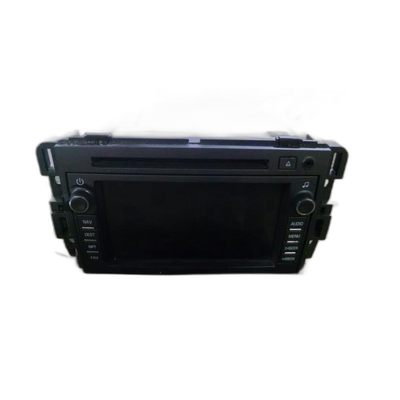
Below are the parts most often responsible for code B1289, ranked by how frequently each one is the actual culprit (per the diagnosis above). Tap any to see what we have for your vehicle.


The information in this article is provided for general reference and educational purposes only. Vehicle specifications, procedures, and part compatibility can vary by production date, trim level, and region. Always consult your vehicle's factory service manual and verify part numbers before purchasing or performing repairs. Safety-critical components such as airbags, seat belts, and braking systems should be installed by a qualified professional.
- 🧭 Diagnostic Flowchart
- 🎬 Helpful Videos
- 🛍️ Shop This Part
- What Does B1289 Mean?
- Can I Drive With B1289?
- Common Causes
- Symptoms
- Common Fixes & Costs
- Used vs. New Parts: Buying Guide
- What Happens If You Wait — Timeline
- Cost of Not Fixing It
- Diagnosis Steps
- When This Code Triggers (Freeze-Frame Conditions)
- Related Codes
- Climate & Environmental Factors
- How to Talk to a Mechanic About This Code
- Where to Take It: Dealer vs Independent vs Chain
- When to Walk Away From the Repair
- What Scan Tool You Need for This Code
- How to Clear the Code After You Fix It
- Will This Fail Emissions / State Inspection?
- Most Commonly Affected Vehicles
- Manufacturer-Specific Notes
- Real Owner Stories
- 2012 GMC Yukon Denali at 130K miles
- 2008 Chevrolet Silverado at 155K miles
- 2009 Lexus GS350 at 110K miles
- 2011 Cadillac Escalade with no rear DVD
- How to Prevent This Code From Triggering
- Frequently Asked Questions
- Is it safe to keep driving with code B1289?
- Why did my radio die if the code definition mentions a rear screen or climate control?
- What are the most common mistakes when diagnosing B1289?
- My mechanic replaced the radio but the problem is still there. What now?
- Can I just replace a fuse to fix this?
- My truck doesn't have a rear DVD screen. Can I still have the common wiring problem?
- Why does my cheap scanner say it's an 'Air Intake' problem?
- How much does it cost to fix code B1289?
- Key Takeaways
- 🎟️ Get 5% Off