

B1292 on 2013-2020 Ram 1500: Park Assist Sensor 5 Failure Explained and Solved
Code B1292 on a Ram 1500 points to a fault with Park Assist Sensor 5, the second sensor from the passenger side on the front bumper. The most common cause is a dirty, obstructed, or damaged sensor. Start by thoroughly cleaning the sensor face. If the code persists, the sensor itself has likely failed. A common and effective DIY diagnostic is to swap Sensor 5 with an adjacent one (like #6); if the code follows the sensor, replacement is needed. This is a straightforward job for most owners.
- B1292 on your Ram 1500 means there's a problem with the front park assist sensor that is second from the right (Sensor #5).
- Always start by thoroughly cleaning the sensor face before attempting any repairs.
- The most reliable way to confirm a bad sensor is to swap it with a neighboring sensor and see if the fault code follows the sensor.
- Replacing a single sensor is a simple, DIY-friendly task that usually requires no tools other than a small flathead screwdriver or trim tool.
- For 2019-2020 models, if the sensor is clean and tests good, a software update from the dealer might be required to fix the problem.
What's Unique About the 2013-2020 Ram 1500

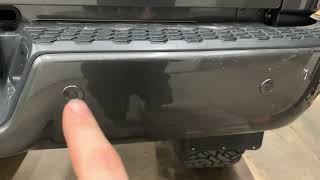
For Ram trucks, the ParkSense® system's reliability is a frequent topic of discussion among owners. The sensors, located in the bumpers, are 🎬 Watch: See exactly where each sensor is located on your Ram. highly exposed to dirt, moisture, road salt, and minor impacts, which can lead to premature failure. Ram has issued multiple Technical Service Bulletins (TSBs) acknowledging that these sensor codes can be set erroneously or due to simple obstructions, highlighting the sensitivity of the system. Forum discussions often reveal frustration with both OEM and aftermarket sensor longevity, with some owners replacing multiple sensors over the vehicle's life.
Diagnostic Flowchart

Tap your situation to follow the diagnostic path that matches what you're seeing on this vehicle.
Generation note: This range covers two Ram 1500 generations: the Fourth Generation (2013-2018, 'DS') and the start of the Fifth Generation (2019-2020, 'DT'). While the B1292 code's meaning is the same for both, the specific part numbers for the sensors and their locations in the bumper may differ. The diagnostic process, including the sensor numbering scheme (front 1-6, driver to passenger), remains consistent across generations.
Symptoms You May Notice

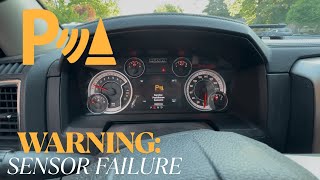
- "Service Park Assist" or "ParkSense Unavailable" message in the instrument cluster.
- The park assist system will not activate when in reverse or at low speeds.
- No audible beeping or visual display from the parking sensors.
- The park assist system may activate erratically before failing completely.
- A persistent chime upon starting the vehicle or shifting into reverse.
- Replacing the Park Assist Module first. The module is rarely the point of failure for a single sensor code; the issue is almost always with the sensor or its wiring.
- Using cheap aftermarket sensors. Forum members on EcoDieselRam.com and RamForum.com have reported that some non-OEM sensors do not communicate correctly with the PAM, causing persistent or new codes even after replacement. Sticking with OEM Mopar or reputable brands like Bosch is recommended.
Most Likely Causes

- Obstructed or Dirty Sensor 🔴 High Probability The sensors are located in the bumpers and are easily covered by mud, snow, ice, or even heavy road grime, which can disrupt the ultrasonic waves. TSB #9003059 explicitly lists this as the first check.
How to confirm: Visually inspect the face of sensor #5. If it is covered in any debris, clean it thoroughly with a soft cloth and water. Even a car wash spray can sometimes temporarily cause the issue.
Typical fix: Clean the sensor. If the code was caused by the obstruction, it should clear after a few drive cycles or can be cleared with a scan tool. Some owners report needing to cycle the ignition several times.
Est. part cost: $0 - Failed Park Assist Sensor 🔴 High Probability → Shop Collision Avoidance Sensor Exposure to weather, road salt, and vibrations can cause the internal electronics of the sensor to fail over time. Forum users frequently report sensor failures, sometimes multiple sensors at once.
How to confirm: A common diagnostic technique is to swap sensor #5 with an adjacent sensor (e.g., sensor #4 or #6). Clear the codes and drive the vehicle. If the code changes to B1291 (sensor 4) or B1293 (sensor 6), the sensor is confirmed to be faulty. Another method is to put the truck in reverse (with the engine on and parking brake set) and listen closely to each sensor; a healthy sensor will emit a faint clicking or ticking sound.
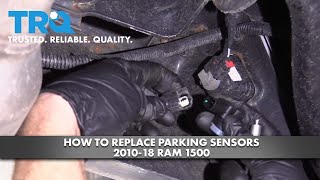
Typical fix: Replace the faulty park assist sensor. This is often a plug-and-play repair accessible from behind the bumper or by removing the fender liner.
Est. part cost: $25-$150 - Damaged Wiring or Connector 🟡 Medium Probability The wiring harness is routed along the bumper and chassis, making it vulnerable to damage from road debris, moisture intrusion, and corrosion, especially at the connector itself. FCA has also noted that a loose connection at the sensor is a known cause for performance codes like B1292-92.
How to confirm: Unplug the connector at sensor #5 and inspect it for corrosion (green or white powder), bent pins, or moisture. Trace the wiring harness back from the sensor, looking for any signs of chafing, breaks, or pinch points, particularly where it's secured to the frame.
Typical fix: Repair the damaged section of wire or clean the connector terminals. If the connector is badly corroded, a replacement pigtail may be needed. Applying dielectric grease during reassembly can help prevent future moisture intrusion.
Est. part cost: $10-$50 - Park Assist Module (PAM) Software Issue ⚪ Low Probability → Shop Collision Avoidance Sensor TSB 08-082-20 notes that on 2019-2020 models, these codes can be set erroneously. Symptoms can also include false detections or braking when no object is present. The TSB provides a software update to correct this sensitivity.
How to confirm: This must be confirmed by a dealership or a shop with access to FCA's wiTECH software to check the current software version of the PAM against the latest version specified in the TSB.
Typical fix: Reprogram the Park Assist Module with the latest software. This is a dealer-level fix.
Est. part cost: $0 if under warranty, otherwise dealer labor rates apply (typically 1-1.5 hours, ~$150-$250).
Rare But Worth Checking
- Failed Park Assist Module (PAM): → Shop Collision Avoidance Sensor While possible, it is rare for the module itself to fail. This should only be considered after all sensors and wiring have been thoroughly checked and confirmed to be good. A failure of the module typically results in codes for multiple sensors, not just one, or a total loss of communication.
- Aftermarket Bumper Interference: Installing an aftermarket bumper, especially with a grille guard or push bar, can cause the sensors to constantly detect an obstruction, leading to codes like B128F and B1292. This is a fitment issue, not a component failure.
Diagnosis Steps
- Identify Sensor #5: On Ram trucks, the front sensors are numbered 1-6 from the driver's side to the passenger's side. Sensor #5 is the second sensor from the right (passenger side) on the front bumper.
- Visual Inspection: Thoroughly inspect and clean the face of sensor #5. Remove any dirt, mud, snow, or ice.
- Clear Codes: Use an OBD-II scanner capable of reading Body (B) codes to clear the fault. See if B1292 returns immediately or after a short drive.
- Listen for Clicks: With the ignition on and the truck in reverse (parking brake firmly set), place your ear close to each front sensor. A healthy sensor should emit a faint, rapid clicking or ticking sound. If sensor #5 is silent while others are clicking, it has likely failed.
- Sensor Swap Diagnosis: The most effective DIY step. Swap sensor #5 with sensor #6 (the outermost passenger side sensor). This is done by reaching behind the bumper, releasing the clips, and unplugging the sensor. Clear the codes. If the code changes to B1293 (for sensor #6), you have confirmed that the sensor itself is bad. If code B1292 returns, the problem is in the wiring to that specific location.
- Inspect Wiring: If the code remains with the location after a sensor swap, unplug the connector for sensor #5 and inspect the terminals for corrosion, moisture, or bent/pushed-out pins. Follow the wiring harness as far as possible, looking for any visible damage.
- Check for Software Updates (2019-2020 models): If you have a newer DT model, be aware of TSB 08-082-20, which indicates a software flash may resolve erroneously set sensor codes. This may require a dealer visit.
Parts You'll Likely Need
- Park Assist Sensor
(OEM #1EW63TZZAA (4th Gen, 2013-2018), 5YV68TZZAA (5th Gen, 2019-2020))— This is the most common point of failure for code B1292 after ruling out obstructions. Note that these part numbers supersede many previous versions. The 4th gen sensor often comes unpainted ('Paint As Required').
Trusted brands: Mopar, Bosch (often the OEM supplier), Dorman, Standard Motor Products (SMP)
OEM price range: $50-$150
Aftermarket price range: $25-$80 - Park Assist Sensor Connector Pigtail
(OEM #805-121-521 (Aftermarket example))— If the wiring connector at the sensor is corroded or damaged beyond cleaning, a replacement pigtail will be needed to splice into the harness.
Trusted brands: Mopar, Dorman, MATAUTOS
OEM price range: $20-$40
Aftermarket price range: $10-$25
Related Codes That Often Appear With This One
- B128F — This code is for PTS Sensor 2. It's common to see multiple sensor codes if there is a widespread wiring issue, after installing an aftermarket bumper that interferes with sensor operation, or if multiple sensors fail due to age.
- B1290, B1291, B1293, etc. — These are codes for other parking sensors (3, 4, 6, etc.). Seeing them together with B1292 could point to a common power, ground, or communication line issue, a problem with the Park Assist Module, or simply multiple sensors failing around the same time.
Technical Service Bulletins (TSBs) & Recalls
- 08-242-25: Lists B1292-25 as PTS Sensor 5-Signal Shape/Waveform Failure.
- 9003059: Recommends cleaning sensors for B1292-25 and other related codes.
- 08-071-14: Defines B1292-25 as PTS SENSOR 5 - Signal Shape / Waveform Failure.
- 08-082-20: Notes that B1292-25 may be set erroneously on 2019-2020 models and can be resolved with a PAM software update.
- S2208000107: An internal FCA case noting that loose sensor connectors can cause performance-related DTCs including B1292-92.
Platform-Specific Known Issues
- TSB #9003059 explicitly
Mechanic-Grade Diagnostic Values
- Park Assist Sensor Signal Circuit Voltage — expected: Below 10.0 Volts. Failure: A reading above 10.0 Volts indicates a short to battery.
- Park Assist Sensor Ground Circuit Resistance — expected: Below 5.0 Ohms. Failure: A reading above 5.0 Ohms indicates an open or high resistance in the ground circuit.
- Park Assist Sensor Signal Circuit Resistance to Ground — expected: Above 10k Ohms. Failure: Resistance below 10k Ohms suggests a short to ground in the signal circuit.
Hidden / Shadow Codes Worth Checking
- B1292-25: The '-25' subtype specifies a 'Signal Shape / Waveform Failure'. The diagnostic condition for setting this code is the 'Data line stuck at 0', meaning the module is not receiving a valid, changing signal from the sensor. (see via A professional-level scan tool like FCA's wiTECH or a high-end aftermarket scanner capable of reading manufacturer-specific body codes and their subtypes.)
Scan Tool Commands That Help
- wiTECH: Reprogram PAM (Park Assist Module) — Used to apply software updates issued by the manufacturer via TSBs to fix bugs, such as erroneously set sensor codes or false alerts, particularly on 2019+ models.
- wiTECH (or similar): ECU View / Vehicle Topology — To verify that all required modules, like the Body Control Module (BCM), are active on the CAN bus before diagnosing the Park Assist Module. A communication loss with the BCM can cause faults in the park assist system.
Wiring & Ground Locations
- Park Assist Module (PAM) — On many Ram 1500s, the module is located in the headliner, above the rear window. This makes access for testing or replacement difficult and often requires removing the headliner.. Knowing the module's location helps in assessing the labor involved if diagnosis points to a module or module-side wiring issue. Its difficult access makes it a last-check item.
- Bumper Harness Main Connector — The main connector for the rear bumper harness is typically located between the frame rails at the rear of the truck.. This is a key point to check for corrosion or damage if multiple sensors on one bumper are malfunctioning. While B1292 is a front sensor, a similar connector exists for the front, usually near the radiator support.
- Frame Ground — A common body/frame ground point is located on the driver's side frame rail in the wheel well area, forward of the upper control arm.. A poor ground at this location can cause intermittent electrical issues for various front-end components, including the park assist system. It should be checked for corrosion and tightness when chasing electrical faults.
Real Owner Repair Stories
- Fetch A Wrench on YouTube (2021 Ram (demonstrates a common issue)) — Multiple rear park assist sensor codes (B1295-11, B1296-11, etc.) and 'Service Park Assist' message.
❌ Tried (didn't work) Swapping known-good sensors into the faulting positions. The codes remained for the same positions (8 & 9), proving the sensors themselves were not the issue.
✅ What actually fixed it A visual inspection of the bumper wiring harness revealed a pinch point where the harness was secured to the bumper. One wire was completely broken and another was pinched. Splicing and repairing the broken wire resolved all fault codes.
"I Checked Everything" — The Actual Cause
- In cases where multiple sensor codes are present (e.g., B1295, B1296, B1297, B1298 all at once), a common misdiagnosis is to replace the Park Assist Module, as it seems unlikely all sensors failed simultaneously. However, technicians have found that the actual cause was a single broken wire in the bumper harness that supplied power or ground to all sensors. One technician found multiple rear sensor codes were caused by a single broken wire in the harness, which was only found after a module replacement did not fix the issue.
When the Usual Fixes Don't Work
- While the 'Common Misdiagnoses' section advises against using cheap aftermarket sensors, there are numerous owner accounts of successfully resolving park assist issues using inexpensive sensor kits. One owner of a 2011 Ram reported fixing the 'Service Park Assist' message by replacing all four rear sensors with a set that cost $35 from Amazon. The system returned to full functionality immediately after replacement, suggesting that for some owners, the cost savings may outweigh the potential risk of incompatibility.
OEM Part Supersession History
Multiple (e.g., 1EW63DX8AA, 1EW63FFBAA, 1EW63FHGAA)→1EW63TZZAA— Standard part consolidation and revision over many model years and vehicle lines.
Heads up: This part number is primarily for the 4th Generation (DS) Ram. While it may fit other Chrysler vehicles, the 5th Generation (DT) Ram 1500 uses a different sensor (e.g., 5YV68TZZAA). Using the wrong generation sensor will result in a no-communication fault.
Model Year Variations Within This Range
- 2019: TSB 08-047-19 was issued for 2019 (DT) models built on or before April 11, 2019. It addresses erroneously set sensor codes, including B1292-25. The fix is a software update to the Parktronic System (PTS) Module, indicating an early production software sensitivity.
Helpful Videos
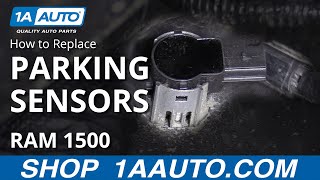
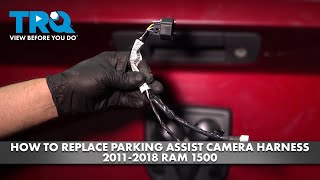

The information in this article is provided for general reference and educational purposes only. Vehicle specifications, procedures, and part compatibility can vary by production date, trim level, and region. Always consult your vehicle's factory service manual and verify part numbers before purchasing or performing repairs. Safety-critical components such as airbags, seat belts, and braking systems should be installed by a qualified professional.
- Ram 1500:
- 🧭 Diagnostic Flowchart
- 🎬 Helpful Videos
- What's Unique About the 2013-2020 Ram 1500
- Symptoms You May Notice
- Most Likely Causes
- Rare But Worth Checking
- Diagnosis Steps
- Parts You'll Likely Need
- Related Codes That Often Appear With This One
- Technical Service Bulletins (TSBs) & Recalls
- Platform-Specific Known Issues
- Mechanic-Grade Diagnostic Values
- Hidden / Shadow Codes Worth Checking
- Scan Tool Commands That Help
- Wiring & Ground Locations
- Real Owner Repair Stories
- "I Checked Everything" — The Actual Cause
- When the Usual Fixes Don't Work
- OEM Part Supersession History
- Model Year Variations Within This Range
- 🎟️ Get 5% Off