

B1294 on 2014-2017 Ram 2500: Park Assist Sensor #9 Fault Causes and Fixes
Code B1294 on a 2014-2017 Ram 2500 means a short-to-ground in the inner passenger-side rear park assist sensor circuit (#9). The most common cause is a damaged or corroded wiring harness behind the rear bumper, not a bad sensor. Inspect the harness and the large gray connector (XY630A) behind the driver's side wheel well before buying parts.
- B1294 specifically identifies a short-to-ground fault with the inner rear parking sensor on the passenger side (#9).
- Always inspect the wiring harness behind the rear bumper and the XY630A connector (behind driver's rear wheel) for damage or corrosion before buying any parts.
- The most effective and cheapest diagnostic step is to swap the suspected sensor with a neighboring one to see if the fault code follows the sensor.
- After any repair, the trouble code must be cleared with a scanner before the park assist system will function again.
What's Unique About the 2014-2017 Ram 2500
On fourth-generation Ram trucks, the rear bumper wiring harness is notoriously exposed to road spray, debris, and physical damage. Its routing makes it susceptible to getting pinched or chafed against the frame or bumper brackets, particularly near the spare tire. This design flaw is why wiring issues are a far more common cause for park assist codes like B1294 than actual sensor failure.
Diagnostic Flowchart
Tap your situation to follow the diagnostic path that matches what you're seeing on this vehicle.
Symptoms You May Notice
- "Service Park Assist System" message appears on the instrument cluster.
- The park assist system is disabled and will not detect obstacles.
- A single, continuous beep may sound when placing the vehicle in reverse, followed by the service message.
- The park assist button light may flash or stay illuminated, indicating the system is off or has a fault.
- In some cases, the rearview camera may also be inactive if the fault lies within a shared harness or module.
- Replacing the park assist sensor before thoroughly inspecting the wiring harness. The fault is most often in the wiring, and a new sensor will not fix the problem. Many owners report replacing sensors only to have the code return immediately.
Most Likely Causes
- Damaged or Corroded Rear Bumper Wiring Harness 🔴 High Probability → Shop Body Wiring Harness The harness is routed behind the rear bumper, where it is exposed to moisture, road salt, and debris. It is also commonly pinched or chafed against the frame, bumper brackets, or near the spare tire.
How to confirm: Visually inspect the entire length of the wiring harness behind the rear bumper. Look for breaks in the insulation, green or white corrosion, or areas where the harness has been crushed. A YouTube video by 'Troubleshooting the Rear Park Assist in Your 2021 RAM' shows a user finding three broken wires inside the harness loom at a pinch point, which fixed the issue after splicing.
Typical fix: Repair the damaged section of wire by splicing, soldering, and heat-shrinking the affected area. In cases of widespread corrosion or damage, the entire rear bumper harness may need to be replaced.
Est. part cost: $10-$150 - Corrosion in Connector XY630A 🟡 Medium Probability This large, 24-way gray connector is located behind the rear left wheel liner and serves as a major junction for the rear bumper electronics. Its location makes it prone to water intrusion, which is specifically called out in FCA STAR Case S2108000060.
How to confirm: Disconnect the XY630A connector and inspect the pins and terminals for any signs of green or white corrosion, moisture, or pushed-out pins. The STAR case suggests performing a slight pull test on the wires to check for loose terminals.
Typical fix: Clean the connector terminals with an electrical contact cleaner and apply dielectric grease. If corrosion is severe, the affected terminals or the entire connector may need to be replaced using a pigtail or a Mopar connector repair kit (68353351AA).
Est. part cost: $20-$60 - Failed Park Assist Sensor (#9) ⚪ Low Probability → Shop Collision Avoidance Sensor While less common than wiring issues, the sensors themselves can fail internally from age, moisture intrusion, or physical impact.
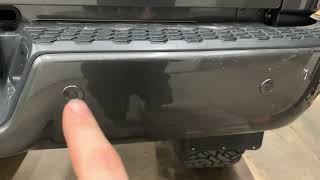
How to confirm: With the ignition on and the truck in reverse, perform a 'listen and touch test.' A healthy sensor will emit a faint clicking or buzzing sound you can hear and feel. If the sensor is silent, swap sensor #9 (inner passenger side) with an adjacent sensor, like #8 (outer 🎬 See this guide to identify each sensor's location passenger side). Clear the codes and put the truck in reverse. If the code changes to B1293 (for sensor #8), the sensor is faulty. If code B1294 returns, the problem is in the wiring.
Typical fix: Replace the faulty park assist sensor. The new sensor will need to be painted to match the bumper color.
Est. part cost: $30-$80
Rare But Worth Checking
- Failed Park Assist Module (PAM): → Shop Collision Avoidance Sensor This is extremely rare. The module is located in a protected area of the cabin (often above the headliner) and should only be considered after all wiring and sensor possibilities have been exhaustively ruled out.
Diagnosis Steps
- Read the trouble codes with an OBD-II scanner capable of reading body codes to confirm B1294-11 is present. Note if other park assist codes are also stored.
- Visually inspect the park assist sensors on the rear bumper for obvious damage, or for being covered in mud, ice, or dirt. Clean them thoroughly.
- With the ignition on and truck in reverse, perform a 'Listen and Touch Test' on each sensor. A healthy sensor will make a faint clicking/buzzing noise. A silent sensor is suspect.
- Get under the rear of the truck and perform a detailed visual inspection of the entire wiring harness that runs along the inside of the bumper. Pay close attention to pinch points near the frame and spare tire area.
- Locate the gray 24-way connector XY630A behind the rear driver's side wheel liner. Disconnect it and carefully inspect for corrosion, moisture, or damaged pins.
- If no wiring damage is obvious, perform a sensor swap test. Exchange sensor #9 (inner passenger side) with sensor #8 (outer passenger side).
- Clear all DTCs using the scanner. Start the truck and place it in reverse to activate the system.
- Re-read the codes. If the code is now B1293, the sensor you moved is bad and needs replacement. If the code is still B1294, the fault lies in the wiring to the #9 sensor location.
- If the wiring is confirmed to be the issue, use a multimeter to test the signal wire for a short to ground.
Parts You'll Likely Need
- Rear Bumper Park Assist Wiring Harness
(OEM #68197872AB (Verify with VIN, may vary based on options like Blind Spot Monitoring))— This is the most common failure point due to its exposed location, leading to corrosion or physical damage.
Trusted brands: Mopar, Dorman
OEM price range: $100-$150
Aftermarket price range: $50-$90 - Park Assist Sensor
(OEM #1EW63TZZAA (Verify with VIN))— Replaced if a sensor swap test confirms it is the faulty component. Note that 🎬 Watch: Step-by-step walkthrough for replacing a faulty sensor new sensors come unpainted.
Trusted brands: Mopar, Standard Motor Products, Bosch
OEM price range: $60-$100
Aftermarket price range: $30-$80 - Connector Repair Kit
(OEM #68353351AA)— Used to repair corrosion or damage specifically at the XY630A connector, as identified in FCA STAR Case S2108000060.
Trusted brands: Mopar
OEM price range: $25-$50
Aftermarket price range: $15-$30
Related Codes That Often Appear With This One
- B1293 — This code is for the adjacent sensor (#8). Seeing multiple sensor codes together (e.g., B1293, B1294, B1295) strongly suggests a problem with the main wiring harness or a connector, rather than multiple individual sensor failures.
- B1295 — This code is for the adjacent sensor (#10). Seeing multiple sensor codes together points to a common failure point like the wiring harness or a shared power/ground circuit.
Technical Service Bulletins (TSBs) & Recalls
- 9003059: Confirms B1294-11 is a 'Short to Ground fault' and instructs technicians to check the wiring behind the sensor, ensuring the connector is fully seated and free of dirt or corrosion.
- S2108000060 (STAR Case): Addresses the 'Service Park Assist Message' with DTC B1294-11, pointing to the XY630A connector as a primary inspection point and providing a repair kit part number (68353351AA).
Platform-Specific Known Issues
- A STAR Case (S2108000060) was issued by FCA to address the 'Service Park Assist Message' linked to codes like B1294-11. It specifically directs technicians to "Inspect inline gray 24-way connector XY630A, located behind the rear left wheel liner...Perform a slight pull test to validate any loose terminals...Disconnect and inspect all terminals for any signs of corrosion, clean and secure to complete."
Mechanic-Grade Diagnostic Values
- Park Assist Sensor Supply Voltage — expected: ~8.5 Volts. Failure: Significantly lower or no voltage indicates an issue with the supply circuit (X700) from the PAM.
- Sensor Signal Circuit to Ground Resistance — expected: Above 10k Ohms. Failure: Resistance below 10k Ohms confirms a short to ground in the signal circuit, which is the specific fault for a B1294-11 code.
- OEM Park Assist Sensor Internal Resistance — expected: ~141 Ohms and ~51 Ohms. Failure: Readings that are wildly different may indicate an internally failed sensor.
Hidden / Shadow Codes Worth Checking
- Set Condition: Sensor ring down time too short: This is not a separate code but the internal logic the Park Assist Module uses to set the B1294-11 fault. It triggers when the sensor's ultrasonic pulse dissipates in under 700 microseconds, indicating a short circuit. (see via This is an engineering parameter, not typically visible on standard scan tools, but it is the root cause for the DTC being set.)
Scan Tool Commands That Help
- wiTECH: Read/Erase DTCs — Must be used to clear codes after a physical repair. The 'Service Park Assist' message may not disappear on its own even if the fault is corrected.
- wiTECH: BODY VERIFICATION TEST — This is the recommended procedure to run after performing a repair, such as replacing a sensor or fixing a wire, to confirm the system is functioning correctly.
- wiTECH: Reprogram the PAM — Used to update the Park Assist Module software. This is specified in service bulletins to fix various system availability or performance issues, though not typically for a hard short-to-ground fault.
- wiTECH: RESTORE VEHICLE CONFIGURATION — This function is used to reconfigure the Body Control Module (BCM) if the Park Assist system is intentionally disabled by disconnecting the PAM, for example, after removing the rear bumper for a flatbed installation.
Wiring & Ground Locations
- Park Assist Module (PAM) — Located behind the driver's side kick panel, on the left cowl side inner panel.. This is the control unit for the system. Technicians may need to access its connectors to perform resistance and voltage tests on the sensor circuits directly at the module.
- XY630A — A large, gray 24-way connector located behind the driver's side rear wheel liner, often clipped to a frame bracket.. This is the main junction for the entire rear bumper harness. It is a well-documented failure point for corrosion and pushed-out pins, causing codes like B1294.
- D703 — This is the circuit identifier for the Park Assist Sensor #9 Signal wire. It runs from the PAM to the sensor connector.. When diagnosing B1294-11, this is the specific wire that must be tested for a short to ground between the PAM and the sensor.
- X700 / X750 — These are circuit designators for the Park Assist Sensor Supply (X700) and Ground (X750) circuits shared by the rear sensors.. A fault in either of these shared circuits could cause multiple sensor codes to appear simultaneously. Testing for proper voltage (X700) and ground continuity (X750) is a key diagnostic step.
Real Owner Repair Stories
- RamForum.com user post (2015 Ram 2500 Laramie) — Incorrect sensor readings (showing an obstacle) whenever it rained.
❌ Tried (didn't work) Initially just reconnecting the sensors did not solve the problem.
✅ What actually fixed it The user found a pinched harness and bent pins on one sensor connector. After repairing the physical damage, the system still did not work. The final fix required using an OBD-II scan tool to manually clear the stored DTC (B1297-11 in his case). The system then began working correctly. - Carly Community user post (2015 Ram 2500 Diesel) — Complete park assist system failure, including ultrasonic sensors and the rearview camera.
❌ Tried (didn't work) The post implies that simply replacing sensors would not have worked.
✅ What actually fixed it The cause was a corroded main wiring harness connection to the control module. The fix required removing the rear bumper to replace the harness with an updated, better-weatherproofed version. The user also noted that specialized diagnostic equipment was needed to reset and calibrate the system after the repair.
When the Usual Fixes Don't Work
- While wiring is the most common cause, it is not the only cause. A documented case showed that after a module replacement failed to fix multiple sensor codes, the actual cause was the simultaneous failure of all four individual sensors.
- The park assist system may not automatically become active once a physical fault (like a broken wire) is repaired. In some cases, the stored Diagnostic Trouble Code (DTC) must be manually cleared with a capable scan tool before the 'Service Park Assist' message will turn off and the system will function again.
Helpful Videos
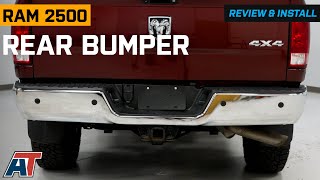
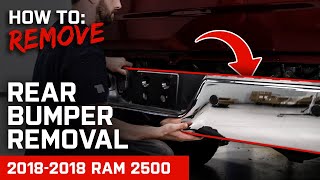

The information in this article is provided for general reference and educational purposes only. Vehicle specifications, procedures, and part compatibility can vary by production date, trim level, and region. Always consult your vehicle's factory service manual and verify part numbers before purchasing or performing repairs. Safety-critical components such as airbags, seat belts, and braking systems should be installed by a qualified professional.
- Ram 2500:
- 🧭 Diagnostic Flowchart
- 🎬 Helpful Videos
- What's Unique About the 2014-2017 Ram 2500
- Symptoms You May Notice
- Most Likely Causes
- Rare But Worth Checking
- Diagnosis Steps
- Parts You'll Likely Need
- Related Codes That Often Appear With This One
- Technical Service Bulletins (TSBs) & Recalls
- Platform-Specific Known Issues
- Mechanic-Grade Diagnostic Values
- Hidden / Shadow Codes Worth Checking
- Scan Tool Commands That Help
- Wiring & Ground Locations
- Real Owner Repair Stories
- When the Usual Fixes Don't Work
- 🎟️ Get 5% Off