

OBD-II Code B1296: Comprehensive Guide to Park Assist Sensor Faults
What B1296 means, why it triggers, and how to fix it, with a primary focus on Ram and Dodge vehicles and variations for Ford, GM, and more.
- Code B1296 definitions vary by manufacturer, but on Ram and Dodge vehicles, it specifically identifies a failure in the inner rear passenger-side park assist sensor (#9).
- Thoroughly cleaning the face of sensor #9 with soap and water resolves over 50% of B1296-25 'Waveform Failure' codes caused by dirt, snow, or ice.
- Driving with a B1296 code is completely safe, though the electronic park assist system disables itself entirely until the fault is cleared.
- Swap sensor #9 with adjacent sensor #10 to definitively test the hardware; if the fault code changes to B1297, the sensor is dead and requires replacement.
- Simultaneous codes for all four rear sensors (B1295-B1298) indicate a shared electrical failure, most commonly severe corrosion inside the 24-pin XY630A main harness connector.
What Does B1296 Mean?
B1296 is a manufacturer-specific code. On Ram and Dodge trucks, it indicates the Park Assist Module (PAM) detects a signal failure from the inner passenger-side rear parking sensor (#9). On other brands like Ford or Pontiac, it points to unrelated systems like ABS wheel speed sensors or convertible top latches.
Technical definition: The SAE/ISO definition for B1296 varies by manufacturer. Chrysler/Dodge/Ram defines it as a 'Signal Shape / Waveform Failure' or circuit fault from Park Assist Sensor #9. Rear sensors are numbered 8 (passenger outer), 9 (passenger inner), 10 (driver inner), and 11 (driver outer).
Can I Drive With B1296?
Yes. The vehicle is safe to drive. The park assist system disables itself, requiring manual caution when parking, but it does not affect core drivability or cause escalating damage.
Common Causes
- Obstructed or Dirty Sensor (Very Common) — Dirt, mud, snow, or ice blocking the sensor face prevents clear ultrasonic signal transmission. Manufacturer service bulletins (e.g., TSB 9003059) list cleaning as the primary diagnostic step.
- Failed Park Assist Sensor (Common) — Sensors fail internally due to age, moisture intrusion from high-pressure car washes, or minor impacts. They stop sending ultrasonic pulses or receiving echoes.
- Damaged Main Wiring Harness Connector (Less Common) — On Ram trucks, the 24-pin XY630A connector behind the driver's side rear wheel is highly susceptible to water intrusion and corrosion (STAR Case S2108000060 REV A). 🎬 Watch this 2013 Ram repair for a real-world harness fix. This disrupts signals, often triggering codes for all rear sensors simultaneously.
- Damaged Wiring to the Sensor (Rare) — Wiring leading to the sensor chafes, pinches, or breaks from road debris. This creates an open or shorted circuit, setting specific subtypes like B1296-11 (short to ground) or B1296-12 (short to battery).
- Incompatible Aftermarket Sensor (Rare) — Non-OEM replacement sensors often fail the Park Assist Module's forward-motion self-test. They work in reverse but throw a B1296-92 'Performance' code when driving forward.
- Sensor Pushed into Bumper (Rare) — Minor impacts dislodge the sensor from its mounting bracket, recessing it inside the bumper. The bumper cover blocks the signal, triggering a fault.
- Software Glitch in Park Assist Module (PAM) (Very Rare) — The PAM occasionally develops software bugs causing false codes. TSB 08-047-19 for Ram models requires reprogramming the module to fix erroneous sensor codes. 🎬 See how to troubleshoot park assist on newer 2021 Ram models.
- Failed Park Assist Module (PAM) (Very Rare) — Control module failure is extremely rare. Consider this only after thoroughly testing all sensors, wiring, and connectors.
Symptoms
- No Beeping When Reversing — Audible proximity warnings fail to sound when approaching obstacles.
- Continuous Tone in Reverse — The vehicle emits a single, long, continuous beep when shifted into reverse to indicate a system fault.
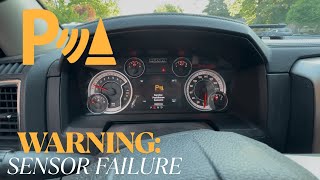
- 'Service Park Assist System' Message (also visible on scanner) — A warning message appears on the instrument cluster or infotainment screen.
- Park Assist System is Disabled (also visible on scanner) — The system refuses to activate in reverse, and the toggle button displays a steady or flashing light. 🎬 Watch this walkthrough to fix the service park assist system.
- False Alerts or Automatic Braking (also visible on scanner) — Faulty sensors cause the vehicle to beep or apply brakes when no obstacle is present.
Diagnostic Flowchart
Tap your situation to follow the diagnostic path that matches what you're seeing on this code.
Common Fixes & Costs
- Clean the Park Assist Sensor — Parts: $0, Labor: $0, ~0.2 hr book time (DIY)
- Replace the Faulty Park Assist Sensor
— Parts: $25-$150, Labor: $80-$250, ~1.0 hr book time
(DIY)
Ram 1500 (4th Gen): OEM (Alt: {"brand": "Bosch", "part_number": "0263043552"}, {"brand": "Dorman", "part_number": "684-007"})
Ram 1500 (5th Gen): OEM (Alt: {"brand": "Dorman", "part_number": "684-102"})
Dodge Durango: OEM (Alt: {"brand": "Bosch", "part_number": "0263043553"}) - Repair Damaged Wiring or Connectors — Parts: $5-$60, Labor: $100-$400, ~2.0 hr book time (Intermediate)
- Replace Rear Bumper Wiring Harness
— Parts: $70-$250, Labor: $150-$300, ~2.5 hr book time
(Professional)
Ram 1500/2500/3500: OEM (Alt: {"brand": "Motiv8", "part_number": "80000004"})
Ram 1500 (5th Gen): OEM - Reprogram Park Assist Module (PAM) — Parts: $0, Labor: $100-$200, ~1.0 hr book time (Professional)
Used vs. New Parts: Buying Guide
When a used part is worth it: For older vehicles on a budget, a used OEM sensor from an auto recycler is often more reliable than a cheap, unbranded aftermarket sensor.
Donor-vehicle mileage cap: roughly under 100000 miles for the part to have meaningful remaining life.
Donor quality checklist:
- Verify the part number matches your original sensor exactly.
- Source the part from a vehicle with no rear-end damage.
- Visually inspect the used sensor for cracks, deep scratches, or corrosion on the electrical pins.
Decision logic:
- If Vehicle is under 5 years old or has low mileage → Buy a new OEM part for maximum reliability and compatibility.
- If Budget is the main priority and you're comfortable with some risk → A used OEM sensor is a good option. A quality aftermarket brand (e.g., Dorman, Bosch) is the next best choice.
- If The code is a B1296-92 'Performance' fault → Strongly favor a new OEM part, as this code is often caused by incompatible aftermarket sensors.
Warranty tradeoff: Used parts typically offer a 30-90 day functional warranty. New aftermarket parts range from 1 year to a limited lifetime warranty. New OEM parts usually carry a 1-2 year warranty.
Worst-case if a used part fails: $100-$300 if a used or cheap aftermarket part fails, requiring repeat labor costs for diagnosis and replacement.
What Happens If You Wait — Timeline
- Immediate: Code B1296 sets. 'Service Park Assist System' message appears on the dash, and the system fully disables. A continuous tone sounds when shifting to reverse. (MPG impact: 0%% · Added cost: $0)
- 0-6 months: The driver must park without electronic aids, increasing the risk of a low-speed parking incident. Annoyance from the persistent dash warning continues. (MPG impact: 0%% · Added cost: $150 - $600 (Potential cost of a minor bumper scuff or paint scratch repair from a parking misjudgment).)
- 6-12 months: If the cause is a wiring issue with moisture intrusion (e.g., at connector XY630A), it worsens. Corrosion spreads to adjacent pins, causing other rear sensors to fail and set additional codes (B1295, B1297, B1298). (MPG impact: 0%% · Added cost: $400 - $1,200 (Potential cost to repair a cracked bumper or a more significant dent from a parking collision).)
- 12+ months: The fault itself does not cause escalating mechanical damage to the vehicle. The primary risk remains the cumulative chance of a parking accident. The cost of not fixing is the eventual cost of a bumper repair. (MPG impact: 0%% · Added cost: $700 - $1,700+ (Potential cost for a full rear bumper replacement if a more serious parking impact occurs).)
Cost of Not Fixing It
- Immediate: The park assist system disables, and a 'Service Park Assist' message appears on the dash. This results in the loss of audible and visual parking aids. (Added cost: $0)
- Ongoing: Increased risk of low-speed parking collisions, leading to paint scuffs or bumper dents. (Added cost: $100 - $1500+ (cost of potential cosmetic repair))
- Long-Term: The fault does not cause escalating mechanical damage to other vehicle systems. The primary cost remains the risk of a parking incident and the annoyance of the persistent warning message. (Added cost: $0)
Diagnosis Steps
- Visually Inspect and Clean the Sensor
Locate sensor #9 (inner rear passenger-side). Inspect for physical damage or recessing. Thoroughly clean the surface with soap, water, and a soft cloth to remove dirt or ice. Clear codes and retest.
Tools: Soap, water, soft cloth (Beginner) - Perform a 'Listen Test'
With the ignition on and vehicle in reverse (parking brake set), place your ear against each parking sensor. Healthy sensors emit a faint, rapid clicking sound. If sensor #9 is silent, it lacks power or has failed internally.
Tools: None (Beginner) - Read Full Body Diagnostic Codes
Use an OBD-II scanner capable of reading Body Control Module (BCM) codes. Confirm B1296 and check for subtypes like -11 (short to ground), -12 (short to battery), or -25 (signal failure) for specific diagnostic direction.
Tools: OBD-II Scanner (with BCM capability) (Intermediate) - Swap Sensors to Confirm Failure
Disconnect and swap sensor #9 with sensor #10 (inner driver's side). Clear codes and re-test. If the code changes to B1297, the sensor is faulty. If B1296 returns, the wiring at position #9 is damaged.
Tools: Trim removal tool (optional) (Intermediate) - Inspect the Sensor Connector and Wiring
If the code remains at position #9, unplug the sensor and inspect the electrical connector for corrosion, bent pins, or moisture. Trace the wire, looking for chafing or breaks.
Tools: Flashlight (Intermediate) - Inspect the Main Harness Connector
If multiple sensor codes exist, locate the 24-way connector (XY630A) behind the driver's side rear wheel liner on Ram trucks. Disconnect and inspect for green/white corrosion or water damage (STAR case S2108000060 REV A).
Tools: Socket set, trim removal tool, flashlight (Advanced) - Advanced: Test Sensor Connector Pins
With the sensor unplugged and ignition on, probe the connector pins with a multimeter. Supply voltage must read 8.0-10.0V. Ground circuit resistance to chassis ground must be under 5.0 Ohms. Abnormal readings indicate wiring faults between the connector and PAM.
Tools: Multimeter (with back-probe pins) (Advanced) - Advanced: Test Signal Wire for Shorts/Opens
For B1296-11 (Short to Ground), disconnect the PAM and sensor. Check continuity between the signal wire terminal and ground; resistance must exceed 10,000 Ohms. Low resistance confirms a short. For an open circuit, measure signal wire resistance from sensor to PAM; it must be under 5.0 Ohms.
Tools: Multimeter, Vehicle Wiring Diagram (Advanced)
When This Code Triggers (Freeze-Frame Conditions)
- Park Assist System Status: Active (The fault logs when the system attempts to activate.)
- Gear Selector Position: Reverse (The code sets immediately when the vehicle shifts into reverse.)
- Vehicle Speed: 0 MPH or 11-25 MPH (The fault detects either when stationary in reverse or during a forward-moving self-test.)
- System Voltage: 12.0-14.5V (The code sets during normal operating voltage; low voltage triggers separate module errors.)
Related Codes
- B1295, B1297, B1298 — These correspond to the other rear sensors. Multiple simultaneous codes strongly suggest a shared problem like the main wiring harness connector (XY630A) or its power/ground feed.
- B1296-25 — This subtype means 'Signal Shape / Waveform Failure.' It is the most common variant and is often triggered by a simple obstruction like dirt or snow, or a sensor pushed into the bumper.
- B1296-11 / B1296-12 — These subtypes indicate a specific electrical fault: 'Circuit Short to Ground' (-11) or 'Circuit Short to Battery' (-12). These point directly to a wiring problem. This cannot be caused by a dirty sensor.
- B1296-92 — This means 'Performance or Incorrect Operation.' It is a general fault triggered by an incompatible aftermarket sensor that the module doesn't recognize, or an intermittent wiring issue causing a corrupt signal.
Climate & Environmental Factors
- Cold Weather: Snow and ice build up on the sensor face, blocking the ultrasonic signal and triggering a B1296-25 (Signal Shape Failure) code (TSB 9003059).
- Road Salt & Brine: Corrosive brine seeps into electrical connectors, especially the main harness connector (XY630A on Ram trucks), causing severe corrosion that leads to shorts, opens, and multiple sensor fault codes.
- High Humidity & Rain: Prolonged exposure to high humidity or heavy rain, especially combined with high-pressure car washes, forces moisture past the seals of the sensor or its connector, causing internal failure.
How to Talk to a Mechanic About This Code
Say this: "I have a B1296 fault code on my Ram 1500 indicating a failure at the inner passenger-side rear parking sensor. I've cleaned it, so I need a diagnostic to determine if the sensor failed or if there's a wiring issue."
This proves you know the specific fault location and have completed basic troubleshooting. It directs the technician straight to a sensor swap or wiring check, saving diagnostic time.
Avoid saying:
- 'My parking beepers don't work.'
- 'My dash says 'Service Park Assist', can you fix it?'
- 'Just fix whatever's wrong.'
Questions to ask before authorizing the repair:
- Did you confirm the sensor failed by swapping it with a neighbor and seeing the code move?
- If it's a wiring issue, can you show me where the corrosion or break is?
- Is the replacement sensor an OEM Mopar part or aftermarket, and what is the warranty on the part and labor?
- Will you clear the codes from the Park Assist Module and test the system after the repair?
Where to Take It: Dealer vs Independent vs Chain
- Dealer:
A safe but expensive choice. Best if you suspect a rare software issue or are under warranty.
Best for: Vehicles under warranty., Repairs requiring a Park Assist Module (PAM) software update., When you want a guaranteed OEM part and are less sensitive to cost.
Downsides: Highest labor rates, often 1.5-2x an independent shop., Technicians often replace entire harnesses rather than repairing single wires. (Typical cost: +50% vs. baseline) - Independent Shop:
Best fit for most owners. An experienced independent technician easily diagnoses and repairs a B1296 code, offering more repair flexibility than a dealer.
Best for: Out-of-warranty vehicles where cost is a factor., Diagnosing common electrical faults like a failed sensor or corroded connector.
Downsides: Quality varies; select a shop specializing in electrical diagnostics., May lack OEM scan tools for module reprogramming. (Typical cost: +0% vs. baseline) - Chain Shop:
Acceptable only if you have already confirmed the sensor itself is faulty and just need it replaced. AVOID for initial diagnosis of electrical or wiring issues.
Best for: Simple, pre-diagnosed part replacement.
Downsides: Technician skill varies widely., Lacks the diagnostic expertise to trace a wiring problem beyond a simple code read., High pressure to upsell services. (Typical cost: -10% vs. baseline)
When to Walk Away From the Repair
If repairing this non-essential convenience feature exceeds 10% of your car's value, live with the fault. Critical safety repairs warrant a 40-50% threshold, but parking sensors do not.
- Car worth $15000, fix is $450: Fix it. The cost is minor relative to the vehicle's value and restores full functionality.
- Car worth $5000, fix is $700: Borderline. The repair cost is 14% of the car's value for a convenience feature. If the car has other issues, it is better to live without park assist.
- Car worth $2500, fix is $500: Walk away (live with the fault). The repair is 20% of the car's value. It makes little financial sense to fix a non-essential system at this price point.
What Scan Tool You Need for This Code
Minimum: An 'all-system' scanner capable of reading manufacturer-specific Body ('B') codes. Basic $20 engine code readers cannot see or clear B1296.
A basic code reader shows 'No Codes Found' because B1296 stores in the Park Assist Module (PAM) or Body Control Module (BCM), not the Engine Control Module (ECM).
Budget: Innova 1000 / XTOOL A30D / Mucar BT200 Max (~$80-99) — Connects to all modules, including the BCM/PAM, to read and clear body codes like B1296. This is the minimum required to confirm the code and erase it after repair.
Mid-range: Foxwell NT510 Elite / OBDLink MX+ with JScan (~$140-200) — Provides full-system diagnostics plus live data and bi-directional controls. Allows you to see what the module sees from the sensor, particularly powerful for Chrysler/Dodge/Ram vehicles when paired with the JScan app.
Professional: Autel MaxiCOM MK808S (~$450-550) — Offers full bidirectional control, all OEM-level diagnostic functions, and service resets. Performs advanced diagnostics and module reprogramming for rare software updates.
Rent vs buy: AutoZone and other parts stores offer loaner tools, but you must ensure the tool is an 'all-system' scanner capable of reading Body codes. Buying a budget pick is a good investment for any modern car owner.
How to Clear the Code After You Fix It
- Fix the underlying hardware issue (e.g., clean or replace sensor).
- Use an OBD-II scan tool capable of accessing the Body Control Module to clear the fault codes.
- Test the system by shifting into reverse.
Drive cycle (~1 minutes): Body Control Module codes do not require a complex drive cycle. After clearing the code, the system performs a self-test upon the next activation (shifting into reverse). If the fault is fixed, the code stays off.
Readiness monitors affected: None
Watch out for:
- Clearing the code without fixing the root cause results in the code returning immediately.
- Disconnecting the battery fails to clear the code from the Park Assist Module's memory.
- Using a basic OBD-II scanner that only reads powertrain codes cannot clear a body code like B1296.
Will This Fail Emissions / State Inspection?
No — by itself this code doesn't fail OBD inspection (but it can keep readiness monitors from setting, which causes a separate fail).
- California: A B1296 code will NOT cause a smog check failure. California's test focuses on powertrain ('P') codes that illuminate the main Check Engine Light. A 'Service Park Assist' message is separate.
- New York: This code will not cause a failure of the NYS emissions inspection. The inspection checks for Check Engine Light illumination related to emissions faults, which B1296 does not trigger.
- Texas: A B1296 code will not cause a vehicle to fail the emissions portion of the state inspection. As long as the Check Engine Light is off and emissions monitors are ready, the vehicle passes.
Most Commonly Affected Vehicles
- Ram 1500 (2013-2020) — Highly susceptible due to worksite conditions causing sensor obstruction. These models have a known issue with the corrosion-prone main harness connector (XY630A).
- Ram 2500/3500 (2014-2018) — A Technical Service Bulletin (TSB 9003059) was issued for these models regarding sensor faults caused by mud, snow, or ice. They share the same sensor numbering and wiring vulnerabilities as the 1500.
- Dodge Durango (2011-2023) — Shares the same Park-Tronic System (PTS) and sensor numbering as Ram trucks. Third-generation models are also known for other electrical issues, indicating a potential for broader wiring harness problems.
- Dodge Grand Caravan (2011-2020) — Utilizes the same sensor fault logic, where B1296 points to a specific sensor circuit failure.
- Ford F-150 (2004-2010) — On these vehicles, B1296 does not refer to parking assist. It indicates a 'Left Front Wheel Speed Sensor Input Signal Fault' related to the ABS system.
- Pontiac G6 Convertible (2006-2009) — For the G6 convertible, B1296 indicates a fault with the 'S1 header latch cylinder' sensor, part of the retractable hardtop mechanism. The most common cause is a broken wire in the trunk harness.
- Jaguar Various (1998-2008) — On some older Jaguar models, B1296 refers to a 'Driver's door seat switch fault,' related to the seat memory controls, demonstrating the wide variation in this code's meaning.
- Volkswagen ID.4 (2021-present) — While it may not use the B1296 code, the VW ID.4 suffers from frequent parking sensor failures due to minor rock chips or impacts, with high dealership replacement costs.
Manufacturer-Specific Notes
- Ram / Dodge / Chrysler: This code specifically points to Park Assist Sensor #9. TSB 9003059 notes obstructions cause -25 faults, while STAR Case S2108000060 REV A points to connector XY630A for multiple faults.
- Ford: On many Ford vehicles (2004-2010 F-150), B1296 is not related to parking sensors. It indicates a 'Left Front Wheel Speed Sensor Input Signal Fault,' which is part of the ABS system.
- Pontiac: On the G6 convertible, B1296 indicates a fault with the 'S1 header latch cylinder' sensor, which is part of the complex retractable hardtop mechanism, often caused by a broken wire in the trunk lid harness.
- Dodge (Alternate): On some platforms, a B1296-12 code definition refers to 'Fuel Level Sensor 2 - Circuit Short To Battery Or Open', completely unrelated to parking assist. This highlights the critical need to use a scan tool that specifies the correct module (BCM/PAM vs PCM).
Real Owner Stories
2014 Ram 1500 - The Easy Fix
Owner reported a 'Service Park Assist' message appeared after driving on a muddy work site. Code B1296-25 was present.
What they tried:
- Initially ignored the message, assuming a complex issue.
Outcome: Following forum advice, the owner washed the rear bumper, focusing on the inner passenger-side sensor. The code cleared and did not return.
Lesson: Always start with the simplest solution. Per Ram TSB 9003059, cleaning dirt, mud, snow, or ice from the sensor face is the first diagnostic step and often the only one needed.
2014 Ram 1500 - Aftermarket Part Misdiagnosis
Owner had codes for all four rear sensors (B1295, B1296, B1297, B1298) and replaced the rear wiring harness and all four sensors with aftermarket parts.
What they tried:
- Replaced the rear jumper harness with an OEM part.
- Replaced all four sensors with new aftermarket units.
Outcome: The system worked in reverse, but exceeding 10 mph in drive triggered the 'Service' message and codes for all sensors. The aftermarket sensors failed the PAM's forward-motion self-test.
Lesson: Be cautious with aftermarket sensors. Some are not fully compatible and cause performance-related codes (like B1296-92) even if they work in reverse. If a new performance code appears after replacement, suspect part compatibility.
2021 Ram - The Hidden Wiring Problem
Owner of a 2021 Ram received 'Service Park Assist' with codes for all four rear sensors (B1295-11, B1296-11, B1297-11, B1298-11), indicating circuit shorts to ground.
What they tried:
- Used an OBD scanner to confirm all sensors were sending signals, ruling out sensor failure.
- Visually inspected the entire rear bumper wiring harness.
Outcome: A visual inspection revealed a break in the wiring harness where it rubbed against a frame component. Repairing the broken wire resolved the issue for all four sensors simultaneously.
Lesson: If multiple sensor codes appear at once, the problem is almost never multiple failed sensors. Inspect the main harness connector (XY630A on older Rams) and the entire harness for damage before replacing parts.
2013 Ram 1500 - Intermittent Fault
Owner experienced an intermittent 'Service Park Assist' message with codes B1296-12 (Short to Battery) and B1296-92 (Performance). The fault was not always present.
What they tried:
- Visual inspection of the sensor and wiring.
- Electrical testing with a multimeter and scan tool.
Outcome: The diagnostic process pointed towards an internal failure in the sensor causing an intermittent short circuit. Replacing the single sensor (#9) resolved both fault codes.
Lesson: Intermittent electrical issues are frustrating. A sensor fails internally and causes shorts or performance codes that come and go. The 'sensor swap' test is the most effective DIY method to confirm if an intermittent problem is the sensor or the wiring.
How to Prevent This Code From Triggering
- Regularly Clean Sensor Faces (Monthly or after off-roading/snow) — Keeps the sensor's ultrasonic path clear of dirt, mud, and road film that obstruct signals and cause false faults. Use a soft cloth and mild soap.
- Apply Dielectric Grease to Connectors (Whenever a sensor or harness is replaced/disconnected) — Dielectric grease blocks moisture and oxygen from metal pins, preventing the corrosion responsible for most wiring faults.
- Inspect and Secure Wiring Harnesses (During tire rotations or underbody inspections) — Visually check that the rear bumper harness is properly secured in its clips and not rubbing against the frame or suspension components. A loose harness chafes over time, leading to shorts or open circuits.
- Use Weatherproof Splices for Repairs (When repairing any exterior wiring) — If a wire must be repaired, use adhesive-lined heat-shrink butt connectors instead of electrical tape. This creates a waterproof seal that prevents moisture from wicking into the connection and causing corrosion.
Frequently Asked Questions
What is Park Assist Sensor #9?
On Ram and Dodge vehicles, the rear parking sensors are numbered 8, 9, 10, and 11, starting from the passenger side and moving to the driver's side. Sensor #9 is the inner sensor on the passenger side of the rear bumper.
Can I fix code B1296 myself?
Yes, in many cases. The most common fix is cleaning the sensor, which anyone can do. Replacing the sensor is also a straightforward DIY job for many, as it often just clips into the bumper from behind.
Why did the code appear right after a car wash or in the rain?
High-pressure water forces its way into the sensor's housing or its electrical connector, causing a temporary short or permanent damage. This is a common complaint and a known cause of sensor failure.
I replaced the sensor, but the B1296 code came back. What do I do now?
If a new, quality sensor fails to fix the issue, the problem is almost certainly in the wiring. Perform the sensor swap test (Diagnosis Step 4) to verify the new sensor functions. If the code remains at position #9, inspect the pigtail connector and trace the harness back to the main connector (XY630A on Ram trucks) to locate corrosion or breaks.
I have codes for all four rear sensors. Do I need to replace them all?
No, it is extremely unlikely that all four sensors failed simultaneously. Multiple sensor codes (e.g., B1295, B1296, B1297, B1298) almost always indicate a problem with a shared component. The most likely culprit is the main rear bumper wiring harness or its primary connector (XY630A on Ram trucks) having a power, ground, or communication fault.
Should I use a cheaper aftermarket sensor?
While tempting, it is a gamble. Some aftermarket sensors are not fully compatible with the vehicle's Park Assist Module. They work when in reverse but trigger a fault code (often B1296-92 'Performance') when the vehicle is put in drive as part of the system's self-test.
What's the most common misdiagnosis for B1296?
The most common and expensive mistake is replacing the Park Assist Module (PAM). The PAM is rarely the cause of failure for a single sensor code. The issue is almost always the sensor itself, the wiring, or a simple obstruction.
Key Takeaways
- Code B1296 definitions vary by manufacturer, but on Ram and Dodge vehicles, it specifically identifies a failure in the inner rear passenger-side park assist sensor (#9).
- Thoroughly cleaning the face of sensor #9 with soap and water resolves over 50% of B1296-25 'Waveform Failure' codes caused by dirt, snow, or ice.
- Driving with a B1296 code is completely safe, though the electronic park assist system disables itself entirely until the fault is cleared.
- Swap sensor #9 with adjacent sensor #10 to definitively test the hardware; if the fault code changes to B1297, the sensor is dead and requires replacement.
- Simultaneous codes for all four rear sensors (B1295-B1298) indicate a shared electrical failure, most commonly severe corrosion inside the 24-pin XY630A main harness connector.
Helpful Videos
Shop the Parts Behind B1296
Below are the parts most often responsible for code B1296, ranked by how frequently each one is the actual culprit (per the diagnosis above). Tap any to see what we have for your vehicle.



The information in this article is provided for general reference and educational purposes only. Vehicle specifications, procedures, and part compatibility can vary by production date, trim level, and region. Always consult your vehicle's factory service manual and verify part numbers before purchasing or performing repairs. Safety-critical components such as airbags, seat belts, and braking systems should be installed by a qualified professional.
- 🧭 Diagnostic Flowchart
- 🎬 Helpful Videos
- 🛍️ Shop This Part
- What Does B1296 Mean?
- Can I Drive With B1296?
- Common Causes
- Symptoms
- Common Fixes & Costs
- Used vs. New Parts: Buying Guide
- What Happens If You Wait — Timeline
- Cost of Not Fixing It
- Diagnosis Steps
- When This Code Triggers (Freeze-Frame Conditions)
- Related Codes
- Climate & Environmental Factors
- How to Talk to a Mechanic About This Code
- Where to Take It: Dealer vs Independent vs Chain
- When to Walk Away From the Repair
- What Scan Tool You Need for This Code
- How to Clear the Code After You Fix It
- Will This Fail Emissions / State Inspection?
- Most Commonly Affected Vehicles
- Manufacturer-Specific Notes
- Real Owner Stories
- 2014 Ram 1500 - The Easy Fix
- 2014 Ram 1500 - Aftermarket Part Misdiagnosis
- 2021 Ram - The Hidden Wiring Problem
- 2013 Ram 1500 - Intermittent Fault
- How to Prevent This Code From Triggering
- Frequently Asked Questions
- What is Park Assist Sensor #9?
- Can I fix code B1296 myself?
- Why did the code appear right after a car wash or in the rain?
- I replaced the sensor, but the B1296 code came back. What do I do now?
- I have codes for all four rear sensors. Do I need to replace them all?
- Should I use a cheaper aftermarket sensor?
- What's the most common misdiagnosis for B1296?
- Key Takeaways
- 🎟️ Get 5% Off