

OBD-II Code B1304: A Comprehensive Diagnostic Guide
What B1304 Means, Why It Triggers, and How to Fix It for Ford, Land Rover, and Hyundai
- B1304 has 3 distinct manufacturer definitions: Ford (accessory delay relay), Land Rover/Jaguar (power steering voltage), and Hyundai (adaptive headlights).
- For Land Rover/Jaguar EPAS faults (B1304-16), test the battery and clean ground studs G1D132/G4D178 before authorizing a $2,000+ steering rack replacement.
- On 1998-2003 Ford trucks, B1304 combined with erratic electrical issues indicates a leaking windshield has destroyed the Generic Electronic Module (GEM).
- Ford accessory relay faults cause a 50mA+ parasitic drain that kills the battery within days, requiring immediate relay replacement to prevent permanent battery damage.
What Does B1304 Mean?
B1304 is a manufacturer-specific Body Diagnostic Trouble Code (DTC) with three primary definitions. For Ford, Lincoln, and Mercury, it signifies a fault in the accessory delay relay circuit, which powers features like the radio after the engine turns off. For Land Rover and Jaguar, it points to an electrical issue within the Electronic Power Assisted Steering (EPAS) system, almost always related to low voltage. For Hyundai, it indicates an 'Engine state signal fault' within the Adaptive Front Lighting System (AFLS).
Technical definition: The SAE/ISO definition for B1304 depends on the manufacturer. For Ford, it is 'Accessory Delay Relay Coil Circuit Short to Battery,' meaning the Body Control Module (BCM) detects excessive voltage on the relay's control circuit. For Land Rover/Jaguar, B1304-16 is 'Electronic Power Assisted Steering (EPAS) system circuit voltage below threshold.' B1304-04 indicates 'EPAS System Internal Failures.' On Hyundai, it means the AFLS control unit is not receiving a valid engine speed signal over the CAN bus.
Can I Drive With B1304?
Yes, But With Caution. Driveability depends entirely on the manufacturer. For Ford vehicles, the fault affects convenience features like the radio and power windows; it is safe to drive, though a stuck relay will drain your battery. On Land Rover and Jaguar models, this code indicates a failure in the Electronic Power Steering (EPAS) system. This is a severe safety concern causing sudden loss of power steering assist. Do not drive Land Rover or Jaguar vehicles with this code until the EPAS issue is resolved.
Common Causes
- Weak or Failing Battery (Land Rover/Jaguar) (Very Common) — A battery unable to maintain sufficient voltage during high-load events (like engine cranking) is the leading cause of the B1304-16 low-voltage code on EPAS-equipped vehicles.
- Failed Accessory Delay Relay (Ford) (Very Common) — The electro-mechanical relay wears out over time, getting stuck open, closed, or developing high internal resistance, disrupting power to interior accessories.
- Corroded Ground Connections (Common) — Corroded grounds create high resistance, triggering low-voltage codes. For Land Rover EPAS systems, ground studs G1D132 and G4D178 frequently corrode. For Ford, a bad BCM or fuse box ground causes identical issues.
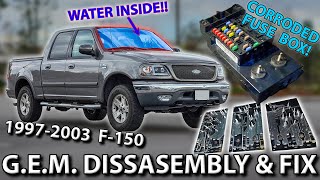
- Water-Damaged GEM / BCM (Ford) (Common) — On 1998-2003 Ford trucks and SUVs, a leaking windshield drips water directly onto the Generic Electronic Module (GEM), causing severe corrosion and triggering B1304 alongside erratic electrical faults. 🎬 See how to remove and fix a water-damaged GEM module.
- Blown Fuse (Common) — A fuse protecting the accessory delay circuit, BCM, or Power Steering Control Module (PSCM) blows due to a short circuit or voltage spike.
- Wiring or Connector Issues (Less Common) — Frayed wires or loose, corroded connectors disrupt voltage. On Land Rovers, the main connector to the PSCM (C11-G1) is a known failure point.
- Failing Alternator (Less Common) — An alternator failing to recharge the battery properly lowers overall system voltage, triggering the EPAS-related B1304-16 code on Land Rovers.
- Internal EPAS Steering Rack Failure (Uncommon) — An actual internal failure of the EPAS motor, control module, or internal belt triggers B1304-04. Rule out all electrical causes before replacing the rack.
- Faulty AFLS Control Module (Hyundai) (Uncommon) — The dedicated Adaptive Front Lighting System (AFLS) module fails internally, preventing it from processing the engine state signal from the CAN bus.
Symptoms
- Sudden loss of power steering assist — On Land Rover and Jaguar models, the steering wheel becomes extremely difficult to turn. This is usually accompanied by a 'Power Steering Assistance Reduced' dashboard message.
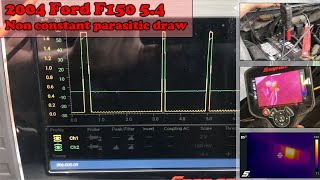
- Parasitic battery drain — If a Ford accessory delay relay sticks in the 'on' position, it powers the radio and windows indefinitely after the ignition is off, killing the battery within days. 🎬 Watch: Troubleshooting a Ford parasitic draw that isn't constant.
- Accessories turn off immediately or do not work — On Ford vehicles, the radio and windows shut off the instant the ignition is turned off, or fail to power on entirely if the relay fails in the open position.
- Adaptive headlights fail to swivel — On affected Hyundai models, the headlights remain stationary when turning, and the 'AFLS OFF' indicator illuminates or blinks on the dashboard.
- Erratic electrical behavior in rain — On older Ford trucks, B1304 is often accompanied by flashing 4x4 lights, phantom wiper activation, and radio issues, worsening during heavy rain due to a leaking windshield.
Diagnostic Flowchart
Tap your situation to follow the diagnostic path that matches what you're seeing on this code.
Common Fixes & Costs
- Replace Battery and Reset BMS — Parts: $200-$400, Labor: $50-$150, ~1 hr book time (DIY)
- Replace Accessory Delay Relay
— Parts: $10-$30, Labor: $0-$50, ~0.2 hr book time
(DIY)
Ford F-150/Explorer: OEM Motorcraft RLY-1 (40A), AT1Z-14N089-A (20A) (Alt: Duralast 19273, Standard Motor Products RY-series) - Clean or Repair EPAS Ground Connection — Parts: $5-$15, Labor: $100-$200, ~1.5 hr book time (DIY)
- Replace Blown Fuse — Parts: $1-$5, Labor: $0, ~0.1 hr book time (DIY)
- Replace Body Control Module (BCM/GEM) and Reseal Windshield
— Parts: $200-$700, Labor: $300-$500 (includes programming and glass labor), ~3 hr book time
(Professional)
2002 Ford Explorer: OEM 1L2Z-14B205-AA (Must match original part number exactly) (Alt: Dorman 601-623 (Remanufactured)) - Replace EPAS Steering Rack Assembly
— Parts: $1200-$2500, Labor: $400-$800, ~4 hr book time
(Professional)
Range Rover Evoque (2012-2018): OEM LR118268, LR088700 (VIN specific) (Alt: Professional remanufactured units recommended.) - Replace AFLS Control Module (Hyundai)
— Parts: $150-$400, Labor: $150-$250, ~1.5 hr book time
(Professional)
Hyundai Genesis (2010-2012): OEM 92170-3M000 (Alt: OEM only.)
DIY vs Professional
- Replace Accessory Delay Relay — Beginner: Yes
- Replace Battery and Reset BMS — Beginner: Yes
- Clean or Repair EPAS Ground Connection — Beginner: With Caution
- Replace Body Control Module (BCM/GEM) — Beginner: No
- Replace EPAS Steering Rack Assembly — Beginner: No
Used vs. New Parts: Buying Guide
When a used part is worth it: For expensive electronic modules like a Ford GEM/BCM or a Land Rover EPAS rack, a used part from a low-mileage, accident-damaged vehicle offers significant savings.
Donor-vehicle mileage cap: roughly under 75000 miles for the part to have meaningful remaining life.
Donor quality checklist:
- Match the part number EXACTLY. A single digit difference guarantees incompatibility.
- For Ford GEMs, ensure the donor vehicle has the identical drivetrain (2WD/4WD) and power options.
- For EPAS racks, inspect electrical connectors for corrosion. Avoid flood vehicles entirely.
Decision logic:
- If The part is a simple relay or fuse → Buy new. They cost under $30 and offer guaranteed reliability.
- If The part is a BCM or GEM → Buy used, but factor in $150-$250 for professional programming/calibration.
- If The part is a safety-critical steering rack → Buy a new or professionally remanufactured unit with a warranty. Avoid junkyard steering racks.
Warranty tradeoff: Salvage yards offer 30-day part-only warranties. New OEM parts offer 1-year warranties covering the component.
Worst-case if a used part fails: $500-$1500 if a used electronic module or steering rack fails, requiring a second labor charge and replacement part.
What Happens If You Wait — Timeline
- 0-2 months: Land Rover EPAS: Intermittent 'Heavy Steering' warning after cold starts. Ford Accessory Relay: Rare instances of accessories not turning off. (MPG impact: 0%% · Added cost: $0)
- 2-6 months: Land Rover EPAS: Warnings occur on most drives. Ford Accessory Relay: The relay sticks permanently, causing a parasitic drain that kills the battery. A jump start is required. (MPG impact: 0%% · Added cost: $50 in inconvenience and minor battery degradation.)
- 6-12 months: Land Rover EPAS: 'Power Steering Assistance Reduced' message is constant; vehicle is unsafe to drive. Ford Accessory Relay: Repeated deep discharges permanently destroy the battery's internal plates. (MPG impact: 0%% · Added cost: $200-$400 for a new battery. $150+ for a tow if steering fails.)
- 12+ months: Ford GEM Leak: The GEM and fuse box are completely ruined by corrosion, requiring extensive wiring harness repair. (MPG impact: 0%% · Added cost: $1000+ in module and wiring replacement.)
Cost of Not Fixing It
- Immediate: For Land Rover/Jaguar EPAS faults, you risk a sudden loss of power steering at speed, potentially causing an accident. The vehicle is unsafe to drive. (Added cost: Potential for severe vehicle damage or injury.)
- 0-3 months: For Ford accessory delay faults, a stuck relay causes a continuous 50mA+ parasitic battery drain, leading to a no-start condition and destroying the battery's internal plates. (Added cost: $200-$400 for a replacement battery.)
- Ongoing: Ignoring the code means living with non-functional systems: no power steering, dead interior accessories, or stationary adaptive headlights. (Added cost: High safety and inconvenience costs.)
Diagnosis Steps
- Identify the Code's Meaning for Your Vehicle
Confirm the B1304 definition for your specific make, model, and year before beginning diagnosis. A 2015 Land Rover requires a completely different diagnostic path than a 2002 Ford F-150.
Tools: Vehicle-specific repair manual or reliable online resource (Beginner) - Test the Battery and Charging System
Mandatory for any Land Rover/Jaguar EPAS fault. Use a digital battery analyzer to test the battery's State of Health (SOH). With the engine running, use a multimeter to verify alternator output is between 13.2V and 14.8V.
Tools: Digital Multimeter, Professional Battery Tester (Beginner) - Swap the Accessory Delay Relay (Ford)
Locate the accessory delay relay in the interior fuse panel. Swap it with an identical relay from a non-critical circuit (like the horn). If the accessory delay function returns, replace the original relay.
Tools: None (Beginner) - Perform a Full Diagnostic Scan
Use a scanner capable of reading Body (B) and Network (U) codes. On Land Rovers, B1304-16 paired with U0131 or U3003 strongly confirms a power supply issue, not a failed steering rack.
Tools: Advanced Bi-Directional OBD-II Scanner (Intermediate) - Perform a Voltage Drop Test on EPAS Grounds
Set a multimeter to low DC Volts. Connect the black lead to the negative battery terminal and the red lead to the EPAS ground stud (e.g., G1D132). With the engine running, the reading must be under 0.1 volts (100mV). Higher readings require cleaning and re-torquing the ground to 9 Nm.
Tools: Digital Multimeter, long test leads, wire brush, torque wrench (Advanced) - Inspect and Test Fuses
Locate the fuses for the BCM, Accessory Power, or PSCM. Visually inspect for broken filaments and test for continuity with a multimeter. Replace any blown fuses.
Tools: Owner's manual, fuse puller, multimeter (Beginner) - Use Bidirectional Control (Ford)
Navigate to the BCM's active tests on an advanced scanner. Command the 'Accessory Delay Relay' on and off. A clicking sound means the control circuit works, pointing to a wiring issue on the load side. No click indicates a bad relay or BCM driver.
Tools: Advanced Bi-Directional OBD-II Scanner (Advanced) - Test the Ford Accessory Relay Circuit Manually
Remove the relay. With the key on, check for 12V+ at pin 30 (constant power) and pin 86 (coil power). Check for ground at pin 85. If inputs are present but the relay fails to activate, the relay is dead.
Tools: Digital Multimeter, vehicle wiring diagram (Advanced) - Inspect Wiring and Modules for Water Damage
Inspect harnesses to the BCM, PSCM, or AFLS module for chafing or corrosion. On 1998-2003 Fords, check for water stains around the GEM/fuse box area, indicating a leaking windshield.
Tools: Flashlight, trim removal tools (Intermediate)
When This Code Triggers (Freeze-Frame Conditions)
- PSCM Main Power Supply: 9.5V - 11.5V (For Land Rover EPAS faults, the code sets during engine cranking when system voltage momentarily drops below the module's operating threshold.)
- Ignition Status: Off to On / On to Off (For Ford accessory delay faults, the code triggers during the transition of the ignition state when the BCM commands the relay.)
- Battery Voltage (KOEO): < 12.0V (If resting battery voltage is low, the EPAS system pre-emptively sets a fault before the engine starts, anticipating a massive voltage drop.)
- Engine State Signal: Invalid/No Signal (For Hyundai AFLS faults, the code sets when the AFLS module powers on but receives no valid engine RPM signal over the CAN bus.)
Related Codes
- B1304-16 — The most common suffix for Land Rover/Jaguar, meaning 'Circuit Voltage Below Threshold.' It proves the problem is related to power supply (battery/alternator/grounds), not a mechanical rack failure.
- B1304-04 — Indicates 'System Internal Failures' within the EPAS. While it can mean a failed steering rack, it is frequently triggered by a software glitch after wading through water. Attempt a software update before replacing the rack.
- U0131, U3003, U0420 — Communication codes appearing alongside B1304 on an EPAS system confirm a power supply issue. The Power Steering Control Module is losing power entirely, causing it to drop off the network.
- B1359 — Common on Ford vehicles with B1304. B1359 indicates a failure in the ignition input circuit, while B1304 points to the accessory output circuit. Seeing both together strongly points to a failing BCM/GEM.
Climate & Environmental Factors
- Cold Weather: Low temperatures severely reduce a battery's cranking power. This causes system voltage to dip below the operating threshold during engine start, triggering the B1304-16 EPAS fault on Land Rovers.
- High Humidity / Rain: On 1998-2003 Ford trucks, rain penetrates failing windshield seals and drips directly onto the GEM/BCM, causing immediate corrosion, electrical shorts, and the B1304 code.
- Road Salt (Winter Climates): Road salt accelerates chassis corrosion. This destroys the EPAS ground studs on Land Rover vehicles, creating the high resistance that causes B1304-16.
How to Talk to a Mechanic About This Code
Say this: "For a Land Rover: 'I have a B1304-16 code. Before discussing a steering rack replacement, I authorize one hour of diagnostic time to perform a battery State of Health test and to clean and re-torque the EPAS ground studs per TSB SSM71278.' For a Ford: 'I have a B1304 code and the accessory delay isn't working. Please start by swapping the accessory delay relay with a known-good one.'"
This language establishes a clear, limited diagnostic path and prevents the shop from immediately quoting a $4,000 steering rack or unnecessary module replacements.
Avoid saying:
- 'My steering feels weird.'
- 'Just fix whatever is wrong.'
- 'The dealer said I need a new steering rack, can you give me a price?'
Questions to ask before authorizing the repair:
- For Land Rover: What was the battery's tested State of Health percentage? What was the voltage drop reading in millivolts across the ground connection before and after cleaning?
- For a steering rack quote: Can you show me proof that the battery and grounds are not the cause?
- For a Ford GEM quote: Have you confirmed evidence of water intrusion from the windshield?
Where to Take It: Dealer vs Independent vs Chain
- Dealer:
Necessary if module programming is required, but you must aggressively instruct them to check the battery and grounds first.
Best for: Vehicles under warranty., Complex software updates (B1304-04 code on a Land Rover)., Repairs requiring manufacturer-specific programming tools (BCM replacement).
Downsides: Highest labor rates., Quick to recommend the most expensive fix (rack replacement) without performing basic electrical checks. (Typical cost: +50% vs. baseline) - Independent Shop:
The best choice for most B1304 scenarios. Provide them with the relevant TSB to save thousands compared to a dealer.
Best for: Out-of-warranty vehicles., Diagnosing common electrical causes (bad battery, grounds, relays)., European or Ford specialists familiar with these specific TSBs.
Downsides: Quality varies widely. Must find a shop with ASE-certified technicians and advanced diagnostic tools. (Typical cost: +0% vs. baseline) - Chain Shop:
AVOID for diagnosis. They will misdiagnose the Land Rover EPAS variant and sell you parts you do not need.
Best for: Simple tire or oil changes., Purchasing a battery (if they can perform the BMS reset).
Downsides: Technicians lack the expertise and advanced tools to read B-codes or follow manufacturer TSBs., High pressure to upsell leads to expensive misdiagnoses. (Typical cost: -10% vs. baseline)
When to Walk Away From the Repair
Sell or trade the vehicle if the estimated repair cost exceeds 40% of its private-party value.
- Car worth $14000, fix is $4000: Borderline. A $4,000 steering rack replacement on a $14,000 Range Rover is a tough call. Exhaust all cheaper diagnostic avenues (battery/grounds) before authorizing.
- Car worth $2500, fix is $1500: Walk away. Spending $1,500 to fix a leaking windshield and replace a GEM on an old Ford Explorer is a poor investment.
- Car worth $18000, fix is $400: Fix it. A $400 repair for a new battery and cleaning ground connections solves a major safety issue.
What Scan Tool You Need for This Code
Minimum: A scanner capable of reading manufacturer-specific Body (B) and Network (U) codes.
Basic $20 code readers only scan generic Powertrain (P) codes and cannot see Body (B) codes like B1304 stored in the BCM or PSCM.
Budget: BlueDriver Pro (~$99) — Connects to a smartphone to read and clear enhanced B-codes for Ford and JLR. Displays live data to monitor system voltage.
Mid-range: Foxwell NT510 Elite (~$170) — Provides full B-code reading, live data graphing, and crucial bidirectional controls to test the Ford accessory relay. Performs BMS resets.
Professional: Autel MaxiCOM MK808S (~$350) — Offers full bidirectional control, comprehensive diagnostics on all modules, and advanced service functions like module programming and steering angle calibration.
Rent vs buy: Parts store loaner tools are basic code readers and will NOT work for B1304. Buying a midrange tool like the Foxwell NT510 Elite pays for itself by avoiding one misdiagnosis.
How to Clear the Code After You Fix It
- Reconnect the battery if disconnected.
- Use an advanced OBD-II scan tool to clear the B-code from the specific module (BCM, PSCM, AFLS).
- For Land Rover EPAS, perform three key-on/key-off cycles, turning the steering wheel lock-to-lock to re-initialize sensors.
- For Ford, operate the radio and windows, then turn the key off to confirm the accessory delay functions.
Drive cycle (~15 minutes): Body codes do not require a complex emissions drive cycle. A 15-minute drive with mixed speeds and several low-speed turns confirms EPAS fixes. For Ford accessories, perform two ignition-off cycles to verify the delay relay operates correctly.
Readiness monitors affected: None
Watch out for:
- Using a basic $20 OBD-II reader that cannot see or clear manufacturer-specific B-codes.
- Failing to perform a Battery Management System (BMS) reset after installing a new battery, causing the low-voltage code to return immediately.
- Clearing the code without cleaning the corroded ground studs, guaranteeing the fault returns on the next cold start.
Will This Fail Emissions / State Inspection?
No — by itself this code doesn't fail OBD inspection (but it can keep readiness monitors from setting, which causes a separate fail).
- California: Body codes (B-codes) do not cause a smog check failure unless they illuminate the primary Check Engine Light, which B1304 does not do.
- New York: NYS inspections check for an illuminated Malfunction Indicator Lamp (MIL). B1304 triggers specific warning messages (like a steering icon) but not the MIL, allowing it to pass.
- Texas: OBD-II tests fail vehicles for P-codes commanding the MIL on. B-codes are excluded from emissions criteria.
Most Commonly Affected Vehicles
- Land Rover Range Rover Evoque / Sport / Velar (2012-2018) — Extremely common for B1304-16 (EPAS low voltage). TSB SSM71278 points directly to a weak battery or corroded ground studs G1D132/G4D178.
- Ford F-150 (1998-2014) — On 1998-2003 models, B1304 indicates a water-damaged GEM. On 2004-2010 models, it is typically the accessory delay relay. On 2011-2014 models, it points to an EPAS system issue.
- Ford Explorer / Mercury Mountaineer (1998-2003) — The classic vehicle for B1304 caused by a leaking windshield dripping water directly onto the GEM/fuse box assembly.
- Ford Ranger / Mazda B-Series (1998-2003) — Shares the leaky windshield and GEM design with the Explorer. Replacement GEM part numbers must match exactly based on 2WD/4WD and power options.
- Land Rover Discovery Sport (2015-2017) — Code B1304-16 indicates low voltage in the EPAS circuit. TSB SSM71278 applies, pointing to ground stud locations G1D122A and G1D122B.
- Hyundai Genesis, Equus (2010-2016) — B1304 indicates an 'Engine state signal fault' where the Adaptive Front Lighting System (AFLS) loses communication with the ECM via the CAN bus.
- Jaguar F-Pace, XJ, F-Type (2016-2019) — B1304-04 or B1304-16 points to an EPAS system fault. Water intrusion into the steering rack motor housing causes internal corrosion and failure.
Manufacturer-Specific Notes
- Land Rover / Jaguar: B1304-16 is almost always a power supply problem. TSB SSM71278 explicitly warns technicians NOT to replace the steering rack until the battery and specific chassis ground studs are tested and cleaned.
- Ford: A leaking windshield on 1998-2003 Explorer, Ranger, and F-Series trucks is the primary cause of GEM failure triggering B1304. You MUST reseal the windshield when replacing the module, or the new one will die immediately.
- Hyundai: B1304 is completely unrelated to accessories or steering. It points to a communication breakdown between the engine computer and the Adaptive Front Lighting System (AFLS) module.
- Land Rover: Recall N642 for the Range Rover Evoque addresses corroding aluminum bolts securing the EPAS motor to the steering rack. If these bolts snap, it causes a sudden loss of steering assist and triggers B1304.
Real Owner Stories
2014 Range Rover Sport with B1304-16
Owner experienced intermittent 'Heavy Steering' warnings on cold mornings. The dealer quoted $3,500 for a new EPAS steering rack based solely on the code.
What they tried:
- Took it to the dealer who diagnosed a failed steering rack.
Outcome: The owner found TSB SSM71278 and took the vehicle to an independent shop. The shop tested the battery (it was weak) and cleaned the main EPAS ground studs (G1D132 & G4D178). Total cost was $450 for a new AGM battery and labor. The problem never returned.
Lesson: Never accept a Land Rover steering rack diagnosis for B1304-16 without proof the battery and specified ground points were tested and cleaned first.
2001 Ford F-150 with multiple electrical issues and B1304
The truck had a parasitic battery drain, the radio stayed on randomly, and 4x4 lights flashed during heavy rain.
What they tried:
- Replaced the battery, which died a week later.
- Swapped the accessory delay relay, making no difference.
Outcome: The owner removed the driver's side A-pillar trim and found water stains leading to the fuse box. The attached GEM was severely corroded. Replacing the GEM with a used, part-number-matched unit ($75) and professionally resealing the windshield ($150) fixed all faults.
Lesson: On older Ford trucks, erratic electrical faults worsening in the rain are caused by a leaking windshield destroying the GEM. Fix the leak before replacing electronics.
2014 Land Rover Sport with B1304 and loud noise
Steering suddenly became heavy, accompanied by a loud grinding/clunking noise when turning the wheel.
What they tried:
- Pulled over and scanned for codes, revealing B1304.
Outcome: Visual inspection revealed the EPAS motor was hanging off the steering rack. The aluminum mounting bolts had corroded and snapped (a known failure under recall N642). The fix required drilling out the snapped bolts and replacing the motor.
Lesson: A sudden, noisy loss of power steering on a Land Rover with B1304 points to a mechanical failure of the motor mounting bolts due to corrosion.
How to Prevent This Code From Triggering
- Proactively Reseal Leaky Ford Windshields (Once, upon first sign of leak) — On 1998-2003 Ford trucks, a windshield leak destroys the GEM module. Any moisture on the A-pillar requires immediate resealing to prevent $500+ in electronic damage.
- Clean and Protect Chassis Ground Connections (Every 3-5 years) — Corrosion on chassis grounds creates high resistance, the #1 cause of the Land Rover EPAS fault. Cleaning EPAS grounds to bare metal and applying dielectric grease prevents voltage drops.
- Replace Vehicle Battery Every 4 Years (Once per 4 years) — Modern EPAS systems are extremely sensitive to voltage. Replacing the battery proactively prevents the intermittent low-voltage faults that trigger B1304-16.
Frequently Asked Questions
Can I fix code B1304 myself?
Yes, for the most common causes. Replacing a Ford accessory relay is a 5-minute plug-and-play fix. Testing the battery and cleaning ground connections on a Land Rover is a manageable DIY task that saves thousands.
My mechanic says I need a new steering rack for B1304. Should I get a second opinion?
Do not authorize a steering rack replacement for a Land Rover B1304-16 code without a second opinion. Insist the shop tests the battery with a digital analyzer and cleans the EPAS ground studs specified in TSB SSM71278. A weak battery or bad ground is the actual cause in over 80% of these cases.
My battery keeps dying. Could B1304 be the cause?
Yes. If the B1304 code is for a Ford accessory delay circuit and the relay is stuck 'on', it creates a 50mA+ parasitic draw. This will drain a healthy battery overnight.
What is a GEM module and why does it fail?
GEM stands for Generic Electronic Module, Ford's central body computer on older trucks. It mounts behind the interior fuse box and fails primarily due to water damage from a leaking windshield.
I replaced the battery on my Land Rover but B1304-16 came back. What now?
You must address the ground connections next. Land Rover TSB SSM71278 identifies specific ground studs (G1D132 & G4D178) that corrode. Disassemble them, clean to bare metal, and re-torque to 9 Nm.
What does the suffix B1304-04 mean on a Jaguar or Land Rover?
B1304-04 indicates a 'System Internal Failure' within the EPAS. While this can mean the rack has failed, Land Rover TSB SSM75704 notes it is often a software glitch triggered after wading through water. Attempt a software update before replacing the rack.
Does a replacement BCM or GEM need to be programmed?
Yes. A replacement BCM/GEM must be programmed to your vehicle's VIN and specific options (4x4, power windows) using an advanced scan tool. On some pre-2000 Ford Rangers, programming is bypassed if the part number matches exactly.
Key Takeaways
- B1304 has 3 distinct manufacturer definitions: Ford (accessory delay relay), Land Rover/Jaguar (power steering voltage), and Hyundai (adaptive headlights).
- For Land Rover/Jaguar EPAS faults (B1304-16), test the battery and clean ground studs G1D132/G4D178 before authorizing a $2,000+ steering rack replacement.
- On 1998-2003 Ford trucks, B1304 combined with erratic electrical issues indicates a leaking windshield has destroyed the Generic Electronic Module (GEM).
- Ford accessory relay faults cause a 50mA+ parasitic drain that kills the battery within days, requiring immediate relay replacement to prevent permanent battery damage.
Helpful Videos

Shop the Parts Behind B1304
Below are the parts most often responsible for code B1304, ranked by how frequently each one is the actual culprit (per the diagnosis above). Tap any to see what we have for your vehicle.






The information in this article is provided for general reference and educational purposes only. Vehicle specifications, procedures, and part compatibility can vary by production date, trim level, and region. Always consult your vehicle's factory service manual and verify part numbers before purchasing or performing repairs. Safety-critical components such as airbags, seat belts, and braking systems should be installed by a qualified professional.
- 🧭 Diagnostic Flowchart
- 🎬 Helpful Videos
- 🛍️ Shop This Part
- What Does B1304 Mean?
- Can I Drive With B1304?
- Common Causes
- Symptoms
- Common Fixes & Costs
- DIY vs Professional
- Used vs. New Parts: Buying Guide
- What Happens If You Wait — Timeline
- Cost of Not Fixing It
- Diagnosis Steps
- When This Code Triggers (Freeze-Frame Conditions)
- Related Codes
- Climate & Environmental Factors
- How to Talk to a Mechanic About This Code
- Where to Take It: Dealer vs Independent vs Chain
- When to Walk Away From the Repair
- What Scan Tool You Need for This Code
- How to Clear the Code After You Fix It
- Will This Fail Emissions / State Inspection?
- Most Commonly Affected Vehicles
- Manufacturer-Specific Notes
- Real Owner Stories
- 2014 Range Rover Sport with B1304-16
- 2001 Ford F-150 with multiple electrical issues and B1304
- 2014 Land Rover Sport with B1304 and loud noise
- How to Prevent This Code From Triggering
- Frequently Asked Questions
- Can I fix code B1304 myself?
- My mechanic says I need a new steering rack for B1304. Should I get a second opinion?
- My battery keeps dying. Could B1304 be the cause?
- What is a GEM module and why does it fail?
- I replaced the battery on my Land Rover but B1304-16 came back. What now?
- What does the suffix B1304-04 mean on a Jaguar or Land Rover?
- Does a replacement BCM or GEM need to be programmed?
- Key Takeaways
- 🎟️ Get 5% Off