

OBD-II Code B1307: Understanding Its Multiple Meanings and Fixes
What B1307 means, why it triggers, and how to fix it on your specific vehicle
- Verify the exact B1307 definition for your vehicle's make and model, as it means 'Oil Level Sensor Short' on Fords and BMWs, but 'Convertible Top Switch Failure' on a Pontiac G6.
- Check your engine oil manually with the dipstick immediately; driving with a disabled warning system risks catastrophic engine failure.
- Avoid the $300+ mistake of replacing the oil level sensor on a 2006-2009 Pontiac G6, where this code exclusively disables the retractable hardtop.
- Test the sensor's signal wire with a multimeter; a reading of 12V+ with the key on confirms a short to power in the wiring harness.
What Does B1307 Mean?
The B1307 code is a manufacturer-specific Body Control Module (BCM) code with drastically different definitions based on your vehicle. For most Ford, BMW, and GM vehicles, it means the computer detects a short to battery (high voltage) in the engine oil level sensor circuit. However, on a 2006-2009 Pontiac G6 convertible, it indicates a failed 'Folding Top Bell Crank Switch'. On a 2012 Hyundai Genesis, it points to an invalid signal from the air suspension ECU affecting the headlight leveling system.
Technical definition: The most common definition is "Oil Level Switch Circuit Short To Battery". This indicates the control module detects continuously high voltage (typically 12V+) on the signal circuit from the engine oil level sensor. For a Pontiac G6, the definition is "Folding Top Bell Crank Switch Fault".
Can I Drive With B1307?
Yes, But With Caution. For the common 'Oil Level Sensor' fault, the vehicle is safe to drive, but the low-oil warning system is disabled. You must check the oil level manually with the dipstick immediately. Driving with a failed warning system risks catastrophic engine failure if a sudden leak occurs. For a Pontiac G6, the car is safe to drive, but the convertible top is permanently disabled until repaired.
Common Causes
- Faulty Oil Level Sensor (Very Common) — The sensor inside the oil pan fails internally, causing it to send a constant high-voltage signal to the computer.
- Faulty Convertible Top Switch (Pontiac G6) (Very Common) — On 2006-2009 G6 convertibles, the 'Folding Top Bell Crank Switch' (a microswitch in the header latch) fails from repeated use, triggering this specific code.
- Damaged Wiring or Connector (Common) — The wire running from the sensor to the computer is frayed, melted, or pinched, causing it to touch a power wire. Corroded connector pins from moisture intrusion also cause high voltage readings.
- Charging System Overvoltage (Less Common) — An overcharging alternator pushes system voltage above 15 volts, triggering circuit-high codes across multiple sensors. This is usually accompanied by code B1317 (Battery Voltage High).
- Failed Control Module (BCM or PCM) (Rare) — The computer responsible for reading the sensor's signal has an internal hardware failure or software glitch. This is diagnosed only after ruling out the sensor and wiring.
Symptoms
- Oil Warning Light or Check Engine Light is On — The computer illuminates a dashboard warning light to alert you of the disabled oil monitoring system.
- Convertible Top Inoperative (Pontiac G6) — The retractable hardtop refuses to open or close, and a 'Top Not Secure' message displays on the dashboard.
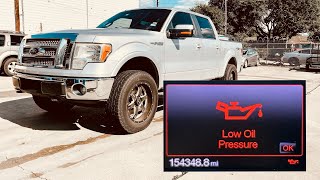
- Incorrect Oil Level Warning — A "Low Oil Level" message appears on the instrument cluster, even when the manual dipstick shows the oil is full. 🎬 See how to fix low oil messages on Ford F-150s.
- Headlight Leveling System Malfunction (Hyundai Genesis) — The automatic headlight leveling feature fails, causing the headlights to aim too high or too low.
- Freeze Frame Data Logged (scan-tool only — no driver-felt sign) — The vehicle's computer stores a snapshot of sensor readings at the exact moment the fault occurred, accessible via a scan tool.
Diagnostic Flowchart
Tap your situation to follow the diagnostic path that matches what you're seeing on this code.
Common Fixes & Costs
- Replace Engine Oil Level Sensor — Parts: $50-$250, Labor: $100-$300, ~1.5 hr book time (Intermediate)
- Replace Convertible Top Bell Crank Switch (Pontiac G6) — Parts: $50-$150, Labor: $200-$400, ~3.0 hr book time (Professional)
- Repair Damaged Wiring Harness or Connector — Parts: $10-$50, Labor: $100-$300, ~2.0 hr book time (Intermediate)
- Replace Body Control Module (BCM) — Parts: $300-$600, Labor: $100-$200, ~1.5 hr book time (Professional)
Used vs. New Parts: Buying Guide
When a used part is worth it: Buying a used OEM oil level sensor is cost-effective for older vehicles where new OEM parts are prohibitively expensive. It is not recommended for critical mechanical components.
Donor-vehicle mileage cap: roughly under 100000 miles for the part to have meaningful remaining life.
Donor quality checklist:
- Ensure the part number matches exactly.
- Purchase from a seller offering a 30-90 day warranty.
- Visually inspect the used sensor for physical damage, corrosion, or brittle wiring.
Decision logic:
- If The cost of a new aftermarket sensor is close to the price of a used OEM sensor → Buy the new aftermarket part for the longer warranty.
- If The vehicle is high-value or newer → Invest in a new OEM part to ensure reliability.
- If The budget is extremely tight and the part is easily accessible → A used part is an acceptable risk.
Warranty tradeoff: Used parts offer a 30-90 day warranty. New aftermarket parts offer 1-year to limited lifetime warranties. New OEM parts carry a 1-2 year manufacturer warranty.
Worst-case if a used part fails: $200-$500 if the used part fails, requiring repeat labor costs plus a new part.
What Happens If You Wait — Timeline
- 0-1 month: Code B1307 sets, illuminating the warning light. The low oil warning system is disabled, but the vehicle drives normally. (MPG impact: 0%% · Added cost: $0)
- 1-6 months: An unnoticed oil leak develops from a seal or gasket. The driver receives no warning. (MPG impact: 0%% · Added cost: $50-$100)
- 6-12 months: The oil level drops critically low. Increased friction overheats internal components, causing premature wear on bearings and camshafts. (MPG impact: 0-5%% · Added cost: $500-$2000)
- 12+ months: Insufficient lubrication causes metal-on-metal contact. Crankshaft bearings weld together, seizing the engine completely. (MPG impact: 100% (vehicle is inoperable)% · Added cost: $5000-$10000)
Cost of Not Fixing It
- 0-3 months: The low oil warning system is disabled. A sudden oil leak goes undetected. For the Pontiac G6, the convertible top remains inoperative. (Added cost: $0 (if no oil leak occurs))
- 3-12 months: An unnoticed oil leak drops the oil level to a critical point, causing increased friction, overheating, and premature wear on bearings and camshafts. (Added cost: $500-$2000)
- 12+ months: Insufficient lubrication causes metal-on-metal contact. Crankshaft bearings weld together, seizing the engine completely and requiring full replacement. (Added cost: $5000-$10000)
Diagnosis Steps
- Verify Code Meaning & Check TSBs
Use a service manual to confirm what B1307 means for your specific year, make, and model. Search for Technical Service Bulletins (TSBs), such as GM's TSB #07-08-67-010C for the Pontiac G6, to identify known manufacturer defects.
Tools: Vehicle-specific service manual, Internet access (Beginner) - Check Engine Oil Level Manually
If the code relates to the oil system, park on level ground, wait for the engine to cool, and use the dipstick to verify the actual oil level. This confirms whether you have a physical oil leak or an electronic sensor fault.
Tools: Rag or paper towel (Beginner) - Visually Inspect Wiring and Connector
Examine the wiring harness connecting to the oil level sensor or convertible top switch. Look for melted plastic, frayed wires, corrosion inside the plug, or pinched wires from recent under-vehicle repairs.
Tools: Flashlight (Beginner) - Test Circuit for Short to Power
With the key on (engine off) and the sensor unplugged, use a multimeter to test the voltage on the signal wire in the connector. A reading of battery voltage (12.0V+) confirms a short to power in the wiring harness.
Tools: Multimeter (Intermediate) - Test the Sensor or Switch
If the wiring tests normal, test the component itself. Check an oil level sensor's internal resistance against service manual specifications. Test a convertible top switch for continuity when manually actuated.
Tools: Multimeter, vehicle service manual (Intermediate) - Perform a Voltage Drop Test
Set your multimeter to DC volts. Place one lead on the negative battery terminal and the other on the sensor connector's ground pin. A reading above 200 millivolts (0.2 volts) indicates high resistance in the ground circuit.
Tools: Multimeter (Advanced) - Monitor Live Data with a Scan Tool
Use an advanced scan tool to monitor live data from the Body Control Module (BCM). For a Pontiac G6, access the Folding Top Control module to verify if the 'Folding Top Bell Crank Switch' status changes when operated.
Tools: Advanced bidirectional scan tool (Advanced)
When This Code Triggers (Freeze-Frame Conditions)
- Engine Coolant Temp: 175-210°F (The fault registers when the engine reaches full operating temperature.)
- RPM: 700-800 RPM (The code sets shortly after startup during idle as the BCM performs initial system checks.)
- Battery Voltage: 13.5-14.5V (The code sets while the engine is running and the alternator is actively charging the system.)
- Vehicle Speed: 0 mph (The fault is detected during the key-on, engine-off state or at idle before driving.)
Related Codes
- B1308 — Means 'Oil Level Switch Circuit Short To Ground.' It points to the exact same components (sensor, wiring) but indicates the signal wire is touching a ground source instead of a power source.
- B1317 — Means 'Battery Voltage High.' If an overcharging alternator triggers B1317, the resulting high system voltage causes the B1307 code. Diagnose the charging system first.
- P0198 — Means 'Engine Oil Temperature Sensor Circuit High.' Vehicles with a combination oil level/temperature sensor trigger both codes simultaneously when the single sensor fails.
- B1010 — On the Pontiac G6, this 'ECU Hardware Malfunction' code appears alongside B1307. TSB #07-08-67-010C warns technicians to fix the switch and wiring before replacing the module.
Climate & Environmental Factors
- High Humidity / Heavy Rain: Moisture penetrates weathered connector seals, causing corrosion on the pins or short circuits that trigger a B1307 code.
- Cold Climates (Rust Belt): Road salt accelerates the degradation of the oil level sensor's plastic housing and exposed wiring harness, making a short circuit highly likely.
How to Talk to a Mechanic About This Code
Say this: "I have a B1307 code on my [Insert Make/Model]. I believe this relates to the [Oil Level Sensor Circuit / Convertible Top Switch]. I've already checked the oil level manually and it's full. I need a diagnostic focusing on testing the sensor/switch and its wiring for a short to power."
This proves you've done research and directs the technician to the correct system, preventing a costly misdiagnosis (like checking the oil on a Pontiac G6).
Avoid saying:
- 'My check engine light is on.'
- 'Just fix the B1307 code.'
- 'I think it's the oil sensor.' (If you have a G6, this guarantees a misdiagnosis)
Questions to ask before authorizing the repair:
- Did you confirm the code's meaning for my specific vehicle in your service database?
- If it's a wiring issue, can you show me exactly where the damage is?
- Are you using an OEM or aftermarket part, and what is the warranty?
- Can you provide a detailed breakdown of the parts and labor costs?
Where to Take It: Dealer vs Independent vs Chain
- Dealer:
Best for: Vehicles under warranty, Complex electrical issues on newer cars (e.g., Hyundai Genesis headlight leveling), Accessing manufacturer-specific TSBs and diagnostic software
Downsides: Highest labor rates, Reluctant to work on older, discontinued models like the Pontiac G6 (Typical cost: +50% vs. baseline) - Independent Shop:
Excellent for the common oil sensor fault. Not recommended for the niche Pontiac G6 issue unless they specialize in GM convertibles.
Best for: Common oil level sensor replacements on out-of-warranty vehicles, General electrical diagnosis and wiring repairs
Downsides: Diagnostic capabilities vary greatly; ensure they have experience with Body Control Module (BCM) diagnostics. (Typical cost: +0% vs. baseline)
When to Walk Away From the Repair
If the estimated repair cost exceeds 50% of the car's private-party value, seriously consider selling or trading it in.
- Car worth $4000, fix is $2100: Walk away. The repair cost is over half the car's value.
- Car worth $12000, fix is $500: Fix it. The repair cost is well below the threshold and restores a critical safety feature.
- Car worth $2500, fix is $600: Borderline. Consider the car's overall condition. If other major repairs are looming, sell it.
What Scan Tool You Need for This Code
Minimum: An OBD-II scanner that reads Body Control Module (BCM) codes. Basic engine code readers cannot see B-series codes.
A standard $20 code reader only checks Powertrain (P-series) codes. You need a tool that communicates with the Body Control Module to diagnose B1307.
Budget: BlueDriver Pro (~$100) — Connects to your smartphone via Bluetooth. Reads BCM codes, views live sensor data to check voltage, and provides freeze-frame data.
Mid-range: Innova 5610 (~$330) — Offers OEM-level diagnostics for GM, reading specific Folding Top Control module data on a Pontiac G6. Provides robust live data graphing for oil sensor circuits.
Professional: Autel MaxiCOM MK808S (~$500) — Offers extensive bidirectional control, allowing you to command modules and switches directly to pinpoint the failure.
Rent vs buy: Auto parts stores offer free scanning, but their tools rarely read BCM codes. Buying a capable scanner like the BlueDriver is mandatory for diagnosing this specific code.
How to Clear the Code After You Fix It
- Use a compatible OBD-II scan tool to erase the Diagnostic Trouble Codes (DTCs).
- Perform a drive cycle to allow the vehicle's onboard computers to re-learn and confirm the repair.
- For the Pontiac G6, fully cycle the convertible top to allow the Folding Top Control module to recognize the fix.
Drive cycle (~20 minutes): Start the engine cold and idle for 3 minutes. Drive in mixed city/highway conditions, maintaining steady speeds between 40-60 mph for 8 minutes. Idle for 2 minutes before shutting off.
Readiness monitors affected: Comprehensive Component Monitor
Before emissions retest: drive at least 50 miles to fully set monitors.
Watch out for:
- Clearing the code without fixing the underlying shorted wire or faulty sensor guarantees the code returns immediately.
Will This Fail Emissions / State Inspection?
Yes — this code typically fails an OBD-II emissions inspection.
- California: A B-series code like B1307 does not cause a smog check failure directly. However, if the check engine light is illuminated for any reason, the vehicle automatically fails the inspection.
- New York: New York's annual safety inspection includes an OBD-II scan. An illuminated check engine light results in an automatic failure.
- Texas: An illuminated check engine light causes an automatic failure in the 17 most populated counties requiring emissions testing.
Most Commonly Affected Vehicles
- Pontiac G6 Convertible (2006-2009) — B1307 indicates a 'Folding Top Bell Crank Switch' fault, disabling the convertible top. It is entirely unrelated to engine oil. Refer to GM TSB #07-08-67-010C.
- Ford F-150, Explorer, Mustang (2004-2014) — Ford uses this code for 'Oil Level Switch Circuit Short To Battery'. The sensor is located on the side of the oil pan and is a frequent failure point.
- BMW 3-Series (E90), 5-Series (E60) (2006-2013) — Indicates an oil level sensor circuit short to battery. Dealership repair quotes are often high due to the sensor's location requiring significant labor.
- Hyundai Genesis (BH) (2009-2014) — B1307 means 'Air suspension ECU sensor signal invalid,' indicating the height sensor signal is out of range, which disables the automatic headlight leveling system.
- Chevrolet Malibu (2008-2012) — Shares the Epsilon platform with the Pontiac G6. Uses this code for the standard oil level circuit fault.
Manufacturer-Specific Notes
- General Motors (Pontiac): On the 2006-2009 Pontiac G6 convertible, B1307 exclusively disables the retractable hardtop system due to a 'Folding Top Bell Crank Switch' failure. It has zero connection to engine oil.
- Hyundai: On the Genesis (BH), B1307 points to the Adaptive Front Lighting System (AFLS). The control module receives an invalid signal from the air suspension's height sensor, disabling auto-leveling headlights.
- Ford: Consistently uses B1307 to indicate a high voltage condition (short to power) in the engine oil level sensor circuit.
- BMW: Defines this code as 'Short circuit interrupting circuit level oils a battery', a direct translation indicating the oil level sensor circuit is shorting to power.
Real Owner Stories
2007 Pontiac G6 Convertible with 26K miles
The convertible top got stuck down after a battery replacement, displaying a 'Top Not Secure' message. Dealers quoted $1000 just for diagnosis.
What they tried:
- Inquired at multiple dealers who refused to guarantee a fix for the discontinued model.
Outcome: The root cause was a failure of the 'Folding Top Bell Crank Switch' (harness 15926163), addressed by GM TSB #07-08-67-010C. The owner used an independent convertible top specialist to replace the switch.
Lesson: For a Pontiac G6 convertible, B1307 is a convertible top fault. Do not let a mechanic replace the oil sensor. Use a shop familiar with GM body codes and TSBs.
2006 Ford F-150 5.4L
After installing a used engine, the check engine light illuminated for the oil level sensor. The replacement engine's oil pan lacked a hole for the sensor.
What they tried:
- Jumped a wire across the connector, which failed to clear the light.
- Plugged the original sensor in and tied the harness out of the way, but the code returned.
Outcome: The computer requires a specific variable signal from the sensor. The shop had to swap the original oil pan (with the sensor port) onto the replacement engine.
Lesson: Bypassing modern vehicle sensors is impossible due to specific signal requirements. Ensure replacement engines match original sensor locations exactly.
BMW E90 with high mileage
The dashboard electronic oil level reading showed 'inactive' (-.-) with an 'oil condition sensor electrical fault' code.
What they tried:
- Replaced the oil level sensor with a genuine part.
- Replaced the entire engine wiring harness with a used one.
Outcome: Both parts failed to fix the issue. Advanced electrical diagnosis revealed the sensor connector lacked a solid ground under load, pointing to a rare DME (ECU) fault rather than a simple wire break.
Lesson: For persistent sensor faults on complex vehicles, test the connector pins for correct voltage and ground under load before condemning expensive control modules.
How to Prevent This Code From Triggering
- Perform Regular Engine Oil and Filter Changes (Per manufacturer's schedule (e.g., 5,000-10,000 miles)) — Prevents sludge buildup that fouls the oil level sensor and causes inaccurate readings.
- Inspect and Clean Electrical Connectors (Every 1-2 years) — Cleaning terminals and applying dielectric grease prevents moisture intrusion, a primary cause of short circuits.
- Secure Wiring Harnesses (During any under-vehicle maintenance) — Routing the harness away from hot exhaust components prevents melted insulation and shorts to power.
- Address Oil Leaks Promptly (As soon as noticed) — Leaking oil saturates electrical connectors and degrades wire insulation, leading to electrical faults.
Frequently Asked Questions
Can I just ignore code B1307 if I know my oil level is full?
No. The warning system is disabled. A future oil leak will go completely unnoticed, resulting in catastrophic engine failure.
My mechanic replaced the oil sensor on my Pontiac G6, but my convertible top still won't work. Why?
This is a misdiagnosis. On a 2006-2009 Pontiac G6, B1307 indicates a faulty convertible top switch, not an oil sensor. You must replace the folding top bell crank switch.
Is it expensive to fix a B1307 code?
Replacing an oil level sensor or a G6 top switch typically costs $150 to $550. Extensive wiring repairs or module replacements push costs higher.
Can a bad battery or alternator cause a B1307 code?
Yes. An overcharging alternator creates high voltage, triggering this code alongside B1317 (Battery Voltage High).
What does 'Circuit Short to Battery' actually mean?
The sensor's signal wire is physically touching a power source. It sends a constant 12V+ to the computer instead of a variable signal.
Can a B1307 code be related to my engine oil temperature?
Yes, if your vehicle uses a combination oil level/temperature sensor. A failed combo sensor triggers both B1307 and P0198 simultaneously.
Do I need a special scan tool to diagnose this code?
A standard OBD-II scanner reads the code, but an advanced tool reading Body Control Module (BCM) live data is required to test switch operation.
Key Takeaways
- Verify the exact B1307 definition for your vehicle's make and model, as it means 'Oil Level Sensor Short' on Fords and BMWs, but 'Convertible Top Switch Failure' on a Pontiac G6.
- Check your engine oil manually with the dipstick immediately; driving with a disabled warning system risks catastrophic engine failure.
- Avoid the $300+ mistake of replacing the oil level sensor on a 2006-2009 Pontiac G6, where this code exclusively disables the retractable hardtop.
- Test the sensor's signal wire with a multimeter; a reading of 12V+ with the key on confirms a short to power in the wiring harness.
Helpful Videos



Shop the Parts Behind B1307
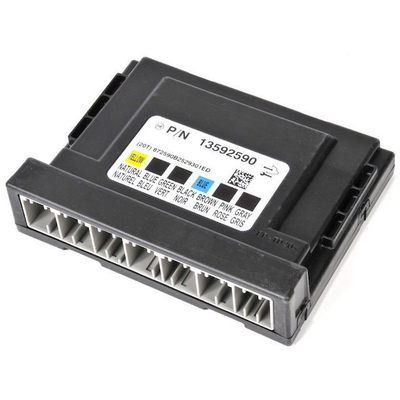
Below are the parts most often responsible for code B1307, ranked by how frequently each one is the actual culprit (per the diagnosis above). Tap any to see what we have for your vehicle.


The information in this article is provided for general reference and educational purposes only. Vehicle specifications, procedures, and part compatibility can vary by production date, trim level, and region. Always consult your vehicle's factory service manual and verify part numbers before purchasing or performing repairs. Safety-critical components such as airbags, seat belts, and braking systems should be installed by a qualified professional.
- 🧭 Diagnostic Flowchart
- 🎬 Helpful Videos
- 🛍️ Shop This Part
- What Does B1307 Mean?
- Can I Drive With B1307?
- Common Causes
- Symptoms
- Common Fixes & Costs
- Used vs. New Parts: Buying Guide
- What Happens If You Wait — Timeline
- Cost of Not Fixing It
- Diagnosis Steps
- When This Code Triggers (Freeze-Frame Conditions)
- Related Codes
- Climate & Environmental Factors
- How to Talk to a Mechanic About This Code
- Where to Take It: Dealer vs Independent vs Chain
- When to Walk Away From the Repair
- What Scan Tool You Need for This Code
- How to Clear the Code After You Fix It
- Will This Fail Emissions / State Inspection?
- Most Commonly Affected Vehicles
- Manufacturer-Specific Notes
- Real Owner Stories
- 2007 Pontiac G6 Convertible with 26K miles
- 2006 Ford F-150 5.4L
- BMW E90 with high mileage
- How to Prevent This Code From Triggering
- Frequently Asked Questions
- Can I just ignore code B1307 if I know my oil level is full?
- My mechanic replaced the oil sensor on my Pontiac G6, but my convertible top still won't work. Why?
- Is it expensive to fix a B1307 code?
- Can a bad battery or alternator cause a B1307 code?
- What does 'Circuit Short to Battery' actually mean?
- Can a B1307 code be related to my engine oil temperature?
- Do I need a special scan tool to diagnose this code?
- Key Takeaways
- 🎟️ Get 5% Off