

OBD-II Code B1311: Manufacturer-Specific Body Circuit Fault
What B1311 means, why it triggers, and how to fix it across multiple brands
- Code B1311 has no universal definition; you must look up the specific meaning for your exact vehicle make, model, and year before diagnosing.
- On GM vehicles, B1311 almost always indicates a failed ambient air temperature sensor circuit, which disables the A/C and defaults the dash readout to -40°F.
- Scan all vehicle modules; if B1311 appears alongside other body codes (like B130D on a Nissan), the root cause is a central control module or software failure, not an individual component.
- While usually a non-essential body system fault, a B1311 on a 1995-1996 Saab 900 indicates a critical coolant sensor failure that causes catastrophic engine overheating.
What Does B1311 Mean?
B1311 is a manufacturer-specific Body Diagnostic Trouble Code (DTC). Its definition changes entirely depending on your vehicle's make, model, and year. It universally points to an electrical circuit fault within the Body Control Module's (BCM) domain. For example, on 2018-2022 Nissan Kicks, it indicates an 'Open Load' in the rear left speaker circuit. On Chevrolet vehicles, it signifies a 'Short Circuit' in the outside air temperature sensor. On Ford models, it means 'Power Door Unlock Circuit Failure'.
Technical definition: The formal SAE/OBD-II definition of code B1311 is not standardized. Automakers assign it to specific faults within the body control system. Registered definitions include 'Rear Left Speaker Open Load' (Nissan), 'Outside Air Temp Sensor Short Circuit' (Chevrolet), 'Power Door Unlock Circuit Open' (Ford), 'Soft Top Open Position Sensor Circuit Short to B+' (Saab 9-3), and 'Driver Seat Position Memory Sensor' (Hyundai).
Can I Drive With B1311?
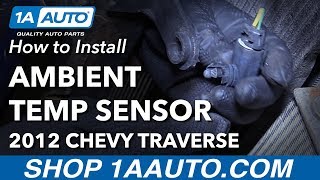
Yes, But With Caution. In most cases, this code relates to non-essential systems like the radio, power locks, or ambient temperature sensors, making the vehicle safe to drive. However, the fault disables important related functions. For example, on Chevrolet vehicles, a faulty ambient air temperature sensor stops the A/C compressor. 🎬 Watch: How to replace the ambient temperature sensor on a Chevy. A rare but critical definition on 1995-1996 Saabs links B1311 to the engine coolant temperature sensor. Do not drive in this specific case; the inability to monitor engine temperature causes severe overheating and catastrophic engine damage.
Common Causes
- Wiring Harness Damage (Very Common) — A broken, corroded, shorted, or chewed wire is the primary cause. This occurs frequently for sensors located in vulnerable areas like behind the front grille (ambient temp sensor) or in high-movement areas like door jambs. Rodents chewing on soy-based wire insulation is a major contributor.
- Loose or Corroded Connector (Common) — The electrical connector at the component or control module is loose, disconnected, or has pins corroded by water intrusion. This interrupts the signal and is highly prevalent in regions that use road salt.
- Blown Fuse or Faulty Relay (Common) — A blown fuse or a failing relay that provides power to the specific circuit triggers this code. This is the easiest and cheapest failure point to check first.
- Faulty Component (Sensor, Speaker, Actuator) (Common) — The specific part the code refers to—such as a door lock actuator, speaker, convertible top position sensor, or ambient air temperature sensor—has failed internally.
- Faulty Control Module (Less Common) — The control module supervising the circuit (e.g., Body Control Module, Audio Head Unit) has an internal failure. This is the definitive cause when multiple related codes appear simultaneously, such as all speaker circuits faulting at once on a Nissan Kicks.
- Faulty Intelligent Battery Sensor (IBS) (Less Common) — On modern BMWs, a failing Intelligent Battery Sensor (IBS) connected to the negative battery terminal causes widespread, seemingly random electrical faults and triggers various body codes as it fails to manage the vehicle's power state.
- Incorrect Part or Programming (Rare) — If a control module like a BCM or radio head unit was recently replaced, it requires dealer-level programming to work with the vehicle's specific configuration. Using an incompatible part sets this code.
Symptoms
- Inoperative Feature — The associated component fails completely. A speaker goes silent, a power lock does not function, a convertible top gets stuck, or the outside temperature display shows an illogical value like -40°F.
- Malfunctioning Automatic Climate Control — On GM vehicles where B1311 relates to the ambient air temp sensor, the A/C system stops blowing cold air because the computer believes the outside temperature is too low to engage the compressor.
- Warning Light on Dashboard — A Check Engine Light, a general BCM fault light, or a system-specific warning (like for the convertible top or security system) illuminates.
- Intermittent Operation — The feature works sporadically, influenced by vehicle movement, bumps, temperature changes, or moisture, confirming a loose connection or damaged wire.
- Battery Drain — On Fords, a fault in the BCM circuits causes modules to stay awake when the car is off, leading to a dead battery. On older Saabs, a B1311 causes the radiator fan to run continuously, draining the battery.
Diagnostic Flowchart
Tap your situation to follow the diagnostic path that matches what you're seeing on this code.
Common Fixes & Costs
- Repairing Damaged Wiring — Parts: $5-$25, Labor: $120-$360 (1-3 hours of diagnostic/repair time), ~2 hr book time (Intermediate)
- Replacing an Ambient Air Temperature Sensor (Chevy/GM) — Parts: $15-$50, Labor: $80-$150, ~0.8 hr book time (DIY)
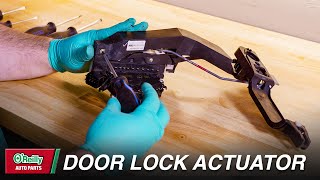
- Replacing a Door Lock Actuator (Ford) — Parts: $50-$250, Labor: $100-$300, ~1.5 hr book time (Intermediate)
- Replacing a Nissan Kicks Infotainment Head Unit — Parts: $250 (used) - $1800+ (new OEM), Labor: $200-$500 (includes dealer programming), ~2.5 hr book time (Professional)
- Replacing an Intelligent Battery Sensor (BMW) — Parts: $150-$300, Labor: $120-$240 (may require battery registration), ~1.2 hr book time (Intermediate)
- Replacing a Saab 9-3 Convertible Top Position Sensor — Parts: $70 (splice-in sensor) - $430 (genuine assembly), Labor: $150-$300, ~2 hr book time (Intermediate)
Used vs. New Parts: Buying Guide
When a used part is worth it: For high-cost electronic modules like a Nissan Kicks head unit, a used part from a reputable salvage yard offers significant savings ($250 used vs. $1800+ new). Simple mechanical parts like door lock actuators are also good candidates for used purchase if from a low-mileage vehicle.
Donor-vehicle mileage cap: roughly under 75000 miles for the part to have meaningful remaining life.
Donor quality checklist:
- Match the OEM part number exactly, especially for electronic modules.
- For electronic parts, ensure the donor vehicle was not scrapped due to electrical or flood damage.
- Ask for the donor vehicle's VIN to verify compatibility if possible.
Decision logic:
- If The part is a simple, inexpensive sensor (e.g., GM ambient temp sensor) → Buy new. The cost savings for a used part are minimal and not worth the risk of premature failure.
- If The part is a complex electronic module (e.g., Radio, BCM) and requires programming → Factor in the cost of dealer programming ($150-$300) when comparing used vs. new prices.
- If The part is a common wear item (e.g., door lock actuator) → A new aftermarket part with a warranty provides a better value than a used OEM part with unknown history.
Warranty tradeoff: Used parts typically come with a 30-90 day warranty. New aftermarket parts carry a 1-year to limited lifetime warranty. New OEM parts have a 1-year warranty.
Worst-case if a used part fails: $300-$600 if a used electronic module fails after installation, requiring repeat labor costs for removal, return, and installation of another unit.
What Happens If You Wait — Timeline
- Immediate (GM Ambient Temp Sensor Failure): Code B1311 sets, outside temperature display defaults to -40°F. The automatic climate control system disables the A/C compressor clutch as a protective measure. (MPG impact: 0%% · Added cost: $0 (Primary impact is loss of A/C comfort))
- 1-4 Weeks (Ford/Nissan BCM Parasitic Drain): A faulty module or component controlled by the BCM fails to go to 'sleep', causing a persistent small battery drain. The car is slow to crank after sitting for 2-3 days. (MPG impact: 0%% · Added cost: $200-$400 (Deeply discharging the battery repeatedly shortens its lifespan, requiring premature replacement.))
- 1-6+ Months (Saab 9-3 Convertible Top Sensor): An intermittent sensor fault becomes a hard failure. The top gets stuck, potentially not fully closed. Water leaks into the cabin and trunk, damaging interior fabrics and electronics. (MPG impact: 0%% · Added cost: $500-$1500+ (Cost to repair water damage to interior and other electronic modules.))
- Minutes to Hours (Saab 900 Coolant Sensor Failure): The ECU loses its ability to read engine temperature. The radiator fan runs constantly as a fail-safe, but the engine overheats rapidly without the driver being aware. Driving the vehicle leads to a blown head gasket or complete engine seizure. (MPG impact: N/A% · Added cost: $2,500-$5,000+ (Cost for major engine repair or replacement due to overheating.))
Cost of Not Fixing It
- Immediate: Loss of function for the associated component (e.g., no A/C, inoperable power lock, silent speaker). This is primarily an inconvenience. (Added cost: $0)
- 1-6 months: On some Ford or BMW models, a BCM-related fault causes parasitic battery drain, leading to a dead battery and the need for a replacement. For Saab 9-3 convertibles, a stuck top leads to water leaks and interior damage. (Added cost: $200-$500)
- Ongoing (Saab 900 Specific): If the code relates to the coolant temperature sensor, ignoring it leads to severe engine overheating, a blown head gasket, or a warped cylinder head. (Added cost: $1,500-$5,000+)
Diagnosis Steps
- Identify the Vehicle-Specific Definition
Use a search engine or professional service manual to find what B1311 means for your exact make, model, and year. All subsequent diagnosis depends entirely on this definition.
Tools: Internet access (Beginner) - Perform a Full System Scan
Use an OBD-II scanner capable of reading Body ('B'), Chassis ('C'), and Network ('U') codes. Note all present codes. Multiple related codes (e.g., B1311, B130D, B130F on a Nissan) point to a central module or software issue, not an individual component.
Tools: Advanced OBD-II Scanner (Beginner) - Check Fuses and Relays
Consult the owner's manual to locate and inspect the fuse for the system identified in Step 1 (e.g., 'Radio,' 'Power Locks,' 'BCM'). Replace any blown fuses.
Tools: Owner's manual, fuse puller (Beginner) - Visually Inspect Wiring and Connectors
Locate the relevant component and visually inspect its wiring harness and connector for chafing, breaks, melting, or corrosion. Focus on areas where harnesses pass through the body or are exposed to the elements.
Tools: Flashlight, inspection mirror (Intermediate) - [Pro Tip] Check for Technical Service Bulletins (TSBs)
Search for TSBs related to code B1311 for your vehicle. For example, Nissan TSB NTB22-034 for the Kicks advises that B1311 with other speaker codes requires a head unit software update or replacement, not a new speaker.
Tools: Internet access (Intermediate) - [Pro Tip] Analyze Live Sensor Data
If the code relates to a sensor, use your scan tool's live data function to observe its reading. For a Chevy ambient temp sensor, a reading stuck at -40°F confirms a circuit fault. For a Saab 900 coolant sensor, the scan tool shows a default of 215°C if the circuit is faulty.
Tools: Advanced OBD-II Scanner (Intermediate) - [Pro Tip] Test Circuit Integrity with a Multimeter
Disconnect the component and the control module. Using a multimeter, check for continuity on the signal and ground wires from end to end (should be <1 ohm), check for a short to ground on the signal wire (should be OL), and check for a short to power (should be OL).
Tools: Multimeter, vehicle-specific wiring diagram (Advanced) - [Pro Tip] Perform Component-Specific Resistance Checks
Test the component itself to separate a component failure from a wiring failure. For a speaker, measure resistance between its terminals (typically 2-8 ohms). For a sensor, check its resistance and compare it to the service manual chart.
Tools: Multimeter (Advanced) - [Advanced] Test GM Ambient Temp Sensor Resistance
Disconnect the GM ambient air temp sensor. Set a multimeter to Ohms (Ω). A common GM sensor reads approximately 2,200-3,000Ω at 20°C (68°F) and 250-350Ω at 80°C (176°F). An open circuit (OL) or a dead short (near 0Ω) confirms sensor failure.
Tools: Multimeter, thermometer (Advanced) - [Advanced] Test Saab 900 Coolant Temp Sensor Resistance
Disconnect the Saab 900 NTC sensor. Measure resistance across its two pins. Key values are approximately 2,200–3,000Ω at 20°C (68°F) and 320Ω at 80°C (176°F). A reading far outside this range indicates a faulty sensor.
Tools: Multimeter, service manual with chart (Advanced) - [Advanced] Check Coolant Sensor Voltage Drop
Back-probe the sensor connector with the engine running. On a typical 5V reference circuit, the voltage should be high when cold (e.g., 3.0-3.5V at 20°C) and drop as the engine warms up (e.g., 1.0-1.3V at 80°C). A static voltage points to a circuit fault.
Tools: Multimeter with back-probe pins (Advanced)
When This Code Triggers (Freeze-Frame Conditions)
- Vehicle State: Key On, Engine Off or Running (BCM performs self-tests upon power-up and during operation.)
- Battery Voltage: 11.8-12.6V (Engine Off) or 13.2-14.8V (Engine On) (Code sets if voltage is unstable or outside the normal range.)
- Component Command State: On/Active (Fault is detected when the BCM commands a specific function (e.g., 'unlock doors,' 'read sensor') and does not receive the expected electrical response.)
- Time Since Start: 0-5 minutes (Many body circuit faults are detected during the initial system checks that occur shortly after the vehicle is started.)
Related Codes
- B130D / B130F — On Nissan Kicks, these codes for the 'Front Right Speaker' and 'Front Left Speaker' are crucial for diagnosis. If they appear alongside B1311, the problem is the central audio head unit or its software. If B1311 appears alone, the fault is in the rear left speaker circuit.
- P0073 / P0072 — On GM vehicles, these codes for 'Ambient Air Temperature Sensor Circuit High' or 'Low' are the powertrain equivalents of the B1311 body code. Their presence confirms the fault lies within the ambient temp sensor circuit.
- B1305 / B1306 — On a Mitsubishi Eclipse Spyder, these codes for the tonneau latch switches are directly related to B1311. Diagnose B1305 and B1306 first, as a failure in a latch switch causes the illogical sensor state that triggers B1311.
- B1310 / P0230 — On Ford F-150s, B1310 (Run/Start Control) and P0230 (Fuel Pump Primary Circuit) appearing with B1311 indicate a systemic problem, such as a faulty Body Control Module (BCM) or a compromised wiring harness.
Climate & Environmental Factors
- High Humidity & Road Salt: Saltwater acts as an electrolyte, dramatically accelerating corrosion on connector pins and wire harnesses, especially on the underbody and behind the front grille. This is the primary driver of GM ambient temp sensor circuit failures.
- Cold Weather: Cold temperatures make wire insulation brittle and prone to cracking, creating entry points for moisture. It also drives rodents to seek shelter in warm engine bays, leading to chewed wires.
- Rodent Infestation: Rodents chewing on wiring is a significant cause of open and short circuits. Modern soy-based wire insulation is particularly attractive to them. Damage is often found in hidden areas of the engine bay.
How to Talk to a Mechanic About This Code
Say this: "I have a body code, B1311, and a specific symptom. For my [Vehicle Make/Model], this code means [Specific Definition, e.g., 'Ambient Temp Sensor Fault']. The symptom is [Symptom, e.g., 'my A/C isn't working and the dash reads -40 degrees']. I'd like to book a diagnostic appointment to confirm the cause, focusing on the [Component] and its wiring."
This language shows you've done your research and moves the conversation from a vague complaint to a specific diagnostic task. It helps the shop assign the right technician and prevents them from starting from scratch, saving diagnostic time and money. It also frames the repair around a specific system, reducing the chance of unrelated upsells.
Avoid saying:
- 'My check engine light is on.' (This is a body code, it may not be the Check Engine Light)
- 'Just fix whatever's wrong.' (This is an open invitation for unnecessary repairs and a high bill)
- 'My friend says it's the...' (Let the technician diagnose the issue based on facts, not guesses)
Questions to ask before authorizing the repair:
- What was the specific cause of the B1311 code? Was it the component, the wiring, or a connector?
- Can you show me the damaged part or a picture of the wiring issue?
- Is this a common failure on this model? Are there any Technical Service Bulletins (TSBs) for it?
- What is the warranty on the new part and the labor for this repair?
- Will you provide a written estimate with a full breakdown of parts and labor before you begin the work?
Where to Take It: Dealer vs Independent vs Chain
- Dealer:
Recommended for programming-intensive fixes (Nissan head unit, BMW IBS) or if the car is under warranty.
Best for: Vehicles under warranty., Complex, brand-specific issues like a Nissan head unit failure or a BMW IBS sensor fault., Repairs that require manufacturer-specific software updates or programming.
Downsides: Typically highest labor rates and part costs., Defaults to replacing a large assembly instead of repairing a smaller component. (Typical cost: +40% vs. baseline) - Independent Shop:
Best fit for most B1311 scenarios, provided the shop is well-regarded and specializes in electrical diagnostics.
Best for: Out-of-warranty vehicles with common, well-documented B1311 definitions (e.g., GM temp sensor, Ford door lock actuator)., Wiring repairs and component-level diagnosis., Owners looking for a better value and a direct relationship with the technician.
Downsides: Quality and equipment vary greatly; ensure they have advanced scanners that read 'B' codes., Lacks access to the very latest manufacturer software updates. (Typical cost: +0% vs. baseline) - Chain Shop:
AVOID. The risk of misdiagnosis and unnecessary part replacement is very high for a nuanced body code like B1311.
Best for: Not recommended for this type of diagnostic work.
Downsides: Technicians lack the specialized electrical diagnostic skills required., High pressure to sell parts rather than perform detailed wiring or circuit diagnosis., Their scanners cannot properly read manufacturer-specific body codes. (Typical cost: -10% vs. baseline)
When to Walk Away From the Repair
If the estimated repair cost exceeds 40-50% of the car's private-party value, it's time to pause and reconsider the repair.
- Car worth $4000, fix is $2200: Walk away. The repair cost for the Nissan head unit is over 50% of the car's value.
- Car worth $8000, fix is $250: Fix it. The cost to replace the GM ambient temperature sensor is well below the threshold.
- Car worth $2500, fix is $1500: Walk away. A major engine repair on the Saab 900 due to overheating far exceeds the car's value.
What Scan Tool You Need for This Code
Minimum: A scanner that reads and clears manufacturer-specific Body ('B') codes from the Body Control Module (BCM).
A standard $20 code reader only checks for Powertrain ('P') codes from the engine computer. It will not see, read, or clear the B1311 code, making it useless for this diagnosis.
Budget: MUCAR BT200 Max / XTOOL A30D (~$60-90) — These smartphone-based dongles offer full system scanning, including Body Control Modules, and read and clear B1311. Some offer limited bidirectional tests, which is exceptional at this price.
Mid-range: BlueDriver Pro / Foxwell NT510 Elite (~$100-180) — BlueDriver offers excellent repair reports that suggest common fixes for your specific vehicle and code. The Foxwell NT510 Elite provides deep, manufacturer-specific diagnostics and performs service functions, useful for BMW battery registration.
Professional: Autel MaxiCOM MK808S / Launch CRP919E (~$450-600) — These are full-featured tablets that provide bidirectional control to test components (e.g., command a door lock to cycle), view extensive live data, and perform advanced service resets and coding required for module replacements.
Rent vs buy: Most auto parts stores like AutoZone no longer rent scanners due to liability issues, though some offer a 'loan-a-tool' program where you buy the tool and get a full refund on return. However, these loaner tools are often basic readers that cannot see 'B' codes. For B1311, you must buy your own capable scanner.
How to Clear the Code After You Fix It
- Use a compatible OBD-II scan tool to clear the 'B' code from the Body Control Module.
- Turn the ignition off and then on again.
- Operate the repaired component multiple times (e.g., lock/unlock doors, test the speaker, check temperature reading) to confirm the fix.
Drive cycle (~15 minutes): Unlike emissions codes, most B-codes do not require a complex drive cycle. After clearing the code, a short 10-15 minute drive combining city and highway speeds is sufficient for the BCM to re-run its internal checks. For a BMW IBS, the system needs to see a full cold start (after sitting 6-8 hours) to recalibrate.
Readiness monitors affected: None
Watch out for:
- Using a basic code reader that cannot access or clear 'B' (Body) codes.
- Simply disconnecting the battery does not clear the code from the BCM's memory.
- The code returns immediately if the underlying electrical fault has not been properly repaired.
Will This Fail Emissions / State Inspection?
No — by itself this code doesn't fail OBD inspection (but it can keep readiness monitors from setting, which causes a separate fail).
- California: A 'B' code like B1311 will not, by itself, cause a smog check failure. The inspection primarily focuses on 'P' (Powertrain) codes and readiness monitor status. However, if the B1311 is accompanied by an illuminated Check Engine Light, it will fail.
- New York: The NYS inspection checks for the presence of the Check Engine Light. If the B1311 fault triggers the main Check Engine Light, the vehicle fails. If it only illuminates a system-specific light, it passes the emissions portion.
- Texas: Texas vehicle inspections look for 'P' codes. A B1311 will not cause a failure unless the Check Engine Light is also commanded on by the fault.
Most Commonly Affected Vehicles
- Nissan Kicks, Leaf (2018-2022) — Commonly means 'Rear Left Speaker Open Load'. Per TSB NTB22-034, if it appears with B130D and B130F, the cause is a faulty infotainment head unit or a needed software update, not the speaker.
- Chevrolet / GMC / Cadillac Silverado, Cruze, Equinox, Malibu, Sierra, etc. (2000-2024) — Widely defined as 'Outside Air Temp Sensor Short Circuit'. A faulty sensor or damaged wiring near the grille defaults the reading to -40°F, disabling the A/C.
- Saab 9-3 (2004-2012) — On convertibles, B1311 indicates a fault with a soft top position sensor (e.g., 'Short to B+'), causing the top to get stuck.
- Ford Focus, F-150, Various (2000-2018) — Definitions vary. On a Focus, it means 'Power Door Unlock Circuit Failure'. On F-150s, it appears with codes like B1310 and P0230, pointing towards a failing BCM or a wiring problem causing a no-start.
- BMW 3-Series (E90/E92), 5-Series (E60), etc. (2006-2013) — The hex code 9311, equivalent to B1311, means 'Feeding circuit opening door open circuit'. However, many electrical gremlins on these models trace back to a failing Intelligent Battery Sensor (IBS).
- Mitsubishi Eclipse Spyder (2006-2012) — Relates to the convertible top control module detecting an impossible signal combination, specifically when a tonneau latch switch and the tonneau position sensor are 'ON' simultaneously.
- Hyundai Various (2010-2019) — Refers to a fault in the 'Driver's seat position memory sensor - front/rear', which causes the memory seat function to fail.
- Saab 900 (1995-1996) — An older, critical definition where B1311 indicates the coolant temperature is out of range. This causes the radiator fan to run continuously as a fail-safe. Resistance should be ~2.5 kOhms at 20°C.
Manufacturer-Specific Notes
- Nissan: For 2018-2022 Kicks, B1311 almost never means the speaker is bad. The issue is consistently traced to the infotainment head unit or its software, as documented in TSB NTB22-034.
- General Motors: A B1311 fault (Ambient Temp Sensor Short) defaults the temperature reading to -40°F. This false reading causes the climate control logic to prevent the A/C compressor clutch from engaging.
- Saab: B1311 has two completely different and critical meanings depending on the model. On the 900, it is a serious cooling system fault. On the 9-3 convertible, it is a fault in the soft top mechanism.
- BMW: Many seemingly unrelated body electrical codes, including the equivalent of B1311 (9311), are symptoms of a failing Intelligent Battery Sensor (IBS). Its failure disrupts communication and power to various modules.
Real Owner Stories
2011 Chevy Cruze with ~100k miles
A/C suddenly started blowing warm air. The outside temperature display on the dash was stuck at -40°F, even on a hot day. Code B1311 was present.
Outcome: The owner located the sensor behind the front grille, found the wiring had been damaged by road debris, and spliced the wires back together. The temperature reading returned to normal and the A/C compressor engaged. Total cost was under $10 for wire and connectors.
Lesson: On GM vehicles with B1311 and a non-working A/C, always inspect the wiring to the ambient temp sensor before replacing the sensor itself. The location makes the wiring vulnerable to damage.
2019 Nissan Kicks at 45K miles
Owner experienced loud, static crackling from all speakers, which eventually led to the audio system going completely silent. Multiple speaker codes were stored: B1311, B130D, and B130F.
Outcome: The dealership confirmed the diagnosis of a failed internal amplifier in the infotainment head unit. The entire unit was replaced under warranty, resolving all audio issues. Out-of-warranty cost would have been over $1,800.
Lesson: If you have a Nissan Kicks with B1311 accompanied by other speaker codes (B130D, B130F), do not replace the speakers. The problem is the head unit, as specified in the TSB.
2009 Ford Focus with 120K miles
Driver's side power door lock stopped working intermittently, then failed completely. The lock would not respond to the key fob or the interior switch. Code B1311 'Power Door Unlock Circuit Failure' was stored.
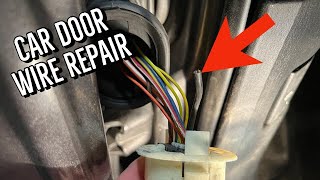
Outcome: Following the wiring harness from the door into the car's body, they pulled back the rubber boot in the door jamb and found a broken wire. Repairing the broken wire restored function to the lock.
Lesson: For door-related electrical faults, always inspect the wiring harness in the flexible door jamb boot for broken wires before replacing expensive components like actuators or switches.
2008 Saab 9-3 Convertible
The convertible top stopped midway through its opening cycle, and the dash displayed a 'Manual Operation Only' message. Code B1311 was found with a Saab-specific scanner.
Outcome: The sensor had become overly sensitive. Instead of replacing the expensive sensor assembly, the owner added a small spacer to move the sensor slightly away from the hydraulic cylinder. This provided a stable signal to the control module, allowing the top to function correctly.
Lesson: On complex systems like convertible tops, a capable scan tool that shows live data is invaluable. Sometimes, a minor physical adjustment to a sensor is a creative, no-cost fix.
How to Prevent This Code From Triggering
- Apply Dielectric Grease to Exposed Connectors (Every 1-2 years or during any related service) — Applying a thin layer of non-conductive dielectric grease to the seals of electrical connectors prevents moisture and road salt from entering and causing corrosion, which is a primary cause of circuit faults.
- Install Rodent-Deterrent Tape (Once, or as needed) — Modern soy-based wire insulation attracts rodents. Wrapping vulnerable harnesses with specialized capsaicin (hot pepper) infused tape makes the wiring unpalatable and prevents chewing.
- Perform Regular Undercarriage Washes (Weekly or bi-weekly during winter in salt-belt regions) — Regularly washing the vehicle's underbody removes the buildup of corrosive road salt. This significantly reduces the rate of corrosion on exposed wiring, connectors, and ground points.
- Secure and Inspect Wiring Harnesses (During any under-hood maintenance (e.g., oil change)) — Periodically check that wiring harnesses are properly secured in their clips and are not rubbing against sharp metal edges. Vibration causes chafing that wears through insulation over time.
Frequently Asked Questions
Why can't I find one single definition for code B1311?
Because B1311 is a 'Body' code, its meaning is not standardized by the SAE like 'Powertrain' codes. Each car manufacturer assigns it to different faults in different models, ranging from speakers in a Nissan to seat sensors in a Hyundai.
Is it safe to drive with code B1311?
Usually, yes, because the code typically refers to a comfort or convenience feature that doesn't impact safety. The main exception is the 1995-1996 Saab 900, where it indicates a coolant sensor fault that causes engine overheating.
Why is my A/C not working with a B1311 code?
On GM vehicles, B1311 means the ambient air temperature sensor circuit failed. The system defaults to a reading of -40°F. The climate control logic disables the A/C compressor because it thinks the outside air is freezing.
Can I fix a B1311 code myself?
It depends heavily on the specific fix required for your vehicle. Replacing a GM ambient temp sensor is a beginner-friendly DIY job requiring basic hand tools. Diagnosing wiring, replacing a door lock actuator, or programming a Nissan head unit requires intermediate to professional skills.
My scanner doesn't show any 'B' codes. What should I do?
Basic code readers only read Powertrain ('P') codes from the engine computer. To read B1311, you must use an advanced scanner capable of accessing Body ('B'), Chassis ('C'), and Network ('U') modules.
Why did the code appear after hitting a pothole or getting a car wash?
This strongly indicates a poor electrical connection. A physical jolt disturbs loose connectors or frayed wires, while water penetrates poorly sealed connectors to cause a short circuit.
The shop wants to replace a whole module for over $1000. Is that necessary?
It is sometimes necessary, such as on a Nissan Kicks where multiple speaker codes dictate replacing the entire infotainment head unit. Always ask the shop to check for software updates via TSBs before authorizing a full module replacement.
What is a common misdiagnosis for B1311?
The most common mistake is replacing the component without testing the wiring circuit first. Examples include replacing a Chevy temperature sensor when a rodent chewed the wiring, or replacing a Nissan speaker when the head unit is the actual failure point.
Key Takeaways
- Code B1311 has no universal definition; you must look up the specific meaning for your exact vehicle make, model, and year before diagnosing.
- On GM vehicles, B1311 almost always indicates a failed ambient air temperature sensor circuit, which disables the A/C and defaults the dash readout to -40°F.
- Scan all vehicle modules; if B1311 appears alongside other body codes (like B130D on a Nissan), the root cause is a central control module or software failure, not an individual component.
- While usually a non-essential body system fault, a B1311 on a 1995-1996 Saab 900 indicates a critical coolant sensor failure that causes catastrophic engine overheating.
Helpful Videos
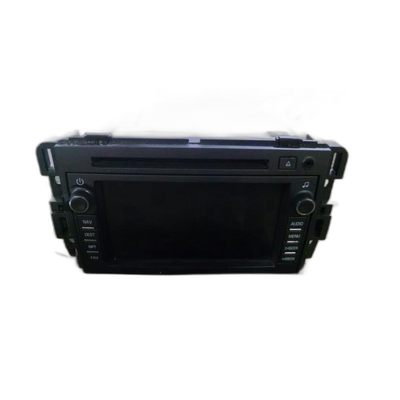
Shop the Parts Behind B1311
Below are the parts most often responsible for code B1311, ranked by how frequently each one is the actual culprit (per the diagnosis above). Tap any to see what we have for your vehicle.



The information in this article is provided for general reference and educational purposes only. Vehicle specifications, procedures, and part compatibility can vary by production date, trim level, and region. Always consult your vehicle's factory service manual and verify part numbers before purchasing or performing repairs. Safety-critical components such as airbags, seat belts, and braking systems should be installed by a qualified professional.
- 🧭 Diagnostic Flowchart
- 🎬 Helpful Videos
- 🛍️ Shop This Part
- What Does B1311 Mean?
- Can I Drive With B1311?
- Common Causes
- Symptoms
- Common Fixes & Costs
- Used vs. New Parts: Buying Guide
- What Happens If You Wait — Timeline
- Cost of Not Fixing It
- Diagnosis Steps
- When This Code Triggers (Freeze-Frame Conditions)
- Related Codes
- Climate & Environmental Factors
- How to Talk to a Mechanic About This Code
- Where to Take It: Dealer vs Independent vs Chain
- When to Walk Away From the Repair
- What Scan Tool You Need for This Code
- How to Clear the Code After You Fix It
- Will This Fail Emissions / State Inspection?
- Most Commonly Affected Vehicles
- Manufacturer-Specific Notes
- Real Owner Stories
- 2011 Chevy Cruze with ~100k miles
- 2019 Nissan Kicks at 45K miles
- 2009 Ford Focus with 120K miles
- 2008 Saab 9-3 Convertible
- How to Prevent This Code From Triggering
- Frequently Asked Questions
- Why can't I find one single definition for code B1311?
- Is it safe to drive with code B1311?
- Why is my A/C not working with a B1311 code?
- Can I fix a B1311 code myself?
- My scanner doesn't show any 'B' codes. What should I do?
- Why did the code appear after hitting a pothole or getting a car wash?
- The shop wants to replace a whole module for over $1000. Is that necessary?
- What is a common misdiagnosis for B1311?
- Key Takeaways
- 🎟️ Get 5% Off