

OBD-II Code B1322: A Multi-Faceted Fault - Driver Door Ajar, Satellite Antenna, or Occupant Sensor Circuit
The Ultimate Guide to Understanding, Diagnosing, and Fixing Code B1322
- Code B1322 requires manufacturer-specific diagnosis: it indicates a door ajar fault on Fords, a satellite antenna issue on GMs, and a critical airbag failure on Subarus, Kias, and BMWs.
- For Ford vehicles, the majority of B1322 codes stem from a broken black ground wire inside the driver's door jamb rubber boot, costing $15 to fix rather than $200 for a new latch.
- On SRS-equipped vehicles (Subaru, Kia, BMW), this code completely disables the passenger airbag, requiring immediate professional diagnosis and often a $1,000+ seat sensor replacement unless covered by recalls like Subaru WRA-24.
- Replacing an Occupant Detection System (ODS) sensor mandates a system calibration using a $350+ bidirectional scan tool; the B1322 code will not clear until this zero-point adjustment is completed.
What Does B1322 Mean?
B1322 is a Body Control Module (BCM) or Supplemental Restraint System (SRS) code with completely different meanings based on the manufacturer. For Ford, Lincoln, and Mercury, it points to a fault in the driver's door ajar switch circuit. For General Motors and Chrysler, it indicates an issue with the satellite radio antenna circuit. For Kia, Hyundai, Subaru, and BMW, it signifies a fault in the passenger seat Occupant Detection System (ODS), a critical safety component controlling passenger airbag deployment.
Technical definition: Ford/Lincoln/Mercury: Driver Door Ajar Circuit Short To Ground or Open. | General Motors/Chrysler: Satellite Radio (SDARS) Antenna Circuit Fault. | Kia/Hyundai: Weight Classification System (WCS) Sensor Circuit Fault. | Subaru: Occupant Detection System (ODS) Failure. | BMW: Seat Occupancy Sensor Mat Fault. | Mazda: Invalid Data Received From Body Control Module. | Suzuki: Left/Right Side-Airbag Initiator Circuit Resistance Low.
Can I Drive With B1322?
Yes, but with significant caution depending on the manufacturer.. If your vehicle is a Ford, Lincoln, or Mercury, driving is safe, but interior lights staying on causes severe battery drain. For GM or Chrysler vehicles, driving is completely unaffected aside from losing satellite radio. However, if you drive a Kia, Hyundai, Subaru, or BMW, this code indicates a critical Occupant Detection System (ODS) fault. The passenger airbag is disabled, drastically increasing injury risk in a collision. Avoid carrying front-seat passengers and take the vehicle to a certified SRS technician immediately.
Common Causes
- Broken or frayed wires in the driver's door jamb (Ford) (Very Common) — Wires running between the driver's door and the body flex every time the door opens. Over thousands of cycles, these wires fatigue and break, causing an open or short circuit. The black ground wire is the most frequent culprit.
- Defective passenger seat Occupant Detection Sensor (ODS) mat (Subaru, BMW, VW, Kia) (Very Common) — The pressure-sensitive mat integrated into the front passenger seat cushion fails from daily wear and tear, liquid spills, or internal short circuits from cracked capacitors. Minor physical impacts can also permanently fault sensitive Weight Classification Sensors.
- Faulty driver's door latch assembly (Ford) (Common) — The door ajar switch is integrated into the door latch mechanism. The switch fails mechanically, electrically, or gets gummed up with dirt and old lubricant, sending a false 'door open' signal.
- Defective satellite radio antenna or coaxial cable (GM/Chrysler) (Common) — The roof-mounted antenna fails internally when degraded seals allow water intrusion, corroding the electronics. Alternatively, the coaxial cable running to the radio gets pinched or corroded, interrupting the signal.
- Unperformed or incorrect WCS/ODS calibration (Kia/Hyundai/Subaru) (Common) — After replacing a seat sensor or related SRS component, the system requires a specific 'rezeroing' calibration using a bidirectional scan tool. Skipping this step guarantees the B1322 code remains active.
- Corroded electrical connectors (Less Common) — Water intrusion into door jamb connectors (Ford), roof antenna bases (GM), or spilled drinks on passenger seat ODS connectors (Subaru/BMW) causes corrosion that disrupts the electrical signal.
- Short in aftermarket accessory wiring (Ford) (Rare) — Poorly installed aftermarket alarms or stereos improperly spliced into the door harness wiring create a short to ground, which the BCM interprets as a constant 'door open' signal.
- Faulty Body Control Module (BCM) or SRS Control Module (Very Rare) — The control module receiving the signal from the switch or sensor fails internally. Consider this only after exhausting all wiring and sensor diagnostics.
Symptoms
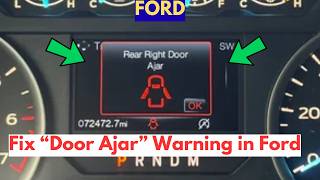
- 'Door Ajar' warning light stays on while driving (Ford) — The dashboard warning light for an open door remains illuminated even when the driver's door is fully shut.
- Interior dome light will not turn off (Ford) — Because the BCM registers the door as open, interior courtesy lights stay on, draining the battery overnight.
- Airbag warning light is on (Kia/Hyundai/Subaru/BMW) — Indicates a fault in the passenger seat weight sensor system, disabling the passenger airbag and illuminating the SRS warning light.
- Passenger airbag 'OFF' indicator is lit with an adult in the seat — The light indicating the passenger airbag is disabled stays on even when an adult is seated, confirming an occupant detection system failure.
- 'Check Satellite Antenna' or 'No Signal' message on radio (GM) — The infotainment screen displays an error message, and satellite radio stops working. AM/FM radio remains unaffected.
- Car alarm randomly goes off (Ford) — The security system falsely triggers because it detects the driver's door opening while the vehicle is locked.
- Inability to lock doors with remote (Ford) — The system prevents the doors from locking via the key fob if it detects an open door.
Diagnostic Flowchart
Tap your situation to follow the diagnostic path that matches what you're seeing on this code.
Common Fixes & Costs
- Repair broken wires in the driver's door jamb (Ford) — Parts: $5-$15, Labor: $150-$250, ~1.5 hr book time (Intermediate)
- Replace the driver's door latch assembly (Ford) — Parts: $110-$180, Labor: $175-$275, ~1.5 hr book time (Intermediate)
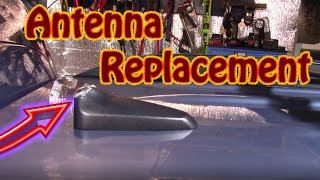
- Replace the satellite radio antenna (GM) — Parts: $65-$155, Labor: $120-$225, ~1.0 hr book time (DIY)
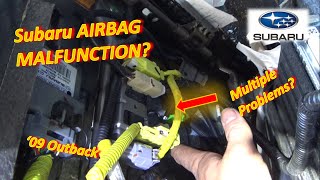
- Replace the passenger seat cushion/ODS Sensor (Subaru/Kia) — Parts: $500-$1000, Labor: $200-$450, ~2.5 hr book time (Professional)
- Replace the passenger seat occupancy sensor mat (BMW) — Parts: $800-$1500, Labor: $250-$500, ~3.0 hr book time (Professional)
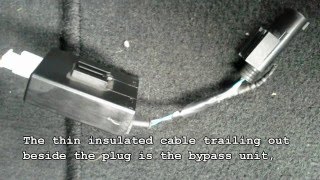
- Install a seat occupancy sensor bypass emulator (BMW/VW - Use with Caution) — Parts: $20-$60, Labor: $75-$150, ~0.5 hr book time (DIY)
DIY vs Professional
- Repair broken wires in the driver's door jamb (Ford) — Beginner: Yes, with patience.
Tools: Wire strippers, butt connectors, heat shrink tubing, heat gun/lighter. - Replace the driver's door latch assembly (Ford) — Beginner: No. This is an intermediate task.
Tools: Trim removal tools, socket set, Torx bit set, screwdrivers. - Replace the satellite radio antenna (GM) — Beginner: Yes.
Tools: Socket set or wrench, trim removal tool. - Replace the passenger seat cushion/ODS Sensor (Subaru/Kia/BMW) — Beginner: No. Professional recommended.
Tools: Socket set, Torx sockets, hog ring pliers, advanced scan tool for calibration. - Install a seat occupancy sensor bypass emulator (BMW/VW) — Beginner: Yes.
Tools: Basic hand tools.
Used vs. New Parts: Buying Guide
When a used part is worth it: For non-safety parts like a Ford door latch or a GM satellite antenna, a used part from a reputable recycler is a cost-effective option. Ensure exact part number matching.
Donor-vehicle mileage cap: roughly under 100000 miles for the part to have meaningful remaining life.
Donor quality checklist:
- Verify the part number is an exact match.
- Ensure electrical connectors are clean and free of corrosion.
- Avoid parts from vehicles in flood-prone areas.
Decision logic:
- If The part is a safety component (ODS Sensor, Seat Mat, Airbag Module) → ALWAYS buy new OEM. Used airbag components are unsafe due to unknown history and critical reliability needs.
- If The part is a door latch or antenna and the vehicle is over 10 years old → A used part is a reasonable choice to save money.
- If The part is a door latch or antenna and the vehicle is relatively new → Buy new (OEM or quality aftermarket) for warranty and peace of mind.
Warranty tradeoff: Used parts offer 30-90 day warranties. New aftermarket parts offer 1-year to lifetime warranties. New OEM parts carry a 12-month warranty.
Worst-case if a used part fails: $200-$500 if a used mechanical/electronic part fails, requiring repeat labor costs.
What Happens If You Wait — Timeline
- Immediate: For Ford: 'Door Ajar' light appears, dome light stays on. For GM: 'No Satellite Signal' message appears. For SRS models: Airbag warning light illuminates, passenger airbag is immediately disabled. (MPG impact: 0%% · Added cost: $0)
- 1-7 Days: For Ford: Constant dome light creates a parasitic drain, killing the battery overnight. For SRS models: The critical safety risk persists; any front passenger is unprotected by the airbag. (MPG impact: 0%% · Added cost: $150-$300 (Cost of a new battery and potential tow service for the Ford).)
- 1-6 Months: For Ford: Continued battery drain issues and random alarm triggers. For SRS models: Ignoring the light normalizes a dangerous condition and causes vehicle inspection failures in some states. (MPG impact: 0%% · Added cost: Incalculable liability. If an accident occurs with a passenger, the consequences of the disabled airbag are catastrophic.)
- 6+ Months: Ignoring a BCM or SRS fault masks other electrical problems. Driving with a known safety system defect has significant legal and insurance claim implications in an accident. (MPG impact: 0%% · Added cost: Potential for denied insurance claims or legal liability on top of the physical risk.)
Cost of Not Fixing It
- Immediate (Ford): Annoyance from 'Door Ajar' chime, inability to lock doors, and interior dome lights staying on, leading to a dead battery. (Added cost: $150-$300 for a new battery and potential tow.)
- Immediate (GM): Loss of satellite radio functionality. AM/FM radio is unaffected. (Added cost: $0)
- Immediate (Kia/Subaru/BMW): CRITICAL SAFETY FAILURE. The passenger airbag system is disabled. In a collision, the passenger airbag will NOT deploy. (Added cost: Incalculable. Potential for catastrophic injury and legal liability.)
- Long-term: Ignoring a BCM or SRS fault masks other developing electrical issues in the vehicle. (Added cost: Varies, leading to more complex electrical diagnostics later.)
Diagnosis Steps
- Confirm the Code's Meaning for Your Vehicle
Search '[Your Car's Make] B1322' to confirm the code's specific definition. This is the most critical step, as the diagnostic path changes completely between manufacturers.
Tools: Internet access (Beginner) - Visual Inspection of the Affected Area
For Ford: Inspect the rubber boot in the driver's door jamb for tears. For GM: Inspect the roof satellite antenna for cracks or looseness. For Kia/Hyundai/Subaru/BMW: Look under the front passenger seat for loose connectors or spilled liquids.
Tools: Flashlight (Beginner) - Check Live Sensor Data with a Scan Tool
For SRS faults, use a scan tool to read Occupant Detection System live data. With the seat empty, status should read 'Empty' or 0 lbs. Have an adult sit down; status should change to 'Occupied'. Erratic or unchanging data points to a faulty sensor mat or wiring.
Tools: Advanced OBD-II Scan Tool (Intermediate) - Perform a 'Wiggle Test'
Connect a scan tool displaying live data for the relevant sensor. Wiggle the wiring harness in the problem area (door jamb for Ford, under the passenger seat for ODS). If live data flickers, you have pinpointed the wiring fault location.
Tools: Advanced OBD-II Scan Tool (Intermediate) - Inspect the Wiring Harness (Ford)
Pull back the rubber boot between the driver's door and the body. Gently pull individual wires to check for broken strands or cracked insulation. Broken black ground wires are the leading cause of this code in Fords.
Tools: Trim removal tool (Intermediate) - Test the Component (Ford Latch / GM Antenna)
For Ford: Spray electrical contact cleaner into the door latch mechanism and open/close the door firmly 15 times to free a sticky switch. For GM: Send a 'refresh signal' from the SiriusXM website to rule out subscription issues.
Tools: Electrical contact cleaner, Internet access (Beginner) - Check Antenna Connection (GM)
Remove the radio trim and ensure the antenna's coaxial cable is securely plugged into the head unit. Lower the rear headliner to check the connection at the antenna base.
Tools: Trim removal tools, screwdriver/socket set (Intermediate) - [Advanced] Test the Circuit with a Multimeter (Ford)
Disconnect the door latch connector. Probe the signal wire on the harness side and touch a clean chassis ground. Low resistance (near 0 Ω) indicates a short to ground. Back-probe the signal wire at the BCM: it should show 12V with the door closed and drop to 0V when opened.
Tools: Multimeter, vehicle-specific wiring diagram (Advanced) - [Advanced] Test ODS Harness Resistance (Subaru)
Disconnect the airbag and ODS modules and connect vehicle-specific test harnesses. Measure resistance between specified pins. A reading greater than 10Ω indicates a faulty airbag rear harness requiring replacement.
Tools: Multimeter, vehicle-specific test harnesses, service manual (Professional) - [Advanced] Perform ODS/WCS System Calibration (Subaru/Kia)
After replacing passenger seat components, a 'Zero Point Adjustment' is mandatory. Park on a level surface, empty the passenger seat, and use a bidirectional scan tool to run the calibration. The code will persist until this succeeds.
Tools: Advanced OBD-II Scan Tool (with bidirectional control) (Advanced)
When This Code Triggers (Freeze-Frame Conditions)
- Vehicle Speed: 0 MPH (The fault is detected during the initial power-on self-test (KOEO/KOER) before the vehicle moves.)
- System Voltage: 11.5-14.5V (The BCM or SRS module requires stable battery voltage to run diagnostics.)
- Ignition Status: RUN (The code sets when the key is in the 'RUN' position and the module performs continuous self-checks.)
- Component State: Varies (For Ford, logged when the door is closed but the switch reports 'Open'. For ODS faults, logged when the module detects an out-of-range sensor reading.)
Related Codes
- B1317 / B1318 — On Ford vehicles, these indicate a 'Door Ajar Circuit Open', whereas B1322 is a 'Short to Ground'. An open circuit is often a broken wire, while a short is a wire touching metal.
- B1650 — On Subaru vehicles, B1650 is a general 'ODS Failure' code. B1322 is a specific sub-code indicating a circuit fault within that system.
- U0184 — A generic 'Lost Communication With Radio' code. On GM vehicles, B1322 is an electrical fault in the antenna circuit. A severe antenna fault damaging the radio causes a U0184.
- B2292 — On Jaguars, B2292 relates to a 'Seat Belt Pretensioner Fault'. Airbag system faults often trigger codes in related SRS components simultaneously.
Climate & Environmental Factors
- Cold Climates: In Ford models, cold temperatures cause wire insulation within the flexible door jamb boot to become brittle, significantly increasing the likelihood of wires breaking.
- Humid/Rainy Climates: For GM vehicles, rain increases the risk of water intrusion past the satellite antenna's base seal, corroding internal electronics. Water intrusion also corrodes door jamb and ODS connectors.
How to Talk to a Mechanic About This Code
Say this: "{'ford_door_ajar': "I have a B1322 code and a 'Door Ajar' light that won't turn off. Could you please start by inspecting the wiring in the rubber boot between the door and the body before quoting a new latch assembly?", 'gm_antenna': "I'm getting a B1322 code and my satellite radio has a 'No Signal' error. I'd like to book a diagnostic to check the satellite antenna circuit.", 'srs_fault': 'I have an airbag warning light on and code B1322. I need to schedule a diagnostic for the SRS system. Can you confirm your shop has the specific tools to perform an ODS system calibration if a sensor is replaced?'}"
This language shows you've done your research and guides the mechanic toward the most likely repair first. For SRS issues, it confirms the shop's capability to perform the mandatory calibration.
Avoid saying:
- My airbag light is on, can you just reset it?
- My car has a B1322, just replace the part.
- Just do whatever is needed to fix it.
Questions to ask before authorizing the repair:
- For a Ford: Did you find a broken wire in the door jamb, or did you confirm the latch switch itself has failed with a multimeter?
- For a Kia/Subaru/BMW: Is the mandatory ODS/WCS calibration included in the labor quote?
- Can you show me the failed part or the broken wires once they are exposed?
- What is the warranty on this specific repair, including both parts and labor?
Where to Take It: Dealer vs Independent vs Chain
- Dealer:
Highly Recommended for SRS-related B1322 faults (Kia, Subaru, BMW). Optional for other variants.
Best for: SRS/ODS/WCS faults (Kia, Subaru, BMW) due to required calibration tools, potential recalls, and warranty coverage., Any vehicle still under its factory or extended warranty., Complex electrical issues requiring manufacturer-specific repair procedures.
Downsides: Highest labor rates, often 1.5x to 2x more than independent shops., May default to replacing an entire assembly when a smaller component repair would suffice. (Typical cost: +50% vs. baseline) - Independent Shop:
Best fit for Ford and GM variants. A good choice for SRS faults ONLY if you vet the shop's diagnostic tool capabilities.
Best for: Ford 'Door Ajar' issues (wiring repair or latch replacement)., GM satellite antenna replacement., Out-of-warranty vehicles where cost is a primary concern.
Downsides: Quality varies widely. For SRS faults, you MUST verify they have a professional scan tool with bidirectional control for calibration., May not be aware of brand-specific recalls. (Typical cost: +0% vs. baseline) - Chain Shop:
Not Recommended. The risk of misdiagnosis or incomplete repair is too high.
Best for: Simple, unrelated maintenance like oil changes or tires.
Downsides: Technician skill varies dramatically; not ideal for complex electrical or safety-critical diagnostics., Unlikely to have the specialized tools or training for SRS calibrations. (Typical cost: -10% vs. baseline)
When to Walk Away From the Repair
If the estimated repair cost exceeds 40-50% of your car's private-party value, consider selling or trading it in.
- Car worth $3500, fix is $1500: Walk away. A $1500 repair for a Subaru seat sensor on a car worth only $3500 is 43% of the car's value.
- Car worth $15000, fix is $450: Fix it. A $450 repair for a Ford F-150 door latch or wiring is only 3% of the vehicle's value.
- Car worth $2000, fix is $1200: Walk away. Spending $1200 on a BMW seat mat replacement when the car is only worth $2000 is a poor financial decision.
What Scan Tool You Need for This Code
Minimum: A scan tool that reads and clears codes from the Body Control Module (BCM) and the Supplemental Restraint System (SRS/Airbag) module. A basic engine-only code reader is useless.
A standard $20 scanner only reads powertrain codes. B1322 is a 'B' (Body) code stored in the BCM or SRS module. Attempting to read it with a basic scanner shows 'No Codes Found'.
Rent vs buy: Most auto parts store loaner tools are basic engine code readers and will NOT read SRS or BCM codes. You must buy a capable scanner or pay for a professional diagnosis.
How to Clear the Code After You Fix It
- For non-SRS faults (Ford Door Ajar, GM Antenna), use a standard OBD-II scan tool to clear the code from the BCM.
- For SRS faults (Kia, Subaru, BMW), use an advanced scan tool capable of accessing the SRS/airbag module to clear the code.
- Disconnecting the battery is not recommended for SRS systems and will not permanently clear hard fault codes.
Drive cycle (~5 minutes): Body and SRS codes do not require a complex drive cycle. The control module performs a self-test upon ignition start. If the repair is successful, the code clears and will not return after cycling the key.
Readiness monitors affected: None
Watch out for:
- Using a basic OBD-II scanner that cannot communicate with the BCM or SRS module.
- Forgetting that SRS/ODS component replacement requires a mandatory system calibration with a specialized scan tool.
- Clearing the code without fixing the underlying fault, causing it to return immediately.
Will This Fail Emissions / State Inspection?
No — by itself this code doesn't fail OBD inspection (but it can keep readiness monitors from setting, which causes a separate fail).
- California: An airbag light will NOT cause a failure of the emissions-only smog check. The SRS system is not tested.
- New York: An illuminated airbag warning light is noted as an advisory during the safety inspection but is NOT a cause for failure.
- Texas: As of 2025, most counties do not require a safety inspection. In emissions-testing counties, an airbag light will not cause a failure.
Most Commonly Affected Vehicles
- Ford Explorer (2002-2014) — Extremely common issue due to failing door latch switches and broken wires in the door jamb.
- Ford F-150 (2004-2018) — Prone to the 'door ajar' light staying on due to a faulty switch inside the door latch or broken wires in the flexible door boot.
- Subaru Outback, Legacy (2020-2022) — Subject to safety recall WRA-24 for a defective Occupant Detection System (ODS) sensor capacitor that shorts out, disabling the passenger airbag.
- BMW 3-Series (E90), 5-Series (E60) (2004-2006) — Faulty passenger seat occupancy sensor mats (OC3) are a very common failure. Subject to safety recall 17V-428.
- Chevrolet Equinox, Traverse (2016-2022) — Frequently experiences satellite radio antenna failures, causing a 'No Signal' message.
- Kia Sedona, Sorento (2012-2018) — B1322 points to a fault with the passenger seat Weight Classification Sensor, disabling the passenger airbag.
- Volkswagen Jetta, Passat (2011-2018) — Suffers from failures of the 'Occupied Recognition Sensor Mat' in the passenger seat.
- Suzuki Grand Vitara (2006-2013) — Indicates 'Left Side-Air Bag Initiator Circuit Resistance Low,' pointing to a problem with the side airbag module or wiring.
Manufacturer-Specific Notes
- Ford / Lincoln / Mercury: The code almost exclusively means 'Driver Door Ajar Circuit Short to Ground'. Always repair and check the wiring in the door jamb boot before replacing the expensive latch assembly.
- Kia / Hyundai: Indicates a 'Weight Classification System (WCS) Sensor circuit fault'. This disables the passenger airbag. A system reset/calibration is mandatory after parts replacement.
- Subaru: Indicates an Occupant Detection System (ODS) fault. Recall WRA-24 covers 2020-2022 Legacy and Outback models. Dealership repairs exceed $1,200 if not covered by recall.
- BMW: Points to a failure of the passenger seat occupancy sensor mat. Recall 17V-428 covers some 2006 models. Many owners use aftermarket bypass emulators, which are cheaper but less safe.
- General Motors (Chevrolet, GMC, Cadillac): Typically means 'Satellite Radio Antenna Fault'. TSB 18-NA-034 addresses water leaks from the antenna base causing 'No Signal' issues.
- Suzuki: B1322 has multiple meanings. It indicates a 'Side-Airbag Initiator Circuit' fault (SRS issue) or an insufficient catalytic converter (emissions issue). Verifying the exact definition is essential.
Real Owner Stories
2005 Ford Escape with 135k miles - The Classic Door Ajar Fix
The 'Door Ajar' light was constantly on, draining the battery multiple times. The owner replaced the battery, but the problem persisted.
What they tried:
- The owner suspected a failing sensor in the door latch.
- They sprayed WD-40 into the door latch mechanism and cycled the door, which temporarily freed a sticky switch.
Outcome: The actual failure was a broken black/purple wire in the rubber boot between the driver's door and the vehicle body. The owner repaired the broken wire using butt connectors and heat shrink tubing, permanently resolving the battery drain.
Lesson: On a Ford with a B1322 code, always inspect the wiring in the door jamb before spending money on a new latch assembly. This is the most frequent point of failure and a cheap DIY fix.
2017 Subaru Forester - The $1400 Seat Cushion Quote
The SRS airbag light came on. The dealer diagnosed a B1322 code, claimed 'water damage' to the passenger occupant detector sensor, and quoted $1400 to replace the seat cushion.
What they tried:
- The owner checked for recalls but was told their vehicle didn't qualify.
- They researched online and found this is a common issue with Subaru's capacitive ODS sensors triggered by moisture.
Outcome: The owner sought an independent Subaru specialist garage for a second opinion and sourced a used sensor pad from a junkyard to reduce the exorbitant repair cost.
Lesson: For a Subaru ODS fault, dealership repairs are extremely expensive. Always check for recalls like WRA-24 first. If not covered, get a quote from a trusted independent shop.
2007 BMW E90 325i - The $40 Bypass Emulator vs. $420 Dealer Repair
The passenger restraint system warning light appeared, indicating a fault with the passenger seat occupancy sensor mat.
What they tried:
- The owner took the car to a dealership, which quoted $420 to replace the seat sensor assembly.
Outcome: The owner purchased a $40 seat occupancy sensor bypass emulator online. They installed it by unplugging the old sensor connector and plugging in the emulator. After clearing the codes, the warning light extinguished.
Lesson: A bypass emulator is a cheap DIY fix for a failed BMW seat mat sensor, but it forces the passenger airbag to ALWAYS deploy in a crash. This is dangerous for children and may have legal implications.
2012 Kia Sedona - Code Persists After Minor Accident
The airbag light came on with code B1322 after a minor accident where the airbags did not deploy.
What they tried:
- The owner initially did nothing, and the code remained for over 5 months.
Outcome: The issue was a fault in the Weight Classification System (WCS) sensor circuit. The solution required full diagnosis of the WCS sensor and a mandatory 'WCS Reset' procedure using a scan tool.
Lesson: On a Kia/Hyundai, a B1322 code is a serious safety issue. Simply clearing the code will not work. Part replacement MUST be followed by a specific WCS calibration procedure.
How to Prevent This Code From Triggering
- Lubricate Door Latch Mechanisms (Once per year) — For Ford models, spraying a dry graphite or silicone-based lubricant into the latch assembly keeps the mechanical switch moving freely, preventing it from sticking in the 'open' position.
- Apply Dielectric Grease to Connectors (When servicing related components) — Applying a thin layer of dielectric grease to connector seals (under the seat for ODS, in the door for Ford) waterproofs the connection, preventing corrosion that causes circuit faults.
- Periodically Inspect Door Jamb Boot (Every 6 months) — On Fords, squeezing and visually inspecting the door jamb boot for tears or brittleness provides an early warning of impending wire failure, allowing proactive repair.
- Be Mindful of the Passenger Seat (ODS-equipped cars) (Daily habit) — On Subarus and BMWs, avoid placing wet items or heavy, sharp objects on the passenger seat. Spilled liquids and physical damage are primary causes of sensor mat failure.
- Ensure Satellite Antenna Seal is Intact (During car washes or heavy rain) — For GM vehicles, check for water staining on the headliner near the satellite antenna. Resealing a failing base seal early prevents water intrusion that corrodes the antenna electronics.
Frequently Asked Questions
I replaced the door latch on my Ford, but the 'Door Ajar' light is still on. What did I miss?
This is a very common misdiagnosis. Before replacing the latch, always inspect the wiring inside the rubber boot in the door jamb. You likely have a broken wire that needs to be repaired.
I've seen BMW seat sensor bypass emulators for sale online. Are they a good idea?
A bypass emulator costs $20-$60 and turns off the airbag light by tricking the car into thinking the seat is occupied. However, the passenger airbag will ALWAYS deploy in an accident, creating a severe safety risk for children. A proper sensor mat replacement is the only safe repair.
Can I just reset the B1322 code on my Kia to turn the airbag light off?
No, the SRS module detects the fault on the next startup cycle and immediately returns the code. Furthermore, replacing the sensor requires a specific 'WCS Reset' calibration using a bidirectional scan tool. The system will not function correctly without this mandatory step.
Why does my satellite radio say 'No Signal' but my AM/FM radio works fine?
AM/FM radio and satellite radio use completely different antennas and internal tuners. The B1322 code on a GM vehicle specifically isolates an electrical fault in the satellite antenna circuit. This allows your regular terrestrial radio to continue working normally.
Is the B1322 code on my Subaru dangerous?
Yes, this code disables the passenger airbag as a failsafe on Subaru vehicles. In an accident, the passenger airbag will not deploy, drastically increasing injury risk. Subaru has issued recalls for this issue and advises limiting passenger seat use until repaired.
My 'Door Ajar' light flickers on and off. Is it still the B1322 code?
Yes, flickering is a classic symptom of a wire broken inside its insulation. As the door moves, the broken wire ends make and break contact, causing the light to flicker. A 'wiggle test' on the door jamb harness confirms this exact failure point.
How much does it cost to diagnose a B1322 code?
Most repair shops charge a diagnostic fee covering the first hour of troubleshooting. Expect to pay between $100 and $185 for this initial diagnosis. This fee typically includes scanning the code and performing initial circuit checks.
My car had the BMW seat sensor recall performed, but the airbag light is back on. What now?
This happens if the replacement sensor fails or if a different SRS fault develops outside the original recall scope. The vehicle requires a fresh diagnosis to pinpoint the new fault source. Take the vehicle back to the dealership to verify if the new issue falls under a parts warranty.
Key Takeaways
- Code B1322 requires manufacturer-specific diagnosis: it indicates a door ajar fault on Fords, a satellite antenna issue on GMs, and a critical airbag failure on Subarus, Kias, and BMWs.
- For Ford vehicles, the majority of B1322 codes stem from a broken black ground wire inside the driver's door jamb rubber boot, costing $15 to fix rather than $200 for a new latch.
- On SRS-equipped vehicles (Subaru, Kia, BMW), this code completely disables the passenger airbag, requiring immediate professional diagnosis and often a $1,000+ seat sensor replacement unless covered by recalls like Subaru WRA-24.
- Replacing an Occupant Detection System (ODS) sensor mandates a system calibration using a $350+ bidirectional scan tool; the B1322 code will not clear until this zero-point adjustment is completed.
Helpful Videos
Shop the Parts Behind B1322
Below are the parts most often responsible for code B1322, ranked by how frequently each one is the actual culprit (per the diagnosis above). Tap any to see what we have for your vehicle.

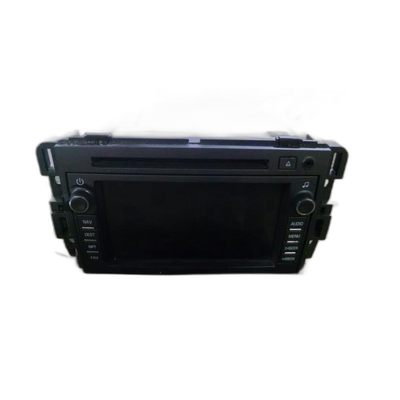

The information in this article is provided for general reference and educational purposes only. Vehicle specifications, procedures, and part compatibility can vary by production date, trim level, and region. Always consult your vehicle's factory service manual and verify part numbers before purchasing or performing repairs. Safety-critical components such as airbags, seat belts, and braking systems should be installed by a qualified professional.
- 🧭 Diagnostic Flowchart
- 🎬 Helpful Videos
- 🛍️ Shop This Part
- What Does B1322 Mean?
- Can I Drive With B1322?
- Common Causes
- Symptoms
- Common Fixes & Costs
- DIY vs Professional
- Used vs. New Parts: Buying Guide
- What Happens If You Wait — Timeline
- Cost of Not Fixing It
- Diagnosis Steps
- When This Code Triggers (Freeze-Frame Conditions)
- Related Codes
- Climate & Environmental Factors
- How to Talk to a Mechanic About This Code
- Where to Take It: Dealer vs Independent vs Chain
- When to Walk Away From the Repair
- What Scan Tool You Need for This Code
- How to Clear the Code After You Fix It
- Will This Fail Emissions / State Inspection?
- Most Commonly Affected Vehicles
- Manufacturer-Specific Notes
- Real Owner Stories
- 2005 Ford Escape with 135k miles - The Classic Door Ajar Fix
- 2017 Subaru Forester - The $1400 Seat Cushion Quote
- 2007 BMW E90 325i - The $40 Bypass Emulator vs. $420 Dealer Repair
- 2012 Kia Sedona - Code Persists After Minor Accident
- How to Prevent This Code From Triggering
- Frequently Asked Questions
- I replaced the door latch on my Ford, but the 'Door Ajar' light is still on. What did I miss?
- I've seen BMW seat sensor bypass emulators for sale online. Are they a good idea?
- Can I just reset the B1322 code on my Kia to turn the airbag light off?
- Why does my satellite radio say 'No Signal' but my AM/FM radio works fine?
- Is the B1322 code on my Subaru dangerous?
- My 'Door Ajar' light flickers on and off. Is it still the B1322 code?
- How much does it cost to diagnose a B1322 code?
- My car had the BMW seat sensor recall performed, but the airbag light is back on. What now?
- Key Takeaways
- 🎟️ Get 5% Off