

OBD-II Code B1323: Door Ajar Circuit Failure & Other Meanings
What B1323 means, why it triggers, and how to fix it for your specific vehicle
- Verify the B1323 definition for your specific vehicle make first, as it means a 'Door Ajar' fault on Fords but a critical airbag failure on BMWs and Hyundais.
- On Ford and GM vehicles, B1323 almost always indicates a stuck door ajar switch inside the latch mechanism or broken wires in the door jamb.
- For BMW, Hyundai, Kia, and Nissan, B1323 flags a disabled passenger airbag system requiring immediate professional diagnosis and recalibration.
- Fix 80% of Ford/GM 'Door Ajar' B1323 codes for under $15 by vigorously spraying electrical contact cleaner and PTFE lubricant directly into the affected door latch.
- Never ignore a 'Door Ajar' B1323 code for more than 48 hours, as the illuminated dome lights will completely drain and potentially ruin your car battery.
What Does B1323 Mean?
B1323 is a manufacturer-specific Body (B) code indicating an electrical circuit fault. Its most common definition is a 'Door Ajar Circuit Failure', where the vehicle incorrectly registers an open door. However, for brands like BMW, Hyundai, and Nissan, this code flags a critical airbag system failure. You must check the 'Manufacturer Quirks' section for your specific vehicle before attempting repairs.
Technical definition: The primary technical definition for B1323 is a 'Door Ajar Lamp Circuit Failure'. This indicates the Body Control Module (BCM) detects a short to ground or an open circuit in the electrical path monitoring a door's status. For other manufacturers, it means 'Lost Communication with Haptic Device' (Toyota), 'WCS Sensor Defect' (Hyundai/Kia), or a fault in the Supplemental Restraint System (SRS), such as a seat belt pre-tensioner or Occupant Classification System (OCS) sensor.
Can I Drive With B1323?
Yes, But With Caution. For a 'Door Ajar' fault, you can drive, but the illuminated dome light drains a typical car battery in 24-48 hours, leaving you stranded. For BMW, Hyundai, Kia, Chrysler, and Nissan, B1323 indicates a serious airbag system fault. Do not drive, as the passenger airbag is disabled and will not deploy in an accident.
Common Causes
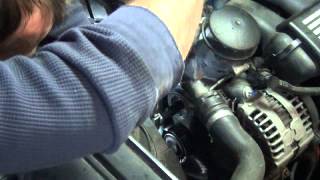
- Stuck or dirty door ajar switch (Very Common) — The switch, integrated into the door latch mechanism 🎬 Watch: How to replace a Ford door latch and switch., is the most frequent failure point on domestic vehicles. It gets contaminated with dirt and moisture, causing it to stick in the 'open' position.
- Damaged wiring or corroded connector in door jamb (Common) — Wires inside the rubber boot between the door and the car's body flex constantly. These wires break or the connectors corrode from moisture, causing a total loss of the door status signal.
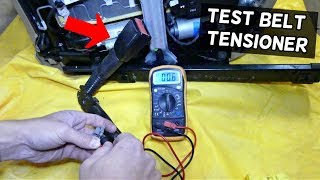
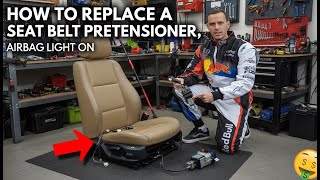
- Faulty Occupant Classification System (OCS) or Pretensioner (Common) — For Hyundai, Kia, Nissan, and BMW, this code points to a failed passenger seat weight sensor 🎬 Watch: How to test a Hyundai or Kia occupancy sensor. or a faulty pyrotechnic seat belt pre-tensioner. Both disable the passenger airbag.
- Misaligned door or door striker (Less Common) — If the door fails to make proper physical contact with the switch due to hinge wear or minor body damage, the system correctly reports the door is not fully latched.
- Water Intrusion into Control Modules (BCM/BJB) (Rare) — Water leaking from a bad windshield seal or clogged A/C drain drips onto the Body Control Module (BCM) or under-hood fuse box, causing corrosion and triggering false B1323 codes.
- Faulty Body Control Module (BCM) (Rare) — The control module itself fails internally. This is diagnosed only after all wiring, switches, and sensors test perfectly.
Symptoms
- 'Door Ajar' warning light stays on — A persistent warning light or message on the dashboard indicates a door is open, even when all are securely closed.
- Interior dome lights will not turn off — The vehicle thinks a door is open and keeps the courtesy lights on, draining the battery completely within 48 hours.
- Airbag / SRS warning light is on — For BMW, Hyundai, Kia, Chrysler, and Nissan, the primary symptom is an illuminated airbag warning light, indicating a disabled safety system.
- Passenger airbag 'OFF' light is illuminated — The Occupant Classification System (OCS) fails to detect the passenger's weight and disables the airbag as a precaution, even with an adult in the seat.
- Car alarm will not arm or goes off randomly — Factory alarms require all doors to be closed to arm. A faulty signal triggers the alarm by making the system think a door opened while armed.
- Module communication status (scan-tool only — no driver-felt sign) — Live data on a professional scan tool shows a door switch stuck 'Open' or an OCS module offline, confirming the electronic fault.
Diagnostic Flowchart
Tap your situation to follow the diagnostic path that matches what you're seeing on this code.
Common Fixes & Costs
- Clean and Lubricate Door Latch Assembly — Parts: $10-$20, Labor: $0, ~0.1 hr book time (DIY)
- Replace Faulty Door Ajar Switch / Latch Assembly — Parts: $50-$250, Labor: $150-$250, ~1.5 hr book time (Intermediate)
- Repair Damaged Wiring in Door Jamb — Parts: $15-$50, Labor: $150-$400, ~2.5 hr book time (Professional)
- Replace and Recalibrate Occupant Classification System (OCS) Sensor — Parts: $300-$800, Labor: $200-$400, ~2.5 hr book time (Professional)
- Replace Body Control Module (BCM) — Parts: $300-$700, Labor: $200-$450, ~2 hr book time (Professional)
Used vs. New Parts: Buying Guide
When a used part is worth it: For a 'Door Ajar' fault, a used door latch assembly from a low-mileage vehicle is a cost-effective option. For an airbag-related fault (OCS Sensor, Pre-tensioner), buying used is strongly discouraged and highly dangerous.
Donor-vehicle mileage cap: roughly under 75000 miles for the part to have meaningful remaining life.
Donor quality checklist:
- Verify the exact part number, as connectors and internal wiring change mid-generation.
- For door latches, choose donors from dry climates to minimize pre-existing corrosion.
- Avoid purchasing used airbag sensors, modules, or pre-tensioners from unknown online sources.
Decision logic:
- If The fault is in the SRS / Airbag system (OCS sensor, pre-tensioner) → Always buy new OEM parts. Do not risk your safety with used components.
- If The part is a door latch assembly and the vehicle is over 100K miles → A used part from a reputable salvage yard with a warranty is an acceptable budget repair.
- If The part is a Body Control Module (BCM) → A professionally remanufactured unit with a warranty is a good alternative to a new OEM module. Ensure it is programmed to your VIN.
Warranty tradeoff: Used parts typically have a 30-90 day warranty. New aftermarket parts offer 1-year to limited lifetime warranties. New OEM parts carry a 1-2 year warranty. The primary risk with used parts is premature failure, requiring repeat labor.
Worst-case if a used part fails: $300-$500 (If a used door latch fails, this covers repeat labor costs. For a failed used airbag component, the cost is a non-functional safety system.)
What Happens If You Wait — Timeline
- Immediate (Airbag Fault): For Hyundai, Kia, BMW, and Nissan, the SRS/OCS system detects a critical fault. The passenger airbag system is immediately disabled as a fail-safe. (MPG impact: 0%% · Added cost: $0 (Immediate and total loss of passenger airbag function, an incalculable safety risk).)
- 0-3 Days (Door Ajar Fault): The 'Door Ajar' light and chime are a constant annoyance. Interior dome lights stay on, causing a constant parasitic drain on the battery. (MPG impact: 0%% · Added cost: $0)
- 3-10 Days (Door Ajar Fault): The battery is significantly drained by the constant lighting. The vehicle fails to start, leaving you stranded. (MPG impact: 0%% · Added cost: $150-$350 (Cost of roadside assistance and/or a new battery if the current one is damaged by deep discharging).)
- 1-6+ Months (Door Ajar Fault from Water Leak): If the root cause is a water leak, persistent moisture corrodes the pins on the Body Control Module (BCM), leading to bizarre, intermittent electrical issues. (MPG impact: 0-5%% · Added cost: $800-$1500+ (Cost to diagnose the leak, replace the destroyed BCM, and program the new module).)
Cost of Not Fixing It
- Immediate (Airbag Fault): Passenger airbag system is disabled. In a collision, the passenger airbag will not deploy, significantly increasing the risk of serious injury or death. (Added cost: N/A (Safety Risk))
- 1-7 Days (Door Ajar Fault): Interior dome lights stay on, draining the car battery. This leaves you stranded and requires a jump start or a new battery. (Added cost: $150-$350 (for a new battery and/or roadside assistance))
- 1-6 Months (Door Ajar Fault with Water Leak): If the fault is caused by a water leak, continued moisture exposure destroys the Body Control Module (BCM), leading to widespread electrical failures. (Added cost: $700-$1500 (for BCM replacement and programming))
Diagnosis Steps
- Verify Code Meaning & Check for TSBs
Confirm what B1323 means for your exact make, model, and year. Check for Technical Service Bulletins (TSBs), as manufacturers release specific repair guidance for known issues related to this code.
Tools: OBD-II scanner, internet access (Beginner) - Isolate the Faulty Door
Sit in the car with the ignition on. Firmly push on the inside of each closed door one by one. If the 'Door Ajar' light flickers or goes out when you push a specific door, you found the faulty latch.
Tools: None (Beginner) - Clean and Lubricate Door Latches
Vigorously spray electrical contact cleaner followed by a penetrating PTFE lubricant directly into the faulty door latch. Open and close the door 15 times to work the lubricant in and free the sticky switch.
Tools: Electrical contact cleaner, PTFE spray lubricant (Beginner) - Inspect the Door Wiring Harness
Open the suspect door and pull back the rubber boot in the door jamb. Visually inspect for broken, pinched, or corroded wires. Wiggle the harness while watching the warning light to see if it flickers.
Tools: Flashlight (Intermediate) - [PRO TIP] Check Live Data with a Scan Tool
Use a professional scan tool to view live data from the Body Control Module. Look for 'Door Ajar Status' PIDs. If a door reads 'Open' when physically shut, the fault lies within that specific door's circuit.
Tools: Professional OBD-II scan tool (Advanced) - [PRO TIP] Test the Door Switch Circuit
Disconnect the suspect door switch connector. Use a jumper wire to connect the two terminals in the harness-side connector. If the 'Door Ajar' light goes out, the wiring and BCM are good, and the switch is faulty.
Tools: Jumper wire (paperclip), basic hand tools (Advanced) - [PRO TIP] Test the Switch with a Multimeter
Set a multimeter to continuity. Connect the leads to the switch's terminals. When the latch is open, it should show continuity (<1 Ω). When closed, it should show an open circuit ('OL').
Tools: Multimeter, basic hand tools (Advanced) - Check Fuses
Locate the fuses for the Body Control Module (BCM) and SRS/airbag system. A blown fuse causes communication issues and triggers fault codes.
Tools: Owner's manual, fuse puller (Intermediate) - [PRO TIP] Test Toyota Haptic Controller Circuit
For a Toyota B1323, disconnect the battery. At the haptic controller connector, measure resistance between CAN High and CAN Low pins. A reading of 55-65 Ω indicates the circuit is intact.
Tools: Multimeter, wiring diagram (Advanced)
When This Code Triggers (Freeze-Frame Conditions)
- Module Voltage: 11-14V (Ignition On, Engine Running or Off)
- Ignition Status: ON (The fault is typically detected during the module's power-on self-test.)
- Fault Type: Open Circuit / Short to Ground / Invalid Data (The specific data point indicating the nature of the electrical failure.)
- Event Counter / Timestamp: Varies (A counter indicating how many times the fault has occurred since it was last cleared.)
Related Codes
- B1318 / B1317 — Often appears with a 'Door Ajar' fault. B1323 causes the dome lights to stay on, draining the battery and triggering the B1318 (Low Battery Voltage) code. Fix the door issue first.
- U0199 — Means 'Lost Communication With Door Control Module.' U0199 points to a module power or data line issue, while B1323 points to the switch or its direct wiring.
- B1428 — This code for 'Seat Belt Switch Circuit Failure' appears with some Fords. Differentiate by the primary warning light: seatbelt light for B1428, door ajar light for B1323.
- B1923 — Means 'Air Bag Memory Clear Circuit Short To Ground'. If seen alongside an airbag-related B1323 variant, it indicates a deeper problem within the SRS control module's memory.
Climate & Environmental Factors
- Freezing Temperatures: Water enters the door and freezes inside the latch mechanism or on the cables, preventing the latch from operating correctly. This is heavily documented on Ford trucks.
- High Humidity / Heavy Rain: Moisture accelerates corrosion on wiring connectors in the door jamb. It also causes water intrusion into the BCM if windshield seals are compromised.
- Road Salt (Winter Climates): Salt spray contributes significantly to the corrosion of electrical wiring and the metal components of the door latch assembly, leading to premature failure.
How to Talk to a Mechanic About This Code
Say this: "State your primary symptom and vehicle make. For a 'Door Ajar' light: 'I have a door ajar light that won't turn off and it's draining my battery. I need a diagnostic to identify which door sensor or wiring is faulty.' For an 'Airbag Light': 'My airbag warning light is on and my scanner shows a B1323 code. I need a diagnostic for a potential OCS sensor fault.'"
Clearly stating the symptom and manufacturer prevents the shop from going down the wrong path. It directs them to the correct system (Body vs. Airbag), saving diagnostic time and protecting you from irrelevant upsells.
Avoid saying:
- 'My car has a B1323 code, please fix it.' (Too vague, the code has multiple meanings).
- 'My check engine light is on.' (B1323 is a Body or SRS code, not an engine code).
- 'Just fix whatever you find.' (This is an open invitation for unnecessary repairs and inflated bills).
Questions to ask before authorizing the repair:
- For a 'Door Ajar' fault: 'Did you test the switch and wiring to confirm the failure, or are you just replacing the whole latch assembly?'
- For an 'Airbag/OCS' fault: 'What specific component failed the diagnostic test? Does this repair require a recalibration of the system afterward?'
- Can you show me the faulty part or a photo of the broken wire?
- What is the warranty on the parts and the labor for this specific repair?
Where to Take It: Dealer vs Independent vs Chain
- Dealer:
Recommended for the airbag-related version of this code due to safety criticality and the need for proprietary recalibration tools.
Best for: Vehicles under warranty., Airbag/SRS/OCS system repairs that require manufacturer-specific recalibration (Hyundai, Kia, Nissan, BMW)., Complex electrical issues involving a faulty or water-damaged Body Control Module (BCM).
Downsides: Highest labor rates., May replace an entire assembly when a smaller component or wiring repair would suffice. (Typical cost: +50% vs. baseline) - Independent Shop:
Best fit for the common 'Door Ajar' version of the code. For airbag faults, verify they have the specific tools for SRS repairs on your vehicle's make.
Best for: Common 'Door Ajar' faults on out-of-warranty domestic vehicles (Ford, GM)., Diagnosing and repairing broken wires in a door jamb., Vehicles where cost is a primary concern.
Downsides: Quality and diagnostic capabilities vary widely. Ensure the shop has ASE-certified technicians., May not own the expensive, specialized tools needed for SRS/OCS recalibration. (Typical cost: +0% vs. baseline) - Chain Shop:
AVOID for diagnosing B1323. They are unlikely to have the expertise to differentiate the code's meanings or perform the necessary safety-critical recalibrations.
Best for: Simple, unrelated maintenance like oil changes or tires.
Downsides: Technician skill varies dramatically; often not equipped for complex electrical or safety system diagnostics., High pressure to upsell services; may misdiagnose the code and sell unnecessary parts. (Typical cost: -10% vs. baseline)
When to Walk Away From the Repair
If the estimated repair cost exceeds 40% of the car's private-party value, seriously consider selling or trading in the vehicle instead of repairing it.
- Car worth $5000, fix is $450: Fix it. A door latch replacement is well below the threshold and restores full function.
- Car worth $3500, fix is $1200: Borderline. An OCS sensor replacement is a significant cost. Get a second opinion before authorizing.
- Car worth $2500, fix is $1500: Walk away. The cost to replace a water-damaged BCM is over half the car's value. The risk of future electrical problems is high.
What Scan Tool You Need for This Code
Minimum: A scanner that reads manufacturer-specific Body (B) and SRS (Airbag) codes. Basic engine-only (P-code) readers are useless for B1323.
A $20 generic OBD-II reader shows 'No Codes Found' because it only accesses the engine control unit. B1323 is stored in the Body Control Module or SRS module.
Budget: BlueDriver Pro (~$100) — Reads and clears SRS and BCM codes on many major brands. Displays live data from the BCM to see which door switch is reading 'Open'. A great choice for DIY diagnosis of the 'Door Ajar' fault.
Mid-range: Autel AutoLink AL619 / Foxwell NT710 (~$120-250) — Explicitly reads and clears codes from ABS and SRS modules. Provides the specific fault information needed to identify an OCS or pretensioner issue, but typically cannot perform the recalibration.
Professional: Autel MaxiCOM MK808BT / Launch X431 CRP919XBT (~$450-650) — Provides full bidirectional control and OE-level diagnostics. Crucially, these scanners perform the mandatory OCS/WCS sensor recalibration after replacement, required for Hyundai, Kia, and Nissan.
Rent vs buy: Auto parts stores offer loaner tools, but verify their specific model reads SRS/Airbag codes. For a one-time 'Door Ajar' diagnosis, a budget pick is a good investment. For an airbag-related repair, the cost of a professional tool approaches the cost of having a shop perform the recalibration.
How to Clear the Code After You Fix It
- Reconnect any disconnected components (battery, sensors, modules).
- Use an OBD-II scan tool with Body/SRS capability to clear the fault code.
- For SRS/OCS faults, perform a system recalibration using an OEM-level scan tool as required by the manufacturer.
- Cycle the ignition off and on, and verify the warning light does not return.
Drive cycle (~10 minutes): For 'Door Ajar' faults, no complex drive cycle is needed. Simply open and close all doors to confirm the light stays off. For SRS/OCS faults, a short 5-10 minute drive allows the system to complete its self-check.
Readiness monitors affected: None
Watch out for:
- Using a basic engine code reader that cannot access Body (B) or SRS codes.
- Failing to perform mandatory OCS/SRS recalibration after replacing a sensor, which causes the code to return instantly.
- Simply clearing the code without fixing the underlying physical fault.
Will This Fail Emissions / State Inspection?
No — by itself this code doesn't fail OBD inspection (but it can keep readiness monitors from setting, which causes a separate fail).
- California: A 'B' code for a door ajar fault will not fail the smog check. However, an illuminated airbag warning light causes a failure during the visual portion of the inspection.
- New York: An illuminated airbag (SRS) warning light is grounds for failing the annual safety inspection. A door ajar light is not.
- Texas: The annual safety inspection requires the airbag warning lamp to illuminate and turn off as designed. A constantly illuminated SRS light results in a failed inspection.
Most Commonly Affected Vehicles
- Ford F-Series, Explorer, Ranger (1998-2014) — Extremely common due to faulty switches inside the door latches. The rear doors on SuperCab models are frequent culprits.
- Chevrolet / GMC Silverado, Sierra (1999-2013) — A very common problem where the switch inside the door latch assembly fails, causing a 'Door Ajar' message and random alarm activation.
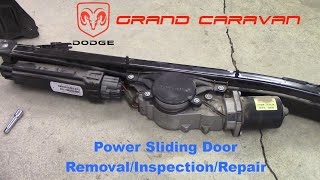
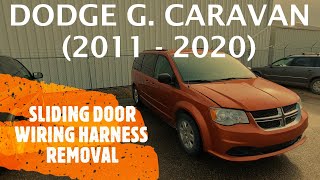
- Dodge / Chrysler Grand Caravan, Town & Country (2008-2020) — The wiring harness for the power sliding doors is a major failure point; wires break inside the plastic track, causing door and airbag faults.
- Kia / Hyundai Sorento, Optima, Elantra, Sonata (2011-2018) — This code points to a 'WCS Sensor Defect' in the passenger's seat for the airbag system. Recalibration is mandatory after repair.
- BMW 3-Series (E90, E91, E92) (2005-2013) — B1323 is an SRS (airbag) system fault, most often a failed seat belt tensioner. This is a safety-critical issue.
- Nissan Altima, Rogue, Sentra (2013-2017) — Logs codes in this range for faults within the Occupant Classification System (OCS). Covered under NHTSA recall 16V-244 for many models.
Manufacturer-Specific Notes
- Ford, Lincoln, Mercury: B1323 almost exclusively means 'Door Ajar Lamp Circuit Failure'. The fix is nearly always a faulty switch inside a door latch or broken wires. For 2020-2022 Super Duty trucks, investigate TSB 23-2133 for water in the Battery Junction Box.
- Toyota, Lexus: This code means 'Lost Communication with Haptic Device'. It is unrelated to doors and points to a fault with the multimedia system's remote touch controller or its CAN bus wiring.
- Hyundai, Kia: B1323 indicates a 'WCS Sensor Defect'. This is a fault in the passenger seat's Weight Classification System, critical for safe airbag deployment. The system must be recalibrated after any repair.
- Chrysler, Dodge, Jeep: B1323 is often an airbag system fault, typically pointing to the occupant classification sensor. On Grand Caravans, it is caused by broken wires in the sliding door harness.
- BMW: B1323 is a Supplemental Restraint System (SRS) fault, most commonly a failed seat belt pre-tensioner. This component contains a pyrotechnic charge and requires professional handling.
- Nissan: Many modern Nissans log codes in this range for faults within the Occupant Classification System (OCS). Check for NHTSA campaign 16V-244 which involves reprogramming or replacing the OCS control unit.
Real Owner Stories
2007 Ford F-150 with 155K miles - The Classic Fix
Owner reported the 'door ajar' light was constantly on, the dome light wouldn't turn off, and an audible chime sounded when driving. The issues drained the battery overnight.
Outcome: The lubricant freed the stuck switch inside the latch. The 'door ajar' light went out, and all symptoms resolved. Total cost was under $10.
Lesson: For Ford 'door ajar' issues, always try the lubricant trick first. It fixes the most common cause: a dirty or sticky switch inside the latch assembly.
2012 Dodge Grand Caravan at 119K miles - A Misleading Code
The airbag warning light came on, and the power sliding doors stopped working. The owner pulled a B1323 code.
Outcome: The root cause was broken wires inside the flexible plastic harness track for BOTH sliding doors. The repair involved replacing both wiring harnesses at a cost of over $600.
Lesson: On vehicles with power sliding doors, a code's definition is misleading. The B1323 airbag fault was a symptom of broken door wiring, which carries airbag sensor signals.
2015 Hyundai Sonata - The Critical Airbag Fault
The airbag warning light illuminated, and the 'Passenger Airbag OFF' light stayed on with an adult in the seat. A scan revealed code B1323, defined as 'WCS Sensor Defect'.
Outcome: The OCS sensor pad in the passenger seat cushion failed. The shop replaced the seat cushion sensor and performed a mandatory recalibration with a Hyundai-specific scan tool.
Lesson: For Hyundai, Kia, Nissan, and BMW, B1323 is a serious safety issue. The fix requires a specific, safety-critical part and mandatory recalibration with a dealer-level tool.
How to Prevent This Code From Triggering
- Lubricate All Door Latches and Hinges (Once per year (before winter)) — Using a PTFE-based or silicone dry lubricant flushes out dirt and moisture, preventing the internal switch mechanism from sticking or corroding.
- Periodically Clean Door Jambs and Drain Holes (Every 6 months) — Clearing leaves and debris from the bottom of doors allows water to drain properly, reducing moisture that corrodes wiring connectors.
- Inspect and Protect Door Jamb Wiring Boots (Once per year) — Check that the rubber boots between the door and the vehicle body are fully seated and not torn to prevent water from entering the wiring.
- Address Windshield Leaks Immediately (As needed) — A known water leak path from a poorly sealed windshield drips directly onto the Body Control Module (BCM), causing catastrophic electrical failures.
Frequently Asked Questions
Why does my 'door ajar' light stay on after I slam the door?
The switch that detects the door's position is stuck or has failed internally. It is located inside the door latch, and vigorously spraying it with lubricant often frees it. If lubrication fails, the latch assembly requires replacement.
My door ajar light flickers when I hit a bump. What does that mean?
This indicates a loose physical connection. The cause is either a failing door latch switch making intermittent contact or a broken wire inside the rubber boot between the door and the car body.
Can I just bypass or disable the door ajar sensor?
While technically possible by permanently grounding the signal wire, it is strongly discouraged. Bypassing it interferes with interior lighting, the car alarm, and safety systems that rely on door status.
I have a BMW with code B1323. Should I start by replacing the door switch?
No, this is a critical misdiagnosis. On BMWs, B1323 indicates a fault in the airbag system, usually a bad seat belt pre-tensioner. This is a safety-critical component requiring professional replacement.
Will clearing the code with a scanner fix the problem?
No. Clearing the code only erases the fault record temporarily. Because B1323 is caused by a persistent physical or electrical fault, the code returns immediately.
My car is a Toyota and I got code B1323, but my doors are fine. Why?
On Toyota and Lexus vehicles, B1323 means 'Lost Communication with Haptic Device'. It is related to your multimedia and navigation remote touch controller, not the doors.
Can a low car battery cause code B1323?
It is usually the other way around. A 'Door Ajar' fault causes the interior lights to stay on, draining the battery. This deep discharge then sets a separate low voltage code like B1318.
How do I know if my passenger airbag works if I have an OCS-related B1323 code?
You must assume it does not work. The system detects a fault and disables the passenger airbag as a fail-safe precaution. Have the vehicle serviced immediately to restore passenger safety.
Key Takeaways
- Verify the B1323 definition for your specific vehicle make first, as it means a 'Door Ajar' fault on Fords but a critical airbag failure on BMWs and Hyundais.
- On Ford and GM vehicles, B1323 almost always indicates a stuck door ajar switch inside the latch mechanism or broken wires in the door jamb.
- For BMW, Hyundai, Kia, and Nissan, B1323 flags a disabled passenger airbag system requiring immediate professional diagnosis and recalibration.
- Fix 80% of Ford/GM 'Door Ajar' B1323 codes for under $15 by vigorously spraying electrical contact cleaner and PTFE lubricant directly into the affected door latch.
- Never ignore a 'Door Ajar' B1323 code for more than 48 hours, as the illuminated dome lights will completely drain and potentially ruin your car battery.
Helpful Videos



Shop the Parts Behind B1323
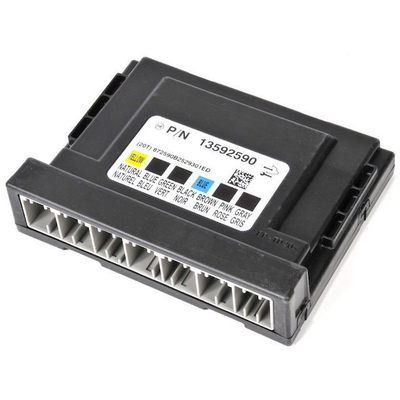
Below are the parts most often responsible for code B1323, ranked by how frequently each one is the actual culprit (per the diagnosis above). Tap any to see what we have for your vehicle.



The information in this article is provided for general reference and educational purposes only. Vehicle specifications, procedures, and part compatibility can vary by production date, trim level, and region. Always consult your vehicle's factory service manual and verify part numbers before purchasing or performing repairs. Safety-critical components such as airbags, seat belts, and braking systems should be installed by a qualified professional.
- 🧭 Diagnostic Flowchart
- 🎬 Helpful Videos
- 🛍️ Shop This Part
- What Does B1323 Mean?
- Can I Drive With B1323?
- Common Causes
- Symptoms
- Common Fixes & Costs
- Used vs. New Parts: Buying Guide
- What Happens If You Wait — Timeline
- Cost of Not Fixing It
- Diagnosis Steps
- When This Code Triggers (Freeze-Frame Conditions)
- Related Codes
- Climate & Environmental Factors
- How to Talk to a Mechanic About This Code
- Where to Take It: Dealer vs Independent vs Chain
- When to Walk Away From the Repair
- What Scan Tool You Need for This Code
- How to Clear the Code After You Fix It
- Will This Fail Emissions / State Inspection?
- Most Commonly Affected Vehicles
- Manufacturer-Specific Notes
- Real Owner Stories
- 2007 Ford F-150 with 155K miles - The Classic Fix
- 2012 Dodge Grand Caravan at 119K miles - A Misleading Code
- 2015 Hyundai Sonata - The Critical Airbag Fault
- How to Prevent This Code From Triggering
- Frequently Asked Questions
- Why does my 'door ajar' light stay on after I slam the door?
- My door ajar light flickers when I hit a bump. What does that mean?
- Can I just bypass or disable the door ajar sensor?
- I have a BMW with code B1323. Should I start by replacing the door switch?
- Will clearing the code with a scanner fix the problem?
- My car is a Toyota and I got code B1323, but my doors are fine. Why?
- Can a low car battery cause code B1323?
- How do I know if my passenger airbag works if I have an OCS-related B1323 code?
- Key Takeaways
- 🎟️ Get 5% Off