

OBD-II Code B1331: Manufacturer-Specific Fault Guide
What B1331 means, why it triggers, and how to fix it on your vehicle
- Code B1331 requires manufacturer-specific diagnosis, meaning a Hyundai airbag fault and a Jaguar trunk latch fault share the exact same code.
- On Hyundai and Kia vehicles, B1331 disables the passenger airbag system due to a short-to-ground in the front impact sensor circuit, requiring immediate repair for passenger safety.
- On Jaguar, Ford, and BMW models, B1331 indicates a trunk latch circuit failure that creates a 1-3 amp parasitic draw, killing the battery within 48 hours if left unfixed.
- Before replacing a $200 sensor or latch, use a multimeter to test the wiring harness, as broken wires cause over 80% of B1331 trunk faults and mimic sensor failures.
What Does B1331 Mean?
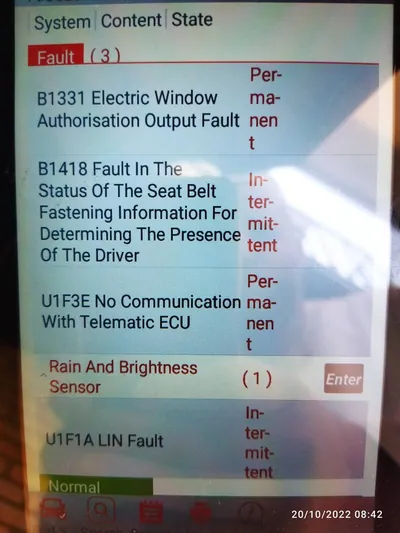
B1331 is a manufacturer-specific code. For Hyundai and Kia, it signals a short to ground in the passenger-side front airbag impact sensor. For Jaguar, Ford, and BMW, it indicates a trunk latch circuit fault, making the car think the trunk is open. For Peugeot or GM, it signifies power window or A/C system errors.
Technical definition: The formal SAE/ISO J2012 definition for B1331 is manufacturer-specific. Common definitions include: Hyundai/Kia: 'Front Impact Sensor (FIS)-Passenger Short to Ground'; Jaguar/Ford: 'Decklid Ajar Rear Door - Circuit Failure'; BMW: 'Later half-open door trumped circuit' (Hex code 9331); General Motors (GM): 'Right A/C Discharge Sensor Fault'.
Can I Drive With B1331?
Yes, But With Caution. Driving is possible but discouraged. On Hyundai and Kia vehicles, the passenger airbag is disabled and will not deploy in a crash. On Jaguar, Ford, and BMW models, the trunk latch fault causes severe parasitic battery drain, potentially stranding you and requiring a $200-$500 battery replacement, while preventing the vehicle from locking.
Common Causes

- Broken Trunk Wiring Harness (Jaguar/Ford) (Very Common) — Wires inside the flexible rubber boot near the trunk hinge break from the repeated stress of opening and closing the trunk lid.
- Broken or Shorted Airbag Wiring (Hyundai/Kia) (Very Common) — The airbag sensor wiring harness corrodes, pinches, or shorts directly to the vehicle's metal frame.
- Faulty Trunk Latch Microswitch (Jaguar/Ford) (Common) — The microswitch inside the trunk latch assembly fails mechanically or electrically, sending a constant 'open' signal to the Body Control Module.
- Faulty Front Impact Sensor (Hyundai/Kia) (Common) — The passenger impact sensor fails due to internal corrosion or physical damage from a minor front-end impact.
- Corroded Connectors or Water Intrusion (Common) — Moisture entering the trunk area or engine bay corrodes the electrical connectors at the latch or impact sensor, causing a short or open circuit.
- Faulty Control Module (BCM or SRSCM) (Rare) — An internal failure in the Body Control Module or Supplemental Restraint System Control Module misinterprets the sensor's signal. This requires module replacement and reprogramming.
Symptoms

- Airbag Warning Light is On (Hyundai/Kia) — The SRS light stays illuminated on the dashboard, indicating the passenger airbag is disabled.
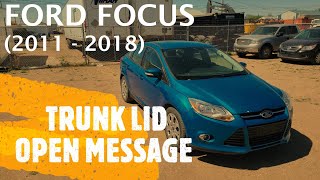
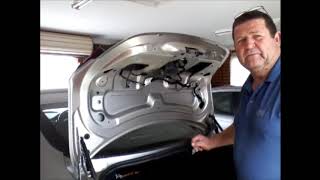
- 'Trunk Ajar' Warning on Dash (Jaguar/Ford/BMW) — The instrument cluster constantly shows the trunk is open, even when securely closed. 🎬 Watch: How to fix the luggage compartment lid open warning.
- Car Will Not Lock or Beeps Twice — The central locking system refuses to lock the doors because it detects an open trunk. Pressing lock on the key fob results in a double beep.
- Interior or Trunk Lights Stay On — The vehicle leaves the interior courtesy lights or trunk light on, leading to a dead battery overnight.
- Trunk Release Button Fails — The electronic trunk release button on the trunk lid, key fob, or interior stops working.
Diagnostic Flowchart
Tap your situation to follow the diagnostic path that matches what you're seeing on this code.
Common Fixes & Costs
- Repair Broken Wires in Trunk Harness (Jaguar/Ford) — Parts: $5-$20, Labor: $150-$350, ~1.5 hr book time (Intermediate)
- Replace Front Impact Sensor (Hyundai/Kia) — Parts: $70-$250, Labor: $75-$150, ~0.8 hr book time (DIY)
- Replace Trunk Latch Assembly (Jaguar/Ford) — Parts: $100-$250, Labor: $100-$150, ~1 hr book time (Intermediate)
- Replace Tailgate/Sensor Wiring Harness — Parts: $150-$400, Labor: $250-$500, ~2.5 hr book time (Professional)
- Replace and Program Control Module (BCM/SRSCM) — Parts: $400-$800, Labor: $150-$300, ~2 hr book time (Professional)
Used vs. New Parts: Buying Guide
When a used part is worth it: For a trunk latch assembly, a used part from a low-mileage, accident-free vehicle is a cost-effective option. For an airbag impact sensor, buying used is strongly discouraged due to safety risks and unknown part history.
Donor-vehicle mileage cap: roughly under 60000 miles for the part to have meaningful remaining life.
Donor quality checklist:
- For latches, verify the donor vehicle wasn't rear-ended.
- Match the part number exactly. Even slight variations may not be compatible.
- Avoid buying used wiring harnesses; they suffer from the same age-related brittleness as the part you are replacing.
- Never buy a used airbag sensor showing any signs of corrosion or physical damage.
Decision logic:
- If The part is an airbag sensor or any SRS component → Buy new OEM or a certified aftermarket equivalent. The safety risk of a used part is not worth the savings.
- If The part is a trunk latch and the vehicle is over 10 years old → A used part is an acceptable budget repair, but a new aftermarket part offers a better warranty for a modest increase in cost.
- If The part is a wiring harness or pigtail → Buy new. The failure is due to wire fatigue, and a used part will have similar fatigue.
Warranty tradeoff: Used parts from a salvage yard typically have a 30-90 day warranty. New aftermarket parts carry a 1-year to limited lifetime warranty. New OEM parts carry a 12-month warranty.
Worst-case if a used part fails: $150-$300 if a used part fails after the warranty period, requiring you to pay for the part and labor a second time.
What Happens If You Wait — Timeline
- Immediate (Airbag Fault): Airbag warning light illuminates. The entire Supplemental Restraint System (SRS) is disabled for safety. (MPG impact: 0%% · Added cost: $0 (Safety risk is the primary cost))
- Immediate (Trunk Latch Fault): 'Trunk Ajar' warning appears. The car refuses to lock, beeping twice, and leaves interior lights on, creating a 1-3 amp parasitic draw. (MPG impact: 0%% · Added cost: $0)
- 8-48 hours (Trunk Latch Fault): The continuous parasitic draw drains the battery completely, preventing the vehicle from starting. (MPG impact: 0%% · Added cost: $50-$150 (for jump start service or initial diagnostics))
- 1-3 months (Trunk Latch Fault): Repeatedly jump-starting the deeply discharged battery causes permanent damage to the lead plates, requiring replacement. (MPG impact: 0%% · Added cost: $250-$585 (Cost of a new AGM battery))
- Ongoing (Airbag Fault): The vehicle automatically fails its annual safety inspection in states like NY and TX due to the illuminated airbag light. (MPG impact: 0%% · Added cost: $50-$100 (Failed inspection fee))
Cost of Not Fixing It
- Immediate (Airbag Fault): The passenger airbag is disabled and will not deploy in an accident, creating a severe safety risk for the passenger. (Added cost: N/A (Safety Risk))
- 0-1 Month (Trunk Latch Fault): Inconvenience and security risk. Car refuses to lock, alarm false triggers, and interior lights stay on, causing parasitic battery drain. (Added cost: $50-$150 (for potential jump starts or diagnostic fees))
- 1-6 Months (Trunk Latch Fault): Repeated deep cycling of the battery due to parasitic drain permanently damages it, requiring replacement. (Added cost: $200-$500 (for a new battery and installation))
- 6+ Months (Trunk Latch Fault): Increased risk of vehicle theft due to inability to secure it. (Added cost: Vehicle-dependent (potential theft deductible))
Diagnosis Steps
- Read Freeze Frame Data
Use an advanced OBD-II scanner capable of reading Body (B) codes to confirm B1331 is present. Note any other codes and review the freeze frame data.
Tools: OBD-II Scanner (with B-code capability) (Beginner) - Visual Inspection (Jaguar/Ford/BMW)
Open the trunk and pull back the rubber wiring conduit between the car's body and the trunk lid. Inspect the wires inside for breaks, chafing, or cracked insulation.
Tools: Flashlight, Trim Removal Tools (Beginner) - Visual Inspection (Hyundai/Kia)
Locate the front passenger impact sensor near the radiator support. Look for obvious physical damage, heavy rust, or corrosion on the sensor body and connector.
Tools: Flashlight, Socket Set (Intermediate) - Check for Short to Ground (Hyundai/Kia)
Disconnect the PFIS connector and the SRSCM connector. Use a multimeter set to Ohms to measure resistance between the 'FIS-Passenger (+)' wire terminal and chassis ground. A reading under 1 ohm indicates a direct short to ground in the wiring harness.
Tools: Multimeter, Vehicle-Specific Wiring Diagram (Advanced) - Test the Latch Microswitch (Jaguar/Ford)
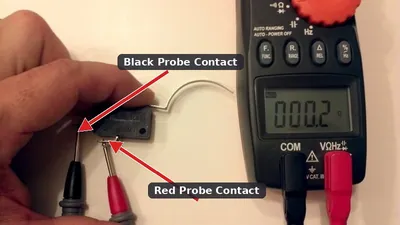
Disconnect the trunk latch connector. Identify the signal and ground pins. With the latch 'closed', resistance should be close to 0 Ω. With the latch 'open', the reading should be open-loop (OL). If the switch doesn't change state, it is faulty.
Tools: Multimeter, Screwdriver (Advanced) - Monitor Live Data with a Scan Tool
Access the BCM live data on your scanner. Find the PID for the 'Decklid Ajar Switch'. It should change state when you manually operate the latch. Wiggle the trunk harness; if the status flickers, you have an intermittent wiring fault.
Tools: Advanced OBD-II Scanner (Intermediate) - Test the Impact Sensor (Hyundai/Kia)
Disconnect the sensor. Set a multimeter to measure resistance. Probing the two pins on the sensor should yield a specific resistance value (e.g., 520-530 ohms). An open-loop (OL) or 0 ohm reading indicates a faulty sensor.
Tools: Multimeter, Service Manual (Advanced) - Test the Component by Substitution
If the driver and passenger impact sensors are identical, swap them. Clear the codes. If the fault code changes to B1326, the sensor you moved is faulty. If B1331 returns, the problem is in the wiring.
Tools: Basic Hand Tools, Socket Set (Advanced)
When This Code Triggers (Freeze-Frame Conditions)
- DTC that caused Freeze Frame: B1331 (The primary fault code recorded by the module.)
- Ignition Status: ON (Fault is typically detected during the module's power-on self-test.)
- System Voltage: 11.5-12.5V (Key On, Engine Off (KOEO). The fault is electrical and not dependent on the engine running.)
- Vehicle Speed: 0 mph (The code is often set at startup before the vehicle is moving.)
Related Codes
- B1334 — On Hyundai/Kia vehicles, this is a 'PFIS to SRSCM communication error'. Seeing B1334 after replacing a sensor for a B1331 code strongly points to a wiring problem.
- B1326 — This is the Hyundai/Kia code for the DRIVER'S side front impact sensor. If you swap the passenger and driver sensors and the code changes from B1331 to B1326, you confirmed the sensor itself is faulty.
- B1306 — On some Ford models, this code for 'Liftgate Ajar Switch Circuit Open' appears alongside or instead of B1331. Both point to a fault in the same trunk latch sensing circuit.
- U1F3E / U1F00 — On Peugeot/Citroën vehicles, B1331 appears with communication error codes like U1F3E. This combination suggests a broader network or module issue rather than a simple component failure.
Climate & Environmental Factors
- Road Salt / High Humidity: In regions using road salt or with high humidity, corrosion heavily contributes to B1331. Salt and moisture penetrate the Hyundai/Kia front impact sensor, causing internal shorts. Moisture also enters the Jaguar/Ford trunk latch microswitch or accelerates corrosion on chafed wires.
- Extreme Cold: In sub-zero temperatures, the plastic insulation on Jaguar trunk harness wires becomes brittle. Repeated flexing from opening and closing the trunk causes the insulation to crack and the wires to break.
How to Talk to a Mechanic About This Code
Say this: "I have a B1331 code. On my [Jaguar/Ford], it's causing a 'trunk ajar' warning. Could you start by inspecting the trunk wiring harness for breaks before quoting a new latch? On my [Hyundai/Kia], the airbag light is on. I need a diagnostic to confirm if the fault is the passenger impact sensor or a short in the wiring harness."
This shows you researched the two very different, common causes of this code. It directs the mechanic to the most likely, and often cheapest, point of failure first (wiring), preventing them from immediately quoting an expensive part replacement.
Avoid saying:
- 'My check engine light is on, can you look at it?' (It's an airbag or body code, not engine)
- 'Just fix whatever's wrong'
- 'The internet said to replace the sensor'
Questions to ask before authorizing the repair:
- For the Jaguar/Ford: Can you show me the broken wire(s) in the harness? If the harness is okay, can you show me the failed latch test on a multimeter?
- For the Hyundai/Kia: Did you test the wiring harness for a short-to-ground between the sensor connector and the SRSCM? Can you show me the multimeter reading that condemns the sensor itself?
- What is the warranty on this repair, including both parts and labor?
- If you are recommending a module (SRSCM/BCM) replacement, what tests did you perform to rule out the sensor, latch, and wiring first?
Where to Take It: Dealer vs Independent vs Chain
- Dealer:
Best fit for the Hyundai/Kia airbag fault due to safety liability. A reasonable, but expensive, choice for the Jaguar/Ford trunk fault.
Best for: Vehicles under warranty, Airbag (SRS) system repairs, as this is a safety-critical system they have specialized training and liability for., Complex electrical diagnostics or module programming requiring manufacturer-specific tools.
Downsides: Highest labor rates., Defaults to replacing an entire harness or assembly rather than performing a smaller, targeted wiring repair. (Typical cost: +50% vs. baseline) - Independent Shop:
Best fit for the trunk latch/wiring fault. A good independent shop handles the airbag sensor/wiring fault, but you must verify they are insured for SRS work.
Best for: Out-of-warranty vehicles, especially for the Jaguar/Ford trunk wiring/latch issue., Shops specializing in European cars (for Jaguar/BMW) or general electrical diagnostics.
Downsides: Quality and expertise vary widely. Vet the shop's reviews for electrical work., Some shops hesitate to work on SRS/airbag systems due to liability. (Typical cost: +0% vs. baseline) - Chain Shop:
AVOID. This code requires specific diagnostic skill (electrical testing, SRS knowledge) that is not a good fit for the chain shop model.
Best for: Simple, non-diagnostic parts replacement.
Downsides: Technician skill varies dramatically., Not equipped for in-depth electrical or SRS diagnostics. High risk of misdiagnosis and unnecessary parts. (Typical cost: -10% vs. baseline)
When to Walk Away From the Repair
If the estimated repair cost exceeds 40-50% of the car's private-party value, pause and consider alternatives.
- Car worth $8000, fix is $350: Fix it. A trunk wiring repair on a Jaguar is a common, relatively inexpensive fix that restores critical functionality.
- Car worth $5000, fix is $1800: Borderline. If a shop wants to replace the SRSCM module on your Hyundai, the cost approaches the walk-away threshold. Get a second opinion focused on testing the wiring first.
- Car worth $3000, fix is $1800: Walk away. The repair cost is over 50% of the car's value. It is not economical to proceed unless the car has significant sentimental value.
What Scan Tool You Need for This Code
Minimum: A scanner that reads and clears manufacturer-specific Body (B) and SRS (B) codes. Basic engine (P) code readers will not see this fault.
A $20 engine code reader from a big-box store cannot access the Body Control Module (BCM) or Supplemental Restraint System (SRS) module where this code is stored. It will incorrectly report 'No Codes Found'.
Budget: Foxwell NT301 Plus / Ancel BD310 (~$80) — Provides basic access to read and clear SRS and ABS codes on top of engine codes. It confirms the B1331 code and turns off the light after a repair, but offers limited live data.
Mid-range: BlueDriver Pro / Foxwell NT630 Plus (~$120) — Offers robust B-code and SRS reading, clearing, and live data streaming to your phone. For trunk latch issues, you view the 'trunk ajar' switch status in real-time to confirm a wiring or latch fault.
Professional: Autel MaxiCOM MK808S / Launch X431 CRP919XBT (~$450-600) — Full bidirectional control. This allows you to command the trunk latch to open/close from the scanner to test the circuit, and perform advanced diagnostics on the SRS module.
Rent vs buy: Most auto parts stores offer a free loaner tool program, but their basic scanners typically do NOT read airbag or body codes. To diagnose B1331, you must buy at least a budget-level scanner with the appropriate capabilities.
How to Clear the Code After You Fix It
- Reconnect battery if it was disconnected for safety.
- Use an OBD-II scan tool capable of reading 'B' codes to clear the fault from the specific module (SRSCM or BCM).
- Turn the ignition off, wait 30 seconds, then turn the ignition on and wait another 30 seconds for the system to self-test.
- For SRS faults, confirm the airbag light comes on for ~6 seconds and then turns off.
Drive cycle (~5 minutes): A specific drive cycle is not required for B1331. The fault is confirmed or cleared during the power-on self-test. After clearing the code, perform 2-3 ignition cycles (Key On -> Wait 30s -> Key Off) to verify the fix is permanent.
Readiness monitors affected: Evaporative System, Catalyst, O2 Sensor
Before emissions retest: drive at least 50 miles to fully set monitors.
Watch out for:
- Simply disconnecting the battery will not clear a 'hard fault' from the SRS or BCM memory.
- If the root cause is not fixed, the code reappears instantly upon the next self-test.
- Disconnecting the battery for the repair resets the powertrain computer's emissions readiness monitors, requiring a separate drive cycle to complete before an emissions test.
Will This Fail Emissions / State Inspection?
No — by itself this code doesn't fail OBD inspection (but it can keep readiness monitors from setting, which causes a separate fail).
- California: A B-code like B1331 will NOT fail the emissions (smog check) portion of the test, as the airbag system is not emissions-related.
- New York: An illuminated airbag warning light fails the annual safety inspection. You cannot get a valid inspection sticker with the light on.
- Texas: An illuminated airbag (SRS) warning light is a cause for rejection during the annual safety inspection.
Most Commonly Affected Vehicles
- Hyundai Tucson (2005-2012) — Highly prone to front impact sensor corrosion and wiring faults due to sensor location.
- Hyundai Santa Fe (2006-2012) — The code specifically relates to a short to ground in the passenger front impact sensor (PFIS) harness.
- Kia Sorento, Rondo, Spectra (2006-2012) — Shares the same SRS system design as Hyundai; the code indicates 'Right-hand Front Crash Sensor Short To Ground'.
- Jaguar XF (2008-2015) — Extremely common issue with broken wires in the trunk lid harness due to a short and inflexible wiring loom design.
- Jaguar S-Type, XJ (2000-2019) — Shares a similar trunk latch and wiring design to the XF, making it susceptible to the same latch sensor and wiring failures.
- Ford Focus, Edge, Escape (2009-2014) — On these models, B1331 typically means 'Decklid Ajar Rear Door Circuit Failure', often caused by a faulty latch or wiring.
- BMW 3-Series (E90/E92), 1-Series (2006-2013) — Corresponds to BMW fault code 9331, indicating a trunk ajar circuit failure. The issue is usually the latch or wiring.
- GM (Chevrolet/GMC/Cadillac) Various Trucks & SUVs (2000-2014) — On some GM vehicles, B1331 points to a fault with the 'Right A/C Discharge Sensor', a completely different system related to climate control.
Manufacturer-Specific Notes
- Hyundai / Kia: This code specifically points to a 'short to ground' in the passenger front impact sensor circuit. The airbag light illuminates and the passenger airbag is disabled. Always check for active recalls on your specific VIN, as numerous TSBs exist for airbag sensor and wiring issues.
- Jaguar: The code means 'Decklid Ajar Circuit Failure'. The most frequent cause is broken wires inside the rubber harness between the trunk lid and the car body. Repairing one broken wire often reveals others are about to fail.
- Ford: On models like the Focus and Edge, B1331 is defined as 'Decklid Ajar Rear Door Circuit Failure'. This is often related to the same causes as Jaguar—a faulty latch microswitch or broken wiring in the trunk hinge area.
- Peugeot/Citroën: This code has multiple meanings, commonly an 'electric window authorisation output fault'. It manifests as the window going up in small increments instead of automatically, often caused by a depleted battery requiring a window re-initialization procedure.
Real Owner Stories
2010 Jaguar XF with 110,000 miles
Owner experienced a double-beep when trying to lock the car, a 'Boot Open' warning on the dash, and the trunk release button stopped working.
What they tried:
- Initially suspected a faulty trunk latch and considered replacing it.
- Pulled back the rubber conduit near the right-side trunk hinge.
- Discovered one wire was completely severed and several others had cracked insulation.
Outcome: Spliced the broken wire and wrapped the others with electrical tape. All symptoms resolved immediately. The owner later replaced the entire harness (Part #C2Z19978, $140) for a permanent fix.
Lesson: Always inspect the trunk wiring harness in the hinge area before replacing the latch itself. A visual inspection is free and identifies the most common point of failure.
2005 Hyundai Tucson with airbag light on
Airbag light was on, and a scanner showed codes B1331 (PFIS short to ground) and B1334 (PFIS to SRSCM communication error).
What they tried:
- Replaced the passenger front impact sensor (PFIS). This cleared B1331 but B1334 remained.
- Replaced the SRSCM control module. This cleared B1334, but B1331 returned.
- Swapped the driver and passenger side impact sensors to see if the code followed the sensor.
Outcome: The owner was left in a loop of misdiagnosis. The problem was a damaged wiring harness causing an intermittent short that changed depending on which parts were connected.
Lesson: When multiple codes are present or parts replacement fails, the problem is in the wiring. Never replace the expensive control module without definitively ruling out the wiring harness with a multimeter.
2017 Veloster with a dead battery
After accidentally closing the trunk hatch on an object, the 'hatch open' light came on and the hatch stuck closed. The next morning, the car battery was completely dead.
What they tried:
- Attempted to get a jump start.
- Realized the stuck latch was causing a parasitic drain that killed the battery.
Outcome: Replaced the damaged trunk latch button/switch assembly, which eliminated the continuous power draw and restored normal function.
Lesson: A 'trunk ajar' warning causes a significant parasitic battery drain that will leave you stranded. Address the issue immediately to avoid the cost of a dead battery.
How to Prevent This Code From Triggering
- Periodically lubricate the Jaguar/Ford trunk wiring harness (Once per year) — Applying a silicone-based lubricant to the outside of the rubber boot reduces friction and binding, lessening the strain on internal wires as they move.
- Apply dielectric grease to the Hyundai/Kia front impact sensor connector (When replacing or if sensor is exposed for other service) — Applying dielectric grease to the connector seal waterproofs the connection, preventing the corrosion that leads to short circuits and code B1331.
- Inspect and secure the trunk harness during other maintenance (Anytime working in the trunk) — Visually inspect the harness boot to ensure it is properly seated and not being pinched by luggage, which accelerates wear.
- Clean the trunk latch mechanism (Once every 2 years) — Spraying the latch mechanism with electrical contact cleaner frees sticky microswitches and prevents false 'ajar' signals.
Frequently Asked Questions
Can I just clear the B1331 code?
You can clear the code with a scanner, but it returns immediately if the underlying electrical fault is still present. This is a 'hard fault' indicating a persistent problem that requires a physical repair.
Is it safe to drive with a B1331 code?
It is not safe if the code is for the airbag system, as the passenger airbag will not deploy in an accident. For a trunk latch issue, it is a security risk that drains your battery, potentially leaving you stranded.
I repaired the broken wire in my Jaguar's trunk harness, but now my license plate lights don't work. What happened?
The trunk wiring harness contains multiple small wires bundled together. The stress that broke the trunk latch wire likely damaged adjacent wires for the license plate lights or reverse camera. Always inspect and reinforce every wire in the flexible boot area during the repair.
Why won't my Jaguar lock and why does it beep twice?
With code B1331, your car's computer thinks the trunk is open. As a security feature, the car refuses to lock the doors with an opening detected. The double beep is an audible warning letting you know the car is not secured.
I replaced the airbag sensor on my Hyundai, but the B1331 code came back. What's wrong?
The B1331 code indicates a 'short to ground' in the circuit, which is often a pinched wire rather than a bad sensor. If the wiring shorts to the frame, a new sensor will not fix the issue. Perform a full circuit diagnosis with a multimeter to confirm the fault location before replacing parts.
What tools do I need to diagnose B1331?
For a basic diagnosis, you need an OBD-II scanner that reads Body codes and a flashlight. For a complete diagnosis and repair, you need a multimeter, basic hand tools, trim removal tools, and a vehicle-specific wiring diagram.
Why are my Peugeot's windows not working correctly with a B1331 code?
On Peugeot models, B1331 indicates a 'window authorisation output fault', often occurring after a dead battery. The system loses its memory of the window's limits. Fix this by performing a re-initialization procedure, which involves holding the window switch up for several seconds after the window fully closes.
Key Takeaways
- Code B1331 requires manufacturer-specific diagnosis, meaning a Hyundai airbag fault and a Jaguar trunk latch fault share the exact same code.
- On Hyundai and Kia vehicles, B1331 disables the passenger airbag system due to a short-to-ground in the front impact sensor circuit, requiring immediate repair for passenger safety.
- On Jaguar, Ford, and BMW models, B1331 indicates a trunk latch circuit failure that creates a 1-3 amp parasitic draw, killing the battery within 48 hours if left unfixed.
- Before replacing a $200 sensor or latch, use a multimeter to test the wiring harness, as broken wires cause over 80% of B1331 trunk faults and mimic sensor failures.
Helpful Videos
Shop the Parts Behind B1331
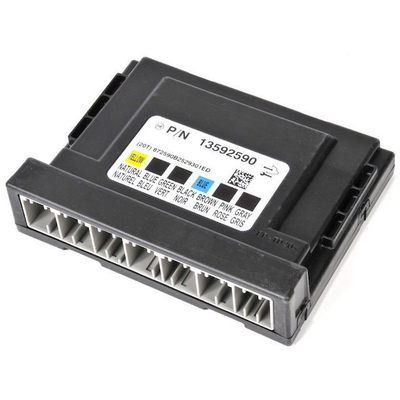
Below are the parts most often responsible for code B1331, ranked by how frequently each one is the actual culprit (per the diagnosis above). Tap any to see what we have for your vehicle.



The information in this article is provided for general reference and educational purposes only. Vehicle specifications, procedures, and part compatibility can vary by production date, trim level, and region. Always consult your vehicle's factory service manual and verify part numbers before purchasing or performing repairs. Safety-critical components such as airbags, seat belts, and braking systems should be installed by a qualified professional.
- 🧭 Diagnostic Flowchart
- 🎬 Helpful Videos
- 🛍️ Shop This Part
- What Does B1331 Mean?
- Can I Drive With B1331?
- Common Causes
- Symptoms
- Common Fixes & Costs
- Used vs. New Parts: Buying Guide
- What Happens If You Wait — Timeline
- Cost of Not Fixing It
- Diagnosis Steps
- When This Code Triggers (Freeze-Frame Conditions)
- Related Codes
- Climate & Environmental Factors
- How to Talk to a Mechanic About This Code
- Where to Take It: Dealer vs Independent vs Chain
- When to Walk Away From the Repair
- What Scan Tool You Need for This Code
- How to Clear the Code After You Fix It
- Will This Fail Emissions / State Inspection?
- Most Commonly Affected Vehicles
- Manufacturer-Specific Notes
- Real Owner Stories
- 2010 Jaguar XF with 110,000 miles
- 2005 Hyundai Tucson with airbag light on
- 2017 Veloster with a dead battery
- How to Prevent This Code From Triggering
- Frequently Asked Questions
- Can I just clear the B1331 code?
- Is it safe to drive with a B1331 code?
- I repaired the broken wire in my Jaguar's trunk harness, but now my license plate lights don't work. What happened?
- Why won't my Jaguar lock and why does it beep twice?
- I replaced the airbag sensor on my Hyundai, but the B1331 code came back. What's wrong?
- What tools do I need to diagnose B1331?
- Why are my Peugeot's windows not working correctly with a B1331 code?
- Key Takeaways
- 🎟️ Get 5% Off