

OBD-II Code B1334: Passenger-Side Front Impact Sensor Communication Error
What B1334 means, why it triggers, and how to fix it
- Code B1334 disables your passenger-side airbag, meaning it will not deploy in a crash and requires immediate attention.
- The most frequent cause is a loose or corroded electrical connector at the front bumper, which costs under $15 in contact cleaner to fix yourself.
- Never splice or solder damaged yellow airbag wires; always replace the damaged harness section to maintain the exact electrical resistance required for deployment.
- Driving with an active B1334 code guarantees a failed safety inspection in states like New York and California, and risks denied insurance claims after an accident.
What Does B1334 Mean?
Code B1334 means the Supplemental Restraint System (SRS) module lost communication with the passenger-side front impact sensor. This sensor detects frontal crashes to trigger airbag deployment. As a safety precaution, the system disables the airbag and illuminates the dashboard warning light.
Technical definition: The SAE/ISO definition is "Front Impact Sensor (FIS)-Passenger Communication Error." The SRS Control Module expects a constant 3V to 11V data stream from the passenger-side sensor. If this signal drops, spikes, or corrupts for more than a few seconds, the module sets B1334 and locks out the passenger airbag circuit.
Can I Drive With B1334?
Yes, But With Caution. You can physically drive the vehicle, but it is not safe. The Supplemental Restraint System (SRS) module disables the passenger-side airbag as a failsafe when this code triggers, drastically increasing injury risk in a frontal collision. Driving with this fault guarantees a failed safety inspection in most states and risks insurance claim denial after an accident.
Common Causes
- Loose or corroded electrical connector. (Very Common) — Water, road salt, or improper seating after a front-end collision repair causes high resistance at the sensor plug, breaking the communication circuit.
- Damaged wiring harness. (Common) — The yellow SRS wiring routed behind the front bumper is highly vulnerable to chafing, collision damage, or rodent chewing.
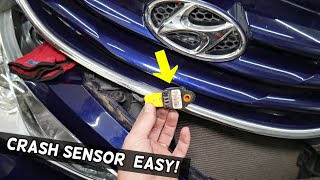
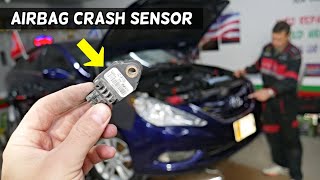
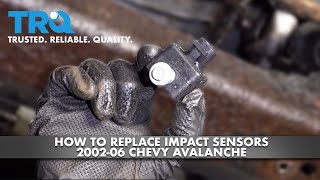
- Faulty Passenger-Side Front Impact Sensor (PFIS). (Common) — The sensor fails internally due to age, moisture intrusion, or physical impact from road debris. 🎬 Watch: How to locate and replace a front crash sensor.
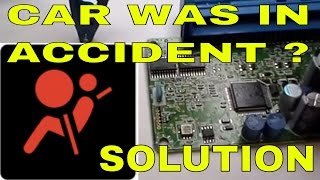
- SRS module in a 'crashed' state. (Uncommon) — After any collision, the SRS module stores crash data and locks communication. It requires a specialized reset service, not just a code clear. 🎬 See how to clear crash data from an airbag module.
- Faulty SRS Control Module. (Less Common) — The main airbag computer develops an internal circuit failure, preventing it from reading sensor data.
Symptoms
- Airbag warning light is on. — The red airbag icon remains illuminated on the dashboard continuously.
- Passenger airbag disabled. — The passenger-side airbag will not deploy in a crash.
- Warning message on dash. — Vehicles with digital displays show a "Check Airbag System" or "Service Airbag" warning.
- Failed state safety inspection. — An illuminated airbag light triggers an automatic failure during annual safety inspections in states like New York and California.
- Code B1334 active in scanner. (scan-tool only — no driver-felt sign) — An SRS-capable OBD-II scanner pulls B1334 as a 'current' or 'active' fault.
Diagnostic Flowchart
Tap your situation to follow the diagnostic path that matches what you're seeing on this code.
Common Fixes & Costs
- Cleaning or reseating the sensor's electrical connector. — Parts: $5-$15, Labor: $50-$100, ~0.5 hr book time (DIY)
- Replacing the passenger-side front impact sensor.
— Parts: $70-$350, Labor: $75-$170, ~1.0 hr book time
(Intermediate)
: OEM
: OEM - Repairing or replacing the wiring harness to the sensor. — Parts: $10-$50, Labor: $100-$200, ~1.5 hr book time (Advanced)
- Resetting the SRS (Airbag) Control Module after a crash. — Parts: $0, Labor: $50-$150, ~1.0 hr book time (Professional)
- Replacing the SRS (Airbag) Control Module. — Parts: $600-$1300, Labor: $150-$250, ~1.5 hr book time (Professional)
Used vs. New Parts: Buying Guide
When a used part is worth it: Never. It is strongly recommended NOT to use salvaged airbag impact sensors. Their history is unknown, and they may fail during a collision.
Donor quality checklist:
- The Society of Collision Repair Specialists (SCRS) explicitly warns against using salvaged SRS components.
- You cannot verify if a used sensor suffered internal stress in a previous collision without deploying it.
Decision logic:
- If The part is a critical SRS component like an impact sensor. → Always buy a new OEM or certified aftermarket part. The cost savings do not justify the immense safety risk.
Warranty tradeoff: Used parts from salvage yards carry a 30-day warranty that only covers the part, not the labor. New OEM sensors include warranties of one year or more.
Worst-case if a used part fails: $500-$1000+ for repeat labor, plus the incalculable cost of the airbag failing to protect a passenger.
What Happens If You Wait — Timeline
- Immediate (First key cycle after fault): The SRS module detects the communication error. The airbag warning light illuminates, and B1334 is stored as a 'hard fault'. (MPG impact: 0%% · Added cost: $0)
- 0-12 months: The passenger-side airbag remains disabled. The vehicle fails any mandatory state safety inspection. (MPG impact: 0%% · Added cost: $50-$200 in potential fines and re-inspection fees.)
- In case of a frontal accident: The passenger-side airbag will not deploy, drastically increasing the risk of fatal injury. Insurance claims may be denied due to negligent maintenance. (MPG impact: 0%% · Added cost: Incalculable cost of injury and legal liability.)
Cost of Not Fixing It
- Immediate: The passenger-side airbag is disabled and will not deploy in a frontal collision, drastically increasing the risk of serious injury. (Added cost: N/A (Safety Risk))
- 0-12 months: Failure to pass mandatory state safety inspections, resulting in fines or inability to legally register the vehicle. (Added cost: $50-$200 in fines or re-inspection fees.)
- In case of an accident: Insurance companies investigate illuminated airbag lights as driver negligence and deny claims related to passenger injuries. (Added cost: Potentially thousands in denied claims or legal liability.)
Diagnosis Steps
- Read the Fault Codes
Use an OBD-II scanner capable of reading SRS/airbag codes to confirm B1334. Note if B1329 (driver's side) is also present, which points to a shared wiring issue or module failure.
Tools: SRS-capable OBD-II Scanner (Beginner) - Visually Inspect the Sensor and Wiring
Locate the passenger-side front impact sensor behind the front bumper or on the radiator support. Look for unplugged connectors, crushed wires, or physical damage from road debris or recent bodywork.
Tools: Flashlight (Beginner) - Check the Electrical Connector
Disconnect the negative battery terminal and wait 15 minutes to discharge the SRS backup power. Unplug the sensor, check for green corrosion or bent pins, and clean thoroughly with contact cleaner.
Tools: Socket set, Electrical contact cleaner (Intermediate) - Check Harness Voltage
With the ignition ON and the sensor unplugged, probe the harness signal wire. It must read between 3V and 11V (on Hyundai/Kia systems). If the voltage is 0V or battery voltage, the issue is a broken wire or bad SRS module, not the sensor.
Tools: Digital Multimeter, Vehicle-specific wiring diagram (Advanced) - Test Wiring Continuity
Disconnect the battery and the SRS module. Test the signal wire from the sensor plug to the SRS module connector. Resistance must be under 1 ohm with no shorts to ground.
Tools: Digital Multimeter, Vehicle-specific wiring diagram (Advanced) - Test Sensor by Substitution
If wiring and voltage tests pass, plug in a known-good OEM sensor. If the code clears and the airbag light turns off, the original sensor failed internally.
Tools: Replacement impact sensor (Intermediate) - Scope the Communication Signal
For definitive proof, connect an oscilloscope to the signal wire. A healthy sensor shows a clean digital square wave. A flat line confirms a dead sensor or broken wire. A noisy signal indicates external electrical interference.
Tools: Oscilloscope, Vehicle-specific wiring diagram (Professional) - Check the SRS Control Module
If all external wiring, voltage, and sensor tests pass, the SRS module requires professional testing or replacement.
Tools: Advanced diagnostic scan tool (Professional)
When This Code Triggers (Freeze-Frame Conditions)
- System State: Ignition ON (The SRS module performs a self-test every time the ignition turns on. B1334 sets during this initial check if communication fails.)
- Fault Detection Time: 2-5 seconds (The code logs if the SRS module loses communication with the sensor for a continuous period of just a few seconds.)
- Battery Voltage: 9-16 Volts (The fault is reliably detected at normal operating voltage. A severely drained battery causes random communication codes across all modules.)
Related Codes
- B1329 — Identical fault for the Driver-Side Front Impact Sensor. If both codes appear together, suspect shared damage from a frontal collision or a failed SRS module.
- B1333 — Indicates a 'Defect' in the passenger-side sensor (internal failure), whereas B1334 is a 'Communication Error' (wiring, module, or sensor).
- B1335 — Means 'Front Impact Sensor-Passenger Wrong ID'. Triggers when an incorrect or incompatible sensor is installed during a repair.
Climate & Environmental Factors
- High Humidity and Rain: Moisture penetrates the exposed sensor connector at the front of the vehicle, causing corrosion that disrupts the 3V-11V communication signal.
- Road Salt (Winter Climates): Corrosive salty spray accelerates the degradation of the wiring harness and sensor connectors, significantly increasing the likelihood of this fault.
- Cold Weather: Extreme cold causes plastic connectors and metal pins to contract at different rates, creating intermittent open circuits that trigger the code.
How to Talk to a Mechanic About This Code
Say this: "My airbag warning light is on, and my scanner shows code B1334 for a passenger-side front impact sensor communication error. Please test the sensor's wiring and connector voltage before recommending a sensor replacement."
This proves you understand the code's common causes (wiring vs. a bad part). It forces the technician to perform a proper electrical diagnosis instead of immediately replacing the most expensive component.
Avoid saying:
- My airbag light is on, can you fix it?
- Just replace the airbag sensor.
- Do whatever it takes to turn the light off.
Questions to ask before authorizing the repair:
- Did you test the wiring and connector for continuity and proper voltage before condemning the sensor?
- Are you using a new OEM or equivalent part? (Never accept used SRS components).
- If the wiring is the issue, what is your repair procedure? (Splicing airbag wires is forbidden).
- Does the quote include clearing the code and confirming the light stays off?
Where to Take It: Dealer vs Independent vs Chain
- Dealer:
A safe but expensive choice. Best if independent diagnostics fail and you suspect the main SRS computer is dead.
Best for: Vehicles under warranty., Complex cases requiring SRS control module replacement and programming.
Downsides: Highest labor rates., Quick to replace entire expensive harnesses rather than perform nuanced repairs. (Typical cost: +50% vs. baseline) - Independent Shop:
Best fit for most situations. An experienced independent mechanic efficiently diagnoses and fixes the common causes of B1334 at a reasonable cost.
Best for: Out-of-warranty vehicles., Diagnosing common wiring, connector, or sensor failures.
Downsides: May lack the specialized tools to program a new SRS module if required. (Typical cost: +0% vs. baseline) - Chain Shop:
Not recommended for the initial diagnosis, which requires careful electrical testing.
Best for: Simple part replacements where the diagnosis is already 100% certain.
Downsides: Technician skill with complex electrical diagnostics is inconsistent., Often lack specific SRS diagnostic tools. (Typical cost: -10% vs. baseline)
When to Walk Away From the Repair
If the estimated repair cost for the airbag system exceeds 50% of your car's private-party value, seriously consider your options.
- Car worth $8000, fix is $500: Fix it. This is a critical safety repair and a small fraction of the car's value.
- Car worth $4000, fix is $1500: Borderline. Get a second opinion before proceeding.
- Car worth $2500, fix is $1800: Walk away. The repair cost is not economically viable.
What Scan Tool You Need for This Code
Minimum: A scanner that specifically reads and clears Supplemental Restraint System (SRS) or airbag codes. Basic engine-only readers will not work.
A standard $20 OBD-II scanner only sees engine emissions codes (P-codes). It cannot communicate with the SRS module to view or clear B-codes like B1334.
Budget: Autel AutoLink AL619 (~$70) — Specifically designed to read and clear ABS and SRS codes. It confirms B1334 is active and clears it after a repair.
Mid-range: BlueDriver Pro (~$120) — Connects to your smartphone to read and clear SRS codes, offering repair reports with common fixes for your specific vehicle.
Professional: Foxwell NT630 Plus / Autel MaxiCOM MK808 (~$180-500) — Offers bidirectional control to actively test SRS components and view live data from the SRS module, essential for advanced diagnostics.
Rent vs buy: Auto parts stores do NOT rent out SRS-capable scanners due to liability. Buying a budget pick like the Autel AL619 is cheaper than paying for a single shop diagnostic session.
How to Clear the Code After You Fix It
- Ensure the underlying fault is corrected and the battery is reconnected.
- Use an SRS-capable OBD-II scan tool to access the Supplemental Restraint System module.
- Select 'Clear/Erase DTCs'.
- Turn the ignition off, then back on. Wait for the SRS light to self-test; it should illuminate for 3-5 seconds and turn off permanently.
Drive cycle (~10 minutes): No specific drive cycle is required. The SRS system self-checks immediately upon ignition. A short test drive confirms the light does not return from road vibration.
Readiness monitors affected: None. Readiness monitors track emissions, not the SRS system.
Watch out for:
- Basic $20 OBD-II readers cannot access or clear SRS codes.
- Disconnecting the battery will not clear 'hard codes' like B1334 from the SRS module's memory.
- If the code returns instantly, the root cause (bad wire, failed sensor) is still present.
Will This Fail Emissions / State Inspection?
Yes — this code typically fails an OBD-II emissions inspection.
- California: For a revived salvage vehicle, an illuminated airbag light is an automatic failure of the Vehicle Safety Systems Inspection (VSSI).
- New York: An illuminated airbag warning light is an automatic failure for the state's annual safety inspection.
- Texas: Texas no longer requires annual safety inspections for non-commercial vehicles as of 2025. The airbag light is not checked during emissions testing.
Most Commonly Affected Vehicles
- Hyundai Sonata (2010-2015) — Extremely common on this model. Often appears with code B1329 for the driver's side.
- Hyundai Elantra (2011-2016) — Frequently reported due to wiring issues or internal sensor failure.
- Hyundai Tucson (2010-2015) — Front impact sensors are a known failure point, particularly on 2010-2012 models.
- Hyundai Accent (2012-2017) — Causes usually point to poor connections at the front bumper harness.
- Kia Forte (2010-2013) — Shares a platform and SRS components with the Elantra, making it equally susceptible.
- Kia Mohave/Borrego (2009-2011) — Diagnostic procedures specifically highlight checking harness connections first for this model.
Manufacturer-Specific Notes
- Hyundai / Kia: This code is exceptionally common on these vehicles. The root cause is almost always a poor connection at the bumper or a failed sensor.
- Ford / Lincoln / Mercury: On Ford vehicles, B1334 means "Decklid Ajar Rear Door Circuit Short To Ground." It triggers a trunk warning, not an airbag light.
- GMC / Chevrolet: For some GM models, B1334 refers to an open in the '#2 low current' power supply circuit, completely unrelated to the airbag system.
Real Owner Stories
2013 Hyundai Elantra, mileage unknown
Airbag light illuminated with codes B1334 and B1329 (passenger and driver side front impact sensor communication errors).
What they tried:
- Inspected wiring to both front impact sensors. No visible damage found.
- Disconnected, cleaned, and securely reconnected the sensor plugs.
- Cleared codes with an SRS scanner, but they returned immediately.
Outcome: Replaced both the driver (95920-3X000) and passenger (95930-3X100) side front impact sensors with new OEM parts. The codes cleared permanently. The issue was simultaneous internal sensor failure.
Lesson: If both driver and passenger codes appear, replacing the sensors is a valid diagnostic step after verifying the wiring is intact.
2011 Hyundai Sonata after minor front-end collision
After a body shop repaired the front bumper, the airbag light stayed on with code B1334.
What they tried:
- Returned the car to the body shop immediately.
- Technician inspected the front passenger side.
Outcome: The technician found the new impact sensor was never plugged in. They connected the harness, cleared the codes, and the light stayed off at no cost to the owner.
Lesson: If B1334 appears directly after front-end work, human error is the most probable cause. Always return to the repair shop first.
2012 Kia Forte with intermittent airbag light
The airbag light triggered randomly, mostly in wet weather. Code B1334 was active.
What they tried:
- A mechanic replaced the front passenger impact sensor, but the code returned a week later.
- A second technician performed a pin-out resistance test on the wiring harness.
Outcome: Found high resistance on the signal wire caused by corrosion inside the wiring loom six inches behind the connector. Repairing the harness section and sealing it with dielectric grease permanently fixed the issue.
Lesson: An intermittent, weather-related light points to a wiring issue, not a hard sensor failure. Do not replace the sensor without testing harness resistance.
How to Prevent This Code From Triggering
- Apply dielectric grease to sensor connectors (Any time front-end work is performed) — Dielectric grease seals the electrical connector against moisture and road salt, preventing the corrosion that causes communication errors.
- Regularly clean the front-end and undercarriage (Monthly, especially in winter climates) — Washing away road salt and grime from the radiator support reduces corrosive materials that degrade the sensor and wiring.
- Ensure front bumper and splash shields are secure (During every oil change) — Missing under-engine splash shields allow excessive water and debris to strike the impact sensors and wiring directly.
Frequently Asked Questions
Is it safe to drive with code B1334?
No. The passenger-side airbag is disabled and will not deploy in an accident, significantly increasing the risk of severe injury.
Will clearing the code fix the problem?
No. If the underlying fault is still present, the code returns immediately and the airbag light stays on.
Can I replace the airbag impact sensor myself?
Yes, if you have basic mechanical skills. You must disconnect the battery for at least 15 minutes before working on any airbag component to prevent accidental deployment.
My car was in an accident and now has this code. What should I do?
Return to the body shop that performed the repairs. They likely damaged the wiring or forgot to plug the sensor back in. If the wiring is fine, the SRS module requires a specialized crash data reset.
How much does it cost to fix code B1334?
Costs depend on the root cause. A simple wiring repair or connector cleaning costs $50 to $200. Replacing the sensor ranges from $200 to $600, while a full SRS module replacement exceeds $1,000.
Can I repair a damaged airbag wiring harness?
Most manufacturers forbid splicing airbag system wires because improper repairs alter circuit resistance. The only approved fix is replacing the entire damaged section of the harness.
What's the most common misdiagnosis for B1334?
Replacing the impact sensor when the actual problem is a corroded connector or a damaged wire. Another mistake is replacing the SRS module when it only needs a crash data reset.
Will my car pass a state inspection with the airbag light on?
In states with annual safety inspections (like New York and California), an illuminated airbag light is an automatic failure.
Could my insurance be voided if I drive with the airbag light on?
Potentially. If you are in an accident, the insurance company can investigate it as 'negligent maintenance' and deny claims related to passenger injuries.
Key Takeaways
- Code B1334 disables your passenger-side airbag, meaning it will not deploy in a crash and requires immediate attention.
- The most frequent cause is a loose or corroded electrical connector at the front bumper, which costs under $15 in contact cleaner to fix yourself.
- Never splice or solder damaged yellow airbag wires; always replace the damaged harness section to maintain the exact electrical resistance required for deployment.
- Driving with an active B1334 code guarantees a failed safety inspection in states like New York and California, and risks denied insurance claims after an accident.
Helpful Videos
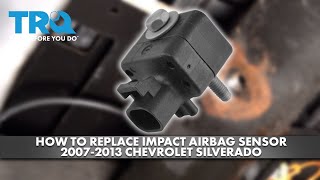
Shop the Parts Behind B1334
Below are the parts most often responsible for code B1334, ranked by how frequently each one is the actual culprit (per the diagnosis above). Tap any to see what we have for your vehicle.



The information in this article is provided for general reference and educational purposes only. Vehicle specifications, procedures, and part compatibility can vary by production date, trim level, and region. Always consult your vehicle's factory service manual and verify part numbers before purchasing or performing repairs. Safety-critical components such as airbags, seat belts, and braking systems should be installed by a qualified professional.
- 🧭 Diagnostic Flowchart
- 🎬 Helpful Videos
- 🛍️ Shop This Part
- What Does B1334 Mean?
- Can I Drive With B1334?
- Common Causes
- Symptoms
- Common Fixes & Costs
- Used vs. New Parts: Buying Guide
- What Happens If You Wait — Timeline
- Cost of Not Fixing It
- Diagnosis Steps
- When This Code Triggers (Freeze-Frame Conditions)
- Related Codes
- Climate & Environmental Factors
- How to Talk to a Mechanic About This Code
- Where to Take It: Dealer vs Independent vs Chain
- When to Walk Away From the Repair
- What Scan Tool You Need for This Code
- How to Clear the Code After You Fix It
- Will This Fail Emissions / State Inspection?
- Most Commonly Affected Vehicles
- Manufacturer-Specific Notes
- Real Owner Stories
- 2013 Hyundai Elantra, mileage unknown
- 2011 Hyundai Sonata after minor front-end collision
- 2012 Kia Forte with intermittent airbag light
- How to Prevent This Code From Triggering
- Frequently Asked Questions
- Is it safe to drive with code B1334?
- Will clearing the code fix the problem?
- Can I replace the airbag impact sensor myself?
- My car was in an accident and now has this code. What should I do?
- How much does it cost to fix code B1334?
- Can I repair a damaged airbag wiring harness?
- What's the most common misdiagnosis for B1334?
- Will my car pass a state inspection with the airbag light on?
- Could my insurance be voided if I drive with the airbag light on?
- Key Takeaways
- 🎟️ Get 5% Off