

OBD-II Code B1346: Driver Airbag Resistance Too High (Hyundai/Kia/GM) or Center High-Mount Stop Lamp Circuit Failure (Ford)
The Ultimate Guide to B1346: What it means, why it triggers, and exactly how to fix it for your specific vehicle
- For Hyundai and Kia vehicles, B1346 indicates a failed clock spring 95% of the time, which disables the driver's airbag and horn.
- Hyundai and Kia extended the clock spring warranty to 15 years with unlimited miles for popular 2011-2016 models, making this a free dealer repair.
- Ford owners with code B1346 usually have a burnt-out third brake light bulb or a leaking $20 foam gasket on 2009-2014 F-150s.
- Diagnose airbag faults safely by using a scan tool to monitor live 'Driver Airbag Resistance' data, looking for stable readings between 2.0 and 4.5 ohms.
What Does B1346 Mean?

The meaning of code B1346 varies significantly by manufacturer, making correct identification the first critical step. For Ford, Lincoln, and Mercury vehicles, it signifies that the Body Control Module (BCM) detects an electrical fault (an open, short, or high resistance) in the circuit for the center high-mount stop lamp (CHMSL), also known as the third brake light. For Hyundai, Kia, and General Motors, this code indicates a severe safety issue: the Supplemental Restraint System (SRS) module detects that the resistance in the driver's side airbag deployment circuit (squib) is too high, deactivating the airbag as a safety precaution.
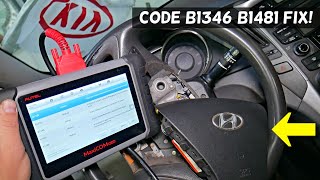
Technical definition: The official SAE/ISO definition for Hyundai, Kia, and GM vehicles is "Driver Airbag Resistance Too High (1st Stage)." The Restraint System Control Module (SRSCM) sets this code when the resistance in the driver's airbag deployment loop exceeds the manufacturer's specified range, typically above 4.5-5.0 ohms. 🎬 See this diagnostic walkthrough for high airbag resistance codes. On Ford vehicles, the definition is "Center High Mount Stop Lamp Circuit Failure." The Body Control Module (BCM) monitors the circuit's integrity and sets this code when it detects an open circuit from a burnt-out bulb or a short to ground.
Can I Drive With B1346?

No, for airbag fault The answer depends entirely on your vehicle's manufacturer. For Hyundai, Kia, and GM, this code indicates a CRITICAL fault in the airbag system. Your driver's airbag is disabled and WILL NOT deploy in a collision. Do not drive the vehicle until it is repaired. For Ford, the code means your third brake light is not working. While the vehicle is mechanically drivable, your visibility to other drivers is dangerously reduced, significantly increasing the risk of a rear-end collision.
Common Causes

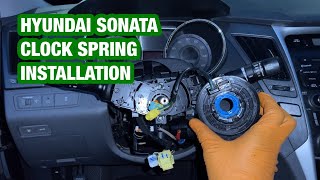
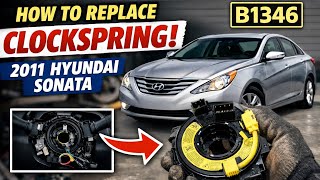
- Faulty Clock Spring (Hyundai/Kia/GM) (Very Common) — This is the leading cause for the airbag-related definition. The clock spring is a coiled ribbon of wires in the steering column that maintains electrical contact for the airbag, horn, and steering wheel controls. 🎬 Watch: How to replace the clock spring and fix steering controls. Constant turning fatigues and breaks the internal wires, creating high resistance.
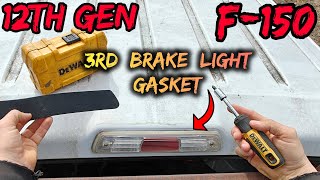
- Burnt-Out Third Brake Light Bulb (Ford) (Very Common) — The filament in the incandescent bulb of the third brake light is a wear item and the most frequent reason for the code 🎬 Watch: Easy DIY third brake light bulb replacement for F-150. on Ford vehicles. A broken filament creates an open circuit detected by the BCM.
- Water Intrusion & Corroded Socket (Ford F-150) (Common) — On 2009-2014 F-150s, the factory foam gasket on the third brake light assembly degrades, allowing water to leak in. This corrodes the bulb socket, connectors, and internal circuit boards, causing shorts and open circuits.
- Damaged Liftgate Wiring Harness (Ford SUVs) (Common) — On SUVs like the Explorer and Escape, wires frequently break inside the flexible rubber boot between the body and the liftgate due to the repeated motion of opening and closing the hatch.
- Faulty Driver's Airbag Inflator (Squib) (Less Common) — The internal resistance of the airbag's deployment squib itself falls out of specification. This is less common than a clock spring failure but is a definitive possibility requiring module replacement.
- Incorrect Aftermarket LED Bulb (Less Common) — Replacing the original incandescent bulb with a non-CAN-bus-compatible LED causes the BCM to misinterpret the LED's low resistance as a burnt-out bulb, setting the code even if the light illuminates.
- Faulty Control Module (SRS or BCM) (Very Rare) — The module monitoring the circuit fails internally. This is only considered after every other part of the circuit—wiring, connectors, and components—is thoroughly tested and proven functional.
Symptoms

- Airbag warning light is on — For Hyundai, Kia, and GM, this is the primary symptom. The light indicates the driver's airbag system is completely disabled.
- Third brake light does not work — The most obvious symptom for the Ford definition. The center brake light fails to illuminate when the brake pedal is pressed.
- Horn or steering wheel controls not working — When B1346 is caused by a failed clock spring, the electrical connections for the horn, cruise control, and audio buttons fail simultaneously.
- Traction Control / ESC light is on — The clock spring assembly often houses the Steering Angle Sensor (SAS). A failing clock spring disrupts the SAS signal, disabling the Electronic Stability Control (ESC) system.
- Cruise control does not work — Vehicles disable the cruise control system as a safety measure when either a brake light circuit fault or an airbag system fault is detected.
Diagnostic Flowchart
Tap your situation to follow the diagnostic path that matches what you're seeing on this code.
Common Fixes & Costs
- Replace Clock Spring — Parts: $80-$150, Labor: $150-$250, ~1.0 hr book time (Intermediate)
- Replace burnt-out third brake light bulb(s) — Parts: $5-$15, Labor: $0-$50, ~0.2 hr book time (DIY)
- Replace the complete third brake light assembly — Parts: $50-$150, Labor: $50-$100, ~0.5 hr book time (DIY)
- Repair damaged or corroded wiring — Parts: $10-$30, Labor: $150-$250, ~1.5 hr book time (Intermediate)
- Replace Driver's Airbag Module — Parts: $400-$800, Labor: $100-$150, ~0.5 hr book time (Advanced)
Used vs. New Parts: Buying Guide
When a used part is worth it: For a third brake light assembly, a used part from a reputable salvage yard is a good value. For a clock spring, buying used is a significant gamble as it is a known wear item. New is strongly recommended for safety components.
Donor-vehicle mileage cap: roughly under 60000 miles for the part to have meaningful remaining life.
Donor quality checklist:
- For a brake light, check for a clear lens, no cracks, and intact mounting points. Avoid parts from flood-damaged cars.
- Match the part number exactly. For clock springs, features like steering wheel controls and heated steering wheels change the part number.
Decision logic:
- If The part is a clock spring → Buy a new OEM or high-quality aftermarket part. The risk and labor cost of a failed used part are not worth the savings.
- If The part is a Ford third brake light assembly (2009-2014 F-150) → Buy a new aftermarket assembly. Many feature improved gasket designs to prevent the water leak that caused the original to fail.
- If The part is a simple bulb or socket → Always buy new. The cost is minimal.
Warranty tradeoff: Used parts typically have a 30-90 day warranty. New aftermarket parts carry a 1-year to limited lifetime warranty. An OEM part provides maximum peace of mind.
Worst-case if a used part fails: $250. If a used clock spring fails shortly after installation, you pay the labor cost a second time, negating any savings.
What Happens If You Wait — Timeline
- Immediate (Airbag Fault): The SRS module disables the driver's airbag and turns on the warning light. There is no grace period. (MPG impact: 0%% · Added cost: $0 (Immediate, non-negotiable safety risk of no airbag deployment))
- Immediate (Brake Light Fault): The third brake light stops working, creating an immediate safety risk of a rear-end collision and causing a failed safety inspection. (MPG impact: 0%% · Added cost: $50-$250 (Potential traffic ticket))
- 1-6 months (Airbag Fault): Continued turning causes other wires in the clock spring to fail, leading to loss of horn, steering wheel controls, and potentially disabling stability control. (MPG impact: 0%% · Added cost: $0 (Safety systems become progressively more degraded))
- 1-6+ months (Brake Light Fault due to Water Leak): Continued water intrusion corrodes the bulb socket and connector, requiring a full assembly replacement. Water stains or ruins the headliner and leads to mold. (MPG impact: 0%% · Added cost: $150-$400 (Cost escalates from a $20 gasket fix to a new light assembly plus headliner cleaning))
Cost of Not Fixing It
- Immediate (Airbag Fault): The driver's airbag is disabled and will not deploy in a collision, drastically increasing the risk of serious injury or death. (Added cost: N/A (Safety Risk))
- Immediate (Brake Light Fault): Significantly increased risk of a rear-end collision. Guaranteed failure of a vehicle safety inspection and potential for a traffic ticket. (Added cost: $50-$250 (Ticket/Fine))
- Long-Term: Ignoring an airbag light negatively affects insurance claim payouts or liability assessments after an accident. The vehicle's resale value is severely diminished. (Added cost: Variable (Insurance/Resale Value))
Diagnosis Steps
- Confirm the Code's Definition for Your Vehicle
Use a high-quality OBD-II scanner that provides manufacturer-specific definitions. Confirm if B1346 refers to the 'Driver Airbag Resistance' (Hyundai/Kia/GM) or the 'Center High-Mount Stop Lamp' (Ford). All subsequent steps depend on this.
Tools: Professional OBD-II scanner (Beginner) - Check for Technical Service Bulletins (TSBs) & Warranty Extensions
For Hyundai and Kia owners, check for TSBs (e.g., 17-BE-004-1) and warranty extensions related to the clock spring. Hyundai and Kia extended the warranty to 15 years/unlimited miles for this part on many popular models.
Tools: Vehicle VIN, Internet access (Beginner) - Visually Inspect the Component & Connectors
For brake lights: Have a helper press the brakes. Inspect the assembly for cracks, moisture, or melted plastic. For airbags: Check if the horn works; if not, it's a definitive sign of a bad clock spring. Visually inspect the connectors at the base of the steering column for damage.
Tools: A helper, flashlight (Beginner) - [PRO TIP] Analyze Live SRS Data (Airbag Fault)
Navigate to the SRS module data on your scan tool and monitor the 'Driver Airbag Resistance (Stage 1)' parameter. A healthy circuit shows a stable reading between 2.0 and 4.5 ohms. If the reading is 5.0 ohms or higher and fluctuates wildly when you turn the steering wheel, the clock spring is faulty.
Tools: Advanced OBD-II scanner with live data (Intermediate) - Test for Power and Ground (Brake Light Fault)
Remove the third brake light assembly. Use a multimeter set to DC Volts. With the brake pedal pressed, check for battery voltage (approx. 12V) at the power pin on the vehicle's harness connector. Check for good ground by measuring resistance between the ground pin and a chassis ground (should be <1 ohm). If you have power and ground, the light assembly is bad.
Tools: Multimeter, trim tools, wiring diagram (Intermediate) - Inspect the Wiring Harness
For Ford SUVs, pull back the rubber boot protecting wires going into the liftgate. Inspect for broken or chafed wires. For airbags, remove the steering column shrouds and inspect the wiring going to the clock spring for pinching or previous poor repairs.
Tools: Flashlight, trim removal tools (Intermediate) - [PRO TIP] Perform a Substituted Load Test (Airbag Fault)
DISCONNECT THE BATTERY and wait 15 minutes. Disconnect the airbag connector. Use a dedicated 2-3 ohm airbag circuit resistor to connect across the two terminals of the VEHICLE-SIDE connector. Reconnect the battery and check live data. If the 'resistance too high' code disappears, the wiring and clock spring are good, and the airbag module itself is faulty.
Tools: 2-3 ohm airbag circuit test resistor, advanced scan tool, basic hand tools (Advanced) - Test the Clock Spring Directly (Advanced)
Disconnect the clock spring from the main vehicle harness at the base of the steering column. Use your 2-3 ohm resistor to jump the pins on the main harness connector leading to the SRS module. If live data shows normal resistance, the main harness and SRS module are good, condemning the clock spring.
Tools: 2-3 ohm resistor, advanced scan tool, wiring diagram (Advanced) - Measure Component Resistance Directly (Advanced)
With the component disconnected, use a multimeter set to Ohms. For an airbag squib, NEVER use a standard multimeter as it supplies enough current to deploy the airbag; a special low-current meter is required (1.5-3.5 ohms is normal). For a Ford bulb, a burnt-out bulb shows infinite resistance.
Tools: High-impedance multimeter (airbag), standard multimeter (bulb) (Advanced)
When This Code Triggers (Freeze-Frame Conditions)
- Fault Status: Active/Current (Indicates the fault is present at the time of the scan. SRS and Body codes set instantly on startup if the hard fault exists.)
- Battery Voltage: 11.5-14.5V (Low battery voltage sometimes causes spurious SRS codes, but B1346 is typically a hard circuit fault occurring at normal operating voltage.)
- Vehicle Speed: 0 mph (The SRS and BCM modules perform a self-test of critical circuits as soon as the ignition is turned on, setting the code before the vehicle moves.)
Related Codes
- B1481 — On Hyundai/Kia vehicles, this code for 'Driver Air Bag Resistance Too High (2nd Stage)' is the sister code to B1346. Seeing both simultaneously guarantees the fault is in a shared component, almost always the clock spring.
- B1347 / B1482 — These indicate 'Driver Airbag Resistance Too Low' (a short). They are caused by a faulty clock spring where broken wires short against each other or ground.
- P0571 — This code for the Brake Switch 'A' Circuit points to the switch at the brake pedal. If you have P0571, all brake lights behave erratically. If you only have B1346 (Ford), the problem is isolated to the third brake light.
- C1219 / C1260 — Common codes for Steering Angle Sensor (SAS) faults. Because the SAS is integrated into the clock spring assembly, these codes appearing alongside B1346 confirm the entire clock spring assembly failed.
Climate & Environmental Factors
- Humidity and Rain: Directly impacts the Ford B1346 issue. Rain exploits failing third brake light gaskets on F-150s, causing water intrusion that corrodes sockets, connectors, and circuit boards.
- Cold Weather: Makes the plastic ribbon inside a clock spring brittle, leading to a higher failure rate when the steering wheel is turned in freezing temperatures.
- Usage Patterns: Vehicles driven frequently in city environments with constant turning wear out the clock spring's internal ribbon significantly faster than vehicles driven primarily on straight highways.
How to Talk to a Mechanic About This Code
Say this: "For a Hyundai/Kia/GM: "I have an airbag light on and a B1346 code for 'Driver Airbag Resistance Too High'. My horn is also not working. I'd like to schedule a diagnostic, focusing on testing the clock spring circuit." For a Ford: "I have a B1346 code and my third brake light is out. Can you diagnose the circuit? I suspect it's either the bulb, socket, or wiring in the liftgate harness.""
This language tells the shop you know the code's specific meaning for your car. It directs them to the most likely cause, saving diagnostic time and preventing upsells on unrelated services.
Avoid saying:
- 'My airbag light is on.' (Too vague, invites a full system diagnostic fee)
- 'My brake light is out.' (Doesn't mention the code, which points to a specific circuit)
- 'Just fix whatever is wrong with it.'
Questions to ask before authorizing the repair:
- For the airbag fault: Did you see the resistance value change on the scan tool when turning the steering wheel? What was the reading?
- For the brake light fault: Did you confirm there is power and ground at the light's connector?
- If a wiring repair is needed: What is your method for repairing the wire (crimp vs. solder) and how will you seal it from moisture?
- What is the warranty on the parts and labor for this specific repair?
Where to Take It: Dealer vs Independent vs Chain
- Dealer:
The best choice ONLY if the Hyundai/Kia clock spring warranty applies. Otherwise, an independent shop is more cost-effective.
Best for: Hyundai/Kia vehicles eligible for the 15-year/unlimited-mile clock spring warranty extension (the repair is free)., Complex electrical issues where an independent shop has been unable to find the fault.
Downsides: Significantly higher labor rates and part costs for out-of-warranty repairs., May replace an entire assembly when a smaller component or wire is the cause. (Typical cost: +50% vs. baseline) - Independent Shop:
The best all-around choice for cost-effective and reliable repair of either the airbag or brake light fault.
Best for: Out-of-warranty clock spring replacements., Diagnosing and repairing Ford brake light circuits, including wiring breaks in liftgate harnesses.
Downsides: Quality and experience with SRS systems varies; choose a shop with ASE-certified technicians., May lack the latest manufacturer-specific diagnostic tools for brand new models. (Typical cost: +0% vs. baseline) - Chain Shop:
ACCEPTABLE for a simple bulb swap on a Ford. AVOID for any airbag-related diagnosis or wiring repairs.
Best for: Simple third brake light bulb replacement on a Ford.
Downsides: Technician skill varies dramatically; not recommended for safety-critical airbag system repairs., High pressure to upsell services; frequently misdiagnoses the root cause of electrical faults. (Typical cost: -10% vs. baseline)
When to Walk Away From the Repair
If the estimated repair cost for the B1346 fault exceeds 40-50% of your car's current private-party value, seriously consider selling the car as-is or trading it in.
- Car worth $3000, fix is $350: Fix it. A $350 clock spring replacement is necessary for safety and makes the car sellable.
- Car worth $15000, fix is $350: Fix it. The repair cost is well below the threshold.
- Car worth $2000, fix is $900: Walk away. If the fault requires replacing the airbag module itself for $900, it's not economical.
What Scan Tool You Need for This Code
Minimum: An OBD-II scanner that reads and clears codes from the SRS (Airbag) and BCM (Body Control) modules.
A basic $20 engine code reader CANNOT see this code. It only communicates with the Engine Control Unit (ECU) and will show 'No Codes Found' even with the airbag or brake light on.
Budget: BlueDriver Pro Scan Tool (~$100) — Connects to your smartphone via Bluetooth. It reads and clears the B1346 code from the SRS or BCM, and provides access to live data streams to watch the 'Driver Airbag Resistance' value in real-time.
Mid-range: Foxwell NT630 Plus / Autel AL619 (~$150) — Dedicated handheld units excellent for DIYers. They specialize in reading and clearing Engine, ABS, and SRS codes, and provide live data without relying on a phone app.
Professional: Autel MaxiCOM MK808 / MK808BT (~$450-600) — An entry-level professional tablet scanner offering comprehensive diagnostics for all vehicle systems. It provides robust live data graphing and active tests. Overkill for just this code, but a great investment for serious DIYers.
Rent vs buy: AutoZone's Loan-A-Tool program offers scanners with SRS/ABS capabilities for a fully refundable deposit. This is the best option for a one-time fix. If you do your own maintenance regularly, buying a tool like the BlueDriver is a worthwhile investment.
How to Clear the Code After You Fix It
- Ensure the underlying fault is repaired (e.g., new clock spring or brake light installed).
- Reconnect the battery if it was disconnected for the repair.
- Use a manufacturer-specific OBD-II scan tool capable of accessing the SRS or BCM module.
- Select the appropriate module (SRS for airbag, BCM for brake light) and use the 'Clear DTCs' function.
- Cycle the ignition off, wait 30 seconds, then turn it back on to confirm the warning light stays off.
Drive cycle (~5 minutes): A drive cycle is not required for B1346. The SRS and BCM are continuously monitored systems. Once the repair is made and the code is cleared, the module re-checks the circuit at the next key-on event.
Readiness monitors affected: None. This is a Body ('B') code and does not affect emissions readiness monitors.
Watch out for:
- Using a basic, engine-only code reader cannot communicate with the SRS or BCM modules to clear the code.
- Disconnecting the battery will NOT clear a 'hard code' from the SRS module; it must be cleared with a scan tool.
- If the warning light returns immediately, the root cause of the high resistance was not fixed.
Will This Fail Emissions / State Inspection?
No — by itself this code doesn't fail OBD inspection (but it can keep readiness monitors from setting, which causes a separate fail).
- California: An airbag light will NOT fail a California smog check, which only tests emissions. However, the vehicle fails a separate safety inspection if one is required for a salvage title.
- New York: An illuminated airbag warning light or a non-functional third brake light are both immediate causes for a safety inspection failure.
- Texas: A non-functional center high-mount stop lamp causes a safety inspection failure on passenger cars 1986+ and light trucks 1994+. An airbag light is not typically a reason for failure in a standard Texas safety inspection.
Most Commonly Affected Vehicles
- Hyundai Sonata (2011-2014) — Extremely common for B1346 caused by clock spring failure. Hyundai issued a 15-year/unlimited-mile warranty extension for this specific issue (Campaign TXXA / TSB 17-BE-004-1).
- Ford F-150 (2009-2014) — Code B1346 is almost always caused by a failed third brake light assembly gasket, allowing water intrusion that corrodes the internal electronics.
- Kia Sorento (2011-2015) — B1346 is very common due to clock spring failure. Kia extended the warranty to 15 years/unlimited miles for this issue.
- Chevrolet Silverado (2007-2013) — B1346 is defined as 'Driver Front Airbag Resistance Too High', pointing to a fault in the airbag, clock spring, or associated wiring connectors.
- Ford Explorer (2011-2019) — Prone to B1346 due to broken wires in the wiring harness passing through the flexible boot into the rear liftgate.
- Kia Forte / Rio (2012-2015) — Kia extended the warranty to 15 years/unlimited miles for 2012-13 Rio and 2014-15 Forte models for clock spring failure causing B1346.
- Hyundai Elantra (2011-2016) — Frequently affected by clock spring failure causing B1346. Included in Hyundai's clock spring warranty extension program (Campaign TXXA).
- Ford Escape (2013-2019) — Suffers from wiring failures in the liftgate harness due to repeated opening and closing, leading to a B1346 code for the third brake light.
Manufacturer-Specific Notes
- Hyundai / Kia: B1346 exclusively means "Driver Airbag Resistance Too High". It is a widespread issue caused by clock spring failure, covered by a 15-year/unlimited-mile warranty extension on many models.
- General Motors (GM): The definition is inconsistent. On trucks and SUVs, B1346 indicates a "Driver Front Airbag Resistance Too High" fault. On other GM models, it means "Heated Mirror Input Circuit Failure". A professional scanner is essential.
- Ford / Lincoln: B1346 is consistently defined as "Center High Mount Stop Lamp Circuit Failure." Causes are model-specific: water intrusion on F-Series trucks and broken liftgate wires on SUVs.
- Volvo: On some Volvo models, B1346 is completely unrelated to safety systems and is defined as "Damper motor, temperature right," a fault in the HVAC blend door actuator.
Real Owner Stories
2011 Hyundai Sonata with Airbag Light, No Horn
Owner of an '11 Sonata reported the airbag light came on and the horn stopped working simultaneously. A scan confirmed code B1346, 'Driver Airbag Resistance too High'.
What they tried:
- The owner checked for warranty extensions and learned Hyundai extended the clock spring warranty to 15 years/unlimited miles for their model.
- They avoided buying cheap aftermarket clock springs online after confirming dealer coverage.
Outcome: A Hyundai dealer replaced the clock spring (Part #93490-3Q120) for free, resolving the B1346 code, the airbag light, and the inoperative horn.
Lesson: If you have a Hyundai/Kia with B1346 and steering wheel electrical issues, check for the 15-year/unlimited-mile clock spring warranty extension first to save $200-$400 in repair costs.
2010 Ford F-150 with Water in Cab and B1346
An F-150 owner noticed condensation inside the windshield and a wet headliner after rain. Soon after, the B1346 code for the center high-mount stop lamp appeared.
What they tried:
- The owner confirmed the third brake light was out and saw condensation inside the light assembly.
- They removed the assembly and found the original foam gasket had degraded, corroding the bulb socket.
- They purchased a thicker aftermarket gasket for $20 instead of a whole new assembly.
Outcome: The owner cleaned the corroded contacts, installed the thicker gasket, and replaced the bulb. This stopped the leak and cleared the B1346 code.
Lesson: On 2009-2014 F-150s, B1346 is almost always caused by a leaking gasket. A $20 aftermarket gasket is a permanent fix, preventing a $100+ light assembly replacement.
2016 Ford Explorer with Intermittent Liftgate/Brake Light Issues
The owner experienced intermittent failures of the third brake light and power latch, eventually triggering code B1346.
What they tried:
- The owner pulled back the rubber boot protecting the wiring harness between the main body and the liftgate.
- They found several wires with cracked insulation and two wires completely broken from repeated stress.
Outcome: The owner repaired the broken wires using solder and heat shrink tubing. This restored the connection, fixed all liftgate electrical problems, and cleared the B1346 code.
Lesson: On Ford SUVs, if B1346 appears with other liftgate electrical faults, the root cause is broken wires inside the flexible rubber boot. Inspecting this area saves hundreds of dollars in misdiagnosed parts.
How to Prevent This Code From Triggering
- Apply dielectric grease to bulb sockets and connectors (Whenever a bulb is replaced or a connector is serviced) — Seals out moisture, preventing the corrosion on bulb bases and connector pins that leads to high resistance and circuit failure.
- Proactively replace the Ford F-150 third brake light gasket (Once on any 2009-2014 F-150, especially in rainy climates) — The OEM foam gasket is guaranteed to fail. Replacing it with a modern butyl rubber gasket prevents water leaks that destroy the light and damage the interior headliner.
- Periodically inspect and protect high-movement wiring harnesses (Every 50,000 miles or if electrical issues arise) — For Ford SUVs, wires in the liftgate boot are a known failure point. Wrapping the harness in abrasion-resistant tape prevents wires from breaking.
- Avoid turning the steering wheel to full lock aggressively (Daily driving habit) — Repeatedly hitting the steering stops puts maximum stress on the clock spring's internal ribbon cable. Smoother steering inputs modestly extend its service life.
Frequently Asked Questions
Is it safe to drive with code B1346?
For Hyundai, Kia, and GM, driving is unsafe because the driver's airbag is deactivated and will not deploy in a crash. For Ford, the vehicle is mechanically sound, but a dead third brake light significantly increases your risk of a rear-end collision. Repair both immediately to restore safety and pass state inspections.
What does '1st Stage' mean in the B1346 airbag code definition?
Modern airbags use dual-stage inflators for different impact severities. Code B1346 indicates high resistance in the lower-power 1st stage circuit. You will often see code B1481 for the 2nd stage simultaneously, as both circuits run through the same failing clock spring.
My horn and steering wheel buttons stopped working when the airbag light came on. Is this related?
Yes, absolutely. This combination of symptoms is a classic sign of a failed clock spring. The clock spring connects the airbag, horn, and all steering wheel buttons, causing them all to fail at once.
What is the warranty on a Hyundai/Kia clock spring for code B1346?
Hyundai and Kia extended the warranty on the clock spring to 15 years with unlimited mileage for many popular 2011-2016 models. If you have this code on an eligible vehicle, a dealer replaces the part for free.
I replaced the airbag/bulb, but the B1346 code came back. What's next?
This indicates the part you replaced was not the root cause. For an airbag code, the next and most likely culprit is the clock spring. For a brake light code, the problem is in the wiring harness or the bulb socket itself.
Can I fix code B1346 myself?
A burnt-out third brake light bulb (Ford) is a very easy DIY fix. A clock spring replacement (Hyundai/Kia) is an intermediate job requiring battery disconnection and steering wheel removal. If you are not 100% confident handling airbag components, leave it to a professional.
Why can't I just clear the airbag code?
Airbag codes are stored in the SRS module as 'hard codes'. An active SRS fault cannot be cleared with a scanner until the underlying electrical problem is fixed. The system remains disabled until circuit integrity is restored.
Key Takeaways
- For Hyundai and Kia vehicles, B1346 indicates a failed clock spring 95% of the time, which disables the driver's airbag and horn.
- Hyundai and Kia extended the clock spring warranty to 15 years with unlimited miles for popular 2011-2016 models, making this a free dealer repair.
- Ford owners with code B1346 usually have a burnt-out third brake light bulb or a leaking $20 foam gasket on 2009-2014 F-150s.
- Diagnose airbag faults safely by using a scan tool to monitor live 'Driver Airbag Resistance' data, looking for stable readings between 2.0 and 4.5 ohms.
Helpful Videos
Shop the Parts Behind B1346
Below are the parts most often responsible for code B1346, ranked by how frequently each one is the actual culprit (per the diagnosis above). Tap any to see what we have for your vehicle.



The information in this article is provided for general reference and educational purposes only. Vehicle specifications, procedures, and part compatibility can vary by production date, trim level, and region. Always consult your vehicle's factory service manual and verify part numbers before purchasing or performing repairs. Safety-critical components such as airbags, seat belts, and braking systems should be installed by a qualified professional.
- 🧭 Diagnostic Flowchart
- 🎬 Helpful Videos
- 🛍️ Shop This Part
- What Does B1346 Mean?
- Can I Drive With B1346?
- Common Causes
- Symptoms
- Common Fixes & Costs
- Used vs. New Parts: Buying Guide
- What Happens If You Wait — Timeline
- Cost of Not Fixing It
- Diagnosis Steps
- When This Code Triggers (Freeze-Frame Conditions)
- Related Codes
- Climate & Environmental Factors
- How to Talk to a Mechanic About This Code
- Where to Take It: Dealer vs Independent vs Chain
- When to Walk Away From the Repair
- What Scan Tool You Need for This Code
- How to Clear the Code After You Fix It
- Will This Fail Emissions / State Inspection?
- Most Commonly Affected Vehicles
- Manufacturer-Specific Notes
- Real Owner Stories
- 2011 Hyundai Sonata with Airbag Light, No Horn
- 2010 Ford F-150 with Water in Cab and B1346
- 2016 Ford Explorer with Intermittent Liftgate/Brake Light Issues
- How to Prevent This Code From Triggering
- Frequently Asked Questions
- Is it safe to drive with code B1346?
- What does '1st Stage' mean in the B1346 airbag code definition?
- My horn and steering wheel buttons stopped working when the airbag light came on. Is this related?
- What is the warranty on a Hyundai/Kia clock spring for code B1346?
- I replaced the airbag/bulb, but the B1346 code came back. What's next?
- Can I fix code B1346 myself?
- Why can't I just clear the airbag code?
- Key Takeaways
- 🎟️ Get 5% Off