

OBD-II Code B1360: Ignition Switch Circuit Problem
What B1360 means, why it triggers, and how to fix it
- B1360 indicates an open electrical circuit in the ignition switch's 'Run/Accessory' position, cutting power to essential vehicle systems.
- The most frequent cause is a worn-out ignition switch, which costs between $140 and $400 to replace at a repair shop.
- On 2008-2020 Hyundai and Kia models, B1360 specifically flags a broken driver's seatbelt pretensioner circuit and triggers the airbag warning light.
- Never ignore this code; the underlying power loss causes unexpected engine stalling at highway speeds, creating a severe crash risk.
What Does B1360 Mean?
Code B1360 means the Body Control Module (BCM) or Instrument Cluster detects an 'open' circuit in the ignition switch. This break in the wire or failed contact prevents electricity from flowing when you turn the key to the 'Run' or 'Accessory' position. This cuts power to essential systems, ranging from dashboard electronics to engine controls.
Technical definition: The SAE/ISO definition for B1360 is "Ignition Run/Accessory Circuit Open". This indicates a control module (BCM, Instrument Cluster, or Smart Junction Box) did not receive the expected 12V signal from the ignition switch in the 'Run' or 'Accessory' position. On Hyundai and Kia vehicles, the definition changes entirely to indicate an open circuit in the driver's airbag pretensioner.
Can I Drive With B1360?
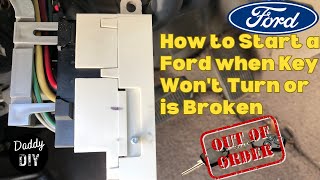
Yes, But With Caution. You can physically drive, but it carries a severe safety risk. The primary danger is the engine stalling unexpectedly at speed, which causes an immediate loss of power steering and power brakes. Stop driving and address this fault promptly to avoid a crash. 🎬 Watch: 10 warning signs of a failing ignition switch. Ignoring it will not damage engine components, but the safety implications are critical.
Common Causes
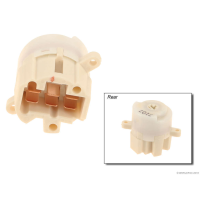
- Worn or failed ignition switch (Very Common) — The internal electrical contacts inside the ignition switch wear out from mechanical stress and electrical arcing. This creates a broken connection that cannot supply power to the Run/Accessory circuit.
- Blown fuse or faulty relay (Common) — A blown fuse protecting the ignition circuit (labeled 'IGN' or 'ACC') or a failing PCM Power Relay interrupts the power supply, triggering this code.
- Damaged wiring or connectors (Common) — Wires connected to the ignition switch or fuse box become frayed, broken, or pinched from steering wheel adjustments. Connectors also suffer from corrosion or backed-out pins, breaking the circuit.
- Aftermarket Remote Starter or Alarm System Issues (Common) — Improperly installed aftermarket systems that tap into ignition wiring frequently fail. Poor splice connections corrode or loosen over time, creating an open circuit.
- Faulty Airbag or Seatbelt Pretensioner Circuit (Hyundai/Kia) (Less Common) — On Hyundai and Kia models, B1360 means 'Pretensioner Front-Driver Open,' indicating a break in the driver's side seatbelt pretensioner circuit. This is an SRS fault accompanied by an airbag warning light. 🎬 See how to diagnose and fix an open pretensioner circuit.
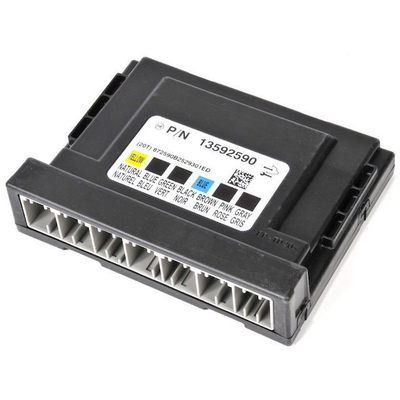
- Faulty Smart Junction Box (SJB), BCM, or Instrument Cluster (Rare) — In many Ford products, the ignition signal is processed by the SJB or instrument cluster. An internal failure in these modules prevents the signal from being recognized, setting the code even if the switch is good.
Symptoms
- Engine will not crank or start — The engine turns over but won't fire, or nothing happens at all, because the fuel pump or PCM isn't getting the 'Run' signal.
- Car stalls while driving — The engine suddenly shuts off on the road due to an intermittent loss of the 'Run' signal, cutting power to engine control systems.
- No power to accessories — The radio, dashboard lights, power windows, or climate control fail to turn on, or flicker intermittently when hitting a bump or wiggling the key.
- Warning lights on the dashboard — An Airbag/SRS light illuminates for the Hyundai/Kia definition, or the anti-theft system light triggers due to power loss during startup.
- Key gets stuck or is hard to turn — Excessive mechanical wear affects both the lock cylinder and the electrical parts of the ignition switch assembly, causing the key to bind.
- Rough idle or misfires reported by scanner (also visible on scanner) — An unstable power supply from the ignition circuit causes the Powertrain Control Module (PCM) to operate erratically, leading to a rough idle.
Diagnostic Flowchart
Tap your situation to follow the diagnostic path that matches what you're seeing on this code.
Common Fixes & Costs
- Replacing a Blown Fuse or Faulty Relay — Parts: $5-$30, Labor: $0-$50, ~0.1 hr book time (DIY)
- Replacing the Ignition Switch — Parts: $40-$150, Labor: $100-$250, ~1.2 hr book time (Intermediate)
- Repairing Damaged Wiring or Connectors — Parts: $10-$50, Labor: $150-$300, ~2.0 hr book time (Professional)
- Replacing/Rebuilding a Seatbelt Pretensioner (Hyundai/Kia) — Parts: $150-$400, Labor: $200-$400, ~1.5 hr book time (Professional)
- Replacing the Smart Junction Box (SJB) or BCM — Parts: $300-$800, Labor: $500-$1200, ~2.5 hr book time (Professional)
Used vs. New Parts: Buying Guide
When a used part is worth it: For a simple electrical ignition switch, a used OEM part from a low-mileage vehicle is a cost-effective alternative to cheap aftermarket parts. Avoid used parts for the SRS (pretensioner) version of the code.
Donor-vehicle mileage cap: roughly under 80000 miles for the part to have meaningful remaining life.
Donor quality checklist:
- Verify the donor vehicle's mileage.
- Inspect the connector for any signs of heat damage, melting, or corrosion.
- Match the part number exactly, as internal wiring differs even if the switch looks identical.
Decision logic:
- If The part is a safety-critical SRS component (e.g., Hyundai pretensioner) → Buy new OEM or use a certified rebuild service. Do not buy from a junkyard.
- If The part is a simple ignition switch and a new OEM part is affordable (<$100) → Buy new OEM (e.g., Motorcraft) for best reliability.
- If Budget is the primary concern and the part is a simple switch → A used OEM switch is preferable to a cheap new aftermarket switch.
Warranty tradeoff: Used parts typically have a 30-90 day warranty. Aftermarket new parts offer a 1-year to limited lifetime warranty. New OEM parts usually carry a 1-2 year warranty.
Worst-case if a used part fails: $200-$500 if a used or cheap aftermarket switch fails, requiring repeat labor costs plus the price of another replacement part.
What Happens If You Wait — Timeline
- 0-1 month: Intermittent symptoms begin. The radio or dash lights flicker when hitting a bump. The car is occasionally hard to start. The B1360 code is stored but may not trigger a warning light. (MPG impact: 0%% · Added cost: $0)
- 1-3 months: Symptoms become frequent. The engine stalls once or twice at low speed. Accessories fail to power on consistently. For Hyundai/Kia, the airbag light is on most of the time. (MPG impact: 0-2%% · Added cost: $100-$300 (Potential towing fee if stranded).)
- 3-6 months: The vehicle is unreliable. Stalling while driving becomes a regular and dangerous occurrence. No-start conditions leave you stranded. For Hyundai/Kia, the driver's airbag is disabled. (MPG impact: 0-5% (due to unstable PCM operation)% · Added cost: $150-$500 (Towing fees plus potential for a new battery if a faulty switch creates a parasitic drain).)
- 6+ months: Catastrophic failure. The ignition switch or wiring fails completely, resulting in a permanent no-start. Continued arcing melts the electrical connector, making the final repair more expensive. (MPG impact: N/A (Vehicle is likely undrivable)% · Added cost: $500-$1200+ (Cost of an accident, or additional labor and parts for harness repair).)
Cost of Not Fixing It
- 0-1 month: Intermittent stalling, no-start conditions, and non-working accessories become more frequent. Increased risk of being stranded. (Added cost: Negligible, but high inconvenience and safety risk.)
- 1-6 months: Catastrophic failure while driving leads to a loss of power steering and brakes, potentially causing an accident. For Hyundai/Kia, the driver's airbag will not deploy in a crash. (Added cost: Potential for towing fees ($100-$300) and significant costs related to an accident.)
- 6+ months: Continued electrical arcing damages the connector or wiring harness, making the eventual repair more complex. A parasitic drain ruins the battery. (Added cost: $150-$500 (for additional wiring repair or a new battery).)
Diagnosis Steps
- Scan for All Codes & Check TSBs
Use an advanced OBD-II scanner to read Body (B), Chassis (C), and Communication (U) codes. Codes like B1352, U1900, or P1260 are critical clues. Check Technical Service Bulletins (TSBs) for your specific vehicle.
Tools: Advanced OBD-II Scanner, Online TSB Database Access (Beginner) - Inspect Fuses and Relays
Check the fuse box for fuses labeled 'IGN,' 'ACC,' 'BCM,' 'SJB,' or 'CLUSTER.' Use a multimeter to test for continuity. Swap the PCM or ignition relay with an identical one from a non-critical system (like the horn).
Tools: Owner's Manual, Multimeter or Fuse Tester (Beginner) - Perform a 'Wiggle Test'
With the key in the 'Run' position (engine off), wiggle the key in the ignition. Move the steering column tilt feature and wiggle the wiring harness behind the switch. Flickering dashboard lights confirm a worn switch or loose wire.
Tools: None (Beginner) - Visually Inspect the Ignition Switch and Steering Column
Remove the steering column shrouds. Look for frayed, pinched, or burnt wires. Inspect any non-factory wiring from aftermarket alarms or remote starters for poor connections.
Tools: Flashlight, Screwdrivers/Trim Removal Tools (Intermediate) - Pro Tip: Test the Ignition Switch Circuit Voltage
Identify the main power input and 'Run/Accessory' output wires at the ignition switch connector. Backprobe the output wire with the key ON. It must read battery voltage (approx. 12.6V). A reading of 0V with good input voltage confirms internal switch failure.
Tools: Multimeter, Vehicle-specific wiring diagram, Backprobe pins (Advanced) - Pro Tip: Perform a Voltage Drop Test on the Circuit
Place the red multimeter lead on the ignition switch output pin and the black lead on the corresponding input pin at the destination module (e.g., BCM). A reading above 0.5 volts indicates excessive resistance (a partial open) in that wiring section.
Tools: Multimeter, Vehicle-specific wiring diagram (Advanced) - Pro Tip: Monitor Ignition Status PID with Scan Tool
Navigate to the BCM live data stream on an advanced scanner. Find the 'Ignition Switch Status' PID. As you turn the key, the PID value must match the key position. If it drops out, the module is not seeing the signal.
Tools: Advanced OBD-II Scanner with Live Data (Advanced) - Check for an Open Circuit (Continuity Test)
Disconnect the battery, ignition switch, and destination module. Set the multimeter to ohms. Test the specific wire between the two connectors. A reading of 'OL' confirms a broken wire in the harness.
Tools: Multimeter, Vehicle-specific wiring diagram (Advanced) - Hyundai/Kia Specific: Test the Pretensioner Circuit
For Hyundai/Kia models, locate the driver's seatbelt pretensioner connector (usually yellow, under the seat). Visually inspect for damage. NEVER probe the pretensioner itself with a multimeter. Use an SRS-safe resistor tool to check the harness side.
Tools: Multimeter, SRS-safe diagnostic tools, Wiring diagram (Professional)
When This Code Triggers (Freeze-Frame Conditions)
- Ignition Status: RUN or ACC (The code sets when the BCM expects 12V+ from the ignition switch in the RUN or ACC position but detects an open circuit (0V).)
- Module Voltage: 11.5V - 14.5V (The fault logs when system voltage is normal, confirming the issue is a specific circuit break, not a dead battery.)
- Vehicle State: Key-On, Engine-Off OR Engine Running (The fault is detected immediately upon turning the key or occurs intermittently while driving, leading to a stall.)
- Hyundai/Kia SRS: Resistance > 6.0 Ohms (The code sets when the SRS control unit measures resistance in the driver's pretensioner circuit higher than the specified threshold.)
Related Codes
- B1352 — Means 'Ignition Key-In Circuit Fault.' Appears with B1360 because both circuits are in the same switch assembly. B1352 relates to the physical key-in chime; B1360 relates to the RUN/ACC power contacts.
- U1900 / U-codes — Communication codes indicating a loss of signal between modules. B1360 is the root cause; the open ignition circuit cuts power to modules, causing them to fail to communicate and trigger U-codes.
- P1260 — Means 'Theft Detected, Vehicle Immobilized.' Triggered if the anti-theft system loses power from the faulty ignition circuit during startup. Fix the B1360 power supply issue to solve the false theft detection.
- B1359 — Means 'Ignition Run/Accessory Circuit Failure.' B1359 indicates a short to ground or power (blowing fuses), whereas B1360 specifically indicates an 'Open' or broken circuit.
Climate & Environmental Factors
- High Humidity / Coastal Regions: Moisture and salt-laden air accelerate corrosion of electrical contacts and connectors, increasing resistance and creating the 'open' circuit condition.
- Cold Weather: Low temperatures cause metal and plastic components inside the ignition switch to contract, leading to poor electrical contact and exposing weak switches.
- Road Salt (Winter Climates): Corrosive salt spray compromises wiring and connectors underneath the vehicle and in the engine bay, affecting related circuits.
How to Talk to a Mechanic About This Code
Say this: "I have a B1360 code and I'm experiencing intermittent stalling (or airbag light is on for Hyundai/Kia). I'd like to schedule a diagnostic to test the ignition switch circuit (or driver's pretensioner circuit for Hyundai/Kia) for an open. Please check the switch, wiring, and related fuses."
This signals you understand the two primary meanings of the code and directs the technician to the specific electrical circuit, preventing them from starting a broad, expensive diagnostic search.
Avoid saying:
- 'My car is acting weird.'
- 'The check engine light is on.' (This code usually doesn't trigger the CEL)
- 'Just fix whatever is wrong with it.'
Questions to ask before authorizing the repair:
- Did you perform a voltage drop test on the ignition circuit, or did you just check for codes?
- For a Hyundai/Kia, did you inspect the connectors under the driver's seat before recommending a new pretensioner?
- If the ignition switch is the problem, is the price for an OEM (e.g., Motorcraft) or an aftermarket part?
- What is the warranty on the proposed repair, including both parts and labor?
Where to Take It: Dealer vs Independent vs Chain
- Dealer:
A strong choice for the Hyundai/Kia SRS version of the code due to safety-critical components. For the common Ford ignition switch issue, a dealer is a safe but expensive option.
Best for: Vehicles under warranty, Complex electrical issues involving module programming (BCM, SJB), Hyundai/Kia SRS (airbag) system repairs where specific recall or warranty extension knowledge is critical
Downsides: Higher labor rates, typically 1.5x to 2x more than independent shops., Defaults to replacing entire assemblies rather than repairing a specific wire or connector. (Typical cost: +50% vs. baseline) - Independent Shop:
Best fit for the common ignition switch/wiring fault on out-of-warranty Ford, Mercury, and Lincoln vehicles. A well-vetted independent shop handles this repair effectively and affordably.
Best for: Out-of-warranty vehicles, especially common models like Ford trucks and SUVs., Diagnosing and repairing straightforward electrical faults like a worn ignition switch or broken wire., Owners seeking better value and a more personal relationship with their mechanic.
Downsides: Diagnostic capabilities for complex module issues vary; ensure the shop has strong electrical diagnostic skills., May not have immediate access to brand-specific TSBs or recall information. (Typical cost: +0% vs. baseline) - Chain Shop:
AVOID for diagnosing a B1360 code. The complexity of an intermittent open circuit or an SRS fault is beyond the scope of most chain shops.
Best for: Simple parts replacement like batteries or fuses if you've already diagnosed the issue yourself.
Downsides: Technician skill varies widely., Lacks the advanced diagnostic tools and experience for intermittent electrical or SRS system faults., High pressure to upsell leads to unnecessary repairs. (Typical cost: -10% vs. baseline)
When to Walk Away From the Repair
If the estimated repair cost exceeds 40-50% of your car's private-party value, seriously consider selling or trading it in instead of repairing it.
- Car worth $4000, fix is $1200: Fix it. The repair cost is 30% of the vehicle's value, which is well below the walk-away threshold.
- Car worth $3000, fix is $1600: Walk away. The repair cost is over 50% of the car's value. It's not a sound financial decision.
- Car worth $8000, fix is $700: Fix it. This is a relatively minor repair cost compared to the vehicle's value.
What Scan Tool You Need for This Code
Minimum: A scanner that reads and clears Body ('B') and SRS ('S') codes. Basic $20 readers that only show Powertrain ('P') codes will not see or clear a B1360.
A basic code reader shows 'No Codes Found' because it cannot access the Body Control Module or SRS Module where this fault is stored.
Budget: BlueDriver Pro (~$100) — Reads and clears Body (B) and SRS (S) codes, provides freeze-frame data, and allows you to view live data from the relevant modules.
Mid-range: Innova 5610 (~$350) — Offers all features of the budget pick plus bidirectional controls. This allows you to actively test components to pinpoint the exact point of failure in the circuit.
Professional: Autel MaxiCOM MK808 (~$500) — Provides full-system diagnostics and advanced service functions. Necessary to perform the specific SRS module reset required after replacing a Hyundai/Kia pretensioner.
Rent vs buy: For a one-time diagnosis, auto parts stores offer free scanning, but their tools may not read B-codes or SRS codes. Buying a budget pick like the BlueDriver is a worthwhile investment.
How to Clear the Code After You Fix It
- Reconnect battery if disconnected
- Use an OBD-II scan tool to clear the B-code from the relevant module (BCM, SRS, etc.)
- For Hyundai/Kia SRS faults, perform the specific SRS reset procedure required after pretensioner replacement
- Perform a drive cycle to confirm the fix
Drive cycle (~20 minutes): Start the engine and idle for 2 minutes. Drive for 10-15 minutes with varied conditions. Cycle the key from OFF to RUN and START several times to test the ignition switch circuit in all positions. Re-scan for codes.
Readiness monitors affected: None directly. B-codes do not affect emissions readiness monitors.
Watch out for:
- Using a basic scanner that only reads 'P' (Powertrain) codes and cannot see or clear 'B' (Body) codes.
- Not fixing the root cause, causing the code to return immediately.
- Forgetting to reset the SRS module on Hyundai/Kia vehicles after a pretensioner repair, leaving the airbag light on.
Will This Fail Emissions / State Inspection?
No — by itself this code doesn't fail OBD inspection (but it can keep readiness monitors from setting, which causes a separate fail).
- California: A B1360 code related to the ignition switch will not cause a smog check failure. If the code is the Hyundai/Kia SRS variant and the airbag light is on, it fails the safety inspection.
- New York: NYS vehicle safety inspection requires the airbag warning light to perform its self-check and turn off. An illuminated SRS light due to a B1360 code results in an automatic failure.
- Texas: Texas does not include the airbag/SRS light as part of its standard safety inspection checklist, so a B1360 code on a Hyundai/Kia typically does not cause a failure.
Most Commonly Affected Vehicles
- Ford F-150 (2004-2008) — Extremely common. Presents with intermittent stalling or a cluster of codes including B1352 and U1900. The instrument cluster processes the ignition signal, making it a potential failure point.
- Ford Explorer (2002-2010) — Prone to ignition switch failure and wiring issues in the steering column, leading to stalling and no-start conditions.
- Ford E-Series Van (2008-2014) — Frequently logs B1360 linked to a no-start condition or stalling, sometimes in conjunction with anti-theft code P1260.
- Ford Powerstroke Diesel Trucks (F-250/F-350) (2005-2007) — Appears during complex no-start diagnostics alongside communication (U-codes) and body codes, pointing to an underlying power supply issue.
- Mercury Various Models (2000-2010) — Uses identical ignition components to Ford and is susceptible to the exact same failures and symptoms.
- Hyundai / Genesis Genesis G80, Sonata, Elantra (2008-2020) — B1360 indicates 'Pretensioner Front-Driver Open'. Diagnosis must focus entirely on the SRS system, specifically the driver's seatbelt wiring and pretensioner unit.
- Chevrolet / GMC Various Models (1999-2014) — Indicates a fault in a specific device's ground circuit, differing from the standard ignition power circuit definition. Requires a specific wiring diagram to trace.
- Jaguar XF, Various Models (2008-2015) — Logged for ignition authorization faults within the Body Control Module (BCM), appearing with immobilizer codes during a no-start.
- Mazda Various Models (2003-2013) — Uses code B1360 to indicate an open in the ignition circuit, consistent with the general definition used by Ford during their partnership era.
Manufacturer-Specific Notes
- Ford / Lincoln / Mercury: The code specifically points to an open in the Run/Accessory circuit. The fault is almost always the electrical portion of the ignition switch or steering column wiring.
- Hyundai / Kia: B1360 is defined as 'Pretensioner Front-Driver Open,' pointing to a fault in the driver's seatbelt pretensioner circuit (SRS system). This triggers an airbag warning light, not a drivability issue.
- GMC / Chevrolet: B1360 refers to a fault in a specific ground circuit for a body device, rather than the ignition switch power circuit. This requires a specific wiring diagram to trace correctly.
- Jaguar / Land Rover: Tied to the Body Control Module (BCM) and its authorization of the ignition sequence. It appears with immobilizer or keyless module communication errors.
Real Owner Stories
2006 Ford F-150 with 90K miles
Truck had a persistent rough idle but no Check Engine Light. A scan revealed code B1360 and multiple misfires logged in the computer's memory.
What they tried:
- Replaced spark plugs and coil packs, which did not solve the rough idle or the code.
Outcome: The issue was diagnosed as an unstable power supply from the ignition circuit. Swapping the PCM Power Relay with an identical one from a non-critical system solved the issue.
Lesson: Engine symptoms like a rough idle are often caused by electrical problems. B1360 indicates a power supply issue making the PCM operate erratically. Diagnose the electrical code before replacing engine parts.
2013 Hyundai Elantra with 100K+ miles
The airbag warning light came on intermittently and would sometimes turn off when turning the steering wheel.
What they tried:
- Replaced the clockspring themselves, but the airbag light remained on, and the steering wheel buttons stopped working.
Outcome: For Hyundai/Kia, B1360 points to an open in the driver's seatbelt pretensioner circuit. The issue was a loose connector under the driver's seat. The SRS module required a professional scan tool reset to turn off the light.
Lesson: On a Hyundai or Kia, B1360 means 'Airbag Problem,' not 'Ignition Problem.' Check connectors under the seat first. SRS codes always require a specific reset procedure.
2008 Ford E-350 with no-start and multiple codes
The van cranked but would not start, or stalled after 15 minutes. The scanner showed codes B1360, B1352, P1260 (Theft Detected), and U2510 (CAN Bus Fault).
What they tried:
- Clearing codes allowed the vehicle to start temporarily, but it always stalled again.
Outcome: The B1360 (Ignition Run/ACC Open) was the root cause. The loss of power prevented the anti-theft module from verifying the key, triggering P1260. Replacing the ignition switch fixed all codes.
Lesson: When you have a body code (B1360), a powertrain code (P1260), and a communication code (U-code) together, the body code is the root cause. Diagnose the ignition circuit fault first.
How to Prevent This Code From Triggering
- Lighten your keychain (Daily habit) — Excessive weight hanging from the key causes premature wear and tear on the internal mechanical and electrical components of the ignition lock cylinder and switch.
- Apply dielectric grease to electrical connectors (During any related repair) — Applying a thin layer of non-conductive dielectric grease to connector seals helps seal out moisture, preventing corrosion that leads to open circuits.
- Use weatherproof splices for any wiring repairs (When repairing wiring) — Using butt splices with built-in heat-shrink tubing creates a sealed, weather-resistant connection that prevents moisture from wicking into the wire.
- Schedule regular electrical system inspections (Every 2-3 years or 30,000 miles) — A professional checks for early signs of trouble, like corroded grounds or loose connections, especially on vehicles over 10 years old.
- Be gentle with the key (Daily habit) — Forcing a key that is difficult to turn damages both the mechanical lock cylinder and the electrical switch behind it.
Frequently Asked Questions
What's the first thing I should check for a B1360 code?
Always start with the simplest things. Check the fuses related to the ignition, accessory power, and body control module. A blown fuse is easy to replace and solves the problem instantly.
Can a bad battery cause a B1360 code?
No. While a weak battery causes low voltage codes, B1360 indicates a physical break (open) in a specific circuit. However, ensure your battery is fully charged before diagnosing any electrical fault.
I replaced my spark plugs for a rough idle, but code B1360 is still there. What did I do wrong?
You chased the symptom instead of the root cause. B1360 indicates an electrical power supply issue, which disrupts the PCM and creates engine symptoms like a rough idle. Diagnose the ignition circuit first before replacing engine parts.
Will clearing the code make it go away?
Clearing the code temporarily turns off the warning light, but it returns as soon as the computer detects the open circuit again. It does not fix the underlying electrical problem.
Is replacing an ignition switch a DIY job?
On many common Ford trucks, it is a manageable job for an intermediate DIYer as it doesn't require removing the airbag. On other cars, it involves removing the steering wheel and airbag, requiring professional service.
Why doesn't this code turn on my Check Engine Light?
B1360 is a 'Body' code related to cabin electronics. The Check Engine Light is reserved for 'Powertrain' codes affecting emissions. On Hyundai/Kia, this code triggers the Airbag/SRS light instead.
My car starts fine, can I ignore this code?
No. This code indicates an unstable ignition circuit that worsens without warning. Stalling while driving is extremely dangerous and must be diagnosed promptly.
What's the difference between a B1360 and a P1360 code?
They are completely different codes. B1360 is a Body code related to the ignition switch circuit. P1360 is a Powertrain code indicating engine issues (like a misfire on certain BMWs).
Key Takeaways
- B1360 indicates an open electrical circuit in the ignition switch's 'Run/Accessory' position, cutting power to essential vehicle systems.
- The most frequent cause is a worn-out ignition switch, which costs between $140 and $400 to replace at a repair shop.
- On 2008-2020 Hyundai and Kia models, B1360 specifically flags a broken driver's seatbelt pretensioner circuit and triggers the airbag warning light.
- Never ignore this code; the underlying power loss causes unexpected engine stalling at highway speeds, creating a severe crash risk.
Helpful Videos

Shop the Parts Behind B1360
Below are the parts most often responsible for code B1360, ranked by how frequently each one is the actual culprit (per the diagnosis above). Tap any to see what we have for your vehicle.




The information in this article is provided for general reference and educational purposes only. Vehicle specifications, procedures, and part compatibility can vary by production date, trim level, and region. Always consult your vehicle's factory service manual and verify part numbers before purchasing or performing repairs. Safety-critical components such as airbags, seat belts, and braking systems should be installed by a qualified professional.
- 🧭 Diagnostic Flowchart
- 🎬 Helpful Videos
- 🛍️ Shop This Part
- What Does B1360 Mean?
- Can I Drive With B1360?
- Common Causes
- Symptoms
- Common Fixes & Costs
- Used vs. New Parts: Buying Guide
- What Happens If You Wait — Timeline
- Cost of Not Fixing It
- Diagnosis Steps
- When This Code Triggers (Freeze-Frame Conditions)
- Related Codes
- Climate & Environmental Factors
- How to Talk to a Mechanic About This Code
- Where to Take It: Dealer vs Independent vs Chain
- When to Walk Away From the Repair
- What Scan Tool You Need for This Code
- How to Clear the Code After You Fix It
- Will This Fail Emissions / State Inspection?
- Most Commonly Affected Vehicles
- Manufacturer-Specific Notes
- Real Owner Stories
- 2006 Ford F-150 with 90K miles
- 2013 Hyundai Elantra with 100K+ miles
- 2008 Ford E-350 with no-start and multiple codes
- How to Prevent This Code From Triggering
- Frequently Asked Questions
- What's the first thing I should check for a B1360 code?
- Can a bad battery cause a B1360 code?
- I replaced my spark plugs for a rough idle, but code B1360 is still there. What did I do wrong?
- Will clearing the code make it go away?
- Is replacing an ignition switch a DIY job?
- Why doesn't this code turn on my Check Engine Light?
- My car starts fine, can I ignore this code?
- What's the difference between a B1360 and a P1360 code?
- Key Takeaways
- 🎟️ Get 5% Off