

B1370 on 2015-2019 GMC Sierra 2500: Ignition Circuit Fault Causes & Fixes
On a 2015-2019 GMC Sierra 2500, code B1370 almost always indicates a wiring or terminal connection problem, not a failed module. The most common causes are poor connections at the underhood fuse block (X50A) or a corroded pink wire (circuit 5199) under the driver's door sill plate, as outlined in multiple GM Technical Service Bulletins.
- B1370 is an electrical circuit fault, not a part failure. Do not replace the BCM or other modules until wiring is thoroughly checked.
- The most likely problem areas are the connectors on the underhood fuse block and the wiring harness under the driver's door sill plate.
- This code is almost always accompanied by a large number of 'U' (communication) codes, which helps confirm a power supply problem.
- Due to the complexity of the wiring and the need for specific diagnostic tools, professional service is highly recommended for this issue.
What's Unique About the 2015-2019 Gmc SIERRA 2500
On these K2XX generation trucks, B1370 is rarely an isolated code. It's typically the primary fault that triggers a cascade of communication ('U' series) codes as other modules lose their 'ignition on' signal. GM has issued multiple Technical Service Bulletins (TSBs), most notably the PIT5391 series, that point directly to known weak spots in the wiring. These include specific terminals in the underhood fuse block (X50A) and a harness section under the driver's sill plate known for corrosion, making wiring inspection the first, not last, diagnostic step.
Diagnostic Flowchart
Tap your situation to follow the diagnostic path that matches what you're seeing on this vehicle.
Symptoms You May Notice
- No crank or starts and then immediately stalls. 🎬 Watch: Troubleshooting guide for no-crank and no-start issues.
- HVAC controls are inoperative or blank.
- No audible feedback (chime) from turn signals.
- Check Engine Light (Malfunction Indicator Lamp) may not turn on when the key is in the 'Run' position.
- Radio display is blank.
- Service 4WD message may appear on the dash.
- Instrument panel cluster (IPC) gauges may be inoperative or fluctuate.
- A relay can be heard clicking repeatedly while driving.
- Service Airbag Message may appear on the dash.
- Replacing the Body Control Module (BCM) without first inspecting wiring and connectors per TSBs.
- Replacing the ignition switch, as the code points to the circuit after the BCM and relays, not the switch itself on this platform.
- Replacing individual components like the radio or HVAC control head that have lost power, without realizing they are symptoms of the B1370 fault.
Most Likely Causes
- Poor Terminal Connection at Underhood Fuse Block (X50A) 🔴 High Probability → Shop Fuse Box TSB #PIT5391A and its later revisions specifically call out this location as a primary failure point. Terminals for critical ignition circuits can back out, lose tension, or corrode, losing connection.
How to confirm: Disconnect the battery. Unplug the large connectors from the bottom of the underhood fuse block (X50A). Inspect connector X2, terminal M7 (Circuit 439) and connector X4, terminal M5 (Circuit 5199, typically a pink wire). Look for backed-out, bent, corroded (green/white powder), or spread-open terminals.
Typical fix: Using a proper terminal tool, push the terminal back into place until it clicks, or replace the faulty terminal (often a Metri-Pack 280 style). 🎬 See this walkthrough on replacing the engine junction block. Apply a small amount of dielectric grease to the connector seal to prevent future moisture intrusion.
Est. part cost: $5-$30 - Damaged/Corroded Wiring in Driver's Sill Plate 🔴 High Probability The main wiring harness runs in a channel under the driver's side door sill plate. This area is highly susceptible to moisture intrusion from wet feet, snow, or leaking door seals, causing wires to corrode and break. TSB #PIT5391A and its predecessors specifically point to this area.
How to confirm: Remove the driver's side door sill plate and kick panel trim, then peel back the carpet. 🎬 Watch: How to safely remove the door sill trim. Inspect the wiring harness, specifically looking for a pink wire (Circuit 5199). Look for signs of green/white corrosion, a swollen or stiff section of the harness, or an outright broken wire.
Typical fix: Cut out the damaged/corroded section of wire. Splice in a new piece of same-gauge TXL automotive wire using weatherproof, heat-shrink butt connectors. Ensure the repair is re-taped and secured away from the floor of the channel to prevent future issues.
Est. part cost: $5-$20 - Poor Terminal Connection at Serial Data Gateway Module (SDGM) ⚪ Low Probability → Shop Telematics Interface Module TSB #PIT5586E notes that on some models, the X1 and X2 connectors to the SDGM can have bent or loose terminals. While this TSB addresses a wide range of communication codes, B1370 is listed as a possible result.
How to confirm: Locate the SDGM (often behind the driver's side of the dashboard). Disconnect the battery, then disconnect and inspect its X1 and X2 connectors for any terminals that are bent, backed out, or show poor pin tension.
Typical fix: Repair or replace the affected terminal(s) and reseat the connector securely.
Est. part cost: $5-$25
Rare But Worth Checking
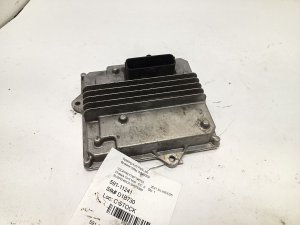
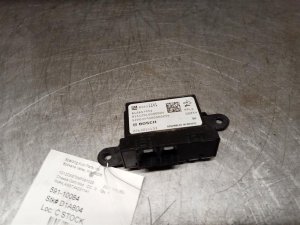
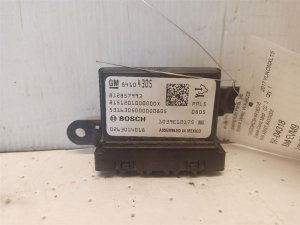
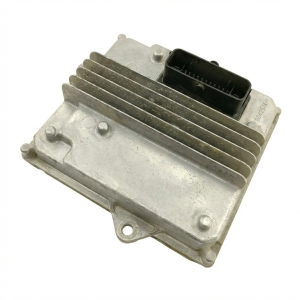
- Failed Body Control Module (BCM): → Shop Body Control Module This is rarely the cause. The BCM should only be replaced after all wiring and connection issues identified in the TSBs have been completely ruled out through testing. A replacement BCM requires dealer programming.
- Failed KR73 Ignition Main Relay: → Shop Wiring Relay The vehicle has two of these relays, one in the underhood fuse block (X50A) and one in the left instrument panel fuse block (X51L). While a failure is possible, it's far less common than the wiring issues that prevent power from reaching or leaving the relay circuit. A simple swap with an identical relay can be used for diagnosis.
Diagnosis Steps
- Scan all modules for codes using a scanner capable of reading B, C, and U codes. A long list of communication codes alongside B1370 strongly points to a power supply issue.
- Check battery voltage and overall charging system health. A weak battery can cause unrelated electrical issues but is not the typical cause of B1370.
- Following TSB #PIT5391F, disconnect the battery. Inspect the connectors at the Underhood Fuse Block (X50A). Pay close attention to connector X4 (terminal M5, circuit 5199) and connector X2 (terminal M7, circuit 439) for corrosion or backed-out pins.
- Inspect the connectors at the Left Instrument Panel Fuse Block (X51L), specifically terminal 42 at connector X1 (circuit 5199) and terminal 44 at connector X2 (circuit 1850).
- Remove the driver's side sill plate and peel back the carpet. Carefully inspect the wiring harness for corrosion or damage, focusing on the pink wire for circuit 5199.
- If no wiring issues are found, inspect the connectors at the Serial Data Gateway Module (SDGM) per TSB #PIT5586E for terminal issues.
- Using a multimeter and wiring diagram, verify that 'Ignition 1 Voltage' is present at the BCM connector when the key is in the 'ON' position. If voltage is missing, trace the circuit back to the fuse block. If voltage is present, the BCM may be faulty, but this is the last resort.
Parts You'll Likely Need
- Wire Connector Terminals & Splices — The most common fix is repairing corroded or broken wires and terminals, not replacing a major component. Weatherproof butt connectors and TXL-grade wire are recommended for repairs.
Trusted brands: ACDelco, Dorman, 3M
OEM price range: $10-$30
Aftermarket price range: $5-$20 - Body Control Module (BCM)
(OEM #13528945 (replaces 13595583, 13521450))— This is the last resort part to be replaced only after all wiring and connection checks have failed. It requires programming by a dealer or qualified shop with access to GM's Service Programming System (SPS).
Trusted brands: ACDelco
OEM price range: $300-$500
Aftermarket price range: $200-$400
Related Codes That Often Appear With This One
- U0100, U0101, U0140, U0155, etc. — B1370 indicates a loss of power on the Ignition 1 circuit. Since this circuit powers up many other modules, its failure causes them to stop communicating on the network, triggering a flood of 'Lost Communication' U-codes. TSB PIT5586E lists over 20 possible U-codes.
- B1325 — This code relates to a device power circuit fault and is often set alongside B1370 due to the same underlying electrical issue, as noted in TSB #PIT5391A.
- P0513 — Incorrect Immobilizer Key. TSB #PIT5391F links this code with B1370 when the fault lies in the driver's sill plate wiring, specifically affecting circuit 5199.
Technical Service Bulletins (TSBs) & Recalls
- PIT5586E: Addresses multiple electrical symptoms and a long list of DTCs including B1370, pointing to terminal issues at the Serial Data Gateway Module (SDGM).
- PIT5391A/D/F: A series of bulletins addressing no-crank/stall conditions and DTC B1370, pointing to terminal issues at the fuse blocks and damaged wiring (Circuit 5199) under the driver's sill plate.
Platform-Specific Known Issues
- TSB #PIT5391A and its subsequent revisions (up to F) identify poor terminal connections at the underhood (X50A) and instrument panel (X51L) fuse blocks, and corrosion on circuit 5199 under the driver's sill plate, as primary causes for B1370.
- TSB #PIT5586E points to loose or damaged terminals at the Serial Data Gateway Module (SDGM) as another potential cause for a cluster of communication codes that includes B1370.
Mechanic-Grade Diagnostic Values
- Voltage on 'Device Ignition 1' circuit (e.g., Circuit 5199, pink wire) at the BCM — expected: ~12.6V (Battery Voltage) with Key ON, Engine OFF. Failure: 0V or significantly less than battery voltage indicates an open circuit or short to ground. Voltage present with Key OFF indicates a short to power.
- Resistance of Ignition 1 circuit wire — expected: Less than 1.0 ohm. Failure: Resistance higher than 1.0 ohm indicates corrosion, a break in the wire, or a poor terminal connection.
Hidden / Shadow Codes Worth Checking
- B1370 06: Device Ignition 1 (ON and START) Circuit Short to Ground or Open. This is the most common variant, indicating a loss of voltage. (see via A professional scan tool like the GM GDS2 (Global Diagnostic System 2) is required to view manufacturer-specific symptom bytes.)
- B1370 01: Device Ignition 1 (ON and START) Circuit Short to Battery. This indicates the BCM has detected voltage on the circuit when it should be off. (see via A professional scan tool like the GM GDS2 is required to view manufacturer-specific symptom bytes.)
- B1370 04: Device Ignition 1 (ON and START) Circuit Open. This specifically points to a break in the wire or a disconnected terminal. (see via A professional scan tool like the GM GDS2 is required to view manufacturer-specific symptom bytes.)
Scan Tool Commands That Help
- GM GDS2 (Global Diagnostic System 2): Control Functions > Command KR73 Ignition Main Relay — This bidirectional test allows a technician to command the ignition relay ON and OFF from the scan tool. If the relay clicks and voltage appears on its output circuit, it confirms the BCM and control side of the circuit are working, isolating the fault to the wiring downstream from the fuse block.
Wiring & Ground Locations
- X50A — Underhood Fuse Block, in the engine compartment.. A primary failure point. TSBs direct inspection of Connector X4, Pin M5 (Circuit 5199) and Connector X2, Pin M7 (Circuit 439) for backed-out or corroded terminals.
- X51L — Left Instrument Panel Fuse Block, inside the cabin.. A secondary failure point. TSBs direct inspection of Connector X1, Pin 42 (Circuit 5199) and Connector X2, Pin 44 (Circuit 1850) for terminal issues.
- Driver's Sill Plate Harness — In the wiring channel under the driver's side front door sill plate and carpet.. This harness, specifically the pink wire for Circuit 5199, is highly prone to moisture damage and corrosion, causing an open circuit as detailed in TSB #PIT5391A and later versions.
- G218 — On the driver's side A-pillar, behind the dash trim panel.. This is a primary ground for the Body Control Module (BCM). TSB #PIT5405C notes that trapped insulation under the ground nut can cause a poor connection, leading to various intermittent electrical faults that can mimic the symptoms of B1370.
Real Owner Repair Stories
- YouTube video by 'PB2715' (2015 GMC Sierra) — Vehicle would randomly stall and become electrically dead, particularly when turning slowly. It would always restart immediately. No check engine lights were present.
❌ Tried (didn't work) The owner initially suspected aftermarket modifications but ruled them out as the problem was intermittent, not consistent.
✅ What actually fixed it Based on forum advice, the owner located the main battery ground connection on the vehicle's frame. He disconnected the 10mm bolt, cleaned the contact surfaces of the terminal and frame with a wire brush to remove corrosion/buildup, and securely reattached it. This permanently resolved the stalling issue. - YouTube video by 'Global Commerce CA' (2008 Chevrolet Express (similar GM electrical architecture)) — No crank, security light on, codes B1370 and B1380 stored.
❌ Tried (didn't work) Replacing fuse boxes, Trying a different key
✅ What actually fixed it The technician traced a power loss on a red/white wire from the fuse box. The wire was found broken under the floor mat, near the brake pedal area. The break was caused by years of the driver's foot resting in that area, eventually wearing through the insulation and causing the wire to corrode and fail. Splicing and repairing the broken wire fixed the no-start condition.
OEM Part Supersession History
13595583→13528945— Standard part revision by the manufacturer, likely for hardware or internal software updates.
Heads up: This Body Control Module is not plug-and-play. It requires programming and setup procedures using GM's Service Programming System (SPS) to function correctly with the specific vehicle's options and security system.
Model Year Variations Within This Range
- 2015-2019: While the primary causes remain consistent, TSB #PIT5391F notes that the exact terminal location for Circuit 439 in the underhood fuse block (X50A, connector X2) can vary. It may be at pin M7, A2, or A3 depending on the specific model and year, requiring a technician to verify with the correct service information (SI) for the vehicle being serviced.
Helpful Videos

We Have This Part in Stock

The information in this article is provided for general reference and educational purposes only. Vehicle specifications, procedures, and part compatibility can vary by production date, trim level, and region. Always consult your vehicle's factory service manual and verify part numbers before purchasing or performing repairs. Safety-critical components such as airbags, seat belts, and braking systems should be installed by a qualified professional.
- Gmc SIERRA 2500:
- 🧭 Diagnostic Flowchart
- 🎬 Helpful Videos
- 🛍️ Shop This Part
- What's Unique About the 2015-2019 Gmc SIERRA 2500
- Symptoms You May Notice
- Most Likely Causes
- Rare But Worth Checking
- Diagnosis Steps
- Parts You'll Likely Need
- Related Codes That Often Appear With This One
- Technical Service Bulletins (TSBs) & Recalls
- Platform-Specific Known Issues
- Mechanic-Grade Diagnostic Values
- Hidden / Shadow Codes Worth Checking
- Scan Tool Commands That Help
- Wiring & Ground Locations
- Real Owner Repair Stories
- OEM Part Supersession History
- Model Year Variations Within This Range
- 🎟️ Get 5% Off