

OBD-II Code B1379: Understanding its Multiple Critical Meanings
An Expert Guide to Diagnosing and Fixing B1379 Airbag, Tailgate, and Circuit Faults
- Verify your vehicle's specific B1379 definition immediately, as it means a critical airbag failure on Hyundai/Kia, a disabled power tailgate on Honda/Acura, or a minor oil reset switch fault on Fords.
- Stop driving Hyundai and Kia vehicles with this code; it indicates a 'Driver Side Airbag Resistance Too Low' fault that completely disables the airbag system during a crash.
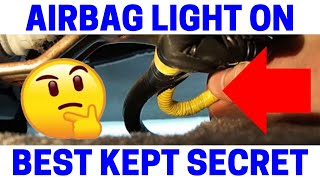
- Fix 80% of Hyundai/Kia B1379 codes for $0 by disconnecting the battery, waiting 10 minutes, and firmly reseating the yellow SRS connector under the driver's seat.
- Inspect the black rubber pinch sensor strips on the left side of the tailgate opening for tears or water damage if you drive a Honda or Acura.
- Never probe airbag wiring with a standard multimeter, as the tool's internal battery supplies enough voltage to accidentally deploy the airbag and cause severe injury.
What Does B1379 Mean?
B1379 is a manufacturer-specific Body Diagnostic Trouble Code (DTC) with vastly different meanings. For Hyundai and Kia, it signals a critical 'Driver Side Airbag Resistance Too Low' fault. For Honda and Acura, it indicates a 'Power Tailgate Left Pinch Sensor Circuit Malfunction'. For Ford, it points to a shorted oil change reset button circuit. For GM and Saab, it relates to an ignition circuit fault.
Technical definition: The generic SAE definition for B1379 is 'Oil change reset button circuit short to ground'. However, Hyundai and Kia define it as 'Driver Side Airbag Resistance too Low,' triggered when circuit resistance drops below 0.9-1.5 Ω. Honda and Acura use it for a 'Power Tailgate Left Touch/Pinch sensor circuit malfunction'. General Motors and Saab use it for a 'device ign 3 circuit' fault, indicating an ignition switch circuit issue monitored by the Body Control Module (BCM).
Can I Drive With B1379?
No (Hyundai/Kia), Yes (Others). For Hyundai and Kia, B1379 signifies a critical airbag failure; airbags WILL NOT deploy in a crash. Tow the vehicle to a qualified shop. For Honda and Acura, the power tailgate anti-pinch safety feature is disabled, creating a pinch hazard but remaining mechanically drivable. For Ford's 'oil reset' definition, the vehicle is safe to drive, but missing oil changes causes severe engine wear.
Common Causes
- Loose or Damaged Under-Seat Airbag Connector (Very Common) — On Hyundai and Kia vehicles, items stored under the driver's seat or foot movement dislodge the yellow airbag system connector, causing a low resistance reading and triggering the B1379 code.
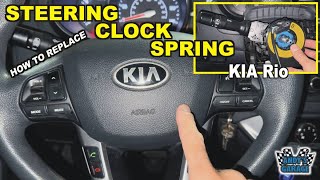
- Faulty Clock Spring (Airbag Squib) (Common) — In Hyundai/Kia airbag systems, the internal ribbon cable of the steering column clock spring frays and short circuits over time. Hyundai issued a recall (Campaign 103) and warranty extension for this exact failure.
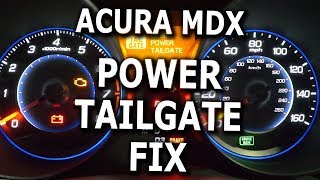
- Failed Power Tailgate Pinch Sensor (Common) — On Honda/Acura vehicles, the flexible pinch sensor strip along the edge of the tailgate opening fails internally from age, impact, or moisture, causing a circuit malfunction.
- Damaged or Corroded Wiring Harness (Common) — Wires leading to the oil reset button, tailgate pinch sensor, or airbag module chafe against metal chassis components or corrode from water intrusion, creating an unintended path to ground.
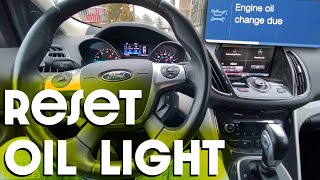
- Failed Oil Change Reset Switch (Less Common) — For Ford vehicles, the internal contacts of the reset button break or stick in the 'pressed' position, creating a permanent short to ground.
- Faulty Control Module (BCM, SRSCM, PTGM) (Rare) — An internal short in the Body Control Module (BCM), Supplemental Restraint System Control Module (SRSCM), or Power Tailgate Control Module (PTGM) mimics a wiring issue. This is the most expensive potential cause.
Symptoms
- Airbag Warning Light is On — For Hyundai and Kia, the primary symptom is an illuminated airbag (SRS) warning light, indicating the entire airbag system is disabled.
- Power Tailgate Inoperative or Reverses on Closing — On Honda and Acura models, the power liftgate refuses to close with the power button, beeps continuously, or immediately reverses to the open position.
- Horn or Steering Wheel Buttons Inoperative — If a faulty clock spring causes the B1379 code, you lose function of the horn and steering wheel-mounted audio or cruise controls.
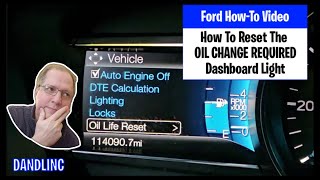
- Oil Change / Service Reminder Light Stays On — For Ford vehicles, the oil change or 'service required' message will not reset, even after performing the correct reset procedure.
- No-Crank, No-Start Condition — On GM or Saab vehicles where B1379 relates to an ignition circuit fault, the issue prevents the vehicle from cranking or starting.
Diagnostic Flowchart
Tap your situation to follow the diagnostic path that matches what you're seeing on this code.
Common Fixes & Costs
- Secure or Repair Under-Seat Airbag Connector — Parts: $0-$10, Labor: $100-$150 (parts+labor), ~0.5 hr book time (DIY)
- Replace Clock Spring (Airbag Squib) — Parts: $150-$250, Labor: $300-$500 (parts+labor), ~1.2 hr book time (Professional)
- Replace Power Tailgate Pinch Sensor — Parts: $160-$220, Labor: $310-$420 (parts+labor), ~1.0 hr book time (Intermediate)
- Repair Damaged Wiring Harness — Parts: $10-$50, Labor: $200-$400 (parts+labor), ~2.5 hr book time (Intermediate)
- Replace Oil Change Reset Button/Switch — Parts: $30-$70, Labor: $110-$220 (parts+labor), ~0.8 hr book time (DIY)
- Replace SRS Control Module (SRSCM) — Parts: $700-$1000, Labor: $950-$1400 (parts+labor, includes programming), ~1.8 hr book time (Professional)
Used vs. New Parts: Buying Guide
When a used part is worth it: For a Clock Spring: A used OEM part from a low-mileage, non-accident vehicle is a cost-effective alternative. For an SRS Control Module: It is almost always better to have your original module reset by a professional service than to buy a used one.
Donor-vehicle mileage cap: roughly under 60000 miles for the part to have meaningful remaining life.
Donor quality checklist:
- Verify the donor vehicle was not in a collision, especially for SRS modules.
- Match the part number exactly. Superseded numbers require verification with a dealer.
- For clock springs, ensure the donor vehicle did not have an airbag light on.
Decision logic:
- If The failed part is the SRS Control Module → Use a mail-in reset service on your original module. It's cheaper, safer, and avoids VIN programming issues.
- If The failed part is a Clock Spring and the vehicle is high-mileage → A new aftermarket or OEM part is recommended due to the wear-and-tear nature of the component.
- If The failed part is a Pinch Sensor or Reset Switch → Used parts are acceptable if a significant cost saving is present, but new parts offer better longevity.
Warranty tradeoff: Used parts: Typically 30-90 day warranty. Aftermarket new: 1-year to limited lifetime warranty. OEM new: 1-year/12,000-mile warranty typical. SRS Reset Services: Often offer a lifetime warranty on their work.
Worst-case if a used part fails: $300-$600 if a used clock spring or module fails after installation, requiring repeat labor costs and the purchase of another part.
What Happens If You Wait — Timeline
- 0-2 months overdue: For an oil-reset related B1379, ignoring the broken reset button means you miss your scheduled oil change. The oil's detergents and additives begin to deplete. No physical symptoms are noticeable yet. (MPG impact: 0-2%% · Added cost: $0)
- 2-6 months overdue (5,000+ miles over): Oil begins to thicken and form early sludge as it oxidizes. It loses some ability to cool and lubricate. You notice a slight decrease in fuel economy or a louder engine noise. (MPG impact: 2-5%% · Added cost: $50-$150 in wasted fuel and accelerated wear)
- 6-12 months overdue (10,000+ miles over): Significant sludge buildup clogs narrow oil passages, increasing heat and friction. Engine wear on bearings and rings accelerates. Risk of overheating increases. (MPG impact: 5-10%% · Added cost: $500-$1,500 (Potential for engine flush, replacing seals, or damage to components like VVT solenoids))
- 12+ months overdue: Catastrophic failure is likely. Thick, sludgy oil can no longer be pumped effectively, starving parts of the engine. This leads to a blown head gasket from overheating or a completely seized engine. (MPG impact: 10-25% (before failure)% · Added cost: $3,000 - $10,000+ (Cost of a used or rebuilt engine replacement))
Cost of Not Fixing It
- Immediate: For Hyundai/Kia: Complete failure of the airbag system to deploy in a crash, leading to a risk of serious injury or death. For Honda/Acura: Inoperable power tailgate and potential pinch hazard. (Added cost: N/A (Safety Risk))
- 1-6 months (Oil-related fault): Ignoring the broken reset button means you miss oil change intervals. This leads to oil breakdown, reduced fuel efficiency, and increased engine wear. (Added cost: $100-$500 (Engine flush, diagnostics for related wear))
- 6+ months (Oil-related fault): Continuing to miss oil changes leads to oil sludge formation, clogged oil passages, and overheating, causing catastrophic engine failure requiring a rebuild or replacement. (Added cost: $3000-$10000+)
Diagnosis Steps
- Confirm the Code and CRITICAL Definition
Use an OBD-II scanner capable of reading Body ('B') codes to confirm B1379 is active. You MUST research the precise definition for your vehicle's make, model, and year. A B1379 on a Kia is an urgent airbag issue; on a Ford, it's a minor reset button fault.
Tools: OBD-II Scanner (with B-code and SRS capability) (Beginner) - Initial Visual Inspection (By System)
For Hyundai/Kia Airbag codes: Inspect the prominent yellow connector(s) under the driver's seat for damage or disconnection. For Honda/Acura Tailgate codes: Inspect the rubber pinch sensor strips along the sides of the tailgate opening for tears. For Oil Reset codes: Inspect the wiring near the reset button for pinching.
Tools: Flashlight (Beginner) - Advanced Scan Tool Analysis (Live Data)
For Hyundai/Kia airbag faults, use a high-end scan tool to view SRS live data. Monitor the 'Driver Airbag Resistance' PID. A healthy circuit shows 1.9 Ω to 2.5 Ω. A value below 0.9 Ω confirms the fault. Slowly turning the steering wheel lock-to-lock while monitoring this value diagnoses a faulty clock spring; wild fluctuations indicate a bad clock spring.
Tools: Advanced OBD-II Scanner with Live Data/SRS capability (Advanced) - Test Pinch Sensor Voltage (Honda/Acura)
For tailgate faults, disconnect the 2-pin connector from the left pinch sensor. Turn the ignition ON. Use a multimeter set to DC Volts to measure the voltage between the two terminals on the harness-side connector. You should see battery voltage (approx. 12V). If voltage is present, the pinch sensor is faulty. If no voltage is present, the problem is in the wiring or control unit.
Tools: Multimeter, Trim removal tools (Intermediate) - Test Switch and Circuit Continuity (Non-Airbag Circuits ONLY)
WARNING: NEVER use a multimeter on airbag (SRS) circuits. This step is for oil reset circuits ONLY. Disconnect the battery. Unplug the connector from the switch. Set your multimeter to resistance (Ohms Ω). Place one probe on the signal wire terminal and the other on a clean chassis ground. A reading near 0 Ω confirms a short circuit in the wiring harness.
Tools: Multimeter, Basic hand tools, Wiring diagram (Intermediate) - Airbag Circuit Resistance Simulation (Professional Use Only)
Disconnect the battery and wait 10 minutes. Disconnect the airbag module. Connect a special airbag diagnostic resistor (2.0 to 2.5 Ω) across the terminals of the vehicle-side harness connector. Reconnect the battery and clear the codes. If the B1379 code does not return, it confirms the wiring and SRSCM are good, and the airbag module itself is the source of the low resistance.
Tools: Airbag circuit diagnostic resistor set, Advanced scanner (Professional) - Isolate the Control Module
If the sensor/switch and wiring test good, suspect the control module (SRSCM, BCM, PTGM). Disconnect the module and check for the short on the corresponding pin at the module connector. If the short disappears when the module is unplugged, the module has failed internally.
Tools: Multimeter, Wiring diagram, Advanced hand tools (Advanced)
When This Code Triggers (Freeze-Frame Conditions)
- System State: Self-Test Active (The SRS or BCM module runs a self-test upon ignition ON. The code sets within seconds if a fault is detected.)
- Component-Specific Data: < 0.9 Ohms (For a Hyundai/Kia airbag fault, the freeze-frame shows the 'Driver Airbag Resistance' value falling below the minimum threshold.)
Related Codes
- B1378 — In Hyundai/Kia systems, this is the direct opposite of B1379, meaning 'Driver Side Airbag Resistance Too High'. B1379 indicates a short, while B1378 indicates an open circuit (broken wire or disconnected connector).
- B1381 — For the generic oil reset circuit, B1381 means 'Oil change reset button circuit open'. This is the opposite of B1379 (short to ground).
- B1380 — This code means a general 'Oil change reset button circuit failure'. If B1379 or B1381 are also present, diagnose the more specific code first.
- B1382 — In Hyundai/Kia vehicles, this is the passenger-side equivalent of B1378, indicating 'Side Airbag Front Passenger Resistance Too High'.
Climate & Environmental Factors
- Cold Weather: Low temperatures make plastic wiring insulation and connectors brittle, increasing the likelihood of cracks and connection failures when flexed.
- High Humidity / Moisture: Moisture is a primary cause of corrosion in electrical connectors. On Honda/Acura models, water intrusion into the tailgate area causes pinch sensor and control module failure.
How to Talk to a Mechanic About This Code
Say this: "{'hyundai_kia': "I have an airbag light on and a B1379 code, which I know is for 'driver side resistance too low'. Can you please start by inspecting the under-seat connector before quoting a clock spring or SRS module?", 'honda_acura': "I'm getting a B1379 code and my power tailgate isn't working. I'd like a diagnostic specifically for the left pinch sensor circuit. Please check the sensor and wiring for damage before recommending a new control module.", 'ford': "My oil reset light won't turn off, and I have a B1379 code for the reset button circuit. Could you please quote me for diagnosing the switch and its wiring?"}"
This specific language shows you've done your research. It directs the technician to the most common, simple fixes first, preventing them from immediately quoting the most expensive repair. It also protects you from being upsold on unnecessary diagnostics.
Avoid saying:
- 'My airbag light is on, can you fix it?' (Too vague, invites expensive guesses)
- 'Just do whatever it takes to get the light off.' (Gives the shop a blank check)
- 'A guy online said it's the...' (Instead, state the known facts: the code and its definition for your car)
Questions to ask before authorizing the repair:
- For a Hyundai/Kia clock spring replacement: Did you confirm the under-seat connector is secure and undamaged first? Have you checked if my VIN is covered by the clock spring warranty extension?
- For a Honda/Acura tailgate: Did you test for voltage at the pinch sensor connector to confirm the sensor itself has failed, and not the wiring?
- If they recommend an SRS module: Did you use a diagnostic resistor to confirm the module is the problem, and not the airbag or wiring? Can you offer a module reset service instead of a new part?
- What is the warranty on this specific repair, including parts and labor?
Where to Take It: Dealer vs Independent vs Chain
- Dealer:
Best for: Hyundai/Kia vehicles where the clock spring may be covered under an extended warranty., Complex SRS module replacement and programming., Vehicles still under the factory bumper-to-bumper warranty.
Downsides: Highest labor rates, often 1.5-2x an independent shop., May default to replacing expensive modules rather than diagnosing wiring or offering a reset service. (Typical cost: +50% vs. baseline) - Independent Shop:
For Hyundai/Kia airbag issues, a dealership is often the safest bet due to warranty coverage and specific expertise. For Honda/Acura tailgate or Ford switch issues, a reputable independent shop is the best-value choice.
Best for: Diagnosing and replacing a Honda/Acura tailgate pinch sensor., Diagnosing and replacing a Ford oil reset switch., Out-of-warranty Hyundai/Kia airbag issues after checking for warranty extensions yourself.
Downsides: Quality and expertise with SRS systems vary greatly; look for ASE certifications and good reviews on electrical/safety system repairs. (Typical cost: +0% vs. baseline) - Chain Shop:
AVOID for any B1379 diagnosis. The airbag-related versions are too safety-critical, and even the 'simpler' versions require specific diagnostic paths that are outside their typical scope.
Best for: Simple mechanical repairs like brakes or oil changes, not complex electrical diagnostics.
Downsides: Technicians are often not specialized in complex electrical or SRS diagnostics., High pressure to upsell leads to misdiagnosis and unnecessary part replacement. (Typical cost: -10% vs. baseline)
When to Walk Away From the Repair
If the estimated repair cost for a safety-critical item like an airbag exceeds 50% of the car's private-party value, you should seriously consider whether to repair, sell as-is, or scrap the vehicle.
- Car worth $3500, fix is $1400: Walk away. A $1400 SRS module replacement on a $3500 car is not economical. Sell the car 'as-is' with full disclosure of the airbag fault, or scrap it.
- Car worth $8000, fix is $450: Fix it. A $450 clock spring or pinch sensor replacement is well below the threshold and restores a critical safety or convenience feature.
- Car worth $5000, fix is $2200: Borderline. This repair is almost 50% of the car's value. Get a second opinion. See if a module reset service ($60-$200) is an option instead of full replacement. If not, trading it in may be the best financial move.
What Scan Tool You Need for This Code
Minimum: A scanner that can read and clear manufacturer-specific Body ('B') and Supplemental Restraint System (SRS) codes.
A standard $20 engine code reader CANNOT see or clear B1379. It will show 'no codes found' even with the airbag light on. Auto parts store free scans often use these basic readers and cannot diagnose airbag lights.
Professional: Autel MaxiSys / Launch X431 Series (~$500-1500) — Offers full bidirectional control, allowing you to command modules and run tests. These professional tools provide dealership-level depth, including component actuations and advanced coding/programming for module replacements.
Rent vs buy: For a one-time airbag light, it may be more cost-effective to pay a shop the ~$150 diagnostic fee. Most parts store rental tools are basic engine code readers and will not work for this code. If you plan to do your own repairs, buying a tool like the BlueDriver or Foxwell NT510 is a worthwhile investment.
How to Clear the Code After You Fix It
- For Airbag/SRS codes: Use a compatible OBD-II scan tool with SRS capabilities to clear the code. Disconnecting the battery will NOT clear hard-fault SRS codes.
- For Tailgate/BCM codes: Clear the code with a standard OBD-II scanner or by disconnecting the battery for 15-30 minutes.
- Perform a system re-initialization if required (e.g., for Honda power tailgates).
Drive cycle (~10 minutes): A specific drive cycle is not required for Body/SRS codes. Turn the key to 'ON' (without starting the engine), wait for the airbag light to self-test (on for ~7 seconds, then off). If the light stays off, start the engine. If the light returns, the fault persists.
Readiness monitors affected: None. This is a Body ('B') code and does not affect engine emissions readiness monitors.
Watch out for:
- Using a basic scanner that cannot read or clear SRS/Body codes.
- Failing to fix the root cause. The code returns immediately on the next ignition cycle if the short circuit still exists.
- Assuming a battery disconnect clears an airbag hard fault. It will not.
Will This Fail Emissions / State Inspection?
No — by itself this code doesn't fail OBD inspection (but it can keep readiness monitors from setting, which causes a separate fail).
- California: An airbag light will NOT cause a failure of the emissions-only smog check. However, it is a safety defect that should be addressed.
- New York: According to the NYS DMV, an illuminated airbag warning lamp is an advisory and is NOT cause for rejection during the safety inspection.
- Texas: An illuminated airbag light is NOT an inspected item and will not cause a failure of the Texas state safety inspection.
- General Note: While some states do not fail the inspection for an airbag light, many states with stricter safety inspections (e.g., Virginia, Pennsylvania) WILL fail a vehicle for an illuminated SRS light.
Most Commonly Affected Vehicles
- Hyundai Santa Fe (2004-2012) — B1379 indicates 'Driver Side Airbag Resistance Too Low'. For 2007-2012 models, check for Hyundai's extended warranty (TSB 21-BE-003H-1) which covers the clock spring for 15 years/unlimited miles.
- Kia Sedona, Sorento, Carens (2010-2018) — Kia uses B1379 for 'Side Airbag Front-Driver Resistance too Low'. A loose under-seat connector is very common.
- Honda Odyssey (2007-2010) — This code points to a 'Power Tailgate Left Pinch Sensor Circuit Malfunction'. The part number for the left sensor is often 72852-SHJ-A211-M1.
- Acura MDX (2007-2020) — Relates to a 'Power Tailgate Left Pinch Sensor Circuit Malfunction'. A damaged driver's door wiring harness unexpectedly causes this fault on older models.
- Honda CR-V (2012-2022) — On the CR-V, B1379 is defined as 'Power Tailgate Left Touch/Pinch sensor circuit malfunction'.
- Chevrolet Classic, Malibu (2003-2015) — On GM vehicles, B1379 is defined as 'device ign 3 circuit' fault, affecting ignition-related systems and causing a no-start condition.
- Ford Various (2000-2015) — Associated with the 'oil change reset button circuit short to ground' definition. Diagnosis involves testing the switch and its wiring back to the BCM.
- Saab 9-5 (2010-2011) — B1379 indicates an ignition switch circuit fault. The Body Control Module (BCM) sets this code if it sees an illogical signal from the ignition switch.
Manufacturer-Specific Notes
- Hyundai / Kia: B1379 means 'Driver side airbag(DSAB), Resistance too low'. This is a critical safety fault that disables the airbag system. Always check the yellow connector under the driver's seat first. Many models from 2007-2014 are covered by a 15-year/unlimited mileage warranty extension for the clock spring.
- Honda / Acura: B1379 is 'Power Tailgate Left Touch/Pinch sensor circuit malfunction'. This disables the power closing function as a safety precaution. On 2018+ Odyssey models, water leaks into the rear body panel are a known issue causing tailgate control unit failure.
- Ford: While most often meaning 'oil change reset button circuit short to ground', similar 'B' codes on Fords point to issues with the illuminated entry relay circuit, affecting interior dome lights.
- Saab / GM: On the Saab 9-5, B1379 is 'Device Ignition 3 Circuit' fault. The Body Control Module (BCM) monitors multiple ignition switch signals to determine the power mode. Illogical signals set this code and cause a no-start condition.
Real Owner Stories
2011 Kia Sedona at 115K miles - The Easy Fix
Airbag light came on intermittently, then stayed on. Code B1379 was read by an auto parts store. Owner had recently stored a small box under the driver's seat.
What they tried:
- Owner first got a quote from a mechanic for a new clock spring, which was over $400.
- After reading online forums, they checked under the driver's seat and found the yellow airbag connector was slightly unplugged where the box had pushed against it.
Outcome: Owner disconnected the car battery, pushed the connector firmly back together until it clicked, and secured the wiring with a zip tie. After reconnecting the battery, the light was gone and did not return. Total cost: $0.
Lesson: For a Hyundai/Kia B1379, ALWAYS check the under-seat connector first. It's the most common cause and a free fix. Do not let items slide under the front seats.
2008 Honda Odyssey at 140K miles - Misdiagnosis Story
Power tailgate started beeping and refusing to close. A local shop scanned the B1379 code and immediately recommended replacing the Power Tailgate Control Module for $900.
What they tried:
- Owner hesitated at the cost and did further research.
- They found that the rubber pinch sensor on the left side of the tailgate opening was torn and weathered.
- They also noticed moisture inside the tailgate panel after a heavy rain.
Outcome: Owner ordered the left pinch sensor (P/N 72852-SHJ-A211-M1) online for $180 and replaced it themselves following a YouTube tutorial. The B1379 code cleared and the tailgate functioned normally.
Lesson: Don't assume the most expensive part has failed. For a Honda/Acura B1379, the pinch sensor itself is a common failure point and much cheaper to replace than the control module.
2010 Hyundai Santa Fe at 95K miles - An Unusual Root Cause
Airbag light on with code B1379. Horn and steering wheel radio controls also stopped working at the same time.
What they tried:
- Checked the under-seat connector, which was secure.
- A mechanic diagnosed a faulty clock spring. The part was replaced, but the B1379 code returned immediately.
- The mechanic then wanted to replace the SRS control module.
Outcome: The owner took the vehicle to a dealership. The dealer technician found that the new aftermarket clock spring was faulty out of the box. They installed an OEM Hyundai clock spring (P/N 93490-2B200), which fixed the B1379 code and restored horn functionality. The repair was covered under Hyundai's extended clock spring warranty (TSB 21-BE-003H-1).
Lesson: Be aware of warranty extensions that make clock spring repairs free at a dealership. Avoid cheap aftermarket electronic parts for critical safety systems, as they are often defective.
How to Prevent This Code From Triggering
- Keep the area under front seats clear (Constant habit) — On Hyundai/Kia vehicles, this prevents objects from sliding forward and damaging or disconnecting the critical yellow SRS connector, the #1 cause of B1379.
- Apply dielectric grease to key connectors (During any related repair) — Applying a small amount of dielectric grease to the rubber seals of connectors (like the tailgate pinch sensor) helps repel moisture and prevent the corrosion that leads to short circuits.
- Regularly clean tailgate drain holes (Every 6 months) — On Honda/Acura models, leaves and debris clog the small drain holes at the bottom of the tailgate, allowing rainwater to pool inside and damage the pinch sensor, wiring, or control module.
Frequently Asked Questions
Is it safe to drive with a B1379 code?
If you own a Hyundai or Kia, absolutely not. The airbag warning light means the entire SRS is disabled and will not deploy in an accident. For other definitions (Ford, Honda), the car is mechanically drivable, but the associated feature will not work.
Will an airbag light from code B1379 fail a state inspection?
Yes. In virtually all jurisdictions with vehicle safety inspections, an illuminated airbag warning light is an automatic failure. The vehicle is not considered road-safe with a fault in a primary safety system.
What is the most common misdiagnosis for a Hyundai/Kia B1379?
The most common mistake is immediately replacing the clock spring or SRS control module. Technicians often find the problem is simply a loose yellow connector under the driver's seat, which requires a $0 fix.
Can I test an airbag with a multimeter?
No, never. Applying voltage or checking resistance on an airbag circuit with a standard multimeter supplies enough current to trigger an accidental deployment. Diagnosis requires specialized training and a specific 2.0-2.5 ohm diagnostic resistor.
Why is replacing an airbag or SRS module so expensive?
The airbag module is a one-time-use explosive device, and the control modules are complex computers requiring perfect reliability. Labor costs are high because technicians follow strict safety protocols and must program the new module to the vehicle's VIN.
What does the yellow connector under my driver's seat do?
The bright yellow color on modern vehicle wiring universally signifies the Supplemental Restraint System (SRS). These connectors link the side airbag and seatbelt pretensioner to the main SRS control module.
What happens if I don't reset my oil change light?
The light itself causes no harm, but your vehicle's internal maintenance counter becomes inaccurate. Driving thousands of miles past your required oil change leads to accelerated engine wear, poor fuel economy, and catastrophic engine damage.
Key Takeaways
- Verify your vehicle's specific B1379 definition immediately, as it means a critical airbag failure on Hyundai/Kia, a disabled power tailgate on Honda/Acura, or a minor oil reset switch fault on Fords.
- Stop driving Hyundai and Kia vehicles with this code; it indicates a 'Driver Side Airbag Resistance Too Low' fault that completely disables the airbag system during a crash.
- Fix 80% of Hyundai/Kia B1379 codes for $0 by disconnecting the battery, waiting 10 minutes, and firmly reseating the yellow SRS connector under the driver's seat.
- Inspect the black rubber pinch sensor strips on the left side of the tailgate opening for tears or water damage if you drive a Honda or Acura.
- Never probe airbag wiring with a standard multimeter, as the tool's internal battery supplies enough voltage to accidentally deploy the airbag and cause severe injury.
Helpful Videos
Shop the Parts Behind B1379
Below are the parts most often responsible for code B1379, ranked by how frequently each one is the actual culprit (per the diagnosis above). Tap any to see what we have for your vehicle.



The information in this article is provided for general reference and educational purposes only. Vehicle specifications, procedures, and part compatibility can vary by production date, trim level, and region. Always consult your vehicle's factory service manual and verify part numbers before purchasing or performing repairs. Safety-critical components such as airbags, seat belts, and braking systems should be installed by a qualified professional.
- 🧭 Diagnostic Flowchart
- 🎬 Helpful Videos
- 🛍️ Shop This Part
- What Does B1379 Mean?
- Can I Drive With B1379?
- Common Causes
- Symptoms
- Common Fixes & Costs
- Used vs. New Parts: Buying Guide
- What Happens If You Wait — Timeline
- Cost of Not Fixing It
- Diagnosis Steps
- When This Code Triggers (Freeze-Frame Conditions)
- Related Codes
- Climate & Environmental Factors
- How to Talk to a Mechanic About This Code
- Where to Take It: Dealer vs Independent vs Chain
- When to Walk Away From the Repair
- What Scan Tool You Need for This Code
- How to Clear the Code After You Fix It
- Will This Fail Emissions / State Inspection?
- Most Commonly Affected Vehicles
- Manufacturer-Specific Notes
- Real Owner Stories
- 2011 Kia Sedona at 115K miles - The Easy Fix
- 2008 Honda Odyssey at 140K miles - Misdiagnosis Story
- 2010 Hyundai Santa Fe at 95K miles - An Unusual Root Cause
- How to Prevent This Code From Triggering
- Frequently Asked Questions
- Is it safe to drive with a B1379 code?
- Will an airbag light from code B1379 fail a state inspection?
- What is the most common misdiagnosis for a Hyundai/Kia B1379?
- Can I test an airbag with a multimeter?
- Why is replacing an airbag or SRS module so expensive?
- What does the yellow connector under my driver's seat do?
- What happens if I don't reset my oil change light?
- Key Takeaways
- 🎟️ Get 5% Off