

OBD-II Code B1382: Varies by Manufacturer
What B1382 means, why it triggers, and how to fix it
- Code B1382 is not universal; it indicates a passenger-side airbag fault on Hyundai/Kia, but signals a power tailgate failure on 2011-2017 Honda Odysseys.
- For Hyundai and Kia models, fix this code 90% of the time by disconnecting the battery for 15 minutes, then cleaning and reseating the yellow electrical connector under the front passenger seat.
- An illuminated airbag warning light completely disables the vehicle's Supplemental Restraint System, meaning zero airbags will deploy in a collision.
- Never use a standard multimeter to test an airbag's resistance directly, as the meter's electrical current can trigger a deployment and cause severe injury.
What Does B1382 Mean?

B1382 is a manufacturer-specific code. On Hyundai and Kia vehicles, it indicates high resistance in the passenger-side airbag circuit. On 2011-2017 Honda Odysseys, it points to a power tailgate latch switch failure. On Ford Mustangs, it signals a passenger door handle proximity sensor fault. Verify your specific vehicle's definition before diagnosing.
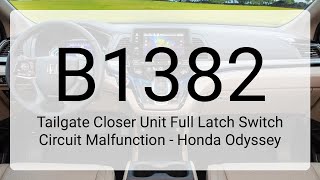
Technical definition: Because B1382 is manufacturer-specific, it lacks a universal OBD-II definition. Hyundai and Kia define it as 'Side Airbag Front-Passenger Resistance too High', triggering when the squib circuit resistance exceeds a threshold (typically >4.2Ω to 6.0Ω). Honda defines it as 'Tailgate Closer Unit Full Latch Switch Circuit Malfunction'. Ford uses it for 'Right Front Door Handle Proximity Sensor Circuit Fault'.
Can I Drive With B1382?
Yes, But With Caution. You can drive the vehicle, but the entire Supplemental Restraint System (SRS) is disabled while the airbag warning light is on. In a collision, zero airbags will deploy. The system is inactive from the moment the light illuminates, requiring immediate repair.
Common Causes

- Loose or Disconnected Under-Seat Airbag Connector (Very Common) — This causes over 90% of B1382 codes in Hyundai and Kia vehicles. Items stored under the seat, passenger foot traffic, or moving the seat during cleaning bumps the yellow airbag connector, loosening the pins and causing high resistance. 🎬 Watch: How to fix high resistance codes on Hyundai and Kia.
- Damaged Wiring Harness (Common) — The wires running under the passenger seat and carpet get pinched, stretched, or severed by the seat track mechanism, creating an open circuit or high resistance. This is a known factory defect on 2007-2011 Chevrolet Aveo models.
- Faulty Side Airbag (SAB) Module (Common) — The airbag unit inside the passenger seat fails internally. The internal wiring or the squib (the explosive igniter) degrades over time, permanently increasing circuit resistance.
- Faulty Airbag Control Module (SRSCM) (Less Common) — The main SRS computer fails internally or develops corrosion at its main harness connector, incorrectly reporting a resistance issue with the passenger airbag.
- Non-Airbag Manufacturer Variants (Rare) — Depending on the brand, this code triggers for entirely different systems: a failed power tailgate latch switch (Honda), a broken exterior door handle proximity sensor (Ford), or a shorted oil change reset button (General Motors).
Symptoms

- Airbag Warning Light On — The dashboard airbag warning light illuminates and stays on permanently.
- Passenger Airbag Off Light On — The passenger airbag 'OFF' indicator illuminates, signaling the system disabled that specific airbag.
- Power Tailgate Inoperative (Honda) — The power tailgate fails to close, latch, or lock properly, or reverses unexpectedly.
- Keyless Entry Fails on Passenger Side (Ford) — The passive keyless entry feature stops working for the passenger exterior door handle.
- Service/Oil Change Light Won't Reset (GM) — The oil life or service reminder light remains on even after performing the manual reset procedure.
Diagnostic Flowchart

Tap your situation to follow the diagnostic path that matches what you're seeing on this code.
Common Fixes & Costs
- Reseating or Cleaning Under-Seat Connector — Parts: $0, Labor: $120-$200 (Standard 1-hour diagnostic fee), ~1.0 hr book time (DIY)
- Repairing Damaged Wiring Harness — Parts: $10-$30, Labor: $150-$300, ~1.5 hr book time (Intermediate)
- Replacing the Side Airbag Module — Parts: $400-$1000, Labor: $200-$400, ~2.0 hr book time (Professional)
- Replacing the Airbag Control Module (SRSCM) — Parts: $500-$1200, Labor: $200-$300, ~2.0 hr book time (Professional)
- Replacing Honda Odyssey/Pilot Tailgate Latch — Parts: $300-$450, Labor: $150-$250, ~1.5 hr book time (Intermediate)
Used vs. New Parts: Buying Guide
When a used part is worth it: For airbag modules, a used, non-deployed OEM part from a certified automotive recycler is a cost-effective alternative to new OEM. For SRSCMs, having your original module professionally reset avoids VIN mismatch issues.
Donor-vehicle mileage cap: roughly under 100000 miles for the part to have meaningful remaining life.
Donor quality checklist:
- Verify the part comes from a certified recycler guaranteeing it is a non-deployed OEM part.
- Reject parts with water damage, corrosion, or physical stress marks.
- Match the part number exactly. SRSCMs must match the make, model, year, and trim.
- Never purchase aftermarket airbags; they are unregulated and dangerous.
Decision logic:
- If The part is an explosive component (airbag squib/module) → New OEM is safest. Used OEM from a certified recycler is acceptable but carries inherent risk.
- If The part is an electronic module (SRSCM) → Resetting your original module via a professional service is best. Used modules require expensive dealer programming to match your VIN.
- If The part is a mechanical assembly (Honda tailgate latch) → Used parts are perfectly acceptable if in good physical condition.
Warranty tradeoff: Used parts carry a 30-90 day function warranty. New OEM parts carry a 1-year warranty. Professional module reset services offer lifetime warranties.
Worst-case if a used part fails: $500-$1500 if a used module fails or requires repeat labor and dealer programming.
What Happens If You Wait — Timeline
- Immediate (0 seconds): The SRSCM detects high resistance. The airbag warning light illuminates, and the entire SRS is disabled for safety. (MPG impact: 0%% · Added cost: $0)
- Ongoing: The vehicle drives normally, but the risk of serious injury in a collision increases significantly for all occupants. (MPG impact: 0%% · Added cost: $0)
- At State Inspection: The vehicle fails mandatory safety inspections in states like Texas and Pennsylvania, preventing registration renewal. (MPG impact: 0%% · Added cost: $50-$200 in re-inspection fees and fines.)
- Post-Accident: Airbags fail to deploy, causing severe injury or death. Insurance claims face denial due to the pre-existing fault. (MPG impact: 0%% · Added cost: Potentially infinite (medical costs, liability).)
Cost of Not Fixing It
- Immediate: The entire Supplemental Restraint System (SRS) is disabled. Zero airbags will deploy in a collision. (Added cost: $0)
- Ongoing: Automatic failure of mandatory state safety inspections (e.g., Texas, Pennsylvania, New York), preventing registration renewal. (Added cost: $50-$200 in re-inspection fees and fines.)
- Post-Accident: Severe injury or death due to non-deployment of airbags. Insurance claims face denial due to the pre-existing safety system fault. (Added cost: Potentially infinite (medical costs, liability).)
Diagnosis Steps
- Scan for Codes and Identify the Vehicle System
Use an OBD-II scanner capable of reading SRS/Body codes. Confirm B1382 is active and identify which system it pertains to for your specific vehicle (e.g., 'Airbag', 'Body Control Module', 'Tailgate Module'). This prevents wasting time looking for an airbag fault on a Honda where this code relates to the tailgate.
Tools: SRS-capable OBD-II Scanner (Beginner) - Analyze Scan Tool Live Data (Hyundai/Kia)
Use a professional scan tool to view live data for the SRS module. Locate the PID for 'Passenger Side Airbag Resistance'. A normal reading is 1.8-2.8 Ω. If the code is active, it will show >4.2 Ω or 'OPEN'. Wiggle the under-seat connector while watching this data; wild fluctuations instantly confirm a loose connection.
Tools: Advanced bidirectional scan tool (Advanced) - Check and Reseat the Under-Seat Connector
Disconnect the negative battery terminal and wait 15 minutes to discharge the SRS capacitors. Locate the bright yellow airbag connector under the front passenger seat. Disconnect it, inspect the pins for corrosion, and firmly reconnect it until it clicks. Reconnect the battery and clear the codes.
Tools: Wrench (10mm), Flashlight (Beginner) - Inspect Wiring for Damage
If the code persists, inspect the visible wiring harness running to the under-seat connector and up into the seat. Look for pinching, chafing, or broken insulation caused by the seat tracks. Repair damaged wires using solder and adhesive-lined heat shrink.
Tools: Flashlight, Wire repair tools (Intermediate) - Test the Squib Circuit with a Dummy Resistor
With the battery disconnected, unplug the harness at the side airbag module inside the seat. Connect a 2.0 to 2.5 ohm airbag dummy resistor to the vehicle harness. Reconnect the battery and clear codes. If B1382 stays away, the side airbag module is faulty. If it returns, the fault is in the wiring or SRSCM. NEVER use a multimeter directly on an airbag squib.
Tools: Airbag dummy resistor tool, SRS-capable OBD-II Scanner (Advanced) - Measure Circuit Resistance at the SRSCM
Disconnect the battery and wait 15 minutes. Unplug the main connector from the Airbag Control Module (SRSCM). Using a wiring diagram, identify the two pins for the passenger side airbag. Measure resistance between these pins on the harness side. A reading of 'OL' indicates a broken wire; a reading over 6.0 ohms confirms high resistance in the harness.
Tools: Digital Multimeter, Vehicle-specific wiring diagram (Advanced) - Test the Airbag Control Module (SRSCM)
If the wiring tests good and the code persists with a dummy resistor installed, the SRSCM is faulty. Use a high-level scan tool to check for internal module faults (like code B1620). A faulty module requires replacement and VIN programming.
Tools: Advanced diagnostic scan tool (Professional) - Diagnose Non-Airbag B1382 Variants
For Honda tailgate issues, perform continuity tests at the power tailgate closer unit connector. For Ford door handles, test the proximity sensor circuit. For GM oil reset buttons, test the switch for continuity and check for a short to voltage.
Tools: Digital Multimeter, Vehicle-specific service manual (Intermediate)
When This Code Triggers (Freeze-Frame Conditions)
- System Status: Fault Present (The SRS module detects the high resistance fault during its initial power-on self-test.)
- Passenger Airbag Resistance: > 5.0 Ohms or 'OPEN' (Live data shows the resistance value exceeding the manufacturer's threshold (e.g., >4.7Ω).)
- Vehicle Speed: 0 mph or Varies (The code sets at key-on (0 mph) or triggers during driving when an intermittent connection wiggles loose over bumps.)
Related Codes
- B1378 — The direct companion code to B1382 in Hyundai/Kia vehicles. B1378 indicates 'Side Airbag Front-Driver Resistance too High'. The diagnostic process is identical but performed on the driver's side.
- B1383 — The opposite fault for the same component. B1383 indicates 'Side Airbag Front-Passenger Resistance too Low'. This is caused by a short circuit rather than a loose connection.
- B1448 — Relates to the Occupant Classification System (OCS) weight sensor mat in the passenger seat. B1382 is a firing circuit fault; B1448 is a weight-sensing fault.
- B1620 — A general internal fault code for the Airbag Control Module (SRSCM). If present alongside B1382, the control module itself is faulty and requires replacement.
Climate & Environmental Factors
- High Humidity / Moisture: Moisture promotes corrosion on the electrical connector pins under the seat, where carpet traps dampness. This corrosion adds resistance to the circuit, triggering the B1382 fault.
- Extreme Temperature Cycles: Temperature swings cause metal pins and plastic housings to expand and contract at different rates, loosening the connection over time and increasing resistance.
How to Talk to a Mechanic About This Code
Say this: "I have an airbag light on and my scanner shows code B1382. For my car, this points to high resistance in the passenger side airbag circuit. I'd like to book a one-hour diagnostic to have you inspect the under-seat connector and wiring before we consider replacing any expensive parts."
This signals you know the specific, common cause (connector/wiring) and prevents a shop from immediately quoting a costly airbag module replacement. It frames the work as a focused, one-hour inspection.
Avoid saying:
- 'My airbag light is on, can you fix it?'
- 'Just do whatever it takes to turn the light off.'
- 'I think I need a new airbag.'
Questions to ask before authorizing the repair:
- Did you find the high resistance at the connector, in the wiring, or internal to the airbag module?
- Can you show me the resistance readings from your scan tool?
- If the connector is the problem, is the solution to clean and secure it, or does the pigtail need replacement?
Where to Take It: Dealer vs Independent vs Chain
- Dealer:
Recommended if the issue is covered by a warranty extension or TSB, or if diagnosis points to the main control module.
Best for: Vehicles under warranty or covered by a specific TSB (like the Kia Sedona)., Complex cases requiring SRSCM replacement and programming.
Downsides: Highest labor rates ($150-$250/hr)., May default to replacing an entire seat harness rather than performing a detailed wiring repair. (Typical cost: +50% vs. baseline) - Independent Shop:
Best fit for most scenarios. An experienced independent technician efficiently diagnoses the connector issue without defaulting to expensive part replacement.
Best for: Out-of-warranty vehicles, especially for the common Hyundai/Kia connector issue., Diagnosing and repairing wiring faults.
Downsides: Quality varies; ensure the shop has ASE-certified technicians experienced with SRS systems. (Typical cost: +0% vs. baseline) - Chain Shop:
AVOID. Airbag system repairs require expertise not typically found at high-volume chain shops.
Best for: Not recommended for SRS/airbag diagnostics.
Downsides: Technicians lack specialized training for airbag systems., Business model incentivizes replacing parts over performing nuanced electrical diagnostics. (Typical cost: -10% vs. baseline)
When to Walk Away From the Repair
If the estimated repair cost for the airbag system exceeds 30% of the car's private-party value, carefully consider your options, as buyers are extremely wary of airbag issues.
- Car worth $5000, fix is $2000: Walk away. The repair cost is 40% of the car's value. Selling a car with a known safety defect significantly lowers the sale price.
- Car worth $15000, fix is $1200: Fix it. The cost is well below the threshold and restores a critical safety feature, preserving vehicle value.
- Car worth $3000, fix is $150: Fix it. If the problem is a simple connector fix for one hour of labor, it's an easy decision.
What Scan Tool You Need for This Code
Minimum: An OBD-II scanner with the ability to read and clear Supplemental Restraint System (SRS/Airbag) codes.
A standard $20 engine code reader cannot communicate with the SRS module. It will not see the B1382 code, cannot read live resistance data, and cannot clear the light after the repair.
Budget: BlueDriver Pro (~$100) — Reads and clears SRS codes for most major brands and connects to a smartphone via Bluetooth.
Mid-range: Foxwell NT630 Plus / Autel AutoLink AL619 (~$130-180) — Dedicated handheld units that read/clear SRS codes and show live SRS data streams to monitor resistance values.
Professional: Autel MaxiCOM MK808BT (~$500-900) — Provides full bidirectional control. Necessary for advanced diagnostics, isolating a faulty SRSCM, or performing programming on a replacement module.
Rent vs buy: Auto parts stores do NOT rent out scanners with SRS capabilities due to liability. Buying a budget-level SRS scanner is more cost-effective than a single diagnostic visit to a shop.
How to Clear the Code After You Fix It
- Reconnect the negative battery terminal.
- Connect an SRS-capable OBD-II scan tool to the vehicle.
- Access the Supplemental Restraint System (SRS) module menu.
- Select 'Clear Codes' or 'Reset Faults'.
- Cycle the ignition off, then back on to verify the airbag light performs its 6-second self-check and turns off.
Drive cycle (~5 minutes): SRS faults are 'hard codes' and never clear via a drive cycle. You must manually clear the code with a scanner. A short 5-minute test drive over bumpy roads verifies the physical connection is secure.
Readiness monitors affected: None
Watch out for:
- Using a basic $20 engine code reader; it cannot communicate with the SRS module to clear the code.
- Disconnecting the battery to clear the code; SRS modules store hard faults in non-volatile memory.
- Assuming the repair failed if the light stays on; you must manually clear the code first.
Will This Fail Emissions / State Inspection?
No — by itself this code doesn't fail OBD inspection (but it can keep readiness monitors from setting, which causes a separate fail).
- California: An airbag light does NOT cause a Smog Check failure, as the inspection only tests emissions systems.
- New York: The airbag light is checked during the safety inspection. It is noted as an advisory but is NOT cause for rejection.
- Texas: An illuminated airbag warning light results in an automatic failure of the Texas safety inspection.
- Pennsylvania: An illuminated airbag warning light causes an automatic failure of the annual safety inspection.
Most Commonly Affected Vehicles
- Kia Sedona (2016-2018) — TSB ELE259 covers vehicles produced from March 2016 to Dec 2017 for high resistance in the side airbag connector, addressed under warranty extension WTY025.
- Hyundai Sonata (2011-2019) — Highly prone to under-seat airbag connector issues causing B1382. Normal resistance spec is 1.8-2.6Ω.
- Kia Sorento (2016-2020) — Frequently experiences faults with the under-seat wiring due to passenger foot traffic or stored items.
- Hyundai Elantra (2011-2016) — Known for chronic under-seat connector issues. Repairs often involve securing the connector with a zip-tie to prevent loosening.
- Hyundai Santa Fe (2004-2012) — Prone to the under-seat connector issue. Service manuals specify a normal resistance of 1.9-4.7Ω.
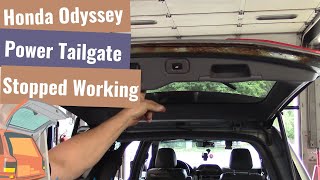
- Honda Odyssey (2011-2017) — B1382 points to a malfunction in the tailgate closer unit's full latch switch circuit, NOT the airbag system.
- Honda Pilot (2012-2015) — Indicates a fault with the power tailgate latch assembly, NOT the airbag system.
- Chevrolet Aveo (2007-2011) — Features a tight wiring harness under the seat that disconnects when the seat moves, triggering B1382.
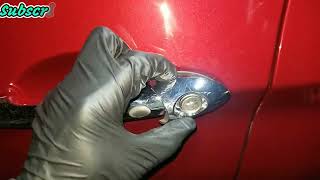
- Ford Mustang (2015-2020) — Code B1382:15 indicates a fault with the proximity sensor in the passenger-side exterior door handle.
Manufacturer-Specific Notes
- Hyundai/Kia: The leading cause of B1382 is the yellow connector under the passenger seat getting loose. The resistance threshold is low, so minor corrosion triggers the fault. Kia issued TSB ELE259 for the 2016-2018 Sedona to address this.
- Honda: For the 2011-2017 Odyssey and 2012-2015 Pilot, B1382 is completely unrelated to airbags. It targets a switch in the power tailgate latching mechanism.
- Ford: On models like the Mustang, B1382 appends extra digits (e.g., B1382:15) and relates to the passive entry system, specifically a fault with the proximity sensor in the passenger door handle.
- General Motors: Definitions vary widely. On a Chevy Aveo, it refers to side airbag wiring. On other GM vehicles, it means 'Device Ignition Accessory Circuit Malfunction' or 'Oil-change-reset button circuit short to battery'.
Real Owner Stories
2007 Chevrolet Aveo5 with Airbag Light
The airbag warning light illuminated while under warranty. The dealership scanned the system and found code B1382.
What they tried:
- The dealership inspected the wiring harness under the right front seat.
Outcome: The dealership replaced the under-seat wire harness. Forum members noted the factory harness on this model is too tight and disconnects when the seat moves.
Lesson: On vehicles like the Chevy Aveo, the factory wiring harness may be too tight. Checking for a disconnected or stressed harness under the seat is the primary diagnostic step.
2017 Kia Sedona with B1382
The owner experienced an airbag light. The dealer confirmed B1382: 'Side Airbag Front Passenger Resistance Too High'.
What they tried:
- The dealer checked the vehicle's production date against known service bulletins.
Outcome: The dealer followed TSB ELE259, disconnecting, cleaning, and securely reconnecting the yellow airbag connector under the seat. The repair was covered under warranty extension WTY025.
Lesson: If you own a 2016-2018 Kia Sedona, check TSB ELE259. The manufacturer acknowledges this issue, and the repair is often covered under a warranty extension.
2014 Honda Odyssey with Tailgate Problems
The power tailgate failed to latch correctly. An OBD-II scan revealed code B1382.
What they tried:
- The owner initially researched airbag faults before realizing the code definition differed for Honda.
Outcome: Correctly diagnosed as 'Tailgate Closer Unit Full Latch Switch Circuit Malfunction'. The fix involved replacing the faulty tailgate latch assembly.
Lesson: Always verify the code's meaning for your specific vehicle. For a Honda Odyssey, B1382 has nothing to do with airbags.
Hyundai Verna with B1382 and B1378
A scan showed both B1382 (passenger side) and B1378 (driver side) high resistance codes simultaneously.
What they tried:
- The owner checked the connectors under both seats but found no issues.
Outcome: The problem was a poor connection at the main Airbag Control Module (SRSCM) under the center console. Disconnecting and reconnecting the main module's harness resolved both codes.
Lesson: If you have codes for both driver and passenger side airbags simultaneously, the fault is likely at a common point, such as the main SRSCM connector.
How to Prevent This Code From Triggering
- Avoid storing items under the front seats. (Daily habit) — Prevents water bottles or umbrellas from snagging and dislodging the sensitive yellow airbag connectors.
- Exercise caution when vacuuming or cleaning. (During cleaning) — Prevents accidentally pulling the airbag wiring harness when moving the seat to its limits.
- Secure loose wiring with zip-ties. (As needed) — If the factory wiring harness has too much slack, securing it with a zip-tie prevents it from getting snagged.
Frequently Asked Questions
Can I just ignore the airbag light?
No. When the airbag light is on, the entire Supplemental Restraint System (SRS) is disabled. This means zero airbags will deploy in an accident, creating a critical safety risk.
Is it safe to work on airbag wiring myself?
Yes, but you must disconnect the negative battery terminal and wait 15 minutes before touching any components. This prevents accidental deployment, which causes serious injury. If you lack the proper tools or confidence, hire a professional.
What is the most common misdiagnosis for B1382?
The biggest mistake is assuming it's an airbag code on vehicles like the Honda Odyssey, where it actually indicates a tailgate fault. The second is replacing a $600 airbag module before checking the under-seat connector, which causes 90% of Hyundai/Kia faults.
The dealer quoted me thousands to fix the B1382 code. Is that right?
A high quote often assumes a worst-case scenario like replacing the airbag module ($600+) and the main SRSCM ($800+). However, the actual cause is usually a loose connector fixed for a $150 diagnostic fee. Always ask for a detailed breakdown before authorizing parts replacement.
I cleared the code and it came right back. What's next?
If the code returns immediately, you have a 'hard fault' rather than an intermittent connection. This indicates a constant problem like a broken wire, a failed airbag module, or a bad control unit. Proceed to advanced diagnostics using a dummy load tool.
I replaced the side airbag but the light is still on. What did I miss?
First, airbag fault codes do not clear themselves; you must manually clear the code from the SRSCM using an SRS-capable scan tool. Second, the fault may actually be in the wiring harness or the control module, highlighting why proper diagnosis is required before replacing parts.
Can a weak car battery cause the B1382 code?
While a low battery causes random electronic glitches, it rarely triggers a specific resistance-based code like B1382 directly. However, if the SRSCM detects low voltage upon startup, it sometimes sets other codes alongside B1382. Always ensure your battery is healthy before starting complex diagnostics.
Key Takeaways
- Code B1382 is not universal; it indicates a passenger-side airbag fault on Hyundai/Kia, but signals a power tailgate failure on 2011-2017 Honda Odysseys.
- For Hyundai and Kia models, fix this code 90% of the time by disconnecting the battery for 15 minutes, then cleaning and reseating the yellow electrical connector under the front passenger seat.
- An illuminated airbag warning light completely disables the vehicle's Supplemental Restraint System, meaning zero airbags will deploy in a collision.
- Never use a standard multimeter to test an airbag's resistance directly, as the meter's electrical current can trigger a deployment and cause severe injury.
Helpful Videos

Shop the Parts Behind B1382
Below are the parts most often responsible for code B1382, ranked by how frequently each one is the actual culprit (per the diagnosis above). Tap any to see what we have for your vehicle.



The information in this article is provided for general reference and educational purposes only. Vehicle specifications, procedures, and part compatibility can vary by production date, trim level, and region. Always consult your vehicle's factory service manual and verify part numbers before purchasing or performing repairs. Safety-critical components such as airbags, seat belts, and braking systems should be installed by a qualified professional.
- 🧭 Diagnostic Flowchart
- 🎬 Helpful Videos
- 🛍️ Shop This Part
- What Does B1382 Mean?
- Can I Drive With B1382?
- Common Causes
- Symptoms
- Common Fixes & Costs
- Used vs. New Parts: Buying Guide
- What Happens If You Wait — Timeline
- Cost of Not Fixing It
- Diagnosis Steps
- When This Code Triggers (Freeze-Frame Conditions)
- Related Codes
- Climate & Environmental Factors
- How to Talk to a Mechanic About This Code
- Where to Take It: Dealer vs Independent vs Chain
- When to Walk Away From the Repair
- What Scan Tool You Need for This Code
- How to Clear the Code After You Fix It
- Will This Fail Emissions / State Inspection?
- Most Commonly Affected Vehicles
- Manufacturer-Specific Notes
- Real Owner Stories
- 2007 Chevrolet Aveo5 with Airbag Light
- 2017 Kia Sedona with B1382
- 2014 Honda Odyssey with Tailgate Problems
- Hyundai Verna with B1382 and B1378
- How to Prevent This Code From Triggering
- Frequently Asked Questions
- Can I just ignore the airbag light?
- Is it safe to work on airbag wiring myself?
- What is the most common misdiagnosis for B1382?
- The dealer quoted me thousands to fix the B1382 code. Is that right?
- I cleared the code and it came right back. What's next?
- I replaced the side airbag but the light is still on. What did I miss?
- Can a weak car battery cause the B1382 code?
- Key Takeaways
- 🎟️ Get 5% Off